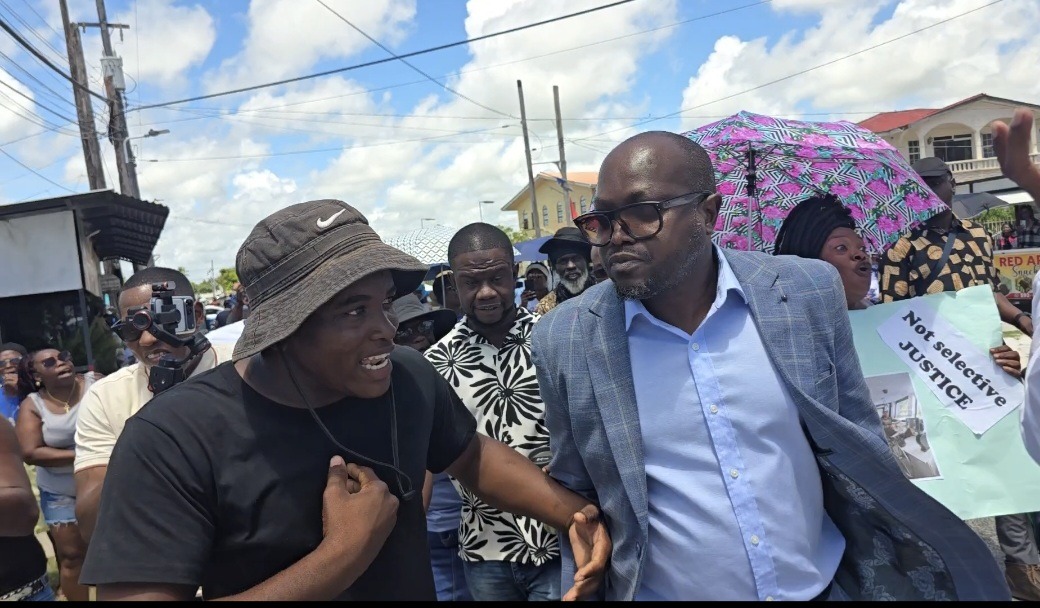
On August 6, 2026, governing party parliamentarian James Bond faced heated public backlash from opposition activists and residents of Melanie Damishana, Guyana, while addressing widespread anger over murder charges filed against three crew members of the sunken vessel MV Barima, which left 72 passengers and crew dead and more than 100 people total dead in the disaster. The three accused are 40-year-old Kevin Price, a resident of Melanie Damishana, 42-year-old chief mate Rondell Dwayne Roberts from East Bank Demerara, and 33-year-old goods superintendent Delon Granderson from West Coast Demerara. Residents have raised fierce objections to the charges, arguing they are premature, legally unfounded, and lack proof of intent — a core legal requirement for a murder conviction. In a tense public confrontation marked by constant jeers and repeated boos from the crowd, Bond, a trained attorney who switched affiliation from the opposition People’s National Congress Reform to the governing People’s Progressive Party Civic ahead of September 2025 general elections, acknowledged that the charges against his fellow villager Price have caused him personal distress. Even so, he defended the legal process that led to the charges. Explaining the procedural background, Bond noted that investigators completed their probe and submitted the case file to the Director of Public Prosecutions, which ultimately authorized the murder charges by applying international case precedent to the local incident. He pushed back against critics questioning why charges were filed at all, drawing a parallel to routine unlawful death cases: just as a driver who causes a fatal crash through dangerous operation is immediately taken into custody and charged, those linked to the MV Barima disaster must face formal legal process per Guyana’s rule of law. Addressing demands for clarity on whether the three crew members premeditated the deaths of the 72 victims, Bond stated he could not speak to the accused’s state of mind. “I was not in [Kevin Price’s] mind. I was not on the vessel. I don’t know enough facts to form a view. I would not even dare go there,” he told the assembled crowd. Prime Minister Mark Phillips has already publicly stated he does not believe the crew intended to kill anyone, a contradiction that has further fueled public skepticism of the charges. As the legal process moves forward, Bond noted that the accused have clear avenues to challenge the DPP’s decision. “If you disagree with whatever decision an administrative or judicial person has made, there is recourse in the law,” he explained. “The accused’s legal team can request a High Court judicial review of the DPP’s charging decision, at which point the prosecution will be required to defend the legal basis for the charge in open court.” Prosecutors have not yet completed full disclosure of all evidence related to the charges to the defense, a procedural step required before the case can move to trial. Bond also addressed the ongoing official Commission of Inquiry convened to investigate the disaster, noting that while the three accused have the legal right to remain silent during commission proceedings, he believes testifying would work to their benefit. “In my estimation, them speaking to the Commission of Inquiry would help them,” he said. To support the commission’s investigative work, the Guyanese government has launched a public tender seeking a specialized firm with forensic evidence preservation capabilities to salvage the wreckage of the MV Barima from its resting place.
标签: Guyana
圭亚那
-
Co-op society lands to be regularised for housing shortly- Attorney General
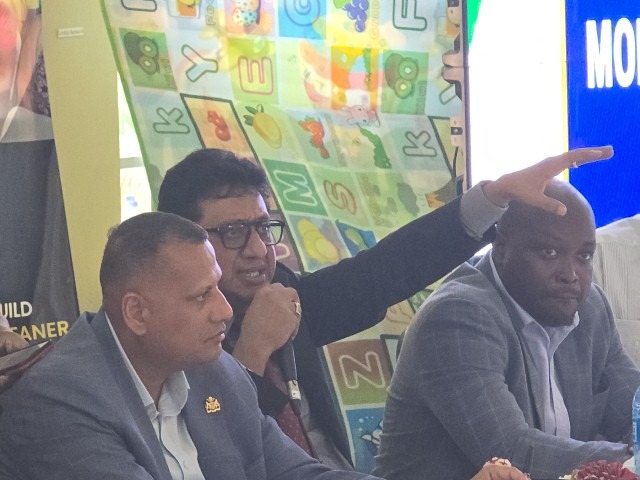
GEORGETOWN, Guyana – August 6, 2026 – Guyana’s Ministry of Legal Affairs has announced a clear timeline to resolve long-running land tenure questions for residents of Melanie Damishana-Non Pariel on the East Coast Demerara, with formal property titles set to be issued to qualifying occupants within the next fortnight.
Speaking at a community consultation focused on the country’s model village initiative held at the Melanie Damishana Nursery School this Thursday, Legal Affairs Minister Anil Nandlall confirmed that the decades-long cooperative land disputes affecting the area will be fully and finally resolved within 14 days, with government representatives deploying on-site to complete the process.
Nandlall explained that the land regularisation initiative, which first launched years ago to formalise tenure for dozens of occupied residential parcels in the area, was delayed after the former CEO of the Central Housing and Planning Authority (CH&PA), Sherwin Greaves, left his position. To get the process back on track, the minister confirmed that his ministry’s dedicated land regularisation unit will hold a planning meeting in Georgetown next week ahead of its on-site deployment to wrap up outstanding work.
Years of preliminary work has already laid the groundwork for the final step: the Guyanese government has already formalised its commitment to issuing full property titles – referred to locally as transports – to all qualifying homestead occupants, and a full occupational survey of the area has already been completed to clear the way for the final approval and issuing of documents. Following interministerial discussions with Cooperatives Minister Keoma Griffith and Housing Minister Collin Croal, the housing ministry has assigned a new liaison officer to support the Legal Affairs Ministry in moving the process forward. Nandlall appeared alongside Croal at Thursday’s community gathering, which was presided over by Guyana President Irfaan Ali.
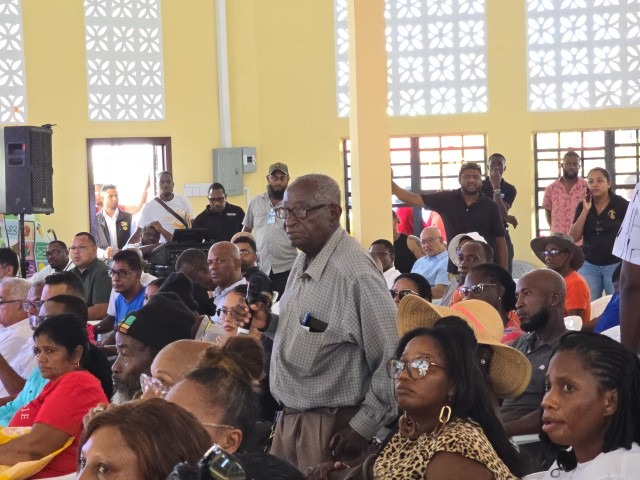
The announcement came in direct response to questions raised by local residents during the consultation’s open question-and-answer session. One resident from nearby Bare Root, East Coast Demerara, pressed government officials for a clear timeline for title delivery, noting that he had already been organizing local residents to prepare for formal tenure by encouraging neighbors to begin paying required rates and taxes ahead of receiving their documents.
The regularisation process will convert land previously held under long-term lease to a cooperative society into formally titled individual residential properties, unlocking property rights, access to financing, and legal security for hundreds of local residents who have resided on the land for years.
-
NIS pension increase coming- Ali
On Thursday, 6 August 2026, Guyanese President Irfaan Ali committed to advancing a long-overdue adjustment to National Insurance Scheme (NIS) pensions, confirming that an increase will be finalized and implemented before the government tables its next national budget. The promise came in direct response to a question raised by a long-serving NIS pensioner during public model village consultations held at the Melanie Damishana Nursery School in East Demerara.
The retired contributor, who has drawn an NIS pension since 2007, told the head of state that his monthly payment had not seen any adjustment in seven years. He explained that his current benefit, which once sat above the minimum pension threshold, has now been nearly matched by incremental increases to the minimum NIS pension, leaving him with effectively no real gains amid rising cost of living. The pensioner pressed Ali to provide a clear timeline for addressing the stagnation in payments for non-minimum pension recipients.
Official NIS records show that the monthly minimum old-age pension has already been adjusted incrementally in recent years, rising from GY$35,000 in 2020 to GY$43,075 as of 1 January 2025. Notably, NIS Board Chairman Ramesh Persaud highlighted the scheme’s solid financial standing in comments made back in late June 2026. Persaud noted that NIS has posted consistent surpluses for the past five consecutive years, with all excess funds being reinvested to secure long-term benefits for future generations of pensioners — a result he described as a significant, positive achievement for the social security system.
Ali’s public commitment signals that the government is moving to address inequities in pension adjustments that have left long-time recipients facing eroded purchasing power, leveraging the scheme’s current strong financial position to deliver relief before the start of the next budget cycle.
-
Govt not backing down from entering bottled water market, despite private sector, opposition concerns
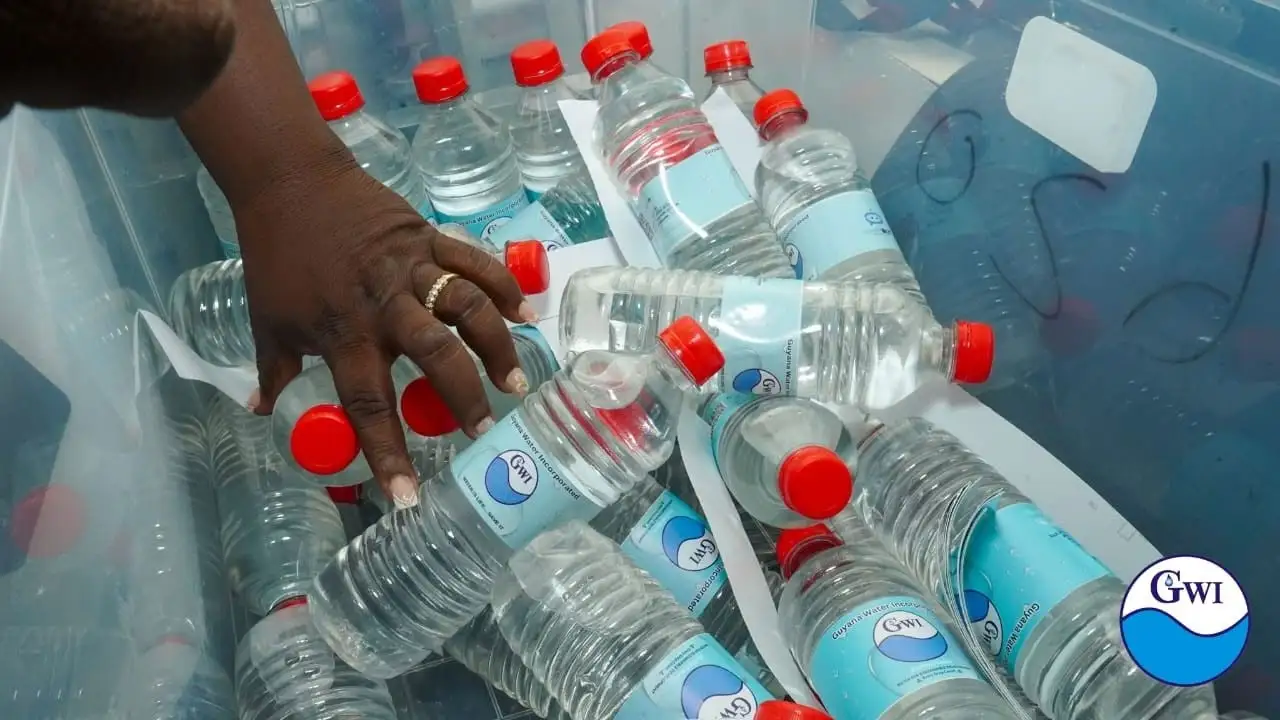
On August 6, 2026, a public debate has emerged in Guyana surrounding the government’s plan to launch a state-run bottled water bottling facility under the umbrella of Guyana Water Incorporated (GWI), drawing sharp criticism from the country’s leading manufacturing industry body and the main opposition party. President Irfaan Ali has pushed back against critics, defending the initiative as a necessary step to fulfill the government’s commitment to affordable, accessible safe water for all Guyanese citizens.
The proposal, which has already been allocated GY$496.3 million in government funding, initially garnered support from the Guyana Manufacturing and Services Association (GMSA). The trade group originally backed the plan as a pathway to cut reliance on imported bottled water, boost local manufacturing, generate new employment opportunities, and strengthen the country’s overall economic resilience. But that support has shifted to fierce opposition now that the project’s structure has come into focus, with GMSA warning that the state-owned venture will directly compete with established private sector businesses that have built up the local bottled water market over decades.
In an official statement released this week, GMSA emphasized that hundreds of millions in private capital have already been invested in the local bottled water sector, with industry players building extensive national distribution networks and creating thousands of sustained jobs for Guyanese workers. Any state-led initiative in this space, the association argued, should be designed to complement and strengthen existing private investment, not undercut or compete against local businesses. GMSA also pointed to a contradiction between the current plan and President Ali’s own February policy announcement, which explicitly called for close public-private collaboration on expanding local bottled water production, including shared industrial infrastructure such as bottle manufacturing to lower industry-wide costs. The group says a standalone state-owned competing venture directly undermines that original collaborative vision.
President Ali rejected these concerns during a press briefing Thursday, framing GWI’s entry into the bottled water market as a matter of public responsibility rather than unfair competition. “GWI is not in competition with anyone,” the president stated, noting that the agency’s core mandate is to deliver safe, affordable drinking water to all Guyanese. He pushed back against private producers, asking why local manufacturers have allowed imported bottled water to capture growing market share in Guyana, arguing that the high cost of bottled water across the region creates a public obligation for the state to intervene to make the product more accessible for ordinary citizens.
The main opposition party, A Partnership for National Unity (APNU), has joined GMSA in criticizing the plan, going a step further to argue that the project misplaces GWI’s priorities at a time when core public water services remain inadequate across much of the country. APNU parliamentarian Ganesh Mahipaul noted in a statement that GWI’s immediate focus should be addressing longstanding systemic issues: unreliable water access, poor water quality, low water pressure, and entirely unconnected communities that lack access to a formal public water distribution network.
“The Government’s first obligation is not to compete in the bottled water market. Its first obligation is to ensure that every household has access to potable water for domestic use,” Mahipaul said. He pointed out that ordinary Guyanese are not requesting the government to sell them bottled water; instead, they want reliable clean water delivered directly to their homes, so they do not need to purchase bottled water at all to meet basic daily needs like cooking, bathing, cleaning, and safe drinking.
While APNU does not reject the principle of state-run commercial ventures in cases where they serve a clear public good and deliver tangible benefits to citizens, Mahipaul said GWI’s current plan raises serious questions about the appropriate role of the state in the domestic marketplace. “Rather than focusing on its core mandate of providing a reliable public utility, GWI appears to be venturing into a commercial enterprise that will inevitably compete with existing local bottled-water producers, many of whom are private Guyanese businesses that have invested significant capital, created employment and contributed to the economy,” he explained. “Government should be creating an environment that supports private enterprise, not using taxpayers’ money to establish a State competitor while its primary public service obligations remain unmet.”
Mahipaul has called on the Ali administration to release full transparency around the project, demanding the government disclose key details including the bottling plant’s location, projected production output, total capital and operational expenses, planned retail price point for the state-produced bottled water, intended distribution network, expected return on investment, and whether independent market analysis was conducted to justify the public expenditure. He added that the Guyanese public also has a right to understand how this multi-hundred-million-dollar project aligns with GWI’s legal mandate to deliver safe, reliable public water services across the entire country.
-
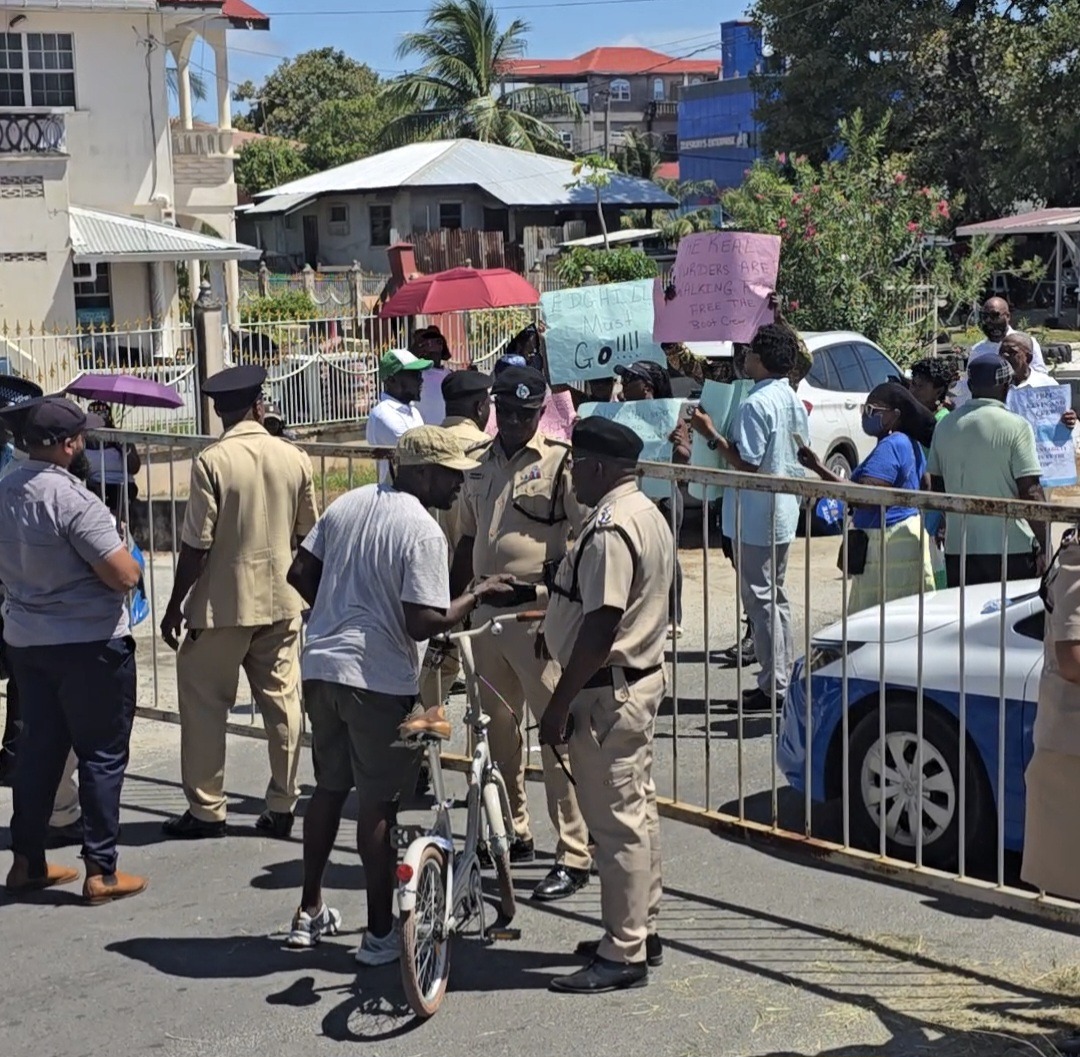
Ali shrugs off calls for Edghill to go
On Thursday, August 6, 2026, Guyanese President Irfaan Ali publicly rejected growing opposition and activist demands for the resignation of Maritime Transport Minister Juan Edghill, just weeks after the deadly July 19 sinking of the MV Barima ferry that left dozens missing off the country’s Essequibo Coast. The president made his position clear while exiting a model village initiative community consultation held at Melanie Nursery School in Melanie Damishana, along Guyana’s East Coast Demerara, where a heavy police presence was deployed to separate a small group of anti-government protesters from the event venue.
The MV Barima tragedy, widely described as the deadliest maritime disaster in recent Caribbean history, occurred when the overloaded ferry sank en route from Georgetown to Port Kaituma in the hard-hit Region One (Barima-Waini). Official tallies confirm 76 people were rescued, 72 passengers and crew are confirmed dead, and 30 remain unaccounted for, with 179 total people recorded as being on board when the vessel capsized in Atlantic waters. Authorities have launched a salvage operation prioritizing the preservation of forensic evidence for an independent Commission of Inquiry (COI) that President Ali has pledged to let operate without political interference.
When questioned by Demerara Waves Online News on calls to place Edghill on administrative leave or force his resignation ahead of the inquiry’s findings, Ali maintained he would not pre-empt the COI’s work. “There is a COI and I have established its independence and let the COI work, ok,” the president stated. Notably, Edghill remained in his post as of Wednesday this week, and even accompanied Ali on a ministerial outreach trip to Region One just over a month after the sinking.
Local law enforcement blocked off access roads surrounding the nursery school to contain the protest, which drew only a small crowd of demonstrators on the village’s main access road. President Ali entered the venue via an alternate route to avoid the gathering. Prior to the start of the consultation, Walston Martins, Chairman of the Buxton-Foulis Neighbourhood Democratic Council (NDC), and an unidentified woman were escorted from the area opposite the school to beyond police cordons. After the removal, the woman was arrested and transported from the scene in a police vehicle. A senior police official also suggested that a journalist could face arrest for allegedly violating restrictions on access to the active police operation.
As he was escorted out, Martins denounced the action as unconstitutional and announced plans to challenge the government and law enforcement in court. He argued that as the local NDC chair, he had a legal right to be present for the community meeting held within his jurisdiction. “I’m the chairman of this NDC. This is my jurisdiction… I will carry the whole pack to court and let us see who will win,” Martins said. From behind the police barrier later, Martins criticized the national series of model village consultations, framing the public outreach as a deliberate distraction from public grief and unanswered questions surrounding the ferry disaster. “This government is a deflective government or a deflection government because we have a boat that is under the sea, we have people that are still hurting and you want to come and talk about a model village,” he said, adding that the government should have consulted the local NDC directly rather than holding standalone community events.
A senior on-scene police official pushed back against Martins’ claims, alleging that law enforcement overheard Martins stating he had not come to the area to attend the consultation. Martins has previously participated in small protests against the criminal charges brought against MV Barima Captain Kevin “KP” Price and two other Transport and Harbours Department workers, who are currently facing murder charges in connection with the deaths of the 72 victims.
Shortly after Martins’ removal, several parliamentarians from the main opposition bloc A Partnership for National Unity (APNU) arrived at the scene to lead protests. The demonstrators chanted calls for both Edghill and Deodat Indar, the country’s maritime regulation minister, to step down, with additional chants demanding the ruling People’s Progressive Party (PPP) government leave office. Law enforcement deployed a standard prisoner transport van to the site to manage arrests and crowd control as the demonstration unfolded.
-
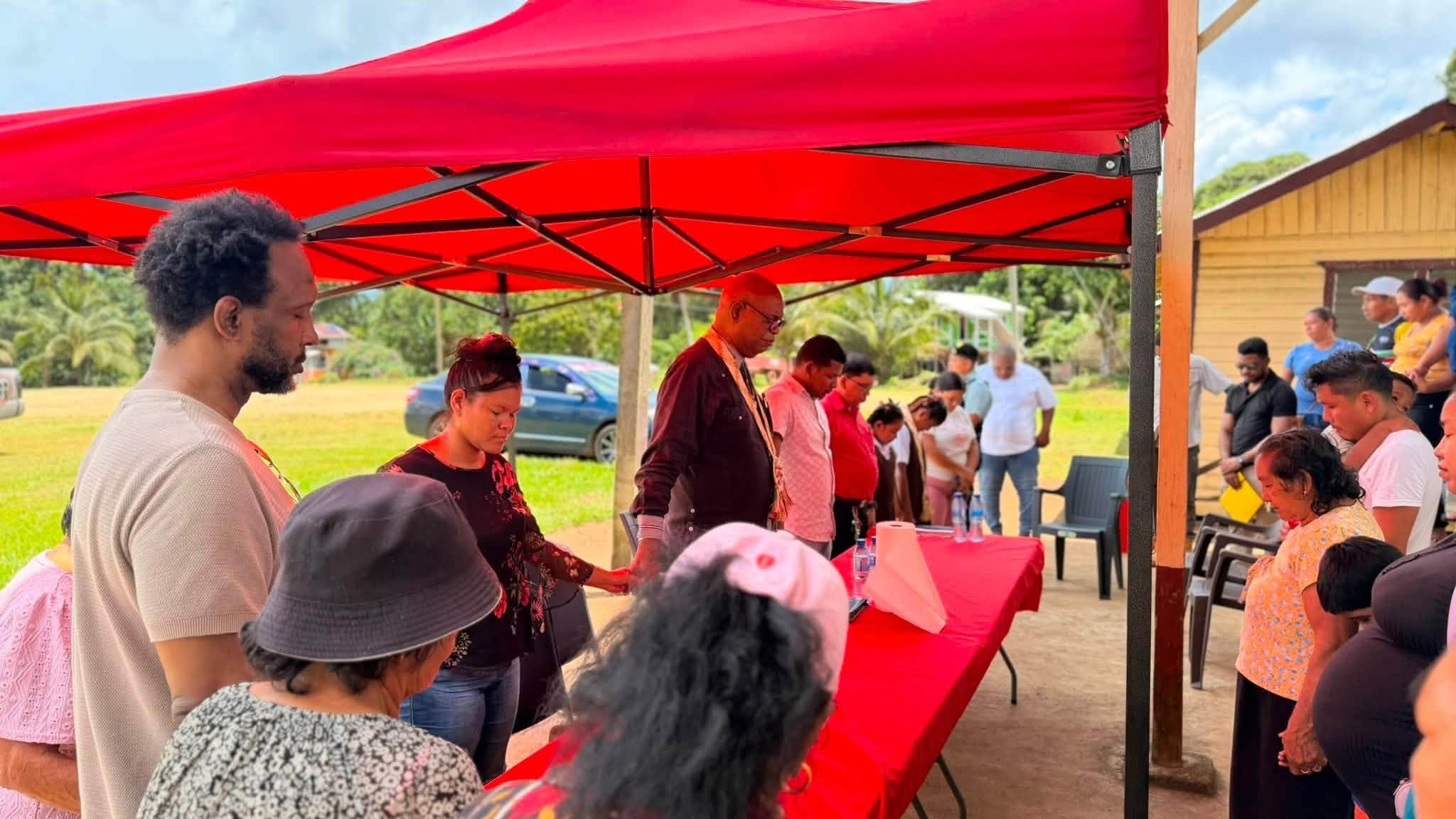
APA, APNU pillory Edghill for going to Region 1 govt outreach, amid resignation calls over MV Barima tragedy
On Wednesday, August 5, 2026, two major Guyanese groups — the Amerindian People’s Association (APA) and the main opposition coalition A Partnership for National Unity (APNU) — publicly condemned Juan Edghill, Guyana’s minister of maritime transportation, for joining a government-led community outreach in Region One (Barima-Waini), the home region of most victims of the July 19 MV Barima ferry sinking. The tragedy, one of the worst maritime disasters in the country’s recent history, has left 72 people confirmed dead, 30 others unaccounted for, and 76 survivors rescued. Widespread public and political demand for Edghill’s resignation or dismissal has persisted in the weeks since the sinking, as critics hold him responsible for the systemic failures that led to the disaster.
Jean La Rose, an executive member of the APA, described Edghill’s inclusion in the outreach, which was headed by sitting President Irfaan Ali, as a deliberate mockery of grieving Region One communities. La Rose emphasized that the minister bears direct accountability for the tragedy and should step down immediately to clear the way for an uncompromised, independent investigation. She raised concerns that the government-orchestrated community meetings would restrict open criticism, noting that pre-screened, hand-picked speakers have been allowed to dominate similar government events in the past.
When asked whether Edghill could have attended the outreach to address community questions directly, La Rose argued that he could only do so legitimately if he had already resigned from his post. She added that other key stakeholders, including the ferry’s captain, its first mate, and a senior superintendent from the Transport and Harbours Department, should also be present to answer for the failures that led to the sinking. La Rose also pointed to ongoing gaps in casualty accounting, arguing that a functioning accountability system would have provided an accurate, complete count of how many passengers were on board when the vessel went down. She further criticized the five-member Commission of Inquiry (COI) convened by the government, saying it was assembled hastily without public input on its membership or terms of reference. APNU has echoed these criticisms in full.
Juretha Fernandes, an APNU member of parliament, argued that Edghill has already proven himself incapable of delivering safe maritime transportation for Guyanese citizens. She called Edghill’s presence at the Region One outreach a blatant “slap in the face” to grieving Indigenous families in the region. “This sends a clear message from the Guyanese government to the Indigenous people of Region One: we do not care about your lost loved ones, we do not care about your pain, and we have no empathy for what you are going through right now,” Fernandes stated. She urged Region One residents to unite in rejecting Edghill, who she labeled a “monument to impunity” that embodies the government’s refusal to hold officials accountable. “Over 100 lives were lost on this minister’s watch, due to his own negligence and incompetence, and now the government sends him to meet the very communities that lost so much,” Fernandes added.
Fellow APNU parliamentarian Nima Flue-Bess extended the criticism to the government as a whole, arguing that Guyanese voters must ultimately decide how long they will tolerate what she called an “uncaring and unempathetic” administration. Flue-Bess claimed the outreach is just the latest government tactic to mislead the public, pointing to the hand-picked COI and quiet, private outreach to victim families as efforts to silence demands for justice. “All of these actions demonstrate a complete lack of care for the victims and their loved ones. It is time for the Guyanese people to respond in kind,” she said.
To date, Edghill has not directly addressed the calls for his resignation, only stating that he will issue a statement at an “appropriate” time. Despite the widespread criticism, APNU parliamentary leader Dr. Terrence Campbell acknowledged that sustained public pressure from opposition and civil society groups has forced limited progress from the government. Campbell confirmed that the administration has now issued a call for expressions of interest from experienced marine firms to salvage the sunken MV Barima, a core demand for a thorough COI investigation. While Campbell said the opposition remains unsatisfied with the slow pace of progress, he added that the outcome proves protests work: “If we had not protested and kept up pressure, the PPP government would have left the MV Barima sitting at the bottom of the Atlantic, with no investigation and no accountability.” Campbell also noted that the disaster has galvanized opposition unity, which was on display during an earlier outreach led by Vice President Bharrat Jagdeo in Linden on Tuesday. “Unified action is the only way we can hold this government accountable to the Guyanese people,” he said.
-
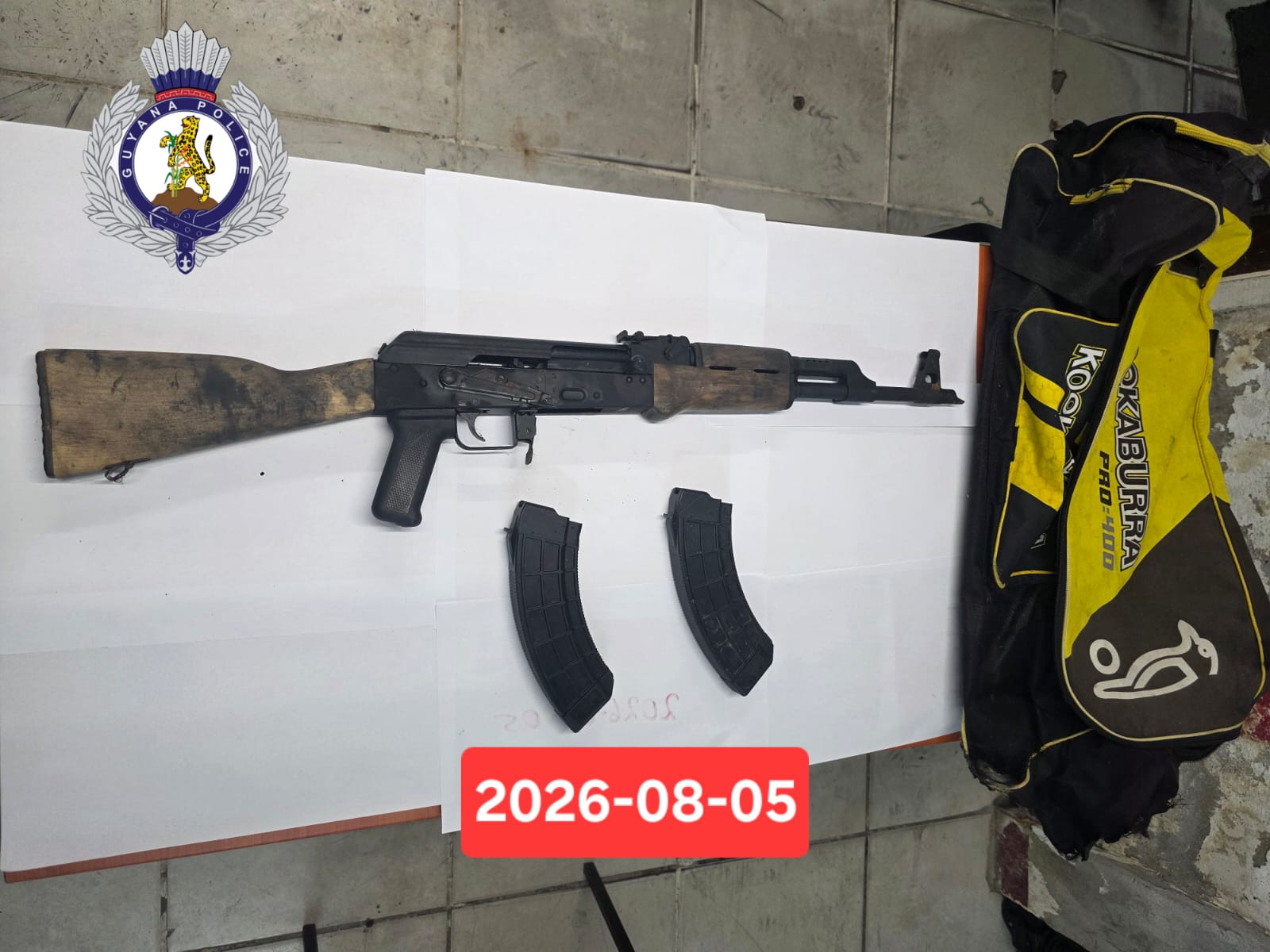
Assault rifle found in Sophia drain
In the early hours of Wednesday, local law enforcement in Guyana recovered an unmarked AK-47 assault rifle from a dry drainage ditch in a vacant lot in the C’ Field neighborhood of Sophia, a suburb of Greater Georgetown. The Guyana Police Force announced that the recovery followed a tip received from a member of the public, which alerted officers to the presence of a hidden bag holding the firearm and two additional ammunition magazines.
Upon retrieving the cache, investigators noted that the rifle’s identifying serial number had been intentionally filed off to obscure its origin, and no live ammunition was loaded into either of the recovered magazines. Following the recovery, the weapon and magazines were transported to the nearby Turkeyen Police Station, where they have been secured as evidence while law enforcement launches an official probe into how the illegal firearm ended up in the drain.
As of Wednesday afternoon, when the update was issued, no suspects have been taken into custody in connection with the recovered weapon, and police have not yet released additional details on possible motives or connections to other criminal activity in the area.
-
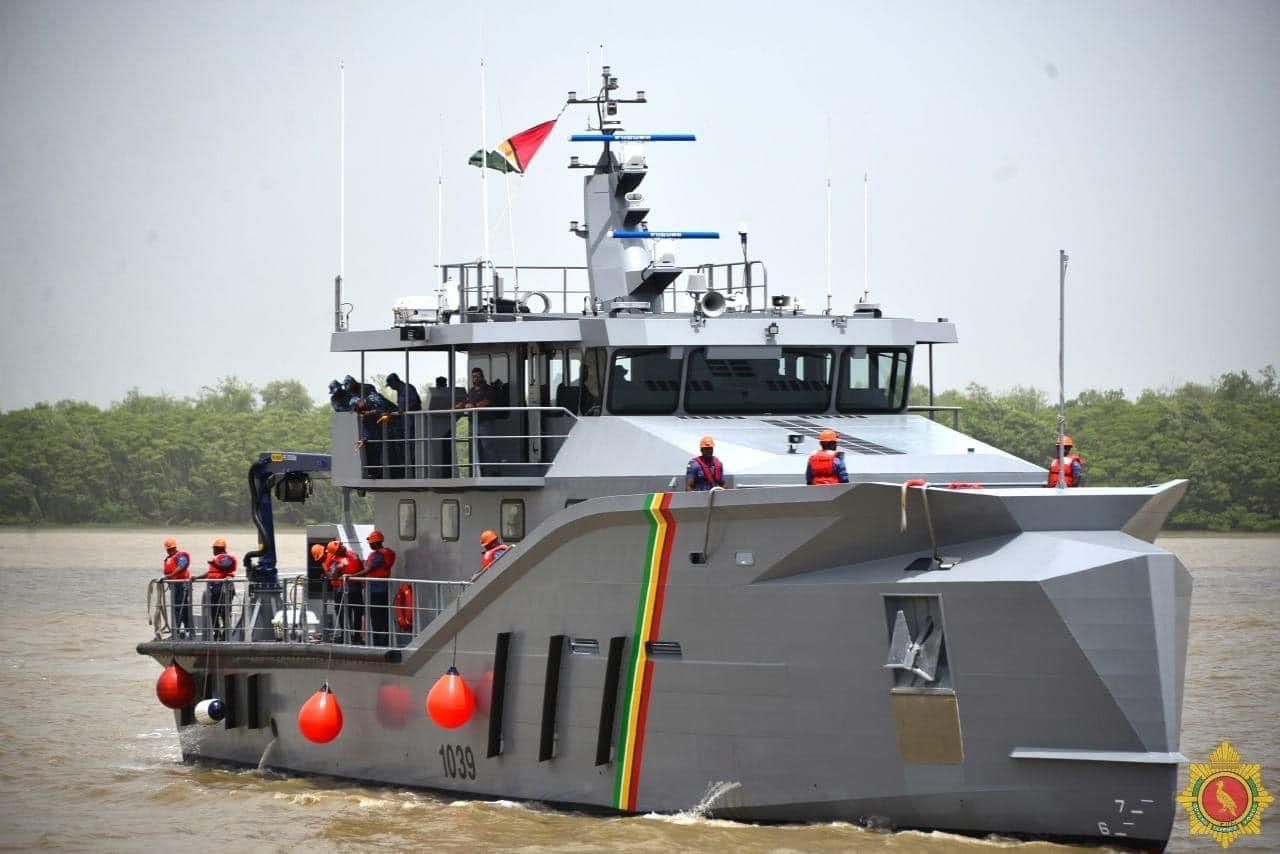
GDF defends stopping of Moruca-bound boat with Opposition Leader
On Wednesday, 5 August 2026, a routine maritime inspection along Guyana’s Pomeroon River erupted into a major political controversy after the Guyana Defence Force (GDF) halted a speedboat carrying Opposition Leader Azruddin Mohamed, drawing sharp accusations of political weaponization from opposition lawmakers. The confrontation centers on competing claims over why the Moruca-bound vessel was blocked from continuing its journey, deepening already tense relations between the ruling People’s Progressive Party Civic (PPPC) administration and the opposition bloc.
In an official statement responding to public criticism, the GDF clarified that its Coast Guard detachment stationed at the Pomeroon Floating Base stopped the vessel as part of regular compliance checks for vessels transiting local waterways. According to the military statement, the vessel’s operator failed to produce three mandatory documents required for passage: a valid boat master’s licence, official vessel registration, and a current certificate of vessel inspection. Under established GDF procedures, all vessels must register their journey at the floating base and present full documentation before proceeding to their destination. As a result of the missing paperwork, the captain was ordered to return to the nearby port of Charity to secure the required certifications before resuming the trip, the GDF explained.
The military emphasized that the inspection was not targeted at any individual or political group, framing the action as part of ongoing efforts to enforce maritime safety rules, boost waterway security, and ensure all operators comply with national regulations. The GDF also reminded all vessel operators to maintain up-to-date documentation and require all passengers to wear properly fitted lifejackets for the duration of all voyages.
Opposition leaders have rejected the military’s explanation, decrying the stop as a deliberate act of political repression orchestrated by the ruling PPPC. Speaking to reporters from a picket line outside the Office of the President, A Partnership for National Unity (APNU) Parliamentary Leader Dr. Terrence Campbell called the incident a dangerous escalation of authoritarian tactics, accusing the government of turning the GDF into a political weapon to violate core constitutional rights. “We are seeing this thing escalating now under this PPPC dictatorship,” Campbell said. “We are seeing a weaponisation of the Guyana Defence Force and this is worrying because especially the army they are there to uphold the constitution of Guyana.” Campbell added that the incident follows a similar alleged targeting of Mohamed the previous day, when security forces were deployed to the town of Linden during a protest at Watooka House, where the opposition leader’s boat was reportedly flagged for interdiction.
Mohamed, who confirmed he had chartered the speedboat to attend a planned peaceful protest in Moruca, backed up Campbell’s claims of political persecution. The opposition leader said his party departed Charity at approximately 7:30 a.m. Wednesday, arriving at the Pomeroon Floating Base an hour later to complete required check-in procedures for travel into the Atlantic Ocean. After the crew tied the vessel to the base and all passengers signed the required log, a GDF service member requested photographs of the group, which were provided without objection. The situation shifted, Mohamed said, when the same service member demanded to see the vessel’s registration documentation. The captain informed personnel that he had already transited the same waterway earlier that same morning without being asked for the documents, Mohamed added.
Ultimately, the trip was aborted, and Mohamed was forced to return to Charity. He claimed a police marine unit shadowed his vessel back to port, and he had received intelligence that plainclothes police were already waiting in the Moruca creek to intercept him on arrival. “Political persecution and victimization- they don’t want me to attend peaceful protest at Moruca. The President doesn’t want to see me there,” Mohamed said.
The trip had already faced a preliminary hurdle: the Toshao (indigenous village leader) of Santa Rosa issued a public advisory stating that Mohamed did not have permission to visit the community. But Mohamed pushed back against that restriction, noting that a majority of the village’s residents had requested he visit to address their concerns. He explained that he chartered the speedboat instead of using his personal vessel because his own boat has an extended engine that risks hitting submerged debris in the shallow local waterways.
Mohamed also challenged the GDF’s authority to carry out documentation checks, arguing that this responsibility falls exclusively to Guyana’s Maritime Administration, not the military. He further claimed that the vast majority of small vessels operating between Pomeroon and Moruca lack formal registration, even though most captains hold valid personal operating licenses.
-
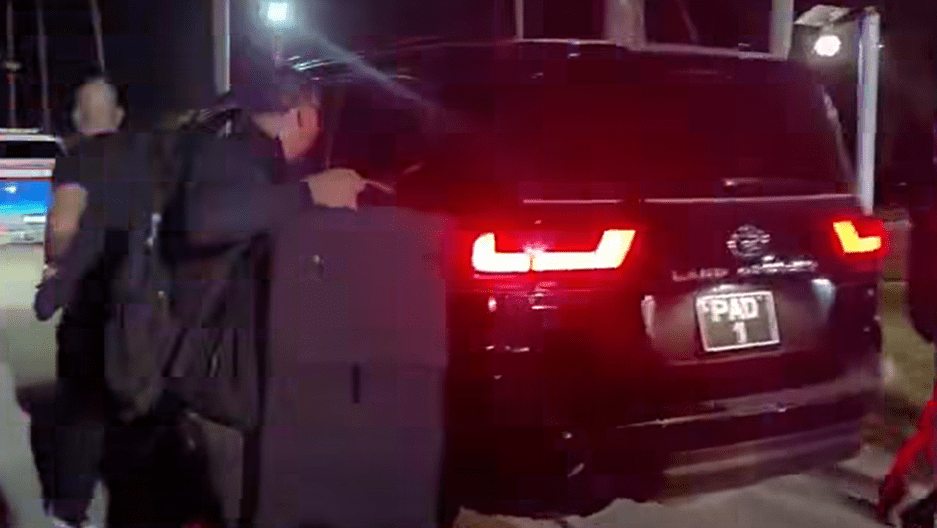
Jagdeo says opposition protest “failed miserably” to affect his Linden outreach
On the evening of Tuesday, 4 August 2026, a high-profile political standoff unfolded at Watooka House in Linden, Guyana, after Vice President Bharrat Jagdeo rejected opposition demands to meet with demonstrators and address their multiple policy and governance grievances, wrapping up a government-led community outreach and departing the site under heightened security.
The confrontation capped a day of escalating tension, as main opposition coalitions We Invest in Nationhood (WIN) and A Partnership for National Unity (APNU) gathered protesters to push for five core demands. First, the groups called on Jagdeo to compel the Regional Executive Officer (REO) of Region 10 – which covers Upper Demerara-Upper Berbice – to schedule a new regional council meeting to elect a chair and deputy chair, after two previous rounds of voting ended in tied results. Second, they argued that the five-member Commission of Inquiry convened to investigate the MV Barima ferry sinking was structurally biased toward the ruling government, citing its composition and the unilateral drafting of its investigation mandate. Third, the opposition demanded that Jagdeo reverse the government’s plan to use an extended competitive bidding process for the ferry salvage contract, and instead award the work through direct sole-sourcing. The MV Barima sank on 18 July 2026. Finally, the groups called for the immediate resignations of two cabinet ministers with oversight of the maritime sector, Juan Edghill and Deodat Indar.
Despite hours of protest pressure, Jagdeo refused to concede to the demands, departing the Watooka House compound at approximately 7:46 p.m. with a beefed-up security detail. The situation grew chaotic in the moments before his exit: after protesters pushed over police barricades and entered the grounds of the property, additional security forces including marine police, the Guyana Defence Force Coast Guard, and a detachment of soldiers were deployed to the area. As the Vice President entered his vehicle to leave, demonstrators surrounded the car and shouted protest slogans, prompting uniformed police and presidential bodyguards to jog alongside the moving vehicle. One member of Jagdeo’s security team deployed a bulletproof shield near the Vice President’s position in the vehicle.
In his first public comments to media in months, Jagdeo pushed back against the opposition’s actions, framing the protest as a failed attempt to derail the government outreach. “It didn’t deter the large number of people who showed up here today. They were hoping that people would boycott coming to this activity. They failed miserably. People just ignored all that they had to say,” Jagdeo told reporters, adding, “I’m happy that they failed.”
Opposition leaders quickly hit back at Jagdeo’s departure, framing the move as a dereliction of democratic duty. Opposition Leader Azruddin Mohamed slammed the Vice President, saying, “VP Jagdeo after hiding from the people all day decided to abscond without speaking to the residents of Linden. He thought he could wait us out but instead he had to run like the coward he is.” Mohamed reiterated the opposition’s demand for the REO to convene the delayed regional leadership election, arguing that the current impasse is undemocratic. “This is not democracy; this is dictatorship,” he said. Mohamed praised the unity of opposition groups that participated in the demonstration, claiming the day’s events amounted to an opposition victory. “Everyone stood their ground to fight for the rights of the people of this country and this is a victory for us today. We could have entered that building today,” he added.
Senior opposition lawmakers echoed Mohamed’s criticism. APNU parliamentarian Sharma Solomon dismissed the entire government outreach as a hollow political performance, calling it a “masquerade” because the government officials in attendance had no intention of engaging with local concerns. “As a collective opposition, we have demonstrated that the issues are bigger than even this government and Edghill and Indar must go,” Solomon said. Fellow APNU legislator Sherod Duncan praised the opposition leadership, claiming the government had been forced to retreat. “It was a privilege to be here today with the Leader of the Opposition. The Leader of the Opposition stood up here today and the government cowered,” Duncan said.
-
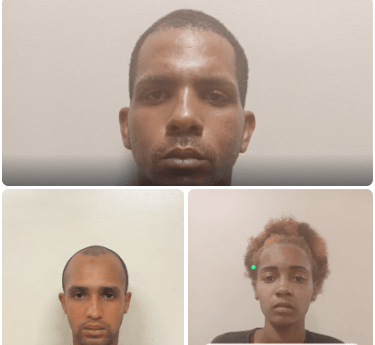
Cubans charged with murder of country man
On Tuesday, August 4, 2026, three Cuban nationals appeared before a Guyanese magistrate to face a joint charge of murder in the death of a 20-year-old fellow Cuban, the Guyana Police Force confirmed in an official statement.
The three accused individuals are 26-year-old barber Alejandro Igalza Rios, also known by the nickname “Papote”, 29-year-old construction worker Juan Pablo Ferrer Perez, and 24-year-old laborer Mairely Felicita Medinas Alvarez. All three list a local address in Timehri, located along Guyana’s East Bank Demerara.
The killing they are accused of committing took place on July 22, 2026, in Diamond, another community on the East Bank Demerara. The victim has been identified as Yudivian Cardenas Amador Almagro. According to his mother Yusmila Amador, she last heard from her son on July 27, when he told her he was traveling to Brazil. He never contacted her again after that conversation, and no further sightings of him have been reported.
Law enforcement officers took the three suspects into custody in a series of arrests carried out between July 29 and July 30, 2026. The formal murder charge was read to the trio by Magistrate Dylon Bess during the arraignment hearing held at the Diamond/Golden Grove Magistrate’s Court.
As is standard procedure for indictable murder charges in Guyana, the defendants were not required to enter a plea at this initial hearing. Following the reading of the charge, Magistrate Bess ordered the three accused to be remanded into state custody. Their next scheduled court appearance is set for September 21, 2026, when the case will advance to the next phase of legal proceedings.