标签: Guyana

圭亚那

  • Guyana breaching ICAO rules over failure to release GDF helicopter crash report- Walton-Desir

    Guyana breaching ICAO rules over failure to release GDF helicopter crash report- Walton-Desir

    Guyana’s compliance with international aviation standards has been called into question following allegations that the government has violated the Convention on International Civil Aviation by withholding the official investigation report of a deadly military helicopter crash that occurred over two years ago.

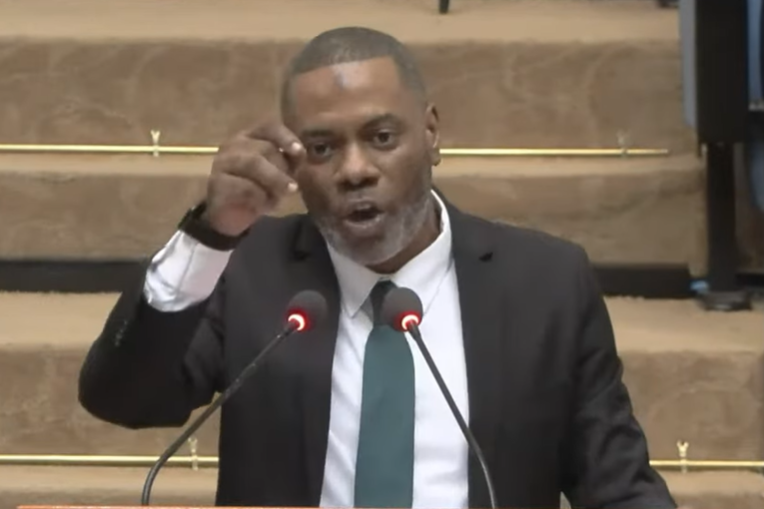
    Amanza Walton-Desir, Leader of the Forward Guyana Movement and former General Counsel to the Guyana Civil Aviation Authority, raised the serious allegation during parliamentary debates on the 2026 national budget. She emphasized that Annex 13 of the International Civil Aviation Convention mandates states to publicly release accident investigation reports within twelve months, or provide annual interim statements if the full report cannot be completed within that timeframe.

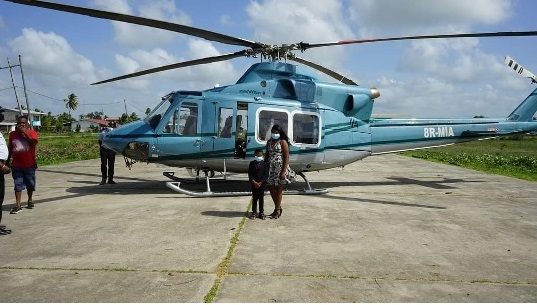
    The tragic incident involved a Bell 412 Epi helicopter belonging to the Guyana Defence Force that crashed on December 6, 2023, while transporting five servicemen to an interior location. The accident occurred during a period of heightened tensions between Guyana and Venezuela concerning Venezuela’s longstanding territorial claim to Guyana’s Essequibo Region.

    While acknowledging potential national security considerations that might justify redacting certain sections, Walton-Desir insisted that the families of the deceased servicemen deserve closure and that the aviation industry needs access to the report’s safety findings to prevent future accidents. She made an impassioned plea from the parliamentary floor for the immediate release of the long-overdue document.

    The continued withholding of the crash investigation report represents both a regulatory violation and a significant transparency issue, raising questions about governmental accountability in matters of national security and aviation safety.
  • Mining districts must benefit directly from earnings- APNU’s Sharma Solomon

    Mining districts must benefit directly from earnings- APNU’s Sharma Solomon

    In a significant parliamentary address, Opposition APNU legislator Sharma Solomon has called for a radical restructuring of revenue distribution from Guyana’s extractive industries. The former Mayor of Linden advocated for mining districts to receive direct financial benefits from sector earnings to drive local human development initiatives.

    Speaking during debates on the national GY$1.558 trillion budget, Solomon emphasized the urgent need for a new social contract between mining regions and the central government. His proposal specifically targets Regions 1 (Barima-Waini), 7 (Cuyuni-Mazaruni), 8 (Potaro-Siparuni), 9 (Upper Takatu-Upper Essequibo) and 10 (Upper Demerara-Upper Berbice) – areas rich in mineral resources but historically characterized by inadequate reinvestment and limited autonomy.

    The parliamentarian pointed to successful Indigenous Amerindian communities already benefiting directly from gold mining revenues as evidence that such models can work effectively. He further cited international precedents from Canada and Australia where mining districts receive direct financial benefits from extraction activities.

    Solomon’s comprehensive framework includes legal recognition of community engagement tied to mining permits, establishment of local employment quotas, specialized training programs, procurement targets, and dedicated community funds. “We must ensure that mining wealth returns to these communities in tangible, transformative ways,” he asserted, highlighting the principle of reciprocity between resource extraction and local investment.

  • Mahdia’s Mayor, Deputy Mayor pull back resignations

    Mahdia’s Mayor, Deputy Mayor pull back resignations

    In a surprising political reversal, Mahdia Mayor Eslyn Romascindo-Hussain and Deputy Mayor Akita John have formally withdrawn their resignations just days after submitting them, citing personal reasons. The unexpected turnaround occurred without public explanation, though sources indicate significant political considerations influenced the decisions.

    According to informed sources, the ruling People’s Progressive Party Civic (PPPC) faced potential complications if the resignations proceeded. Mayor Romascindo-Hussain, as a constituency-elected councilor, would have triggered a mandatory by-election, while Deputy Mayor John’s departure would have reduced the party’s council representation to three seats.

    In her February 2 recission letter, Mayor Romascindo-Hussain stated she had made her decision ‘after careful consideration,’ pledging to ‘continue to serve the citizens of Mahdia to the best of my abilities.’ Her original resignation cited three years of council work that had caused her ‘physical and mental health to be unstable.’

    Deputy Mayor John similarly revoked her resignation, which had been scheduled to take effect February 7. Her original resignation to Local Government Minister Priya Manickchand explained that the position’s demands had ‘become increasingly challenging’ and were significantly impacting her personal life.

    The mayor has since addressed speculation about political motivations behind the reversal, issuing a statement denying any interference from Junior Minister Pauline Sukhai and reaffirming her commitment to the PPPC. She appealed to unknown persons to cease spreading false information regarding her decision-making process.

  • Unemployment slashed by more than half- Ali

    Unemployment slashed by more than half- Ali

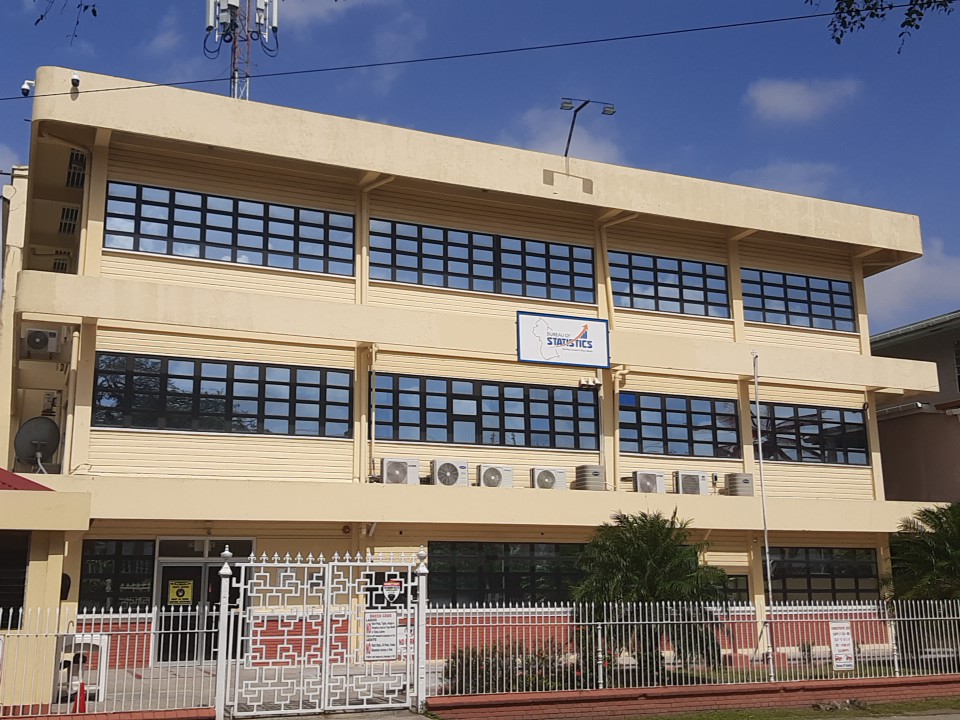
    In a landmark economic announcement, Guyanese President Dr. Mohamed Irfaan Ali revealed a dramatic halving of the nation’s unemployment rate since 2020, crediting strategic economic diversification for creating over 104,000 new jobs. Official data from the Bureau of Statistics shows unemployment plummeting from 12.8% in 2020 to just 6.8% by the end of 2024, signaling one of the most remarkable economic turnarounds in the Caribbean region.

    The President, addressing the nation via social media, emphasized that this transformative job growth extends beyond urban centers, with employment opportunities now “evenly distributed between rural and urban areas.” This balanced regional development reflects infrastructure investments and policies supporting multiple sectors including agriculture, tourism, manufacturing, and agro-processing.

    Women have particularly benefited from the economic expansion, with female unemployment dropping significantly from 14.4% to below 9% during the same four-year period. The employment surge has lifted total workforce numbers from approximately 264,000 to nearly 370,000 persons.

    Beyond job creation, the economic transformation has generated substantial wage growth across nearly all sectors. Average earnings increased between 50% to over 100% from 2020 to 2024, with particularly strong performance in professional, scientific and technical services (over 100% increase), arts and entertainment (over 114%), and agriculture, forestry and fishing (84% increase).

    President Ali specifically noted that these wage increases have not triggered inflationary pressures, with Guyana maintaining “one of the lowest inflation rates” due to sound economic policies. The President challenged the narrative that this growth stems primarily from oil and gas, instead highlighting how economic diversification has created widespread prosperity.

    International assessments now indicate Guyana faces an unexpected challenge: labor shortages rather than unemployment. Studies by the Centre for Local Business Development and International Organisation for Migration project workforce shortfalls between 52,000 to 100,000 workers to fully realize the country’s growth agenda. Future job growth is anticipated in construction, hospitality, specialized services, agriculture, health services, and green technology sectors.

  • GPA tells House Speaker he’s referring to COVID-19 agreement on media access

    GPA tells House Speaker he’s referring to COVID-19 agreement on media access

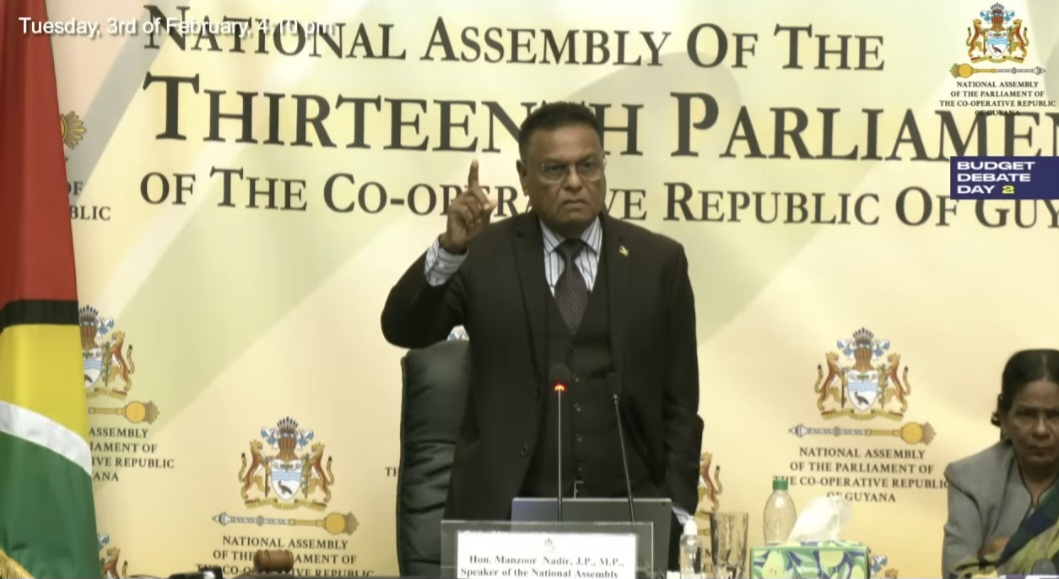
    In a significant development for press freedom in Guyana, the Guyana Press Association (GPA) has publicly refuted claims by House Speaker Manzoor Nadir regarding an existing agreement on media access to parliamentary proceedings. The controversy emerged during the February 3-4, 2026 parliamentary sessions when Speaker Nadir asserted that current media arrangements were established in consultation with the GPA.

    The GPA issued a comprehensive statement clarifying that any previous agreement with the Parliament Office was specifically limited to COVID-19 pandemic restrictions in 2020 and has been obsolete since national restrictions ended in March 2022. The association emphasized that Speaker Nadir’s continued reference to this expired agreement represents a fundamental misrepresentation of the current media landscape.

    The dispute centers on the Speaker’s decision to limit parliamentary access to only seven journalists while banning all private television news cameras from the chamber, permitting only the state-affiliated Department of Public Information (DPI) to provide video coverage. The GPA maintains that these restrictions are unjustified, noting that the parliamentary chamber has historically accommodated up to twelve journalists and multiple camera operators simultaneously.

    Speaker Nadir challenged opposition parliamentarian Sherod Duncan to formally propose changes to parliamentary rules through a motion while simultaneously expunging Duncan’s concerns from the official record. The Speaker maintained that no journalists are restricted from covering proceedings, despite implementing the seven-reporter cap.

    The GPA has identified multiple concerns with the current arrangement, including the unreliable nature of the DPI-provided video feed, which frequently experiences audio breaks and interruptions. The association also rejected the Speaker’s suggestion that smartphone recordings could substitute for professional broadcast equipment.

    This conflict represents the latest chapter in an ongoing struggle between Guyana’s media community and parliamentary authorities. The GPA characterizes these restrictions as an attack on media freedom that compromises transparent coverage of the nation’s legislative processes, particularly during critical events like budget presentations.

  • U.S.-based Sociologix plans AI ride-sharing and delivery super-app for Guyana

    U.S.-based Sociologix plans AI ride-sharing and delivery super-app for Guyana

    American technology company Sociologix is preparing to launch RIYDE, an innovative artificial intelligence-driven platform combining ride-sharing and on-demand delivery services in Guyana. This comprehensive super-app aims to transform mobility access while simultaneously addressing environmental concerns through its unique operational model.

    The Guyana-focused initiative represents a strategic entry into a nation recognized for its exceptional forest coverage. According to Forest Carbon Partnership Facility data, approximately 85% of Guyana’s national land area consists of forest, totaling about 18.4 million hectares. This environmental context aligns with the country’s Low Carbon Development Strategy 2030, which prioritizes forest conservation and sustainable development.

    RIYDE’s feature set encompasses the full spectrum of transportation and delivery services found in leading regional platforms. The application will offer on-demand and scheduled rides, multi-stop itineraries, pooled transportation options, and real-time driver tracking with estimated arrival times. The delivery marketplace will initially support prepared meals, groceries, over-the-counter pharmacy items, and select consumer electronics, utilizing both company-managed drivers and third-party couriers.

    A distinctive aspect of Sociologix’s approach involves its revolutionary profit distribution model. The company plans to allocate up to 80% of platform profits directly to drivers and couriers through enhanced per-trip compensation and incentive programs. The remaining 20% will sustain the RIYDE ecosystem, funding product development, safety operations, customer support, insurance compliance, and sustainability reporting.

    The platform’s proprietary AI infrastructure performs critical optimization functions including intelligent dispatch matching to minimize pickup times and reduce empty mileage, pooling feasibility analysis to increase vehicle occupancy, eco-routing to decrease congestion and idling, and advanced risk management controls with GPS spoofing detection.

    For emissions benchmarking, Sociologix references the U.S. Environmental Protection Agency’s baseline of approximately 400 grams of CO₂ per mile for average passenger vehicles. The company projects significant environmental impact, with modeling suggesting an 8-18% reduction in carbon emissions per service kilometer during the first year of operation in Georgetown, potentially avoiding 185-417 metric tons of CO₂ annually. At full national scale within three years, these savings could reach 1,854-4,326 metric tons annually.

    The initiative will be accompanied by a monthly ‘Green Ledger’ transparency report detailing trip volumes, modeled emissions reductions, and conservation allocations. This program directly supports Guyana’s national development strategy while aligning with recent UNFCCC REDD+ documentation that recognizes the country’s high forest cover and minimal deforestation rates.

    Leading the technological development is Gaurav Masram, an award-winning technology designer serving as Lead Innovator for platform architecture, AI optimization, safety engineering, and sustainability measurement.

  • Pressure mounts on House Speaker to remove media restrictions

    Pressure mounts on House Speaker to remove media restrictions

    A contentious dispute over media access has erupted in Guyana’s National Assembly, with House Speaker Manzoor Nadir facing mounting criticism for implementing severe restrictions on journalistic coverage of parliamentary proceedings. The controversial measures, introduced at the start of Monday’s budget debates, have drawn forceful opposition from across Guyana’s media landscape.

    The new regulations permit only five reporters within the parliamentary chamber at any given time—a dramatic reduction from the previous allowance of up to 17 journalists. Additionally, television news cameras from private media organizations have been completely banned from the Dome, with media houses instructed to rely exclusively on official feeds from the Department of Public Information (DPI).

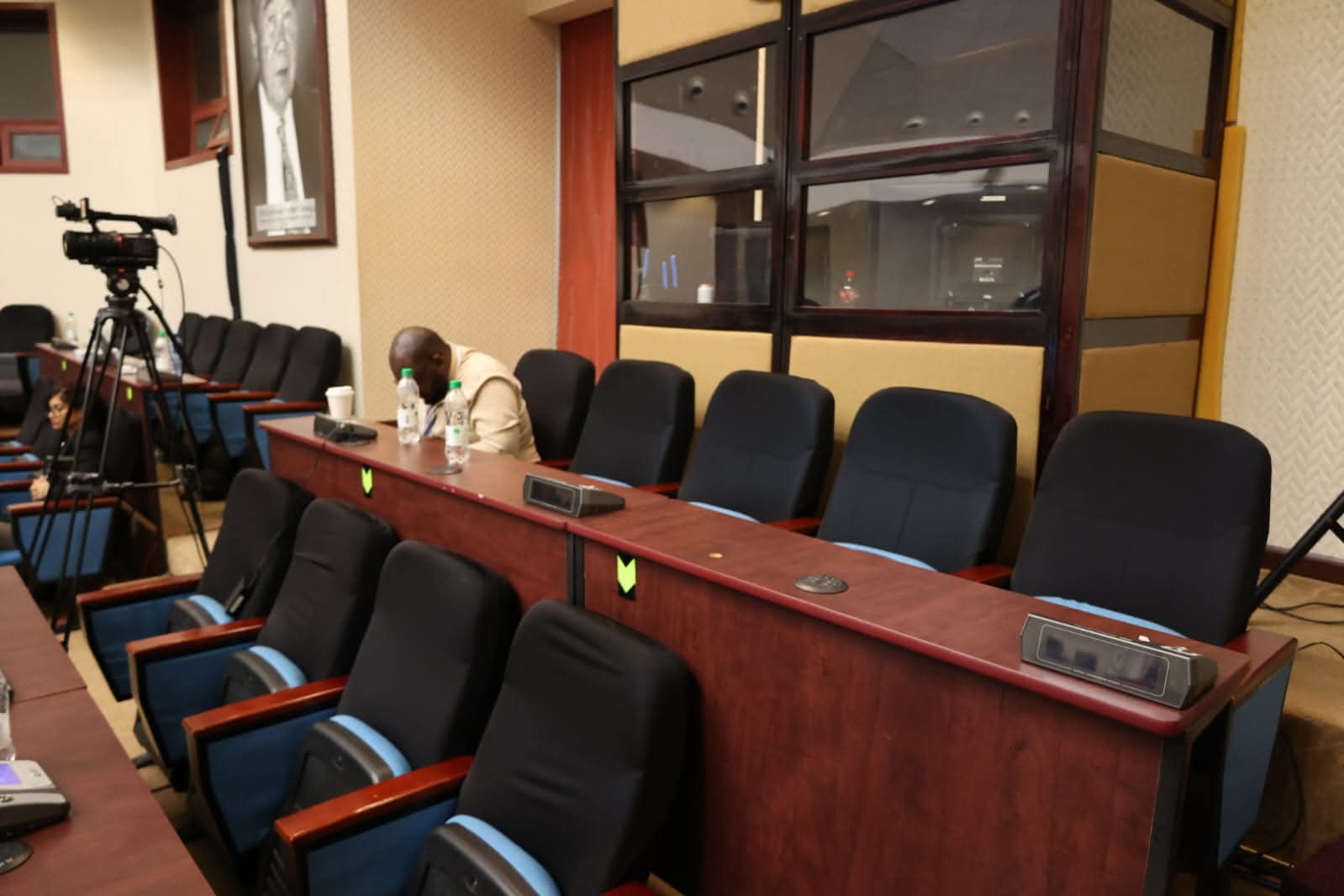
    Media professionals have universally condemned these restrictions as fundamentally anti-democratic. Fareeza Haniff, a prominent media practitioner, highlighted the practical deficiencies of the arrangement, noting that the official live feed suffers from persistent technical glitches and poor quality. She further accused the Parliament Office of disseminating misleading information through a late-night Facebook post that showed empty media seats after journalists had departed to file their stories.

    The controversy deepened as journalists revealed that the Parliament Office attempted to justify the restrictions by referencing a COVID-19 era agreement from 2020 as if it were current policy. This characterization was widely dismissed as disingenuous by media representatives.

    Former Guyana Press Association (GPA) President Nazima Raghubir questioned whether Parliament had reached the point of intentionally misleading the public, while journalist Vishani Ragobeer directly contradicted the official narrative, stating, “Those seats were filled by my colleagues and me yesterday. I sat there with colleagues from other private media outlets, and there was a rotation of reporters covering different speakers.”

    Kurt Campbell, another newsroom journalist, described the measures as “profoundly regressive and democratically corrosive,” arguing that they veer “dangerously into authoritarian instinct.” He emphasized the unreliability of the DPI’s coverage, noting its failure to provide basic recordings of significant parliamentary events, including the national budget presentation delivered over a week earlier.

    The Guyana Press Association issued an official statement expressing “deep concern” over the restrictions and condemning the Speaker’s edict as “a direct attack on freedom of the press.” The association called for an urgent review of the measures and the restoration of full press access in keeping with democratic norms and principles of open governance.

    Veteran journalist Denis Chabrol challenged the rationale behind the restrictions, noting that journalists have historically covered parliamentary sessions according to newsworthiness without ever being obstructive. He argued that sufficient space exists to accommodate multiple privately-owned television cameras and that no logical justification exists for limiting media access to the National Assembly.

  • GUYSUCO producing sugar at 154% more than selling price- APNU

    GUYSUCO producing sugar at 154% more than selling price- APNU

    Guyana’s state-owned sugar corporation, GUYSUCO, is operating under severe financial strain with production costs dramatically exceeding market sale prices, according to revelations in the National Assembly. APNU’s agriculture spokesman, Vinceroy Jordan, disclosed that the corporation is producing sugar at an average cost of US$1.31 per pound while selling it for just US$0.17 per pound—representing a staggering 154% cost-to-price disparity. This translates to a loss of US$1.14 on every pound of sugar sold internationally. In local currency terms, the figures are equally alarming: GUYSUCO spends GY$275 to produce one pound of sugar but sells it for only GY$35. The 2026 National Budget indicates sugar prices fell by 17.1% to US$0.37 per kilogram in 2025, with a further 0.5% decline expected this year. Despite these financial challenges, the government plans to inject an additional GY$13.4 billion into the sugar sector following last year’s GY$13.3 billion expenditure on mechanization and operational improvements. Finance Minister Dr. Ashni Singh reported that sugar production reached 59,600 tonnes in 2025—a 26.5% expansion despite being hampered by heavy rainfall, labor shortages, low employee turnout, and factory machinery issues. The sector is projected to grow by 67.9% in 2026 with a target of 100,041 tonnes. GUYSUCO remains a significant employer with over 8,000 workers.

  • WIN, APNU, PPPC govt clash on amount of oil money in budget, cost of living

    WIN, APNU, PPPC govt clash on amount of oil money in budget, cost of living

    Guyana’s National Assembly witnessed a fierce political confrontation on Monday as the opposition We Invest in Nationhood (WIN) and A Partnership for National Unity (APNU) clashed with the ruling People’s Progressive Party Civic (PPPC) government over the allocation of oil revenues in the record GYD$1.558 trillion 2026 national budget and its perceived failure to address escalating living costs.

    In his inaugural parliamentary address, WIN frontbencher Dr. Andre Lewis launched a comprehensive critique of the budget framework, arguing that it disproportionately relies on volatile oil earnings without establishing contingency plans for potential revenue shortfalls. “The budget depends heavily on oil revenues at a time when global oil prices are uncertain and projected to decline,” Lewis stated, emphasizing the absence of clear fiscal safeguards should petroleum income diminish unexpectedly.

    The opposition leader further challenged the government’s characterization of the spending plan as “People-Centred,” noting persistent challenges including inflated food prices, unregulated transportation costs, and inadequate housing availability. Lewis contended that coastal, riverain, rural, and mining communities continue experiencing stark disparities in service delivery, infrastructure quality, and economic opportunity despite the budget’s comprehensive scope.

    Public Works Minister Juan Edghill offered a robust defense of the government’s fiscal strategy, clarifying that only GY$495 billion—approximately 31.8% of the total budget—derives from petroleum revenues. “That’s the total amount of oil money that is financing this budget,” Edghill asserted, directly countering opposition claims of excessive hydrocarbon dependency.

    The minister characterized the budget as a “social contract of inclusion” deliberately designed to channel resources toward working families, small enterprises, agricultural producers, public servants, and marginalized communities. Edghill highlighted substantial allocations including GY$183 billion for education, GY$161 billion for healthcare, GY$113.2 billion for agricultural and food security initiatives, and GY$196.1 billion for transformational transport infrastructure.

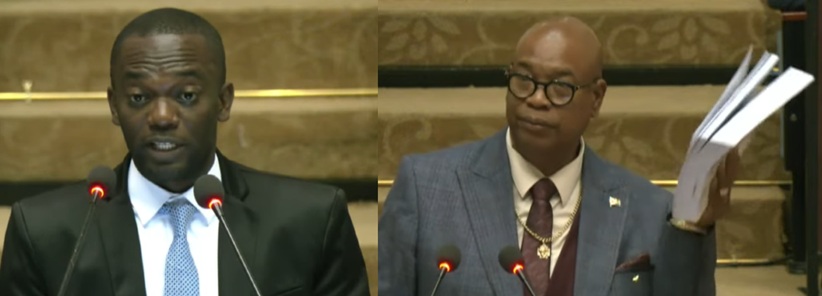
    APNU representative Vinceroy Jordan joined the critique, dismissing the government’s proposed GY$5,000 pension increase and GY$3,000 public assistance boost as insufficient measures that fail to genuinely prioritize citizen welfare. Jordan advocated for a 35% salary increase for public servants—suggesting 25% as a minimum acceptable compromise—and emphasized that substantial agricultural investment represents the most viable pathway to reduce food prices and enhance national food security.

    Minister Edghill concluded by underscoring the government’s comprehensive infrastructure investments in drainage systems, road networks, bridges, ferry services, and airstrips, arguing that these developments indirectly reduce living costs by improving transportation efficiency and market accessibility, particularly in remote regions.

  • Ali downplays impact of CARICOM’s differences

    Ali downplays impact of CARICOM’s differences

    In a significant address to Belize’s National Assembly on Monday, Guyana’s President Irfaan Ali reframed internal disagreements within the Caribbean Community (CARICOM) not as a weakness, but as a fundamental strength of the 15-member regional bloc. Speaking during a three-day state visit, President Ali articulated a vision where divergent perspectives are essential for robust decision-making, directly addressing recent tensions among member states.

    The President’s remarks arrive amidst a backdrop of visible policy splits, particularly concerning regional security. He implicitly referenced the recent positions of Guyana and Trinidad & Tobago, which endorsed United States-led actions against narco-terrorism in the Caribbean Sea. This stance contrasted with the traditional regional aspiration of maintaining a ‘zone of peace,’ a concept recently questioned by Trinidadian Prime Minister Kamla Persad-Bissessar, who had previously labeled CARICOM as ‘not a reliable partner.’

    Emphasizing CARICOM’s five-decade resilience, Dr. Ali called for a renewed commitment to strengthen the community. ‘It is now incumbent upon us to make the community stronger, more responsive, and better equipped to serve both the collective and national interests of our peoples,’ he stated, underscoring the necessity for the bloc to adapt to a complex global landscape.

    To illustrate the benefits of regional cooperation, President Ali pointed to the recently concluded partnership between the European Union and MERCOSUR (the Southern Common Market). He presented this inter-regional agreement as a model, demonstrating how such collaborations can expand market access, bolster economic resilience, and amplify the influence of participating states in response to global uncertainties. His visit to Belize culminated in the signing of several bilateral agreements focused on tourism, technology, education, and agricultural cooperation.