标签: Guyana

圭亚那

  • Randy Jagdeo surrenders for seized AK-47s probe

    Randy Jagdeo surrenders for seized AK-47s probe

    A major illegal firearms investigation in Guyana has taken a new turn, with a local city businessman turning himself in to authorities on Sunday, June 14, 2026, following a massive seizure of 23 US-manufactured AK-47 assault rifles and hundreds of rounds of ammunition earlier this week.

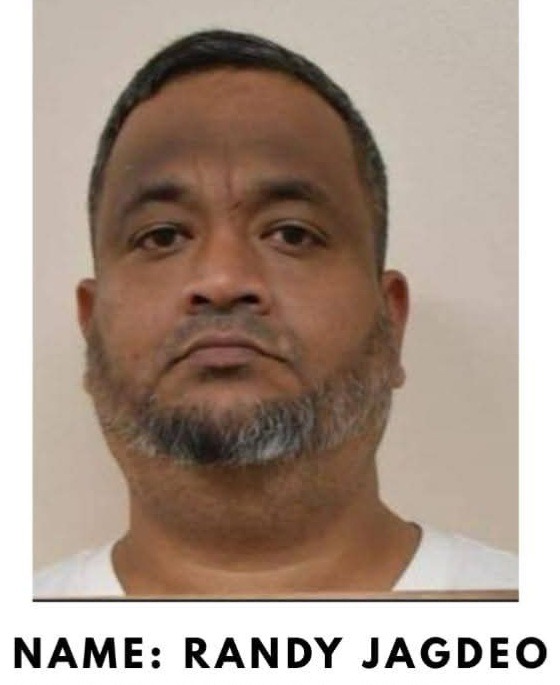
    Randy Jagdeo, 40, surrendered peacefully at the headquarters of the Guyana Police Force’s Criminal Investigations Department (CID) in the company of his legal representation, confirmed Deputy Police Commissioner Wendell Blanhum, who heads the CID. As of Sunday afternoon, Jagdeo remained in police custody as investigators continue to unpack details of the smuggling case.

    The large cache of weapons — 23 assault rifles and 503 matching rounds of ammunition — was intercepted by law enforcement late Thursday during a seizure at Schoonard, on the West Bank of Demerara. Blanhum previously confirmed that all the firearms originated in the United States. While one weapon still retained its original factory serial number, investigators found that the identifying serial numbers on every other rifle had been intentionally erased, a common tactic for illegal arms traffickers.

    One suspect has already been taken into custody in connection with the Schoonard bust: 28-year-old Jonathan Gans, a Venezuelan man who resides in Third Street, Grove, East Bank Demerara. Authorities have also issued an official wanted bulletin for a second Guyanese suspect, Orlando Gabriel, who is still being sought on charges of unlawful weapons possession linked to the case.

    This seizure marks the second large interception of illegal assault rifles in Guyana in just one month. Just last month, authorities seized 10 AK-47 rifles in Berbice, and three Guyanese nationals have already been formally charged and are currently going through court proceedings for that incident.

    As of Sunday, top Guyanese security officials have declined to comment on the driving forces behind what appears to be a growing influx of high-powered assault weapons into the country, leaving many open questions about the intended destination and use of the seized contraband. The case underscores growing regional concerns over cross-border illegal arms trafficking in South America.

  • Miners trapped in collapsed mining pit

    Miners trapped in collapsed mining pit

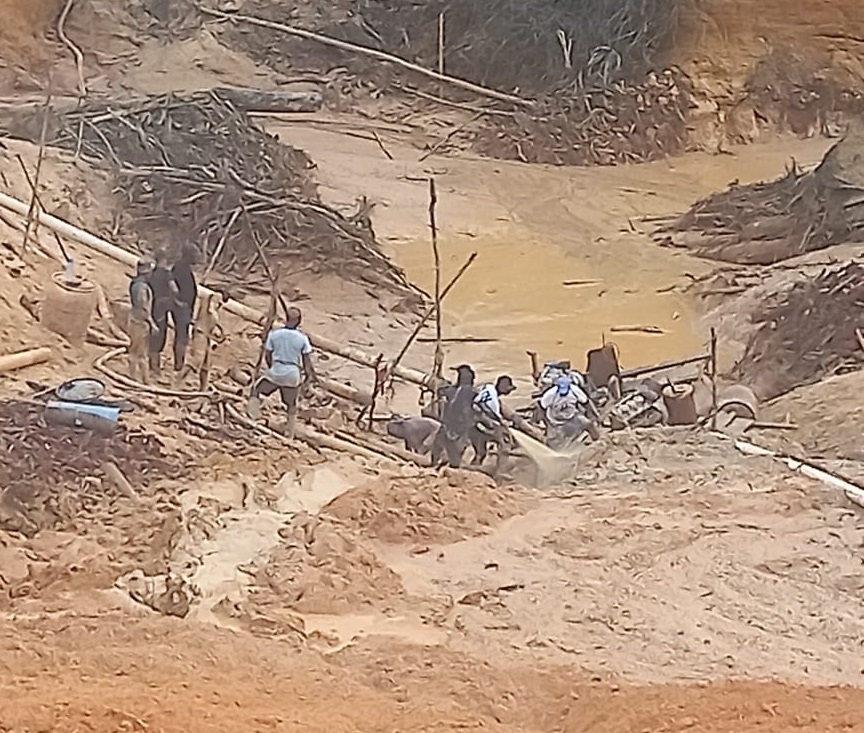
    Rescue and recovery operations were ongoing Sunday for two miners trapped following a partial collapse at an unregulated small-scale gold mining pit in central Guyana, local law enforcement confirmed. The incident unfolded at approximately 3:23 p.m. local time on Saturday, June 13, 2026, at the St. Elizabeth Backdam mining concession in Potaro, Region 8, according to official statements from the Guyana Police Force.

    Preliminary investigative findings show that the two trapped miners were working alongside a group of other crew members in a 60-foot-deep excavation pit when sudden structural failures of the pit’s eastern and western walls triggered a collapse. All other crew members were able to evacuate the pit before the debris fully settled, but 32-year-old Franky Hussain and 38-year-old Neunes Neunes Da Silva became trapped beneath tons of fallen earth and rock. The collapse also buried a heavy excavator machine operating at the site. Hussain is a resident of Guyana’s North West District, Region 1, while Da Silva is a Brazilian national who works as an independent small-scale gold miner—commonly referred to locally as a pork-knocker—operating in the region.

    As of Sunday afternoon, the immediate rescue and recovery work is being led by the mine’s owner and on-site mining crew, per the police statement. Law enforcement officers and technical representatives from the Guyana Geology and Mines Commission, the government body responsible for regulating the country’s large and small-scale mining sectors, have already been deployed to the site to conduct a full investigation into the cause of the collapse and coordinate with rescue teams. Updates on the operation’s progress are expected as efforts continue to reach the trapped miners.

  • “Surface cracks”, rust on new Demerara River Bridge no cause for concern- Public Works Minister

    “Surface cracks”, rust on new Demerara River Bridge no cause for concern- Public Works Minister

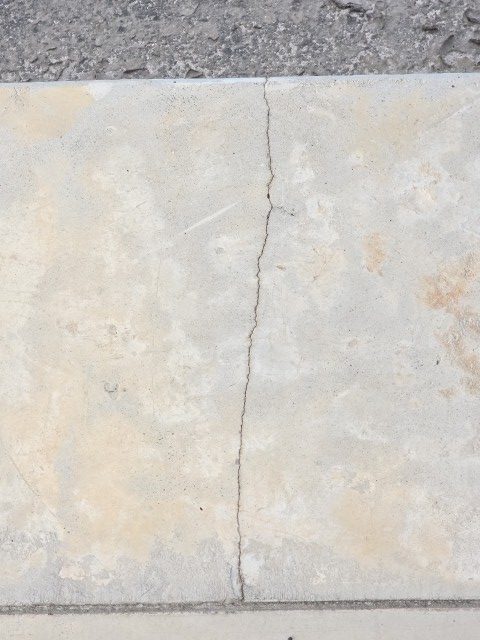
    Eight months after its grand opening, Guyana’s US$260 million Bharrat Jagdeo Demerara River Bridge has drawn public attention over reports of visible fine cracks on pedestrian walkways and minor corrosion on metal components. But top infrastructure officials are moving quickly to reassure the public that the critical cross-river link poses no safety risks to users. Public Works Minister Juan Edghill addressed public concerns in an interview with Demerara Waves Online News on Sunday, breaking down the engineering context behind the observed defects following official inspections of the 2.6-kilometer cable-stayed bridge.

    Edghill explained that the fine cracks spotted on pedestrian walkways and sleeper beams are an expected byproduct of normal bridge operations, not a sign of structural failure. The main bridge structure expands and contracts naturally in response to daily and seasonal temperature shifts, as well as the constant weight of passing vehicle traffic. This minor deformation is transferred to the bridge’s non-load-bearing auxiliary components, resulting in the surface cracks that have been observed. To put this in perspective, Edghill compared these auxiliary elements to a residential home’s exterior wall finishes or entrance steps—components that serve functional and aesthetic purposes but do not support the overall structural load of the entire building.

    The minister added that construction teams followed all engineering standards when building the bridge, including installing contraction joints aligned with strict specifications set by the American Association of State Highway and Transportation Officials (AASHTO) to manage cracking. Even with these proper precautions in place, he noted, it is a well-documented reality in civil engineering that fine surface cracks cannot be fully eliminated, due to the inherent shrinkage properties of concrete materials used in construction.

    Beyond cracking, Edghill also addressed separate public concerns about minor corrosion spotted on the bridge’s inspection vehicle track and a small number of bolts. For the track corrosion, he explained that the factory-applied anti-corrosion coating was accidentally removed during routine operation of the inspection vehicle. Once the bare metal surface was exposed to moisture in the air, light surface rust formed. Edghill emphasized that this superficial rust is comparable to the thin rust layer that forms on automotive brake rotors, and does not weaken the track’s structural strength at all. To prevent further corrosion, the bridge’s maintenance team will add regular touch-up coating applications to their routine upkeep schedule.

    As for the rust observed on some bolts, Edghill noted this developed from minor coating damage sustained during the installation process, when bolts were threaded into place. The original contractor will complete targeted rust removal and reapply anti-corrosion treatment for these affected bolts, and the government has committed to conducting formal bi-annual inspections of the bridge’s components to catch and address any future issues early. Edghill reiterated that neither form of corrosion poses any threat to the bridge’s overall structural safety, and ongoing preventative maintenance will keep the crossing in good working order for decades.

    The four-lane east-west crossing, constructed by China Railway Construction Corporation, was officially opened to traffic on October 5, 2025, and has since served as a critical infrastructure connection for the region, cutting travel times and boosting economic connectivity between communities on either side of the Demerara River.

  • Tamùkke Feminists says GY$1.5 trillion budget not addressing structural inequality

    Tamùkke Feminists says GY$1.5 trillion budget not addressing structural inequality

    As Guyana rides a wave of rapid economic expansion driven by its burgeoning petroleum industry, a leading grassroots women’s rights and empowerment organization is sounding the alarm that the country’s 2026 GY$1.558 trillion national budget fails to address deep-rooted systemic disparities that disproportionately harm marginalized groups.

    Tamùkke Feminists has published its landmark *Feminist Budget Analysis (FBA)*, titled *An Intersectional Feminist Desk Analysis of Guyana’s 2026 National Budget: Health, Environment and Equity*, compiled by economic analysts Jayda Overton and Sequoia Peniston. The report comes at a defining crossroads for Guyana, which has seen its fiscal space expand dramatically from a GY$1.146 trillion budget in 2024 to this year’s trillion-dollar allocation, fueled by new oil revenues. Yet the analysis makes clear that increased spending alone does not deliver more equitable outcomes: most budget allocations remain intentionally gender-neutral in design and rollout, with no systematic redirection of resources to dismantle structural inequality.

    Unlike conventional budget audits that focus solely on total spending figures, the FBA examines Guyana’s fiscal priorities through an intersectional feminist framework, asking critical questions that have often been overlooked: who stands to benefit from public spending, who is systematically excluded, and whose unpaid labor goes unaccounted for in national planning.

    On-the-ground case studies underscore these gaps. In the South Rupununi community of Parabara, for example, all sampled Indigenous residents tested showed elevated mercury levels linked to unregulated mining activity, with women recording some of the highest toxin concentrations. This finding illustrates how the environmental harm of extractive development falls disproportionately on marginalized groups, a pattern repeated across multiple policy areas.

    The report documents layered barriers to equitable care across the country: women in remote hinterland and rural regions face compounded obstacles to accessing basic healthcare and reproductive services; Lesbian, Bisexual and Trans+ (LBT+) women are systematically excluded from mainstream public health systems; and Indigenous communities bear the brunt of industrial environmental damage without access to equal regulatory protection.

    Tamùkke’s analysis identifies three overarching structural gaps that Guyana’s future national planning must urgently address to advance equity. First is a persistent distributional gap: despite overall spending growth, remote hinterland regions still face extreme travel distances, exorbitant transportation costs, and severe shortages of specialized healthcare services. Second is a prevention gap: public investment consistently prioritizes hospital infrastructure and emergency response over community-based care, reproductive health services and environmental monitoring, shifting the burden of risk management onto households – and disproportionately onto women, who take on the majority of unpaid care work to offset this underinvestment. Third is an inclusion gap: Indigenous communities, LGBTQ+ people and people living with disabilities remain largely invisible in official budget allocation frameworks.

    These gaps are not theoretical. Even after the passage of the Medical Termination of Pregnancy Act legalized abortion access nationwide, the report notes that services remain geographically concentrated in just three regions, leaving most women in hinterland areas completely cut off from legal care, proving that legal reform alone cannot guarantee equitable access. The analysis also found that LBT+ women across Guyana face widespread barriers to accessing accurate sexual health information, cervical cancer screening and bodily autonomy, a gap worsened by the absence of comprehensive sexuality education in national public education programming.

    “Budgets are inherently political documents – they reflect the government’s explicit choices about whose needs are treated as urgent, and whose are pushed to the side,” explained Akola Thompson, Managing Director of Tamùkke Feminists, in a formal press release. “A feminist lens simply makes these choices visible for all to see.”

    Thompson emphasized that the FBA is not intended as a blanket criticism of the government’s fiscal expansion efforts. Instead, the organization frames it as a practical planning tool to guide more equitable policy going forward. “Our core finding is that Guyana’s economic transformation is outpacing its social transformation,” Thompson said. “Without a feminist analysis, this gap goes unnamed, and there is no clear path to correct it.”

    “By identifying precisely where and how fiscal expansion is failing to reach marginalized populations, it provides a concrete basis for more targeted, accountable and equitable budget design going forward,” she added.

    The report puts forward four clear, actionable recommendations for the government to address the documented gaps:
    1. Establish a dedicated gender-responsive budgeting unit within the Ministry of Finance by 2027 to embed equity considerations into all future fiscal planning;
    2. Expand legal abortion services beyond the currently served Regions 4, 6 and 9 to guarantee universal access across the country;
    3. Roll out routine mercury testing for all residents of mining-impacted communities to address ongoing public health harms from extractive activity;
    4. Implement nationwide comprehensive sexuality education, and develop accessible disaster shelters and community-led climate adaptation projects for Indigenous communities disproportionately impacted by environmental harm and climate change.

    Thompson noted that these proposals are not abstract policy asks: they are directly tied to documented gaps and measurable harm to women, girls and gender-diverse people across every region of Guyana.

    With petroleum revenues dramatically expanding the country’s fiscal capacity, affordability is no longer a credible barrier to reform, Tamùkke argues. The FBA concludes that the central question facing Guyana today is not whether the country can afford to implement inclusive, intersectional budgeting – but whether it can afford not to.

    “Integrating inclusive, intersectional budgeting into national planning cycles is not only an imperative for equity,” the organization notes. “It is the foundation for protecting the future of all Guyanese people as the country navigates rapid economic transformation.”

  • Guyana makes first pipe fabrication scope for an FPSO

    Guyana makes first pipe fabrication scope for an FPSO

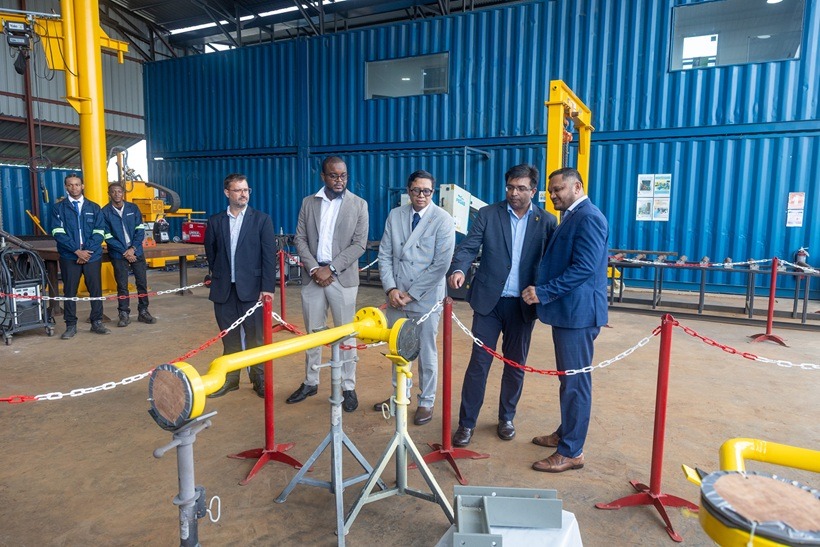
    A landmark achievement for Guyana’s emerging offshore energy sector has been marked this month, as local workers and a new domestic fabrication firm have successfully completed the country’s first set of high-pressure process pipes for a floating production storage and offloading (FPSO) vessel. The project, delivered for the FPSO Liza Unity operating off Guyana’s coast, has shattered expectations by meeting the most rigorous global offshore industry standards with zero defects, marking a major step forward for local content development in the South American nation’s fast-growing oil and gas sector.

    The Water Injection Riser Depressurization (WIRD) project was led by Friedlander Guyana, a relative newcomer to Guyana’s industrial fabrication market, in collaboration with SBM Offshore Guyana and ExxonMobil Guyana’s Brownfield Projects division. What makes the milestone particularly notable is that the entire scope of fabrication work was carried out by a Guyanese workforce, with capacity-building embedded into every stage of the process.

    Per SBM Offshore, the project provided a unique opportunity for local welders to co-develop and qualify industry-standard welding procedures, while dozens of additional technical personnel earned certification from the American Bureau of Shipping (ABS), a leading global maritime classification body. This certification has directly expanded Guyana’s growing pool of internationally recognized technical talent, creating long-term value that extends far beyond the WIRD project itself.

    To deliver the high-pressure pipe systems, which are engineered to withstand some of the extreme water pressures encountered on FPSO vessels, Friedlander Guyana had to complete a grueling qualification process. This included third-party vendor audits, rigorous testing of weld procedures, extensive material testing conducted at globally accredited laboratories under ABS supervision, classification approval, and hands-on training and certification for local welding teams. Every step of the project — from cutting and fitting to non-destructive testing, hydrostatic pressure testing, blasting, and finishing painting — was executed in full compliance with international offshore standards. The final result was a zero-defect deliverable with no weld repairs required, a feat that confirms the quality and capability of Guyana’s local workforce.

    Dr. Carla Crawford, Director and Co-owner of Friedlander Guyana, credited the on-ground workshop team for the historic success. “The success belongs first and foremost to the teams working on the workshop floor, who pushed through every stage — cutting, fitting, welding, testing, painting — to meet some of the most demanding technical requirements in the offshore industry,” Crawford said in an official statement. “They learned, they adapted, they pushed themselves to meet international standards and they succeeded. In doing so they proved something essential: that Guyanese talent, Guyanese companies can deliver specialized offshore projects at the highest level.”

    Martin Cheong, General Manager of SBM Offshore Guyana, emphasized the transformative meaning of the achievement during a June 9 celebration event marking the milestone. “The WIRD project is more than a milestone—it is evidence of what can be achieved when world-class partners place confidence in local talent and work together to unlock its full potential,” Cheong said. “It provides a glimpse into the future of Guyana’s energy industry, where Guyanese companies and professionals continue to play an increasingly significant role in supporting one of the world’s most dynamic energy sectors.”

    SBM Offshore confirmed that the capacity building from this initial phase will have long-term ripple effects: while this first fabrication scope supported the Liza Unity FPSO, similar work will be expanded to other FPSOs operated by SBM and other vessel builders in the future, turning a one-off project into a permanent new local capability.

    ExxonMobil Guyana Production Manager Huzefa Ali reaffirmed the energy giant’s commitment to growing local technical capacity to support the long-term sustainability of Guyana’s energy sector. “As Guyana’s energy partner, ExxonMobil Guyana remains firmly committed to the country’s development and building capabilities, as this event demonstrates,” Ali said. “We continue to invest strategically in communities across the country, workforce development and the advancement of local capability.”

    Guyana’s Minister of Natural Resources Vickram Bharrat, who delivered the feature address at the celebration, praised the cross-sector collaboration between local firms, international operators, and government, noting the project’s far-reaching benefits for national development. “The future ahead is a bright one for Guyana, is a bright one for the local entities that are taking the risk and investing, and is also a good opportunity for private and foreign investment in Guyana,” Bharrat said. “This is a true reflection of a lot of hard work by a number of people.”

    Industry observers note the milestone marks a critical turning point for Guyana’s local content strategy, proving that domestic firms can compete for the most technically complex contracts in the offshore oil and gas sector, opening new economic opportunities for local workers and businesses as the country’s energy industry continues to expand.

  • Guyana Cricket Board gets new logo

    Guyana Cricket Board gets new logo

    The Guyana Cricket Board (GCB) has launched a new official logo, marking a public milestone in the organization’s ongoing campaign to digitize, modernize, and transform its core administrative framework. In an official statement released to the public, the governing body for cricket across the South American nation framed the rebrand as far more than a simple visual update, positioning it as a symbolic representation of a sweeping institutional overhaul.

    “This step is a core part of our wider transformation agenda, which focuses on strengthening internal systems, boosting operational efficiency, elevating accountability, and refining the overall public image, brand identity, and national visibility of Guyana cricket,” the statement read. Beyond its aesthetic refresh, the new logo embodies a renewed institutional direction, a reinforced commitment to modern governance standards, and a progressive approach to administering and growing cricket at all levels across Guyana, according to the board.

    Under the leadership of the Bissoondyal Singh administration, multiple foundational modernization changes have already been rolled out, with the organization increasingly integrating cutting-edge technology — including artificial intelligence-powered platforms — to streamline core administrative functions. These tools are being deployed to improve internal and external communication, strategic planning, formal reporting, and data-driven decision-making across the board.

    The full transformation initiative covers upgrades to internal control mechanisms, reporting protocols, administrative procedures, documentation standards, and end-to-end operational workflows. The GCB emphasized that these reforms are designed to build a more structured, accountable, efficient, and responsive governing body that can meet the evolving and growing demands of 21st-century cricket administration.

    By implementing these changes, the organization aims to lay a robust administrative foundation that prioritizes transparency, institutional discipline, standardized record-keeping, and enhanced collaboration across all stakeholder groups. This includes better alignment between internal departments, standing committees, regional county boards, commercial sponsors, contracted players, match officials, and other key partners connected to Guyana cricket.

    Two new dedicated departments have been established as part of the restructuring, representing major advances to the GCB’s technical and administrative architecture. The first is a specialized cricket operations department, tasked with providing focused oversight for the planning, coordination, delivery, and evaluation of all cricket-related activity — from local competitions and national development programmes to major tournaments, fixture scheduling, and grassroots outreach initiatives. This department will also streamline alignment between national development schemes, regional county competitions, youth cricket programmes, national coaching frameworks, player preparation pathways, match-day operations, and all other cricket activities across the country.

    The second new addition is a dedicated media management department, another core pillar of the GCB’s transformation journey. This department has been mandated to strengthen the board’s overall communication ecosystem, public relations strategy, official content distribution, digital branding, media liaison, and direct public engagement. “Through this new department, we will be better positioned to manage our institutional reputation, ensure timely information flow to fans and stakeholders, promote our programmes and achievements, and deliver a more professional, consistent communication strategy across all our official platforms,” the GCB explained.

    To further strengthen administrative leadership, the board has also added a new chief operations officer role to its executive structure, which will provide an enhanced layer of operational oversight and strategic leadership. The chief operations officer will lead coordination of day-to-day organizational functions, improve cross-departmental communication, support departmental efficiency gains, and ensure that administrative decisions are fully implemented across all levels of the organization. The GCB noted that this new role is critical to building a more disciplined, responsive, and performance-focused administrative culture, where departmental priorities are aligned and operational responsibilities are clearly defined for all teams.

    The sweeping reforms come as cricket governing bodies across the globe increasingly prioritize modernization to keep pace with growing commercial, competitive, and fan engagement demands, and the GCB’s overhaul positions Guyana’s cricket infrastructure to adapt to these shifting expectations for years to come.
  • AFC backs Ambassador Rodrigues-Birkett for UN Secretary General

    AFC backs Ambassador Rodrigues-Birkett for UN Secretary General

    Just three hours after Guyanese President Irfaan Ali formally put forward Ambassador Carolyn Rodrigues-Birkett as the country’s candidate for the next United Nations Secretary-General, the nation’s opposition Alliance For Change (AFC) has thrown its full weight behind the government’s decision.

    In an official statement released hours after the nomination announcement on 12 June 2026, the AFC praised Rodrigues-Birkett as an outstanding Guyanese diplomat whose decades of public service, proven professionalism, and longstanding dedication to multilateral cooperation make her uniquely suited for the UN’s top leadership role. “The AFC is proud to endorse her candidacy and wishes her every success in this historic endeavour,” the statement read.

    The opposition party has also called on the Guyanese government to move quickly to rally international backing for the nomination, urging immediate outreach to blocs and partners including the Caribbean Community (CARICOM), the Commonwealth, the Organization of American States, the Non-Aligned Movement, and other global stakeholders to build broad cross-regional support.

    At 52, Rodrigues-Birkett brings a wealth of high-level diplomatic and international experience to the candidacy. She served as Guyana’s Minister of Foreign Affairs and International Cooperation from 2008 to 2015, before taking on a senior leadership role as a Director at the UN Food and Agriculture Organization. In 2022, she was appointed Guyana’s Permanent Representative to the United Nations, and she currently leads the country’s 2024-2025 term as a member of the UN Security Council. She also previously served as President of the 65th Session of the UN General Assembly, a role that put her consensus-building skills across diverse nations on full display.

    The AFC emphasized that Rodrigues-Birkett holds all the core attributes required to steer the UN through a period of unprecedented global strain. “Ambassador Rodrigues-Birkett possesses the experience, diplomatic acumen, integrity, and global perspective required to lead the world’s foremost multilateral institution during a period of unprecedented international challenges,” the statement noted, adding that her decades of work across public service, diplomacy, and global affairs have already earned her widespread respect across the Caribbean, Latin America, and the broader international community.

    The party also highlighted Rodrigues-Birkett’s longstanding commitment to foundational global principles: international law, peaceful resolution of cross-border disputes, sustainable development, and the greater inclusion of small states in global decision-making. At a moment when the world faces overlapping crises – from ongoing armed conflicts and accelerating climate change to rising geopolitical division, growing humanitarian need, and mounting challenges to the rules-based international order – the AFC argues the UN needs principled, inclusive, forward-looking leadership, a standard Rodrigues-Birkett meets fully.

    Beyond her personal qualifications, the AFC noted that her nomination marks a key milestone for both Guyana and small developing nations globally. Her candidacy not only reflects Guyana’s expanding role in global diplomacy, it also creates a critical opportunity to center the perspectives and lived experiences of small developing states at the highest levels of global governance. The party expressed confidence that under her leadership, the United Nations would emerge better equipped to advance shared goals of peace, security, sustainable development, and cross-national cooperation.

    Rodrigues-Birkett becomes the fifth official candidate in the race to succeed outgoing Secretary-General António Guterres, whose second term concludes on 31 December 2026. She joins a growing field of contenders that includes four previously announced nominees: Rafael Mariano Grossi of Argentina, nominated in November 2025; Rebeca Grynspan Mayufis of Costa Rica, nominated in March 2026; Macky Sall of Senegal, nominated by Burundi that same month; and Michelle Bachelet Jeria of Chile, whose nomination was backed by Brazil, Chile, and Mexico before Chile withdrew its sponsorship in late March.

  • Geotechnical engineer drills out GY$17 million from Jagdeo for defamation

    Geotechnical engineer drills out GY$17 million from Jagdeo for defamation

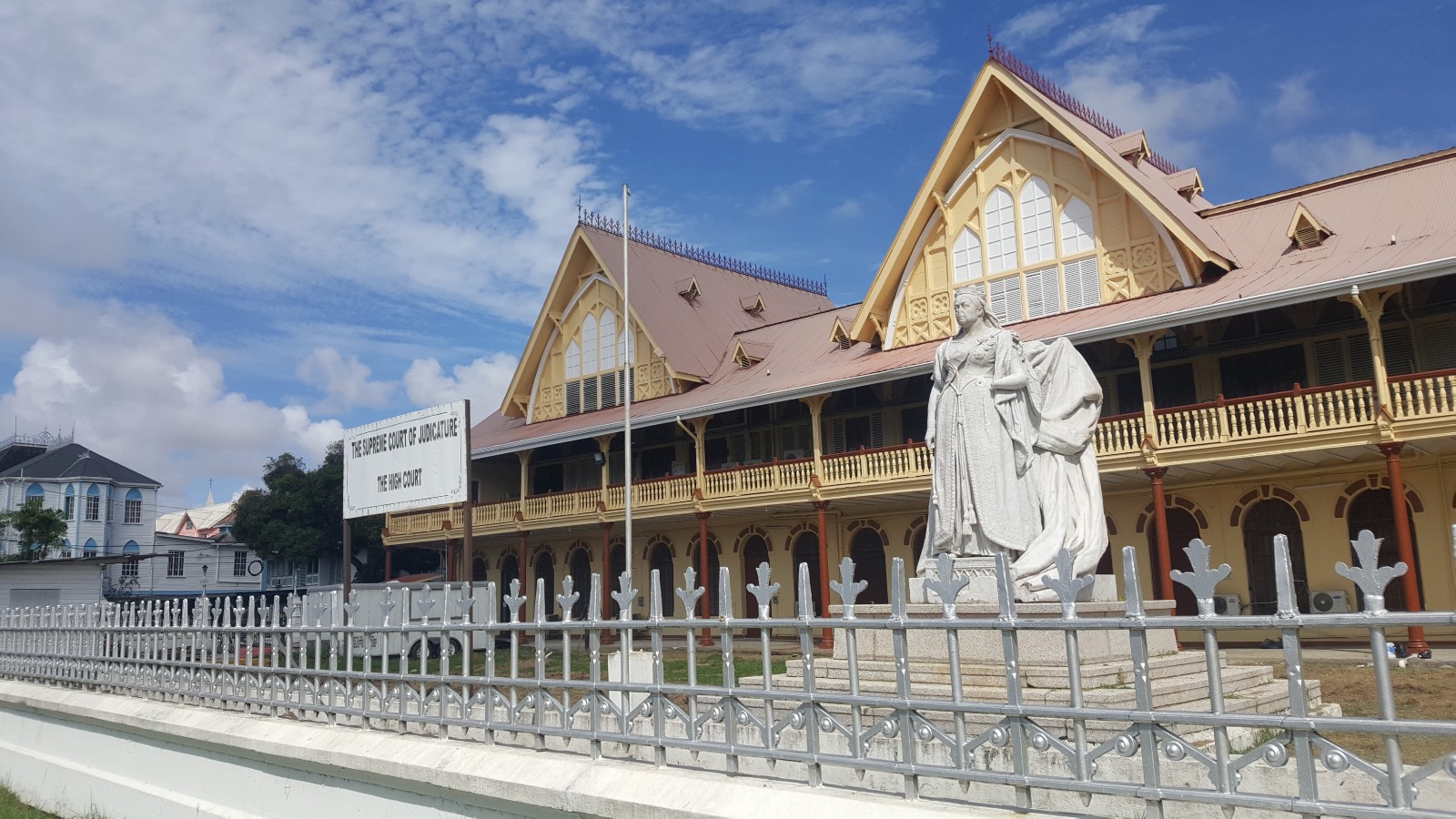
    On Friday, 12 June 2026, Guyana High Court Judge Fidela Lincoln-Corbin delivered a landmark defamation ruling holding current Guyanese Second Vice President Bharrat Jagdeo financially liable for defamatory comments he made against prominent senior engineer Charles Ceres back in 2019.

    The case stems from a press conference held on 27 June 2019, when Jagdeo was serving as Opposition Leader and General Secretary of the People’s Progressive Party (PPP). At that event, Jagdeo made damaging public statements about Ceres’ 2019 land acquisition deal with his then-wife.

    In her written ruling, Judge Lincoln-Corbin confirmed that Ceres had presented unchallenged evidence proving Jagdeo either personally published or authorized the publication of the defamatory claims against the engineer. The judge ultimately dismissed all three of Jagdeo’s core legal defenses: justification, fair comment, and qualified privilege. She emphasized that Jagdeo failed to introduce any credible evidence to support any of his defensive claims, despite cross-examining Ceres over the course of the trial in an apparent attempt to validate his arguments.

    Alongside the GY$15 million in defamation damages owed directly to Ceres, Jagdeo was also ordered to pay an additional GY$2,150,000 to cover Ceres’ court costs. The ruling also addressed co-defendants Tusika Martin, Editor-in-Chief of the *Guyana Times*, and the newspaper outlet itself. After reviewing the full audio recording of the 2019 press conference that was entered into evidence, Judge Lincoln-Corbin found that while the outlet’s news headline did not clarify the piece was a report on the press conference, the body of the article constituted a fair and accurate summary of Jagdeo’s original remarks. As a result, the judge awarded discretionary costs of GY$1 million to Martin and the *Guyana Times*.

    Ceres, a globally recognized geotechnical engineer and groundwater hydrologist with more than four decades of professional experience, was represented in court by attorney Darren Wade. Jagdeo’s legal team was led by barristers C.V. Satram and Ron Motilall.

    Shortly after the ruling was issued, Wade announced on his Facebook page that Ceres plans to appeal the court’s decision as it relates to *Guyana Times*, and will also push for a higher damages award against Jagdeo. Even so, Wade publicly urged the vice president to resolve the matter immediately by paying the ordered damages rather than pursuing an appeal. “Mr. Bharrat Jagdeo, please pay up as soon as possible. Do not let anyone convince you that there is any real prospect of success on appeal,” Wade stated.

  • Seized AK-47s are US-made

    Seized AK-47s are US-made

    In a major joint law enforcement operation targeting illegal weapons trafficking, Guyanese authorities have seized 23 United States-manufactured AK-47 assault rifles and hundreds of rounds of ammunition in Schoonord, West Bank Demerara, senior law enforcement officials confirmed Friday. One suspect has been taken into custody, while two other accomplices managed to evade capture following the Thursday night interdiction, according to Deputy Police Commissioner Wendell Blanhum, head of the Guyana Police Force’s Criminal Investigations Department (CID).

    Ballistic experts have already confirmed that all 23 seized assault rifles originated from the U.S. Blanhum noted that one of the weapons still has its original serial number fully intact, while the identifying markings on the remaining 22 rifles have been deliberately destroyed to hinder tracing efforts. Along with the firearms, officers seized a substantial cache of ammunition; local outlet Demerara Waves has confirmed the haul totals 504 rounds of 7.62X39 caliber, the standard ammunition for the AK-47 platform.

    The intercepted cache was discovered during a targeted stop of a suspicious motor vehicle, carried out through a partnership between the Guyana Police Force and the Customs Anti-Narcotics Unit (CANU), an agency focused on disrupting cross-border illicit trade. The arrested suspect has been identified as 28-year-old Jonathan Gans, a Venezuelan national residing in Third Street, Grove, East Bank Demerara. As of Friday afternoon, Gans remained in police custody as detectives conduct ongoing interrogations, while CID Crime Laboratory firearms specialists continue forensic examinations of the seized weapons to build a full case file.

    The seizure comes as Guyana and the broader Caribbean Community (CARICOM) have for years repeatedly called on the United States to step up collaborative efforts to stem the steady flow of illegally trafficked firearms into the region. In response to these regional concerns, the U.S. has previously extended an invitation for Caribbean nations to join the Regional Integrated Ballistic Information Network (RIBIN), a cross-border database system designed to help detect, track, and intercept illicit weapons moving through the Caribbean.

    This latest high-volume weapons seizure also follows a separate major arms bust just one month prior, when 10 other AK-47 assault rifles were recovered in Berbice. Three Guyanese nationals are currently facing prosecution in court over that earlier incident, underscoring the growing challenge of transnational weapons trafficking impacting the South American Caribbean nation.

  • High Court’s criminal case backlog reduced significantly

    High Court’s criminal case backlog reduced significantly

    On June 11, 2026, Guyana’s Director of Public Prosecutions Shalimar Hack announced major progress in clearing the country’s long-standing High Court criminal case backlog, crediting targeted support from the Partnership of the Caribbean and European Union (PACE) Justice Project for the transformation. Speaking at the opening ceremony of a two-day joint training workshop for members of the Guyana Police Force and DPP Chambers, Hack detailed how multi-faceted assistance from the UNDP-implemented, EU-funded initiative has driven systemic improvement in the nation’s criminal justice sector.

    Between 2020 and 2024, the High Court’s criminal assizes division regularly carried a docket of roughly 300 pending cases. As of 2025, that number has fallen to just over 100, a reduction of two-thirds that Hack called a remarkable milestone for the justice system. This progress came after the PACE project invested in specialized professional training, upgraded forensic infrastructure, and delivered new information technology hardware and software to DPP Chambers and law enforcement agencies.

    Beyond clearing the existing backlog, Hack emphasized that the DPP is implementing permanent procedural reforms to prevent case backlogs from reaccumulating, with a core goal of guaranteeing timely trials for all defendants. As evidence of the new system’s efficiency, she noted that a murder trial for an offense committed only two years ago is set to begin next week, while defendants accused of crimes committed in 2025 have already completed their trials.

    A key procedural change driving ongoing improvement is the adoption of the new paper committal system, which Hack said will allow her office to manage residual backlogged cases and new incoming caseloads simultaneously. Beyond streamlining court proceedings, the reform is expected to reduce Guyana’s pre-trial prison population, complementing government investments in new prison facilities that are designed to hold inmates in more humane, comfortable conditions while they await timely adjudication of their cases.

    Dhiraj Singh, officer in charge of the United Nations Development Programme (UNDP) Guyana, outlined the broader scope of the PACE Justice Project, which centers on reducing case backlogs and expanding equitable access to justice across the Caribbean region. The European Union, the project’s primary funding partner, has allocated approximately €9.75 million (equivalent to US$11.4 million or GYD$2.3 billion) to support criminal justice administration improvements across eight Caribbean nations, including Guyana.

    Singh added that the Guyana Police Force has reaped substantial benefits from the initiative’s capacity-building components. In addition to receiving upgraded IT equipment, senior police officers have taken part in regional investigative training hosted in Barbados, while two senior leaders completed a professional study visit to Spain and Italy, where they observed cutting-edge investigation techniques and technological applications. Singh noted that these trained officers will now cascade their new skills and knowledge to broader ranks of the national police force, lifting the overall investigative capacity of Guyana’s law enforcement sector for long-term systemic improvement.