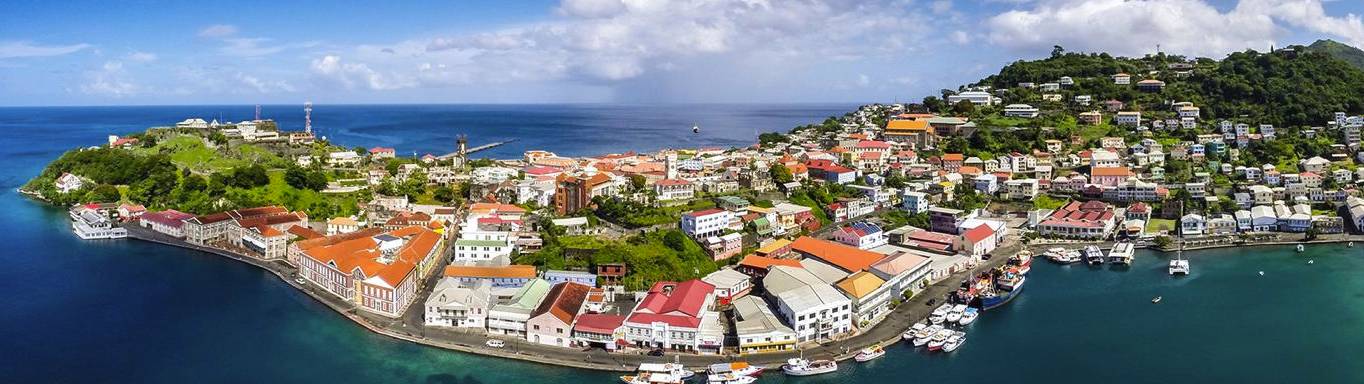
标签: Grenada

格林纳达

  • Opening of the New Law Year 2026

    Opening of the New Law Year 2026

    The Eastern Caribbean Supreme Court (ECSC) will inaugurate its 2026 legal calendar on January 12th through traditional ceremonial proceedings, adopting the thematic banner “Justice that Endures — Anchored in Independence, Strengthened through Trust.” This year’s host nation, the Commonwealth of Dominica, will stage the inaugural sitting of the Court of Appeal while simultaneous observances occur across eight additional Member States and Territories—a significant departure from the past four years’ format.

    In Grenada, festivities will commence with an 8:15 am service at St George’s Anglican Church, succeeded by the Inspection of the Guard of Honour. A formal procession will then advance to the High Court for a Special Sitting scheduled at 10 am.

    Presiding over the ceremonies, Acting Chief Justice Her Ladyship the Hon. Mde. Margaret Price Findlay will deliver the keynote address live from Dominica. Her address will be broadcast in real-time to all Organization of Eastern Caribbean States (OECS) jurisdictions through multiple digital platforms, including the Commonwealth of Dominica Information Services media channels, the ECSC’s official website and Facebook page, and UWITV.

    The ECSC, established in 1967 as a superior court of record, exercises unlimited jurisdiction across nine OECS territories. These include six sovereign nations—Antigua and Barbuda, Dominica, Grenada, St Kitts and Nevis, St Lucia, and St Vincent and the Grenadines—alongside three British Overseas Territories: Anguilla, British Virgin Islands, and Montserrat.

    The public is invited to participate either in person at church services or court sittings, or virtually through the various streaming options provided.

  • The sea is rising and so should we

    The sea is rising and so should we

    As the United Nations commences the second year of the Second International Decade for People of African Descent (2025-2034), the accelerating climate emergency presents an existential threat to Small Island Developing States that can no longer be marginalized in global discourse. Across the Caribbean and Global South, human-induced climate change has transformed from theoretical concern to daily reality, particularly for over 200 million people of African descent inhabiting formerly colonized territories.

    This crisis unfolds against a backdrop of deteriorating global climate governance. The Trump administration’s confirmation of withdrawal from 66 international organizations—including 31 UN bodies specializing in climate policy, sustainable development, and international accountability—has created seismic shifts in diplomatic circles. Critical withdrawals encompass the UN Framework Convention on Climate Change, Intergovernmental Panel on Climate Change, and International Renewable Energy Agency, signaling a dangerous retreat by major industrial powers from their environmental responsibilities.

    Scientific evidence underscores the urgency. The Americas recorded unprecedented temperatures in 2025, with prolonged heatwaves from February through July breaking historical records across North America, the Caribbean, and South America. This extreme heat intensifies droughts, compromises fragile infrastructure, and fuels catastrophic wildfires. Urban centers face particular vulnerability as ‘heat islands’ exacerbate living conditions—a phenomenon poetically foreshadowed in Bob Marley’s ‘concrete jungle’ depiction of 1970s Kingston.

    The Caribbean’s hurricane seasons reveal increasingly destructive patterns, with recent storms devastating Jamaica, Grenada, Cuba, Haiti, and The Bahamas. These are no longer natural disasters but climate-amplified events fueled by warming oceans and atmospheric instability. Each storm leaves devastated infrastructure, lost livelihoods, and communities trapped in cyclical reconstruction with diminishing resources.

    This environmental emergency intersects directly with historical injustices. The Caricom Reparations Commission emphasizes that climate change cannot be divorced from colonial legacy—plantation economies created structural poverty that now magnifies climate vulnerability. Reparatory justice demands must encompass climate justice, including adaptation financing, technology transfer, and institutional support.

    Regional examples offer hope amidst crisis. Cuba’s conservation efforts—protecting 25% of marine coastal areas including the Caribbean’s largest mangrove forest and significant coral reefs—demonstrate people-centered approaches yielding tangible results. Despite US embargo constraints, Cuba has developed robust meteorological research documenting 121 hurricanes between 1791-2023, though political isolation limits regional knowledge sharing.

    Encouragingly, South-South collaboration gains momentum. The African Union and Caricom have forged a powerful alliance around reparatory justice, with the AU designating 2025 as the Year of Reparations and 2026-2036 as the Decade of Reparations. This partnership explicitly links historical redress with climate justice, recognizing the Caribbean’s disproportionate vulnerability. Calls for a global tribunal addressing historical atrocities further underscore demands for accountability.

    Caricom’s Environment and Natural Resources Policy Framework signals institutional commitment to integrating environmental justice with sustainable development and climate resilience. In an era of industrial nation unresponsiveness, Caribbean solidarity and Global South cooperation emerge not as radical concepts but essential survival strategies confronting interconnected crises of history, climate, and inequality.

  • Grenada government responds to latest US travel advisory

    Grenada government responds to latest US travel advisory

    The Grenadian government has issued a robust response to the United States’ updated travel advisory, firmly maintaining the Caribbean nation’s status as a secure destination despite heightened warnings from American authorities. On Wednesday, Prime Minister Dickon Mitchell’s administration launched a comprehensive defense of the country’s security infrastructure, directly addressing the U.S. State Department’s decision to elevate Grenada to Level 2 status, which advises visitors to ‘exercise increased caution’ due to crime risks.

    The U.S. advisory, released Tuesday, cited concerning statistics including armed robberies, assaults, burglaries, and sexual assaults affecting American citizens, with some cases resulting in fatalities. The warning specifically noted that police response times ‘are not as fast as one may expect in the United States.’

    In sharp contrast, the Grenadian government presented compelling data showing the nation maintains one of the region’s lowest crime rates at approximately 4 incidents per 100,000 people. Officials emphasized Grenada’s ‘strong record of public safety, social stability, and effective law enforcement,’ highlighting the significant population of U.S. citizens who permanently reside, work, study, and invest in the tri-island state without security concerns.

    The government statement detailed the Royal Grenada Police Force’s ‘robust systems for rapid response’ and ‘strong crime solvency rates,’ underscoring institutional capabilities that ensure continued public safety. Through close collaboration among law enforcement agencies, ongoing investment in public safety infrastructure, and strong regional and international partnerships, Grenada maintains its commitment to treating security as a ‘national priority.’

    Tourism officials noted that hundreds of thousands of visitors experience Grenada’s ‘renowned hospitality, rich culture, and world-class tourism offerings’ annually, with the sector operating under rigorously maintained safety protocols. The government reaffirmed its ‘open lines of communication and continued security cooperation’ with international partners including the United States, while maintaining that Level 2 represents a ‘relatively low’ risk classification within the State Department’s four-tier advisory system.

    Contextualizing the advisory, Grenada joins the Bahamas at Level 2, while neighboring Caribbean destinations including Barbados and Dominica maintain Level 1 status, indicating standard precautions for travelers.

  • Statement by the Media Workers Association of Grenada

    Statement by the Media Workers Association of Grenada

    The Media Workers Association of Grenada (MWAG) has formally responded to Prime Minister Dickon Mitchell’s recent televised commentary regarding the absence of regular government press briefings and journalist conduct at previous engagements. Issued on Monday, January 5, the statement aims to rectify what the association describes as inaccurate representations of longstanding media concerns spanning three years.

    MWAG emphasizes that transparency issues were raised early in the current administration’s tenure, including during a direct meeting with the prime minister. The administration’s initial action involved discontinuing scheduled press engagements, with Prime Mitchell publicly announcing information would be distributed on a “need-to-know” basis—a approach that raised significant concerns within media circles about governmental transparency.

    The association clarifies that journalists have never objected to the volume of information disseminated by the government. Rather, media professionals welcome comprehensive and timely information serving public interest. The core concern centers on the structure of government news conferences, which prioritize sequential presentations over interactive dialogue. This format consistently limited opportunities for journalists to question, clarify, and scrutinize issues on behalf of the public.

    MWAG refutes suggestions that journalists disengaged due to being overwhelmed by information, characterizing this assertion as misleading. The actual problem resided in the lack of coherent focus and adequate questioning time during these engagements. Regarding virtual participation, the association notes that hybrid formats have long been facilitated through government communications teams using Zoom credentials distributed to media houses. Any technical disconnection experienced by the prime minister should have been addressed through proper technical arrangements standard in hybrid events.

    The association reaffirms its commitment to constructive engagement with the Grenadian government, emphasizing that regular, well-structured press briefings with sufficient questioning time remain fundamental to transparent governance and democratic accountability. MWAG stands ready to collaborate in good faith to improve these arrangements for public benefit.

  • CXC reports strong uptake for CTEC Pilot

    CXC reports strong uptake for CTEC Pilot

    The Caribbean Examinations Council (CXC) has launched its January 2026 examination period with significant advancements in digital assessment technologies and regional education reform. With over 10,000 candidates participating in the Caribbean Secondary Education Certificate (CSEC) examinations, the council is implementing a strategic shift toward complete digitalization of all testing within the next three to five years.

    During a press conference in Kingston, Jamaica, Registrar and CEO Dr. Wayne Wesley unveiled comprehensive updates on CXC’s evolving examination framework. The current January sitting, running through January 29th, utilizes the council’s digital e-assessment and hybrid systems. Following this period, CXC will immediately commence preparations for the May-June examinations, which anticipate over 100,000 candidates and more than 600,000 subject entries across CSEC and Caribbean Advanced Proficiency Examination (CAPE) programs.

    Dr. Wesley presented two foundational documents representing CXC’s renewed focus on educational standards: learning standards for literacy and numeracy, and standards with performance criteria for primary exit examinations. These resources establish benchmark proficiencies aligned with regional and international requirements. The literacy and numeracy standards specifically guide pedagogical approaches during the first three years of secondary education, while the updated Caribbean Primary Exit Assessment (CPEA) standards target enhanced primary-level instruction outcomes.

    A standout development is the remarkably successful Caribbean Targeted Education Certificate (CTEC) pilot, exceeding participation projections by more than 50%. Initially designed for 3,000 learners, the program attracted 6,453 candidates across all 13 CXC member states through 48 examination centers. Alton McPherson, supporting the pilot rollout, outlined the structured implementation timeline from January to March. Candidates will receive orientation on the Surpass platform, which will administer Paper One electronically and Paper Two in hybrid format, followed by comprehensive practice testing.

    The assessment process incorporates meticulous technical preparation between March and April, ensuring candidates can upload School-Based Assessments (SBAs), download timetables, and meet e-test readiness requirements. CTEC results will be addressed during the July-August results period, with comprehensive data analysis and qualitative feedback informing the full program rollout scheduled for June 2027.

    Dr. Wesley also emphasized CXC’s commitment to accessibility, referencing the council’s adherence to the Marrakesh Treaty. For the 2025 examinations, special arrangements accommodated 3,444 candidates with visual impairments and other special needs. The council continues to refine technologies and approaches to ensure full and equitable participation for all candidates regardless of ability.

    The Board of Governors has formally approved a comprehensive disaster and business recovery protocol featuring six implementation steps: initial response and support statement, coordination with education ministries, stakeholder consultation, recommendation development, board review, and measured implementation with ongoing evaluation. This protocol ensures continuity when member states experience disasters or unusual events.

    Dr. Wesley concluded with an optimistic outlook for 2026, inviting regional partnership in CXC’s mission to “ignite the potential and shape the future of our Caribbean people” through resilient stakeholder engagement, improved operational processes, and inclusively expanded service access.

  • Royal Grenada Police Force hosts historic promotion ceremony

    Royal Grenada Police Force hosts historic promotion ceremony

    In an unprecedented move signaling significant institutional growth, the Royal Grenada Police Force (RGPF) has elevated 179 officers and subordinate personnel—marking the single largest promotion ceremony in the force’s modern history. The landmark event, orchestrated under the thematic banner ‘Elevated in Rank, Anchored in Service,’ underscores the profound dedication and professional excellence demonstrated by Grenada’s law enforcement community in their ongoing mission to ensure national security.

    The comprehensive promotions encompass multiple hierarchical tiers within the police infrastructure, including one individual ascending to Assistant Commissioner of Police, 14 to Superintendent, 18 to Assistant Superintendent, 32 to Inspector, 46 to Sergeant, and 69 to Corporal.

    Assistant Commissioner of Police Vannie Curwen emphasized that the ceremony served dual purposes: not only honoring the relentless effort and perseverance exhibited by RGPF personnel but also recognizing the indispensable support and personal sacrifices made by their families, which proved crucial to their professional achievements.

    Prime Minister Dickon Mitchell, delivering the keynote address, lauded the promoted officers for their exemplary service and called upon them to approach their enhanced responsibilities with unwavering integrity and forward-thinking vision. He urged leadership by example, encouraged self-reflection for diversified future service, and motivated all personnel to pursue continuous self-improvement and training opportunities. The Prime Minister further articulated that this milestone represents a pinnacle of achievement for regional law enforcement, reinforcing Grenada’s steadfast dedication to superior public safety and community-oriented policing.

    This substantial organizational advancement symbolizes the RGPF’s renewed commitment to maintaining the highest standards of law enforcement, deeply rooted in service to the citizens of Grenada, as the force continues its progressive evolution.

  • Temporary closure of Melville Street Fish Market

    Temporary closure of Melville Street Fish Market

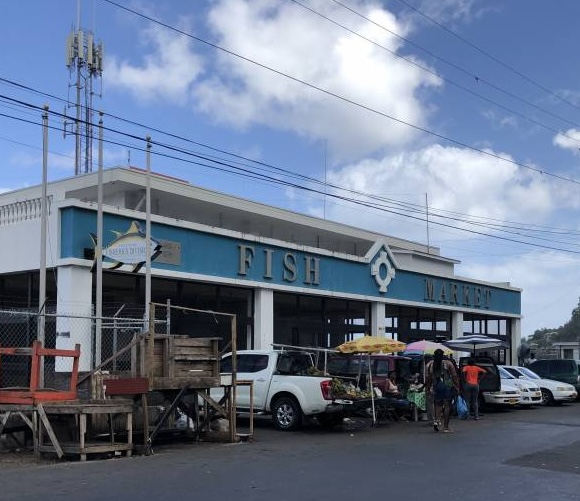
    The Ministry of the Blue Economy and Marine Affairs has issued a public advisory regarding the temporary suspension of operations at Melville Street Fish Market, a facility under its Fisheries Division. The market will remain closed on Monday, January 12, and Tuesday, January 13, 2026, to accommodate specialized training sessions on Sanitary and Phytosanitary (SPS) Standards and Protocols.

    This initiative represents a collaborative effort between the Ministry of the Blue Economy and Marine Affairs and the Ministry of Health, focusing on enhancing food safety measures within Grenada’s fish markets. The comprehensive training program is designed to equip market personnel with advanced knowledge and practical skills necessary for maintaining stringent hygiene standards. The curriculum emphasizes compliance with both national regulations and international benchmarks to ensure the highest quality of seafood products for consumers.

    Regular commercial activities at Melville Street Fish Market are scheduled to recommence on Wednesday, January 14, 2026, following the completion of the training initiative. Government officials have expressed appreciation for public understanding regarding this temporary disruption, acknowledging the essential nature of these improvements to public health infrastructure and food safety systems.

    The implementation of SPS protocols demonstrates Grenada’s commitment to advancing its blue economy sector while prioritizing consumer protection and international trade compliance. Such measures are increasingly critical for Caribbean nations seeking to maintain competitive standing in global seafood markets while safeguarding public health interests.

  • GDB vacancy: Climate Finance Officer

    GDB vacancy: Climate Finance Officer

    The Grenada Development Bank (GDB) has announced a strategic recruitment initiative for a Climate Finance Officer to join its specialized Strategic Projects and Climate Finance Unit. This professional appointment represents a critical component of Grenada’s comprehensive strategy to enhance climate resilience and advance sustainable economic development.

    The newly created position offers a unique opportunity for qualified professionals to contribute directly to the nation’s environmental sustainability objectives while supporting the Bank’s pursuit of accreditation with the Green Climate Fund (GCF). The successful candidate will play an instrumental role in developing and managing climate finance initiatives focused on mitigation, adaptation, and resilience-building projects.

    Primary responsibilities include supporting the mobilization and management of climate finance from multilateral, bilateral, and donor partners. The officer will assist in meeting operational, reporting, and compliance requirements for various climate finance mechanisms while contributing to the preparation of technical submissions and board documentation.

    The role encompasses substantial project development duties, including the review of climate finance concept notes and proposals aligned with national priorities. The position requires active stakeholder engagement with government agencies, development partners, and relevant entities, in addition to supporting project implementation, monitoring, and evaluation activities.

    Qualifications require a Bachelor’s degree in Economics, Finance, Environmental Science, Development Studies, or related fields, with a Master’s degree in Climate Policy, Finance, or Sustainability considered a distinct advantage. Applicants must possess 3-5 years of experience in climate finance, development projects, or sustainable finance, with familiarity of environmental safeguards and results-based frameworks.

    The position operates primarily from an office environment with occasional fieldwork across Grenada, Carriacou, and Petite Martinique. Interested candidates must submit a comprehensive cover letter and curriculum vitae to the Human Resource Manager by January 30, 2026. GDB emphasizes its commitment to equal opportunity employment and encourages applications from qualified professionals throughout Grenada and the Caribbean region.

  • PM Mitchell concerned about domestic gambling

    PM Mitchell concerned about domestic gambling

    Prime Minister Dickon Mitchell has expressed profound concerns regarding the escalating gambling epidemic in Grenada, advocating for a comprehensive societal approach that prioritizes citizen welfare over revenue generation. During his inaugural 2026 interview on Grenada Broadcasting Network’s ‘Beyond the Headlines’ program, the Prime Minister highlighted the destructive nature of gambling addiction, particularly among financially vulnerable populations.

    Mitchell emphasized that while respecting individual liberties, society must reach consensus on values and recognize gambling’s detrimental impacts. He specifically referenced games classified by the World Health Organisation as highly addictive, noting alarming patterns where citizens gamble 12-14 hours daily while neglecting familial responsibilities.

    The gambling landscape in Grenada is dominated by the state-established Grenada National Lotteries Authority (GNLA), the primary provider of lottery products including Bingo, Lotto, Super 6, Daily Pick 3, and instant Scratch games. Private companies also operate promotional chance games.

    Mitchell proposed a ‘whole of society’ framework that balances revenue generation with protective measures for at-risk individuals, stating: ‘If people believe gambling is their only escape from financial hardship, we guarantee they’ll never overcome it.’ The Prime Minister’s comments signal a potential policy shift toward addressing gambling’s social consequences rather than merely exploiting its economic benefits.

  • Grenada reaffirms strong commitment to safety, security and welcoming visitors

    Grenada reaffirms strong commitment to safety, security and welcoming visitors

    The Government of Grenada has issued a formal response to the recent Level 2 Travel Advisory from the United States, vigorously reaffirming the nation’s standing as a secure and welcoming destination for international visitors and residents. Officials emphasized Grenada’s exceptional public safety record, social stability, and robust law enforcement capabilities that continue to make it one of the Caribbean’s premier locations.

    Grenada’s deep connections with the United States form a cornerstone of its international relations, with a significant population of American citizens residing, working, studying, and investing across the tri-island nation. These individuals receive identical security protections and access to public services as all nationals, reflecting Grenada’s commitment to inclusive safety measures. Their continued presence underscores the confidence in Grenada’s quality of life and governance structures, bolstered by historical people-to-people ties between the two nations.

    Statistical evidence supports Grenada’s safety claims, with the country consistently ranking among the region’s safest destinations. The nation maintains an exceptionally low crime rate of approximately 4 incidents per 100,000 people—a figure that reflects comprehensive public safety initiatives, proactive policing strategies, and active community engagement programs.

    The Royal Grenada Police Force maintains advanced rapid response systems and demonstrates strong investigative capabilities with high crime solvency rates. These operational strengths ensure continuous public safety through institutional preparedness and professional law enforcement practices. Grenada’s security apparatus maintains open communication channels and ongoing cooperation with international partners, including United States security agencies.

    Tourism infrastructure operates under rigorously maintained safety protocols, with communities renowned for their genuine hospitality and respectful treatment of visitors. Hundreds of thousands of international travelers experience Grenada’s renowned cultural richness and world-class amenities annually, contributing to its reputation as a destination where travelers feel authentically welcomed and secure.

    The government maintains that safety and security represent national priorities, achieved through inter-agency law enforcement collaboration, sustained investment in security infrastructure, and strengthened regional and international partnerships. Grenada remains fully open to global visitors while continuing to proactively address security concerns through comprehensive protection standards for all nationals and guests alike.