标签: Grenada

格林纳达

  • US wants Caribbean to be part of a new dynamic in the Western Hemisphere

    US wants Caribbean to be part of a new dynamic in the Western Hemisphere

    In a significant address to Caribbean Community (CARICOM) leaders during their 50th regular summit, United States Secretary of State Marco Rubio outlined Washington’s vision for a revitalized partnership with the Western Hemisphere. The closed-door meeting served as a platform for Rubio to emphasize shared security concerns and economic opportunities while addressing recent developments in Venezuela.

    Rubio identified transnational criminal organizations as the region’s most pressing security threat, noting their funding and power often rival that of nation-states. He described an “interlocked challenge” fueled primarily by narcotrafficking and other illicit activities that ultimately endanger both transit countries and U.S. national security. The Secretary expressed particular alarm at the advanced weaponry these groups possess, much of which originates from the United States, and pledged intensified law enforcement cooperation to disrupt these arms flows.

    Beyond security concerns, Rubio highlighted “extraordinary opportunities for economic advancement,” specifically emphasizing energy collaboration. He acknowledged the Caribbean’s energy resources and expressed America’s desire to partner in their responsible development to generate regional prosperity.

    Addressing Venezuela’s political situation, Rubio defended U.S. policy despite potential regional disagreements, stating unequivocally that “Venezuela is better off today than it was 8 weeks ago.” He cited the release of political prisoners, closure of the notorious Helicoide prison, and renewed oil revenue distribution for public benefit as evidence of progress under interim authorities led by Delcy Rodríguez. While acknowledging the need for eventual legitimate democratic elections, Rubio framed current U.S. efforts as focused on preventing instability, mass migration, and spillover violence.

    The Secretary positioned a potentially “prosperous, free Venezuela” as a future asset for regional energy needs and stability. He conceptualized the Caribbean Basin—including the southern United States—as an integrated zone that should attract inbound investment, with American businesses participating in the region’s economic diversification efforts.

    Rubio concluded by framing U.S. and Caribbean security and prosperity as fundamentally interconnected, stating: “We view our security, our prosperity, our stability to be intricately tied to yours.” His personal presence at the summit signaled Washington’s commitment to reinvigorating relationships rather than resetting them, emphasizing longstanding bilateral and multilateral ties. Rubio pledged to make Caribbean engagement a personal priority throughout his tenure, aiming to establish a strong foundation for his successor.

  • No Parking: Stadium Ring Road, St George

    No Parking: Stadium Ring Road, St George

    The Royal Grenada Police Force (RGPF) Traffic Department has issued an immediate parking prohibition along Stadium Ring Road in St. George. Authorities have mandated the prompt removal of all vehicles currently stationed in the affected area to accommodate unimpeded vehicular movement and enhance pedestrian safety measures.

    This regulatory intervention responds to growing concerns about traffic congestion and potential safety hazards in the vicinity of the stadium. The police commissioner’s office emphasized the necessity of these measures for maintaining orderly traffic patterns and protecting public welfare.

    The parking restriction will remain indefinitely until official authorities determine otherwise. Motorists are advised to seek alternative parking arrangements and comply with traffic directives to avoid penalties. The RGPF maintains its commitment to ensuring road safety and efficient traffic management throughout Grenada.

    This public notice represents part of broader ongoing efforts by Grenadian law enforcement to optimize traffic flow in high-density areas, particularly around venues that frequently host large public gatherings.

  • Encouraging start to early preparations for Festival of the Arts

    Encouraging start to early preparations for Festival of the Arts

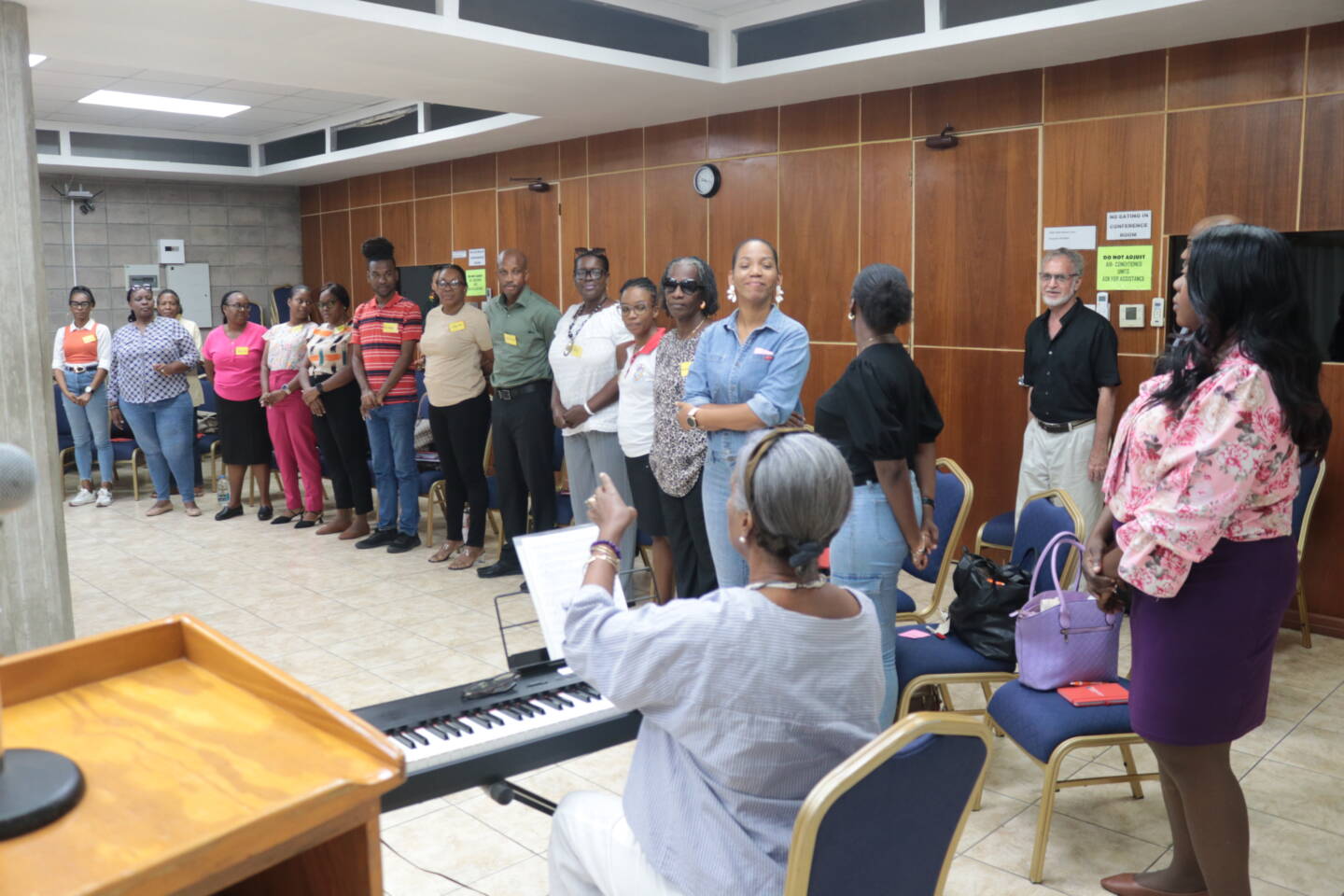
    In a strategic move to elevate artistic standards for the upcoming 2026 Festival of the Arts, Grenada has successfully trained 50 primary and secondary school choir instructors through an intensive professional development program. The comprehensive workshop, held at the Public Workers Union building in St. George’s, focused on enhancing vocal pedagogy and choral leadership capabilities across the nation’s educational institutions.

    Voice Specialist Valarie Daniel-Burkhardt, renowned for her work with professionals ranging from broadcasters to politicians, led the technical training sessions. The curriculum encompassed critical vocal techniques including breath control, vocal projection, diction refinement, rhythmic precision, and anatomical awareness of vocal mechanisms. Participants gained practical methodologies for improving singing proficiency while preventing vocal strain and long-term damage.

    Assistant facilitator Lucinda Ogilvie emphasized the universal relevance of vocal training, noting its importance not only for educators and students but also for performing artists across musical genres. “Understanding vocal mechanics is essential for sustainable artistic expression,” Ogilvie stated. “This knowledge protects vocal instruments from deterioration while enhancing performance quality.”

    The initiative, orchestrated by the Division of Culture within the Ministry of Tourism, Creative Economy and Culture, represents the government’s commitment to cultural development. Chief Cultural Officer Kelvin Jacob explicitly linked the training to national artistic standards, urging participants to implement their newfound expertise to cultivate exceptional school choirs.

    Educators expressed unanimous appreciation for the program’s practical applicability. Donovan Richards, Principal of Hermitage Government School, confirmed the immediate utility of the exercises for student development. Teacher Kellyann Gunpot similarly endorsed the capacity-building initiative, particularly as Grenada prepares for the return of its premier cultural showcase.

    Cultural Officer Arlene Joseph reported overwhelming participant engagement and readiness to guide choirs toward excellence. The program concluded with formal certification ceremonies presided over by Parliamentary Secretary Senator Quinc Britton and Chief Cultural Officer Jacob, symbolizing the official endorsement of this cultural upskilling endeavor.

  • Call for participation in National Tourism Youth Congress

    Call for participation in National Tourism Youth Congress

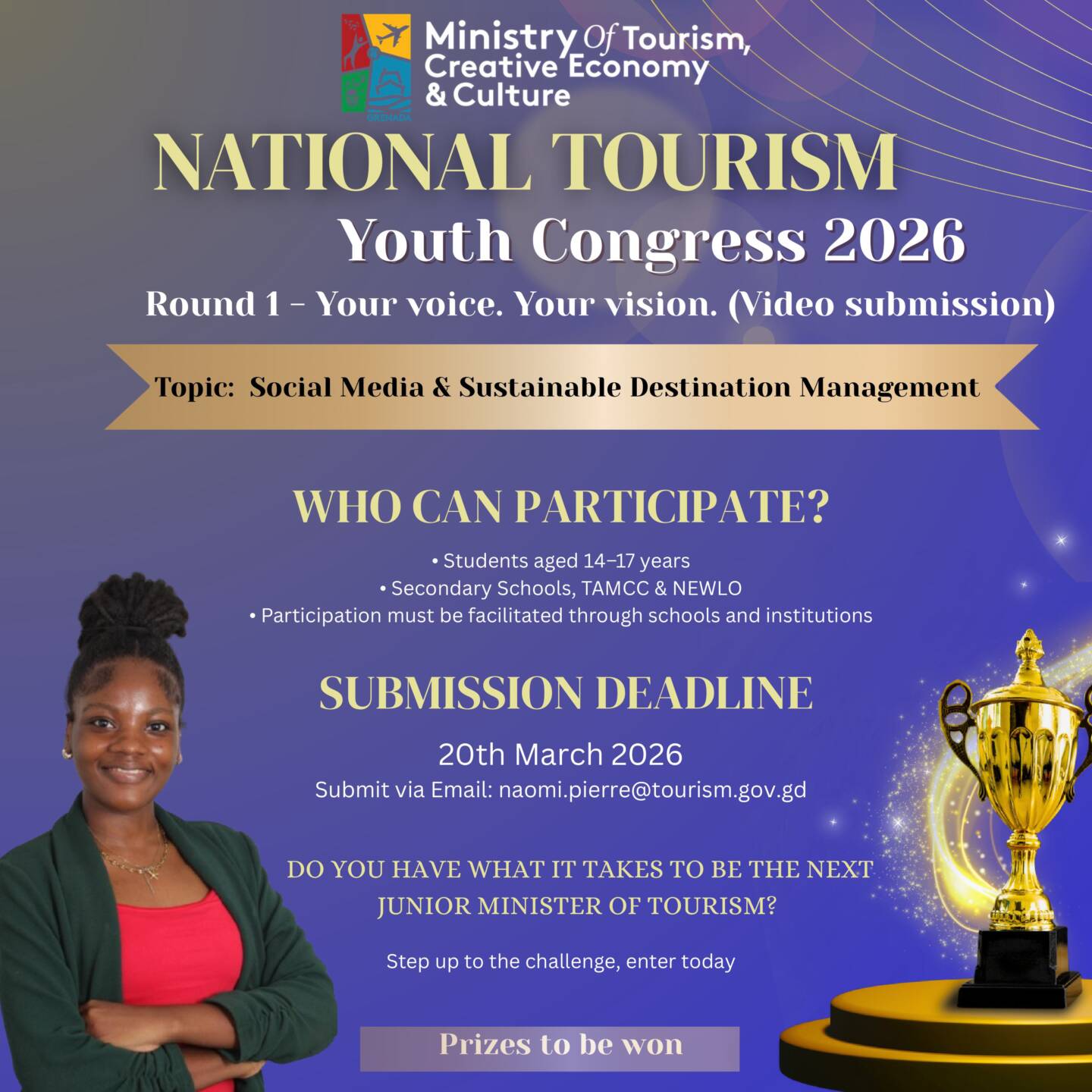
    Grenada’s Ministry of Tourism, Creative Economy and Culture has initiated a nationwide search for young tourism ambassadors through the National Tourism Youth Congress, targeting students aged 14-17. The competition aims to select Grenada’s representative for the Regional Tourism Youth Congress in Guyana this October.

    The two-tier competition structure invites participants from secondary schools, NEWLO Hospitality Department, and T.A. Marryshow Community College’s Tourism and Hospitality programs. The preliminary round requires candidates to submit a three-minute video presentation by March 20, 2026, through designated school officials at [email protected].

    Seven finalists will advance to the live competition on May 8, 2026, where they will demonstrate their expertise through prepared presentations and impromptu responses. The final round features two challenging components: a structured presentation with audio-visual aids on a predetermined topic, followed by a mystery topic segment that tests quick thinking and communication skills. Contestants will have three minutes to prepare and one minute to deliver their response to unexpected questions.

    This initiative forms part of the Caribbean Tourism Organisation’s broader strategy to engage youth in regional tourism development. The congress replicates the format of CTO Board of Directors’ meetings and occurs annually during the State of the Tourism Industry Conference (SOTIC). The program aims to cultivate research skills, critical discussion, and innovative thinking among Caribbean youth regarding tourism’s future.

    The competition follows the success of Kealah Baptiste from TAMCC, who represented Grenada at the 2025 Regional Congress in Barbados, demonstrating the program’s capacity to identify and develop young tourism leaders.

  • Impact of GEF funding of CSIDS Soilcare Phase 1 Project highlighted

    Impact of GEF funding of CSIDS Soilcare Phase 1 Project highlighted

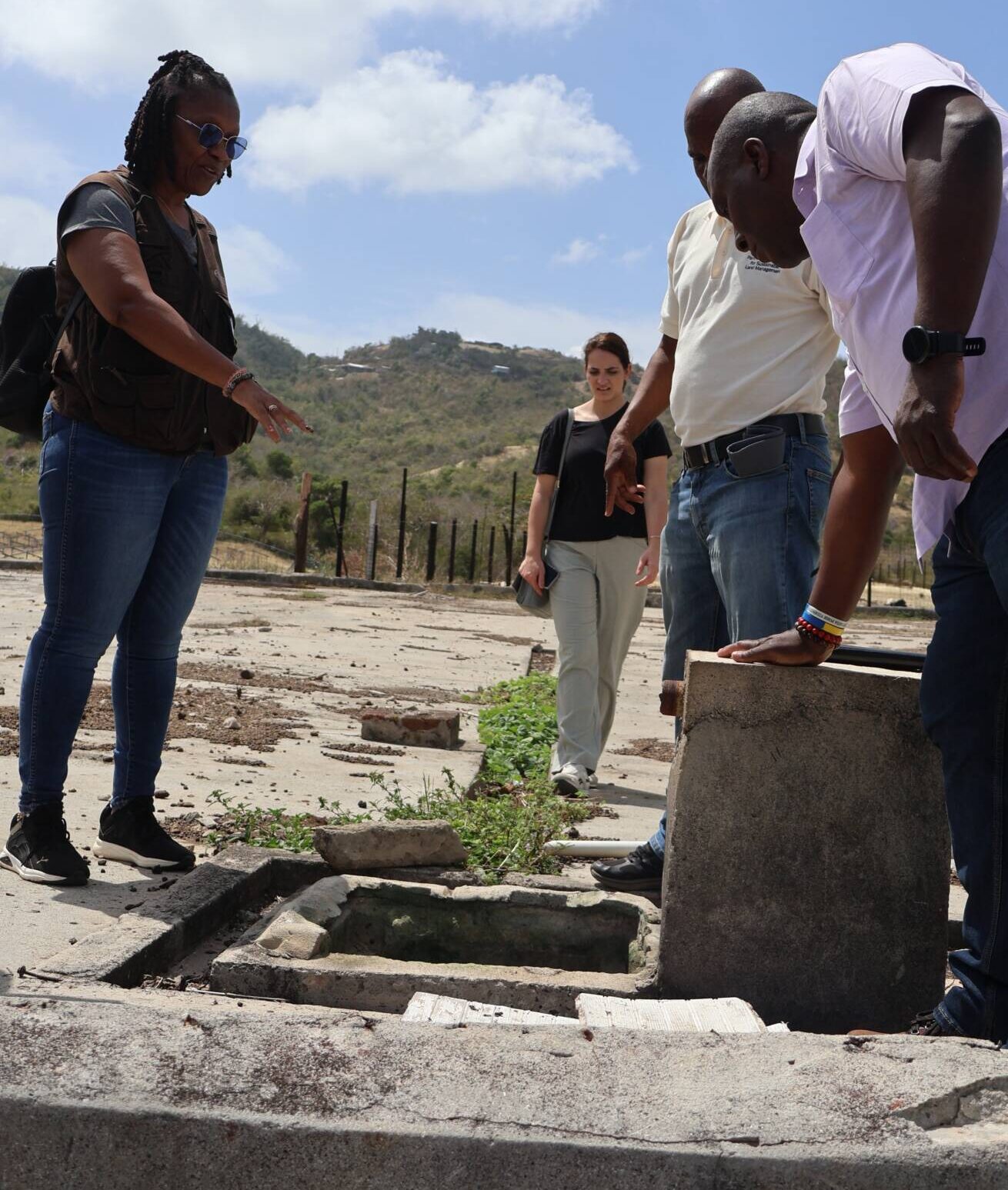
    A high-level delegation comprising representatives from the Global Environment Facility (GEF), Partnership Initiative for Sustainable Land Management (PISLM), Food and Agriculture Organisation (FAO), and the Government of Canada recently concluded an intensive assessment mission across St. Lucia and Grenada to evaluate the transformative impacts of the CSIDS SOILCARE Project. The February 17-20 mission showcased how strategic international funding is driving sustainable agricultural practices and climate resilience throughout Caribbean Small Island Developing States.

    The diplomatic engagement included substantive meetings with key government officials, including Hon. Lisa Jawahir (Minister for Agriculture, Fisheries, and Climate Change, St. Lucia), Permanent Secretary Leanwall Perrotte (Ministry of Carriacou and Petite Martinique Affairs), and Hon. Lennox Andrews with Permanent Secretary Isaac Bhagwan (Ministry of Agriculture, Lands and Forestry, Grenada). These discussions highlighted strengthened partnerships and national commitments toward advancing sustainable soil management frameworks.

    Field inspections covered critical implementation sites across the region: St. Lucia’s Sir Arthur Lewis Community College, Darban agricultural zone, and National Soil Laboratory; Carriacou’s Limlair Livestock Facility, Belair Agricultural Nursery, and Dumfries Agricultural Station; and Grenada’s St. George’s soil laboratory, Les Avocat Forest reserve, and Chambord intervention sites.

    Dr. Ronen Francis, Executive Director of PISLM, emphasized the mission’s importance in demonstrating tangible outcomes: “This undertaking allows us to showcase to GEF and Canadian partners how implemented work directly transforms landscapes and community livelihoods within project areas.”

    Neila Bobb-Prescott, GEF Task Manager and Climate Finance Specialist at FAO, noted the assessment provides crucial insights for planning “Phase 2 of this regional initiative,” indicating continued international support.

    The project’s multidimensional approach received strong endorsement from Rawleston Moore, GEF Senior Climate Change Specialist, who stated: “This represents an exemplary model for enhancing farmer resilience, combating climate change, and reducing land degradation simultaneously.”

    The delegation’s findings confirm that international cooperation through GEF funding mechanisms effectively addresses pressing environmental challenges while creating sustainable economic opportunities for Caribbean communities through innovative land management solutions.

  • GTAWU and SGU sign collective bargaining agreement

    GTAWU and SGU sign collective bargaining agreement

    In a significant development for labor relations in Grenada, the Grenada Technical and Allied Workers’ Union (GTAWU) and St. George’s University Limited (SGU) formally ratified a comprehensive Collective Bargaining Agreement on February 12, 2026. The six-year pact, covering July 1, 2022 through June 30, 2028, was executed under the supervision of Labour Commissioner Sparkle Grenade-Courtney.

    The signing ceremony featured representation from both organizations’ leadership. SGU’s delegation included Chief Campus Operations Officer Greg Hendel, Vice President Business Administrator Dawne Buckmire, Human Resources Director Camila Williams-Johnson, and legal counsel Skeeta Chitan-Sylvester. GTAWU’s representation was led by President General André Lewis, accompanied by Chief Grievance Officer Trevor Xavier, Shop Stewards Kevon Noel and Gleaner Lewis, Workers’ Representative Ron Greaves, and Industrial Relations Officer Kadisha Andrew.

    Key provisions of the landmark agreement establish minimum starting salaries at 20% above Grenada’s national minimum wage threshold. The compensation package includes structured annual increments: four consecutive 4% raises for the 2022-2026 periods, followed by two 5% increases for the final two years of the contract.

    Additional benefits encompass enhanced night differential allowances, full reimbursement of driver’s license fees, comprehensive health insurance coverage, uniform and protective clothing provisions, pension benefits, and a formalized grievance procedure framework.

    Notably, both parties committed to ongoing negotiations regarding the unresolved status of SGU’s ‘Unvaccinated Workers’ who have been barred from campus premises since June 2021. The discussions will focus on compensation arrangements for these employees’ years of service prior to the implementation of vaccination mandates.

  • No one is coming to save us

    No one is coming to save us

    In a profound address resonating across the Eastern Caribbean, Dr. Didacus Jules, Director General of the Organisation of Eastern Caribbean States (OECS), has amplified Professor Justin Robinson’s stark declaration that ‘No One is Coming to Save Us.’ This statement, originally articulated in a widely circulated article, serves as a catalyst for redefining regional sovereignty and self-reliance in an increasingly fragmented global landscape.

    Dr. Jules contextualizes this realization not as a cause for despair but as a necessary awakening from long-held illusions. The past year has dismantled the Caribbean’s enduring belief that international systems, historical partnerships, or benevolent allies would provide sanctuary during crises. Major powers are recalibrating strategies to serve their own interests, concessional finance is diminishing, migration pathways are constricting, and the rules-based international order proves malleable to the whims of the powerful. This represents a fundamental structural shift, not a temporary disruption.

    For the OECS, the path forward is neither isolation nor empty bravado, but deliberate design. True sovereignty for small states, argues Jules, is not achieved through solitary defiance but through strategic pooling of capacities where size is a disadvantage and collective action where fragmentation weakens influence. The Eastern Caribbean already demonstrates this principle through functional realities: a common currency, a unified Supreme Court, free movement of people, and coordinated diplomatic representation. These are not theoretical constructs but operational systems that enhance, rather than dilute, national sovereignty.

    The contemporary geopolitical environment demands an evolved operational model. Incremental reform is insufficient in a world where geopolitics directly governs access to finance, trade, data, energy, and mobility. In this context, fragmentation across countries and sectors has transitioned from a manageable inconvenience to a strategic liability.

    Dr. Jules outlines a concrete framework for actionable self-reliance:

    1. Treating regional systems—education, digital infrastructure, climate resilience, energy, and data governance—as strategic assets that generate competitiveness and bargaining power, not merely as social expenditures.

    2. Making fragmentation economically and politically costly by strengthening regional platforms that reduce transaction costs, attract capital, and amplify collective voice. This requires unprecedented political discipline, establishing national-interest red lines on core matters like regional integration, citizenship, and external alignment that transcend electoral cycles.

    3. Replacing rigid planning with disciplined adaptability, designing institutions capable of learning, adjusting, and course-correcting amid perpetual uncertainty.

    4. Converting vulnerability into exportable expertise by developing climate resilience, disaster management, renewable energy, and digital services at regional scale rather than as isolated national experiments.

    5. Speaking with one coherent, data-grounded voice or accepting the consequence of being spoken for in international forums.

    Ultimately, Dr. Jules reframes development as a political and institutional choice rather than a technical problem awaiting external solutions. The OECS experience proves that self-preservation is within regional capacity—requiring clarity of purpose, courage for deeper integration, and discipline to build enduring systems. This moment represents not a rejection of global engagement, but a determination to engage the world on terms that protect agency, dignity, and future sovereignty.

  • Ariza National Championships set to ignite track and field excitement

    Ariza National Championships set to ignite track and field excitement

    Grenada’s premier athletics event, the Ariza National Championships, is set to showcase the nation’s top track and field talent on February 28th and March 1st, 2026, at the renowned Kirani James Athletics Stadium. The competition will feature athletes from across the island vying for national honors while simultaneously serving as a qualifying pathway for the prestigious CARIFTA Games.

    This year’s championships carry special significance as Grenada prepares to host the regional CARIFTA competition, offering local athletes the exceptional opportunity to compete on home turf while representing their nation. The event promises to be a spectacular display of emerging athletic excellence and competitive spirit.

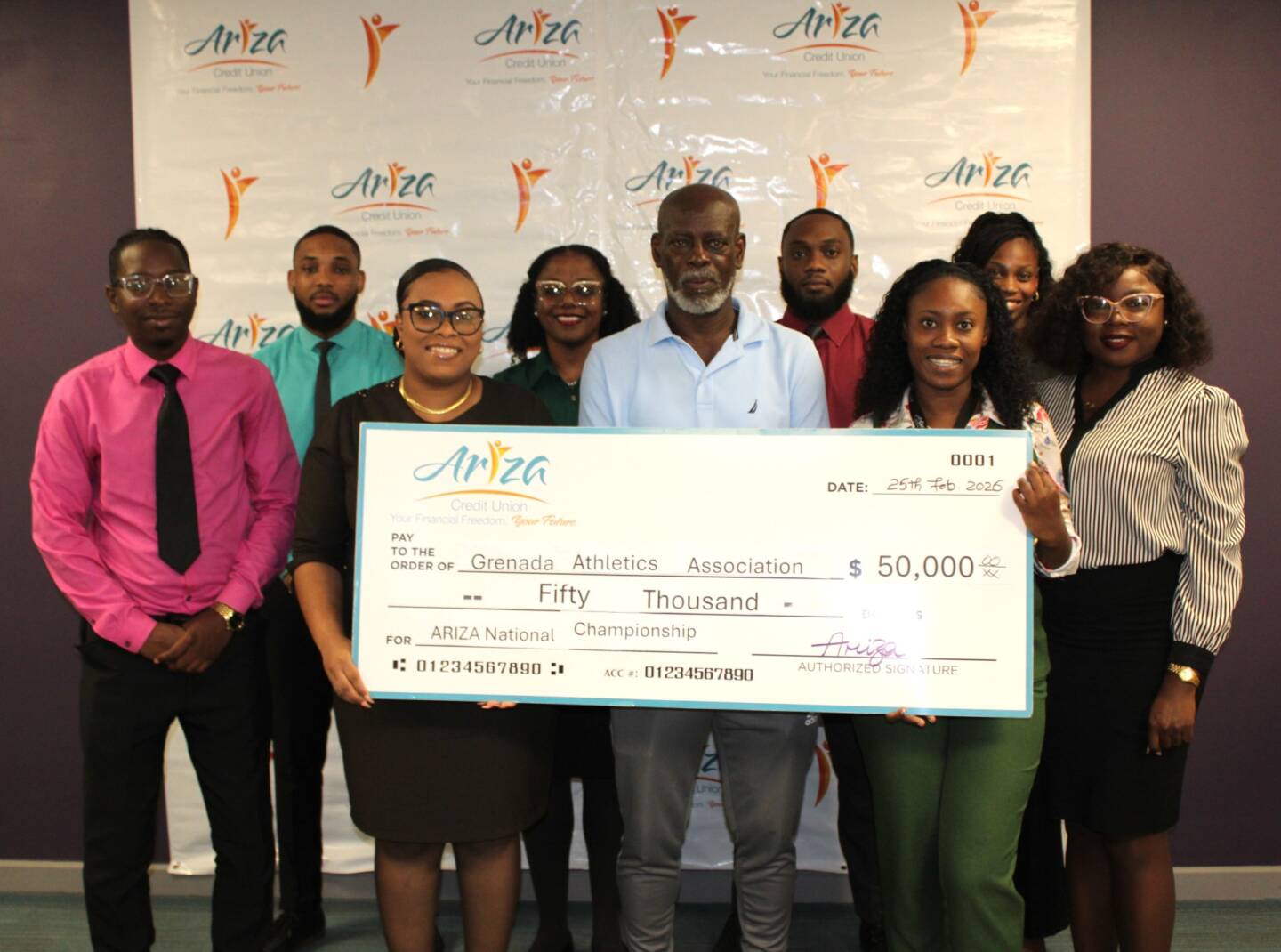
    Marking over a decade of sustained partnership, Ariza Credit Union has reinforced its commitment to youth development through sports by presenting the Grenada Athletics Association (GAA) with a substantial sponsorship cheque of EC$50,000. This continued investment underscores the financial institution’s dedication to nurturing athletic talent and community development initiatives.

    Mervyn Lord, Chief Executive Officer of Ariza, emphasized the organization’s philosophy: “Our ongoing investment initiatives specifically target youth empowerment and community strengthening through athletic programs. Sports serve as a fundamental platform for developing discipline, building confidence, and creating meaningful opportunities for young Grenadians.”

    Conrad Francis, President of the Grenada Athletics Association, acknowledged the vital support: “We deeply appreciate Ariza’s consistent partnership and their unwavering commitment to one of our nation’s most anticipated sporting events. This sponsorship enables us to maintain the high standards of competition and athlete development that define these championships.”

    The collaboration between Ariza Credit Union and the GAA continues to demonstrate how corporate sponsorship can effectively drive sports development while creating pathways for athletic excellence and national pride.

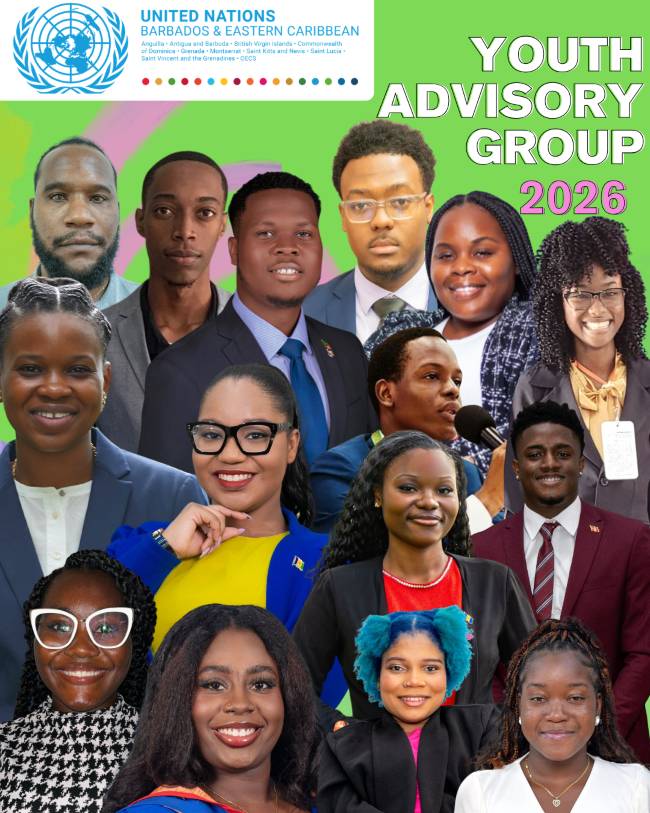
  • 15 Youth Leaders named to 2026 UN Advisory Group for Barbados and Eastern Caribbean

    15 Youth Leaders named to 2026 UN Advisory Group for Barbados and Eastern Caribbean

    In a significant move to amplify youth voices in regional development, fifteen emerging leaders from across the Eastern Caribbean have been selected to join the 2026 United Nations Youth Advisory Group (YAG). This strategic appointment reinforces the UN’s dedication to positioning young visionaries at the core of sustainable development initiatives throughout the sub-region.

    The newly formed cohort, marking the fifth installation of this initiative, represents a diverse cross-section of nations including Anguilla, Antigua and Barbuda, Barbados, the British Virgin Islands, Dominica, Grenada, St Kitts and Nevis, St Lucia, and St Vincent and the Grenadines. These dynamic individuals, aged between 18 and 30, bring substantial expertise across critical development areas including climate action, mental health advocacy, gender equality, disability inclusion, educational reform, food security, crime prevention, and indigenous rights protection.

    UN Resident Coordinator for Barbados and the Eastern Caribbean Simon Springett emphasized the transformative potential of youth engagement, stating: ‘Our youth represent both our present and future. We’ve merely scratched the surface of what young people can contribute to governmental and international institutions. Their increased involvement is crucial for driving meaningful transformation.’

    Rianka Chance of St Vincent and the Grenadines returns for her third term, assuming the role of Chair. She articulated the group’s ambitious vision: ‘I envision the YAG evolving into a unifying force across Barbados and the Eastern Caribbean—propelling collaboration, advancing the Sustainable Development Goals, and ensuring inclusive youth engagement at all decision-making levels. Our objective extends beyond participation to actively shaping policies, influencing systems, and leading sustainable change locally, regionally, and globally.’

    The selection process adhered to the UN’s Leave No One Behind principle, ensuring substantial representation from marginalized and underserved youth communities. This year’s cohort includes advocates working on indigenous identity recognition and social justice, alongside young leaders with notable accomplishments at national and international levels.

    Throughout their one-year mandate, YAG members will serve as UN Youth Advocates, collaborating with other ambassadors to implement critical policy frameworks including the Youth Development Strategy for Barbados and the Eastern Caribbean, the UN Multi-Country Sustainable Development Cooperation Framework, and respective Country Implementation Plans. Their engagement will encompass advocacy campaigns, outreach initiatives, and regional forums aimed at advancing the 2030 Agenda for Sustainable Development.

    The United Nations anticipates productive collaboration with these emerging leaders to drive inclusive, youth-centered development outcomes across the Eastern Caribbean region.

    2026 YAG Country Representatives:
    – St Vincent and the Grenadines: Rianka Chance (Chair)
    – Anguilla: Melissa Edwards
    – Antigua and Barbuda: Amelia Williams and Shaquan O’Neil
    – Barbados: Kalan Alleyne and Jovanaa Ifill
    – British Virgin Islands: Angeleah Cupid
    – Dominica: Loik Charles and Emmana Jeffers
    – Grenada: Kerri-Ann Marrast, Zinzee Noel, and Raheem Smith
    – St Kitts and Nevis: Hasani McDonald
    – St Lucia: Davianne Alexander and Ethan Leandre

  • Ministry of Tourism launches 2026 Immersive Edutainment Tours

    Ministry of Tourism launches 2026 Immersive Edutainment Tours

    The Grenada Ministry of Tourism, Creative Economy and Culture has inaugurated its 2026 Immersive Edutainment Tours initiative, marking a significant expansion of its youth engagement strategy within the tourism sector. This innovative program aims to foster greater industry appreciation and illuminate diverse career pathways among students across primary, secondary, and tertiary educational levels.

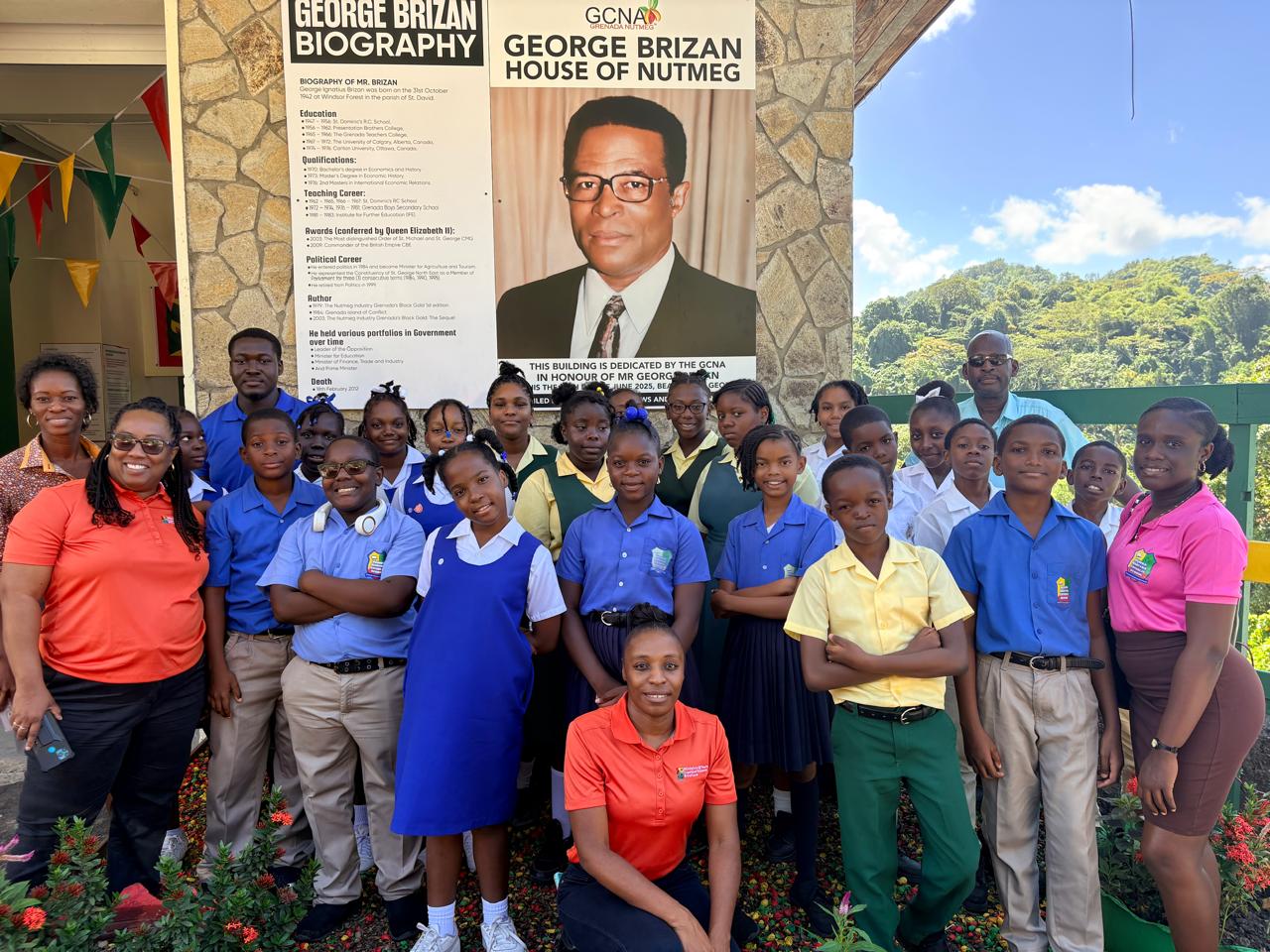
    The inaugural tour occurred on Friday, February 20th, featuring participation from twenty Grade Five and Six students accompanied by educators from four distinguished institutions: St George’s Methodist School, St Louis Girls RC School, St George’s Anglican Senior School, and Uganda Martyrs Catholic School.

    Participants embarked on an educational journey through two premier agro-tourism establishments in Beaulieu. The George Brizan House of Nutmeg, operated by the Grenada Cooperative Nutmeg Association (GCNA), provided students with comprehensive insights into nutmeg cultivation techniques, harvesting methods, and production processes. Simultaneously, the Tri-Island Chocolate Factory—recognized as Grenada’s first publicly accessible ‘tree-to-bar’ chocolate facility—offered an immersive understanding of artisanal chocolate production.

    The second scheduled tour, set for Friday, February 27th at Coyaba Beach Resort in Grand Anse, will engage twenty Form Three students and teachers from Wesley College, Anglican High School, JW Fletcher Catholic Secondary School, and Grenada Boys’ Secondary School.

    These experiential learning expeditions form part of a broader strategic initiative launched in March 2023 to build tourism awareness through firsthand industry exposure. The program specifically aims to enhance student comprehension of Grenada’s hotel and cruise sectors while highlighting the developmental significance of agro-tourism and community-based tourism models. By connecting classroom learning with real-world industry applications, the ministry seeks to inspire future professionals and strengthen the long-term sustainability of Grenada’s vital tourism economy.