标签: Grenada

格林纳达

  • REOI: Consultancy Services for Environmental Health and Safety Officer (EHSO)

    REOI: Consultancy Services for Environmental Health and Safety Officer (EHSO)

    The Government of Grenada has secured multilateral financing to advance its ambitious Grenada Geothermal Drilling Project, an initiative designed to expand the Caribbean nation’s renewable energy capacity and boost its climate resilience goals. Implemented by the country’s Ministry of Climate Resilience, the Environment and Renewable Energy and overseen by the dedicated Geothermal Project Management Unit (GPMU), the project will carry out exploration drilling at two pre-selected sites. Both locations are situated on private agricultural land in the northern region of Grenada’s main island: Site C in Tricolar, St Patrick Parish, and Site F at Plaisance Estate in St John Parish.

    As a project supported by multiple lending institutions, the initiative is bound by a rigorous set of international environmental and social safeguard frameworks. These include the Caribbean Development Bank’s (CDB) official review protocols, Inter-American Development Bank (IDB) safeguard policies, and the International Finance Corporation’s (IFC) widely recognized Performance Standards. The project scope covers civil engineering works and core exploration drilling, both of which will be procured via international competitive bidding, alongside a suite of contracted consultancy and individual specialist roles. All procurement activities follow the CDB’s established procurement guidelines for funded projects, aligned with Grenada’s domestic national procurement legislation. In cases where the two regulatory frameworks conflict, the terms of the relevant financing agreement take precedence.

    To ensure full adherence to all environmental, health and safety requirements during the project’s active phases, the executing ministry has launched a search for a qualified consultant to fill the role of dedicated Environmental Health and Safety Officer (EHSO). The core objective of this consultancy is to act as the GPMU’s central point of responsibility for all EHSO matters, with a mandate to guarantee the project complies with all approved regulatory documents throughout the civil works and exploration drilling stages. These requirements include the original Environmental and Social Impact Assessment (ESIA), the updated ESIA, finalized Environmental and Social Management Plans (ESMPs), all relevant Grenadian national laws, and the mandatory standards set by the project’s lending partners.

    The contracted EHSO will be employed on a full-time basis for an initial term of two years, with adjustments possible to align with evolving project needs. The ministry is now calling for expressions of interest from eligible individual consultants who meet the required qualification and experience benchmarks to deliver the services outlined.

    When evaluating submitted expressions of interest, the selection panel will prioritize candidates with a proven track record of successful delivery on comparable assignments. The mandatory qualifications for the role are as follows: candidates must hold either a bachelor’s degree paired with 10 years of relevant professional experience, or a postgraduate degree paired with at least 5 years of relevant experience, in a field such as environmental science, environmental engineering, occupational health and safety, or another closely related discipline. Candidates must also demonstrate hands-on experience carrying out EHS monitoring and implementing ESMPs in active project environments, with preference given to applicants with experience in the extractive, energy, or construction sectors. Additional requirements include a demonstrated working knowledge of occupational health and safety management systems and practices tailored to construction and drilling operations. Strong preference will be given to candidates already familiar with IFC Performance Standards or equivalent multilateral development bank safeguard frameworks, and prior experience working on geothermal or extractive industry project operations will be considered a distinct advantage.

    All application materials must be submitted in English. Interested candidates can access full project details, including the complete Terms of Reference for the role, via the In-Tend public procurement portal. General queries will be answered between the hours of 8 am and 4 pm, Monday to Friday, with responses issued within three working days of receipt.

    Completed expressions of interest must be submitted exclusively through the In-Tend portal, and must be received no later than Friday, 7 August 2026. All submissions must include the applicant’s full name and contact address, and be clearly marked with the text: “Expression of Interest – Consultancy Services for Environmental Health and Safety Officer (EHSO)” to avoid misclassification.

    After the evaluation process is completed, the candidate assessed as having the strongest technical capabilities and most relevant experience will be invited to enter into contract negotiations with the ministry. The Government of Grenada retains full legal rights to accept or reject any late submissions, to cancel the current call for expressions of interest either partially or in full, and is not obligated to provide any justification for its decision to select or reject any applicant. The government will also not cover any costs incurred by applicants during the preparation and submission of their expressions of interest.

    Submissions are addressed to the Permanent Secretary of the Ministry of Climate Resilience and Renewable Energy, located at the Ministerial Complex, Sir Eric Matthew Gairy Botanical Gardens, Tanteen, St George’s. The portal can be accessed at https://in-tendhost.co.uk/gnd, and candidates requiring assistance with portal registration can direct queries to [email protected].

  • Successful GPPA men’s health clinic signals new era for men’s healthcare

    Successful GPPA men’s health clinic signals new era for men’s healthcare

    On July 2, 2026, a major step forward for men’s healthcare in Grenada took place, as the Grenada Planned Parenthood Association (GPPA) formally unveiled its long-awaited dedicated Men’s Health Initiative. The launch was anchored by a well-received one-day specialist Men’s Health Clinic, developed through a collaborative partnership between GPPA, Dr. Jonathan Noël — a leading robotic urological surgeon based at Guy’s and St Thomas’ NHS Foundation Trust in the United Kingdom and Medical Director of Global Robotic Prostate — and the Maria Holder Memorial Trust, a local funding partner that made the project possible.

    The clinic saw far higher turnout than organizers initially anticipated, drawing widespread interest from men across all regions of the Caribbean island nation. Over the course of the day, participating men received one-on-one specialized consultations covering a full spectrum of common male health concerns, from prostate health monitoring and urinary symptom assessments to sexual health support and treatment for other urological conditions. Public health experts emphasize that early detection and intervention for these conditions drastically improves long-term health outcomes and patients’ quality of life, filling a critical gap in access to specialized care for Grenadian men.

    For more than six decades, GPPA has anchored sexual and reproductive health services across Grenada, focusing its efforts on advancing the well-being of women, young people, and families. The launch of the Men’s Health Initiative marks a meaningful expansion of the organization’s core mandate, a shift that reflects both the central role men play in family and community health and GPPA’s commitment to delivering confidential, compassionate care to all members of the public, regardless of gender. GPPA leadership notes that dedicated men’s health services have been needed for years, making the new initiative a landmark milestone for the organization.

    “The turnout and engagement we saw at our first ever Men’s Health Clinic makes one thing clear: Grenadian men are ready to prioritize their health when they have access to specialist services that are accessible and welcoming,” explained Dr. N’Kosha Fletcher, a family practitioner with GPPA. “This clinic is just the first step. Through our ongoing partnership with Dr. Noël, we are dedicated to sustaining consistent access to expert urological care, and building a culture where men make regular screening and early intervention a core part of their health routine.”

    In response to the overwhelming demand for services at the inaugural clinic, the partnership has already mapped out plans for ongoing care beyond one-off in-person events. When Dr. Noël is not visiting Grenada for on-site clinics, patients will be able to access his specialized expertise through a telehealth consultation program, linked directly through GPPA’s existing patient referral system. “I was incredibly encouraged by the tremendous response we saw and how willing men were to reach out for care,” Dr. Noël shared. “The reality is that most urological conditions can be managed very successfully when they are caught early. I’m looking forward to continuing this important work with GPPA, and returning to the island later this year to treat even more men across Grenada.”

    GPPA has publicly extended its gratitude to the Maria Holder Memorial Trust, whose generous financial and programmatic support made the launch of the initiative possible. The organization also recognized the work of its full-time staff, volunteer team, and other community partners, whose collective commitment ensured the inaugural clinic ran smoothly and successfully.

    GPPA is currently encouraging all men across Grenada to take proactive control of their health by booking an appointment, either to see one of the association’s in-house family practitioners or to access the new telehealth urology service. The initiative is rooted in a simple, powerful public health motto: Healthy Men. Healthy Families. Healthy Communities.

    Men seeking more information or interested in scheduling an appointment can contact the Grenada Planned Parenthood Association via telephone at (473) 440-3341 or (473) 403-3341, or reach out by email at [email protected].

  • Cost of Living Assistance Programme

    Cost of Living Assistance Programme

    Facing persistent global economic pressures that have driven up living costs for households and businesses across the nation, the Government of Grenada has launched a comprehensive, fiscally responsible 2026 Cost of Living Assistance Programme. Valued at a maximum of EC$18 million, the temporary five-month relief package combines energy-focused tax cuts, expanded household subsidies, and consumer-focused tax exemptions to ease immediate budget strains, curb inflation, and support local economic activity, all while preserving long-term fiscal sustainability.

    The first and most broad-reaching measure of the programme is a full temporary removal of Value Added Tax (VAT) on all electricity consumption, effective from 1 August through 31 December 2026. Unlike targeted relief that benefits only specific groups, this cut applies to every category of electricity customer across the country: residential households, small commercial enterprises, large commercial operations, industrial producers, public institutions, and all other energy users. As a core input to every sector of Grenada’s economy, lower electricity costs will reduce expenses across the board—from monthly household budgets to overhead for local businesses and production costs for agriculture and manufacturing. By August, all electricity customers will see a zero charge for VAT in the government charges section of their monthly bill, delivering immediate, transparent savings directly to end users.

    The second energy-focused measure complements the VAT cut by eliminating the Customs Service Charge on imported diesel used exclusively for electricity generation, running for the same August to December 2026 period. Because Grenada relies entirely on imported fuel to produce much of its electricity, import taxes directly pass through to end users in the form of higher power tariffs. By removing this charge at the border, the government reduces the underlying input cost of electricity generation, helping to offset upward pressure on power prices driven by volatile global fuel markets. Unlike the immediate VAT cut on retail bills, the benefits of this measure will be passed to consumers gradually, aligned with existing billing cycles and the flow of new duty-free fuel shipments into the national energy supply.

    Third, the government is dramatically expanding its existing residential electricity subsidy programme to reach thousands more vulnerable households, while more than quadrupling the monthly benefit amount. Previously, the programme offered just EC$10 per month in relief for households consuming 99 kilowatt-hours (kWh) or less monthly, supporting approximately 22,089 households. The enhanced scheme raises the monthly subsidy to EC$50 and expands eligibility to all households consuming 200 kWh or less per month, pushing the total number of beneficiary households to 38,640 across Grenada, Carriacou, and Petite Martinique. The expanded subsidy will take effect for August 2026 bills, putting extra cash directly back into household pockets to cover groceries, back-to-school supplies, and other essential daily needs. Like all measures in the package, the enhanced subsidy is temporary, targeted, and designed to cushion household disposable incomes from global energy price shocks while the government advances long-term solutions in renewable energy and energy efficiency.

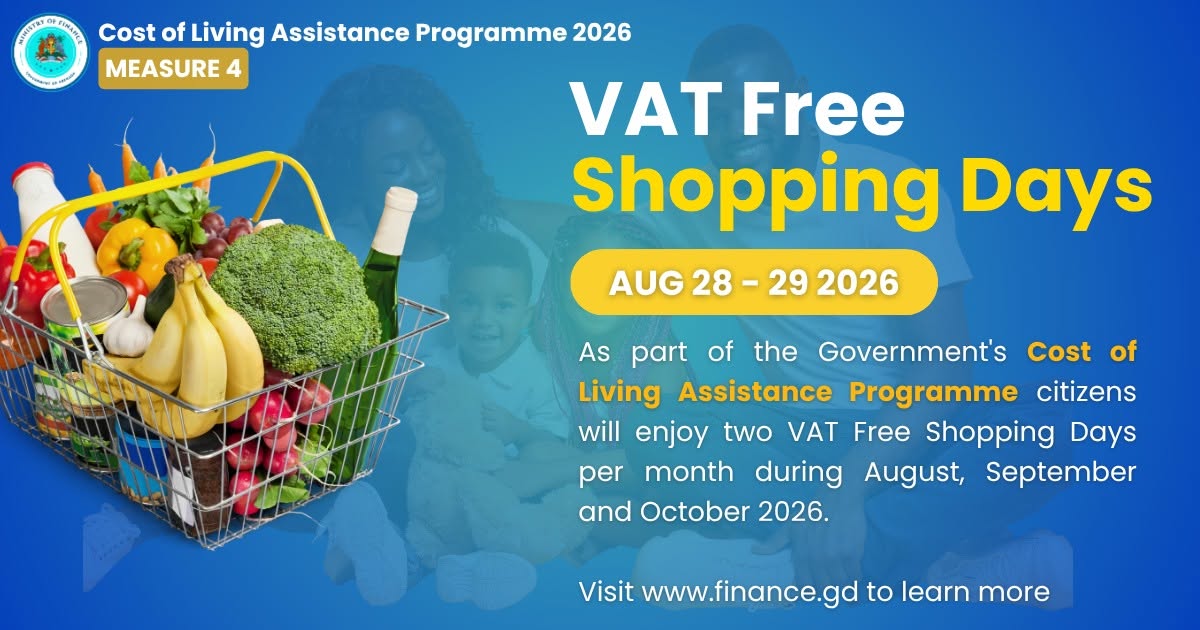
    As a fourth measure to support consumers and stimulate local business activity, the cabinet has approved two VAT-free shopping days per month for August, September, and October 2026. The first VAT-free weekend is scheduled for 28–29 August 2026, timed perfectly to help families cover back-to-school costs and stock up on essential household goods. Only approved, VAT-registered, tax-compliant businesses are permitted to participate, and the exemption applies to a wide range of everyday goods: groceries, clothing, school supplies, books and uniforms, household goods, appliances, electronics, and hardware. The initiative has four core goals: deliver direct immediate cost-of-living relief to households, boost consumer spending and retail sales, support compliant local businesses, and encourage broader tax compliance by strengthening public-private collaboration. Clear pricing and compliance rules have been built into the programme design to ensure consumers receive the full benefit of the tax exemption. The Ministry of Finance will launch a full public information campaign in the coming weeks to share details on participating businesses and eligible items with the public.

    In addition to these four new measures, the government will extend existing fuel price stabilisation measures through the end of December 2026. These measures include keeping price caps in place for domestic consumption of key fuel products: gasoline, diesel, and kerosene are capped at EC$17 per gallon, 20-pound LPG cylinders are held at EC$40, and 100-pound cylinders are capped at EC$350.

    Throughout the announcement, the Ministry of Finance emphasized that the entire relief package has been structured to be fiscally responsible, with an expected maximum total fiscal impact of EC$18 million. Years of prudent public financial management have created the fiscal space to deliver this meaningful immediate relief without putting long-term national fiscal sustainability at risk, officials noted. This targeted investment is designed to protect household budgets, support economic stability, and buffer Grenadians from ongoing external economic uncertainty, representing what the government calls responsible governance that balances short-term relief with long-term national stability.

  • Stacey Liburd has concluded tenure as CEO at GTA

    Stacey Liburd has concluded tenure as CEO at GTA

    The Grenada Tourism Authority (GTA) has made an official announcement confirming that chief executive Stacey Liburd will end her tenure at the helm of the national tourism organization, effective July 22, 2026. Liburd first took up the top leadership role at GTA in June 2025, and over the course of her term, she oversaw all core operations of the authority, spanning executive management, global destination marketing, and cross-stakeholder engagement across Grenada, Carriacou and Petite Martinique. Her work covered both long-established international source markets and fast-growing emerging tourism markets for the island nation.

    In a public statement reflecting on her time leading the authority, Liburd described holding the CEO post as one of the most significant honors of her entire professional career. She noted that while her tenure in Grenada brought profound professional fulfillment, it also required major personal sacrifice. After extensive consideration, she made the difficult decision to step down to return to her home country and prioritize time with her family.

    Liburd emphasized that she departs with great pride in the collective progress the GTA team delivered during her relatively short time in office. She expressed gratitude for the opportunity to contribute to the ongoing expansion of Grenada’s tourism sector and the strengthening of the destination’s global brand positioning. She extended sincere thanks to GTA’s committed full-time staff, Grenada’s Ministry of Tourism, all industry and community stakeholders, and the general public of Grenada for the warm welcome, collaborative partnership, and consistent support they offered throughout her tenure. She added that the widespread passion and dedication shown by local tourism workers leave her fully confident that Grenada’s tourism industry will continue to grow and prosper in the coming years.

    “ I leave with cherished memories, lasting friendships and deep appreciation for the opportunity to have served this beautiful nation. It has truly been an honour, and I will continue to celebrate and support Grenada wherever my journey leads,” Liburd said.

    GTA’s Board of Directors has publicly acknowledged Liburd’s contributions during her tenure, thanking her for her service and extending well wishes for all her future professional and personal pursuits. The authority confirmed that it remains fully committed to its core mission of advancing and expanding Grenada’s tourism offerings. To ensure no disruption to core operations, interim leadership arrangements have already been implemented to keep the organization on track with its mandate of boosting the destination’s global visibility and international market competitiveness.

  • IRENA SolarCity Simulator includes 3 areas in Grenada

    IRENA SolarCity Simulator includes 3 areas in Grenada

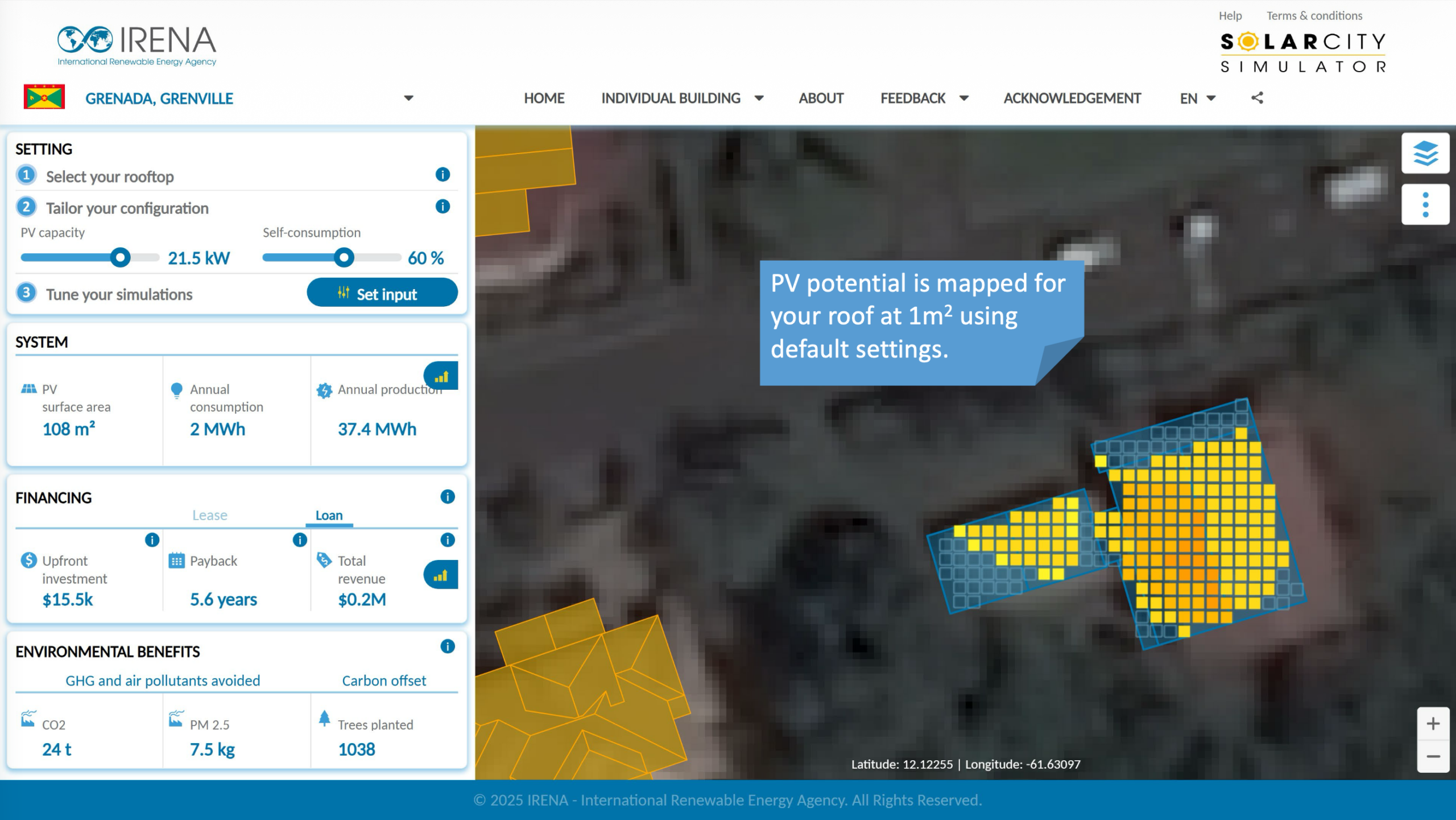
    The International Renewable Energy Agency (IRENA) has announced an expansion of its free, publicly accessible online SolarCity Simulator, adding coverage for three high-priority regions across Grenada as part of a global push to speed up the adoption of residential and commercial rooftop solar photovoltaic (PV) systems. The newly covered areas include St George’s and Grand Anse in the parish of St George, Grenville in St Andrew, and Hillsborough on the island of Carriacou, opening the tool’s planning capabilities to stakeholders across a large portion of Grenada’s populated areas.

    Designed to demystify the process of investing in rooftop solar, the SolarCity Simulator serves a broad range of users, from individual homeowners considering small-scale residential installations to business owners, private energy investors and local government agencies planning larger commercial and public projects. Through the interactive online platform, users can test a wide range of deployment scenarios, pulling location-specific data to generate accurate estimates of two critical outcomes: the technical energy generation potential of a given rooftop space, and the expected long-term financial performance and potential revenue streams from a completed installation.

    Unlike many technical energy planning tools that require specialized expertise to access or operate, IRENA’s simulator is built to be intuitive and accessible for users with no prior background in renewable energy project development. This user-centric design ensures that even first-time potential solar adopters can gather the actionable data they need to make confident, informed investment decisions before committing time and capital to a full installation.

    For local users in Grenada, the tool is also integrated directly into the Climate Resilience Portal hosted by the country’s Ministry of Climate Resilience, The Environment & Renewable Energy, making it easy to access alongside other national climate and renewable energy resources. Users can navigate to the simulator through the portal’s Data & Tools dropdown menu, selecting the Tools subcategory to locate the SolarCity Simulator.

    IRENA has also opened a call for public feedback from users of the expanded platform, specifically requesting input on how the tool can better serve three core use cases: building public awareness of rooftop solar benefits, streamlining preliminary site assessments for potential projects, and supporting data-driven investment decisions. Agency officials note that user comments will be integrated into ongoing updates to the tool, ensuring it continues to evolve to meet the specific needs of adopters in Grenada and other regions where it will be deployed in the future.

    As a small island developing state, Grenada has prioritized expanding renewable energy adoption to reduce dependence on imported fossil fuels, lower energy costs for residents and businesses, and strengthen its national climate resilience. The expansion of the SolarCity Simulator aligns with both IRENA’s global mandate to accelerate renewable energy deployment and Grenada’s national climate and energy policy goals.

  • Government invests $18 million in cost-of-living relief measures

    Government invests $18 million in cost-of-living relief measures

    The Caribbean nation of Grenada has launched a targeted, multi-faceted Cost of Living Assistance Programme to shield local households, small businesses, and the broader national economy from the sharp upward swing in global food and energy prices that has strained budgets across the world in recent months.

    This wide-ranging relief initiative is crafted specifically to counteract international inflationary pressures that have spilled over into Grenada’s domestic market: these include heightened fuel tariffs, bloated global shipping costs, and persistent supply chain disruptions that have been worsened by ongoing geopolitical tensions in the Middle East.

    While unveiling the programme, Minister of Finance Dennis Cornwall stressed that the inflation driving cost increases across the country is not homegrown, but imported from global markets. “While we cannot control international markets, we can act responsibly to help reduce the impact on our people,” Cornwall explained during the official announcement.

    The initiative is projected to deliver direct support to more than 38,000 households spread across Grenada, Carriacou and Petite Martinique. It is structured to deliver immediate targeted relief while upholding the government’s longstanding pledge to maintain fiscal stability, with the total cost of the programme estimated at roughly 18 million Eastern Caribbean dollars.

    Among the core, long-term measures is the extension of existing price caps on four key energy products: gasoline, diesel, kerosene, and liquefied petroleum gas cylinders. These price ceilings will remain in place through December 2026 to prevent sudden cost spikes for consumers. Additional key relief provisions include:
    1. Full VAT elimination on electricity bills for all consumer categories, running from August 2025 through December 2026
    2. A full waiver of customs service charges on diesel imported for power generation, a move designed to cut wholesale production costs that translate to lower electricity bills for end users
    3. An increase to direct monthly electricity subsidies, raising the maximum payment from EC$10 to EC$50, alongside a major expansion of eligibility to cover households that use up to 200 kilowatt-hours per month, up from the previous threshold of 99 kilowatt-hours
    4. Two VAT-free shopping days per month from August through October 2026, covering essential goods including groceries, school supplies, hardware, and home appliances

    Cornwall emphasized that the government’s ability to roll out this substantial relief package stems from years of disciplined fiscal management. “We can provide meaningful relief today because of prudent fiscal stewardship over recent years. We are taking care of our people today while preserving the country’s long-term sustainability. That is responsible governance,” he said.

    In closing, the government of Grenada reaffirmed its commitment to upholding the principles of good governance, fiscal responsibility, and economic stability to protect the livelihoods of all citizens across all three of the nation’s main islands.

  • Temporary road closure: Park Lane, St George’s on 22 July 2026

    Temporary road closure: Park Lane, St George’s on 22 July 2026

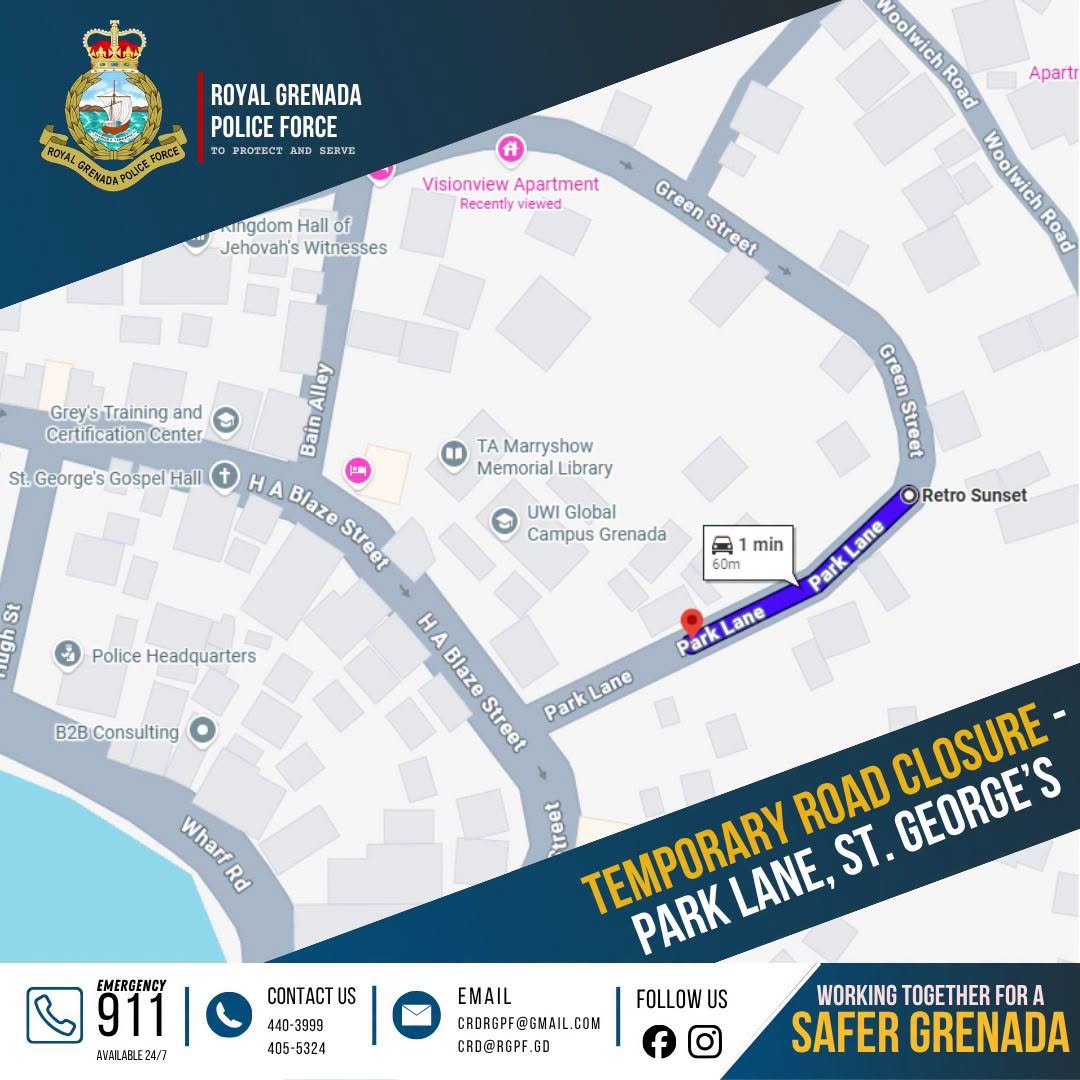
    The Traffic Division of the Royal Grenada Police Force (RGPF) has issued a formal public advisory alerting all local residents, and drivers in particular, to an upcoming full closure of Park Lane in downtown St George’s. The closure is set to take place on Wednesday, July 22, 2026, running from 9:00 a.m. through to 12:00 p.m. local time, to accommodate critical concrete pouring work along the roadway.

    To minimize disruption to daily travel and keep local traffic flowing safely during the construction window, RGPF has implemented a formal temporary traffic diversion plan that all road users must follow during the closure period. Under the new route arrangement, any vehicle traveling along Green Street will not be permitted to continue toward the closed Park Lane segment. Instead, all motorists on Green Street will be required to make a right turn into Bain’s Alley, before exiting the diversion route onto H A Blaize Street.

    In its advisory, the Royal Grenada Police Force extended a public apology for any unavoidable inconvenience that the road closure and temporary route changes may cause to local commuters, businesses, and visitors. Law enforcement officials also noted that they are expecting full cooperation and compliance with the new traffic rules from all road users during the three-hour construction window to ensure the work is completed on schedule and without unnecessary traffic disruption.

    This advisory was officially released through the Office of the Commissioner of Police, for distribution to the general public ahead of the scheduled work. NOW Grenada, the outlet publishing the advisory, notes that it holds no responsibility for the content, opinions, or statements included in third-party contributor submissions, and provides a reporting channel for users to flag any abusive content shared on its platform.

  • GNT calls for independent review before Drill Yard demolition

    GNT calls for independent review before Drill Yard demolition

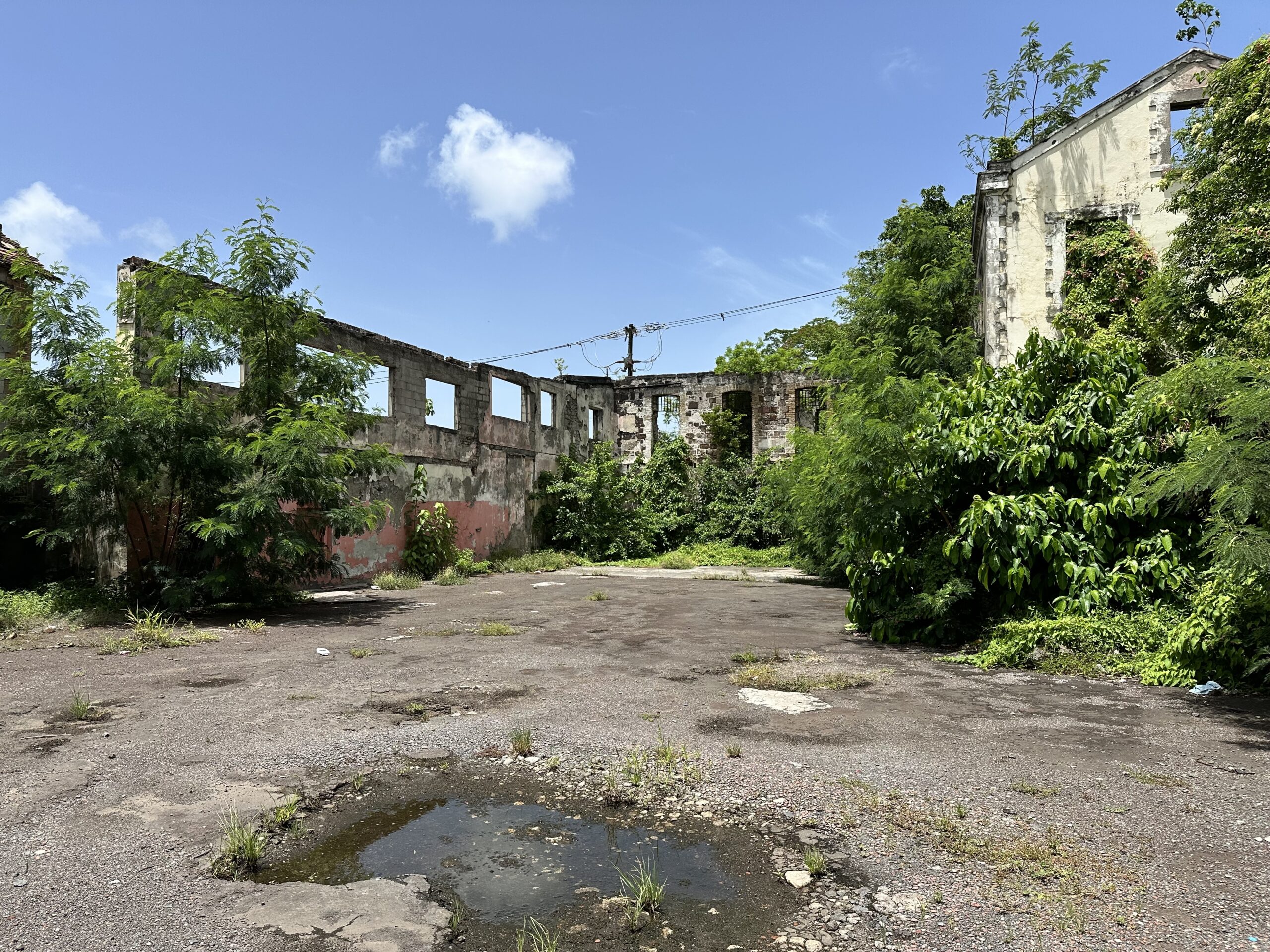
    A heated debate over the future of one of Grenada’s most historically significant landmarks has emerged, with the Grenada National Trust (GNT) formally calling on national authorities and statutory bodies to pause ongoing irreversible demolition work at the historic Drill Yard. The organization is pushing for an independent, conservation-focused structural assessment before any further action is taken, arguing that prioritizing public safety does not have to come at the cost of permanently erasing the nation’s cultural heritage.

    Speaking on the GNT’s behalf, First Vice President Dr. Ezra B. Matthias emphasized that the trust does not oppose securing hazardous areas to protect the public. “Public safety is our top priority too. We are not asking for an unsafe site to remain open and accessible to the public,” Matthias clarified, framing the organization’s position as a balanced alternative to rushed demolition.

    Instead of immediate full demolition, the GNT proposes a structured, multi-faceted review that evaluates heritage value, structural integrity, archaeological potential, and public safety risks before any irreversible changes proceed. The trust’s core recommendations include immediately fencing off dangerous sections of the site, fully documenting and salvaging one-of-a-kind historic materials before they are destroyed, and retaining any portions of the original structure that can be stabilized safely. “Informed decisions must be made before we face losses that can never be reversed,” Matthias noted, stressing that no final determination on the site’s future can be made without independent input.

    Matthias explained that while the National Insurance Scheme (NIS) has cited engineering advice that supports full demolition, the GNT carried out its own independent desk review in partnership with the International National Trusts Organisation and global heritage conservation specialists. After examining NIS engineering reports, draft demolition plans, official planning approvals, and all related technical documentation, the GNT published its own formal conclusions and policy recommendations.

    The GNT acknowledges the real safety concerns raised by the NIS, including unstable masonry, falling debris, and the risk of total structural collapse. However, the organization points out that there is currently no independent verification that the site cannot be rehabilitated and preserved for future generations. To address immediate safety risks while the assessment is completed, the GNT proposes interim measures: perimeter fencing, controlled restricted access, clear public warning signage, temporary structural stabilization where feasible, selective removal of only immediately hazardous loose materials, and professional oversight of all activities during the review period.

    A key point of contention in the debate is the lack of early stakeholder engagement. Matthias confirmed that the GNT was never formally consulted during the planning stages for the demolition. The organization only became aware of the project after concerns were raised by the Grenada National Museum (GNM) and other heritage groups. While a meeting between the NIS, GNT, the Willie Redhead Foundation, and GNM was held on 1 July 2026, that meeting took place after demolition work had already commenced on the site.

    When contacted by NOW Grenada for comment on the future of the Drill Yard property, the National Insurance Board (NIB) declined to answer questions. Acting Executive Assistant Davionne Phillip confirmed that the board would not be issuing a statement on the matter at this time, noting that any future public updates would be released through official channels if the board chooses to do so. Requests for comment sent to Alva Browne, Permanent Secretary in the Ministry of Infrastructure and Physical Development, on 15 July 2026 also went unanswered as of the publication of this report.

    Dr. Matthias argues that for a site of Drill Yard’s national historical importance, all key stakeholders – including the GNT, GNM, Willie Redhead Foundation, and heritage representatives from the Planning and Development Authority – should have been formally included in the decision-making process before demolition was scheduled. The Drill Yard is far more than a collection of old buildings: it is deeply woven into Grenada’s historical narrative, with connections to the 18th-century Palais de Justice, the island’s early prison system, military history, the transatlantic enslavement system, the post-emancipation apprenticeship period, Fedon’s Rebellion, the development of public administration, and even early cultural development as the location of Grenada’s first calypso tent.

    Beyond its historical value, Matthias added that the restored site could become a core node in a growing heritage tourism circuit connecting Fort George, the Grenada National Museum, Market Square, Young Street, and other iconic historic landmarks. This would generate long-term educational, cultural, and economic benefits for local communities and the nation as a whole.

    The GNT also points to existing national legislation that mandates heritage protection: the 1967 Grenada National Trust Act and the 2016 Physical Planning and Development Control Act both establish clear legal frameworks for the conservation of historic sites, and Matthias says these legal mechanisms should be fully applied before any demolition proceeds.

    Responding to Grenadians who argue that public safety must take absolute precedence over heritage preservation, Matthias said the GNT shares that core value. “They are right that public safety must come first. No heritage site is worth a human life,” he stated. “But public safety does not automatically require the total erasure of our shared history. A serious, responsible country can do both: protect the public and safeguard our heritage. This is not a choice between safety and preservation – it is a question of whether we will follow a disciplined, lawful, professional process before destroying a site of national significance.”

    Matthias emphasized that the outcome of the Drill Yard debate will set a critical precedent for heritage protection across the entire country, extending far beyond this single property. The GNT is calling for the adoption of a formal national standard that requires securing unsafe sites, consulting all relevant stakeholders, conducting thorough independent conservation assessments, documenting heritage assets, salvaging significant historic materials, and preserving all sections of structures that can be safely retained before any irreversible demolition decisions are made.

  • NAGICO Insurances and GSL launch historic developmental scholarship

    NAGICO Insurances and GSL launch historic developmental scholarship

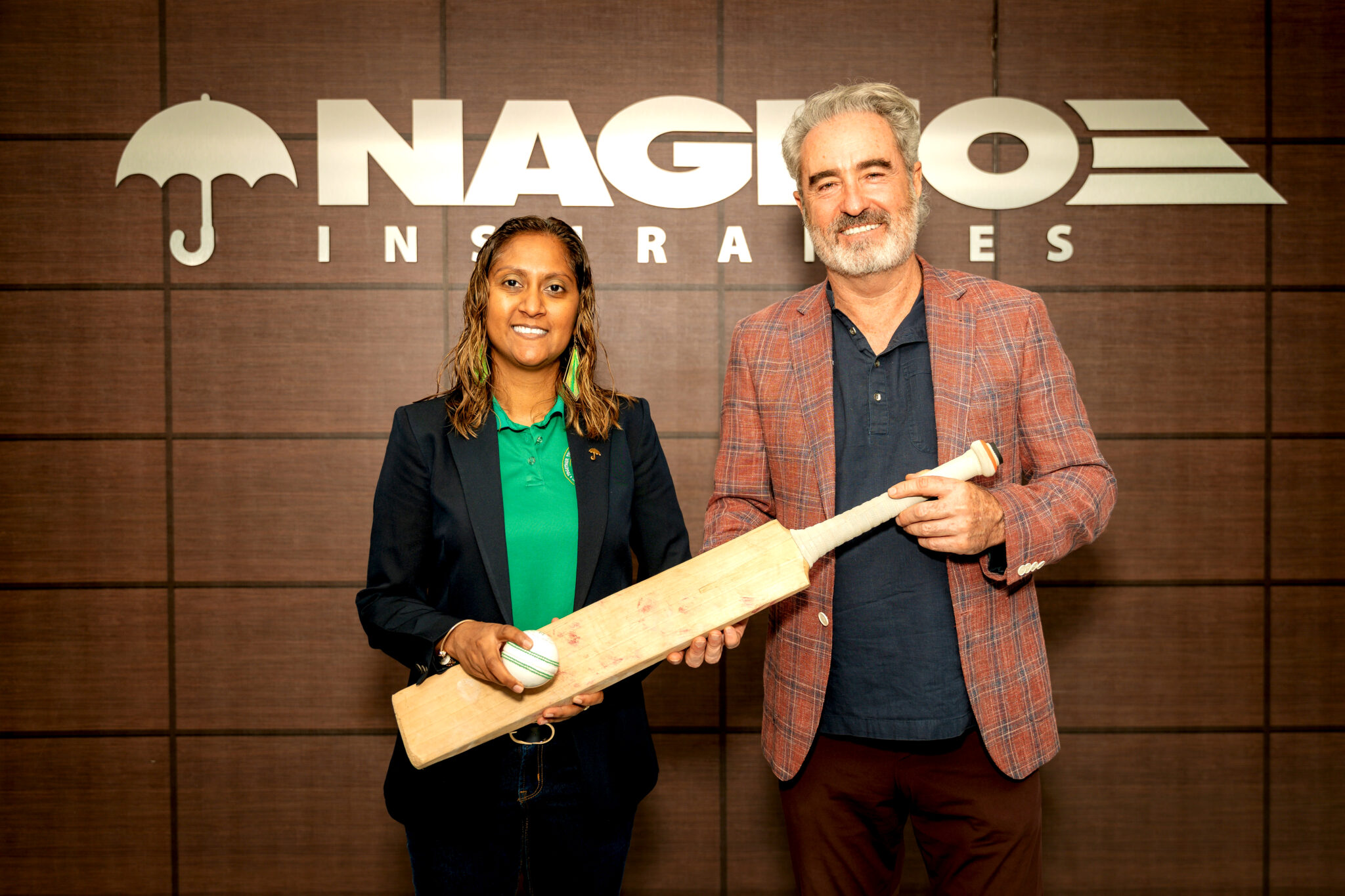
    Caribbean cricket is set to receive a major boost for emerging talent, as the ExxonMobil Guyana Global Super League and regional insurance leader NAGICO Insurances have partnered to launch a groundbreaking developmental scholarship for the 2026 tournament. This first-of-its-kind opportunity, launched under the league’s Super We platform, has selected 21-year-old St Maarten batting all-rounder Michael Palmer as its inaugural recipient. Palmer will join the tournament’s home franchise, the Guyana Amazon Warriors, for the upcoming event.

    Unlike standard observation programs, this scholarship immerses rising young players in the full high-performance culture of professional cricket, giving them hands-on experience alongside some of the top regional and international cricketers competing in the tournament. For NAGICO Insurances, which is headquartered in Palmer’s home country of St Maarten, this initiative marks a continuation of the firm’s longstanding commitment to youth development and the expansion of cricket across the Caribbean region.

    “At NAGICO, we believe that one of the greatest investments we can make is in the potential of young people,” said Kyria Ali, CEO of the NAGICO Group. “This initiative is about more than giving talented youth a chance to watch elite cricket; it is about giving the opportunity to experience it from the inside, to share a dressing room with some of the world’s best players, observe the professionalism and discipline that define success, and return home inspired to pursue their own dreams.”

    Ali emphasized that as a homegrown Caribbean company, NAGICO takes particular pride in launching this trailblazing program, with plans to expand the partnership with the Global Super League in coming years. “We believe that this experience can ignite passion, build confidence, and help shape the next generation of Caribbean sporting talent. Sometimes, a single opportunity can change the course of a young person’s future, and we are honoured to work alongside the Global Super League team to help make that possible,” she added.

    Sir Clive Lloyd, chairman of the ExxonMobil Guyana Global Super League, welcomed the partnership, framing the scholarship as a foundational investment in the future of Caribbean cricket. “One of the key objectives of the ExxonMobil Guyana Global Super League is to create opportunities that extend beyond the matches themselves. We are delighted that NAGICO Insurances has partnered with us to provide this developmental scholarship, which will give one talented young cricketer invaluable exposure to a professional environment. Initiatives like this help ensure that the next generation of Caribbean players is equipped to carry our rich cricketing legacy forward,” he explained.

    The scholarship adds a new, impactful legacy component to the 2026 ExxonMobil Guyana Global Super League, reinforcing the tournament’s dual mission of delivering world-class elite competition and nurturing the next wave of Caribbean cricket talent. The 2026 tournament is scheduled to run from July 23 to August 1 in Guyana, where reigning champions Guyana Amazon Warriors will defend their title against top international franchises: Lahore Qalandars from Pakistan, Desert Vipers from the United Arab Emirates, Perth Scorchers XI from Australia, and the San Francisco Unicorns from the United States.

    Founded in 1982, the NAGICO Group is one of the Caribbean’s leading insurance providers, offering property and casualty coverage, life and health insurance, and customized risk solutions to clients across the region. Headquartered in Philipsburg, Sint Maarten, the firm holds an A- Excellent Capital Adequacy Rating from AM Best, cementing its position as one of the region’s most financially stable and trusted insurers.

  • Our health heritage

    Our health heritage

    For generations, communities across the Global South have absorbed a harmful, unspoken bias: the assumption that innovations and expertise from wealthy, developed nations are inherently more valuable than knowledge cultivated at home. This prejudice, centuries old and often unconsciously perpetuated, blinds societies to their own historical contributions and erodes confidence in indigenous problem-solving. Recently, that implicit bias boiled over into a shocking public statement from a senior U.S. official, who claimed on broadcast that so-called “third world” nations never contributed anything to global progress—from the invention of the wheel to modern technology, medicine, or air travel. As a small Caribbean nation widely categorized in that dismissive grouping, Grenada is directly targeted by this harmful falsehood.

    This claim is not just offensive—it is historically inaccurate, and a long-forgotten 18th-century medical trial held right on Grenadian soil proves it. As historian Londa Schiebinger documents in her work *Secret Cures of Slaves*, a 1773 yaws outbreak on a Bacolet Island plantation created an accidental test of indigenous versus European medical practice. Yaws, a debilitating bacterial infection that erodes skin and bone, was a major public health threat in the region at the time. While the infection has been eliminated from the Caribbean, it still plagues more than a dozen low-income nations globally, and the World Health Organization has targeted it for complete eradication by 2030.

    The plantation’s Scottish owner, Alexander J. Alexander, arranged a side-by-side comparison of two treatment approaches. Four enslaved patients were placed under the care of a European-trained surgeon, who used the standard European medical remedies of the era. Two other patients were entrusted to an unnamed enslaved African healer, who treated them with a combination of induced sweating and a medicinal preparation made from local Grenadian woods—including the native ironwood known locally as Bois fer. The results were definitive: the healer’s two patients made full recoveries in just 14 days, while the European surgeon’s treatment failed completely. Seeing the outcome, the plantation owner immediately transferred all yaws patients on his estate to the indigenous healer’s care, and all subsequent patients recovered.

    This successful demonstration of effective indigenous medicine predates the United States’ Declaration of Independence by three full years. That makes the modern claim that Global South nations have never contributed to medical or technological progress nothing less than deliberate slander, contradicted by documented historical evidence. So how has this harmful stereotype persisted for so long? The answer lies in a failure of historical memory: the legacy of colonial and post-colonial education systems that have erased Indigenous and local knowledge from public narrative, leaving a vacuum filled by the myth that foreign expertise is inherently superior.

    The Bacolet healer was never honored for his achievement, nor was his success used to build national pride in Grenada’s indigenous medical heritage. He was not even recorded by name in historical documents, remembered only as a “Negro doctor”—his contribution documented only because the plantation owner stood to lose valuable enslaved labor if patients died. But the surviving record stands as a powerful rebuke to modern racism, ignorance, and condescension toward Global South knowledge.

    The core crisis this forgotten story exposes is not just the ignorance of outsiders. It is the internalized devaluation of local wisdom that many Global South communities have absorbed. The greatest danger is not the doubt that outsiders cast on our ability—it is the self-doubt that leads us to reflexively reach for foreign-developed solutions to problems rooted in our own local context. While many foreign innovations offer real value, we have too often overlooked the wisdom of generations of people who have lived with our local health challenges, allowing that hard-won knowledge to fade into obscurity thanks to persistent prejudice.

    The unnamed healer at Bacolet had no foreign medical board to credential him, no international funding to support his work, and no access to imported pharmaceuticals. He relied only on the generations of knowledge he carried and the medicinal resources growing naturally around him on Grenadian soil—and the results spoke for themselves. Today, that story challenges Grenada and other Global South nations to reckon with the bias we have inherited: When will we value our own history, honor our own successes, and break the chains of internalized self-doubt that keep us from solving our own health challenges? When will we stop waiting for crisis to force us to look abroad for answers, and start the quiet, essential work of elevating the expertise of our own people to solve our own problems?