标签: Grenada

格林纳达

  • Temporary road closure: Scott Street/Young Street, St George’s

    Temporary road closure: Scott Street/Young Street, St George’s

    Motorists and residents of St. George’s, Grenada are adjusting their travel plans in advance after an official advisory from the Traffic Department of the Royal Grenada Police Force (RGPF) announced an upcoming temporary closure of the Scott Street and Young Street corridor. The complete ban on vehicular access is scheduled to allow construction teams to safely carry out the demolition of an existing structure located on Young Street.

    The traffic restriction will go into effect on Sunday, July 26, 2026, and remain in place from 8:00 a.m. local time through 6:00 p.m. the same day. To minimize travel disruptions for commuters and local businesses during the closure period, law enforcement officials have published a clearly marked alternative route for all through traffic.

    Under the revised traffic plan, any vehicle traveling along Halifax Street will be required to divert off the main corridor: drivers must turn left onto Church Street, then take a right turn onto Lucas Street to connect to H A Blaize Street, the primary downtown thoroughfare that the Scott/Young Street corridor normally serves.

    In the official notice issued from the Office of the Commissioner of Police, the RGPF extended a public apology for the inevitable disruptions to daily travel that the closure will cause. Law enforcement representatives also noted that they are counting on full cooperation and compliance from all road users throughout the duration of the demolition work to ensure the operation proceeds safely and on schedule.

    This advisory was released by the RGPF through official public communication channels. NOW Grenada, the outlet that published the notice, has clarified that it holds no responsibility for the content of statements or third-party contributor materials, and provides a reporting channel for users to flag any abusive content associated with the publication.

  • Notice: Sunken vessel in St George’s outer harbour

    Notice: Sunken vessel in St George’s outer harbour

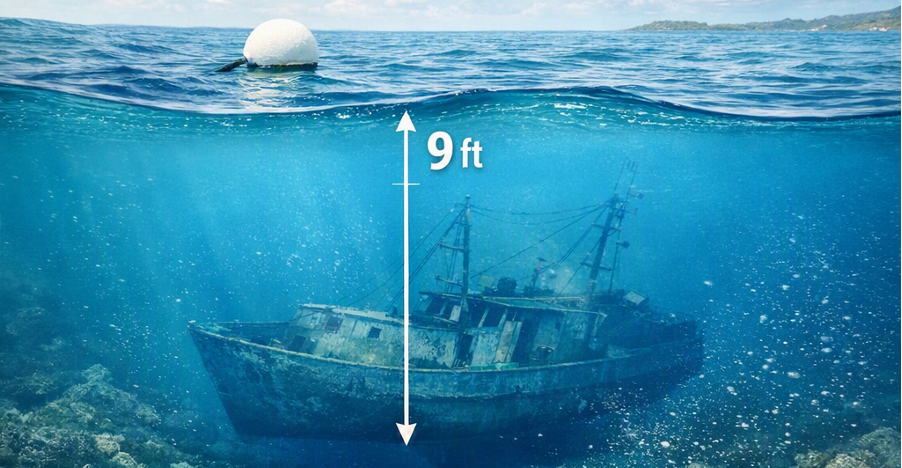
    Mariners and commercial and recreational fishers operating in Grenada’s St George’s Outer Harbour have been issued an urgent safety advisory, warning of a major new navigation hazard following the sinking of fishing vessel *Little Desrine F2* on 16 July 2026.

    According to the Fisheries Division under Grenada’s Ministry of Blue Economy and Marine Affairs, the vessel sank after an onboard fire broke out, leaving a submerged wreck at the marked coordinates of 12°03.403’N, 106°45.521’W. Official measurements confirm that the minimum vertical clearance between the wreck and the water surface is just 2.74 metres, or 9 feet, creating a hidden threat for watercraft passing through the area.

    The advisory outlines a range of serious risks that the sunken wreck poses to maritime traffic. Passing vessels can sustain severe hull damage from striking the submerged structure, while fishers risk losing or damaging expensive fishing gear through entanglement with the wreck. Additional hazards apply to specific operating conditions and vessel types: the threat is amplified for deep-draft vessels, for those traveling to fishing grounds, trolling, setting or retrieving fishing gear, and for any navigation carried out at night or in conditions with reduced visibility.

    A temporary white fender has been deployed to mark the wreck’s position, but authorities stress that mariners should not depend on this marker alone to avoid the hazard. All watercraft operators are instructed to cross-reference the official published coordinates, maintain a safe clearance distance from the site, and exercise extreme caution any time they transit through the Outer Harbour.

    In a closing note, the Ministry urged mariners and fishing community leaders to share this advisory widely across local and regional fishing networks to ensure all operators are aware of the new hazard. Members of the public with questions or additional information about the incident can contact the Fisheries Division at 438-5050 or 440-3814.

    This advisory was published by NOW Grenada, which notes that it accepts no liability for opinions and statements shared in contributor-submitted public content. Users can report any abusive content related to this advisory through the platform’s designated reporting channel.

  • Ties that Bind: Art exhibition of 17 families

    Ties that Bind: Art exhibition of 17 families

    For years, the idea of a dedicated permanent space to elevate interconnected Caribbean art across island nations existed only as a distant vision. That vision became a tangible reality in 2024, thanks to the relentless drive of veteran art collector and former banker Rae Skinner, who opened Caribbean Brushstrokes gallery in Bridgetown, Barbados’ Pelican Village.

    Skinner’s connection to Caribbean art stretches back decades. During her years working in international banking, she traveled regularly across the Caribbean region, and carved out time on every trip to seek out local creative work. She built personal connections with hundreds of artists long before launching her gallery, often growing familiar with their pieces before meeting them in person. Her core mission for the new space emerged from a common gap she observed across the regional art scene: Caribbean creators and audiences rarely get the chance to engage with work from artists across neighboring islands. “We don’t see enough of each other’s art,” Skinner noted, a gap she set out to close with her new venue.

    Caribbean Brushstrokes’ first major exhibition, titled “Ties that Bind”, opened to an overwhelming turnout of art enthusiasts from across the region and beyond. Centered on the theme of intergenerational and familial artistic heritage, the show gathers work from 17 family groups of Caribbean creators hailing from four islands: Barbados, St Lucia, Trinidad and Grenada. The lineup includes multi-generational pairs and groups, from mother-son and mother-sister duos to grandfather-grandchild lineages, with some families featuring work by deceased creators whose legacy is carried forward by younger generations.

    Despite the wide range of creators and mediums represented, the entire exhibition feels intentionally cohesive, unified by bold palettes, striking contrasts and deeply personal explorations of familial and regional identity. Notably absent are the overused, romanticized tropes of Caribbean art crafted for international tourism; equally absent is the frantic search for cultural identity that marks many regional creative projects. Instead, every piece is rooted in a clear, unapologetic understanding of self, with each family sharing a one-of-a-kind narrative that resonates across island boundaries.

    Standout works span generations and mediums: the late iconic Barbadian sculptor and painter Karl Broodhagen features alongside work from his son Virgil and nephew Jabari; the Scott family contributes four creators working across a diverse range of techniques; the Rowley family’s collective of mother, sister and niece displays harmonized canvases in warm, earthy tones; 95-year-old Goldie Spieler showcases delicate watercolors while her son David exhibits hand-thrown pottery; Ras Akyem-I Ramsay, a creative stalwart with more than 50 years of practice, introduced work from his son and granddaughter; even exhibition writer Susan Mains participated, showing pieces alongside her son Asher Mains.

    The push for greater regional artistic unity is not a new one: upcoming major regional events including 2025’s Carifesta in Barbados and the 2026 Grenada pavilion at the Biennale di Venezia already center cross-island collaboration, with the 2026 pavilion set to include creators from Barbados and Trinidad alongside Grenadian artists. But cross-island exhibitions remain rare due to steep logistical and financial barriers. Shipping art between small island nations is slow, logistically complex and exorbitantly expensive; flying artists between islands for exhibition openings is even more out of reach for most creators, with high airfare and accommodation costs, and limited affordable access to islands geared toward high-end tourism. While regional sports teams regularly attract corporate sponsorship to support cross-island travel and collaboration, artistic collectives have almost never received the same support.

    Against these long-standing odds, “Ties that Bind” stands as a landmark moment for Caribbean art. The exhibition offers a tangible, visual vision of what free movement of Caribbean people and creative work could look like, proving that shared regional identity runs far deeper than the small differences that separate individual island nations. It embodies the core synthesis of Caribbean identity: people drawn from every corner of the globe building a harmonious, shared culture rooted in mutual respect and shared experience.

    During the post-opening artist talk, Trinidadian creator Sean Peters summed up the exhibition’s core mission: “My purpose is to make art that looks like us for us.” With the launch of Caribbean Brushstrokes and this landmark first exhibition, Rae Skinner has turned that shared mission into reality. The “Ties that Bind” exhibition runs at Caribbean Brushstrokes until 8 August 2024, and followers can keep up with the gallery’s upcoming programming via Instagram and Facebook.

  • What really happens after a suspicious transaction is reported?

    What really happens after a suspicious transaction is reported?

    A widespread misunderstanding about global anti-money laundering frameworks has distorted public understanding of how suspicious activity reporting works: many people assume that as soon as a suspicious transaction is logged with authorities, an immediate arrest will follow. Legal industry expert Kevon K K Charles, Managing Partner of Grenada-based KC Legal Consultancy, explains that this almost never reflects the actual process. In fact, a suspicious transaction report is rarely the end of a probe — it is almost always the very first step of a quiet, behind-the-scenes investigation that most members of the public will never observe.

    At the center of this unseen work is the Financial Intelligence Unit (FIU), a specialized government body whose core role is often misunderstood by the general public. To clear up common confusion, Charles emphasizes that an FIU is neither a law enforcement agency nor a judicial body. Instead, it acts as a dedicated hub for collecting, processing, and connecting data on potentially illicit financial activity. Its core function is to turn scattered raw information into actionable intelligence: by cross-referencing data from multiple sources, identifying hidden patterns of suspicious behavior, and sharing refined insights with law enforcement and other relevant regulatory bodies when wrongdoing is suspected.

    This distinction between raw information and processed intelligence is critical to understanding why immediate arrests do not follow every suspicious transaction report. A single report, viewed in isolation, rarely provides enough context to justify enforcement action. Only when that report is combined with other intelligence data can a complete, accurate picture of potential criminal activity emerge. While FIUs across the globe share this core mission, their specific authority and operating structures are defined by individual national legislation. Caribbean jurisdictions have all built their own FIUs tailored to their domestic legal frameworks, all united by the overarching goal of shielding regional financial systems from criminal abuse.

    Looking at two Caribbean examples illustrates this regional approach. In Trinidad and Tobago, the FIU operates under the dedicated *Financial Intelligence Unit of Trinidad and Tobago Act*, with core responsibilities that include collecting suspicious transaction reports, analyzing financial data, and sharing intelligence with relevant authorities when criminal activity is suspected. Its mandate extends beyond combating money laundering to also address terrorist financing and the funding of weapons proliferation. Grenada follows a very similar model: its national FIU is authorized to collect and analyze financial intelligence, open inquiries into potential financial crimes, and share relevant findings with law enforcement when appropriate. Though almost all of its work occurs out of public view, the Grenada FIU plays an irreplaceable role in protecting the country’s financial system and advancing regional efforts to dismantle financial crime networks.

    The work of FIUs also carries important implications for professionals across the legal and property sectors, including estate lawyers, real estate practitioners, and financial institution employees. Most of these reporting entities never see what happens to a suspicious transaction report after they submit it, but their input is critical to the entire system. A single report that seems insignificant on its own can be the missing puzzle piece that reveals a larger pattern of illicit activity when combined with data from other sources. For this reason, Charles argues that mandatory suspicious activity reporting should never be treated as a meaningless bureaucratic check box. It is a core component of a far larger national and regional intelligence network that depends entirely on accurate, timely, and thorough reporting from frontline professionals.

    Beyond the common narrative that FIUs exist solely to catch criminals, the organization’s mandate is actually far broader. By aggregating and analyzing data from hundreds of reporting entities, FIUs can identify emerging systemic financial risks, strengthen national regulatory compliance frameworks, and protect the global reputation and integrity of a country’s financial sector. In short, FIUs act as the critical bridge between raw financial data and actionable criminal intelligence that enables effective law enforcement.

    As Charles notes in closing reflections, most members of the public will never have direct interaction with an FIU, and that is by design. The unit’s work is intentionally invisible to most. But every time a legal professional asks a client for additional context, a bank requests further verification documentation, or a reporting entity completes required due diligence checks, that action feeds into the larger system that protects the integrity of the entire Caribbean financial ecosystem.

    The next time someone claims that filing a suspicious transaction report leads straight to arrest, it is important to correct that misconception: the report is only the starting line. Analysis always precedes enforcement action, and actionable intelligence always comes before prosecution. Behind that quiet, unseen process stands an institution that few people will ever notice, but one that delivers widespread public benefits to everyone who participates in the regional financial system.

    This piece is part of an ongoing series exploring the changing dynamics of wealth, property, and regulatory compliance across the Caribbean. NOW Grenada does not take responsibility for opinions or statements shared by contributing authors, and invites users to report abusive content through official platform channels.

  • Grenada to implement reformed CXC SBA Framework

    Grenada to implement reformed CXC SBA Framework

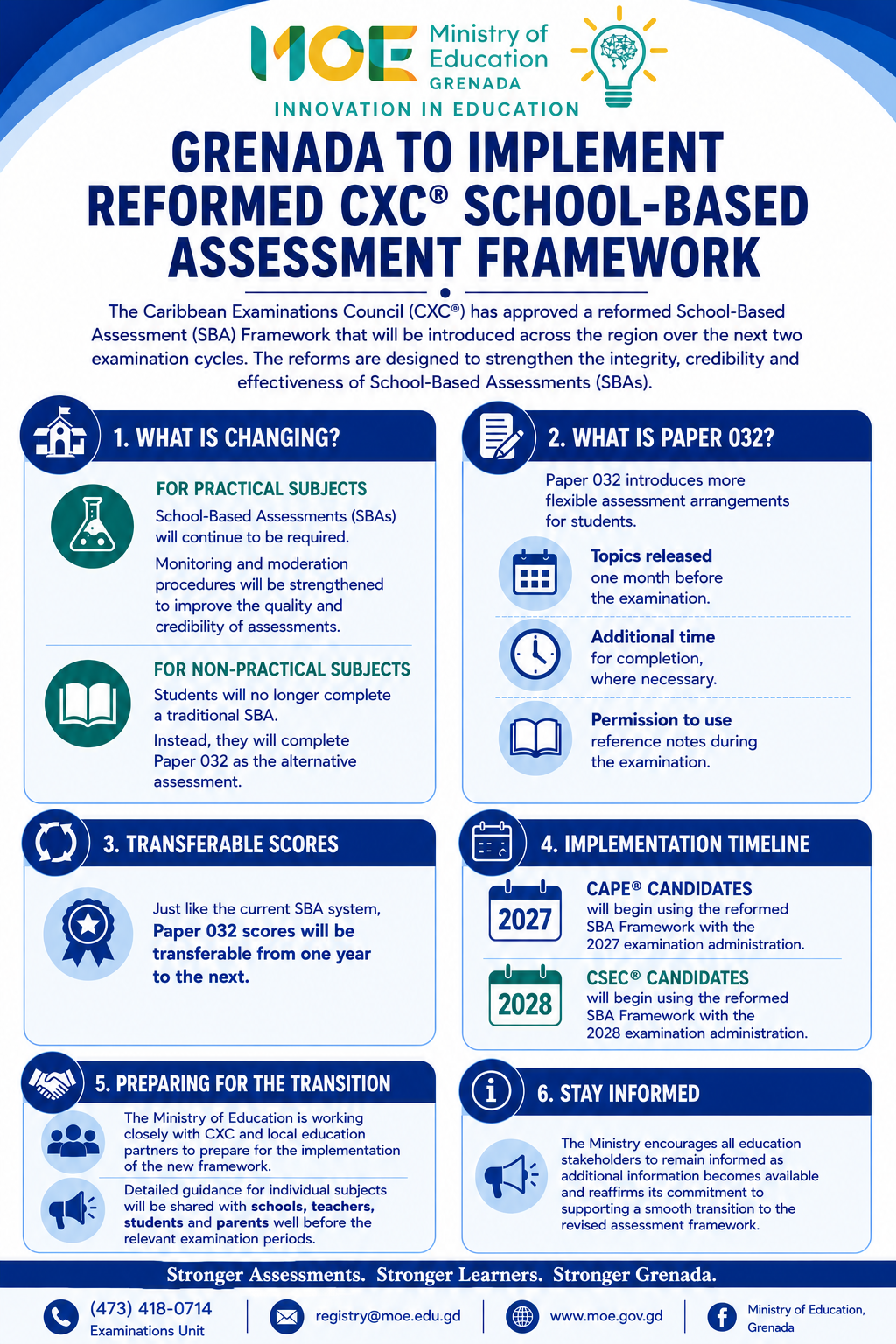
    The Caribbean Examinations Council (CXC) has given formal approval to an overhauled School-Based Assessment (SBA) framework that will roll out across Caribbean nations over the next two examination cycles, Grenada’s Ministry of Education has announced. The regulatory changes were greenlit during CXC’s 64th quarterly business meeting held on June 29, 2026, with the core goal of reinforcing the integrity, public credibility, and overall effectiveness of school-based assessment within the regional standardized examination system.

    The revised restructures how assessments are administered across different subject types, creating clear distinctions between practical and non-pacademic non-practical subjects. Moving forward, SBAs will only be mandatory for practical subjects, and the CXC has put in place substantially strengthened monitoring and moderation protocols to uphold assessment standards for these evaluated projects. For students enrolled in non-practical subjects, the traditional SBA requirement will be replaced by a new assessment component called Paper 032.

    Paper 032 is designed with greater flexibility to reduce student stress while still accurately measuring learning outcomes. Key accommodations built into the new assessment format include the release of examination topics one full month ahead of the test date, extra completion time for students who require it, and explicit permission for candidates to use approved reference notes during the assessment. Mirroring the existing SBA system, scores earned on Paper 032 will also be transferable across examination years, allowing students to carry over valid scores if they need to retake other components of their exams.

    Implementation of the full reform package will follow a staggered, phased timeline to give education systems, schools, and students sufficient time to adapt to the new structure. The new framework will first be introduced for Caribbean Advanced Proficiency Examination (CAPE) candidates ahead of the 2027 examination administration. For candidates sitting the Caribbean Secondary Education Certificate (CSEC) exams, the transition to the revised framework will begin with the 2028 examination cycle.

    Grenada’s Ministry of Education confirmed it is collaborating closely with CXC leadership and local education stakeholders—including school administrators, teacher associations, and parent groups—to prepare for a smooth transition. The ministry notes that detailed, subject-specific implementation guidance will be distributed to schools, teachers, students, and families well in advance of each group’s first examination under the new framework, to ensure all parties have adequate time to adjust their preparation strategies. The ministry has also called on all education stakeholders to monitor official updates as more details are released, and reaffirmed its ongoing commitment to delivering targeted support through the transition period to minimize disruption for learners across the country.

  • In Tribute to Sir Garfield St Aubrun Sobers (1936–2026)

    In Tribute to Sir Garfield St Aubrun Sobers (1936–2026)

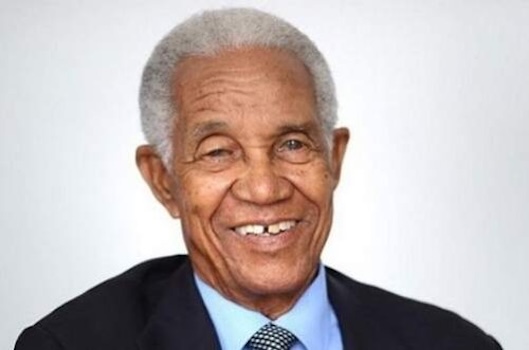
    The global cricket community and the Caribbean region are in mourning this week following the death of Sir Garfield Sobers, widely regarded as the greatest all-round cricketer in the history of the sport and one of the West Indies’ most beloved cultural figures. In an official statement released on behalf of the Organisation of Eastern Caribbean States (OECS), Director General Dr. Didacus Jules reflected on Sobers’ extraordinary life and enduring legacy, extending heartfelt condolences to Sobers’ family, the people of his home nation Barbados, and Caribbean communities worldwide who have long claimed the athlete as their own.

    Sobers’ career on the cricket pitch remains unmatched in the sport’s modern history. He embodied the ideal of a complete cricketer, bringing unmatched artistry to every role he filled: as a batsman, he played with a breathtaking, almost effortless grace that captivated crowds; as a bowler, he mastered three distinct styles of the craft, keeping opposing teams constantly off-balance; and as a fielder, his sharp instinct and athleticism turned routine plays into memorable moments. His record-breaking 365 not out in Test cricket stood as the highest individual score in the format for 36 years, while his feat of hitting six consecutive sixes in a single over endures as one of the most iconic and daring acts in global sport. Over the course of 93 Test matches, Sobers scored more than 8,000 runs, and as captain of the West Indies team, he led with remarkable imagination, courage, and national pride.

    But Dr. Jules emphasized that Sobers’ greatness extends far beyond the statistical milestones he achieved over his decades-long career. Born and raised in the working-class Bay Land neighborhood of Bridgetown, Barbados, Sobers rose to the pinnacle of a sport that, for generations, barred Black Caribbean people from competing at the highest levels. Emerging at a moment when the British Empire was unraveling across the Caribbean, Sobers stood as living proof that Caribbean excellence demanded no validation from colonial powers. For the first time, a Black West Indian man was universally recognized as the greatest in the world at his craft, and the scattered small island nations of the region saw themselves reflected in his success: unified, self-assured, and truly independent.

    Beyond the boundary ropes, Sobers played a pivotal role in forging a collective regional identity for the young post-independence nations of the West Indies. The hard-won shared sense of dignity and collective triumph that binds the Caribbean together carries an immeasurable debt to the Barbadian athlete who forced the world to stop and recognize Caribbean brilliance. A National Hero of Barbados who was knighted on his home soil, Sobers never distanced himself from his working-class roots, and his home nation has already pledged that his legacy will never be forgotten.

    In closing his statement, Dr. Jules reaffirmed the OECS’s solidarity with Sobers’ widow Lady Sobers and the entire Sobers family, as well as with the people of Barbados as they grieve. “To Sir Garfield, we say only: thank you — for the runs, the wickets, the pride, and the freedom you helped us feel,” the statement read. “Rest well, Master.”

    This note from NOW Grenada: The outlet is not responsible for the opinions, statements, or third-party media content shared by contributor. Users may click here to report any content that violates community guidelines.

  • Government validates Medium-Term Action Plan 2027–2029

    Government validates Medium-Term Action Plan 2027–2029

    On July 14, 2026, the Government of Grenada marked a critical step forward in its long-term national development strategy with the successful completion of the Medium-Term Action Plan (MTAP) 2027–2029 Validation Retreat, held at the Radisson Grenada Beach Resort. Convened under the central theme “Validating Priorities for Resilient and Transformational Development,” the gathering brought together a cross-section of senior government stakeholders: Prime Minister Dickon Mitchell, full cabinet membership, permanent secretaries, department heads, special policy advisors, and senior technical officials. Their collective task was to review, refine, and formally validate the draft MTAP ahead of its formal submission to the Cabinet for final approval.

    The 2027–2029 MTAP functions as the government’s core operational framework, designed to translate the high-level long-term goals laid out in the 2020–2035 National Sustainable Development Plan (NSDP) and the administration’s Vision 75 initiative into coordinated, actionable work across all branches of government. Developed over months of wide-ranging consultations with hundreds of government ministries, departments, and agencies, the draft plan outlines 200 targeted priority actions spanning 13 distinct economic and social sectors, plus seven cross-cutting thematic areas that will steer the government’s development agenda across the next three-year term.

    In his opening keynote address to retreat participants, Prime Minister Mitchell reaffirmed the administration’s steadfast commitment to delivering tangible, systemic transformation across Grenada through disciplined implementation, strengthened public institutions, and intentional cross-stakeholder collaboration. He emphasized that the MTAP must be more than a symbolic planning document, stressing that it should deliver measurable improvements to the daily lives of all Grenadians through robust execution, clear accountability mechanisms, and a laser focus on delivering results.

    The prime minister also outlined a selection of flagship initiatives that will anchor the plan’s work to shape Grenada’s future trajectory. These include the high-profile Project Polaris and Project 500 infrastructure and development schemes, the planned rollout of new Education Centres of Excellence, the country’s ongoing transition to renewable energy, a national digital transformation agenda, and a suite of other strategic investments aligned directly with the goals of Vision 75.

    Cabinet Secretary Carvel Lett, in her official welcome to attendees, underscored that the successful delivery of the MTAP’s outcomes will rely on three foundational pillars: unified collective leadership, coordinated whole-of-government action, and clear ownership of priorities by individual ministries, departments, and agencies. She urged participants to leverage the retreat’s collaborative format to ensure the final plan is pragmatic, achievable, fully aligned with the government’s core strategic priorities, and matched to the country’s available resource allocations.

    Over the course of the one-day retreat, participants worked through a structured agenda to validate sector-specific priorities, performance metrics, baseline data, outcome targets, and implementation timelines. The gathering also created space to identify opportunities to strengthen inter-ministerial cooperation, tighten accountability frameworks, and streamline delivery arrangements for priority projects. Breakout working groups focused specifically on developing practical, collaborative approaches to cross-sectoral implementation, acknowledging that most of the country’s most pressing national priorities require input and coordination from multiple government institutions.

    In the wake of the retreat, individual ministries, departments, and agencies are now moving forward with final revisions to their sections of the plan, incorporating all refinements and adjustments agreed upon during the gathering. The fully finalized MTAP 2027–2029 will be submitted to the Cabinet for formal review and approval by the end of July 2026. Once authorized, the plan will guide all government planning, budget allocation, project implementation, and performance monitoring activities for the three-year period from 2027 to 2029.

  • CARDI Launches Inaugural Agricultural Research and Innovation Symposium

    CARDI Launches Inaugural Agricultural Research and Innovation Symposium

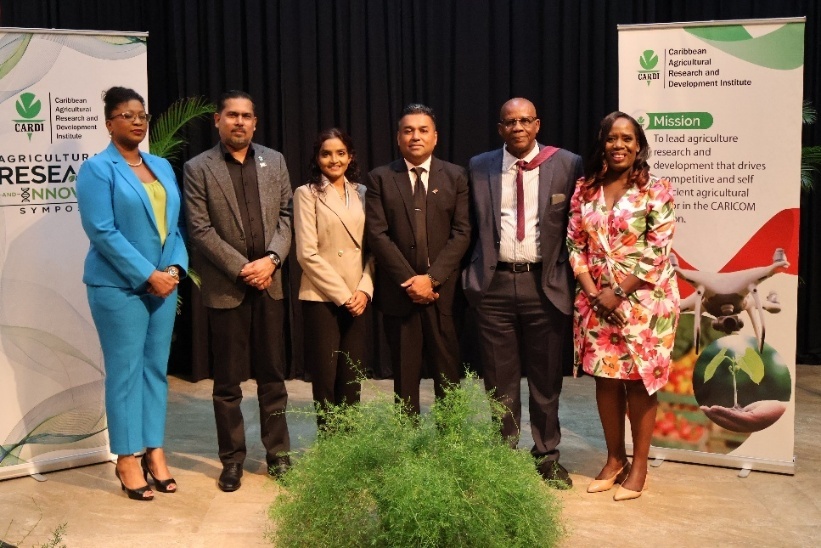
    On July 8, 2026, the Caribbean Agricultural Research and Development Institute (CARDI) inaugurated its first-ever Agricultural Research and Innovation Symposium (ARIS) in a landmark event that united a diverse cross-section of regional stakeholders. Researchers, government policymakers, smallholder and commercial farmers, international development partners, and private sector agribusiness representatives gathered from across the Caribbean to explore cutting-edge, science-backed strategies for building a more food-secure and climate-resilient regional agricultural sector.

    Organized around the central theme “Advancing Agricultural Innovation for Sustainable and Climate-Resilient Food Systems”, the symposium functions as an annual recurring platform to disseminate CARDI’s latest research outputs and deepen cross-institutional collaboration among groups dedicated to transforming the Caribbean’s aging, vulnerable agricultural landscape.

    In his opening address, CARDI Board of Governors Chairman Hon. Lennox Andrews, who also serves as Grenada’s Minister of Agriculture, emphasized that sustained investment in agricultural research and innovation is non-negotiable for the region to tackle its growing set of interconnected agricultural challenges. “Climate change impacts, evolving pest and disease outbreaks, and sudden global market disruptions leave us no choice but to embrace science, innovation, and cross-sector collaboration as core tools to secure the future of Caribbean agriculture,” Andrews stated. “The research showcased at this symposium proves CARDI’s unwavering commitment to developing practical solutions that boost farm productivity, strengthen regional food systems, and lift the livelihoods of smallholder farmers across every island nation.” He added a critical call to action: “If we expect CARDI to continue delivering these life-changing solutions for our region, we must ensure it has the sustained financial resources and policy support required to carry out its mandate.”

    CARDI Executive Director Ansari Hosein framed the symposium as a transformative milestone for the 50-plus-year-old regional institution, marking the launch of a new regular tradition of stakeholder engagement. “This symposium brings our research teams from across 14 member states together to share the results of two years of on-the-ground research conducted in our member countries, and most importantly, it creates space for direct dialogue with the farmers, policymakers, development partners and private sector actors that our work serves,” Hosein explained. “Our core goal is to move research beyond the walls of the laboratory and deliver tangible, on-the-ground benefits for food and nutrition security, climate resilience, and agricultural competitiveness across every corner of the Caribbean.” He reaffirmed that CARDI’s ongoing research agenda remains centered on building robust, resilient, innovative, and sustainable agri-food systems that align with the region’s collective food security targets.

    Speaking on behalf of Trinidad and Tobago’s Minister of Agriculture and Fisheries, Ministerial Advisor Ravi Pooran Maharaj praised CARDI for establishing the first dedicated regional forum for agricultural scientific collaboration and knowledge exchange. “The Caribbean’s future food security hinges on our collective ability to turn laboratory research into real, on-farm action,” Maharaj noted. “This symposium provides a critical space where researchers, policymakers, innovators, and practicing farmers can exchange ideas, build long-term partnerships, and speed up the adoption of transformative technologies that will reshape agriculture across Trinidad and Tobago and the entire Caribbean.” He emphasized that agricultural innovation is no longer a discretionary investment but an existential necessity, highlighting the outsized role of climate-smart farming techniques, improved drought- and pest-resistant crop varieties, precision agriculture tools, and sustainable land management practices in building food systems that can withstand climate shocks.

    Michelle Anne Thomas, Permanent Secretary in Trinidad and Tobago’s Ministry of Agriculture and Fisheries, welcomed the symposium as a key mechanism to strengthen ties between regional research institutions and government bodies. “The complex, interconnected challenges facing Caribbean agriculture cannot be solved by any single group – they demand deep, sustained partnerships between researchers, policymakers, and producers,” Thomas said. “By creating structured opportunities to share actionable knowledge and practical solutions, initiatives like this symposium ensure that scientific evidence informs public policy, strengthens national agricultural programs, and delivers meaningful benefits for both farmers and consumers across the region.”

    The three-day symposium featured three technical sessions that highlighted CARDI’s ongoing research across its 14 member states, addressing the region’s most urgent agricultural priorities. Research presentations covered a range of locally focused initiatives, including assessments of the commercial production potential for white potatoes in Grenada and tropical wheat varieties adapted to Belize’s climate. Additional studies outlined innovations in production practices for lettuce, corn, silage, dasheen, and black-eyed peas, all designed to cut the Caribbean’s heavy dependence on imported food and animal feed, a major drain on regional foreign exchange.

    The event also put a spotlight on CARDI’s expanding work in digital agricultural innovation. Presentations explored strategies to increase youth participation in commercial agriculture, new digital platforms for optimized livestock feed management, artificial intelligence-powered tools for rapid crop disease diagnosis, and emerging digital technologies that can strengthen agricultural extension services and help farmers make more data-driven on-farm decisions.

    Across all sessions, the research presented reinforced CARDI’s core mission: to deliver practical, science-based solutions that advance regional food and nutrition security, improve smallholder farmer livelihoods, and boost the global competitiveness of Caribbean agricultural products. This article was distributed via the CARDI network; NOW Grenada holds no responsibility for contributor opinions, statements, or third-party content included in this report.
  • Cuba Solidarity Fund reaches landmark $200,000

    Cuba Solidarity Fund reaches landmark $200,000

    A grassroots solidarity movement in Grenada has hit a major milestone in its campaign to support Cuba amid a deepening humanitarian crisis, with the Cuba Solidarity Fund crossing the $200,000 threshold on July 15. All organizational costs for the three months of fundraising activities across the island nation have already been covered, meaning every dollar raised will go directly to relief efforts for the Cuban people.

    The fundraising drive has been a truly nationwide effort, with events hosted across every parish of Grenada, plus the smaller island territories of Carriacou and Petite Martinique. Community groups organized a diverse slate of activities: a formal dinner at the Grenada Trade Centre, a major concert, three separate community breakfasts in Town, Mt Moritz, and StPaul’s, a combined health fair and breakfast in the capital St George’s, a raffle, community barbecue and motorcade in St Patrick, an evening soiree dedicated to Cuba in St Andrew, two back-to-back breakfasts and an additional raffle in St David. Volunteers also ran donation collections at hundreds of churches across the entire country, with more contributions still being processed.

    Church communities have accounted for the two largest individual donations to the fund. The Roman Catholic Church contributed $61,469.29, while the Seventh Day Adventist Church donated $32,572.00, both deposited to the fund’s bank account this week. Additional contributions have already arrived from the Methodist and Presbyterian churches, with more church donations expected to be finalized within the next seven days. Two of the largest standalone fundraising events, the May 6 dinner at the Grenada Trade Centre and the May 15 soiree at St Andrew’s Rainbow Inn, generated a combined net profit of just over $50,000.

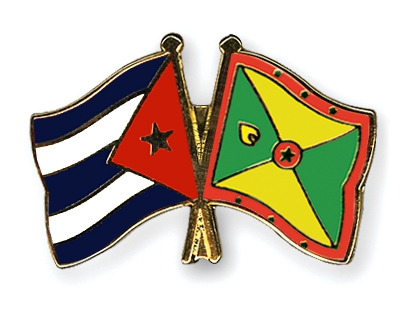
    The campaign launched in April 2026 with an official media briefing, timed to coincide with the 47th anniversary of diplomatic relations between Grenada and Cuba on April 14. It is led by Citizens for Cuba, a non-partisan, citizen-led coalition open to all residents, united by the shared goal of helping Cuba address its worsening humanitarian emergency.

    Cuba has faced growing hardship in recent months, compounded by more than six decades of U.S. economic blockade that has been exacerbated by tightened sanctions. The country is currently suffering acute shortages of fuel, basic food staples, and critical medical supplies. Widespread, extended blackouts have become a daily reality across the island, and dozens of urgent, life-saving medical procedures have been forced to be canceled, resulting in multiple preventable deaths.

    For Grenadians, the campaign is an opportunity to repay decades of selfless support Cuba has given to their nation. Cuba’s most iconic contribution to Grenada is the construction of the country’s international airport, but it has also provided hundreds of university scholarships for Grenadian students and deployed dozens of Cuban medical specialists across multiple disciplines to strengthen Grenada’s public health infrastructure.

    Operating under the theme “Grateful Grenada Gives Back to Cuba,” the drive has drawn support from across all sectors of Grenadian society, with donations flowing through community organizations, churches, trade unions, and direct individual contributions. Direct donations can still be made to the campaign via the Humanitarian Relief Inc. account at the Grenada Co-operative Bank, account number 11302334. The solidarity drive remains ongoing, with two additional recent events held: a combined breakfast and lunch hosted by the St Paul’s Sports and Culture Organisation on June 20, and a luncheon organized by the Technical and Allied Workers Union on July 3. More donations from trade unions and additional church groups are expected within the next week.

    Citizens for Cuba has issued a statement of deep gratitude to every organization and individual across Grenada, Carriacou, and Petite Martinique that has contributed to the initiative, noting the broad cross-section of society that has backed the effort. When all outstanding pledges and donations are collected within the next two weeks, organizers project the total fund will reach an impressive $250,000, a testament to the widespread gratitude of the Grenadian people for their long-standing ties to Cuba.

  • We are hiring! Grenada Duty Free, Store Manager—GRENADA

    We are hiring! Grenada Duty Free, Store Manager—GRENADA

    A new full-time store manager opening for a duty-free retail location in Grenada has been announced, calling for qualified candidates with a mix of leadership experience, commercial acumen, and local regulatory knowledge to lead the operation.

    The recruiting party has outlined a comprehensive set of core competencies required for the role. Top of the requirements list is exceptional interpersonal and communication aptitude, with candidates expected to approach teams and customers in an accessible manner while demonstrating polished verbal and written communication skills. Strong, decisive leadership is also a non-negotiable foundation for overseeing daily store operations.

    On the commercial and operational side, successful candidates must show a proven track record of managing departmental budgets, dissecting key sales performance metrics, and building data-driven business strategies that drive revenue growth. They are also expected to hold a working knowledge of core inventory management practices and standard merchandising principles that keep retail operations running smoothly and product displays engaging for customers.

    Proficiency in digital tools is also required: candidates must be fully comfortable working with the entire Microsoft Office Suite, with at minimum intermediate-level skills in Excel for data tracking and analysis. A critical requirement for the role is a solid, up-to-date understanding of Grenada’s national Labour Code and associated employment regulations, to ensure all store operations remain fully compliant with local laws.

    Given the fast-paced nature of the retail industry, the ideal candidate must be able to thrive under dynamic, high-pressure workflow conditions and maintain a flexible working schedule that aligns with the organization’s operational needs.

    While 3 years of verifiable experience working as a store manager or in a similar retail leadership role is not a strict mandatory requirement, it is considered a significant competitive advantage for applicants.

    Candidates interested in applying are instructed to submit their updated curriculum vitae to [email protected], with the subject line formatted as “Store Manager—GRENADA”. The closing deadline for all applications is 1 August 2026, giving prospective candidates ample time to prepare and submit their materials.

    A disclaimer accompanying the vacancy notice notes that NOW Grenada holds no responsibility for opinions, statements, or any third-party media content shared by contributors to the platform. Individuals who encounter content that violates platform policies may file an abuse report directly through the outlet’s official reporting channel.