标签: Grenada

格林纳达

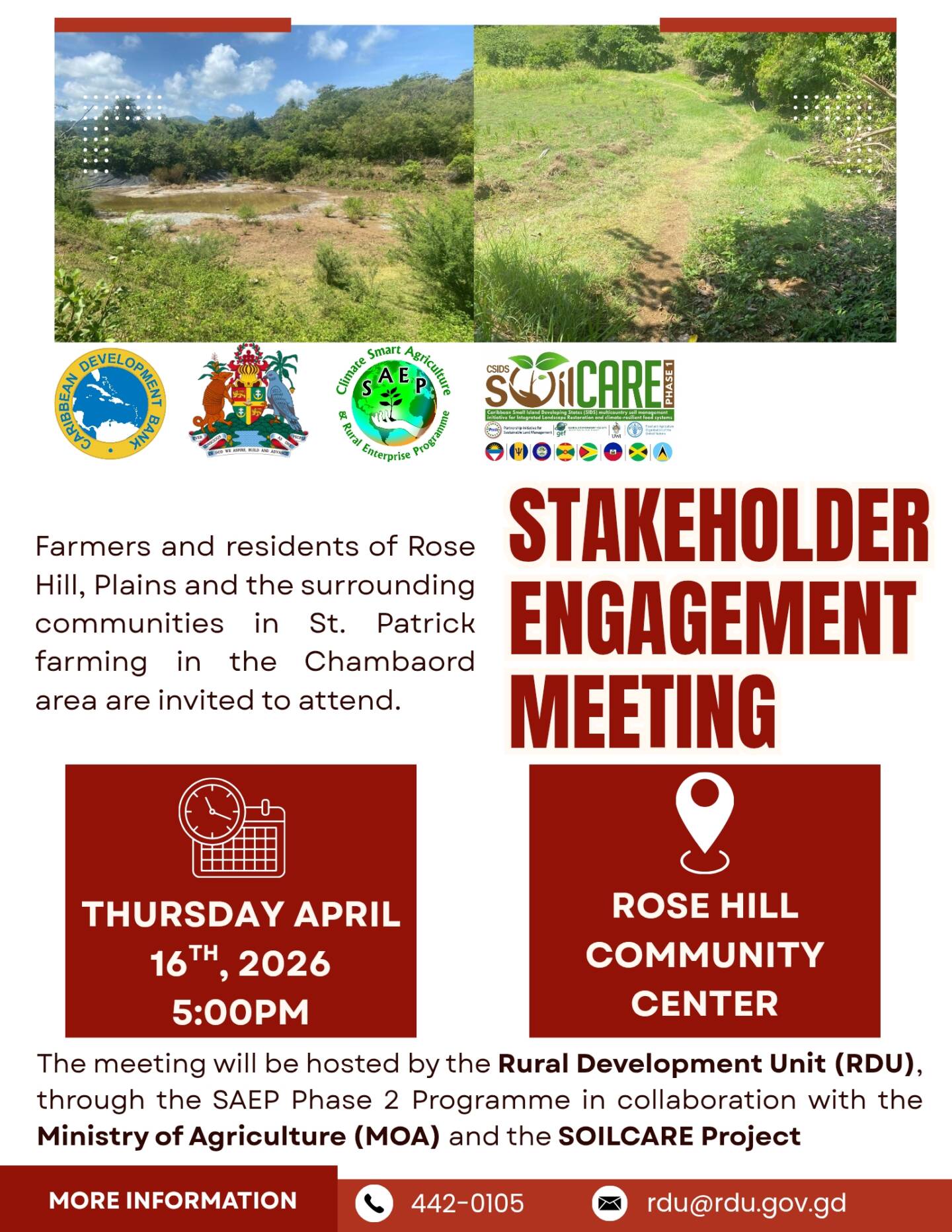
  • RDU/SAEP stakeholder engagement on Thursday, 16 April

    RDU/SAEP stakeholder engagement on Thursday, 16 April

    Grenada’s push for climate-resilient rural development has received a major boost, after the island’s Rural Development Unit (RDU) secured fresh financing from the Caribbean Development Bank (CDB) to launch the second phase of the Climate Smart Agriculture and Rural Enterprise Programme (SAEP). The initiative, which will focus on upgrading critical irrigation and rural infrastructure across Grenada, its dependency Carriacou, and the smaller island of Petite Martinique, is being delivered in partnership with the Ministry of Agriculture and the regional Soil Care Project.

    The first major infrastructure upgrades under the new phase are scheduled to break ground in 2026, centered on the Chambord region. Two core projects will move forward: the full rehabilitation of the Chambord Irrigation Pond, and the reconstruction and upgrade of the Chambord Farm Access Road. Once completed, these upgrades are projected to improve reliable market access for local agricultural producers and strengthen the region’s overall capacity to withstand extreme climate events, directly benefiting at least 29 small and medium-scale farmers operating in the area.

    To ensure transparency and alignment with local needs ahead of construction, RDU has planned a public Stakeholder Engagement Meeting set to take place on Thursday, 16 April 2026, at 5:00 pm at the Rose Hill Community Centre. The gathering is designed to share key project details with participating farmers and other local stakeholders, including confirmed timelines for construction, the full scope of planned work, and potential impacts on local operations. Organizers also plan to collect feedback and input from attending farmers, with the goal of addressing concerns and adjusting project plans to enable seamless, uninterrupted implementation once work gets underway.

    Disclaimer: NOW Grenada does not take responsibility for opinions, statements, or third-party content shared by contributors to this publication. To report inappropriate or abusive content, please use the official reporting channel provided on the NOW Grenada platform.

  • Grenada commemorates 47th anniversary of diplomatic relations with Cuba

    Grenada commemorates 47th anniversary of diplomatic relations with Cuba

    Forty-seven years after formalizing diplomatic relations, Grenada has offered warm fraternal greetings and sincere congratulations to Cuba’s government and people, marking the milestone anniversary through a statement released by Grenada’s embassy in Havana.

    Diplomatic ties between the two Caribbean nations were first established in 1979, and over the nearly five decades that followed, their partnership has evolved into a durable bond rooted in shared values of friendship, collective solidarity, and reciprocal benefit. The relationship has long been anchored in unwavering mutual respect for each nation’s sovereignty and inherent right to self-determination — principles that remain the guiding framework for all bilateral collaboration to this day.

    This year’s anniversary observance arrives against a uniquely challenging backdrop: as global geopolitical rifts deepen, Cuba continues to navigate severe economic strain caused by a decades-long, increasingly tight international blockade. In this context, Grenada has re-stated its unshakable solidarity with the Cuban people, and extended deep gratitude for Cuba’s consistent humanitarian ethos, selfless commitment to global cooperation, and long-standing tradition of internationalism.

    Grenada has itself reaped tangible, lasting benefits from the bilateral partnership over the past 47 years, with high-impact Cuban development assistance shaping key sectors of the Grenadian economy and public services. Most notably, Cuba supported the construction of Grenada’s Maurice Bishop International Airport, a critical infrastructure hub that remains central to the country’s tourism-driven economy, and also led construction of a new national hospital that expanded access to care for thousands of Grenadians. Beyond infrastructure, Cuba has trained roughly 500 Grenadian professionals across critical fields including medicine, engineering, economics, and agricultural sciences, while Cuban medical specialists have made vital, sustained contributions to strengthening Grenada’s domestic healthcare system.

    In return, Grenada has maintained consistent, unwavering support for Cuba across multilateral global institutions. Most prominently, Grenada has repeatedly joined calls for the full lifting of economic sanctions imposed on Cuba and for a permanent end to the decades-long blockade that has weighed on the Cuban people.

    As both countries commemorate this 47-year milestone, Grenada says it is eager to continue deepening collaborative ties and building on the historic friendship that connects the two nations’ populations for decades to come.

    Disclaimer: This article is based on an official statement from the Embassy of Grenada in Cuba. NOW Grenada does not take responsibility for opinions or content shared by contributing parties. To report potential abuse of content policies, follow the platform’s official reporting channel.

  • PM to undertake economic development working visit in Africa

    PM to undertake economic development working visit in Africa

    Grenada’s Office of the Prime Minister has officially announced that Prime Minister Hon. Dickon Mitchell will embark on a five-day working visit focused on advancing economic cooperation to two West African nations starting April 15, 2026. The itinerary will first take Mitchell to Taraba State, Nigeria, before the delegation moves onward to Accra, Ghana’s capital, for the continuation of the scheduled engagements.

    The core objective of this regional diplomatic trip is to deepen and expand bilateral ties between Grenada and each of the two host countries. Across a packed schedule of high-level government and business meetings, discussion priorities will center on four key mutually beneficial sectors: human capital development, agricultural innovation and trade, public health system collaboration, and sustainable tourism development. These areas were selected to align with Grenada’s ongoing growth priorities and the shared development goals of all three nations.

    Mitchell will be joined on the visit by two senior Grenadian officials: Trevor St Bernard, who holds dual roles as Chairman of the Grenada Solid Waste Management Authority and Deputy Chairman of the Grenada Development Bank, and Teddy St Louis, the Prime Minister’s Chief of Staff. The full delegation is scheduled to complete its trip and return to Grenada on April 20, 2026.

    To ensure continuous governance during the Prime Minister’s travel outside the country, Hon. Dennis Cornwall has been appointed to serve as Acting Prime Minister for the duration of Mitchell’s absence. This arrangement guarantees that all routine government functions and decision-making processes will proceed without interruption while the Prime Minister advances Grenada’s international economic and diplomatic agenda abroad.

    This announcement was released via the Office of the Prime Minister of Grenada, and distributed through NOW Grenada media platform.

  • Grenada victorious over Cayman Islands in Concacaf W Qualifier

    Grenada victorious over Cayman Islands in Concacaf W Qualifier

    On April 14, the Kirani James Athletics Stadium played host to a memorable evening of regional women’s football, as Grenada’s Senior Women’s National Team (SWNT) fought back from an early deficit to claim a hard-fought 3-1 win over the Cayman Islands in Group C of the 2025/26 Concacaf W Qualifiers.

    The visitors got off to a blistering start, with Molly Kehoe finding the back of the net just three minutes into the contest to put Cayman Islands ahead. But Grenada refused to let the early setback derail their game plan. After weathering the initial pressure, the home side gradually found their rhythm, and grabbed the equalizer in first-half stoppage time from Raquelle Mitchell in the 5th minute of added time. Buoyed by the halftime equalizer, Grenada gained momentum as the match entered the second half. In the 63rd minute, Nia Thompson put the home side in front, before 17-year-old Alexis Hypolite, a called-up member of the national U17 squad, sealed the three points with a late strike in the 87th minute.

    This result is far more than just three points for Grenada’s women’s football programme. Competing in the preliminary round of the 2026 Concacaf W Championship, Group C pits Grenada against Costa Rica, Guatemala, Bermuda and the Cayman Islands, with only the group winner earning a spot in the final tournament. While Concacaf confirmed ahead of the April match window that Bermuda, Grenada and the Cayman Islands had already been eliminated from contention for the group top spot, the victory still stands as a landmark moment for the development of the women’s game in the country.

    A standout feature of the match was the impact of young emerging talent brought through the Grenada Football Association’s (GFA) youth development pathway. In total, five U17 players were called up to the senior squad for this qualifier, with two delivering standout performances. Alongside Hypolite’s decisive goal, 15-year-old Cara Bisasor turned in a composed display that won over fans and team leadership alike. GFA President Marlon Glean highlighted Bisasor as one of the match’s most influential players, noting she quickly became a crowd favorite during her senior appearance.

    “This result is a meaningful achievement for our programme and our entire country,” Glean said in post-match comments. “We are incredibly proud of how the team responded to the early setback, and this win reflects the steady progress women’s football is making here in Grenada. What excites us most is seeing young U17 players step up and deliver on the senior stage – that’s exactly the development pathway we’ve been working to build for emerging talent.”

    Head Coach Melanie Thomas echoed Glean’s praise, highlighting her side’s mental strength across the full 90 minutes. “The players showed incredible effort, discipline and belief from the first minute to the last,” Thomas said. “We didn’t let that early goal define our match. We stayed calm, worked our way back into contention, and our persistence paid off. Moving forward, we want to carry this same mentality, work ethic and togetherness into our next fixture.”

    Grenada will now wrap up their 2025/26 Concacaf W Qualifiers campaign with an away fixture against Bermuda on April 18, hosted at the Dame Flora Duffy National Sports Centre in Hamilton. For the SWNT, the match offers a chance to build on their positive home performance and close out the qualifying stage on a high note.

    In a closing statement, the GFA extended its gratitude to all supporters, partners, sponsors and stakeholders who have backed the growth of women’s football in Grenada. Tuesday’s result, the association noted, serves as a proud reminder of what this team can achieve, and the GFA remains confident that the programme will continue to go from strength to strength in the coming years.

  • Sirens and Sinners at Art House 473

    Sirens and Sinners at Art House 473

    Tucked inside Art House 473, a former repurposed church that has been reinvented as a serene, chapel-like contemporary art space, the collaborative exhibition *Sirens and Sinners* from creators Asher Mains and Susan Mains unfolds not as a flashy public spectacle, but as a quiet, introspective reckoning with identity, morality and human experience.

    Drawing on decades of creative exploration into masks and the layered personal stories they carry, the exhibition upends the binary moral framing suggested by its title, which evokes ancient myth, traditional morality, and the tension between temptation and transgression. Far from the seductive, dangerous figures of legend, the sirens depicted here do not lure viewers—they confront them. Likewise, the so-called sinners are not portrayed as condemned outsiders, but as deeply, tenderfully human. Most works center mask-like visages that are not generic pre-written archetypes, but cumulative identities shaped by lived experience, layered with the sediment of years of memory and struggle.

    Susan Mains’ contribution to the show carries a particularly distinct sense of temporal layering. Her iconic “little faces” carry an uncanny, arresting weight: miniature in scale yet monumental in emotional impact, they read as both naive and knowing. Rooted in Caribbean masquerade traditions, the works transcend cultural reference to explore internal, psychological terrain, framing faces as thresholds of experience rather than static surfaces. Every small visage feels less like a finished art object than a residue of a lived moment, a faint, persistent trace that refuses to fade completely.

    Asher Mains’ practice offers a compelling spatial and atmospheric counterpoint to Susan’s intimate works. His practice oscillates between abstraction and figuration, weaving the portrait-focused work into broader environmental and narrative contexts. He incorporates found ghost nets—discarded fishing gear that washes up on the beaches of the Grenadian fishing village Calliste—into both his installations and paintings, where the tangled nets hold, caress, and even trap the depictions of sirens. Drawing inspiration from Homer’s *Odyssey* and Derek Walcott’s *Omeros*, the St. Lucian poet’s reimagining of the Homeric epic, Asher crafts a unique magical realist narrative deeply rooted in Caribbean maritime life. If Susan’s pieces are quiet, intimate confessions, Asher’s installations are the resonant spaces where those confessions echo out for viewers to encounter.

    What unifies the entire exhibition is its deliberate refusal to offer easy answers. There is no clear moral axis, no didactic narrative that draws a hard line between virtue and vice. Instead, *Sirens and Sinners* puts forward a far more unsettling core thesis: the categorical lines between good and evil, purity and corruption are porous, perhaps even entirely illusory. Viewers are left to navigate a creative landscape where allure and guilt, innocence and complicity coexist in the same quiet gaze.

    It is this commitment to ambiguity that gives the exhibition its quiet, enduring power. In an era that constantly demands rigid clarity, quick labels, fixed positions and loud public declarations, *Sirens and Sinners* insists on the value of uncertainty. It does not invite viewers to judge the figures on display, but to recognize them—to see something uncomfortably familiar in their layered, weathered faces. In the end, the exhibition does not demand audiences answer who the sirens or sinners are. Instead, it poses a far more subtle, probing question: when you look long enough at these faces, can you still tell the difference between them?

  • Silversands National Learn to Swim Week a success with 800 swimmers

    Silversands National Learn to Swim Week a success with 800 swimmers

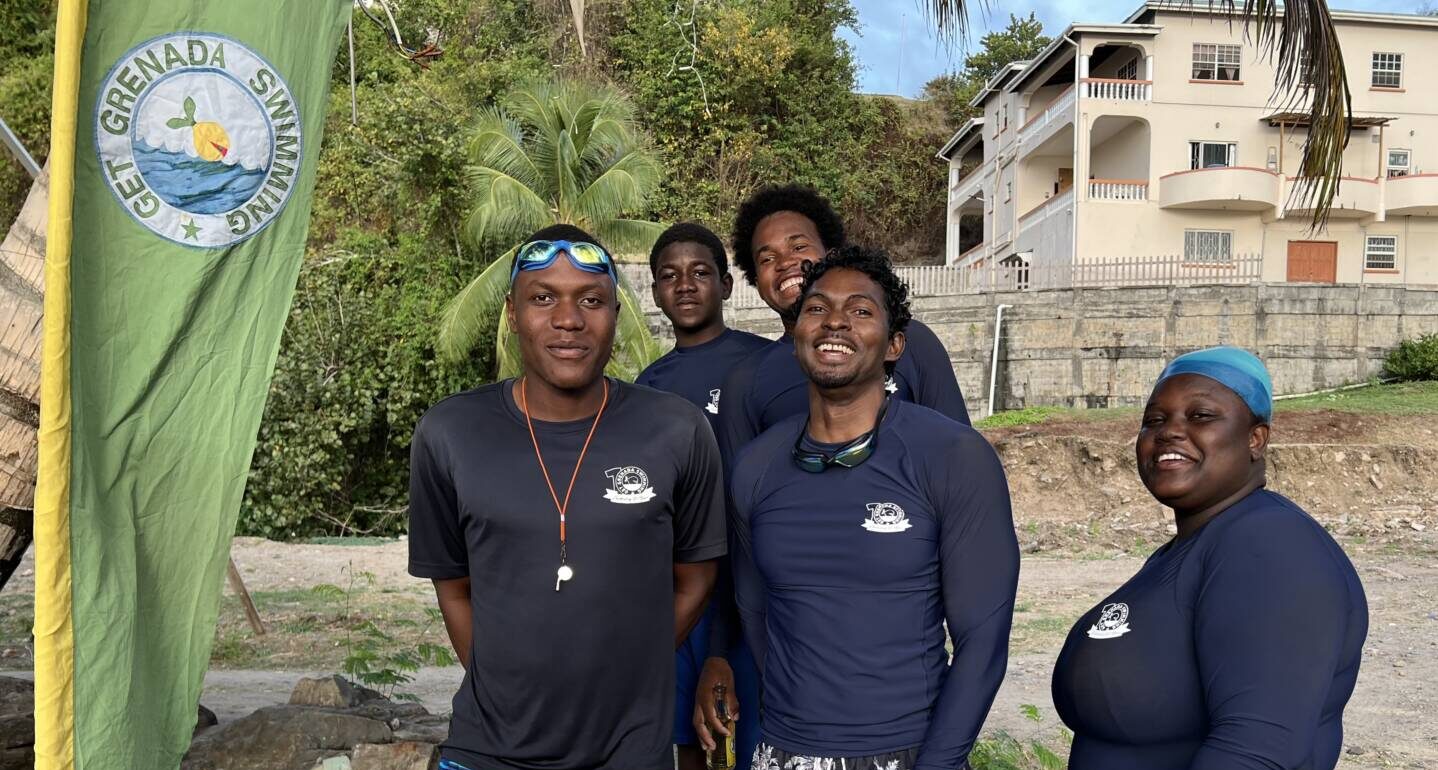
    Last Saturday marked the successful conclusion of Get Grenada Swimming’s 12th annual national swim week, a milestone made possible only through the coordinated effort of site supervisors, certified instructors, corporate sponsors, community volunteers, and local supporters who have sustained the program for more than a decade.

    Now a beloved community tradition, this year’s initiative expanded access to free swim instruction across the entire island nation of Grenada, opening 15 separate teaching locations that spanned from the northern town of Sauteurs along the main island’s Grand Anse Beach all the way to the island of Carriacou. Unlike many paid aquatic programs, Get Grenada Swimming opens its lessons to all interested participants aged five and older, welcoming both children and adults to build critical water safety skills at no cost.

    As the program’s major corporate partner this year, Silversands Management reaffirmed its longstanding commitment to the initiative. “Naguib Sawiris and Silversands are delighted to continue supporting Deb Eastwood and the entire Get Grenada Swimming team as they carry out their exceptional work teaching children to swim and stay safe in Grenada’s waters,” a representative from Silversands shared. “Over 12 years of this life-changing program, their work has likely saved countless lives by equipping young people with the competence to enjoy our beautiful coastlines confidently. We are deeply grateful to the entire team for this essential, community-focused work.”

    Program director Deb Eastwood highlighted the collaborative problem-solving that allowed the initiative to overcome an unexpected logistical hurdle in Carriacou this year. Just 48 hours before the start of swim week, more than 30 additional participants registered for lessons, leaving the island with only one assigned instructor to serve a surge in demand. In a show of cross-island community spirit, two volunteers from mainland Grenada quickly arranged travel on the Osprey ferry to Carriacou to lend their support for the full week of instruction. The last-minute teamwork paid off: the 2026 Carriacou swim week taught 55 total participants, marking the highest local participation number in the program’s history.

    Setting this year’s event apart from previous iterations was a new, added component: a hands-only CPR training workshop hosted at Camerhogne Park. The interactive session was met with enthusiastic feedback from both younger swimmers and adult participants, who valued the opportunity to add another life-saving skill to their knowledge base.

    Eastwood emphasized that none of the program’s 2026 milestones would have been achievable without collective community and corporate investment. She extended special thanks to major sponsor Silversands, alongside additional supporting partners including Budget Marine, True Blue Blue Resort, Ting/Star Malt, Spice Island Marine, Acado, Flow, Pure Grenada, and Waggy-T.

    Looking ahead, the organization has already opened registration for its next Learn to Swim Week, scheduled to run from July 6 through July 10, with sponsorship from Sandals. Interested participants can sign up today through the program’s official website, www.getgrenadaswimming.com.

    Beyond the annual week-long intensive events, Get Grenada Swimming continues to offer free weekly swim lessons every Saturday at 11 accessible locations across Grenada and Carriacou. Current weekly locations and local contact information are as follows:
    – Birchgrove – St Andrew (Mello’s Complex): Contact Lovell Alexander at 416-1226
    – Cabier Beach – Crochu, St Andrew: Contact Abigail Fletcher at 449-6091
    – Carriacou – Paradise Beach: Contact Sophia Ireland at 535-6992
    – Grand Anse – Umbrella’s Restaurant (9 am–11 am): Contact Deb Eastwood at 404-5237
    – Grand Mal Beach – Across from SOG (10 am–12 pm): Contact Kevin Phillips at 421-1835
    – Grenada Marine, Corinth at 9 am: Contact Catherine John at 459-2393
    – Grenville – Telescope Beach: Contact Francis Williams at 449-3773
    – Gouyave – St John, near Fish Market (12 pm–2 pm): Contact Sharm Ashton at 422-9893
    – Paraclete – Lime House: Contact Kester Roberts at 403-6358
    – Sauteurs – St Patrick Breakwater (9 am–11 am): Contact Nixon Edwards at 537-3035

    For more details on upcoming events, registration, or opportunities to volunteer or donate, visit the Get Grenada Swimming official website at www.getgrenadaswimming.com, contact Deb Eastwood directly by phone at 404-5237, or send an email to info@getgrenadaswimming.com.

  • REMAR project launched to restore OECS mangroves

    REMAR project launched to restore OECS mangroves

    On April 11, 2026, the Organisation of Eastern Caribbean States (OECS) Commission held an official virtual launch ceremony for the groundbreaking Resilient Ecosystems through Mangrove Restoration (REMAR) Project, in close partnership with France’s Agence Française de Développement (AFD) and the French Facility for Global Environment (FFEM).

    This five-year regional initiative carries a total investment of €5.5 million, marking one of the most significant recent commitments to advancing climate resilience, biodiversity protection, and inclusive sustainable livelihoods across the Eastern Caribbean. Over its implementation period, the project will deliver targeted support for mangrove restoration and long-term collaborative ecosystem management across five participating OECS territories: Grenada, St Lucia, St Vincent and the Grenadines, Martinique, and Guadeloupe.

    Mangrove forests rank among the most ecologically and economically valuable coastal ecosystems in the entire Caribbean region. These unique coastal habitats deliver a wide range of critical ecosystem services: they shield shorelines from destructive erosion and dangerous storm surges, provide essential breeding and feeding grounds that underpin local commercial and artisanal fisheries, support a wide array of unique native biodiversity, filter pollutants to improve coastal water quality, and sequester far larger volumes of atmospheric carbon than most terrestrial forest ecosystems, making them a powerful natural tool for climate change mitigation.

    Despite their outsized importance, Caribbean mangrove habitats have faced growing, cumulative threats in recent decades. Unsustainable coastal development, pollution, rising sea levels and intensifying storm activity driven by climate change, recurring hurricane damage, severe flooding events, and the rapidly growing crisis of large-scale sargassum inundations have all degraded vast swathes of mangrove habitat across the region.

    Speaking during the project’s official launch, OECS Director General Dr. Didacus Jules framed REMAR as far more than an environmental intervention, calling it a strategic investment in regional communities, natural resources, and cross-border cooperation. “Protecting and restoring mangroves is not simply an environmental choice; it is a development imperative,” Jules noted. “REMAR is one such model. A model that brings together regional cooperation, local ownership, and strategic partnerships. A model that allows us to learn, adapt, and scale. And a model that positions the OECS not only as a beneficiary of support, but as a driver of solutions.”

    Jules added that the new initiative aligns perfectly with the OECS’s core vision of lifting quality of life for all people across the region through collective action and equitable, impact-focused development cooperation.

    Domenico Ditaranto, Deputy Head of Mission for the Embassy of France to the Eastern Caribbean States, Barbados, and the OECS, reaffirmed France’s longstanding commitment to sustainable development and collaborative regional action in the Caribbean. “REMAR is a very iconic project because it embodies regional cooperation that is highly relevant for the Caribbean,” Ditaranto said. “It shows the commitment of France and the value of working together to respond to shared challenges.”

    Quentin Lajus, representing the Agence Française de Développement, also delivered remarks at the ceremony, highlighting the urgent need for coordinated cross-border action to address shared regional threats ranging from biodiversity loss and climate change to increasing coastal vulnerability. “The challenges that are shared by the region’s states and territories go beyond national borders and require joint, coordinated responses,” Lajus explained. “This is why our partnership with the OECS is so important and why REMAR is such a meaningful initiative.”

    The REMAR Project is structured around three core strategic pillars that guide its work across all participating territories. First, it supports community-led restoration efforts at sites where mangrove habitats have been heavily degraded. Second, it works to expand scientific understanding of Caribbean mangrove ecosystems and establish open regional data-sharing protocols. Third, it focuses on strengthening institutional capacity for long-term ecosystem management and conservation across local, national, and regional levels.

    At the regional level, the OECS Commission will lead overall implementation coordination, facilitate cross-territory knowledge exchange, and support the development of a new regional network focused on mangroves and swamp forest conservation. At the local level, site managers and community stakeholders will lead all restoration planning and on-the-ground work, with activities tailored to the specific ecological conditions and socio-economic needs of each territory.

    Over the long term, project leaders expect REMAR to deliver far-reaching benefits across environmental, social, and economic domains. These outcomes include healthier, more resilient coastal ecosystems, expanded and more stable livelihoods for coastal communities dependent on mangrove resources, stronger local stewardship of natural resources, and more coordinated regional policy frameworks for mangrove protection.

    Through the REMAR initiative, the OECS Commission and its partner organizations are reaffirming their shared commitment to building a more resilient, interconnected, and sustainable Eastern Caribbean, centered on nature-based climate solutions and strengthened by regional collective action.

  • FIU urgent public advisories: Money Mule and Smishing scams

    FIU urgent public advisories: Money Mule and Smishing scams

    Grenada’s top financial oversight body, the Financial Intelligence Unit (FIU), has issued two urgent public alerts to warn local residents about two increasingly common financial fraud schemes that have targeted people in the country recently: money mule scams and smishing attacks targeting bank customers.

    The first scam, the money mule scheme, preys on people seeking quick, easy side income by exploiting their personal bank accounts to move stolen funds out of Grenada’s borders. Scammers typically initiate contact through a friend or an unexpected online connection, offering a casual job that requires the target to simply allow funds to be deposited into their personal account in exchange for a cut of the money. Once stolen funds are transferred into the target’s account, the scammers instruct the target to withdraw the full sum and forward the majority of it to an overseas account via local money service remittance providers, letting the target keep a small portion as payment for their role. The FIU emphasizes that participating in this scheme is not a harmless side gig—it is a serious criminal offense. Anyone who agrees to let their account be used to receive and transfer these illicit funds can face charges for money laundering and handling proceeds of crime, which carry penalties including heavy fines and imprisonment. To avoid falling victim and facing legal consequences, the FIU urges residents to never share personal bank account details to support unvetted, illegitimate transactions, never withdraw or transfer funds that are not rightfully their own. If approached by scammers, individuals should contact their bank immediately and file a report with the FIU right away.

    Alongside the money mule warning, the FIU also issued an alert about a surge in smishing attacks—fraudulent text messaging campaigns that specifically target Grenadian bank customers. These scams use fake text messages sent from local Grenadian phone numbers to trick recipients. The messages typically claim the recipient’s bank account has been suspended or that suspicious unusual activity has been detected, and include a clickable link that claims to let the user fix the issue immediately. While these messages and accompanying fake pages are often designed to look identical to legitimate bank communications, they are entirely fraudulent. If a recipient clicks the link, they are redirected to a convincing fake bank website that mirrors the design of a real local bank portal. When targets enter their full banking credentials—including their full name, account password, authentication codes, and registered email address—the stolen information is immediately sent to the criminals behind the scam. With this access, scammers can take full control of the victim’s bank account and linked email, then transfer all available funds out of the account within hours. Even if the account holds no balance at the time of the attack, the account and personal information remain permanently compromised.

    To protect against smishing attacks, the FIU outlines clear safety guidelines that all bank customers should follow. Consumers should never click links included in unsolicited text messages or emails claiming to be from their bank, and should never share personal or banking-sensitive information through SMS links or third-party web portals. One-time passwords and two-factor authentication codes should never be shared with any third party, even someone claiming to be a bank representative. Instead of clicking links from messages, users should always manually type their bank’s official web address into their browser to access their account. Any message claiming account issues should be verified by calling the bank directly through its official publicly listed contact number. If an individual realizes they have already fallen victim to a smishing attack, they are instructed to contact their bank immediately to lock the account, change all passwords for both online banking and linked email accounts, and submit a full report to the FIU for investigation. A key reminder from the FIU: no legitimate bank will ever ask customers to verify or restore their account access via a text message link. The core rule of thumb for consumers to avoid this scam is simple: don’t click, don’t share, don’t send sensitive information.

    This public advisory is released by the Financial Intelligence Unit of Grenada, with the outlet NOW Grenada noting that it does not take responsibility for opinions or content shared by contributing official bodies, and provides a channel for users to report abusive content if encountered.

  • GTA targets high-yield growth and MICE Opportunities in Guyana

    GTA targets high-yield growth and MICE Opportunities in Guyana

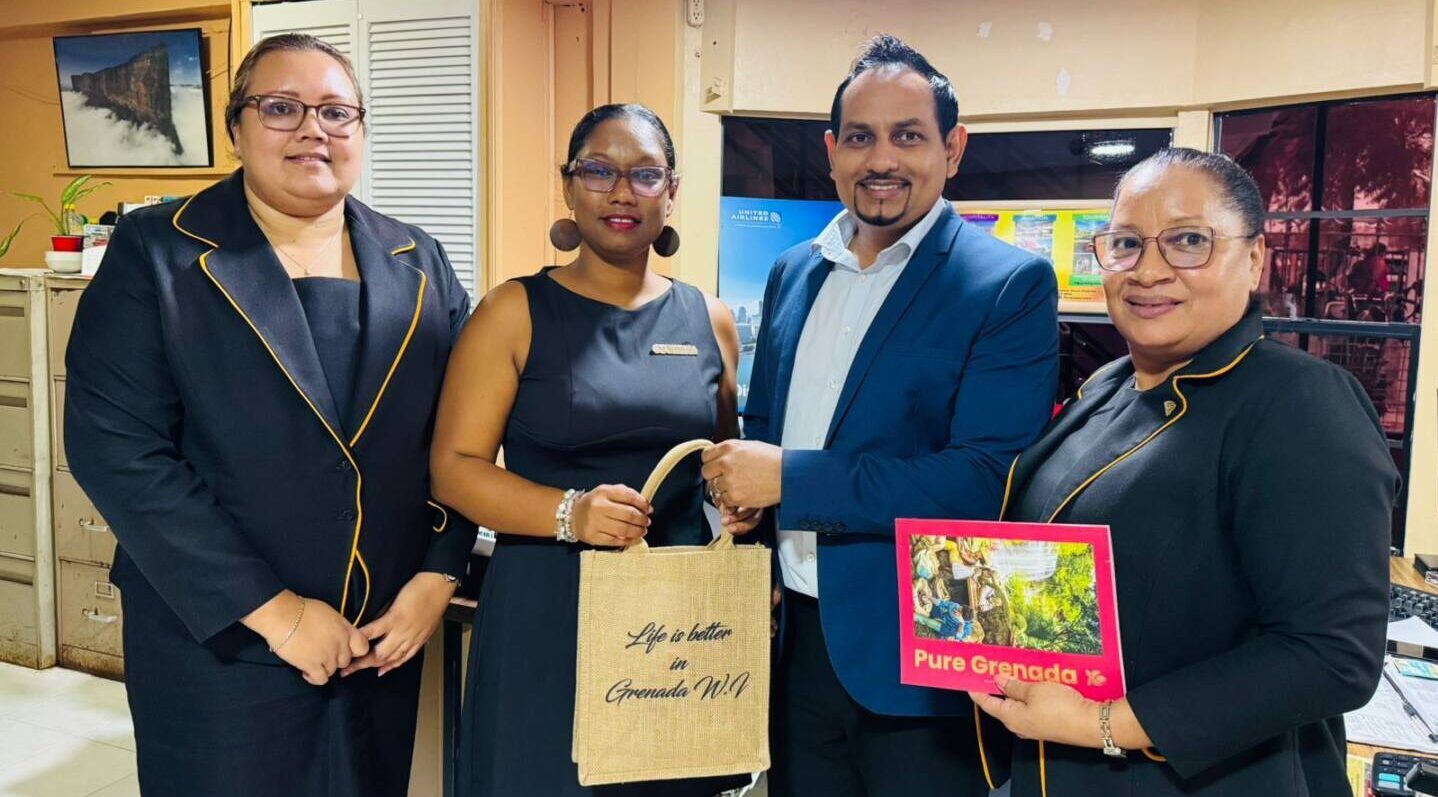
    After four days of targeted industry discussions and collaborative engagements, the Grenada Tourism Authority (GTA) has wrapped up a high-stakes sales mission in Guyana, laying new groundwork for expanded tourism cooperation between the two Caribbean neighbours. The core goal of the mission was to strengthen existing bilateral tourism partnerships and unlock untapped growth pathways that benefit both island nations.

    A central priority of the GTA’s outreach centered on the fast-expanding Meetings, Incentives, Conferences, and Events (MICE) sector. During one-on-one and group sessions with Guyanese corporate stakeholders, GTA representatives showcased Grenada’s world-class event infrastructure and proven ability to host everything from small executive retreats to large-scale regional professional forums. These presentations positioned Grenada’s tri-island destination as a flexible, attractive option for the Guyanese business community seeking unique event locations outside traditional markets.

    Beyond corporate and MICE-focused travel, the mission also included structured technical briefings with local travel trade partners in Guyana. These sessions updated industry stakeholders on the latest developments across Grenada’s tourism ecosystem, from ongoing upgrades to airlift connectivity between the two countries to the rapid expansion of Grenada’s luxury and boutique accommodation offerings. Representatives also outlined plans for new custom-curated travel experiences tailored to the varied preferences of Guyana’s local population and large expatriate community.

    Tornia Charles, Chief Marketing Officer at the GTA, emphasized the strategic logic behind the mission, noting that Guyana’s rapidly evolving economy has driven equally rapid shifts in the travel habits and expectations of its residents. “This mission was designed to align our tourism product with those shifting demands, ensuring that Grenada’s business and experiential offerings directly meet the rising expectations of this maturing market,” Charles explained.

    The outcomes of the in-country engagements align closely with the GTA’s broader regional development goals, with insights and feedback collected during the mission set to shape the authority’s future marketing campaigns and trade support initiatives.

    Melinda Telesford, Marketing Executive at the GTA, added that the on-the-ground engagement gave the GTA team unparalleled insight into the needs of Guyanese travelers. “This mission allowed us to go beyond the surface and truly understand the pulse of the Guyanese traveller. We found a remarkable alignment between Guyana’s growing professional class and Grenada’s diverse experiential offerings, which will allow us to curate a bespoke marketing roadmap for this market moving forward,” Telesford said.

    By targeting both the fast-growing corporate MICE segment and the rising demand for premium leisure travel, the GTA is moving beyond conventional destination promotion to build a long-term, sustainable cross-Caribbean tourism corridor. This strategic positioning ensures that as Guyana’s travel market continues to mature, Grenada is well-prepared to welcome a new wave of discerning, experienced travelers seeking unique Caribbean getaways.

    Disclaimer: NOW Grenada does not assume responsibility for opinions or statements shared by contributing parties. Users may report content violations through designated official channels.

  • Grenada to Venice: New work rooted in experience

    Grenada to Venice: New work rooted in experience

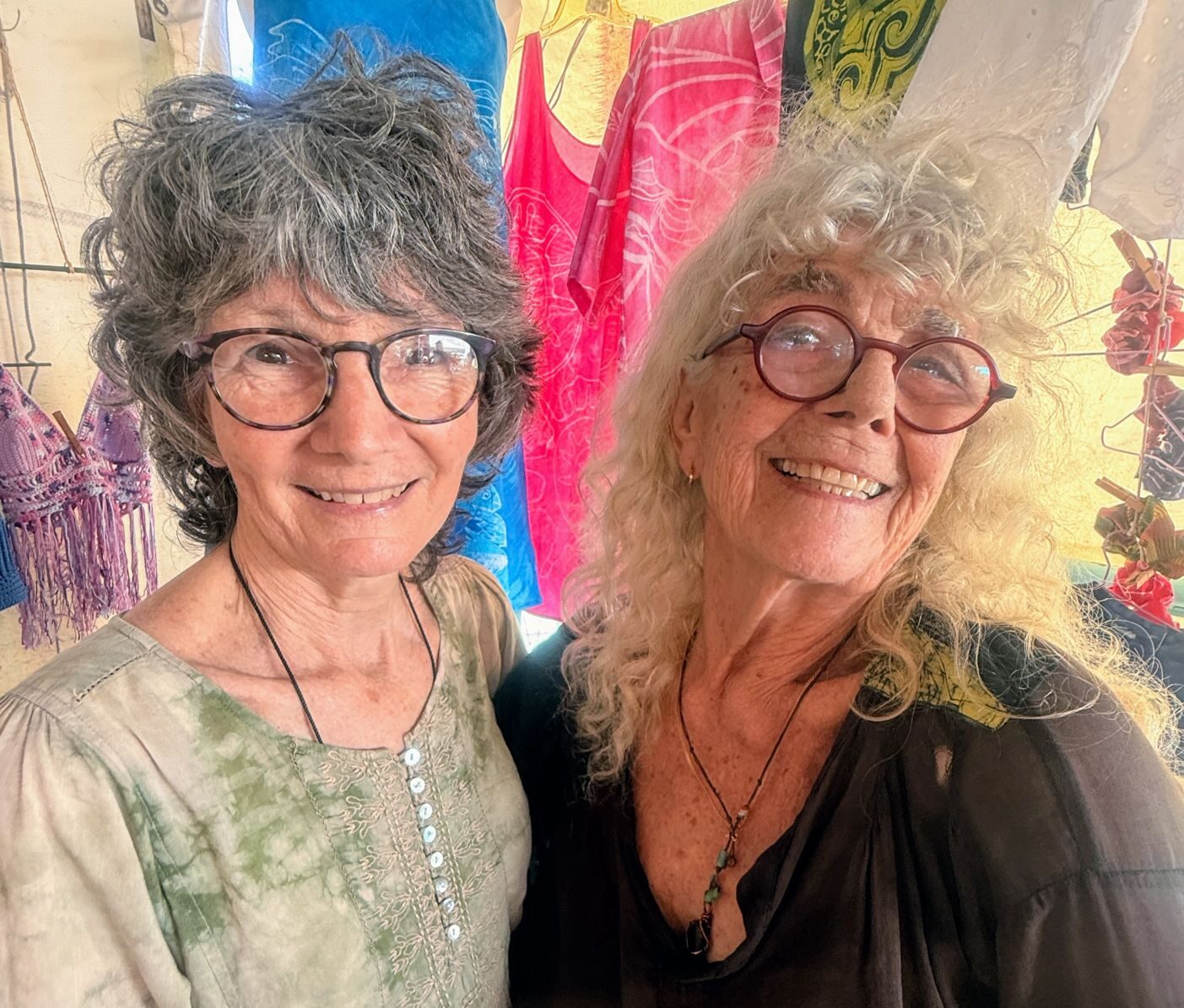
    As the 61st La Biennale di Venezia approaches, two seasoned Grenadian artists with more than three decades of collective creative experience each are putting the finishing touches on an innovative new body of work that will anchor Grenada’s national pavilion at the world’s most prestigious international art exhibition. Chris Mast and Lilo Nido, both long-time staples of Grenada’s contemporary art scene, have crafted a collaborative presentation that weaves together their distinct individual artistic trajectories while highlighting their shared commitment to exploring materiality, place and emotional connection through their practice.

    Chris Mast, an alumna of Humboldt State University (now California State Polytechnic University, Humboldt), has built her reputation on a bold assemblage practice that centers found and upcycled materials. She transforms discarded everyday objects into layered, thought-provoking visual narratives, drawing constant inspiration from close observation of the world around her and reinterpreting overlooked items to carry new meaning. Across her decades of practice, Mast has refined this approach to create work that bridges ecological awareness and visual storytelling.

    Her collaborator Lilo Nido is a photographer and multimedia artist whose practice is shaped by decades of global travel that have deeply influenced her creative perspective. Guided by intuition and emotional resonance, Nido subscribes to the core belief that art can transcend cultural divides, that heartfelt creation speaks a universal language that resonates across audiences. In recent years, she has expanded her practice beyond photography to include evolving experimental textile works that lean into this philosophy.

    What unites both artists’ practices beyond their shared connection to Grenada’s creative community is a deep exploration of handpainted batik, a traditional textile art form that both creators reimagine through a contemporary lens. They merge the tactile, centuries-old tradition of batik with modern expressive techniques, creating a dialogue between contrasting artistic approaches: Mast’s structured, material-focused assemblage works converse with Nido’s intuitive, spontaneous multimedia practice, resulting in a presentation that balances discipline and creative risk.

    Both artists have previously shown work both individually and collectively in multiple exhibitions organized by the Grenada Arts Council (GAC), which supports the Grenada Pavilion’s participation in the Venice Biennale. This marks the ninth time Grenada has hosted a national pavilion at the Venice Biennale overall since it first joined the event in 2015: six of these pavilions have been presented during the international art exhibition, with three featured during the parallel architecture Biennale. For 2024, their new collaborative work marks both a continuation of each artist’s individual creative journey and a powerful point of convergence, where decades of experience, experimental curiosity and the unique context of Grenada’s creative landscape intersect to welcome a global audience of art lovers to Grenada’s ninth presentation at the iconic event.