标签: Grenada

格林纳达

  • Cox: 2026 Budget not forward-looking financial plan

    Cox: 2026 Budget not forward-looking financial plan

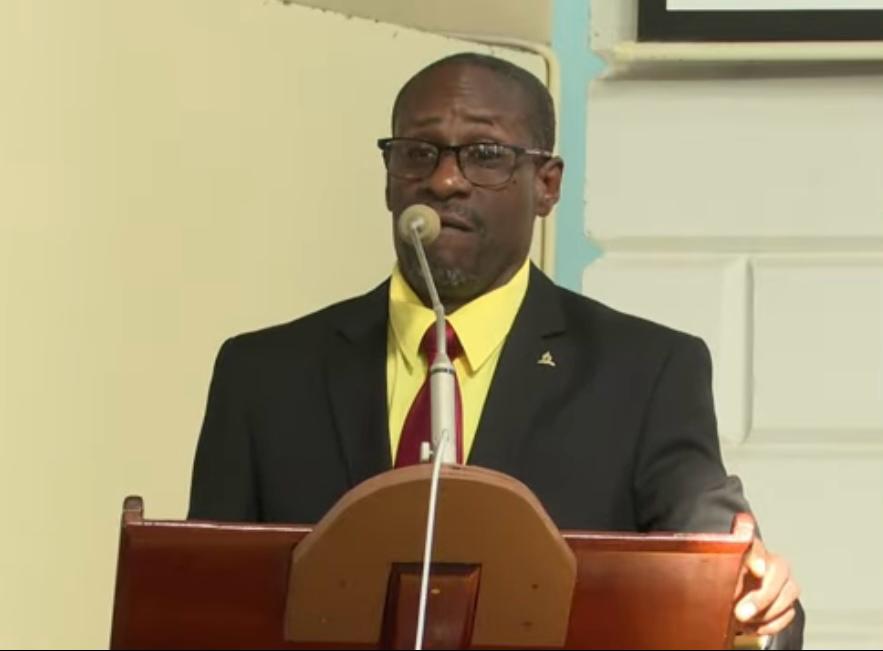
    Grenada’s Upper House witnessed a contentious debate on December 10th regarding the 2026 Estimates of Revenue and Expenditure, revealing starkly contrasting perspectives on the nation’s economic direction. Opposition Leader Norland Cox delivered a scathing critique, characterizing the budget document as lacking vision and merely recycling unfulfilled promises rather than presenting a forward-looking financial strategy.

    Cox, a former Infrastructure Minister, asserted that Grenada is experiencing “disaster-driven reconstruction spending” financed through short-term passport sales and long-term borrowing rather than genuine economic transformation. He challenged the government’s growth narrative, arguing that post-Hurricane Beryl reconstruction—which caused damage equivalent to 16.7% of GDP—drives temporary recovery rather than sustainable development. “This growth is not due to structural productivity gains. Grenada is growing only because it first fell,” Cox emphasized during his Senate address.

    The opposition leader highlighted concerning declines in agricultural output, with nutmeg production falling 51%, mace by 33%, and cocoa by 9% despite hurricane recovery efforts. He pointed to systemic challenges facing farmers, including labor shortages, high costs, and inadequate technical support, arguing that resilience alone cannot substitute for comprehensive agricultural policy.

    Contrasting this assessment, Government Business Leader Adrian Thomas defended the budget, presented under the theme “Towards Vision 75: Powering Progress Through People’s Participation and Innovation.” Thomas described the financial plan as reflective of Grenada’s collective dream, envisioning shared prosperity through people-centered development, innovation, and equity.

    The budget, initially presented to the Lower House on December 1st, has become a focal point for broader discussions about economic sustainability and transparency. Cox accused the government of obscuring the struggles of key sectors while celebrating limited growth, warning that confusing temporary rebuilding with genuine economic strength risks misleading both leadership and citizens.

    The Senate debate underscores deepening political divisions regarding economic strategy as Grenada continues its recovery from natural disasters while seeking to establish sustainable development pathways beyond crisis-response financing.

  • GFNC’s Christmas Singing Contest deadline extended

    GFNC’s Christmas Singing Contest deadline extended

    The Grenada Food & Nutrition Council (GFNC) has launched an innovative holiday initiative that merges musical creativity with public health awareness. Their ’12 Days of Christmas Singing Contest’ now features an extended submission deadline until December 12th, allowing broader participation across local and diaspora communities.

    This unique competition invites workplace teams, youth organizations, family units, and friend groups to reinterpret a specially remixed version of the classic Christmas carol. Participants are encouraged to incorporate creative elements including choreography, costumes, props, and harmonic arrangements while performing lyrics available on the GFNC Facebook platform.

    Submission protocols emphasize accessibility: contestants may record performances using mobile devices and submit entries via WhatsApp (473-415-2126) or email ([email protected]). The selection process transitions to public voting from December 15-18, where Facebook likes and reactions will determine winning entries. Finalists will be announced on December 18, 2025.

    The initiative serves dual purposes: fostering seasonal camaraderie through collaborative performance while subtly promoting nutritional awareness and healthy lifestyle choices. GFNC emphasizes this blend of entertainment and education as part of their broader mission to strengthen food security and nutrition literacy across Grenadian society.

    Additional resources including nutritional counseling services (473-440-2126) and organizational information remain available through GFNC’s digital platforms, maintaining the council’s ongoing commitment to public health education alongside seasonal celebration.

  • Grenada opens honorary consulate in Guyana

    Grenada opens honorary consulate in Guyana

    In a significant move to bolster regional cooperation, Grenada has officially inaugurated an honorary consulate in Georgetown, Guyana, marking a new chapter in bilateral relations between the two Caribbean Community (Caricom) nations. The ceremony, held on Monday evening, was attended by high-level officials including Grenadian Prime Minister Dickon Mitchell and Foreign Minister Joseph Andall, alongside Guyanese President Irfaan Ali.

    President Ali articulated a visionary proposal for integrated tourism offerings, combining Grenada’s renowned ‘Spice Isle’ attractions—featuring beaches, yachting, and cultural charm—with Guyana’s world-class eco-tourism assets of rainforests, waterfalls, and wildlife. This synergy aims to create multi-destination packages, enhancing regional competitiveness while requiring improved air connectivity to realize its full potential.

    Prime Minister Mitchell emphasized the strategic importance of investing in regional partnerships, acknowledging Guyana’s ‘rock hard’ support during Grenada’s recovery from Hurricane Beryl in 2024. He critiqued the conventional practice of establishing distant diplomatic missions with nations lacking shared interests, affirming that this consulate represents a ‘deliberate step’ to strengthen political, economic, and diplomatic ties within the Caribbean backyard.

    The consulate will be headed by Komal Singh, a prominent Guyanese businessman and former Private Sector Commission chairman, who has been appointed as Honorary Consul. Singh pledged to function as a bridge for business, investment, education, and cultural exchange, stimulating Grenadian engagement with opportunities in Guyana.

    Beyond tourism, both leaders highlighted advanced discussions on regional food security, with plans to formalize an elaborate bilateral agreement by early next year. Guyana aims to become a reliable supplier of quality food at consistent prices, while also proposing joint investment in modernizing Grenada’s spice industry through enhanced processing and packaging capabilities.

    Foreign Minister Andall expressed optimism that the consulate would catalyze extended trade relations not only between Guyana and Grenada but across the entire Caricom bloc, signaling a collective stride toward economic resilience and regional integration.

  • 1,166 new citizens under the CBI from January to September

    1,166 new citizens under the CBI from January to September

    Grenada’s Investment Migration Agency (IMA), formerly known as the Citizenship by Investment Unit, has released comprehensive statistics revealing significant developments in the nation’s citizenship program during the third quarter of 2025. According to the latest data, citizens from 55 different countries received approval for Grenadian citizenship through the Investment Migration Program between July and September 2025.

    The approval distribution shows a notable concentration from six key jurisdictions: Nigeria (15%), China (13%), Iraq, the United States, Pakistan, and Egypt. Collectively, these nations accounted for 51% of the 135 new citizens approved during the quarter. The total number of approvals for the first three quarters of 2025 reached 1,166 individuals, maintaining the program’s steady growth trajectory since its inception in 2014, during which over 20,000 people have obtained Grenadian citizenship.

    A significant operational pause occurred in August 2025 when no approvals were processed due to the Cabinet of Ministers’ recess period, during which no official meetings were conducted. This temporary suspension highlights the program’s structured governance framework requiring ministerial oversight.

    Finance Minister Dennis Cornwall, presenting the 2026 budget statement to Parliament on December 1, emphasized the program’s evolving significance. “The Citizenship By-Investment Programme has become a substantial contributor to government revenues, tourism development, and job creation,” Cornwall stated. “Our Program continues to rank among the most reputable globally, featuring deeply entrenched, robust due diligence processes developed over its 11-year history.”

    The government announced forthcoming regulatory amendments designed to stimulate local participation. In the coming weeks, Grenada will implement revised regulations reducing fees by 70% for local developers initiating new projects within priority economic sectors under the CBI Program. This strategic move responds to advocacy from local business communities seeking enhanced involvement in the investment migration ecosystem.

    Financially, the program has exceeded expectations, with 2025 revenues surpassing the projected EC$165.9 million forecast in the annual budget. Looking ahead to 2026, the Ministry of Finance has projected IMA revenues to reach EC$173,973,807, indicating continued confidence in the program’s sustainable growth and economic contribution.

  • Trump’s drug war hypocrisy and the Caribbean Lesson

    Trump’s drug war hypocrisy and the Caribbean Lesson

    The recent presidential pardon granted by Donald Trump to former Honduran leader Juan Orlando Hernández has laid bare the profound contradictions embedded within Washington’s foreign policy apparatus. Hernández, who faced extradition in 2022 and subsequent conviction in American courts for facilitating the smuggling of over 400 tons of cocaine into the United States, has now been absolved of all charges through executive clemency.

    This judicial reversal underscores how America’s decades-long ‘war on drugs’ has functioned primarily as an instrument of geopolitical convenience rather than a consistent moral campaign. Evidence presented during Hernández’s trial detailed extensive bribery schemes, state-level complicity, and narco-political operations at the highest echelons of Honduran governance—prompting federal prosecutors to formally designate his administration a ‘narco-state.’

    The pardon emerges against a backdrop of strategic utility. Honduras maintained its value to successive U.S. administrations by hosting American military assets and supporting Washington’s aggressive stance toward Venezuela and Central American affairs. Trump’s intervention consequently appears less motivated by judicial mercy than by preserving political influence, demonstrating how rhetoric surrounding ‘rule of law’ readily dissipates when strategic alliances hang in the balance.

    Simultaneously, the Trump administration intensified allegations against Venezuela, accusing President Nicolás Maduro and even artisanal fishermen of narcotics trafficking—despite consistent reporting from the DEA and UN indicating that cocaine primarily transits through Honduras, Guatemala, and Mexico.

    This dichotomy reveals the underlying mechanics of U.S. drug policy: compliant allies receive forgiveness while adversarial nations face relentless scrutiny. For Caribbean communities bearing witness to decades of anti-narcotics operations, this pattern resonates with painful familiarity. Regional institutions now face renewed imperatives to develop independent narcotics policies grounded in transparency rather than dependency.

    The pardon further jeopardizes the integrity of America’s judicial institutions, suggesting that legal accountability remains subject to political whimsy. It ultimately confirms that the war on drugs has generated military contracts and diplomatic leverage while failing to meaningfully reduce consumption, trafficking, or violence. What began as a moral crusade has devolved into a naked struggle for control—with the Hernández case serving as its most revealing epitaph.

  • Interrogating political masculinity

    Interrogating political masculinity

    The pervasive influence of patriarchal structures continues to define political landscapes worldwide, creating significant barriers to gender equality in governance. Political masculinity—the entrenched system where masculine norms, values, and identities dominate political discourse and leadership paradigms—remains a critical yet under-examined aspect of modern politics.

    Globally, women’s participation in representational politics demonstrates a fragmented pattern despite their fundamental role as the backbone of political organizations. Female politicians carry the additional burden of balancing familial responsibilities with their careers, unlike their male counterparts who historically benefit from gender stereotypes that permit absence from domestic duties. This disparity highlights how traditional gender roles continue to disadvantage women in political spheres.

    The recent global surge in right-wing populism and nationalism has further complicated gender dynamics in politics. These movements typically embrace misogynistic and sexist ideologies that directly contradict feminist principles and gender equality initiatives. Notably, governments adhering to populist frameworks often disregard United Nations Sustainable Development Goals (SDGs), instead prioritizing the restructuring of societies around traditional gender roles. This regression normalizes gender-based violence and systematically marginalizes women’s visibility in public life.

    Even when women break through the proverbial glass ceiling, they frequently receive masculine descriptors such as ‘iron lady’—a phenomenon observed with former leaders including Margaret Thatcher (UK), Indira Gandhi (India), and Eugenia Charles (Dominica). Caribbean leaders like Portia Simpson-Miller (Jamaica), Mia Mottley (Barbados), and Kamla Persad-Bissessar (Trinidad and Tobago) have navigated similar patriarchal challenges within their political cultures, where sexist paradigms often remain unchallenged.

    The cult-like personalities surrounding populist leaders accelerate the masculinization of politics, frequently manifesting as authoritarian leadership styles that violate human rights principles. While strong leadership can coexist with human rights adherence, the traditional form of political masculinity—often labeled ‘toxic’—promotes negative outcomes through its emphasis on aggression, emotional suppression, and dominance. This authoritarian model concentrates decision-making power exclusively with the leader, demanding unconditional obedience while reinforcing gendered inequalities and suppressing diverse perspectives.

    Despite its documented drawbacks, political masculinity maintains global resilience, adapting to cultural shifts rather than disappearing. In many regions, leadership remains synonymous with traditionally masculine traits like toughness and dominance, celebrated as necessary for ‘strong’ governance. The upcoming 2024 US Presidential Elections will inevitably reflect these dynamics, echoing Michelle Obama’s recent observation about societal readiness for female leadership.

    The militarization of policy approaches through masculine frameworks consistently drowns out alternative solutions proposed by women and marginalized groups. Moving forward, the international community must embrace political harmony—a state of cooperative governance characterized by minimal conflict, mutual respect, and effective dialogue that prioritizes collective progress over divisive power struggles.

  • Peter David: Budget lacked “deep structural changes”

    Peter David: Budget lacked “deep structural changes”

    Grenada’s parliamentary opposition has delivered a sharp critique of the EC$1.9 billion national budget presented by Finance Minister Dennis Cornwall on December 1st, characterizing the fiscal plan as inadequate for driving meaningful economic transformation.

    Peter David, Opposition MP for the Town of St. George and political leader of the Democratic People’s Movement, asserted that while the budget contained some positive elements, it fundamentally lacked the structural reforms necessary to revitalize Grenada’s economy. According to David, the expenditure allocations merely perpetuate existing patterns of resource distribution without addressing core developmental challenges.

    “What we are witnessing is essentially maintenance-level governance rather than transformative policy-making,” David contended during parliamentary debates. “The current approach applies temporary fixes rather than implementing the deep structural changes that would genuinely transform our nation as the government claims to intend.”

    David elaborated that authentic structural reform would involve comprehensive support systems for agricultural producers, young entrepreneurs, and enhanced community participation in decision-making processes. He emphasized that these measures constitute development priorities rather than partisan political issues.

    The opposition leader highlighted several critical areas requiring immediate attention, including youth entrepreneurship development, agricultural sector revitalization, and food price stabilization. With approximately 80% of consumed food being imported, David warned that without strategic intervention, grocery prices would continue their upward trajectory, placing additional burdens on Grenadian households.

    David painted a vivid picture of the economic anxieties facing ordinary citizens, noting that kitchen table conversations across the nation consistently revolve around concerns about medical expenses, educational costs, employment security, and basic subsistence. He framed the opposition’s critique as necessary advocacy for addressing these pressing public concerns through substantive policy recommendations.

    The Democratic People’s Movement leader concluded that without significant alterations to the budgetary approach, the government’s transformation agenda would remain unfulfilled, leaving structural economic challenges unaddressed.

  • GFNC: Farm to Table standards

    GFNC: Farm to Table standards

    Grenada is mobilizing a nationwide initiative to transform food safety from a health precaution into a comprehensive national strategy. This effort engages every segment of the food supply chain—from agricultural production to consumer practices—to safeguard public health, enhance export competitiveness, and protect the island’s vital tourism industry.

    At the production level, farmers and fishermen constitute the first defense line. Their adherence to hygienic handling of crops, livestock, and seafood establishes the foundation for everything that follows. The use of clean irrigation water and contamination-free storage methods is particularly crucial for Grenada’s signature exports, including spices, cocoa, and fresh fruits.

    Processing facilities—including bakeries, spice processors, and juice manufacturers—serve as critical intermediaries. These operations are implementing Hazard Analysis and Critical Control Points (HACCP) principles to systematically identify and mitigate potential hazards before products reach markets. This adoption of international standards not only protects consumers but also positions Grenadian products favorably in global trade.

    The distribution and retail sector functions as the final checkpoint before food reaches consumers. Supermarkets and distributors bear responsibility for maintaining cold chains, ensuring proper storage conditions, and providing accurate labeling. Any failure in these areas can compromise the entire safety system, making retail establishments crucial guardians of public trust.

    Consumers complete the safety cycle through proper food handling practices in homes. Simple measures including thorough handwashing, adequate cooking, and adherence to storage instructions transform food safety from a regulatory requirement into a community-wide culture of protection.

    Grenada’s strategy incorporates internationally recognized frameworks including the European Union’s Regulation (EC) 852/2004 alongside HACCP methodologies. This integrated approach promises significant national benefits: reduced foodborne illnesses, strengthened export credentials for agricultural products, and enhanced reputation as a premium tourism destination. The Grenada Food and Nutrition Council (GFNC) spearheads this comprehensive effort, recognizing that food safety represents both a public health imperative and an economic investment in the nation’s future.

  • Maximum EC$100,000 fine under new fisheries regulations

    Maximum EC$100,000 fine under new fisheries regulations

    Grenada has implemented comprehensive new fisheries regulations establishing robust protections for marine mammals within its territorial waters. Published in the 5 December Government Gazette as Statutory Rules and Order (SRO) 43 of 2025, these regulations introduce significant penalties for violations, including fines up to EC$100,000 (approximately US$37,000) and potential imprisonment.

    The legislative framework mandates specific protocols for fishermen encountering marine mammals during operations. Vessel operators are now required to immediately release any accidentally captured or entangled mammals using methods that minimize stress and harm. The regulations further stipulate that crew members must assist in release operations unless personal safety is compromised.

    Protected species under the new rules include multiple cetaceans and marine mammals found in Grenadian waters: Humpback Whales, Sperm Whales, various dolphin species (Bottlenose, Spinner, and Atlantic Spotted), Pilot Whales, False Killer Whales, Pygmy Sperm Whales, West Indian Manatees, and seals. For unidentified species, the regulations require photographic documentation and detailed reporting to the Fisheries Division for scientific verification.

    This regulatory overhaul directly addresses compliance requirements under the US Marine Mammal Protection Act, successfully averting a scheduled January 2026 ban on Grenadian fish and fish products entering the American market. The potential embargo, announced in August 2025, threatened an industry generating over EC$50 million annually for the island nation.

    The legislation does include limited exemptions for scientific research authorized by the Minister and emergency situations where human life or marine mammal welfare is imminently endangered. In such cases, individuals must exercise reasonable care during interventions and report any takings or harassment incidents to the Chief Fisheries Officer within 48 hours.

    Grenada’s parliamentary approval process saw both legislative chambers endorsing amendments to the Fisheries Act approximately three weeks prior to the regulations’ official publication, demonstrating coordinated governmental action to protect both marine ecosystems and economic interests.

  • Reopening of 2-lane traffic: Old Fort Main Road

    Reopening of 2-lane traffic: Old Fort Main Road

    The Royal Grenada Police Force (RGPF) Traffic Department has officially announced the full reopening of Old Fort Main Road in St. George to two-way vehicular traffic. The restoration, which became effective Friday, December 5, 2025, marks the conclusion of previously undisclosed infrastructure work that had necessitated a partial closure.

    In a public communiqué, the RGPF extended its gratitude to citizens and motorists for their demonstrated patience and cooperative spirit during the period of traffic disruption. The police force emphasized that public understanding was instrumental in facilitating the project’s completion.

    The announcement, disseminated through the Office of the Commissioner of Police, serves as a formal notification to the commuting public to resume standard travel patterns on the route. Local authorities have confirmed that all necessary safety checks and assessments have been conducted to ensure the road’s integrity for public use.