标签: Grenada

格林纳达

  • Traffic Arrangements – Mt Kumar to Chantilly, St George

    Traffic Arrangements – Mt Kumar to Chantilly, St George

    Motorists and local residents in Grenada are being alerted to upcoming temporary traffic adjustments that will reshape travel patterns across several public roads for three weeks starting May 14, 2026. The new rules, issued by the Traffic Department of the Royal Grenada Police Force (RGPF), are being implemented to accommodate the Mt Kumar to Chantilly G-Crews Pipe Laying Project, an infrastructure upgrade that will improve local utility services once completed.

    Under the approved traffic plan, two major local roads will convert to one-way operation for the duration of the construction work. La Mode Public Road will only allow vehicles traveling in the direction of Mt Gay, while Beaulieu Public Road will be restricted to one-way traffic heading toward Snug Corner.

    Additional routing adjustments have been mapped out to redirect through traffic around the construction zone. All vehicles traveling from Grand Etang toward St George’s will be required to turn left onto Boca Public Road, followed by another left turn onto Melrose Public Road, before exiting onto La Mode Public Road to continue their journey. For drivers departing from New Hampshire and nearby surrounding communities, the revised route calls for a left turn at the Beaulieu/Boca junction, a right turn onto Melrose Public Road, and exit onto La Mode Public Road.

    Notably, the new traffic restrictions do not apply to all vehicle classes. Heavy trucks and public buses will be exempt from the altered routing rules, and will retain access to their standard, pre-construction routes throughout the three-week work period.

    The RGPF has issued a public call for cooperation from all road users, emphasizing that the temporary adjustments are necessary to keep construction crews safe and allow the infrastructure project to progress on schedule. The official notice was released through the Office of the Commissioner of Police, with local outlet NOW Grenada noting it does not take responsibility for contributor content and provides a channel for reporting alleged abuse of its platform.

  • PM congratulates Hon. Philip Davis on his re-election as prime minister

    PM congratulates Hon. Philip Davis on his re-election as prime minister

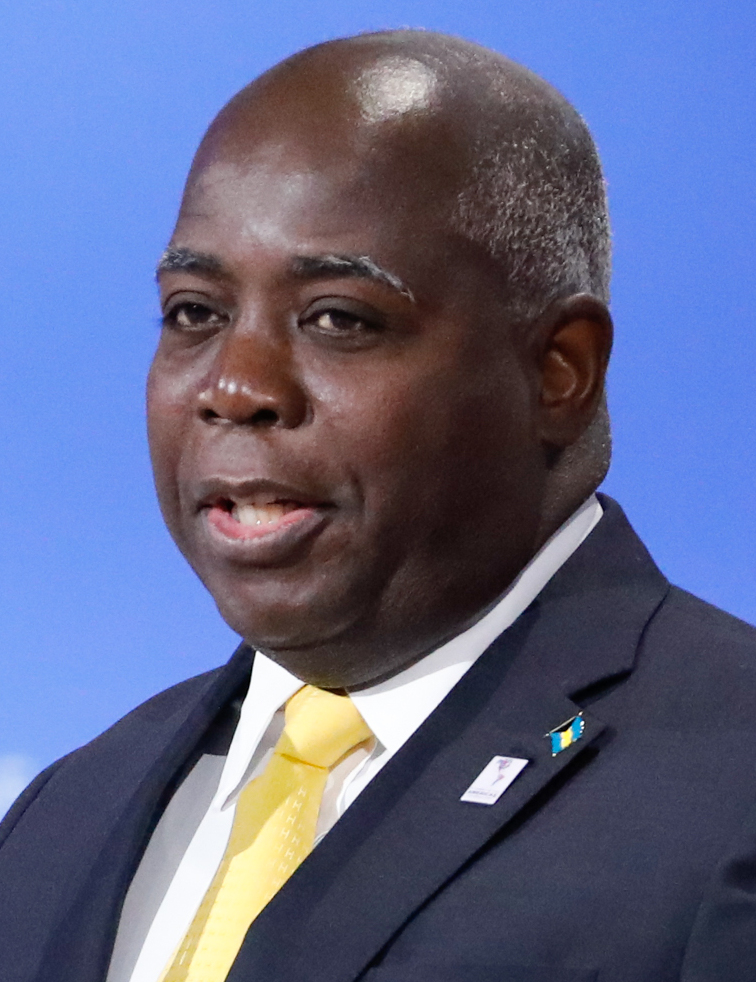
    Following the conclusion of The Bahamas’ recent general election, Grenada’s Prime Minister Dickon Mitchell has officially extended his warm congratulations to Philip Davis on his successful re-election as Prime Minister of the Commonwealth of The Bahamas.

    Mitchell emphasized that Davis’ victory is far more than a personal political win — it represents a fresh vote of confidence from the Bahamian public, both in Davis’ leadership and in the country’s foundational democratic governance system.

    As fellow member states of the Caribbean Community (Caricom), Grenada and The Bahamas have built a long-standing track record of collaborative work focused on advancing three core regional goals: deepening Caribbean unity, accelerating regional integration, and driving inclusive sustainable development across the bloc. Mitchell noted that this bilateral partnership remains an essential pillar of Caricom’s collective progress, particularly as the region works to tackle interconnected pressing challenges: building national economic resilience, delivering ambitious climate action, guaranteeing food and water security, and expanding equitable social development.

    Both nations fall into the group of Small Island Developing States (SIDS), a classification that binds them through shared core commitments and parallel unique challenges. As SIDS, both face disproportionate vulnerability to the accelerating impacts of climate change, heightened exposure to volatile external economic shocks, and an ongoing need to deliver growth that is both inclusive and sustainable. United by solidarity and shared purpose, the two countries remain unwavering in their coordinated efforts to advocate for Caribbean priorities and interests in global multilateral forums, leveraging regional coordination to amplify their collective voice.

    Looking ahead, the Government of Grenada has made clear it is eager to continue its productive collaborative work with the Government of The Bahamas. The two sides will work to strengthen bilateral ties and advance shared priorities at both the regional and global levels, all rooted in the enduring spirit of Caribbean unity, mutual partnership, and cross-national solidarity.

    This statement was released by the Office of the Prime Minister of Grenada. NOW Grenada notes that it holds no responsibility for opinions, statements, or third-party contributor content, and invites users to report any alleged abuse through official designated channels.

  • Corp-EFF Insurance Company Limited opens sales window for Flexible Hurricane Protection coverage

    Corp-EFF Insurance Company Limited opens sales window for Flexible Hurricane Protection coverage

    In a proactive move to strengthen climate resilience across Grenada, Corp-EFF Insurance, in partnership with Grenada Cooperative League Limited (GCLL), has announced the reopening of the sales window for its groundbreaking Flexible Hurricane Protection (FHP) parametric insurance product. The coverage will remain available for purchase through May 31, 2026, giving residents and organizations across the island ample time to secure tailored financial protection ahead of Atlantic hurricane seasons.

    Unlike traditional property and casualty insurance products that require proof of physical damage to process claims, FHP operates on a parametric payout model designed to deliver rapid access to emergency funds. Payouts are triggered as soon as official government authorities confirm that a qualifying storm has made landfall on the island, eliminating lengthy damage assessment processes and getting critical capital into the hands of policyholders when urgent recovery efforts begin. This flexible framework also allows customers to select coverage tiers that align with their specific needs and financial capacity, making hurricane protection accessible to a broader range of stakeholders.

    The innovative product has already proven its value to the Grenadian community. First launched in 2023 ahead of Hurricane Beryl, FHP disbursed a total of EC$3.9 million in claims to the Grenada Co-operative Nutmeg Association (GCNA) and dozens of private individual policyholders within just 15 days of the storm passing, demonstrating the product’s ability to deliver on its promise of fast, reliable support.

    Corp-EFF Insurance has emphasized that the FHP product operates under full regulatory oversight from the Grenada Authority for the Regulation of Financial Institutions (GARFIN), ensuring compliance with all local financial industry standards. Global reinsurance firm Hanover Re acts as the principal reinsurer for the product, providing the financial backing needed to honor large-scale claims after major storm events.

    As a cooperative-focused insurance provider, Corp-EFF Insurance is jointly owned by a network of regional cooperative entities: Nexa Credit Union, Ariza Credit Union, Grenada Cooperative League Limited, four additional local credit unions, and the cooperative league of neighboring Dominica. FHP coverage is open to a wide range of applicants, including statutory government bodies, private companies, small businesses, religious institutions including churches, and individual residents across Grenada.

    Interested parties can learn more about eligibility, coverage tiers, and enrollment through Corp-EFF Insurance’s official website at www.corpeffinsurance.com, via email at [email protected], or by calling the company’s customer service line at (473) 440-2903.

  • Sagicor “Mom’s Masterclass” webinar

    Sagicor “Mom’s Masterclass” webinar

    Against a backdrop of growing recognition that maternal support demands more than just a single annual day of recognition, Caribbean financial and wellness leader Sagicor is extending its annual motherhood celebrations with a purpose-driven, empowering virtual event tailored to lift up women in their foundational role as mothers.

    Scheduled for Thursday, 14 May 2026 at 7:00 pm, the upcoming “Mom’s Masterclass” webinar will convene a diverse, expert panel spanning healthcare, business, entrepreneurship, and finance to tackle the most pressing topics modern mothers and their families face. The curated discussion agenda covers four critical domains: children’s physical health, maternal self-care, long-term financial wellness, and navigating the unique challenges of 21st-century parenting.

    This no-cost online gathering aligns with Sagicor’s long-standing institutional commitment to advancing wellness, family stability, and financial empowerment across the entire Caribbean region. The cross-sector panel brings together five accomplished voices to share their unique perspectives: Nicole McClaren-Campbell, a published author, entrepreneur, and prominent digital content creator; Dr. Maria Chase, a board-certified pediatrician; Carolyn Shepherd, Assistant Vice President of Digital and Alternate Channels at Sagicor Life Inc; Renee Ottley, Senior Manager of Investments and Wealth Management at Sagicor Investments Trinidad and Tobago Limited; and Kizzy Flood, a dedicated Sagicor Advisor with Sagicor Life (Eastern Caribbean) Inc.

    Organizers designed the interactive session to deliver more than just theoretical discussion: attendees will walk away with actionable, practical advice, unfiltered honest insights, and targeted encouragement to help mothers balance the competing demands of parenting, professional careers, personal financial planning, and their own physical and mental well-being. Unlike traditional Mother’s Day observances that limit recognition to a 24-hour period, the masterclass was developed to affirm that ongoing support and celebration for mothers is a year-round priority. To add to the engagement, attendees who join the live broadcast will also be entered to win a selection of attractive giveaways.

    Event organizers urge all interested participants to register for the webinar as early as possible to reserve their spot, given expected high demand for the free event.

  • Enough is enough: The blood of our daughters cries out

    Enough is enough: The blood of our daughters cries out

    On the night of February 6, 2026, a senseless act of brutal violence cut short the life of 22-year-old Aleandra Lett–Hypolite, a promising nursing student at St George’s University who had dedicated her life’s ambition to caring for others. Aleandra was raped and murdered in the quiet Grenadian parish of St Andrew, her body discarded in bushes in the remote community of Café, Crochu. The man charged with her murder and rape is a convicted sexual predator who was granted early bail despite a documented history of violent sexual offenses. Just days after Aleandra’s killing, a second young life was lost: 18-year-old Terrecheal Sebastian was shot dead in Tivoli, also in St Andrew.\n\nThese two tragedies are not isolated incidents. They are the most recent high-profile examples of a growing, horrifying pattern of femicide that has shaken Grenada and spread across the broader Caribbean region, where young women are being killed by men of all ages in streets, homes, and public spaces that should be safe.\n\nPublic outrage over the killings has been widespread and deeply felt, with community vigils, candlelight memorials, and an outpouring of condolences for the victims’ families. But the author of this commentary, Francis Amèdé, MD, argues that gestures of sympathy are not enough. For years, Grenada has fallen into a repeating cycle: communities mourn after a brutal killing, express frustration, and then nothing changes. Dangerous offenders remain free on bail, court cases drag on for years, and the death penalty — which Amèdé calls the ultimate deterrent for violent crime — has been sidelined by international pressure from human rights groups like Amnesty International, while the Grenadian government has moved toward full abolition on human rights grounds.\n\nFor Amèdé, the blood of Aleandra, Terrecheal, and dozens of other women killed before them demands swift, decisive justice. He cites the Bible’s Ecclesiastes 8:11, which warns: “Because the sentence against an evil deed is not executed speedily, the heart of the children of man is fully set to do evil.” This is not a call for vengeance, he emphasizes, but a demand for biblical justice, improved public safety, and the long-term survival of Grenada as a safe nation. He argues that Grenada and other Caribbean nations must immediately reinstate and enforce the death penalty for deliberate, premeditated murder — particularly in aggravated cases involving rape, repeat offending, or attacks on vulnerable people. Beyond capital punishment, he calls for sweeping reform: police must aggressively investigate violent gender-based crimes and deny bail to dangerous repeat offenders; courts must deliver timely verdicts, ending the decades-long delays caused by extended appeal processes; and governments must reject pressure from foreign non-governmental organizations to abolish the death penalty, instead leading with courage to protect their citizens. While prevention programs are an important part of addressing violence against women, Amèdé argues they are useless without harsh, certain consequences for offenders — “Band-Aids on a haemorrhage.”\n\n## The Scale of the Crisis: Data on Femicide and Violence Across the Region\n\nGrenada is a small island nation with a total population of just 125,000 to 130,000, meaning every homicide has an outsize impact on the tight-knit community. 2023 data from Macrotrends (2025) puts the country’s homicide rate at 13.67 per 100,000 people — a relatively high rate for a nation of its size, translating to roughly 16 to 17 murders per year. While 2025 saw a welcome drop to around 10 total homicides (all of which were reportedly solved), the early 2026 spike in brutal killings of young women has reversed that progress. Grenada’s femicide rate currently stands at approximately 1.714 per 100,000 women, placing it among the highest rankings for gender-based killing regionally and globally.\n\nThe picture is even grimmer across the rest of the Caribbean. Saint Vincent and the Grenadines has recorded homicide rates as high as 40 to 54 per 100,000 in recent years, driven by gang activity and the illegal drug trade. Neighboring nations including Trinidad and Tobago and Jamaica consistently rank among the most violent countries in the world. Data from the United Nations Office on Drugs and Crime (UNODC) and the UN Economic Commission for Latin America and the Caribbean (ECLAC) for 2025 shows that Latin America and the Caribbean account for a disproportionate share of global femicides. Between 2021 and 2023, thousands of women were killed across the region, with 45% to 74% of all female homicides linked to intimate partners or family members, depending on the sub-region. In small island nations like Grenada, an even higher share of female homicides are classified as gender-based.\n\nSurveys show that one in four Grenadian women have experienced physical violence, nearly one in ten have endured sexual violence, and three in ten have suffered emotional abuse at the hands of a partner. The economic cost of violence against women and girls in Grenada is estimated at US$63 million per year — equal to 5.24% of the country’s total GDP — according to 2025 data from UN Women Caribbean and the World Bank. This cost comes from lost productivity, healthcare spending, burdens on the justice system, and intergenerational trauma passed to survivors’ children. The data also confirms that Grenada’s femicide rate rose during the COVID-19 pandemic, alongside entrenched patriarchal social norms, controlling behavior in romantic relationships, and stark gender gaps in employment: recent data puts female unemployment at 31.8%, compared to just 17.8% for men. Studies also confirm that lower educational attainment correlates with a higher risk of intimate partner violence.\n\nAmèdé argues these killings are not random “crimes of passion” — they are symptoms of deeper systemic failures: repeat violent offenders are repeatedly released on bail, law enforcement agencies face crippling forensic backlogs and underfunding, and the justice system allows convicted murderers to linger on death row for decades without resolution, due to repeated legal challenges and rulings from the Privy Council, the region’s highest appellate court.\n\n## How the Crisis Evolved: From Post-Independence Hope to Modern Crisis\n\nGrenada’s trajectory mirrors that of most other English-speaking Caribbean nations. Gained independence in 1974, the country saw a period of idealistic political change followed by upheaval during the 1979–1983 revolutionary government. The 1983 U.S. intervention and the execution of former Prime Minister Maurice Bishop and 16 other supporters left deep national scars. Economic shifts away from agriculture toward tourism and services created growing income inequality. The 1980s and 1990s saw a boom in drug transhipment, as cocaine moved from South America through Caribbean islands to markets in Europe and North America, flooding local communities with illegal guns, cash, and gang culture. Firearms violence rose dramatically, while traditional community social controls eroded.\n\nChanging economic conditions also fractured family structures: widespread migration of working-age young men created gaps in family life, and welfare policies sometimes inadvertently discouraged the formation of stable two-parent households. Childhood exposure to domestic violence normalized aggressive behavior toward women. The traditional Caribbean “macho” culture that glorifies male control over women, combined with high rates of substance abuse, fuels a sense of male entitlement that can explode into lethal violence. Social media has amplified these toxic influences, normalizing the objectification of women, spreading revenge porn, and enabling cultural dynamics that sometimes shield abusive men while blaming victims for their own attacks.\n\nBy the 2000s and 2010s, intimate partner femicide and random stranger attacks on young women had become a “perennial scourge.” Convicted rapists and abusers regularly received bail or overly lenient sentences, were released back into communities, and reoffended — often killing. Aleandra’s alleged killer fits this pattern exactly: a repeat sexual offender who was granted release before he attacked her. Courts, constrained by human rights appeals and chronic resource shortages, move far too slowly to deliver justice. Police often launch aggressive manhunts after killings, but lack access to advanced forensics and struggle to build trust with communities in high-crime areas. The Grenadian government has maintained a de facto moratorium on executions since 1978, after the Privy Council ruled mandatory death sentences unconstitutional in high-profile cases, even though the death penalty remains on the country’s statute books for murder. The last execution carried out in Grenada was in 1978.\n\nThe result of this system is widespread impunity for killers, Amèdé argues, fulfilling the warning of Ecclesiastes 8:11 in real time. When offenders see other killers serve only 10 to 20 years (or less) or remain free pending appeals, “the heart of the children of man is fully set to do evil.” Young men learn that violating and killing women carries very little risk, while women live in constant fear — on public buses, walking home from university, even in their own yards.\n\nThis pattern holds across the entire Caribbean. High rates of single-mother households (reaching 40% to 60% in some islands), chronic youth unemployment, weak gun control enabled by porous national borders, and cultural tolerance for “discipline” of women that crosses into abuse have created fertile ground for violence. After the COVID-19 pandemic began in 2020, lockdowns caused a sharp spike in domestic violence, and uneven economic recovery has left widespread frustration that often boils over into gender-based violence.\n\n## A Biblical Case for Swift Capital Justice\n\nAmèdé argues that the Bible is unambiguous in its support for capital punishment for premeditated murder. After the Flood, God’s covenant with Noah states in Genesis 9:6: “Whoever sheds the blood of man, by man shall his blood be shed, for God made man in his own image.” This is not a rule tied to a specific cultural moment, he argues: it is a foundational principle rooted in the sanctity of human life, which demands an equivalent consequence for the intentional destruction of an innocent life.\n\nMultiple passages in the Old Testament reinforce this principle: Exodus 21:12 commands that anyone who kills another person must be put to death; Exodus 21:23–25 codifies the principle of lex talionis — life for life — as measured justice, not a call for vigilante violence; Numbers 35:30–31 explicitly rules out offering ransom or showing pity to a convicted murderer, stating “he shall surely be put to death”; Deuteronomy 19:11–13 commands the community to remove guilty murderers from the land, lest their unpunished bloodshed pollute the entire community, saying “Your eye shall not pity him, but you shall purge the guilt of innocent blood from Israel, that it may be well with you.”\n\nProverbs 6:16–19 lists “hands that shed innocent blood” among the things that God hates, and Ecclesiastes 8:11 explicitly warns of the harm of delayed justice. The New Testament affirms the right and responsibility of the state to deliver justice: Romans 13:1–4 states that governing authorities “do not bear the sword in vain” but are “God’s servant… an avenger who carries out God’s wrath on the wrongdoer.” Amèdé notes that Jesus’ teaching to “turn the other cheek” in Matthew 5 applies to personal revenge, not official state justice or self-defense, and the Apostle Paul appealed to the Roman state court system (which practiced capital punishment) in Acts 25:11, acknowledging the state’s legitimate authority to impose the ultimate penalty.\n\nAbolitionist groups like Amnesty International often cite the Ten Commandments’ command “Thou shalt not kill” to oppose capital punishment, but Amèdé argues this ignores the full context of Scripture: the same Torah commands capital punishment dozens of times for murder and other grave sins. Abolitionists prioritize the “dignity” of convicted offenders over the life of the victim and the community’s right to protection, he says, calling this selective theology. True biblical compassion, he argues, protects vulnerable people — including the young women being killed — by deterring predators. Delayed or absent justice mocks the sanctity of life (the Imago Dei) in both the victim and the perpetrator.\n\nGrenada’s strong Christian heritage, where a large majority of the population identifies as Protestant or Catholic, should embolden leaders to act on these principles, Amèdé argues. He notes that the verse “Vengeance is mine, I will repay, says the Lord” (Romans 12:19) prohibits private revenge, not state-administered justice, which the Bible ordains for magistrates.\n\n## Reassessing the Death Penalty in the Caribbean Context\n\nCritics of capital punishment often argue there is no conclusive evidence that the death penalty deters violent crime. But Amèdé points to classical criminological theory, which emphasizes that deterrence works through three core principles: the certainty that an offender will be caught and punished, the celerity (speed) of that punishment, and the severity of the penalty. Grenada’s current broken system fails all three of these tests: certainty is undermined by the routine grant of bail to repeat rapists, celerity is destroyed by years of appeals, and severity is neutered by the de facto moratorium on executions.\n\nWhile global empirical studies on deterrence are mixed, Amèdé notes this is because implementation of the death penalty varies wildly across countries. Some analyses show that U.S. states that carry out executions regularly see a measurable marginal reduction in homicides, and Singapore’s strict regime, which uses the death penalty for serious crimes, has one of the lowest homicide rates in the world at just 0.2 per 100,000 people. Public opinion across the Caribbean overwhelmingly supports retaining the death penalty: a 2025 poll from the Death Penalty Project shows 89% of Trinidadian respondents support capital punishment for murder, and while opinion leaders in the Eastern Caribbean are divided, a large share support keeping the death penalty as an option, and the public outrage after the recent killings in Grenada shows strong public support for action.\n\nRetribution, Amèdé argues, is not barbarism — it is moral balance. A rapist-murderer who destroyed the life of a young nurse with her whole future ahead of her deserves the ultimate penalty that society can impose. Capital punishment also provides absolute incapacitation: a executed offender will never reoffend or traumatize another victim. While the risk of wrongful execution exists everywhere, Amèdé argues this risk is minimized in a small, tight-knit nation like Grenada, where modern forensics, independent judicial review, and time-limited appeals can reduce the chance of error. He argues that life without parole is no substitute, especially in the Caribbean where prisons are chronically overcrowded, escapes happen, and early releases are common.\n\nAmnesty’s successful lobbying has forced moratoriums on executions across the Caribbean, framing the death penalty as “cruel and unusual punishment.” But Amèdé asks: whose cruelty is greater? Executing a proven violent offender after full due process, or allowing that offender to go on to kill another young woman like Aleandra because human rights frameworks shield the guilty? He notes that many sovereign nations around the world — including Japan, India, Singapore, and parts of the United States — maintain the death penalty without descending into tyranny, and that Grenada has a right to reclaim its sovereign right to set its own justice policy. In 2025, the Grenadian government signaled it planned to move forward with full abolition after public consultation, but recent public protests and polling after the 2026 killings show the public opposes this move. Amèdé calls for a national referendum to let Grenadian voters decide the issue.\n\n## A Three-Prong Plan to End Impunity\n\nAmèdé lays out a practical, three-part plan to address the femicide crisis and end impunity for violent offenders, focusing reform on police, the courts, and national government.\n\n### First: Police Reform for Frontline Deterrence\n\nAmèdé calls for increased funding for the Royal Grenada Police Force to build fully functioning DNA forensic labs, equip all officers with body-worn cameras, expand community intelligence gathering, and create specialized, well-trained Gender-Based Violence (GBV) units. He demands an immediate ban on bail for any defendant charged with murder, rape, or aggravated assault who has prior violent convictions, and requires mandatory risk-assessment tools to flag repeat violent offenders. Police should partner with communities to expand neighborhood watch programs and anonymous tip lines, and train officers in trauma-informed victim support to encourage more women to report violence early before it escalates to lethal violence. While the manhunt for Aleandra’s killer was swift, true prevention requires locking up dangerous offenders before they can attack.\n\n### Second: Court Reform to Deliver Speed and Certainty\n\nAmèdé calls for legislative reform to end repeated mandatory challenges to death sentences, replacing the old mandatory system with clear discretionary guidelines for aggravated murder — defined as premeditated killing, rape-murder, serial killing, killing of a child, or murder by an offender with prior violent convictions. All GBV homicide trials should be fast-tracked, with limits on adjournments for trivial reasons and mandatory inclusion of victim impact statements. The appeals process should be reformed to impose a strict two to three year limit on all appeals for death penalty cases, with automatic review by the Judicial Committee of the Privy Council (JCPC) only granted for clear constitutional errors, not endless re-litigation of cases. Specialized courts should be created to handle family and sexual violence cases, judges and prosecutors should receive specialized training on gender-based violence patterns, and all conviction and sentencing data should be published transparently for public accountability.\n\n### Third: Government Leadership for Lasting Change\n\nThe Grenadian government should immediately reinstate an enforceable death penalty through constitutional amendment or targeted legislation for premeditated aggravated murder. Amèdé calls on leaders to resist pressure from Amnesty International and United Nations bodies, noting that Article 6 of the International Covenant on Civil and Political Rights (ICCPR) explicitly allows the death penalty for “most serious crimes” when full due process is followed. Beyond criminal justice reform, the government should fund a massive expansion of women’s shelters, 24/7 crisis hotlines, and economic empowerment programs for at-risk women and young people. School curricula should be updated starting in primary school to teach consent, emotional intelligence, and healthy masculinity. The government should subsidize job training and employment programs for idle young men to reduce the economic frustration

  • Harassment is a crime

    Harassment is a crime

    A new regional cybersecurity resource aimed at building safer digital environments for Caribbean communities has been launched, accessible at https://cardtpconnect.org/safercyberspaces. The initiative is tied to the Caribbean Digital Transformation Project (CARDT P), a regional development effort backed by the World Bank that works alongside key Caribbean blocs including the Caribbean Community (CARICOM) and the Organization of Eastern Caribbean States (OECS) to advance digital safety across the region.

    This project focuses on addressing growing cybersecurity threats that impact individuals, businesses and public institutions across Caribbean nations. Key priorities of the safer cyberspaces initiative include educating users on core protective practices, such as creating secure passwords, enabling multi-factor authentication (MFA), and recognizing common cyber threats including phishing fraud, hacking, and online harassment. The effort also works to strengthen the capacity of regional Computer Security Incident Response Teams (CSIRT) to coordinate responses to cyberattacks and criminal activity.

    NOW Grenada, the platform hosting the announcement of the resource, has issued a standard content disclaimer clarifying that the outlet does not take responsibility for opinions, statements or third-party contributor content shared on its pages. The platform also provides a reporting channel for users to flag any abusive content that violates community guidelines.

    As digital adoption accelerates across the Caribbean, driven by broader digital transformation efforts, regional stakeholders have prioritized closing cybersecurity knowledge gaps to protect users from rising cybercrime rates. This new resource is designed to centralize guidance and tools for individuals and organizations to build more resilient digital practices, supporting the region’s goal of inclusive and secure digital growth.

  • GFA begins second term with strategic KNVB Engagement

    GFA begins second term with strategic KNVB Engagement

    Grenada’s national governing body for football, the Grenada Football Association (GFA), has hit the ground running in its second term under re-elected president Marlon Glean, placing targeted, long-term football growth at the top of its policy agenda. Glean and his entire leadership slate secured a fresh four-year mandate during internal elections, with the official results publicly confirmed by the GFA on May 9, 2026. This renewed vote of confidence from member stakeholders paves the way for continued momentum on ongoing initiatives designed to elevate the standard of the sport across all levels of Grenadian football.

    One of the first and most high-profile moves of the new administration has been senior-level strategic discussions with top leaders from the Royal Netherlands Football Association (KNVB), including KNVB President Frank Paauw and General Secretary Gijs de Jong. This dialogue is no accidental diplomatic exchange; it aligns with the GFA’s deliberate strategy of building mutually beneficial international partnerships that can deliver tangible, practical support for domestic football development through shared expertise, targeted knowledge transfer, and structured institutional capacity building.

    Talks between the two federations have centered on priority development areas that the GFA has identified as critical to lifting the country’s football ecosystem. At the top of the agenda are coaching education and referee development, two core pillars of the GFA’s broader plan to raise technical standards across the sport, improve the quality of grassroots and elite programming, and build more robust development pathways for clubs, technical staff, match officials, and youth and senior players alike. The discussions have also covered targeted equipment support, with the GFA emphasizing that sustainable on-the-ground progress depends not just on training and education, but also access to the physical resources needed to implement new programs effectively.

    The KNVB has emerged as an ideal international partner for this work, with a globally recognized track record of football development cooperation. Through its specialized KNVB Academy, the Dutch federation trains thousands of new coaches, trainers and match officials every year across every tier of the sport, from community grassroots programs to top-tier professional football. Its global development portfolio centers heavily on coach development and open knowledge sharing with emerging football associations, and the organization has continued to formalize new cooperative agreements and development-focused initiatives with partners around the world in recent months.

    For Grenada, this collaboration comes at a particularly opportune moment. The GFA has already taken major steps to strengthen match officiating standards in the country through the recent launch of its own domestic Referee Academy, and it is currently pursuing broader technical advancement across all segments of the local football ecosystem. A targeted partnership focused on coaching education, referee development, and equipment support is expected to deliver tangible improvements at every level, from community recreational football to the country’s elite national teams, while also helping to strengthen organizational and institutional capacity for local clubs and the GFA’s central administrative structure.

    In comments on the start of his second term, Glean emphasized that the administration’s early priority is not just to maintain existing progress, but to deepen it through intentional, value-driven partnerships that deliver lasting benefits to Grenadian football. “Securing re-election for a second term is both a great honor and a significant responsibility, and our team is committed to using this mandate with clear purpose,” Glean said. “Our ongoing engagement with the KNVB makes clear the direction we are taking this term: we are focused on intentional technical growth, institutional strengthening, and building long-term opportunity for every stakeholder in Grenada football. Coaching education, referee development, and equipment access are all non-negotiable if we want to raise standards across the sport, and we see enormous value in building relationships that let us benefit from proven systems, global expertise, and structured collaborative work.”

    The GFA has stressed that this engagement goes far beyond ceremonial diplomatic exchange. Instead, it frames the dialogue as a forward-thinking effort to lock in concrete collaborative projects that drive technical development, strengthen administrative systems, and improve program delivery across the entire local football ecosystem. As Glean’s administration settles into its second term, the GFA remains committed to growing Grenadian football through trusted international partnerships that support knowledge sharing, systemic improvement, and measurable, long-term progress.

  • Nawasa advises of worsening dry season impact on water supply

    Nawasa advises of worsening dry season impact on water supply

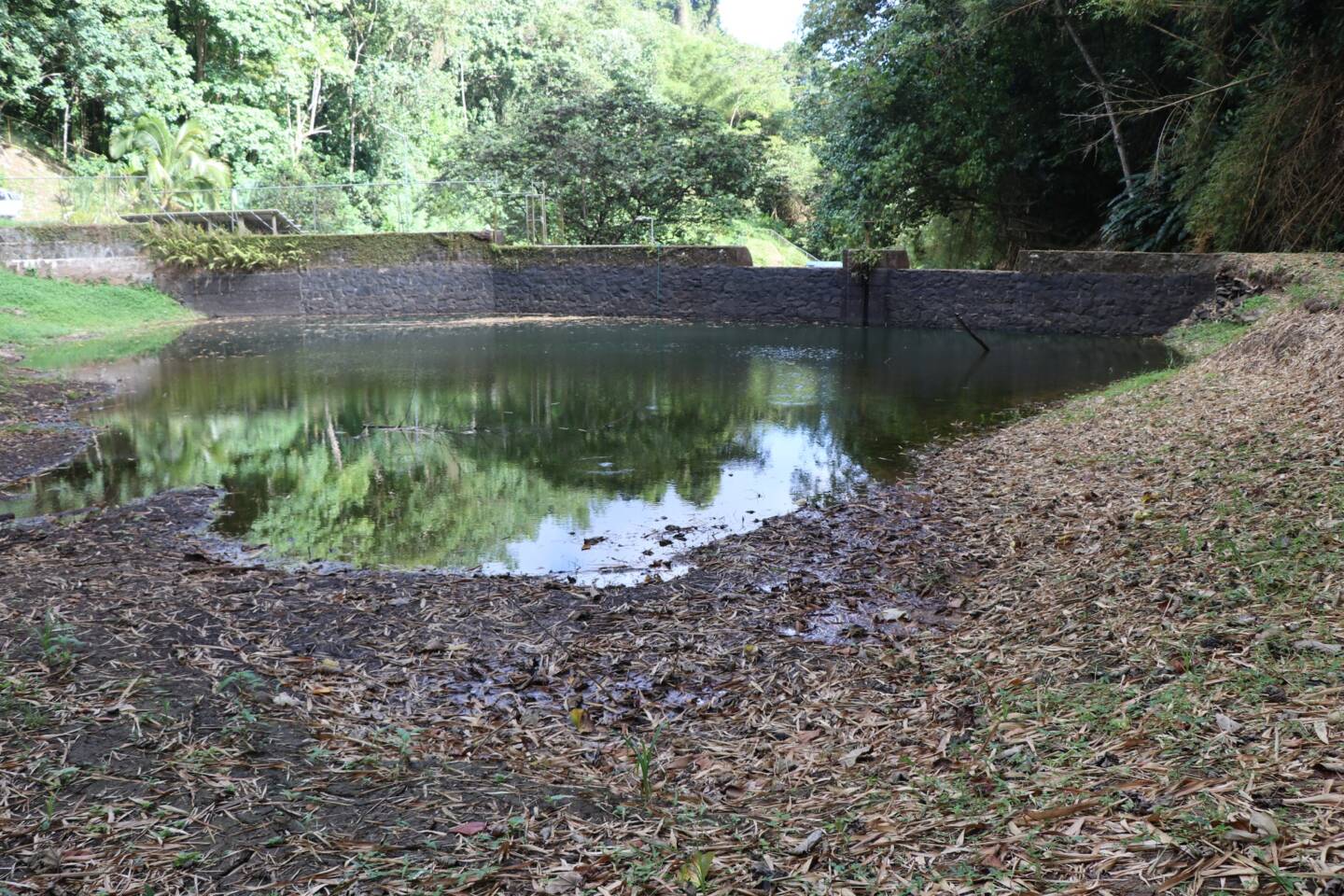
    A prolonged and intensifying dry season across the southern Caribbean is pushing Grenada, including its sister islands Carriacou and Petite Martinique, into a growing fresh water crisis, with the nation’s primary water infrastructure facing unprecedented strain. The National Water and Sewerage Authority (Nawasa) has issued an official public alert confirming that multiple key water production facilities have already dropped to critically low output levels, as extended dry weather depletes the island’s natural fresh water sources.

    Recent comprehensive audits of Nawasa’s national production network confirm stark output declines across most treatment facilities when measured against baseline operating conditions. Some stream-fed production systems are currently recording output deficits as high as 60%. This dramatic drop highlights the far-reaching impact of prolonged drought on Grenada’s surface and groundwater reserves, which supply 94% of the country’s total drinking water.

    Plummeting river flows, shrinking spring yields, and near-stagnant natural aquifer recharge have gutted production capacity across dozens of facilities, leaving officials warning that continued dry conditions over coming weeks could push the national supply system past its breaking point.

    Four major facilities serving populations across the island are already operating at critically reduced capacity, with one completely offline. The Après Tout facility has ceased operations entirely, leaving surrounding service areas with inconsistent, unreliable water access. Les Avocats, which supplies communities along Grenada’s eastern corridor including Minorca, Windsor Forest, Apsley, Perdmontemps, Marian, St Paul’s, Richmond Hill, Morne Jaloux, La Borie, Hope Vale, and Creighton, has seen production fall by more than 40%. The Petit Etang facility, a key source for areas including Petit Etang, Syracuse, Corinth, Vincennes, Windsor Forest, Laura Land, Perdmontemps, Providence, Champfleur, and Child Island, has lost nearly 47% of its output compared to December 2025 levels. Most dramatically, the Bon Accord facility, which serves large swathes of southern Grenada including St George’s Estate, Bon Accord, La Mode, and Ravine, has recorded an output drop of approximately 69%.

    Even the island’s largest and most robust production networks are not immune. Two major systems — Annandale and Mirabeau — are also facing significant output declines. The Annandale Water System, which supplies Grenada’s main tourist belt and dozens of nearby communities, is struggling with persistent production shortfalls even after drawing emergency support from Grand Etang Lake, whose water levels are currently under constant close monitoring. The Mirabeau Water System, the largest distribution network serving the parish of St Andrew and communities including Telescope, Grenville, and multiple surrounding districts, is facing growing pressure as its natural sources dry up. As core components of the national water distribution grid, continued production declines at these facilities could trigger cascading supply shortages for hundreds of communities if drought conditions hold.

    If the situation continues to deteriorate, Nawasa warns that customers across the island will feel the impacts. Particularly in elevated and remote areas, residents can expect reduced water pressure, extended gaps between scheduled supply deliveries, slower reservoir recovery, and more frequent, prolonged service disruptions.

    In response to the deepening crisis, Nawasa has ramped up a suite of operational adjustments to stretch the island’s limited water reserves as far as possible. These include proactive system balancing to reallocate available supply across high-need areas, enhanced round-the-clock monitoring of the most vulnerable water sources, and targeted adjustments to distribution schedules where needed to prioritize critical access.

    The authority has also expanded emergency water trucking operations to deliver supply directly to communities hit hardest by disruptions. In a show of public-private cooperation, St. George’s University (SGU) has deployed one of its own water tankers and a dedicated operator to support deliveries across the southern distribution network. This extra capacity will strengthen the country’s emergency response, allowing Nawasa to reallocate its existing truck fleet to other critically affected communities across the island. Nawasa is also finalizing plans to deploy additional water wagons to high-priority drought zones as part of its broader emergency response framework.

    With reserves dwindling, Nawasa is calling on all Grenadian residents to actively manage their stored water reserves and adopt consistent, responsible water conservation practices in their daily lives. The authority is also actively evaluating the reintroduction of formal water restrictions, modeled after the rules put in place during the 2024 dry season, to slow the rate of reserve depletion and ensure equitable water access across all affected communities.

    As of the latest update, 12 of the island’s 26 independent water systems are already under controlled valve regulation to reduce output and preserve reserves. Multiple systems have also been temporarily taken offline ahead of their scheduled reopening dates to allow natural sources and storage reservoirs to recharge, with the Mirabeau Water System being one of the most prominent examples of this emergency measure.

    Nawasa has acknowledged that the emergency measures and ongoing supply shortages will cause significant inconvenience for residents and businesses across the island. The authority has given its assurance that it is taking every possible step to preserve service reliability through this increasingly challenging period. Officials will continue to monitor hydrological conditions around the clock and issue timely public updates as the situation evolves, and thanked the public for their patience, cooperation, and support as Grenada navigates the ongoing dry season crisis.

  • From DCash to FPS, the ECCB’s quiet financial reset

    From DCash to FPS, the ECCB’s quiet financial reset

    For years, regional leaders and financial experts framed DCash, the Eastern Caribbean Central Bank (ECCB)’s ambitious retail central bank digital currency (CBDC) project, as the inevitable future of finance across the Eastern Caribbean Currency Union (ECCU). Unveiled to the public in 2021, the digital wallet pilot rolled out across four founding nations — Antigua and Barbuda, Grenada, St Kitts and Nevis, and St Lucia — promising to revolutionize everyday transactions, from purchasing local produce at neighborhood markets to settling informal debts between friends. Touted as a cutting-edge leap forward for the region’s financial system, DCash was meant to position the ECCU as a global pioneer in central bank digital currency innovation.

    But a quiet, transformative policy shift revealed in the ECCB Monetary Council’s 112th Meeting Communique, published on May 4, 2026, has brought the DCash 2.0 development project to an official end. What appears on the surface to be a major failure of regional digital ambition, however, is actually a pragmatic course correction that could lay stronger groundwork for long-term financial integration and growth across the Caribbean.

    The decision to suspend DCash 2.0 is a quiet acknowledgment of a core reality that many fintech innovators overlook in small island economies: consumers prioritize stability and familiarity over technological novelty. Most people do not demand an entirely new currency to manage their daily finances; they simply want their existing money to move more quickly, cheaply, and reliably across accounts and borders. For populations that have long relied on established traditional banking systems to hold their salaries, savings, and essential living funds, trust in familiar infrastructure outweighs the appeal of untested new tools. Even after years of outreach and rollout, DCash never achieved the mass adoption the ECCB had hoped for, in large part because it required users to join a completely separate digital ecosystem disconnected from their existing bank accounts. The friction of learning a new system and splitting financial activity between two separate platforms proved an insurmountable barrier for most everyday users.

    Rather than abandoning digital financial innovation entirely, the ECCB has shifted its focus from high-profile retail CBDC experimentation to far more practical, behind-the-scenes infrastructure upgrades. The new top priority is the Fast Payment System (FPS), a framework that improves rather than replaces the region’s existing banking structure. Unlike DCash, the FPS does not require users to adopt a new currency or a standalone digital wallet. Instead, it modernizes the core processing backbone of current banks, enabling instant, 24/7 transfers of existing Eastern Caribbean dollars between any users across the region, using nothing more than a phone number or QR code. No longer will customers have to wait multiple business days for transfers to clear just because they use different banks — a payment from a customer at Republic Bank to a merchant at Grenada Co-operative Bank will settle in seconds, not days.

    This shift aligns with broader Open Banking principles designed to boost interoperability between disparate financial institutions across the Eastern Caribbean. Even more consequential for regional trade is the ECCB’s new commitment to the pilot program for the Caricom Payments and Settlement System (CAPSS), a project that aims to resolve one of the most longstanding pain points for Caribbean businesses: the exorbitant cost and friction of cross-border transactions. For decades, regional businesses that pay suppliers in other Caricom nations have been forced to convert their local currency to U.S. dollars first, paying steep conversion fees and high wire transfer charges that eat into already thin profit margins for small island enterprises. CAPSS will create a unified regional settlement layer that allows businesses to pay cross-border suppliers directly in local currency, with participating central banks handling all settlement behind the scenes, eliminating the need for costly intermediate conversions.

    ECCB Governor Timothy Antoine has long articulated the goal of “The Big Push,” an ambitious plan to double the size of the ECCU’s total economy by 2035. Viewed through that lens, the pause in DCash 2.0 is no retreat from innovation — it is a strategic refocus that prioritizes tangible utility over flashy, hype-driven fintech optics. The central bank is stepping back from the crypto-adjacent excitement around standalone digital tokens and redirecting resources to the unglamorous but critical work of fixing the region’s fragmented, inefficient cross-border and inter-bank infrastructure.

    In the global finance space, the most impactful, lasting changes are rarely the flashy consumer-facing apps that draw headlines. The most transformative improvements are the upgrades to the hidden “plumbing” of the financial system that make every transaction faster, cheaper, and more reliable for businesses and consumers alike. For the Eastern Caribbean, that hidden plumbing just got a much-needed overhaul.

  • Pure Grenada Masters Cricket Tournament signals new era in sports tourism

    Pure Grenada Masters Cricket Tournament signals new era in sports tourism

    Grenada has marked a major milestone in its push to become a top regional sports tourism destination, with the Grenada Tourism Authority (GTA) declaring the first-ever Pure Grenada Masters Cricket Tournament a resounding success.

    The seven-day sporting showcase brought together 60 veteran cricketers from six competing squads: four regional teams hailing from across the Caribbean, alongside two local sides assembled on the island. The visiting contingent featured the West Indies Masters, Trinidad’s Munroe Road Masters, Guyana’s North Soesdyke, and Barbados’ AMAAS Masters, while Grenada was represented by Spice Isle Masters 1 and Spice Isle Masters 2. After a week of close-fought, high-spirited matches that celebrated the long-standing cricket culture of the Caribbean, Guyana’s North Soesdyke claimed the top championship title, with Munroe Road Masters of Trinidad finishing as tournament runners-up.

    For Grenada’s tourism sector, the tournament was far more than just a sporting event: it served as a proof of concept for the island’s growing sports tourism strategy, delivering tangible economic benefits to local communities and businesses. “The Pure Grenada Masters Cricket Tournament is a shining example of how sports tourism can fuel our local economy and showcase our island’s hospitality,” said Stacey Liburd, Chief Executive Officer of the GTA. “By blending elite competitive play with strategic cross-sector partnerships, we are creating memorable, meaningful experiences that lift up our local service industries and maintain Grenada’s strong tourism momentum year-round.”

    The influx of visiting players and accompanying guests generated substantial new revenue across multiple pillars of Grenada’s tourism economy, from accommodation providers and local restaurants to transportation and retail services. To extend these economic benefits even further, the GTA organized a consumer pop-up marketplace on the tournament’s final day, giving local small businesses and brands a direct opportunity to connect with visiting attendees and showcase their products.

    As the GTA works toward its 2026 strategic development targets, the organization says it remains fully focused on cementing Grenada’s reputation as a premier destination for regional and international sporting events. “As we continue to deploy our 2026 strategy, we remain fully committed to positioning Grenada as a sports tourism destination,” added Tornia Charles, Chief Marketing Officer of the GTA. “Our aim of achieving this goal goes beyond just hosting events; we intend to create a lasting impact for all Grenadians who benefit from visitors coming to our shores.”

    Looking forward, the GTA has outlined ambitious plans to expand the Pure Grenada Masters Cricket Tournament into a permanent annual fixture on the regional sporting calendar. Proposed growth initiatives include expanding the number of participating teams, boosting spectator engagement opportunities, integrating more authentic local cultural experiences into the event, and increasing opportunities for local businesses to participate. The organization is also exploring adding new offerings such as voluntourism packages for attendees, structured fan experience packages, and expanded sponsorship opportunities, all with the goal of establishing Grenada as a go-to destination for sporting events of all sizes.