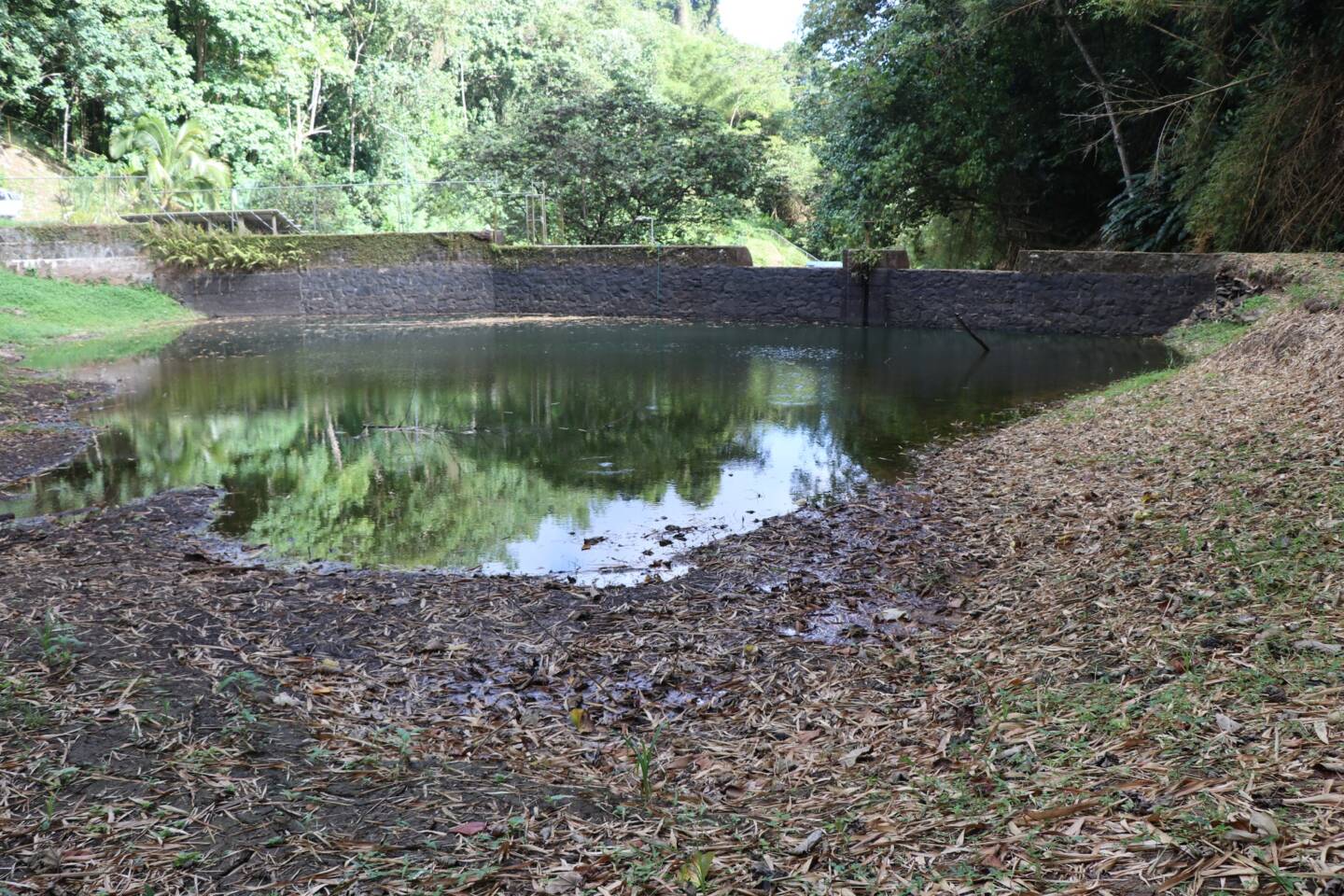
A prolonged and intensifying dry season across the southern Caribbean is pushing Grenada, including its sister islands Carriacou and Petite Martinique, into a growing fresh water crisis, with the nation’s primary water infrastructure facing unprecedented strain. The National Water and Sewerage Authority (Nawasa) has issued an official public alert confirming that multiple key water production facilities have already dropped to critically low output levels, as extended dry weather depletes the island’s natural fresh water sources.
Recent comprehensive audits of Nawasa’s national production network confirm stark output declines across most treatment facilities when measured against baseline operating conditions. Some stream-fed production systems are currently recording output deficits as high as 60%. This dramatic drop highlights the far-reaching impact of prolonged drought on Grenada’s surface and groundwater reserves, which supply 94% of the country’s total drinking water.
Plummeting river flows, shrinking spring yields, and near-stagnant natural aquifer recharge have gutted production capacity across dozens of facilities, leaving officials warning that continued dry conditions over coming weeks could push the national supply system past its breaking point.
Four major facilities serving populations across the island are already operating at critically reduced capacity, with one completely offline. The Après Tout facility has ceased operations entirely, leaving surrounding service areas with inconsistent, unreliable water access. Les Avocats, which supplies communities along Grenada’s eastern corridor including Minorca, Windsor Forest, Apsley, Perdmontemps, Marian, St Paul’s, Richmond Hill, Morne Jaloux, La Borie, Hope Vale, and Creighton, has seen production fall by more than 40%. The Petit Etang facility, a key source for areas including Petit Etang, Syracuse, Corinth, Vincennes, Windsor Forest, Laura Land, Perdmontemps, Providence, Champfleur, and Child Island, has lost nearly 47% of its output compared to December 2025 levels. Most dramatically, the Bon Accord facility, which serves large swathes of southern Grenada including St George’s Estate, Bon Accord, La Mode, and Ravine, has recorded an output drop of approximately 69%.
Even the island’s largest and most robust production networks are not immune. Two major systems — Annandale and Mirabeau — are also facing significant output declines. The Annandale Water System, which supplies Grenada’s main tourist belt and dozens of nearby communities, is struggling with persistent production shortfalls even after drawing emergency support from Grand Etang Lake, whose water levels are currently under constant close monitoring. The Mirabeau Water System, the largest distribution network serving the parish of St Andrew and communities including Telescope, Grenville, and multiple surrounding districts, is facing growing pressure as its natural sources dry up. As core components of the national water distribution grid, continued production declines at these facilities could trigger cascading supply shortages for hundreds of communities if drought conditions hold.
If the situation continues to deteriorate, Nawasa warns that customers across the island will feel the impacts. Particularly in elevated and remote areas, residents can expect reduced water pressure, extended gaps between scheduled supply deliveries, slower reservoir recovery, and more frequent, prolonged service disruptions.
In response to the deepening crisis, Nawasa has ramped up a suite of operational adjustments to stretch the island’s limited water reserves as far as possible. These include proactive system balancing to reallocate available supply across high-need areas, enhanced round-the-clock monitoring of the most vulnerable water sources, and targeted adjustments to distribution schedules where needed to prioritize critical access.
The authority has also expanded emergency water trucking operations to deliver supply directly to communities hit hardest by disruptions. In a show of public-private cooperation, St. George’s University (SGU) has deployed one of its own water tankers and a dedicated operator to support deliveries across the southern distribution network. This extra capacity will strengthen the country’s emergency response, allowing Nawasa to reallocate its existing truck fleet to other critically affected communities across the island. Nawasa is also finalizing plans to deploy additional water wagons to high-priority drought zones as part of its broader emergency response framework.
With reserves dwindling, Nawasa is calling on all Grenadian residents to actively manage their stored water reserves and adopt consistent, responsible water conservation practices in their daily lives. The authority is also actively evaluating the reintroduction of formal water restrictions, modeled after the rules put in place during the 2024 dry season, to slow the rate of reserve depletion and ensure equitable water access across all affected communities.
As of the latest update, 12 of the island’s 26 independent water systems are already under controlled valve regulation to reduce output and preserve reserves. Multiple systems have also been temporarily taken offline ahead of their scheduled reopening dates to allow natural sources and storage reservoirs to recharge, with the Mirabeau Water System being one of the most prominent examples of this emergency measure.
Nawasa has acknowledged that the emergency measures and ongoing supply shortages will cause significant inconvenience for residents and businesses across the island. The authority has given its assurance that it is taking every possible step to preserve service reliability through this increasingly challenging period. Officials will continue to monitor hydrological conditions around the clock and issue timely public updates as the situation evolves, and thanked the public for their patience, cooperation, and support as Grenada navigates the ongoing dry season crisis.