标签: Dominican Republic

多米尼加共和国

  • Dominican ambassador receives Duarte busts for Saudi Arabia and Djibouti

    Dominican ambassador receives Duarte busts for Saudi Arabia and Djibouti

    In a formal ceremony held in advance of the Dominican Republic’s 2027 national Independence Day and Homeland Month celebrations, the Dominican Republic’s Ambassador to Saudi Arabia Andy Rodríguez Durán accepted two sculpted busts of Juan Pablo Duarte, the nation’s iconic founding father, from representatives of the Duartian Institute.

    This handover marks a key step in the Dominican Republic’s initiative to share its foundational historical heritage with the global community. Per the planned installation schedule, one of the two bronze busts will be placed in Djibouti, a country that falls under the diplomatic accreditation of the Dominican Embassy based in Riyadh. This placement will make the sculpture the second official public monument to Duarte located on the African continent. The first official Duarte bust was unveiled in Egypt in 2023, when Ambassador Rodríguez Durán was serving in a diplomatic posting there.

    The second bust, which portrays Duarte in his historic role as a military leader of the Dominican independence movement, will remain on permanent display at the Dominican Embassy’s headquarters in Riyadh, serving as a permanent reminder of the nation’s founding ideals for visitors and diplomatic staff alike. Alongside the two sculptures, Ambassador Rodríguez Durán also received an official Dominican national flag and a curated collection of books and institutional publications that detail Duarte’s life, contributions, and enduring legacy.

    Wilson Gómez Ramírez, president of the Duartian Institute, emphasized during the ceremony that his organization has long prioritized expanding global awareness of Duarte’s transformative role in Dominican history. The institute remains dedicated to preserving his ideals and extending recognition of his legacy beyond Dominican borders to international audiences. For his part, Ambassador Rodríguez Durán expressed sincere gratitude to the Duartian Institute for its ongoing work to safeguard the patriot’s legacy and create opportunities to share it with communities across the globe, noting that the installations will strengthen cultural diplomacy and highlight Dominican national identity in the Middle East and Africa.
  • Two high-altitude rescue specialists, the heroes of the cable car

    Two high-altitude rescue specialists, the heroes of the cable car

    A tense 24-hour mid-air emergency in the Dominican Republic’s northern tourist hub of Puerto Plata came to a safe conclusion on Monday, when two highly trained cable car rescue specialists successfully extracted 17 people stranded in a suspended funicular cabin. The trapped group, which matched the cabin’s full 17-person capacity of 16 passengers and one operator, had been stuck hanging over the mountain slope since Sunday, after an unexpected mechanical failure shut down the iconic tourist attraction.

    The two rescuers, Amaro García and Michael Añasco, were specially called in from the capital city of Santo Domingo to lead the high-stakes operation. Both are part of a cohort of 32 Dominican rescue workers who completed advanced high-altitude rescue training for cable car emergencies in Colombia just last year. García, a corporal and second-in-command of the Metro and Cable Car Specialized Security Corps (Cesmet), said the team only deploys after on-site teams have exhausted efforts to restart the stalled cable system, as manual extractions carry significant inherent risk.

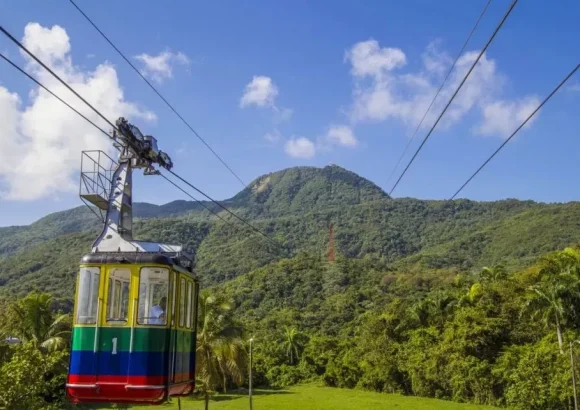
    Using specialized climbing and rigging equipment designed for aerial rescue operations, the pair reached the suspended cabin on the Isabel de Torres Mountain funicular — better known as the Puerto Plata cable car — and safely lowered each passenger and the operator to the ground one by one. Once they arrived in Puerto Plata from Santo Domingo, the team integrated with local response units from the Emergency Operations Center to coordinate the rescue effort.

    Local officials praised the team’s quick, calm execution of the dangerous mission. “This emergency personnel demonstrated great technical skill and a lot of courage in making use of their training,” said government spokesperson Homero Luis Lperalta in a statement following the successful rescue.

    The specialized rescue unit, which falls under the administrative umbrella of the Santo Domingo Metro (the managing body of the Santo Domingo Cable Car), has been working to expand local response capacity across the Dominican Republic. As the number of funicular and cable car operations has grown in recent years to meet rising tourism demand, the unit has been training new cohorts of local rescue workers to serve as additional skilled responders across the country.

    First opened in 1975, the Puerto Plata cable car is one of the destination’s most popular tourist attractions. The eight-minute scenic trip up and down Isabel de Torres Mountain draws thousands of visitors annually, who ride to the mountain’s summit for panoramic views of the northern coast and native tropical vegetation. The mechanical failure that caused Sunday’s incident was traced to a broken axle in the upper pulley system — an original component that had been in place since the cable car launched 48 years prior. The attraction is managed by an independent board of trustees, and it remains unclear how long inspections and repairs will keep the site closed to visitors.

  • Isolated showers and sweltering heat will mark this Sunday

    Isolated showers and sweltering heat will mark this Sunday

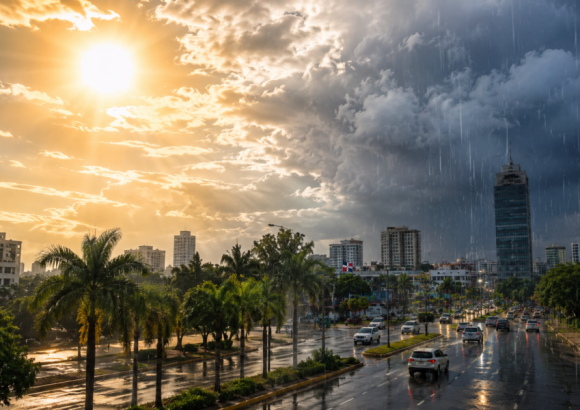
    Residents across the Dominican Republic are bracing for a day of contrasting weather on Sunday, with localized showers in the east and capital region forecast to give way to heavier thunderstorms in central and western areas, paired with dangerously high heat indexes, according to the country’s national meteorological service. The Dominican Institute of Meteorology, better known by its local acronym Indomet, traced the day’s precipitation to residual moisture left behind by a passing tropical wave, combined with atmospheric pressure from a trough moving across the region.

    Early Sunday morning will bring scattered isolated showers to several eastern and southern coastal provinces, including La Altagracia, La Romana, San Pedro de Macorís, San Cristóbal, and the broader Santo Domingo metropolitan area. As the day progresses into the afternoon, the weather system will shift west and inland, bringing moderate to heavy downpours, thunderstorms, and sudden gusty winds to provinces including Hato Mayor, Monte Plata, La Vega, Santiago Rodríguez, San Juan, Dajabón, and Elías Piña. For the remainder of the country, forecasters predict mostly clear sunny conditions with only gradual, minor increases in cloud cover through the day.

    Beyond rainfall, Indomet warned that sweltering heat will intensify across the nation on Sunday, building on hot and hazy conditions that were already forecast for Saturday, which also included expected Saharan dust intrusion. A combination of high baseline temperatures and elevated humidity will push the heat index — a measure of how hot conditions actually feel to the human body — into dangerous territory.

    In response to the dangerous heat forecast, Indomet has issued a series of public safety recommendations for all residents, with extra guidance for vulnerable groups. The agency urged people to drink water regularly to maintain hydration, wear loose, light-colored clothing that reflects heat, and avoid prolonged exposure to direct sunlight between the peak heat hours of 11 a.m. and 5 p.m. It also advised the public to stay in cool, well-ventilated spaces as much possible during these hours, and to cut back on strenuous outdoor activity. Young children, pregnant people, and older adults are flagged as particularly vulnerable to heat-related illness, so extra precautions are recommended for these groups.

    Breaking down the forecast for the four sections of the Santo Domingo metropolitan area — National District, Santo Domingo Norte, Santo Domingo Oeste, and Santo Domingo Este — all four zones are expected to see gradual increases in cloud cover through the day, paired with isolated showers, possible thunderstorms, and occasional gusty winds. Nationwide, overnight low temperatures Saturday into Sunday are expected to range between 23°C and 25°C, while afternoon high temperatures will reach between 33°C and 35°C across most of the country.

  • Man killed for 50 pesos in Santiago

    Man killed for 50 pesos in Santiago

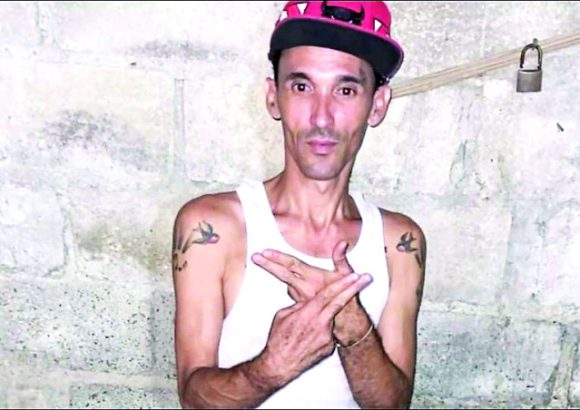
    SANTIAGO — A regional manhunt is active across Santiago after a fatal stabbing Thursday night that grew out of a minor gambling dispute, local law enforcement confirmed this week. The Dominican National Police announced they are continuing targeted search and intelligence operations across multiple neighborhoods in the district to locate Alexander Torres Lara, who is also known by the aliases Ezequiel and El Sade. Authorities have named Lara as the primary suspect in the killing of Domingo Andrés Acevedo Peña, a local man who went by the nickname El Rubito.

    The deadly attack unfolded in the La Yagüita sector of the Pastor neighborhood, according to preliminary law enforcement investigations. The fatal confrontation began during a casual dice game, when a trivial disagreement over a 50-peso bet spiraled into violence.

    Witness accounts and initial investigative findings detail that Peña pressed Lara to cover a 50-peso match bet. The pair was playing for a 500-peso pot, and Peña told Lara he had already exhausted all his cash after a streak of losses. When Lara refused to put forward the required 50 pesos to match the bet, the disagreement quickly escalated into a heated argument that turned into a knife fight. Perita was fatally wounded in the altercation, and he was pronounced dead at the scene by responding emergency personnel.

    Immediately after the incident, the suspect fled the neighborhood to avoid arrest. Since then, National Police teams have been carrying out coordinated sweeps and intelligence-gathering work across the Santiago region to track down Lara, with investigators confirming that they are following multiple leads to determine the suspect’s current whereabouts.

  • Collado emphasizes that the beaches are public, not private.

    Collado emphasizes that the beaches are public, not private.

    A recent incident in which private resort security personnel attempted to bar a local activist from a public beach in the Dominican Republic has prompted swift government action to defend public access rights to the country’s coastlines. In a formal statement addressing the controversy, Tourism Minister David Collado has drawn a clear line: no private entity is authorized to block Dominican citizens from entering and using the nation’s public beach spaces, labeling the Juan Dolio confrontation deeply unacceptable.

    The conflict, which ignited widespread national debate over coastal access rights, stemmed from an incident recorded on video and shared widely across social media platforms. The footage shows private security guards at a Juan Dolio resort, located in the eastern province of San Pedro de Macorís, trying to restrict movement of Mariano Lantigua – a well-known musician, community activist and founder of the local advocacy group Aljadaqui – while he was on the public stretch of the beach.

    Minister Collado emphasized that the Dominican government’s official stance upholds the fundamental right of all people to use public coastal areas, while also noting that this right is balanced with legal protections for private property and existing national regulations governing coastal zones. “We firmly stand for open access to all public beaches, always in line with the law and with full respect for legitimate private property rights, and our actions have backed this position up,” Collado said in his remarks. “What happened to the Aljadaqui representative in Juan Dolio is shameful. This has no place in our country – our beaches belong to the Dominican people.”

    To address the root of the controversy and prevent similar confrontations from occurring in the future, Collado announced the launch of a new multi-agency working group tasked with overseeing coastal access regulations. The body will bring together representatives from four key government institutions: the Ministry of Tourism, the Ministry of Environment and Natural Resources, the Ministry of the Interior and Police, and the Office of the Attorney General of the Republic.

    The working group has three core mandates: first, to strengthen legal clarity and enforcement for land and access rights in coastal zones; second, to foster positive, harmonious coexistence between local Dominican residents, international tourists, and private tourism development operators; and third, to ensure that public beaches are used responsibly by all groups in line with national rules. Collado explained that the whole initiative is designed to eliminate future access conflicts, creating an orderly, peaceful environment for all visitors to enjoy the Dominican Republic’s coastline that aligns with the country’s existing legal frameworks for each coastal region.

  • “With cries to heaven”: residents of Los Alcarrizos denounce power outages and water shortages

    “With cries to heaven”: residents of Los Alcarrizos denounce power outages and water shortages

    In the Los Alcarrizos district of the Dominican Republic, hundreds of families across five residential sectors have spent months grappling with two crippling basic service failures: prolonged, routine power outages and a persistent shortage of potable drinking water, local residents publicly denounced this Sunday.

    The affected communities — Las Glorias, Los Cerros, Residencial Pablo, Mella and Pueblo Nuevo — report that power cuts follow a predictable, disruptive schedule, cutting off electricity consistently from 9 p.m. to 2 a.m. each night. This nightly blackout window does more than just disrupt daily life: it undermines rest for working residents and inflicts measurable financial harm on local small business operators who rely on consistent power to keep their businesses running.

    Gustavo Pérez, who owns a small neighborhood grocery store, explained that the combination of extended outages and the region’s sweltering high temperatures has destroyed hundreds of dollars worth of inventory that requires constant refrigeration. “Our products that need refrigeration are spoiling due to the lack of energy,” Pérez confirmed in an interview with local community organizers.

    North Villa Mella, the broader region where these sectors are located, has long been framed as being on the cusp of modern development, yet decades of underinvestment have left it trapped in systemic poverty with gaps in even the most basic public services. The water crisis compounds the misery caused by unreliable power, with residents of Las Glorias reporting that consistent drinking water service has been unavailable for more than seven months.

    Supply gaps are most extreme in the elevated sections of the sector, where running water rarely reaches households at all. Even in lower-elevation neighborhoods, water is only available for a few hours just once or twice a week. Forced to secure water for their households amid the chronic shortage, many families have turned to purchasing water from private tanker trucks — a service that costs between 2,000 and 2,500 Dominican pesos, an expense that local residents say places an unbearable strain on already tight household budgets.

    Residents describe daily life in the area as unlivable: backup power inverters have been worn down by constant use from intermittent power, soaring heat makes indoor spaces unbearable, and booming mosquito populations have made it impossible to get a full night of sleep. “The inverters are down, the heat is unbearable, and the mosquitoes have us cornered. We can’t sleep,” community members said in a joint statement.

    Mercedes Cruz, a long-time resident of the area, shared that she returns home from a full workday at 10 p.m. each night only to face another round of service failures. “Every day I get home at 10 pm, after a long day at work, and I find there’s no electricity. Between the blackouts, the lack of water, the mosquitoes, and the heat, I feel like I never get any rest,” Cruz explained.

    Local community leaders have issued an urgent call for national and municipal authorities to intervene immediately to resolve the crisis and restore stable, reliable water and power service to the affected neighborhoods. Fed up with unfulfilled political pledges, leaders say residents are demanding tangible solutions that respect their fundamental right to access these core public services. “We demand respect for our right to receive electricity and drinking water. We are tired of promises and we need solutions,” leaders concluded.

  • Immigration control Drones and patrols: this is how the operation that ended with 47 arrests unfolded

    Immigration control Drones and patrols: this is how the operation that ended with 47 arrests unfolded

    In coordinated border surveillance and immigration enforcement missions carried out across two northern Dominican provinces, the Dominican Republic Army (Ejército de República Dominicana, ERD) has apprehended 47 Haitian nationals who entered the country without valid immigration documentation.

    The operations, which leveraged modern drone technology to enhance situational awareness and detection capabilities, unfolded across targeted locations in Dajabón and Santiago Rodríguez provinces, both positioned near the Dominican-Haitian border that has long been a focal point for irregular migration activity.

    In the first high-profile intercept, soldiers stationed at the Masacre border outpost, working alongside the military’s specialized drone unit, spotted and detained 16 undocumented migrants during routine area patrols. The group was composed of 14 adult men and two adult women, all of whom had crossed into Dominican territory without completing required immigration checks.

    A second seizure took place in the Los Cañaverales sector of Los Miches, located within Dajabón province, when troops from the ERD’s 10th Infantry Battalion again used aerial surveillance to track and intercept another group of 14 unregistered Haitian nationals. That group included 13 men and one woman, bringing the total number of detentions in Dajabón to 30.

    Further inland in Santiago Rodríguez province, troops assigned to the La Leonor detachment intercepted the final group of 17 migrants in the Coquí community, which sits along a common irregular entry route. This group included 15 adult men, one adult woman, and one unaccompanied minor, all caught immediately after crossing into Dominican territory illegally.

    Following their detainment, all 47 migrants were first transferred to local military command centers for initial processing, before being formally handed over to the Dominican Republic’s General Directorate of Migration (DGM). The DGM will now oversee the official repatriation process, carried out in full compliance with the country’s existing immigration legislation.

    In a statement outlining the mission, the ERD emphasized that it maintains 24/7 surveillance, mobile patrols, and targeted interdiction operations across the entire shared border and other high-risk areas under its jurisdiction. These persistent efforts are designed to curb unauthorized entry of foreign nationals, dismantle transnational criminal networks that profit from migrant smuggling, and reinforce overall Dominican national security.

  • “Ezequiel” surrenders, implicated in the death of “El Rubito” during a fight in Santiago

    “Ezequiel” surrenders, implicated in the death of “El Rubito” during a fight in Santiago

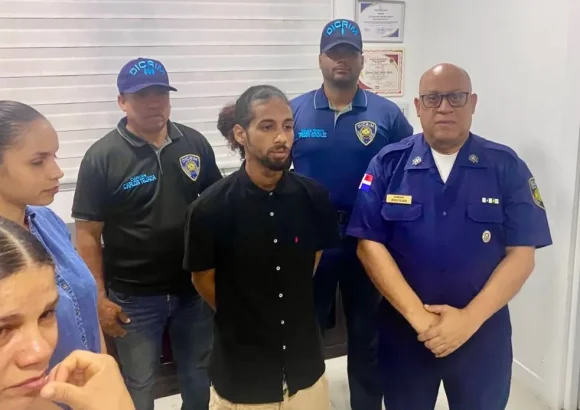
    In a development that brings a high-profile homicide investigation one step closer to resolution, Dominican National Police announced Saturday that Alexander Torres Lora, a suspect linked to the fatal stabbing of Domingo Andrés Acevedo Peña, has turned himself in to authorities. Torres Lora, who is known by the aliases “Ezequiel” and “El Sade”, surrendered at the regional headquarters of Cibao Central, accompanied by his family members and a representative from a local media outlet, following days of coordinated investigative tracking by law enforcement.

  • Puerto Plata Golf Club announces the 51st edition of its traditional Rotating Golf Cup

    Puerto Plata Golf Club announces the 51st edition of its traditional Rotating Golf Cup

    One of the Dominican Republic’s most enduring and anticipated golf tournaments is set to return this August and September, with the 51st edition of the Rotating Golf Cup welcoming more than 140 competitors from across the globe to the Puerto Plata Golf Club. Organized under the leadership of club president and local businessman Juan Antonio Morales, this year’s tournament carries extra meaning: it will honor the decades-long contributions of Fernando Ortega Brugal, widely known as Don Nano, for his tireless work advancing golf development in the region and supporting the growth of the club itself.

    Spread across three competition days, the tournament is scheduled to open on August 29, with main competitive rounds open to both domestic and international participants held on Friday, September 4 and Saturday, September 5. As Morales emphasized, the Rotating Golf Cup has long been a cornerstone event for both the Puerto Plata Golf Club and the wider northern Dominican community, holding a reputation as one of the most high-profile competitive golf tournaments in the entire country.

    Américo Núñez, director of the Playa Dorada Golf Club, outlined the tournament’s structure and reward system to competitors and spectators alike. Holding the distinction of the second-oldest continuous golf tournament in the Dominican Republic, the event is only outranked in tenure by the national championship series hosted by the Dominican Golf Federation (Fedogolf). This year’s tournament will follow a traditional Stroke Play format, with two separate competitive tracks: an individual division for the coveted rotating club cup, and an open division welcoming guests and associate members of the club.

    To reward standout play across all skill levels, the tournament will award honors for both the best net score and best gross score across all divisions. Additional special prizes will be given out for unique competitive achievements, including the longest drive of the tournament, the most accurate drive, a reward for any player that scores a hole-in-one, and a prize for the closest shot to the pin on the course’s 17th hole. Organizers expect the multi-day event to draw large crowds of local spectators and golf enthusiasts, reinforcing the tournament’s decades-long legacy as a highlight of the Dominican golf calendar.

  • The Amber Highway will boost convention tourism in the northern region

    The Amber Highway will boost convention tourism in the northern region

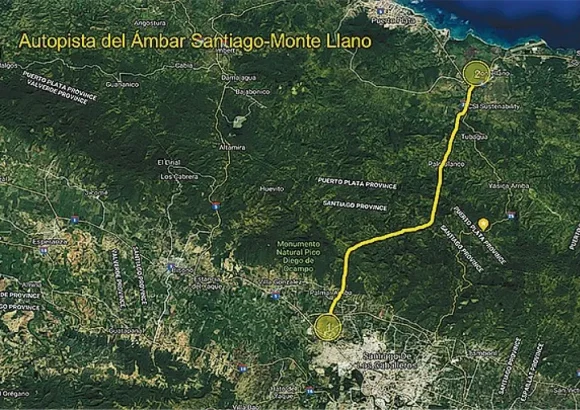
    A key Dominican Republic lawmaker has outlined how a transformative new infrastructure project will reshape connectivity and economic opportunity across large swathes of the country’s northern Cibao region. Senator Daniel Rivera, who represents the province of Santiago, says the planned Amber Highway stands among the most impactful public works projects ever undertaken for the Cibao North, South and Northeast subregions. Once completed, the route will slash travel time between the major urban hub of Santiago and the popular coastal tourist destination of Puerto Plata from 90 minutes to just half an hour.

    Rivera emphasized that the RD$28.8 billion investment in the highway will deliver widespread economic gains across nearly every major sector of the regional economy. Beyond cutting travel times, the project is projected to boost tourism, the convention industry, cross-border commerce, healthcare access, manufacturing production, agricultural exports and the country’s large poultry sector. It will also improve access to higher education institutions, unlock new growth for mountain tourism, and strengthen connected transport links beyond the two core provinces, delivering tangible benefits to nearby Cibao communities including La Vega and Espaillat.

    The senator offered high praise for the national government’s ongoing commitment to advancing the project, pointing to a recent high-profile visit to Santiago by Vice President Raquel Peña and Public Works Minister Eduardo Estrella as clear evidence of the administration’s support. To date, more than 70 local and national organizations have publicly thrown their support behind the project’s execution, building broad consensus around its public benefits.

    One of the project’s most critical public safety gains will be a dramatic reduction in traffic collisions along the existing Santiago-Puerto Plata corridor, which is currently ranked as one of the most dangerous road routes in the Dominican Republic. The new four-lane highway will be built to meet global modern safety standards, addressing the design flaws that have contributed to high accident rates on the existing route. It is also expected to generate significant fuel savings for regular drivers, easing cost burdens for daily commuters and commercial transport operators alike.

    Stretching 32.7 kilometers total, the Amber Highway will feature four traffic lanes, an engineering design that allows for operating speeds of up to 100 kilometers per hour, and two purpose-built tunnels cutting through the Northern Mountain range. The tunnel design was specifically chosen to limit disruption to local ecosystems, balancing the need for improved mobility with commitments to protecting the region’s unique natural environment.