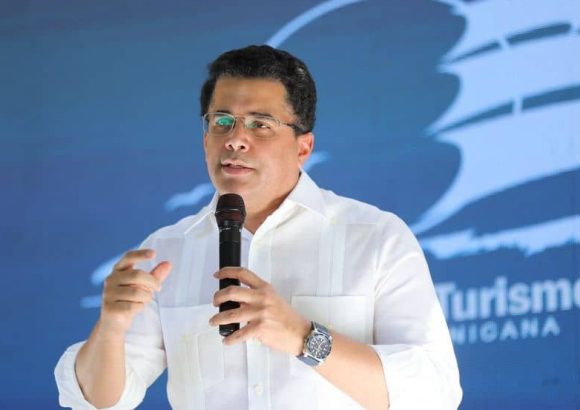
A recent incident in which private resort security personnel attempted to bar a local activist from a public beach in the Dominican Republic has prompted swift government action to defend public access rights to the country’s coastlines. In a formal statement addressing the controversy, Tourism Minister David Collado has drawn a clear line: no private entity is authorized to block Dominican citizens from entering and using the nation’s public beach spaces, labeling the Juan Dolio confrontation deeply unacceptable.
The conflict, which ignited widespread national debate over coastal access rights, stemmed from an incident recorded on video and shared widely across social media platforms. The footage shows private security guards at a Juan Dolio resort, located in the eastern province of San Pedro de Macorís, trying to restrict movement of Mariano Lantigua – a well-known musician, community activist and founder of the local advocacy group Aljadaqui – while he was on the public stretch of the beach.
Minister Collado emphasized that the Dominican government’s official stance upholds the fundamental right of all people to use public coastal areas, while also noting that this right is balanced with legal protections for private property and existing national regulations governing coastal zones. “We firmly stand for open access to all public beaches, always in line with the law and with full respect for legitimate private property rights, and our actions have backed this position up,” Collado said in his remarks. “What happened to the Aljadaqui representative in Juan Dolio is shameful. This has no place in our country – our beaches belong to the Dominican people.”
To address the root of the controversy and prevent similar confrontations from occurring in the future, Collado announced the launch of a new multi-agency working group tasked with overseeing coastal access regulations. The body will bring together representatives from four key government institutions: the Ministry of Tourism, the Ministry of Environment and Natural Resources, the Ministry of the Interior and Police, and the Office of the Attorney General of the Republic.
The working group has three core mandates: first, to strengthen legal clarity and enforcement for land and access rights in coastal zones; second, to foster positive, harmonious coexistence between local Dominican residents, international tourists, and private tourism development operators; and third, to ensure that public beaches are used responsibly by all groups in line with national rules. Collado explained that the whole initiative is designed to eliminate future access conflicts, creating an orderly, peaceful environment for all visitors to enjoy the Dominican Republic’s coastline that aligns with the country’s existing legal frameworks for each coastal region.