标签: Dominican Republic

多米尼加共和国

  • U.S. to require US$15,000 visa bond for 12 countries

    U.S. to require US$15,000 visa bond for 12 countries

    In a significant expansion of immigration policy, the U.S. State Department has unveiled plans to implement a $15,000 bond requirement for B1/B2 visa applicants from twelve additional countries effective April 2. The newly designated nations include Nicaragua, Cambodia, Ethiopia, Georgia, and Tunisia, joining an existing list of countries subject to the financial guarantee program originally initiated during the Trump administration.

    The controversial measure functions as a refundable security deposit, with the full amount returned to travelers who adhere to all visa conditions and depart the United States within their authorized period. However, applicants who overstay their visas will forfeit the bond, with the funds being allocated toward covering deportation expenses.

    According to official estimates from U.S. immigration authorities, the average cost of deporting an individual exceeds $18,000. The administration projects that this expanded bond requirement could generate approximately $800 million in annual savings for taxpayers while simultaneously creating a stronger financial disincentive against visa violations. The policy represents the latest effort by U.S. officials to address chronic issues of visa overstays through economic mechanisms rather than solely relying on enforcement actions.

  • Carolina Mejía welcomes delegations for Santo Domingo 2026 Games

    Carolina Mejía welcomes delegations for Santo Domingo 2026 Games

    Santo Domingo rolled out the welcome mat for international sports officials as Mayor Carolina Mejía hosted a pivotal gathering at the revitalized Taíno Park. The event brought together delegation leaders from 37 participating nations ahead of the Central American and Caribbean Games Santo Domingo 2026.

    The reception, attended by organizing committee chairman José Monegro and other distinguished officials, served as a ceremonial precursor to the major sporting event. During the proceedings, Mejía emphasized the transformative potential of hosting the Games, characterizing them as a monumental opportunity for national development and international recognition.

    The newly renovated Taíno Park will function as both a competition venue and a symbolic centerpiece for the Games. In a unique display of unity and environmental consciousness, organizers revealed that each national delegation will plant a native tree within the park grounds when the Games commence on July 24, 2026.

    This arboreal ceremony will establish a living legacy of the international gathering, representing both cultural exchange and environmental stewardship. The planting ritual will precede the athletic competitions that will continue through August 8, creating a permanent green monument to regional cooperation and sporting camaraderie.

  • Kenyan police begin withdrawal from Haiti

    Kenyan police begin withdrawal from Haiti

    Nairobi will commence the repatriation of its security personnel from Haiti starting Tuesday, marking the initial phase of a strategic drawdown from the international stabilization mission. This transition occurs simultaneously with preparations to deploy Chadian forces as part of a newly structured United Nations-backed security initiative.

    Dominican Foreign Minister Roberto Álvarez confirmed the progressive withdrawal plan, indicating that the Gang Suppression Force (GSF)—the mission’s successor—is projected to achieve full operational capacity by October. This staggered timeline facilitates an orderly handover, allowing incoming troops adequate preparation for Haiti’s complex security environment.

    The GSF represents an evolution of the previous Multinational Security Support (MSS) mission, which Kenya spearheaded to bolster the Haitian National Police against powerful criminal organizations controlling significant territories. Despite its authorization last year, the MSS operation remained predominantly Kenyan, with minimal reinforcements from Central American and Caribbean nations.

    The predecessor mission confronted substantial operational hurdles, including critical shortages in personnel, financial resources, and tactical equipment. Originally conceptualized for 2,500 deployed personnel, the force reached only approximately 970 members—primarily from Kenya. After more than a year of operations targeting gang leadership, the mission proved unable to reclaim territory from armed factions, underscoring the challenges of international security interventions in Haiti’s volatile landscape.

  • Balearic president visits Abinader to strengthen tourism support

    Balearic president visits Abinader to strengthen tourism support

    SANTO DOMINGO – In a significant diplomatic engagement, President Marga Prohens of Spain’s Balearic Islands and Dominican Republic President Luis Abinader convened in Santo Domingo to reinforce bilateral relations with particular emphasis on tourism collaboration. The high-level meeting served as a strategic precursor to the 26th Plenary Session of the Council of the Balearic Islands Abroad, scheduled to convene in Punta Cana with delegates from throughout Latin America.

    The discussions centered on implementing the tourism agreement initially established at FITUR (International Tourism Fair), with both nations committing to enhanced training protocols and service quality improvement within the Dominican tourism sector. Through the esteemed Balearic Islands Hospitality School, Spain will provide comprehensive educational support to both instructors and students at the technical institute in Sabana de la Mar, creating a sustainable framework for industry-wide standards elevation.

    President Prohens underscored the dual significance of preserving cultural connections with the Balearic diaspora across Latin America while simultaneously advancing tourism quality through professional development. ‘Excellence in tourism services fundamentally relies on well-qualified human capital,’ Prohens stated during the meetings. The Spanish delegation is scheduled to visit the training facility to monitor program implementation, signaling deepened cooperation in both educational exchange and tourism development between the two nations.

  • Aerodom deploys new digital platform across Dominican airports

    Aerodom deploys new digital platform across Dominican airports

    The Dominican Republic’s airport network is undergoing a significant technological modernization with the implementation of a new digital operations platform. Aeropuertos Dominicanos Siglo XXI (Aerodom), the airport operator, has initiated a comprehensive rollout across its six national airports, marking a strategic shift towards data-driven aviation management.

    This advanced platform, developed in collaboration with technology firm AirportLabs, integrates an airport operational database with sophisticated real-time resource management tools. The system is designed to optimize flight coordination, gate assignments, and passenger service delivery through centralized information systems and automated processes.

    The deployment commenced with Las Américas International Airport (SDQ) in Santo Domingo on March 2, followed by Gregorio Luperón International Airport (POP) in Puerto Plata on March 16. The implementation will extend to airports in Samaná, Barahona, and other locations within Aerodom’s network, creating a unified operational ecosystem.

    Key benefits include enhanced communication channels between airlines, ground handling crews, and airport personnel, facilitating smoother turnaround operations. The platform’s predictive planning capabilities will enable proactive resource allocation, potentially reducing delays and improving overall operational resilience.

    This initiative represents a cornerstone of Aerodom’s broader modernization strategy to accommodate the Dominican Republic’s growing tourism sector and increasing passenger volumes. The technology investment aims to maintain service quality standards while supporting the country’s position as a leading Caribbean aviation hub.

  • Cyclists from around the world ride Cibao in Gran Fondo RD 2026

    Cyclists from around the world ride Cibao in Gran Fondo RD 2026

    LA VEGA, Dominican Republic – Defying challenging weather conditions, the fourth edition of the Gran Fondo Cycling Challenge RD 2026 concluded triumphantly, cementing its status as a premier event on the Caribbean sporting calendar. The competition attracted over 300 cycling enthusiasts, with approximately 30% representing an international contingent from Chile, Argentina, the United States, Cuba, and Puerto Rico, signaling its expanding global footprint.

    The race commenced and culminated in La Vega, guiding athletes through a rigorous and mountainous circuit across the Cibao region. Cyclists navigated a demanding path through the municipalities of Bonao, Maimón, and Cotuí. A particularly scenic segment along the iconic Hatillo Dam provided a dramatic backdrop before the route advanced toward Fantino and looped back to the origin. Persistent rainfall intensified the difficulty of the already arduous course, testing the physical and mental fortitude of all participants.

    Undeterred by the inclement conditions, competitors demonstrated remarkable resilience and passion, successfully completing the event. Henry Francisco, the chief organizer, emphasized the competition’s dual role in both promoting athletic excellence and boosting regional tourism. ‘The growth we are witnessing is phenomenal,’ Francisco noted. ‘This event is pivotal in showcasing our country’s potential as a top-tier destination for sports tourism.’

    Critical institutional support from DIGESETT (General Directorate of Traffic Safety and Land Transport) and POLITUR (Tourism Police) was instrumental in executing a secure and flawlessly managed event. Their coordinated efforts in traffic control and participant safety were paramount to the competition’s seamless operation, ensuring a positive experience for athletes and spectators alike. The event’s continued success underscores the Dominican Republic’s emerging prominence on the international cycling circuit.

  • Government presents plan for Dominican Republic’s first spaceport in Pedernales

    Government presents plan for Dominican Republic’s first spaceport in Pedernales

    The Dominican Republic has announced a landmark initiative to establish its first commercial spaceport through a strategic partnership between the government and Launch On Demand Holdings. This ambitious project, unveiled by the Ministry of the Presidency, will be situated in Oviedo, Pedernales, marking the Caribbean nation’s entry into the rapidly expanding global space industry.

    The comprehensive development plan extends beyond launch facilities to include an integrated energy hub with approximately 200 megawatts of capacity. Supporting infrastructure will encompass advanced logistics systems, water management solutions featuring a desalination plant, and cutting-edge noise mitigation technology. Project executives emphasize that environmental sustainability remains a core principle, with designs leveraging the region’s low population density while complying with international ecological standards.

    With over US$600 million in anticipated private investment, the venture will operate under a regulatory framework aligned with global best practices to ensure both safety and competitiveness. Government officials indicate this initiative directly supports President Luis Abinader’s economic diversification strategy, aiming to attract foreign capital while generating high-tech employment opportunities in aerospace engineering and advanced logistics sectors.

    The spaceport project represents a significant technological leap for the Dominican Republic, potentially positioning the country as a key player in satellite deployment and orbital services within the Latin American region.

  • Venezuela wins first World Baseball Classic title

    Venezuela wins first World Baseball Classic title

    In a stunning finale at Miami’s LoanDepot Park, Venezuela captured its first-ever World Baseball Classic championship with a dramatic 3-2 victory over the defending champion United States. The championship game culminated in a heart-stopping ninth-inning climax that saw Eugenio Suárez deliver the game-winning double to seal Venezuela’s historic triumph.

    The championship clash unfolded as a tense pitching duel through the early innings. Venezuela established an early advantage in the third inning when Salvador Pérez drove in a run with a sacrifice fly, followed by Wilyer Abreu’s solo home run that extended their lead. The American squad remained scoreless until the eighth inning when Bryce Harper electrified the home crowd with a game-tying two-run homer.

    Venezuela demonstrated remarkable resilience in the final frame. After drawing a walk and executing a critical stolen base, the stage was set for Suárez’s climactic double that scored the decisive run. Venezuela’s pitching corps delivered an exceptional performance, with starter Eduardo Rodríguez and reliever Daniel Palencia combining to limit the potent American offense to merely three hits throughout the contest.

    This championship victory capped an extraordinary tournament run for Venezuela, who finished with a 6-1 record that included impressive victories against baseball powerhouses Japan and Italy. The loss marks the United States’ second consecutive defeat in the World Baseball Classic final, denying them back-to-back titles in the prestigious international competition.

  • Abinader tours La Milagrosa Farm to strengthen tobacco technology

    Abinader tours La Milagrosa Farm to strengthen tobacco technology

    MONTE PLATA – In a significant move to bolster the national tobacco sector, President Luis Abinader conducted a high-profile inspection of the state-of-the-art ‘La Milagrosa’ tobacco plantation, a flagship operation managed by the renowned Arturo Fuente company. The presidential visit served as a strategic assessment of the advanced agricultural model that the government now seeks to replicate across other tobacco-producing regions in the Dominican Republic.

    During the tour, President Abinader received detailed briefings from Arturo Fuente executives Ciro Cascella and Carlos Fuente, who elaborated on the farm’s substantial technological investments and its transformative effect on the production of premium cigars for the global market. The executives credited the sector’s robust expansion to the government’s business-friendly policies and supportive regulatory environment.

    The sprawling 1,000-acre agricultural complex represents a capital investment surpassing RD$350 million and stands as a paradigm of modern farming. It integrates cutting-edge infrastructure, including automated irrigation networks, precision fertilization systems, solar energy installations, and high-capacity curing barns designed for optimal efficiency. Beyond its technological prowess, the project serves as a critical economic engine for the Monte Plata province, creating approximately 400 direct employment opportunities and stimulating local development.

    Citing data from the Tobacco Institute of the Dominican Republic, the visit underscored the crop’s paramount role as the nation’s leading agricultural export. The industry generates an estimated $1.38 billion in revenue and sustains nearly 40,000 jobs within associated free trade zones, with a notably high rate of female workforce participation.

    In addition to its commercial success, the Fuente family highlighted the profound social dividends of their operations through their dedicated foundation. This philanthropic arm has significantly broadened access to quality education, enhanced healthcare services, and funded community development initiatives, substantially improving living standards in tobacco-growing communities.

  • Abinader swears in environmental observatory committee

    Abinader swears in environmental observatory committee

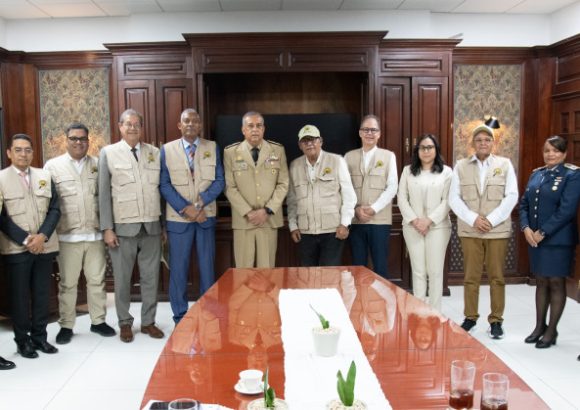
    SANTO DOMINGO – In a significant move toward enhanced environmental governance, Dominican President Luis Abinader has officially inaugurated the steering committee for the Observatory of Environmental Policies and Protected Areas. The ceremony, held at the National Palace, marks the operational launch of this multi-sectoral entity established under Decree 105-26.

    The newly formed Observatory is designed as an independent consultative body with a mandate to strengthen oversight, conservation, and sustainable management of the nation’s natural resources, placing particular emphasis on protected areas. It represents a collaborative governance model, integrating representatives from prominent environmental organizations, academic institutions, and the Ministry of Environment and Natural Resources.

    A core function of the initiative is to promote the generation of and public access to environmental information. It aims to foster cooperation across government agencies, civil society, and the academic sector, with future plans to transition into a formally established non-profit organization. The decree mandates the steering committee to finalize its legal incorporation and define its operational framework within a 45-day period. Subsequently, the body will be tasked with developing a sustainability plan and securing necessary resources in coordination with the Ministry of Environment.

    This establishment underscores the Abinader administration’s commitment to transparent, accountable, and participatory environmental policy management in the Dominican Republic.