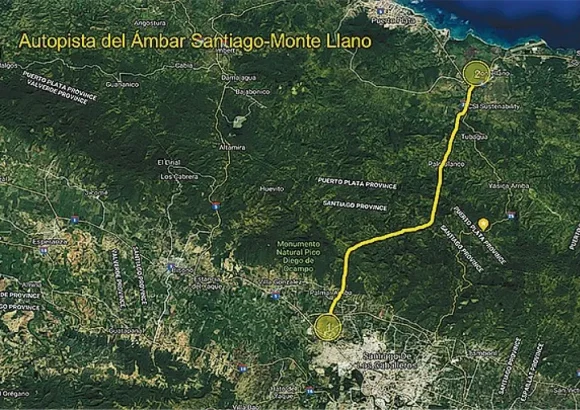
A key Dominican Republic lawmaker has outlined how a transformative new infrastructure project will reshape connectivity and economic opportunity across large swathes of the country’s northern Cibao region. Senator Daniel Rivera, who represents the province of Santiago, says the planned Amber Highway stands among the most impactful public works projects ever undertaken for the Cibao North, South and Northeast subregions. Once completed, the route will slash travel time between the major urban hub of Santiago and the popular coastal tourist destination of Puerto Plata from 90 minutes to just half an hour.
Rivera emphasized that the RD$28.8 billion investment in the highway will deliver widespread economic gains across nearly every major sector of the regional economy. Beyond cutting travel times, the project is projected to boost tourism, the convention industry, cross-border commerce, healthcare access, manufacturing production, agricultural exports and the country’s large poultry sector. It will also improve access to higher education institutions, unlock new growth for mountain tourism, and strengthen connected transport links beyond the two core provinces, delivering tangible benefits to nearby Cibao communities including La Vega and Espaillat.
The senator offered high praise for the national government’s ongoing commitment to advancing the project, pointing to a recent high-profile visit to Santiago by Vice President Raquel Peña and Public Works Minister Eduardo Estrella as clear evidence of the administration’s support. To date, more than 70 local and national organizations have publicly thrown their support behind the project’s execution, building broad consensus around its public benefits.
One of the project’s most critical public safety gains will be a dramatic reduction in traffic collisions along the existing Santiago-Puerto Plata corridor, which is currently ranked as one of the most dangerous road routes in the Dominican Republic. The new four-lane highway will be built to meet global modern safety standards, addressing the design flaws that have contributed to high accident rates on the existing route. It is also expected to generate significant fuel savings for regular drivers, easing cost burdens for daily commuters and commercial transport operators alike.
Stretching 32.7 kilometers total, the Amber Highway will feature four traffic lanes, an engineering design that allows for operating speeds of up to 100 kilometers per hour, and two purpose-built tunnels cutting through the Northern Mountain range. The tunnel design was specifically chosen to limit disruption to local ecosystems, balancing the need for improved mobility with commitments to protecting the region’s unique natural environment.