标签: Dominican Republic

多米尼加共和国

  • National Assets raises RD$57.3 million in second public auction of 2026

    National Assets raises RD$57.3 million in second public auction of 2026

    In Santo Domingo, the General Directorate of National Assets of the Dominican Republic has successfully concluded its second public auction of 2026, generating total revenue of RD$57.3 million through the sale of hundreds of seized and unclaimed government-held assets.

    The event, which took place at the auditorium of the Higher Education Police Institute (IPES), drew dozens of active bidders eager to acquire a range of practical and industrial assets up for grabs. Across the auction block, 123 individual asset cases and 61 distinct lots were sold, including transferable passenger and commercial vehicles, vehicle bodies, functional and disassembled motorcycles for parts, general office furniture, and bulk scrap metal.

    According to Nelson Gómez, head of the directorate’s Auction Department, all items put up for bidding originated from multiple public institutions across the country. Prior to the sale, the assets were stored at two dedicated National Assets facilities: one located along the Mella Highway, and a second at the Merca Santo Domingo commercial complex.

    To participate in the bidding process, all prospective buyers were required to pay a non-refundable RD$2,000 registration fee to secure their eligibility. After the close of bidding, winning bidders are given five full business days to complete full payment via certified check made out directly to the Dominican National Treasury. Once payment is confirmed, buyers receive an additional five business days to arrange transport and remove their purchased items from the designated storage warehouses.

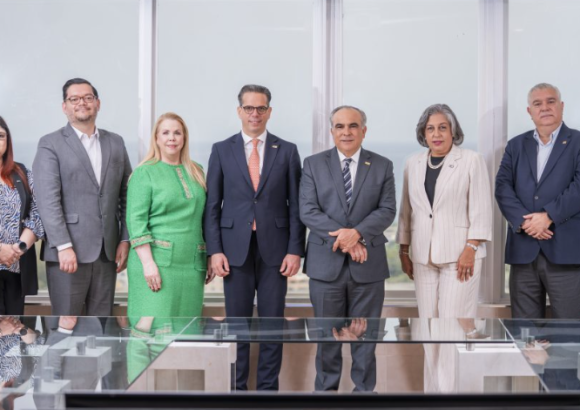
    Deputy Director General José Moya Mejía led the proceedings in an official capacity, standing in for Director General Rafael Burgos Gómez. To uphold the integrity of the public sale, senior officials confirmed that the entire auction followed strict pre-issued public notice requirements, and was overseen by a multi-stakeholder oversight team. This group included a licensed public auctioneer, a legal notary public, and official representatives from three key government bodies: the Fair Prices Commission, the Ministry of Public Works, and the Office of the Comptroller General. This multi-agency supervision was implemented to guarantee full transparency and strict adherence to all established public auction regulations set out by Dominican law.
  • Dominican researchers advance sargassum solutions at first SARGARD Symposium

    Dominican researchers advance sargassum solutions at first SARGARD Symposium

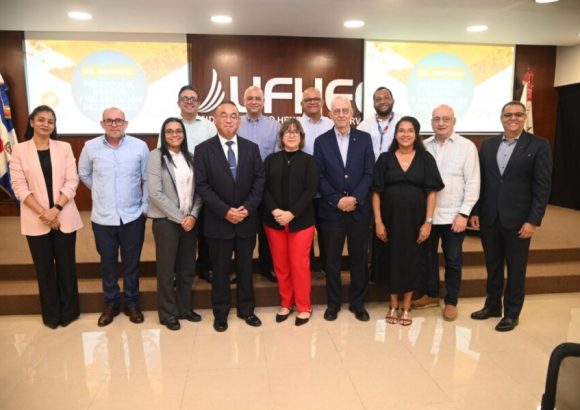
    In Santo Domingo, the Dominican Republic, an unprecedented collaborative gathering is advancing a radical rethinking of one of the Caribbean’s most pressing environmental headaches: massive, recurring sargassum blooms that choke coastlines, damage tourism, and disrupt coastal ecosystems. The Federico Henríquez y Carvajal University (UFHEC) recently played host to the inaugural SARGARD Network Symposium, a landmark event that brought together Dominican and international research communities to share breakthrough work that reframes the invasive macroalgae from a costly problem into a catalyst for inclusive, circular sustainable growth.

    The symposium was organized as a core feature of the Ministry of Higher Education, Science and Technology (MESCyT)’s annual Dominican Science and Technology Week, a platform designed to showcase the nation’s growing research capacity and foster global academic connections. The event opened with a keynote address from Professor Satoshi Nakai of Japan’s Hiroshima University, setting a collaborative, forward-looking tone for the proceedings. Following Nakai’s talk, researchers from five leading Dominican higher education institutions — UFHEC, the Instituto Tecnológico de Santo Domingo (INTEC), Pontificia Universidad Católica Madre y Maestra (PUCMM), ISA University, and Universidad APEC (UNAPEC) — took the stage to present their latest findings across a diverse range of sargassum-focused research areas.

    Attendees were treated to presentations spanning cutting-edge practical and technical applications of sargassum utilization. Research topics ranged from improved sargassum monitoring and forecasting systems, which help communities prepare for incoming blooms and coordinate collection efforts, to innovative approaches for converting the biomass into valuable goods. Experts shared progress on developing bioenergy from sargassum, creating natural agricultural biostimulants to boost crop yields, and advancing biotechnological processes that extract high-value biomolecules. These extracted compounds show significant promise for use across multiple commercial sectors, including pharmaceuticals, cosmetics, nutraceuticals, and mainstream food production. Other highlighted innovations included microwave-assisted pyrolysis for biomass conversion and the development of sargassum-based hydrogels for industrial and environmental uses.

    The cross-sector nature of the symposium underscored the complexity of the sargassum challenge and the need for coordinated action beyond academic walls. Attendees included representatives from key Dominican government bodies, such as the Ministry of Environment, the national Sargassum Control Cabinet, the National Maritime Authority (ANAMAR), and the Dominican Institute of Civil Aviation (IDAC), alongside private sector stakeholders from the Dominican Republic, Japan, and Italy. This multi-stakeholder turnout reinforced widespread commitment to co-developing scalable, innovative management and utilization strategies for the macroalgae.

    In his opening remarks, Darwin Muñoz, UFHEC’s Vice Rector for Science, Technology and Innovation, stressed that no single institution or nation can address the far-reaching impacts of sargassum blooms alone. The excess macroalgae, which has increasingly inundated Caribbean coastlines in recent years, inflicts widespread damage across the region: it harms coastal ecosystems, cuts into tourism revenue, and disrupts small-scale fishing livelihoods. Muñoz’s call for cross-border, cross-sector joint research echoed the consensus that emerged from the symposium: rather than treating sargassum as waste to be disposed of, the global community should frame it as an abundant, valuable biomass resource. Under a circular economic framework, proponents argue, sargassum can be transformed into renewable energy, sustainable agricultural inputs, and high-value industrial materials — turning a persistent crisis into an opportunity for long-term, inclusive economic growth across the Caribbean.

  • President Abinader confirms attendance at Colombia’s inauguration ceremony

    President Abinader confirms attendance at Colombia’s inauguration ceremony

    In a historic break from decades of Colombian political tradition, the upcoming presidential inauguration of Abelardo de la Espriella will make headlines not only for the leadership transition it formalizes, but also for the guest list of global dignitaries and the unprecedented location of the event. Local authorities confirmed this week that dozens of high-profile international figures, including Dominican Republic President Luis Abinader, have formally confirmed their attendance at the August 7 ceremony held in the southwestern city of Cali.

    Cali Mayor Alejandro Eder was the first to share the full lineup of global attendees, revealing that the guest list spans heads of state, royal figures, cabinet ministers and senior diplomatic representatives from across the Americas, Europe and the Middle East. Joining Abinader will be Spain’s King Felipe VI, alongside the sitting presidents of Argentina, Ecuador, Paraguay, Costa Rica, Panama, Chile and Honduras. For neighboring El Salvador and Guatemala, vice presidents will attend in place of their heads of state, while Curaçao will send Prime Minister Gilmar Pisa and Brazil will be represented by Foreign Minister Mauro Vieira.

    One of the most politically significant attendees is Israeli Foreign Minister Gideon Sa’ar, whose presence comes as De la Espriella’s incoming administration prepares to reverse a 2024 decision by former President Gustavo Petro to sever full diplomatic relations with Israel. The move to restore ties, paired with Sa’ar’s invitation to the inauguration, signals a sharp shift in Colombia’s Middle East foreign policy as the new government takes office.

    Beyond the diplomatic lineup, the most notable change from past inaugurations is the location: this August 7 ceremony will mark the first time in modern Colombian history that a presidential inauguration is held outside the capital city of Bogotá. De la Espriella has framed the decision to host the event at Santiago de Cali University’s Arena USC as a core fulfillment of his campaign pledge to advance political and economic decentralization across Colombia. The president-elect has also emphasized that the ceremony will be deliberately austere, a deliberate choice designed to align with his administration’s commitment to spreading state influence and investment beyond Bogotá to regional hubs across the country.

  • Dominican Republic wins mixed 4×400 relay gold with record-breaking performance

    Dominican Republic wins mixed 4×400 relay gold with record-breaking performance

    On a celebratory night in front of thousands of cheering local fans at Santo Domingo’s Félix Sánchez Olympic Stadium, Olympic champion Marileidy Paulino delivered a legendary final leg to carry the Dominican Republic to its first-ever mixed 4×400-meter relay gold medal at the 2026 XXV Central American and Caribbean Games. Paulino’s blistering closing run not only secured the top spot on the podium but also set a new regional record of 3:10.57, marking one of the most iconic achievements of this year’s event.

    The Dominican quartet, made up of opening sprinter Erick Sánchez, second leg runner Anabel Medina, third leg competitor Christopher Melenciano, and anchor Paulino, put on a masterclass of teamwork and speed that left the home crowd roaring. When the race began, Sánchez held his own against a stacked field of elite sprinters from across the region, setting a solid foundation for his teammates before passing the baton to Medina. Medina extended the team’s position, and Melenciano’s strong third leg saw the Dominican team hand off to Paulino in second place, just a few meters behind the race leaders.

    With the entire stadium on its feet, Paulino unleashed one of her signature powerful closing sprints, eating into the lead gap with every step before overtaking the front-runner in the final 100 meters. As she crossed the finish line, the Olympic champion raised her baton high in victory, triggering wild celebrations among the thousands of local fans packed into the stands. For Paulino, the win adds another landmark milestone to an already stellar career, while giving the Dominican Republic a crucial addition to its overall medal haul at the 2026 CAC Games hosted on home soil.

  • Dominican Republic investigates death of NYPD officer after cosmetic surgery

    Dominican Republic investigates death of NYPD officer after cosmetic surgery

    Santo Domingo — A 31-year-old New York Police Department officer with Dominican roots has died following breast implant removal surgery at a Dominican clinic, triggering an active official investigation into the circumstances that led to her unexpected passing.

    Rebecca DePaula traveled to the Caribbean nation roughly seven days before the procedure to undergo the operation, according to official reports. To date, authorities have declined to release the public identity of the medical facility or the operating surgeon that carried out the treatment.

    A joint probe is being led by the Dominican National Police and the nation’s Public Ministry, with the investigative process currently in a holding pattern while teams await results from autopsy and forensic testing completed by the National Institute of Forensic Sciences, known locally as INACIF. Only after receiving these formal results will officials confirm an official cause of death and assess whether any form of medical negligence contributed to the fatality.

    National Police spokesperson Diego Pesqueira emphasized that investigators will not jump to unsubstantiated conclusions about what led to DePaula’s death, noting the case file remains open as forensic work is finalized.

    Family members of the fallen officer have shared preliminary accounts that DePaula developed serious health complications immediately after her surgery, including intense, persistent diarrhea. Relatives also added that treating physicians raised the possibility of a dangerous bacterial infection as a contributing factor. Despite these anecdotal claims, official investigators have stressed that none of these allegations have been verified through the ongoing forensic review, and all potential causes remain on the table.

    DePaula was a serving member of the NYPD’s 46th Precinct based in New York City. Beyond her law enforcement career, she also served as a pastor alongside her husband. She leaves behind her spouse and three children, who are currently in New York making arrangements to receive her remains for repatriation and burial.

  • RAAS Solar launches Tesla Solar Roof in the Dominican Republic

    RAAS Solar launches Tesla Solar Roof in the Dominican Republic

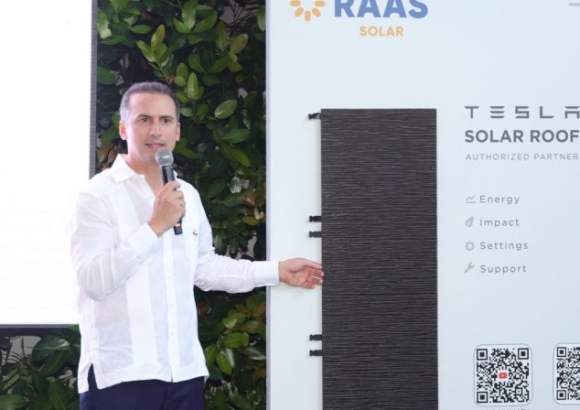
    In a major step forward for renewable energy adoption across the Caribbean, Dominican-based renewable energy firm RAAS Solar has formally introduced Tesla Solar Roof to the Dominican market, opening up access to Tesla’s cutting-edge integrated solar roofing technology for both residential and commercial properties across the country.

    The official launch event was hosted at RAAS Solar’s Sustainable Corporate Office in the nation’s capital, Santo Domingo. Unlike conventional solar panel setups that require mounting separate hardware on existing roofing, Tesla’s innovation embeds photovoltaic power-generating cells directly into durable glass roof tiles. This design allows structures to produce clean, renewable electricity while retaining the sleek, classic aesthetic of a traditional shingled roof, resolving a long-standing pain point for property owners who value curb appeal as much as energy savings.

    This launch marks another milestone in RAAS Solar’s long-standing partnership with Tesla Energy. The Dominican company first made history in 2020 as the first certified Tesla Energy partner in the country to install the Tesla Powerwall, a cutting-edge home energy storage system that stores excess solar energy for use during outages or periods of low sunlight. Company executives noted that adding Tesla Solar Roof to their service lineup significantly strengthens their comprehensive suite of clean energy solutions, giving property owners a fully integrated end-to-end renewable energy system from power generation to storage.

    To ensure optimal performance in the Dominican Republic’s unique environmental conditions, RAAS Solar mandates a full technical assessment before every installation. Technical teams evaluate a range of site-specific factors, including roof orientation, levels of shading from surrounding vegetation or structures, complex multi-level roof designs, and the hot, humid Caribbean climate that places unique demands on building materials. All installation work, product warranties, and ongoing technical support will be handled directly by RAAS Solar’s local trained team, eliminating barriers to service for local customers.

    Beyond the technological benefits, property owners who opt for Tesla Solar Roof can also take advantage of existing policy incentives designed to accelerate renewable energy adoption in the Dominican Republic. The system qualifies for benefits under the nation’s 2007 Law 57-07 on Renewable Energy, as well as the country’s popular Net Metering program, which allows solar system owners to sell excess generated power back to the local grid for credit, reducing long-term energy costs and shortening the payback period for the initial investment.

  • Mining workers earn the highest salaries in Dominican Republic, ONE survey shows

    Mining workers earn the highest salaries in Dominican Republic, ONE survey shows

    New official data released by the Dominican Republic’s National Statistics Office (ONE) reveals a mixed picture for the country’s formal business sector in 2024, pairing a small year-over-year drop in total employment with notable growth in average monthly wages across the industry. Findings from the 2025 National Survey of Economic Activity (ENAE), published this cycle, show that the total number of workers employed in the formal sector reached 881,265 in 2024. That marks a 1.1% decline from the 2023 total of 891,144 registered formal employees. Against this pullback in total headcount, the survey confirms broad-based wage growth across all major formal industry segments, with the national average monthly formal sector salary climbing to RD$34,318.81 in 2024, up from RD$31,213.11 recorded in 2023. The data also sheds light on persistent wage disparities across different industries, a trend that has held steady for multiple reporting cycles. Mining and quarrying retained its position as the highest-paying sector in the Dominican Republic’s formal economy, with average monthly earnings rising to RD$76,136.48 in 2024, up from RD$72,596.78 the previous year. Taking the second spot in the ranking of highest-paying industries is the electricity supply sector, where average monthly salaries grew from RD$65,644.66 in 2023 to RD$68,863.20 in 2024. Seven additional formal sectors outpaced the 2024 national average wage: information and communications, construction, transportation and storage, trade, manufacturing, and water supply. At the opposite end of the wage spectrum, accommodation and food services remained the lowest-paying segment of the country’s formal economy, even as the sector recorded solid year-over-year wage growth. Average monthly pay in accommodation and food services rose from RD$20,421.38 in 2023 to RD$23,193.42 in 2024. Beyond industry-level trends, the 2025 ENAE survey confirmed that company size remains a key predictor of average pay levels for Dominican formal sector workers. Contrary to common assumptions that large multinational or domestic enterprise offer the highest compensation, the survey found that medium-sized firms — defined here as businesses with 100 to 249 employees — delivered the highest average salaries in 2024. Average monthly pay at this size of company rose from RD$36,799.92 in 2023 to RD$40,330.30 in 2024, a gain that outstripped the average compensation recorded at larger Dominican firms. The ONE’s latest release provides policymakers, business leaders, and labor advocates with the most up-to-date granular data on formal labor market trends in the Dominican Republic, offering critical context for discussions of economic growth, wage policy, and labor market regulation heading into 2025.

  • Index partners with WLO to expand higher education opportunities for Dominicans abroad

    Index partners with WLO to expand higher education opportunities for Dominicans abroad

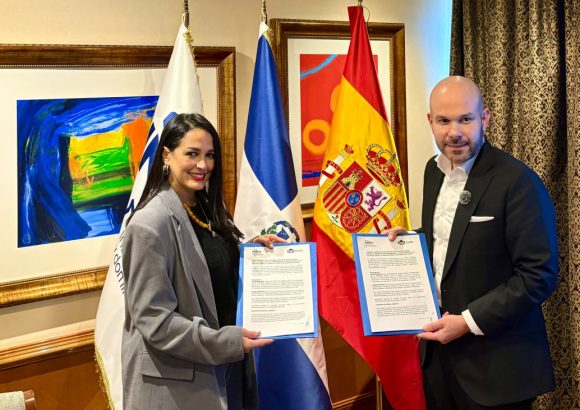
    MADRID — Two global education-focused organizations have launched a groundbreaking new collaboration designed to tear down financial and structural barriers to advanced learning for Dominicans living outside their home country. The Institute of Dominicans Abroad (Index) and the World Literacy Organization (WLO) have formalized their partnership with a cooperation agreement signed in the Spanish capital this week.

    The deal, penned by Index Executive Director Celinés Toribio and WLO Executive Director José Francisco Rojas Blasco, unlocks preferential access to a full spectrum of academic and professional development opportunities for members of the global Dominican diaspora. The offerings span undergraduate degrees, postgraduate programs, and continuing education courses, all crafted to bolster learners’ academic credentials and sharpen their competitive edge in fast-evolving international labor markets.

    To address the financial burdens that often prevent diaspora communities from accessing further education, the partnership includes substantial cost breaks for eligible participants. Tuition discounts can reach as high as 80%, with a capped fixed monthly payment of just $75 USD throughout the duration of a learner’s program. Additionally, all standard enrollment and administrative fees are fully waived for participants accessing the agreement’s benefits. To accommodate diverse work and living situations, all programs are offered in both in-person and fully online learning formats, giving learners the flexibility to fit their studies around existing personal and professional commitments.

    Beyond traditional academic degree programs, the initiative also expands into foundational skills development that addresses common barriers to economic mobility for immigrant communities. It includes comprehensive English language instruction spanning all proficiency levels, from absolute beginner (A1) to masterful advanced (C2), along with professional skills certification programs that align with global industry standards. Leveraging WLO’s extensive global network, which includes 16 partner universities across the world, program beneficiaries gain access to a wide portfolio of academic opportunities that carry international accreditation, expanding their career prospects across borders.

    Moving forward, Index will lead outreach to the Dominican diaspora, promoting the full slate of available programs via its official website and social media channels, where it will share detailed information on eligibility and program offerings. Interested applicants will complete their registration through WLO’s dedicated online platform, using a special institutional code provided by Index to unlock the full cost and access benefits of the new partnership.

  • Sergio Carlo files complaint with Environment Ministry over Macao Beach access

    Sergio Carlo files complaint with Environment Ministry over Macao Beach access

    A prominent Dominican journalist, Sergio Carlo, has launched a formal legal complaint against the luxury Dreams Macao Punta Cana hotel over allegations that the property improperly blocked and restricted public access to a popular stretch of Macao Beach, drawing attention to longstanding tensions between private coastal resorts and public access rights in the Caribbean nation.

    Carlo’s complaint has been distributed to multiple key government bodies, including the Ministry of Environment and Natural Resources, the Ministry of Tourism (MITUR), the Higüey City Council, and the Specialized Tourist Security Corps (CESTUR). The filing centers on claims that hotel staff regularly force visiting members of the public to move their personal belongings and beach equipment, such as umbrellas and chairs, to clear sections of the shoreline for private commercial events like wedding ceremonies and professional photo shoots.

    The incident that prompted the complaint directly involved Carlo himself, during a recent visit to the beach. While he was using an explicitly public section of the shore, he says hotel employees approached him and demanded he relocate his umbrella. Staff told Carlo the area was required for a private event, following orders from hotel management, even though the location fell within the public maritime zone that is protected from private restriction under Dominican law.

    In his formal filing, Carlo lays out extensive legal backing for his position, citing multiple binding constitutional and regulatory frameworks that confirm public ownership of all Dominican beachfront and the 60-meter maritime coastal strip. These include Article 15 of the Dominican Constitution, Law 305-68 which governs the 60-meter maritime zone, General Environmental Law 64-00, a previous ruling from the Dominican Constitutional Court, and recent Environment Ministry Resolution 026/2025, all of which enshrine the right of unrestricted free public access to all beach areas falling within this public zone.

    Carlo is calling on relevant authorities to launch a full, transparent investigation into his allegations. Beyond the probe, he is pushing for regulatory bodies to immediately halt any ongoing hotel practices that unlawfully limit public access to the beach, implement routine, unannounced inspections of the coastal strip in front of the Dreams Macao Punta Cana property, and levy appropriate legal sanctions against the hotel if the violations outlined in the complaint are confirmed.

  • Central American and Dominican business leaders revive regional economic agenda

    Central American and Dominican business leaders revive regional economic agenda

    In a landmark gathering hosted in the Dominican Republic’s capital of Santo Domingo, top business leaders from across Central America, Panama, and the Dominican Republic have formally committed to revitalizing a collaborative regional strategy centered on deepening economic integration, drawing new foreign and domestic investment, and closely tracking evolving trade ties with the United States.

    The agreement was finalized during the latest Ordinary Assembly of Presidents of the Federation of Private Entities of Central America, Panama, and the Dominican Republic, better known by its acronym Fedepricap. This year’s session was convened by the National Council of Private Enterprise (CONEP), the Dominican private sector governing body that currently holds Fedepricap’s rotating regional presidency.

    Celso Juan Marranzini, who leads both CONEP and serves as Fedepricap’s Pro Tempore President, outlined the federation’s renewed mission in remarks to attendees. He emphasized that the organization seeks to reclaim its central role as a coordinated advocacy and action platform for addressing the most pressing shared challenges facing the region. These priority issues span far beyond basic trade coordination: they include targeted investment promotion, overhauled education and workforce development frameworks, preparation for the rise of artificial intelligence, broad technological transformation across industries, establishing consistent legal certainty for businesses, strengthening regional public institutions, and protecting foundational democratic systems and free enterprise principles.

    In additional business conducted during the assembly, leaders formally reaffirmed their welcome for renewed participation from Panama’s private sector delegation, restoring full representation to the grouping. Attendees also passed a resolution expressing unified solidarity with Nicaragua’s business community, which has faced growing government restrictions that undermine freedom of enterprise and disrupt the normal operations of independent business organizations across the country.

    Originally established to align private sector priorities across the region, Fedepricap unites the most influential private industry associations from eight regional economies to advance pro-growth policies that boost competitiveness, expand investment opportunities, increase sustainable employment, and shore up democratic stability across Central America and the Caribbean. With this new agreement, the organization moves forward from a period of stalled coordination to refocus on shared priorities that benefit businesses and workers across the entire region.