标签: Dominican Republic

多米尼加共和国

  • Corporate accelerators in LATAM and the Caribbean are missing P&L

    Corporate accelerators in LATAM and the Caribbean are missing P&L

    Across Latin America and the Caribbean, a persistent misalignment in how corporate accelerator programs are structured is undermining the region’s already limited innovation capacity. Too many of these initiatives are framed and funded as corporate responsibility outreach, when they should be governed as long-term patient capital portfolios designed to deliver strategic, operational, and tangible financial value for the parent company. This mismatch creates hollow programs that generate positive press and support founders but fail to move the needle on corporate innovation – a critical flaw in a region that invests just 0.56% of total GDP in research and development, with only Brazil crossing the 1% threshold. With scarce capital allocated to innovation, there is no room for unfocused programs built without a clear economic thesis.

    How a company structures its accelerator budget directly shapes the outcomes it will deliver. If the budget sits within a corporate responsibility department, success will inevitably be measured in non-economic terms: number of founders supported, jobs created, industry goodwill, and positive media coverage. There is nothing inherently wrong with corporate responsibility supporting entrepreneurship; many companies legitimately view lifting up emerging founders, underserved communities, or nascent industries as part of their core social mandate. But this approach is not equivalent to building a strategic corporate accelerator that advances the parent company’s innovation goals. The critical mistake occurs when programs funded with no expectation of economic return are marketed and framed as core components of a company’s innovation strategy.

    Budgets carry implicit mandates, and how a program is funded defines what it is allowed to become. When accelerators are treated as corporate sponsorships, they produce sponsorship-level outcomes. When they are positioned as long-term investments in future corporate capability, the entire design of the program shifts to prioritize that value creation.

    Adopting a profit and loss (P&L) logic for an accelerator does not require every cohort of startups to turn an immediate profit within a 12-week program, nor does it mean abandoning promising projects that fail to deliver quarterly returns. True innovation requires patient capital, and value builds gradually across multiple program cycles. The first accelerator cohort may deliver promising pilot projects but no scalable, commercially viable startups. A second cycle can refine the company’s selection criteria, improve internal governance for working with external founders, and strengthen alignment with business unit needs. After several cycles of disciplined iteration, the company builds a far more valuable asset: a curated portfolio of technologies, commercial partnerships, intellectual property (IP), and equity positions directly tied to its long-term strategic goals. One cycle can identify promising startups, but multiple disciplined cycles build enduring corporate assets.

    For corporate accelerators, the core P&L question is not whether the current cohort made money immediately. It is what long-term economic value the entire portfolio is designed to create. That value can emerge from a range of sources: reduced internal operating costs, new revenue streams, proprietary technology, licensing income, exportable IP, equity appreciation, acquisition targets, or solutions to long-standing internal problems that conventional procurement has failed to fix.

    A common structural flaw across many programs is the sequence of execution: most start with a general call for startup applications, then retroactively search for internal corporate problems that these startups might solve. This sequence needs to be reversed. Successful programs start with a clear, predefined corporate objective, then build the accelerator around that goal. For example, a retailer planning aggressive national expansion may need better inventory tracking, optimized logistics, data-driven site selection, or deeper customer intelligence. A regional bank may need new tools to evaluate creditworthy customers who lack traditional credit scoring. A tourism group may require solutions for workforce mobility, lower energy costs, or sustainable destination management. These specific corporate objectives should define the accelerator’s investment thesis. Only after the thesis is set should the corporation determine how much capital to allocate, which internal business units will lead pilot projects, and what rights the company will retain if a solution proves successful. The biggest gap in most accelerator programs is not recruiting enough startup applicants – there are always thousands of founders eager to participate. The gap is a cohesive architecture that connects corporate strategy, patient capital allocation, pilot governance, IP rights, external financing, and clear scaling decision-making.

    A illustrative model developed by Successment demonstrates how a modest, multi-cycle accelerator can deliver multiple forms of value simultaneously. Across three accelerator cycles investing in 15 total pilots, the model projects a $1.05 million total investment over three years. Two of the solutions are deployed internally, generating $1.5 million in cost savings or new revenue within five years. One portfolio company achieves a $20 million exit, with the parent company retaining a 3% equity stake that delivers $600,000 in proceeds. This brings the total projected gross value to more than $2.1 million over seven years, a 2.0x return on investment, with additional upside from licensing, exportable IP, acquisition value, and external financing not included in the base calculation. This conversion rate (2 out of 15 pilots delivering meaningful value, or 13%) is entirely conservative: BMW reports that 14% of startups that completed joint projects through its Startup Garage program eventually became established suppliers or service providers for the company. The 3% equity stake used in the model is also below the 5% common equity position typically taken by leading accelerator network Techstars before accounting for additional convertible investments. The point of the model is not to guarantee every $1.05 million accelerator will deliver exactly $2.1 million in returns. It is to prove that corporations can model expected returns before launching a program, allowing leadership to define how much value should come from internal deployment, how much from portfolio equity, and what upside to expect from IP, licensing, or acquisitions. This is a far more useful measure of success than simply counting the number of startup applications received.

    This disciplined approach is not exclusive to Silicon Valley or European multinational corporations. Mexican baked goods giant Grupo Bimbo offers a proven regional example of this model in action. The company launched Bimbo Ventures to collaborate with and invest in startups focused on food products, food technology, supply chain optimization, and commercial operations. In its first Eleva accelerator cohort, the program received more than 2,000 applications, selected nine ventures, invested in four, and acquired the formula, patent, and full rights to a product developed by one participant. This already represents a far more sophisticated value structure than generic “support for entrepreneurship.” Today, the platform delivers concrete corporate value across multiple categories: co-developed products sold under Grupo Bimbo brands, innovative new food formulations, and an artificial intelligence platform that streamlined supplier document processing. The lesson is not that every regional corporation needs to match Grupo Bimbo’s budget or scale. It is that a single accelerator can deliver multiple forms of value – equity holdings, acquired IP, new commercial products, and internal operating improvements – but this diversified portfolio is only possible when the program starts with clear corporate priorities, rather than a generic open call for innovation.

    Large established programs prove that this value can compound over time. BMW’s example, while from a large global corporation, holds lessons for smaller Latin American and Caribbean firms because its discipline around conversion tracking, not its scale, is the key takeaway. BMW does not measure success solely by the 4,700 startups it evaluates; it tracks how many complete joint projects and how many eventually join the company’s supplier network, a metric tied directly to economic value. Telefónica’s Wayra accelerator offers a regional example of tangible financial results: the company reported that by 2025, Wayra had invested more than €245 million and worked with over 400 startups that generated more than €1.06 billion in revenue for Telefónica. While that top-line revenue is not pure profit, it clearly demonstrates that corporate acceleration can deliver measurable commercial value. Accelerators do not have to choose between solving internal corporate problems and holding profitable equity positions. Depending on the core thesis, a program can operate as a venture client, a direct investor, a venture builder, or any combination of the three. What matters is that the structure is intentional and aligned with the company’s goals.

    Corporations also do not have to carry all early-stage risk on their own balance sheets. A properly structured accelerator with a clear investment thesis can attract external capital from multilateral institutions, development agencies, and specialized impact funds that prioritize vehicles focused on financial inclusion, climate resilience, digital transformation, export development, and productivity growth. For example, the Inter-American Development Bank Group’s Multilateral Investment Fund approved a $5 million equity investment and $750,000 in technical cooperation to help NXTP Labs expand its accelerator model across Latin America, a structure designed to support between 200 and 250 early-stage startups. Not every corporate program will qualify for this type of external support, but programs with a credible thesis, clear governance, robust measurement systems, and a defined portfolio strategy are far more likely to secure grants, guarantees, technical assistance, or blended finance mechanisms that reduce early-stage risk. A traditional demo day cannot attract serious long-term capital on its own, but a well-designed investment architecture can.

    The hidden cause of failure for many corporate accelerators is not the quality of the participating founders. It is the lack of clear internal ownership of the program as a full investment system. Typically, corporate responsibility owns the external communications and visibility, the innovation team manages the startup cohort, operations teams receive the pilot output, procurement controls contracting, legal negotiates IP terms, and the finance department only asks about returns after the fact. Every department touches the accelerator, but no single stakeholder owns the full economic outcome of the portfolio. This institutional gap undermines results from day one. A high-impact corporate accelerator requires a clear, linear operational sequence: define corporate objective, build the investment thesis, allocate patient capital, curate the portfolio, conduct paid validation of solutions, secure commercial and IP rights, then scale or exit the position. This is not a public relations plan; it is a core corporate operating model.

    Latin America and the Caribbean do not need more ceremonial accelerator launches that generate buzz around demo day then deliver no long-term value. The region needs corporations that can turn their own strategic challenges into investable theses, and those theses into portfolios whose value compounds over time. Corporate accelerators can absolutely deliver on public goals: strengthening local industries, supporting emerging founders, and creating broad public value. But if an accelerator is expected to drive innovation for the parent company that funds it, it cannot survive on goodwill alone. It needs patient capital, clear internal ownership, and a commitment to P&L discipline.

  • Aneudys Santos apologizes to U.S. ambassador Leah Francis Campos over offensive remarks

    Aneudys Santos apologizes to U.S. ambassador Leah Francis Campos over offensive remarks

    Nearly two months after making derogatory, faith-targeting comments about United States Ambassador to the Dominican Republic Leah Francis Campos, Dominican television personality Aneudys Santos has issued a formal public apology, acknowledging his actions were unjustified and wrong.

    In a video statement circulated across his personal social media channels, the prominent broadcaster opened by directly addressing Campos, noting he owed an apology to her first as an individual and a woman, and second in her official capacity as the diplomatic representative of the U.S. government. Santos went on to distance himself from the inappropriate language he used, describing his original comments as erratic, undeserved, and unnecessary. He emphasized that he fundamentally opposes calling into question any person’s religious beliefs, a core line of criticism he leveled at Campos that he now admits was out of line. Invoking shared Christian values of forgiveness, he urged the ambassador to accept his public apology.

    Santos also provided context for his original confrontation, explaining that his criticism grew out of political disagreement: he had opposed Campos’ decision to join the public debate surrounding revisions to the Dominican Penal Code and related discussions of freedom of expression. Even as he clarified the root of his disagreement, he took full personal ownership of the offensive language he deployed, explicitly denying claims that he was acting on behalf of any third party when he made the original remarks.

    The public apology marks a resolution to a diplomatic friction point that emerged after Santos first shared his offensive video targeting Campos. At the time, the ambassador had publicly reaffirmed her commitment to freedom of expression while responding to the derogatory comments directed at her.

  • Dominican ambassador receives Duarte busts for Saudi Arabia and Djibouti

    Dominican ambassador receives Duarte busts for Saudi Arabia and Djibouti

    In a formal ceremony held in advance of the Dominican Republic’s 2027 national Independence Day and Homeland Month celebrations, the Dominican Republic’s Ambassador to Saudi Arabia Andy Rodríguez Durán accepted two sculpted busts of Juan Pablo Duarte, the nation’s iconic founding father, from representatives of the Duartian Institute.

    This handover marks a key step in the Dominican Republic’s initiative to share its foundational historical heritage with the global community. Per the planned installation schedule, one of the two bronze busts will be placed in Djibouti, a country that falls under the diplomatic accreditation of the Dominican Embassy based in Riyadh. This placement will make the sculpture the second official public monument to Duarte located on the African continent. The first official Duarte bust was unveiled in Egypt in 2023, when Ambassador Rodríguez Durán was serving in a diplomatic posting there.

    The second bust, which portrays Duarte in his historic role as a military leader of the Dominican independence movement, will remain on permanent display at the Dominican Embassy’s headquarters in Riyadh, serving as a permanent reminder of the nation’s founding ideals for visitors and diplomatic staff alike. Alongside the two sculptures, Ambassador Rodríguez Durán also received an official Dominican national flag and a curated collection of books and institutional publications that detail Duarte’s life, contributions, and enduring legacy.

    Wilson Gómez Ramírez, president of the Duartian Institute, emphasized during the ceremony that his organization has long prioritized expanding global awareness of Duarte’s transformative role in Dominican history. The institute remains dedicated to preserving his ideals and extending recognition of his legacy beyond Dominican borders to international audiences. For his part, Ambassador Rodríguez Durán expressed sincere gratitude to the Duartian Institute for its ongoing work to safeguard the patriot’s legacy and create opportunities to share it with communities across the globe, noting that the installations will strengthen cultural diplomacy and highlight Dominican national identity in the Middle East and Africa.

  • Dominican Republic launches Paris artist residency program with France

    Dominican Republic launches Paris artist residency program with France

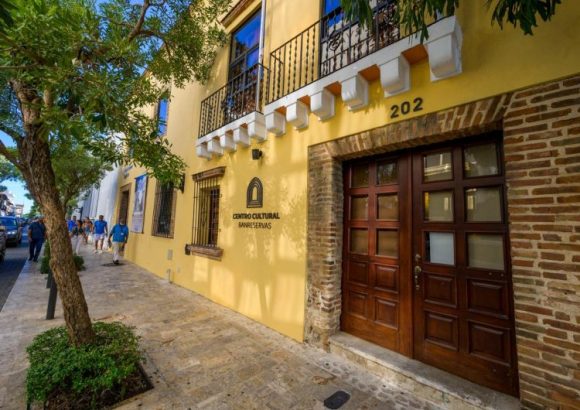
    A groundbreaking new cultural initiative aimed at elevating Dominican visual artists onto the global stage has been jointly launched by the Dominican Republic Embassy in France and Banco de Reservas via its Banreservas Cultural Center. Dubbed the “Dominican Republic x Cité internationale des arts” program, the project will open doors for creators from the Caribbean nation to conduct three-month artistic research residencies in one of the world’s most iconic cultural capitals: Paris.

    The residency scheme is developed in close collaboration with Cité internationale des arts, a long-renowned European leader in hosting international artist residency programs that has nurtured creative talent from across the globe for decades. Under the three-year rolling plan running from 2026 through 2028, six Dominican artists will earn spots in the program, with two creators selected annually to take up their residency in Paris.

    To remove financial and logistical barriers for participating creators, the program provides comprehensive support for selected artists. This includes fully covered accommodation in the city, a dedicated private studio space to develop new work, access to one-on-one professional mentoring from established arts practitioners, and a monthly stipend that covers everyday living costs and local transportation throughout the residency period.

    Eligibility for the program is open to any Dominican visual artist currently based in the Dominican Republic, whose proposed creative project carries conceptual or contextual ties to Paris or France. A wide range of creative disciplines are accepted, covering traditional mediums such as painting, sculpture, and photography, as well as contemporary practices including installation art, digital art, performance art, and interdisciplinary cross-medium work.

    The application window for the first round of residencies is open now, and will close on August 30, 2026. Names of the inaugural selected artists will be publicly revealed in October that same year, timed to coincide with the annual Dominican Week in France celebration.

    Speaking on the launch of the initiative, Dominican Ambassador to France David Puig emphasized the program’s broader strategic role beyond supporting individual artists. Puig noted that the residency scheme strengthens bilateral cultural diplomacy between the two nations, expands the global footprint of Dominican creative talent, and lays the groundwork for long-term collaborative artistic partnerships between creators and cultural institutions in the Dominican Republic and France.

  • INTEC study warns mangrove loss could cost Dominican Republic US$75 million annually

    INTEC study warns mangrove loss could cost Dominican Republic US$75 million annually

    Santo Domingo, Dominican Republic – A new research led by experts from the Technological Institute of Santo Domingo (INTEC) has drawn urgent attention to the steep economic costs of letting mangrove ecosystems decline across the country’s coastlines, projecting annual losses could reach as high as US$75 million if degradation continues. The findings, which underscore the underrecognized economic importance of these coastal habitats for the Dominican Republic’s tourism-driven economy, were officially published in the peer-reviewed academic journal *Ocean & Coastal Management*.

    To reach their conclusions, the research team conducted a comprehensive analysis of overlapping economic and environmental datasets spanning 28 years, from 1995 through 2023. Their statistical analysis confirmed a clear correlation: ongoing mangrove degradation correlates directly with slower national GDP growth, declining numbers of international tourist arrivals, and slowed investment and development of tourism infrastructure along the country’s coasts.

    Lead researchers emphasized that the $75 million annual loss estimate is intentionally conservative. This figure is calculated based only on the direct economic contributions of the Dominican Republic’s coastal and marine ecosystems, which collectively generate roughly US$1.8 billion in annual economic activity for the nation. The current projection does not account for the wide range of additional unpriced ecosystem services that mangroves provide, including long-term carbon sequestration, natural storm surge protection during hurricane season, habitat support for commercial and artisanal fisheries, and the conservation of critical regional biodiversity.

    Study authors frame mangroves as far more than just a natural wilderness feature: they act as cost-effective, vital natural infrastructure that delivers multiple overlapping benefits for coastal communities and the national economy. These root-dense coastal forests slow coastal erosion, protect the sandy beaches and adjacent coral reefs that draw millions of visitors each year, and maintain the scenic coastal landscapes that form the core of the Dominican Republic’s $10 billion-plus tourism sector. Given these far-reaching benefits, the research team argues that expanding mangrove conservation and restoration efforts should not be viewed as a purely environmental obligation, but rather a high-return investment in the country’s long-term economic resilience against climate shocks and industry decline.

    The research, which received funding from the Dominican Republic’s National Fund for Innovation and Scientific and Technological Development (Fondocyt), puts forward three core policy recommendations to reverse current degradation trends: strengthen legal and on-the-ground protections for existing mangrove habitats, integrate ecosystem conservation into long-term coastal tourism planning, and adopt targeted policy incentives that encourage private and public investment in coastal ecosystem conservation across the country.

  • Dominican government launches operation to protect six national parks from environmental crimes

    Dominican government launches operation to protect six national parks from environmental crimes

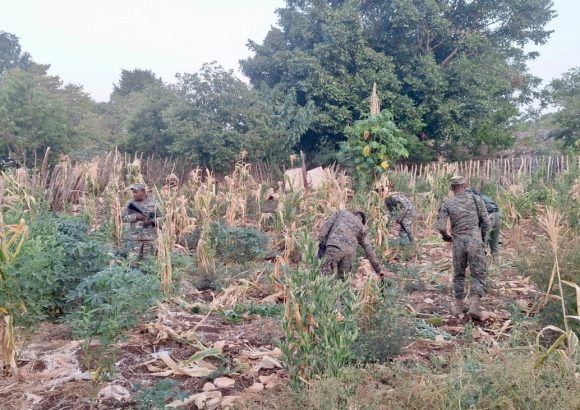
    In a coordinated, cross-government effort to address escalating threats to the country’s ecologically critical protected landscapes, the Dominican Republic’s Ministry of Defense and Ministry of Environment and Natural Resources have officially launched Operation Environmental Commitment 2026, a nationwide crackdown on destructive environmental crime. The multi-month initiative brings together a diverse coalition of state institutions to counter activities that have eroded fragile ecosystems across the nation’s most protected natural spaces.

    Operational leadership for the campaign falls to the National Environmental Protection Service (known locally as SENPA), with the Dominican Armed Forces providing tactical and logistical support alongside more than half a dozen additional government agencies. Enforcement and recovery activities are being deployed simultaneously across six of the country’s highest-priority protected areas: Los Haitises National Park, Valle Nuevo National Park, Sierra de Bahoruco National Park, José del Carmen Ramírez National Park, Armando Bermúdez National Park, and La Humeadora National Park. All six sites are home to unique biodiversity and endangered species that have faced growing pressure from unregulated human activity in recent years.

    The operation’s primary enforcement targets include five of the most widespread damaging activities plaguing Dominican protected areas: illegal land encroachment, unlicensed commercial logging, intentional vegetation burning, slash-and-burn subsistence farming that clears old-growth forest, and illegal unregulated fishing in protected aquatic habitats. Deployed inter-agency teams are conducting stepped-up aerial and ground surveillance across remote areas, carrying out enforcement actions against violators, and leading on-the-ground restoration work to reverse damage to already impacted ecosystems.

    Beyond environmental authorities and SENPA, the coalition includes the Dominican Army, Navy, and Air Force, the General Directorate of Migration, the Ministry of Agriculture, and the Specialized Prosecutor’s Office for the Defense of the Environment and Natural Resources. This whole-of-government approach is designed to break down coordination barriers that have historically hampered efforts to counter organized environmental crime in remote protected regions.

    In a statement following the launch, the Ministry of Defense emphasized that safeguarding the country’s natural resources is not merely an environmental priority, but a core pillar of national security. The institution reaffirmed its long-term commitment to advancing conservation goals by leveraging the extensive operational capabilities and geographic reach of the Armed Forces to protect ecosystems that are vital to the Dominican Republic’s biodiversity, tourism industry, and long-term climate resilience.

  • Aerodom announces new international routes and more flights for Puerto Plata

    Aerodom announces new international routes and more flights for Puerto Plata

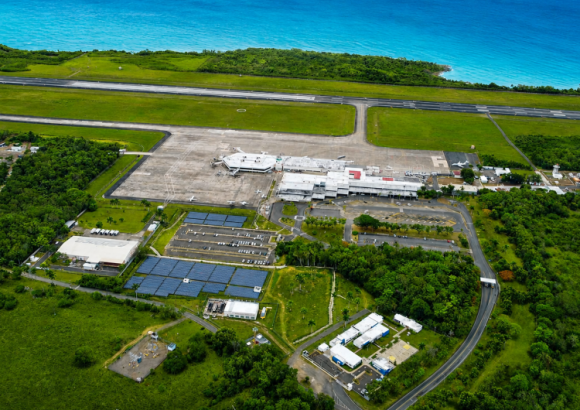
    One of the Dominican Republic’s most popular coastal tourism hubs, Puerto Plata, is set to welcome more international visitors this year as Gregorio Luperón International Airport (POP) advances an expansion of its global flight network, adding new routes to Canada and boosting regular service to Panama.

    Aerodom, the airport operator that forms part of the global Vinci Airports network, has confirmed a permanent capacity increase from one of Latin America’s leading carriers: Copa Airlines. Starting immediately, the airline will ramp up its weekly service between Panama City’s Tocumen International Airport and Puerto Plata from three flights to four. The expanded schedule will create more flexible connection options for travelers traveling to and from dozens of destinations across Central and South America, leveraging Copa Airlines’ strategic hub in Panama to cut down on layover times and expand access to Puerto Plata’s renowned beaches and tourist attractions.

    For the upcoming 2024-2025 Northern Hemisphere winter travel season, two major Canadian carriers will roll out new direct seasonal services to the Dominican destination, both launching on December 15. Air Transat will introduce a new weekly flight connecting POP to London, Ontario, a growing market for leisure travel to the Caribbean. Meanwhile, WestJet will launch a weekly seasonal route from Winnipeg, extending direct access to Puerto Plata for travelers in the Canadian prairies who previously faced longer connecting itineraries.

    Beyond expanding its route network, Gregorio Luperón International Airport has also cemented its reputation for delivering high-quality passenger experience. The airport has been recognized four times by the Airports Council International (ACI) with the globally respected Airport Service Quality (ASQ) Award, including a 2025 honor as the best airport in Latin America and the Caribbean in the under 2 million annual passengers category. This award, which is based on direct feedback from passengers across metrics including check-in experience, terminal cleanliness, and staff service, underscores the airport’s ongoing commitment to meeting the needs of growing visitor numbers while maintaining service standards.

  • 4.5-magnitude earthquake shakes Samaná, felt in Santo Domingo

    4.5-magnitude earthquake shakes Samaná, felt in Santo Domingo

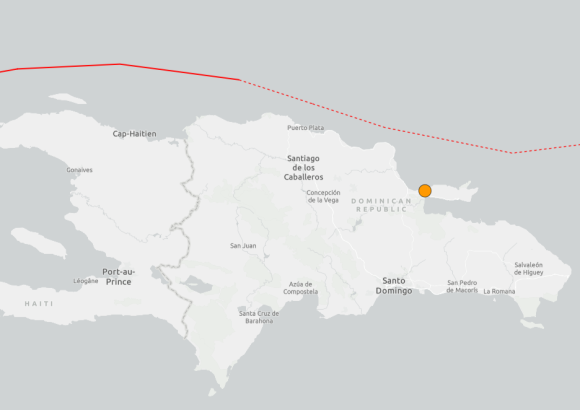
    A moderate 4.5-magnitude earthquake rattled coastal areas of the Dominican Republic early Monday, triggering tremors that reached the capital region but leaving no harm or destruction in its wake, local officials confirmed.

    The seismic event was recorded at 1:01 a.m. local time, researchers from the Seismological Institute of the Autonomous University of Santo Domingo (UASD) confirmed. Mapping data places the earthquake’s epicenter roughly 16.9 kilometers south of the town of Sánchez, in the northeastern Samaná province, with the tremor originating at a depth of 14.7 kilometers below the Earth’s surface.

    Prominent Dominican geologist Osiris de León noted that shaking from the quake was widespread across the region. Residents across the entire Samaná Peninsula reported feeling the tremor, with perceptible movement also registered in Nagua, the broader Northeast region, Bajo Yuna, Monte Plata, and the densely populated Greater Santo Domingo area.

    As of mid-morning Monday, national emergency and geological authorities have not received any reports of human casualties, injuries, or structural damage to buildings or infrastructure across the affected regions. The country’s emergency management agencies remain on standby to monitor any aftershock activity and respond to potential secondary impacts.

  • President Abinader attends installation of new bishop of La Vega Diocese

    President Abinader attends installation of new bishop of La Vega Diocese

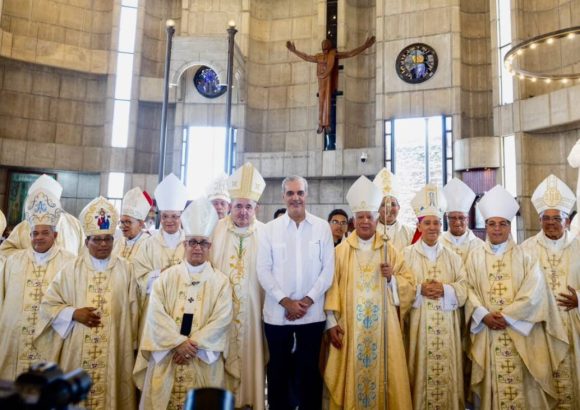
    LA VEGA – A landmark ceremonial event unfolded this week at the Immaculate Conception Cathedral in La Vega, where newly appointed Bishop Andrés Napoleón Romero Cárdenas was formally installed as the top leader of the Diocese of La Vega. The installation followed an official appointment by Pope Leo XIV, with Apostolic Nuncio Archbishop Piergiorgio Bertold presiding over the formal religious gathering. Dominican Republic President Luis Abinader was in attendance to mark the historic occasion for the regional Catholic community.

    In his inaugural homily delivered moments after taking office, the new bishop laid out a clear vision for his tenure leading the diocese. Romero Cárdenas committed to guiding a faith community rooted in proximity to local residents, built around open dialogue and collaborative partnership, while intentionally steering clear of partisan political divides. He emphasized his intent to work constructively alongside government officials, educational establishments, local business groups, and community-focused organizations to advance shared public good across the diocese’s coverage area.

    Beyond collaborative governance, Romero Cárdenas reinforced his dedication to upholding the Dominican Republic’s long-held religious and cultural heritage. He highlighted core values that will anchor his pastoral work: respect for life, support for family structures, a commitment to justice and peace, investment in education, upholding human dignity, and advancing meaningful action for environmental protection.

    Among his key pastoral priorities, the new bishop singled out youth ministry as a central focus for growth in the coming years. He announced concrete plans to expand and strengthen existing support programs for young people, delivered through coordinated cross-community pastoral initiatives designed to meet the evolving needs of the diocese’s youth population.

    The Diocese of La Vega is one of the Dominican Republic’s larger regional Catholic jurisdictions, serving four provinces: La Vega, Hermanas Mirabal, Monseñor Nouel, and Sánchez Ramírez. Across its service area, the diocese oversees 63 individual parishes and supports a roster of more than 120 active priests serving local faith communities.

  • Santo Domingo Este Malecón closed today for Central American and Caribbean Games triathlon

    Santo Domingo Este Malecón closed today for Central American and Caribbean Games triathlon

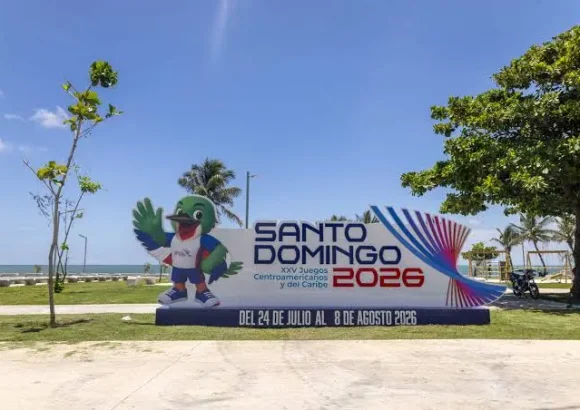
    Santo Domingo, Dominican Republic – Ahead of the triathlon competition kicking off as part of the XXV Central American and Caribbean Games 2026, local transportation authorities have formally announced temporary traffic restrictions along a key coastal corridor in the capital’s eastern district.

    The National Institute of Transit and Land Transportation (Intrant) confirmed Monday, August 3, that the entire stretch of Santo Domingo Este Malecón, officially known as Avenida España, will be closed to all motor vehicle traffic for 11 hours on the day of the event. The shutdown is set to begin at 3:00 a.m. and will remain in place until 2:00 p.m., giving event organizers time to set up race infrastructure before the competition and clear the course for regular use once the triathlon concludes.

    In an official statement, Intrant has urged all drivers who typically travel along the corridor to adjust their travel plans in advance to prevent unexpected delays and congestion at nearby access points. To help commuters and commercial vehicles reroute smoothly, the agency has identified three primary alternate routes: Las Américas Avenue, Estados Unidos Avenue, and Mirador del Este Avenue, all of which are designed to accommodate increased traffic volume during the closure.

    To further assist road users, Intrant confirmed that all details of the temporary closure have already been updated and integrated into the popular Waze real-time navigation application, allowing app users to automatically receive rerouting suggestions when planning trips through the affected area. Additionally, uniformed traffic officers have been deployed to key intersections and diversion points along the restricted zone. These personnel will be on site throughout the closure to manually direct vehicle flow, respond to unexpected congestion issues, and uphold overall traffic safety for both race participants and road users during the event.