标签: Dominican Republic

多米尼加共和国

  • Dominican Republic reaffirms commitment to decent work at ILO

    Dominican Republic reaffirms commitment to decent work at ILO

    GENEVA – During the pivotal 356th session of the International Labour Organization (ILO), Dominican Minister of Labor Eddy Olivares Ortega delivered a robust affirmation of the nation’s dedication to advancing decent work and implementing inclusive labor policies on the global stage. Addressing the assembly, Minister Olivares characterized the ILO’s newly unveiled 2026–2029 Development Cooperation Strategy as both a timely and pragmatic framework, perfectly attuned to a world grappling with financial limitations and complex societal issues. He articulated that the strategy’s focus on fostering innovation, cultivating strategic alliances, and demanding measurable outcomes provides a critical pathway to confront pervasive regional challenges, including widespread informal employment, the necessity for sustainable job creation, gaps in social protection systems, and stagnating productivity. Beyond outlining the strategy’s merits, the Minister championed the amplified role of South-South and triangular cooperation as vital mechanisms for the exchange of proven best practices among developing nations. Concurrently, he called for the fortification of partnerships with international financial entities and the private sector to mobilize essential resources. Olivares Ortega further highlighted the Dominican Republic’s established role as a regional leader in pioneering social dialogue and executing meaningful labor reforms across Central America. Concluding his address, he reaffirmed the nation’s steadfast endorsement of the ILO’s tripartite model—uniting governments, employers, and workers—as the indispensable cornerstone for constructing a more equitable and inclusive future of work globally.

  • Abinader meets French business leaders to boost investment in the Dominican Republic

    Abinader meets French business leaders to boost investment in the Dominican Republic

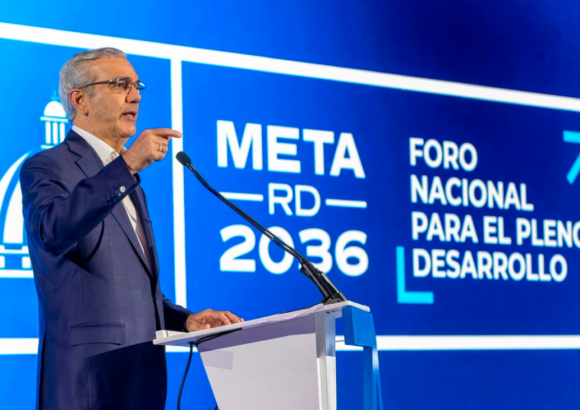
    PARIS – In a strategic move to bolster economic partnerships, Dominican Republic President Luis Abinader convened with top executives from France’s private sector during an investment forum hosted by MEDEF International. The high-level gathering, forming a pivotal segment of his official state visit, served as a platform to showcase the Caribbean nation’s robust economic credentials to potential investors.

    Addressing assembled business leaders, President Abinader articulated a compelling case for the Dominican Republic, emphasizing its remarkable economic stability, reinforced legal safeguards for foreign capital, and proactively open investment policies. He presented the nation as the premier hub for commercial ventures in the Caribbean region. The forum garnered strong endorsements from established French corporations already operating within the country, who attested to its consistent growth trajectory and business-friendly environment. Their testimonials were complemented by expressions of serious interest from new market entrants eager to engage in forthcoming projects and public tenders.

    This business roundtable immediately followed President Abinader’s diplomatic discussions with French President Emmanuel Macron, signaling a concerted effort to deepen bilateral ties beyond politics into tangible economic cooperation. Revealing a significant milestone, Abinader announced that Foreign Direct Investment (FDI) had exceeded US$5 billion in 2025, setting an unprecedented national record. He pinpointed several high-priority sectors actively seeking international investment and expertise, including metropolitan transit systems, renewable energy generation, major infrastructure upgrades, logistics hubs, digital transformation initiatives, semiconductor manufacturing, and defense technology.

  • Omar Fernández calls for income tax indexation to ease family finances amid Iran conflict

    Omar Fernández calls for income tax indexation to ease family finances amid Iran conflict

    SANTO DOMINGO – Dominican Senator Omar Fernández has issued a compelling appeal to the national government, demanding it assume a greater share of the economic strain triggered by escalating global instability linked to the Middle East conflict. He emphasized that ordinary citizens should not be left to shoulder the overwhelming financial consequences alone, particularly as new measures impacting essential goods and services are implemented.

    In a detailed critique of current fiscal policy, Fernández questioned whether state institutions were demonstrating commensurate sacrifice. He advocated for the immediate adoption of countercyclical economic strategies designed to shield household incomes, citing the prolonged financial distress faced by Dominicans since the COVID-19 pandemic.

    The senator put forward a multi-faceted proposal to alleviate public hardship. Key recommendations include indexing income tax brackets to inflation to prevent bracket creep and reduce the fiscal pressure on salaried workers, providing tax relief on mortgage loans, and eliminating advance tax payments for small and medium-sized enterprises (SMEs) to improve their cash flow.

    Furthermore, Fernández proposed a strategic reduction of the electricity sector’s deficit to pre-pandemic 2019 levels. He argued that the substantial savings realized from this measure could be reallocated to finance critical subsidies for fuel, basic food items, and agricultural fertilizers, alongside necessary public sector salary adjustments.

    In a move highlighting fiscal responsibility, the senator also suggested repurposing a portion of the social assistance funds allocated to legislators to support these subsidy initiatives. Fernández concluded that such decisive and shared actions are imperative to fortify public confidence and underscore the government’s institutional accountability during a period of economic difficulty.

  • Flour sector signals upcoming price hikes across all products

    Flour sector signals upcoming price hikes across all products

    The Dominican Republic’s bakery sector is confronting an unprecedented economic challenge as skyrocketing operational expenses threaten the stability of flour-based product manufacturing. The Union of Medium and Small Flour Industries (UMPIH) has issued an urgent alert regarding unsustainable cost pressures that jeopardize the entire production chain.

    According to UMPIH President José Radhames Bruno, production and distribution expenses have escalated by a staggering 40% across the sector. This alarming increase poses particular threat to the industry’s composition, where 99% of operations are classified as micro or small enterprises with limited financial resilience.

    During a recent press briefing, Bruno emphasized that while the union maintains a policy of non-interference in pricing decisions, it bears responsibility for educating both producers and consumers about market realities. He clarified that any potential price modifications for bread and related products would constitute direct responses to these uncontrollable cost surges rather than opportunistic increases.

    In response to the crisis, UMPIH has announced plans to convene an extraordinary national assembly. This emergency gathering will focus on developing strategic measures to safeguard sector profitability while implementing mitigation strategies to cushion consumer impact. The assembly aims to establish cooperative solutions that balance commercial viability with public affordability in one of the nation’s essential food industries.

  • Dominican Republic joins Food First Pact to combat hunger by 2030

    Dominican Republic joins Food First Pact to combat hunger by 2030

    Santo Domingo has marked a significant milestone in regional food security efforts as the Dominican Republic formally became a signatory to the “Food First Pact,” a multinational initiative designed to accelerate progress toward the United Nations’ Zero Hunger objective by 2030. This strategic alliance, previously ratified by Mexico, Guatemala, and Chile, establishes a framework for implementing concrete legislative measures and securing dedicated budgetary allocations to eradicate hunger across Latin America.

    Luis Lobo, a key representative, emphasized the pact’s commitment to delivering tangible outcomes through the enactment of specific laws and the strategic financing of nutritional security initiatives. The initiative enjoys robust institutional support from the Food and Agriculture Organization (FAO), alongside international collaborators including Spanish development agencies and the Mexican Agency for International Development Cooperation (AMEXCID). Its core mission is to embed the fundamental right to adequate nourishment at the heart of governmental policy, underpinned by commitments to fortify legal frameworks and establish rigorous monitoring systems.

    The official signing ceremony at the National Congress featured critical insights from regional leaders. Rodrigo Castañeda acknowledged the recent downward trend in hunger rates across Latin America and the Caribbean over the past two years but cautioned against complacency. He highlighted persistent severe challenges, noting that over a quarter of the region’s population continues to experience food insecurity, with millions lacking access to affordable, healthy diets. Spanish Ambassador Lorea Arribalzaga Ceballos drew attention to the disproportionate impact of food insecurity on women, underscoring entrenched gender disparities. Echoing the urgency, Chamber of Deputies President Alfredo Pacheco issued a compelling call to action for regional governments, asserting that addressing the hunger crisis admits no further delay.

  • Government bans mass parties and alcohol sales for Holy Week 2026

    Government bans mass parties and alcohol sales for Holy Week 2026

    The Dominican government has unveiled comprehensive public safety regulations for Holy Week 2026, implementing significant restrictions on social gatherings and alcohol sales throughout the national territory. The Ministry of the Interior and Police issued Resolution MIP-RR-0001-2026, establishing stringent protocols for the period spanning March 29 to April 5, 2026.

    Under the new directives, mass gatherings at coastal and recreational areas including beaches, rivers, and resorts will be strictly prohibited. The regulation specifically bans the installation of temporary structures such as stages, tents, and similar installations that could facilitate unauthorized events. This preventive measure aims to address concerns about overcrowding and maintain public order during one of the country’s peak travel periods.

    In a particularly notable provision, authorities will enforce a complete 24-hour nationwide suspension of alcohol sales on Good Friday (April 3, 2026). The prohibition represents an extension of existing regulatory measures coordinated with the Ministry of Tourism, with normal sales operations resuming immediately following the designated period.

    Enforcement mechanisms will involve coordinated operations between the National Police and the Directorate of Control of Alcohol Sales (COBA), with monitoring systems deployed across all provinces. Government officials emphasized that these preventive actions prioritize citizen security, accident prevention, and the promotion of peaceful coexistence during the religious observance period. The measures reflect ongoing efforts to balance traditional celebrations with contemporary public safety requirements in the Caribbean nation.

  • Abinader meets Dominican diaspora in Paris, proposes INDEX office

    Abinader meets Dominican diaspora in Paris, proposes INDEX office

    PARIS – Dominican President Luis Abinader convened a significant gathering with nearly 100 young Dominican expatriates in Paris, underscoring his administration’s dedication to enhancing diplomatic relations and support mechanisms for citizens residing in France. The meeting served as a platform for substantive dialogue on critical areas including educational advancement, artificial intelligence integration, cultural preservation, housing solutions, and political engagement.

    In a major policy announcement, President Abinader revealed that authorities would conduct feasibility studies for establishing both an office of the Institute of Dominicans Abroad (INDEX) and a Dominican cultural center in France. These initiatives aim to foster deeper community integration and provide structured support for the growing Dominican population in the country, which currently exceeds 8,000 individuals according to Ambassador David Puig.

    Foreign Minister Roberto Álvarez detailed comprehensive reforms underway within the nation’s foreign service apparatus, designed to modernize diplomatic operations and improve consular services. The administration also highlighted existing support programs accessible to diaspora members, including the ‘Beca Tu Futuro’ educational scholarship initiative and various housing development projects in the Dominican Republic.

    President Abinader concluded the engagement by reaffirming his government’s unwavering commitment to national development projects that improve quality of life both domestically and for overseas citizens, emphasizing the important role of the diaspora as ambassadors of Dominican culture and values.

  • Abinader signs OECD memorandum in Paris

    Abinader signs OECD memorandum in Paris

    PARIS – In a significant diplomatic ceremony attended by President Luis Abinader, the Dominican Republic formalized a strategic partnership with the Organisation for Economic Co-operation and Development (OECD) through the signing of a comprehensive Memorandum of Understanding. The signing event, held during the OECD Global Anti-Corruption and Integrity Forum in Paris, marks a pivotal step in the Caribbean nation’s integration with global governance standards.

    Foreign Minister Roberto Álvarez and OECD Secretary-General Mathias Cormann executed the agreement that establishes an institutional framework for enhanced cooperation across multiple policy domains. This partnership is designed to facilitate knowledge transfer, promote transparency initiatives, and implement international best practices within the Dominican Republic’s public administration systems.

    The memorandum outlines specific collaboration areas including economic policy reform, fiscal management modernization, environmental sustainability programs, and public governance enhancement. These measures are strategically positioned to attract foreign direct investment by demonstrating the country’s commitment to institutional integrity and international compliance standards.

    Additionally, the agreement provides mechanisms for expanded participation in OECD technical committees and policy networks, accelerating the alignment of Dominican legislation with OECD instruments. This engagement is expected to drive state modernization efforts and elevate the nation’s economic competitiveness on the global stage through improved regulatory frameworks and governance practices.

  • Edesur announces scheduled power outages in Greater Santo Domingo

    Edesur announces scheduled power outages in Greater Santo Domingo

    Residents across multiple districts of Santo Domingo are set to experience temporary power disruptions this week as Edesur Dominicana proceeds with critical infrastructure upgrades. The electricity distributor has announced scheduled outages on Tuesday, Wednesday, and Friday affecting neighborhoods in the National District, Los Alcarrizos, and Santo Domingo Oeste regions.

    The modernization initiative centers on two key substations: Arroyo Hondo and Alfa. At the Arroyo Hondo facility, technicians will install advanced distribution cells and enhance existing infrastructure to fully utilize the station’s 56 MVA capacity. This work necessitates power interruptions from 9:00 a.m. to 5:00 p.m. on Tuesday, impacting Viejo Arroyo Hondo, Las Palmas, Los Jardines, and Los Pinos.

    Concurrently, integration efforts at the new Alfa substation will involve comprehensive power line installation and pole positioning designed to reinforce electrical supply networks. These operations will trigger additional service suspensions on Wednesday (9:00 a.m. to 1:00 p.m.) and Friday (9:00 a.m. to 3:00 p.m.).

    Affected communities encompass Tierra Llana, Villa Peravia, Villas Naco, La Ciénaga, Los Hidalgos, San Miguel de Manoguayabo, and Pueblo Nuevo. Numerous sectors within Los Alcarrizos—including Savica, Los Multifamiliares, El Chucho, Los Rieles, and Carmen Renata—will likewise experience temporary electricity cuts.

    Edesur has extended apologies for any inconvenience caused, emphasizing that these essential improvements will significantly boost service reliability and address the region’s escalating energy demands. The company reaffirmed its commitment to delivering enhanced electrical infrastructure through these strategic modernization projects.

  • Abinader promotes transparency, anti-corruption agenda at OECD Forum

    Abinader promotes transparency, anti-corruption agenda at OECD Forum

    PARIS – Dominican Republic President Luis Abinader delivered a powerful address at the Organisation for Economic Co-operation and Development (OECD) Global Anti-Corruption and Integrity Forum in Paris, positioning institutional integrity as the fundamental driver of his nation’s economic and democratic advancement.

    In his keynote speech, President Abinader articulated a comprehensive governance model structured around four strategic pillars: prevention, transparency, coordination, and compliance. He emphasized that integrity constitutes more than political rhetoric—it represents an operational system founded on rigorous legal frameworks, institutional accountability, and public openness. This system, he argued, directly fortifies citizen trust and ensures long-term governmental stability.

    The President characterized corruption as an ‘invisible tax’ that inflates operational costs, deters foreign investment, and suppresses national productivity. To counter this, his administration has implemented innovative structural measures including the establishment of Integrity and Compliance Commissions across all government bodies. These commissions are tasked with proactively identifying institutional risks and strengthening internal control mechanisms.

    Abinader detailed significant constitutional reforms demonstrating his commitment to judicial independence, notably the appointment of an autonomous attorney general and the removal of presidential influence over this critical role. He referenced ongoing high-profile corruption prosecutions as evidence of the government’s unwavering commitment to equitable justice.

    Recognizing Milagros Ortiz Bosch for her pioneering transparency initiatives, Abinader concluded that integrity serves as a strategic national asset that catalyzes foreign investment, fosters innovation, and reinforces democratic resilience, ultimately positioning the Dominican Republic as a leader in international governance standards.