标签: Dominican Republic

多米尼加共和国

  • Abinader arrives in Paris for Global Anti-Corruption and Integrity Forum

    Abinader arrives in Paris for Global Anti-Corruption and Integrity Forum

    PARIS, FRANCE – Dominican Republic President Luis Abinader commenced a significant official visit to the French capital on Monday evening, embarking on a series of high-level diplomatic engagements centered on international cooperation and governance reform. The visit’s cornerstone event is his scheduled bilateral discussion with French President Emmanuel Macron, alongside active participation in the OECD’s prestigious Global Anti-Corruption and Integrity Forum.

    The itinerary includes a formal signing ceremony for a memorandum of understanding between the Dominican Republic and the Organisation for Economic Co-operation and Development (OECD), following a personal invitation extended by Secretary-General Mathias Cormann. President Abinader will further contribute to the International Economic Forum on Latin America and the Caribbean, coinciding with the tenth anniversary celebrations of the OECD’s regional program initiative.

    This high-level forum, commencing Tuesday, serves as an international platform advocating for enhanced governmental transparency, robust accountability mechanisms, and comprehensive institutional strengthening across nations. Beyond multilateral engagements, President Abinader’s agenda features strategic dialogues with OECD leadership, including Aidan Eyakuze, and dedicated sessions with prominent business executives to catalyze foreign investment and deepen economic collaboration.

    The state visit will culminate with a community engagement event connecting with the Dominican diaspora residing in France. Prior to his departure on Wednesday, President Abinader will host an exclusive investment-focused breakfast roundtable with French industry leaders. This session will target capital mobilization toward strategic Dominican sectors such as national infrastructure development, transportation networks, logistics hubs, free trade zones, and renewable energy projects.

  • ADLA announces airfare hikes due to rising jet fuel prices

    ADLA announces airfare hikes due to rising jet fuel prices

    Santo Domingo, Dominican Republic – The Dominican aviation industry is implementing across-the-board fare increases in response to a significant jump in jet fuel costs, according to an announcement from Omar Chahín, President of the Dominican Association of Airlines. The decision comes after a 21-peso per-unit increase in aviation fuel prices, which represents one of the most substantial operational expenses for carriers operating in the region.

    Chahín detailed that the global energy market volatility, particularly influenced by ongoing geopolitical tensions involving Iran, has created unsustainable pressure on airline operating margins. The sector has reached a point where continued absorption of these repeated cost increases is no longer financially viable, necessitating immediate fare adjustments to ensure operational sustainability.

    Despite these economic challenges, the Dominican aviation sector demonstrates remarkable resilience and continued expansion. Multiple carriers including Air Century, Sky High Aviation Dominicana, RED Air, and Sunrise Airways Dominicana are actively broadening their route networks across the Caribbean, Central America, South America, and North America. This expansion supports both the growing tourism industry and enhances connectivity for the Dominican diaspora community.

    Industry executives have issued cautions that the current situation remains fluid. Should the global fuel market experience additional price escalations, further corrective measures may be required, potentially leading to subsequent fare increases in the upcoming months. The sector remains cautiously optimistic while monitoring international energy market developments closely.

  • INTRANT bans cargo vehicle circulation for Easter 2026

    INTRANT bans cargo vehicle circulation for Easter 2026

    Santo Domingo – In a significant move to enhance road safety during one of the busiest travel periods, Dominican transportation authorities have unveiled comprehensive restrictions on cargo vehicle circulation for the upcoming 2026 Easter holiday. The National Institute of Transit and Land Transportation (INTRANT) has formally enacted Resolution 005-2026, establishing a nationwide prohibition on freight transport from 6:00 a.m. on Thursday, April 2, through 5:00 a.m. on Monday, April 6.

    The sweeping measure applies to all cargo vehicles, including those typically granted Restricted Access Zone (ZAR) permits, with additional restrictions placed on oversized loads, double-trailer trucks, and overweight vehicles. Authorities have specifically emphasized that these categories will receive no authorization during the restricted period.

    Critical exemptions have been established for vehicles transporting essential supplies including fuel, food products, drinking water, pharmaceutical products, and medical equipment. Emergency service vehicles such as ambulances, utility maintenance units, and other essential service providers will also remain operational throughout the restriction period.

    Enforcement mechanisms will include substantial penalties for violations, with fines equivalent to one minimum public sector wage as stipulated under Law 63-17. To streamline permissions for exempted vehicles, INTRANT has implemented a digital application system that generates QR-coded verification permits for authorized transport.

    This initiative represents a core component of the government’s broader strategic framework aimed at optimizing traffic flow and reducing accident rates during periods of peak seasonal travel, reflecting ongoing commitments to improved road safety and efficient public mobility.

  • Fire reported at Don Ernesto Parrillada in Santo Domingo’s Colonial City

    Fire reported at Don Ernesto Parrillada in Santo Domingo’s Colonial City

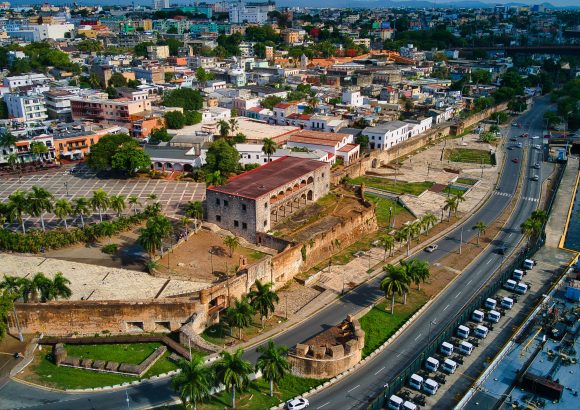
    A significant fire erupted at the renowned Don Néstor Parrillada restaurant in Santo Domingo’s historic Colonial City district on Sunday evening, triggering emergency responses and raising questions about safety protocols in one of the Dominican Republic’s prime tourist destinations.

    The blaze originated approximately at 6:30 p.m. within the establishment’s grill section, according to preliminary reports. Quick-thinking employees from adjacent businesses immediately deployed fire extinguishers in a bid to contain the flames before professional emergency crews reached the scene at Plaza España. The coordinated efforts between these first responders and subsequently arrived firefighters successfully prevented the conflagration from extending to neighboring properties.

    Through the activation of established safety protocols and efficient evacuation procedures, all restaurant staff and patrons were safely escorted from the premises without reported injuries. While the precise trigger of the incident remains under official investigation, the event has prompted immediate damage assessment by restaurant management and broader discussions regarding fire safety standards in high-density historic zones.

    The Colonial City, recognized as a UNESCO World Heritage site and major tourism attraction, faces ongoing challenges in balancing historic preservation with modern safety requirements. This incident marks the latest in a series of safety evaluations concerning commercial establishments operating within culturally significant architectures that often present unique fire prevention complications.

  • Dominican Republic advances climate monitoring deal with Italian Space Agency

    Dominican Republic advances climate monitoring deal with Italian Space Agency

    Santo Domingo has taken a significant step toward technological advancement in climate security through a new partnership with Italy’s space sector. The National Council for Climate Change and Carbon Market (CNCCMC) has announced substantial progress in finalizing a cooperative agreement with the Italian Space Agency, marking a pivotal development in geospatial monitoring capabilities for the Caribbean nation.

    This groundbreaking initiative, spearheaded by CNCCMC Vice President Max Puig, focuses on leveraging sophisticated satellite technology to transform disaster risk management. The collaboration will provide Dominican authorities with enhanced access to both real-time and historical satellite data, enabling more precise forecasting and response mechanisms for extreme weather phenomena including hurricanes, floods, and various hydrometeorological hazards.

    The partnership emerged from high-level discussions involving Marco Lisi, a representative connected to Italy’s Foreign Ministry and the European Space Agency’s Galileo navigation program, alongside academic experts from Pedro Henríquez Ureña University. This multilateral engagement underscores the international commitment to addressing climate vulnerabilities in the region.

    Central to the cooperation are several strategic components: the enhancement of early warning systems, the development of a comprehensive Climate Risk Atlas, and the potential establishment of a national satellite data processing center dedicated to climate analysis. This infrastructure will serve as the foundation for improved disaster preparedness and climate adaptation strategies.

    Officials emphasize that this agreement represents a transformative approach to climate resilience, integrating cutting-edge technology with international knowledge sharing. The initiative aligns with the Dominican Republic’s broader strategy to modernize its climate change adaptation framework through technological innovation and global partnerships, ultimately creating a more secure future for its citizens in the face of escalating climate challenges.

  • Caribbean Cinemas closes Malecón branch after violent incident

    Caribbean Cinemas closes Malecón branch after violent incident

    SANTO DOMINGO – A tragic law enforcement incident resulted in the death of National Police Officer Dary Daniel Andújar Pérez, 22, who succumbed to injuries sustained during an intervention at Caribbean Cinemas’ Cinema Centro Malecón on George Washington Avenue. The fatal confrontation occurred Sunday afternoon while the theater facility was closed to the public.

    Preliminary investigative reports indicate Officer Andújar Pérez responded to an active threat situation involving an armed individual who was allegedly threatening cinema employees. During the intervention, private security guard Santo Pimentel Lebrón was also killed in the exchange. Authorities currently believe Pimentel Lebrón may have inflicted the fatal injury that ultimately caused the officer’s death despite emergency surgical intervention at the National Police General Teaching Hospital (Hosgedopol).

    The incident connects to an earlier attempted homicide report at the same location involving a security guard from Eulen company and a female employee. Caribbean Cinemas management confirmed the incident occurred during non-operational hours and acknowledged that police intervention potentially prevented further casualties.

    National Police Director Andrés Modesto Cruz Cruz publicly honored Officer Andújar Pérez’s bravery and dedication to duty while extending official condolences to the bereaved family. The case remains under active investigation by judicial authorities with forensic analysis pending from INACIF. The cinema chain has implemented emergency protocols, cooperated fully with investigators, and temporarily shuttered the Malecón location pending completion of official proceedings.

  • Dayron is still waiting for high-cost medication; Family calls for protest for approval

    Dayron is still waiting for high-cost medication; Family calls for protest for approval

    In Santo Domingo, a desperate plea for medical justice unfolds as one-year-old Dayron Almonte Socias battles Spinal Muscular Atrophy (SMA), a severe genetic disorder causing progressive muscle deterioration. His parents, Inmanol Almonte and Genesis Socias, face an agonizing reality: despite constitutional guarantees to healthcare, the Ministry of Public Health and the High Cost Drugs Program have delayed approval of Evrysdi—the critical medication sustaining their son’s life—for over a year.

    The drug, priced at approximately 620,000 Dominican pesos per bottle (required every two months), remains financially unattainable for the family. With existing supplies dwindling, Dayron’s survival hinges on institutional intervention. In response, his parents will lead a peaceful demonstration on March 25 at 10:00 a.m. outside the National Palace, urging authorities to honor legal obligations under the Dominican Constitution and General Health Law 42-01.

    Article 61 of the Constitution explicitly mandates the state to ensure access to essential medicines and comprehensive healthcare for all citizens. The protest extends beyond Dayron’s case, symbolizing a broader struggle for countless individuals awaiting approval of vital treatments. Community solidarity is urged to amplify calls for systemic accountability and the protection of fundamental health rights.

  • Ashoresoca warns of risks to tourism due to conflicts in Cabarete; supports improved beach access

    Ashoresoca warns of risks to tourism due to conflicts in Cabarete; supports improved beach access

    The Hotel and Restaurant Association of Sosua and Cabarete (Ashoresoca) has issued a stark warning that escalating tensions between government authorities could severely damage the tourism prospects of Cabarete, a vital coastal destination in Puerto Plata province. This alert follows a highly visible verbal confrontation between personnel from the Dominican Navy and district director Freddy Cruz regarding beach access protocols during ongoing infrastructure improvements.

    Antonio Cárdenas, President of Ashoresoca, emphasized that such public disputes create detrimental perceptions among both current visitors and potential investors. This development arrives at a particularly sensitive juncture as the region intensifies efforts to enhance its tourism infrastructure and market competitiveness.

    While the association explicitly supports the coastal intervention project—recognizing its critical importance for enhancing organizational efficiency, visitor safety, and overall market positioning—it has urgently called for immediate diplomatic resolution to inter-agency conflicts. Industry leaders stress that any delays in completing these vital developments could generate substantial negative economic repercussions for the local tourism-dependent economy.

    The association advocates for structured dialogue between all stakeholders to ensure project continuity, maintaining that coordinated execution of improvement works is essential for safeguarding Cabarete’s reputation as a premier Caribbean destination.

  • Dominican Republic will host international meeting on sea turtle conservation

    Dominican Republic will host international meeting on sea turtle conservation

    Santo Domingo will transform into the epicenter of marine conservation efforts as the Dominican Republic prepares to host the prestigious Annual Meeting of the Wider Caribbean Sea Turtle Conservation Network (Widecast) from March 26-29, 2026. This pivotal gathering will unite scientific experts and conservationists from across the Caribbean basin to address critical challenges facing endangered sea turtle populations.

    The Ministry of Environment’s Vice Ministry of Coastal and Marine Resources confirmed the four-day symposium will facilitate unprecedented regional collaboration. Widecast represents a formidable coalition of conservation professionals spanning more than 40 nations and territories, collectively working to reverse population declines through scientifically-grounded management strategies.

    Central to the event’s mission is advancing technical exchange and scientific cooperation throughout the Wider Caribbean region. The network’s coordinated approach emphasizes capacity building and knowledge sharing to enhance conservation outcomes for multiple threatened sea turtle species.

    A dedicated session on March 27 will spotlight the Dominican Republic’s conservation initiatives, featuring comprehensive presentations from national institutions. These will showcase monitoring methodologies, community engagement programs, and educational campaigns implemented throughout the country’s coastal regions. Discussion will focus on identifying both persistent challenges and emerging opportunities in species protection.

    The urgency of these efforts is underscored by recent conservation data. During 2025, environmental authorities monitored 237 leatherback and hawksbill sea turtle nests across Dominican beaches. Conservationists implemented strategic interventions including the careful relocation of 71 vulnerable nests for protected incubation, while 166 nests remained in their natural habitats. These efforts culminated in the successful emergence of 635 hatchlings, demonstrating tangible progress in regional preservation initiatives.

  • Fundación Movido brings together traffic leaders to transform the road culture of motorcyclists in the DR

    Fundación Movido brings together traffic leaders to transform the road culture of motorcyclists in the DR

    The Dominican Republic has initiated a comprehensive national effort to combat its escalating road safety crisis through the First Road Safety Congress for Motorcyclists, titled “Safe Course.” Organized by the Dominican Road Mobility Foundation (Movido), the landmark event convened at the High Technology building of the Autonomous University of Santo Domingo’s Faculty of Engineering and Architecture, bringing together the nation’s foremost transportation authorities and safety experts.

    The congress centered on the critical premise that “investing in road safety is not an expense, but an investment in human lives, productivity and social welfare.” This foundational concept guided discussions among key participants including Engineer Omar Segura, Dean of UASD’s Faculty of Engineering and Architecture; Joel Gneco, Director of Transit at the National Institute of Transit and Land Transport (Intrant); and Franklin Glass, Executive President of the Dominican Chamber of Insurers and Reinsurers (Cadoar).

    Engineer Segura delivered a technical analysis highlighting how street design directly impacts accident rates, noting that “the motorcycle is highly sensitive to the environment of life.” He explained that common road conditions like potholes or inadequate drainage significantly reduce grip, creating potentially fatal hazards for motorcyclists. Segura proposed five strategic solutions: implementing inclusive road design standards, ensuring continuous pavement maintenance, adapting protective metal railings specifically for motorcycle safety, applying effective technological controls, and strengthening specialized education programs.

    Complementing the engineering perspective, psychologist Ofelia Mera addressed the human factors in road safety, emphasizing that on-the-road behavior reflects drivers’ personality traits and cognitive abilities. She defined risk perception as a “cognitive-emotional process through which traffic users interpret, assess the probability of suffering the accident, and the magnitude and consequences.”

    Franklin Glass presented startling comparative data, revealing that while the COVID-19 pandemic prompted nationwide lockdowns after causing 4,200 deaths over eighteen months, the country records approximately 3,400 annual traffic fatalities without comparable economic disruption. Glass highlighted that only 38% of motorcyclists carry insurance and proposed developing accessible, tailored policies covering health, life, accident, and theft protection.

    The congress concluded with a practical emergency response drill conducted by Civil Defense personnel, while recognizing contributions from transportation advocates Maribel Bellapart, Miguel Franjul, and Yindhira Taveras.