标签: Dominican Republic

多米尼加共和国

  • EGEHID begins bat relocation ahead of dam reactivation

    EGEHID begins bat relocation ahead of dam reactivation

    LA VEGA, Dominican Republic – In an unprecedented environmental operation, the Dominican Hydroelectric Generation Company has initiated a large-scale effort to relocate massive bat colonies from abandoned tunnels within the Guaigüí dam project site. These bats have inhabited the dormant infrastructure for more than twenty years, creating one of the region’s most significant bat habitats.

    The relocation strategy employs non-invasive techniques designed to encourage natural migration patterns without causing harm to the protected species. Authorities have implemented a phased approach including weeks of behavioral observation, strategic sealing of tunnel entrances, and installation of specialized lighting systems to gently discourage the bats from returning to their former habitat.

    Project coordinators report that the tunnels contain an estimated one million bats representing multiple species, creating substantial logistical challenges. Specialized environmental teams are working under strict safety and ecological protocols to clean and prepare the area for dam reactivation while ensuring minimal disruption to the local ecosystem.

    The reactivation project includes comprehensive infrastructure updates including road rehabilitation, tunnel maintenance, and updated technical studies. Despite initial dramatic sightings of massive bat swarms exiting the tunnels, officials express confidence that the highly adaptable species will successfully transition to nearby forested areas where they can continue their vital ecological roles in seed dispersal and insect population control.

    This operation represents a significant case study in balancing infrastructure development with environmental conservation priorities, demonstrating how industrial projects can incorporate sophisticated wildlife protection measures.

  • Dominican Republic joins global effort to protect high seas

    Dominican Republic joins global effort to protect high seas

    In a significant move for international marine conservation, the Dominican Republic has formally ratified the groundbreaking Agreement on the Conservation and Sustainable Use of Marine Biodiversity in Areas Beyond National Jurisdiction (BBNJ). Ambassador Wellington Bencosme, the nation’s Permanent Representative to the United Nations, executed the official deposition of the ratification instrument at the UN headquarters, accompanied by senior officials from the Ministry of Foreign Affairs.

    This ratification positions the Caribbean nation as the 87th country to endorse this pivotal international framework. The Dominican government articulated that this action reinforces its dedication to multilateral cooperation, the preservation of oceanic environments, and the adherence to international legal standards. As an island state whose economy and food security are intrinsically linked to marine resources, the country emphasized the critical importance of unified global efforts to safeguard marine ecosystems for sustainable development.

    The administration further detailed that the BBNJ Treaty will enhance global ocean governance through several key mechanisms: advancing marine scientific research, facilitating the establishment of marine protected areas in international waters, and promoting the transfer of marine technology and capacity-building initiatives. These provisions are deemed particularly crucial for supporting developing nations and Small Island Developing States (SIDS).

    Widely recognized as the first legally binding international instrument dedicated to protecting biodiversity in the high seas—which constitute approximately two-thirds of the world’s oceans—the BBNJ Agreement introduces comprehensive measures. These include mandatory environmental impact assessments for activities with potential effects on the marine environment and frameworks for the fair and equitable sharing of benefits arising from marine genetic resources. The overarching goal is to combat the escalating crises of ocean degradation and biodiversity loss.

    By completing this ratification, the Dominican Republic now stands among the vanguard of nations championing the treaty’s implementation. The country is set to actively participate in the preparatory proceedings for the inaugural Conference of the Parties (COP), where the operational details and future trajectory of the agreement will be established.

  • ONE, EU and UNFPA enhance migration data quality

    ONE, EU and UNFPA enhance migration data quality

    SANTO DOMINGO – A groundbreaking initiative to revolutionize migration statistics in the Dominican Republic has been officially unveiled. The National Statistics Office (ONE), in a strategic partnership with the United Nations Population Fund (UNFPA) and backed by financial support from the European Union, has publicly presented the outcomes of its transformative project, ‘Figures that Include’.

    This comprehensive program was specifically engineered to fortify the nation’s capacity to generate precise and reliable migration statistics by harnessing administrative records from various public institutions. The core mission involved a significant enhancement in the availability, quality, and practical application of existing data, converting raw information into standardized, comparable official statistics.

    Key project milestones included a rigorous evaluation of the quality of current administrative records, extensive documentation of statistical methodologies—with a particular emphasis on processes at the General Directorate of Migration—and the critical harmonization of all migration-related data sets to guarantee nationwide consistency and dependability.

    Furthermore, the initiative has catalyzed the development of more sophisticated and integrated information systems. These advanced systems are poised to deliver superior measurement of migration flows and provide deeper insights into the demographics and conditions of migrant populations. This robust data infrastructure is expected to supply indispensable evidence for crafting informed and effective public policies.

    ONE Director Mildred Martínez hailed the project as a monumental leap forward in the nation’s approach to data production and utilization. The international collaborators also underscored the initiative’s profound significance. Mario Serrano of the partnering agencies highlighted that enhanced data directly translates to improved planning and policy efficacy. European Union Ambassador Raúl Fuentes Milani emphasized the project’s pivotal role in advancing evidence-based governance and tackling social vulnerabilities.

    The ‘Figures that Include’ project is meticulously aligned with both national and international frameworks, including the National Development Strategy 2030 and the global Sustainable Development Goals (SDGs). Its execution was a coordinated effort involving major national bodies such as the Central Electoral Board, the Ministry of Interior and Police, the Ministry of Education, and the Attorney General’s Office.

  • Domínguez Brito calls for less bureaucracy in remote work

    Domínguez Brito calls for less bureaucracy in remote work

    SANTO DOMINGO – Presidential candidate Francisco Domínguez Brito of the Dominican Liberation Party has identified teleworking as a pivotal instrument for modernizing the nation’s economy, while simultaneously cautioning that excessive bureaucratic hurdles are stifling its potential expansion. The remarks came in response to a recent remote work initiative put forward by President Luis Abinader.

    Domínguez Brito, a former government minister, contended that the current regulatory environment presents significant implementation challenges for businesses and employees alike, thereby diminishing the efficacy of telework policies. He specifically highlighted stringent mandates for formal written contracts and convoluted legal stipulations as primary barriers to widespread adoption.

    Instead of rigid frameworks, the political figure championed the implementation of more streamlined and adaptable agreements. These would facilitate necessary adjustments in work schedules, hours, and overall conditions. Domínguez Brito further urged a comprehensive reassessment of existing legislation, proposing the establishment of a principles-based legal structure capable of seamlessly accommodating rapid technological evolution.

    “The path to making teleworking genuinely effective lies in reducing bureaucracy and enhancing flexibility,” he emphatically stated, underscoring his central argument for regulatory modernization.

  • France supports Dominican Republic in tackling sargassum crisis

    France supports Dominican Republic in tackling sargassum crisis

    PARIS – In a significant bilateral meeting, French President Emmanuel Macron and Dominican leader Luis Abinader forged a cooperative front against the escalating sargassum seaweed crisis plaguing Caribbean coastlines. President Macron explicitly recognized the Dominican Republic’s pivotal strategic importance in developing regional solutions for the environmental challenge, which severely impacts marine ecosystems and tourism-dependent economies.

    The high-level discussions, held during President Abinader’s two-day official visit to France, served to reinforce the strong and trusting diplomatic relationship between the two nations. Macron reiterated France’s commitment to deepening this bilateral partnership, emphasizing shared interests in environmental sustainability and economic stability.

    Parallel to the presidential dialogue, Abinader addressed the inaugural session of an anti-corruption conference organized by the Organisation for Economic Co-operation and Development (OECD). In his keynote speech, he positioned governmental integrity as a foundational element of his administration’s philosophy and a critical catalyst for both economic growth and democratic consolidation in the Dominican Republic.

    Concurrently, the Dominican government has proactively implemented a specialized regulatory framework aimed at mitigating the sargassum invasion. This comprehensive initiative outlines standardized protocols for the efficient collection, ecological disposal, and potential commercial utilization of the seaweed. The move represents a direct response to the alarming proliferation of sargassum, which has caused substantial damage to pristine beaches and threatened the vitality of the nation’s crucial tourism industry.

  • Migration strengthens controls on foreign labor permits

    Migration strengthens controls on foreign labor permits

    The Dominican Republic’s General Directorate of Migration (DGM) has enacted sweeping regulatory changes that significantly tighten the requirements for temporary work permit renewals for foreign employees. This comprehensive overhaul introduces mandatory formal employment contracts processed through the Ministry of Labor, marking a substantial shift in the country’s immigration compliance framework.

    Under the newly implemented resolution, which emerged from an extensive internal review process, employers now bear increased responsibility for their foreign workforce. The updated regulations explicitly invalidate sworn statements as acceptable substitutes for formal contracts, aligning enforcement procedures with the existing Migration Law 85-04 and its corresponding regulatory provisions.

    The revised framework establishes clear limitations on permitted employment activities, specifically prohibiting foreign workers from engaging in informal sectors including motorcycle taxi operations, street vending, and delivery services. These restrictions ensure temporary permit holders exclusively perform duties outlined in their officially sanctioned employment contracts.

    Renewal applicants must navigate a detailed documentation process through the government’s official digital platform, submitting multiple verifiable components: valid passport credentials, temporary worker identification, medical certification, proof of Social Security (TSS) registration, and a renewed employment contract confirming ongoing employment. Employers assume contractual obligations to maintain employment throughout the authorized period and coordinate the worker’s repatriation following contract termination.

    The DGM emphasizes that these measures aim to enhance regulatory compliance, increase procedural transparency, and establish greater legal certainty for both employers and foreign workers while addressing previously identified irregularities in application processing.

  • Truck overturns on Duarte Highway, causing heavy traffic

    Truck overturns on Duarte Highway, causing heavy traffic

    A significant traffic disruption paralyzed a crucial section of Santo Domingo’s Duarte Highway on Wednesday afternoon following a serious vehicular incident. A large semi-trailer truck transporting metal materials overturned at kilometer 9 of this vital thoroughfare, a primary artery for entry to and exit from the Dominican capital.

    The aftermath of the accident resulted in extensive vehicular congestion, with long queues of stranded motorists experiencing considerable delays during the busy afternoon commute. While several adjacent access roads remained relatively clear, traffic flow in the immediate vicinity of the incident slowed to a crawl, creating a ripple effect of disruptions across the local road network.

    Emergency response teams and transit authorities were promptly deployed to the scene. Their coordinated efforts focused on the complex task of righting the overturned heavy-goods vehicle, clearing the scattered metal cargo, and implementing traffic management protocols to alleviate the gridlock. The primary objective was to reinstate normal traffic conditions with utmost expediency.

    Official advisories were issued urging commuters to seek alternative routes to circumvent the affected zone. Authorities further appealed for public patience and calm for those already caught in the backlog. An emphasis was placed on defensive driving practices and heightened vigilance to prevent secondary accidents while recovery operations were underway.

  • Danilo Medina and U.S. Ambassador hold meeting on Dominican political situation

    Danilo Medina and U.S. Ambassador hold meeting on Dominican political situation

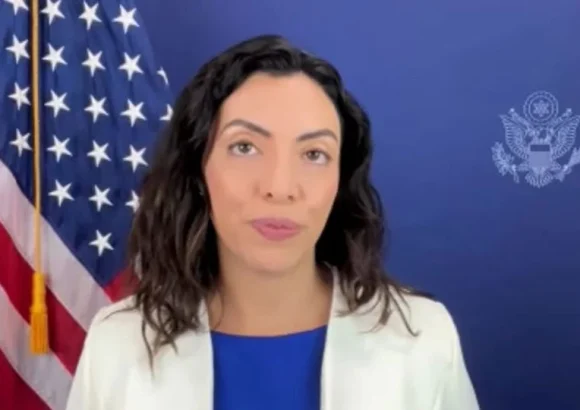
    In a significant diplomatic engagement, former Dominican Republic President Danilo Medina convened with United States Ambassador Leah Francis Campos to address the nation’s current political landscape and reinforce democratic governance frameworks. The high-level discussion unfolded at the Santo Domingo headquarters of the Dominican Liberation Party (PLD), marking a pivotal moment in bilateral political relations.

    The extended two-hour dialogue featured comprehensive exchanges regarding institutional strengthening and democratic values, with Ambassador Campos being accompanied by senior embassy officials while Medina was joined by PLD Secretary General Johnny Pujols. This meeting represents the continuation of strategic efforts to enhance cooperation between Dominican political leadership and United States diplomatic channels.

    In a symbolic conclusion to the proceedings, the PLD delegation presented Ambassador Campos with a curated collection of literary works by Professor Juan Bosch, the party’s founding intellectual and former Dominican president. This gesture underscored the cultural and historical dimensions of the bilateral relationship while emphasizing shared democratic principles.

  • Dominican Republic reaffirms commitment to decent work at ILO

    Dominican Republic reaffirms commitment to decent work at ILO

    GENEVA – During the pivotal 356th session of the International Labour Organization (ILO), Dominican Minister of Labor Eddy Olivares Ortega delivered a robust affirmation of the nation’s dedication to advancing decent work and implementing inclusive labor policies on the global stage. Addressing the assembly, Minister Olivares characterized the ILO’s newly unveiled 2026–2029 Development Cooperation Strategy as both a timely and pragmatic framework, perfectly attuned to a world grappling with financial limitations and complex societal issues. He articulated that the strategy’s focus on fostering innovation, cultivating strategic alliances, and demanding measurable outcomes provides a critical pathway to confront pervasive regional challenges, including widespread informal employment, the necessity for sustainable job creation, gaps in social protection systems, and stagnating productivity. Beyond outlining the strategy’s merits, the Minister championed the amplified role of South-South and triangular cooperation as vital mechanisms for the exchange of proven best practices among developing nations. Concurrently, he called for the fortification of partnerships with international financial entities and the private sector to mobilize essential resources. Olivares Ortega further highlighted the Dominican Republic’s established role as a regional leader in pioneering social dialogue and executing meaningful labor reforms across Central America. Concluding his address, he reaffirmed the nation’s steadfast endorsement of the ILO’s tripartite model—uniting governments, employers, and workers—as the indispensable cornerstone for constructing a more equitable and inclusive future of work globally.

  • Abinader meets French business leaders to boost investment in the Dominican Republic

    Abinader meets French business leaders to boost investment in the Dominican Republic

    PARIS – In a strategic move to bolster economic partnerships, Dominican Republic President Luis Abinader convened with top executives from France’s private sector during an investment forum hosted by MEDEF International. The high-level gathering, forming a pivotal segment of his official state visit, served as a platform to showcase the Caribbean nation’s robust economic credentials to potential investors.

    Addressing assembled business leaders, President Abinader articulated a compelling case for the Dominican Republic, emphasizing its remarkable economic stability, reinforced legal safeguards for foreign capital, and proactively open investment policies. He presented the nation as the premier hub for commercial ventures in the Caribbean region. The forum garnered strong endorsements from established French corporations already operating within the country, who attested to its consistent growth trajectory and business-friendly environment. Their testimonials were complemented by expressions of serious interest from new market entrants eager to engage in forthcoming projects and public tenders.

    This business roundtable immediately followed President Abinader’s diplomatic discussions with French President Emmanuel Macron, signaling a concerted effort to deepen bilateral ties beyond politics into tangible economic cooperation. Revealing a significant milestone, Abinader announced that Foreign Direct Investment (FDI) had exceeded US$5 billion in 2025, setting an unprecedented national record. He pinpointed several high-priority sectors actively seeking international investment and expertise, including metropolitan transit systems, renewable energy generation, major infrastructure upgrades, logistics hubs, digital transformation initiatives, semiconductor manufacturing, and defense technology.