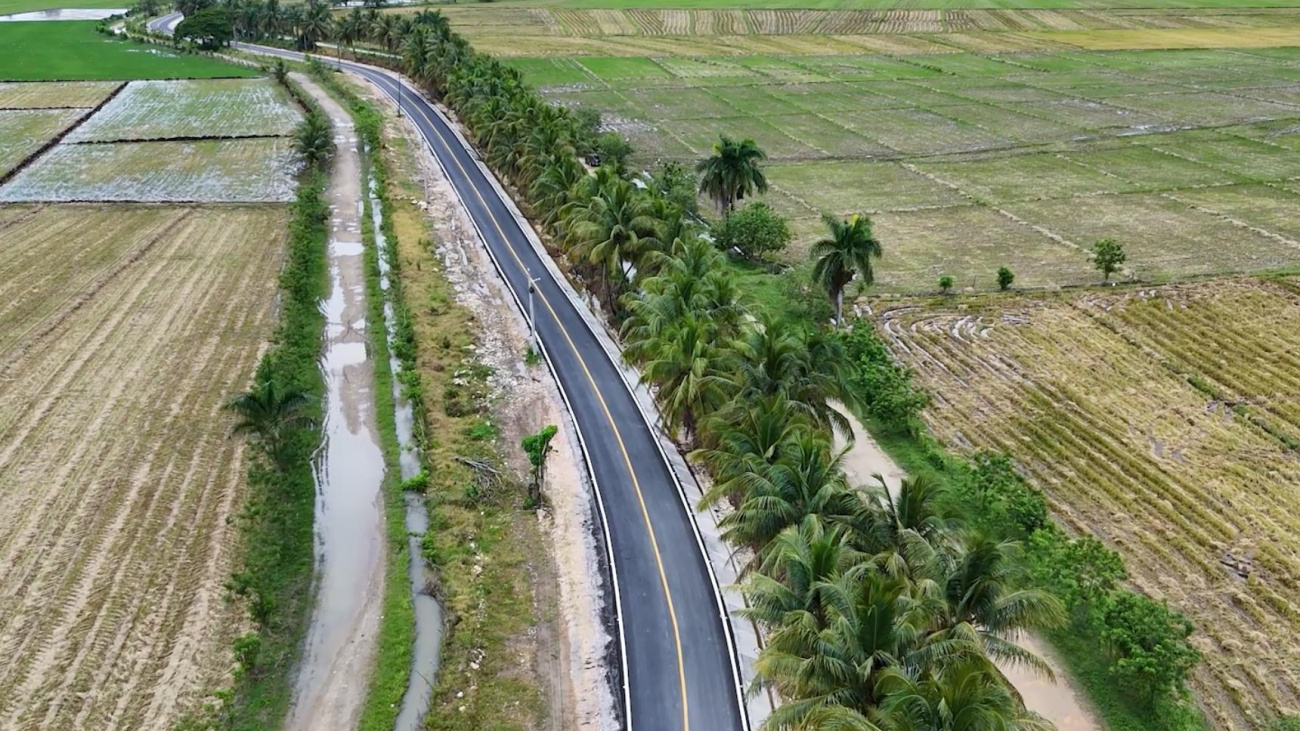
Dominican Republic President Luis Abinader has formally opened the transformative Bajo Yuna Road Circuit, a 49-plus kilometer infrastructure project that bridges Duarte Province and María Trinidad Sánchez Province in a long-awaited upgrade for the underserved Lower Yuna region.
Delivered by the nation’s Ministry of Public Works and Communications, the project comprises 42.8 kilometers of primary highway and an additional 6.2 kilometers of feeder roads connecting local settlements. It links a string of previously disconnected communities—including La Reforma, Las Coles, La Jagua, El Jobo, and La Garza—to critical national transport routes, namely the Juan Pablo Segundo Highway and the Nagua–Samaná road. For more than 20,000 people living in these areas, the new connection cuts travel times and removes long-standing barriers to accessing essential public services, from hospital care to primary and secondary schooling, as well as regional commercial markets.
Beyond connecting people, the roadway is designed to revolutionize the movement of the region’s key agricultural exports, most notably rice and cocoa. Speaking at the inauguration ceremony, Public Works Minister Eduardo Estrella emphasized that streamlined logistics will directly strengthen the sector’s competitiveness, with rice producers set to see the most significant gains from reduced transit costs and faster delivery times.
Project planners also prioritized climate resilience in response to the Lower Yuna region’s history of frequent flooding. Custom drainage systems were integrated into the circuit’s design to ensure the route remains passable through heavy rain and flood events, delivering reliable connectivity year-round rather than just during dry seasons.
Local community leaders have welcomed the infrastructure as a game-changer for the region. They note that the elimination of transport bottlenecks will lift local agricultural productivity, open new economic opportunities for smallholder producers, and lay the foundation for broad-based, sustainable development across the entire Bajo Yuna catchment area.