标签: Dominican Republic

多米尼加共和国

  • Ministry of Defense delivers equipment to the Army to strengthen operational capabilities

    Ministry of Defense delivers equipment to the Army to strengthen operational capabilities

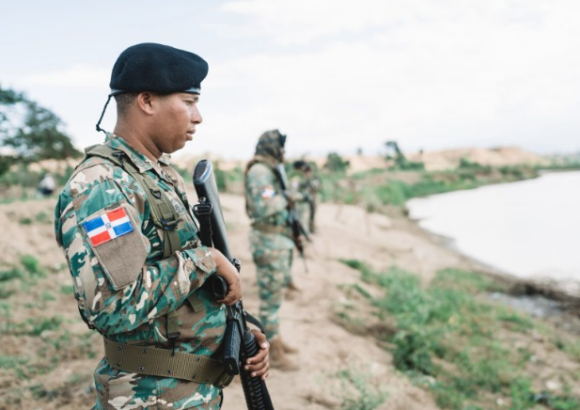
    In a formal ceremony held at the Dominican Republic’s “August 16th” Military Camp, the nation’s Ministry of Defense has formally transferred a large shipment of upgraded military gear to the Dominican Republic Army, marking a key milestone in the government’s ongoing campaign to modernize and strengthen the country’s national defense institutions.

    The handover ceremony was led by Defense Minister Lieutenant General Carlos Antonio Fernández Onofre of the Dominican Republic Army, with the shipment officially accepted by Army Commanding General Major General Jorge Iván Camino Pérez. Senior defense officials including Deputy Defense Ministers, the Armed Forces Inspector General, and members of the Armed Forces General Staff and high military command were in attendance, signaling broad institutional backing for the armed forces’ modernization agenda.

    Per an official press statement from the defense ministry, the equipment delivery is executed in full alignment with directives issued by Dominican Republic President Luis Rodolfo Abinader Corona, who serves as the supreme authority over the nation’s Armed Forces and National Police. The shipment forms a core component of the administration’s broader institutional strengthening and modernization drive for the country’s military.

    The new equipment will be distributed to seven key frontline units critical to national defense and internal security: the 1st Battalion “Juan Pablo Duarte”, 2nd Battalion “Francisco del Rosario Sánchez”, 3rd Battalion “Matías Ramón Mella” under the First Infantry Brigade, as well as the Army’s elite Commando Battalion.

    The full shipment includes a range of advanced firearms: IWI ARAD 5.56-caliber assault rifles, Negev 7.62-caliber machine guns designed for integration with patrol vehicles and transport platforms, precision rifles from Barrett and Daniel Defense, alongside more than 11,000 custom work uniforms manufactured domestically by the Dominican Military Industry, plus a range of additional operational supplies.

    This deployment of new equipment is rooted in the administration’s long-term strategic vision to build a more modern, efficient, and rapidly responsive Dominican Armed Forces. The upgrade is designed to boost the operational readiness of frontline troops and optimize their performance across a wide range of operational scenarios.

    Military officials note that the integration of these new weapons and systems represents a substantial leap forward in military technology for the Dominican Army, bringing improvements to operational reliability and adaptability that will directly enhance the effectiveness of military units as they carry out their core national defense and security missions.

  • Mario Díaz proposes halting motorcycle imports

    Mario Díaz proposes halting motorcycle imports

    In Santo Domingo, Dominican Republic, prominent union leader and legal professional Mario Díaz has doubled down on his demands for urgent nationwide action to address growing public safety threats tied to the country’s vehicle fleet. Speaking on long-unenforced provisions of national traffic legislation, Díaz has stressed that full, immediate implementation of mandatory technical vehicle inspections for all registered vehicles on Dominican roads is non-negotiable as a foundational first step.

    Beyond mandatory inspections, Díaz is pushing for two additional sweeping policy changes to tackle growing risks tied to two-wheeled vehicles: an indefinite ban on all new motorcycle imports into the country, and far stricter, more consistent oversight of the existing national motorcycle fleet. These enhanced controls, he argues, would ensure that every motorcycle on the road meets proper safety standards, holds valid registration, and remains subject to consistent regulatory oversight — gaps that he says have created widespread public risk.

    Díaz has explicitly linked the unregulated proliferation and indiscriminate use of motorcycles across the Dominican Republic to two pressing national crises: a steady rise in criminal activity and a persistently high rate of fatal and injurious traffic accidents. He emphasized that these unaddressed issues have caused irreversible harm to innocent lives and eroded public confidence in citizen safety across the country, calling the ongoing situation an unacceptable public scourge.

    To move toward meaningful reform, Díaz confirmed that the sector he represents stands ready to partner fully with national law enforcement agencies and the Dominican government to design and roll out effective, evidence-based solutions. Even as he offers collaboration, however, he has made clear that no comprehensive fix can succeed without starting with the core priorities he has outlined: full implementation of mandatory technical vehicle inspections and uniform, strict oversight of the entire national motorcycle fleet.

  • Dominican Republic, Costa Rica and Ecuador condemn Iran’s seizure of MSC Francesca

    Dominican Republic, Costa Rica and Ecuador condemn Iran’s seizure of MSC Francesca

    In a rare coordinated display of diplomatic pushback, three Latin American nations — the Dominican Republic, Costa Rica, and Ecuador — have publicly condemned Iran’s seizure of the Panama-flagged commercial vessel MSC Francesca in the strategically critical Strait of Hormuz, issuing a unified call for the immediate release of both the ship and its crew.

    The joint statement released by the three governments outlines key details of the incident: the container ship, which is owned by an Italian shipping firm and registered under Panama’s flag, was intercepted by Iranian authorities while making a routine transit through the busy international waterway. Beyond demanding the vessel’s release, the three nations are calling for an immediate halt to all actions that put unimpeded, free navigation through international waters at risk.

    Senior officials from the three countries argue that the seizure does not merely run counter to established international norms, but constitutes a clear violation of binding international law. They frame the action as a direct challenge to the long-recognized principle of freedom of navigation, a right explicitly enshrined and protected under the United Nations Convention on the Law of the Sea. The statement also notes that Iran’s actions infringe on the sovereign rights of Panama, the flag state of the seized vessel, and amplify long-simmering security concerns across one of the globe’s most vital trade and energy chokepoints. Roughly 20% of the world’s daily oil supplies pass through the Strait of Hormuz, making consistent, unthreatened access critical to global energy markets and economic stability.

    The joint communique further warns against the escalating trend of coercive actions targeting civilian shipping engaged in legitimate international transit, emphasizing that such moves are fundamentally incompatible with the global legal obligations all signatory nations are bound to uphold. In closing, the three governments called on the broader international community to stand against any behavior that erodes maritime security, reaffirmed their unwavering solidarity with Panama, and reiterated their full commitment to upholding the framework of international maritime law.

  • Abinader oversees progress on República de Colombia Avenue project

    Abinader oversees progress on República de Colombia Avenue project

    SANTO DOMINGO – Dominican Republic President Luis Abinader recently conducted an on-site inspection of the ongoing expansion and redevelopment work on Avenida República de Colombia, a flagship government infrastructure initiative designed to tackle chronic traffic congestion and boost urban mobility across the National District.

    Valued at nearly 12 billion Dominican pesos (approximately $213 million USD), the entire project is funded through revenue generated from the Aerodrom concession contract, a deal that grants the private airport operator management rights over the country’s primary air facilities. The total budget also covers all land expropriation costs required to clear space for the expanded roadway and associated infrastructure.

    Joining the president during the site visit was Eduardo Estrella, the nation’s Minister of Public Works, alongside lead project engineers and senior ministry officials. During the walkthrough, government representatives outlined the core goals of the initiative: the project targets one of the capital’s most gridlocked traffic corridors, where daily commutes often stretch for hours due to outdated road design and rising vehicle ownership. By upgrading the roadway and creating new connecting infrastructure, officials aim to cut travel times, reduce vehicular emissions from idling traffic, and ultimately improve the daily quality of life for thousands of area residents.

    As of the inspection, the project has already hit key early milestones: several new U-turn lanes along the corridor leading toward La Monumental have been completed and opened to the public, providing early relief for local drivers. The full scope of work includes the construction of a new bridge spanning a local ravine, which will connect directly to a newly built tunnel system. When complete, the project will create a seamless, uninterrupted through-route that eliminates the need for traffic lights and repeated stops along the busy corridor. The upgraded road will establish direct, high-speed connections between three of the capital’s major arterial routes: Avenida Jacobo Majluta, the existing República de Colombia Avenue, and Avenida Monumental.

    Authorities confirmed the project will be delivered in sequential phases to minimize disruption to daily traffic in the area. The first completed section of the new roadway is on track to open to the public by the end of the current calendar year, with full construction completion projected for the third quarter of 2025. During his visit, President Abinader toured multiple active construction zones, reviewed progress against the project timeline, and received detailed technical briefings from the engineering team and public works leadership on outstanding work and upcoming milestones.

  • Dominican Republic promotes UNESCO World Heritage nomination for La Isabela

    Dominican Republic promotes UNESCO World Heritage nomination for La Isabela

    In a step forward for cultural preservation and international collaboration, the Dominican Republic is actively moving closer to its goal of securing UNESCO World Heritage designation for La Isabela, a landmark colonial-era site on the nation’s northern coast. To strengthen the site’s nomination dossier and tap into global specialized expertise, the country has welcomed a delegation of Turkish cultural heritage professionals, led by veteran underwater archaeologist Harun Özdaş, for an in-depth technical assessment of the historic location.

    The Turkish delegation also included senior diplomatic representatives, headed by Ambassador Emriye Bağdagül Ormancı of Turkey’s diplomatic mission to the Dominican Republic, alongside senior cultural heritage officials from the Dominican Republic’s Ministry of Culture. During the visit, participating authorities repeatedly highlighted the critical role that the site’s submerged archaeological remains play in establishing its global cultural significance. Underwater cultural artifacts and structural remnants, they noted, are not just secondary additions to the site’s history—they are a core component that will help prove La Isabela’s ‘outstanding universal value,’ the key requirement for UNESCO World Heritage inscription.

    La Isabela holds a unique place in modern global history: founded in 1493 by Christopher Columbus during his second voyage to the Americas, it was the first permanent European settlement established across the entire Western Hemisphere. Today, the site preserves irreplaceable archaeological evidence from the earliest days of transatlantic colonization, including foundational urban planning traces, intact structural foundations, and a vast collection of period artifacts that offer unparalleled insight into the earliest interactions between European colonizers and Indigenous populations of the Caribbean. For years, La Isabela has held a spot on the Dominican Republic’s tentative UNESCO nomination list, a preliminary step toward formal consideration for the coveted global designation.

    The technical partnership with Turkish archaeologists is part of a broader strategy by the Dominican Ministry of Culture to expand global collaboration in heritage conservation. Beyond advancing the UNESCO bid, the cooperation facilitates cross-border knowledge sharing, builds capacity for specialized underwater heritage preservation, and allows both nations to exchange evidence-based best practices for protecting vulnerable submerged cultural assets. Dominican cultural officials noted that this international collaboration strengthens not only La Isabela’s nomination prospects but also the country’s broader national efforts to preserve and promote its unique historic and cultural legacy to the world.

  • Senate approves first reading of real estate regulation bill in the Dominican Republic

    Senate approves first reading of real estate regulation bill in the Dominican Republic

    In a key step to clean up the Dominican Republic’s property market, the national Senate has given preliminary approval to a sweeping piece of legislation designed to oversee real estate brokerage services and crack down on deceptive advertising. The reform is rooted in growing concerns over unethical practices and rising consumer fraud in the country’s booming real estate sector, with lawmakers aiming to bring clearer accountability and structure to property transactions.

    The bill was put forward by a cross-group trio of sitting senators: Rafael Barón Duluc, Félix Ramón Bautista, and Eduard Alexis Espiritusanto. At its core, the legislation sets mandatory ethical and transparency benchmarks that cover every stage of real estate activity, from initial property promotion and marketing through to the final execution of sales or rental agreements. Unlike loose existing guidelines, the new framework is built to protect all stakeholders in the sector – not just prospective home buyers and tenants, but also licensed agents and registered agencies, while fostering sustainable, orderly growth across the industry.

    To align the new rules with existing national consumer protection legislation, the bill formalizes a clear definition of misleading advertising. Any commercial messaging that misleads consumers about core property details – including structural features, unit availability, listed pricing, purchase agreement terms, or promised move-in deadlines – will be classified as a violation, matching the standards already set out in the country’s existing Law 358-05 on Consumer Protection. The legislation carves out key exceptions to avoid overreach: it does not apply to private property owners selling their personal residences directly, nor to legal professionals carrying out their standard advisory duties during property transfer processes.

    To enforce the new standards, the bill outlines a tiered system of penalties for violators. Sanctions range from temporary operational shutdowns and license suspensions to financial fines that can reach as high as 50 times the country’s current minimum wage. Oversight and enforcement of the new rules, if the bill passes its final reading, will be assigned to the Dominican Republic’s Ministry of Housing, Habitat and Buildings, which will set up a dedicated specialized department to handle agent registration, ongoing regulatory compliance, and regular monitoring of all real estate intermediation activities across the country.

  • Dominican Republic and Guatemala create bilateral forum to strengthen economic relations

    Dominican Republic and Guatemala create bilateral forum to strengthen economic relations

    In a landmark step to boost cross-border economic collaboration, the foreign ministries of the Dominican Republic and Guatemala have formalized an agreement to establish a joint Political and Business Forum, designed to deepen trade ties and unlock new investment opportunities between the two Latin American nations.

    The memorandum of understanding was signed during an official ceremony by Roberto Álvarez, Dominican Minister of Foreign Affairs, and his Guatemalan counterpart Carlos Ramiro Martínez Alvarado. Once operational, the forum will serve as a structured, recurring platform that brings together public sector leaders and private business delegates from both countries. Its core mandates include mapping untapped commercial opportunities, streamlining access to each nation’s consumer and industrial markets, and advancing collaborative investment projects that benefit both economies.

    Beyond facilitating direct business connections, the new bilateral mechanism will also promote the sharing of critical industry data, practical policy experiences, and proven regulatory best practices across three key areas: trade process simplification, national commercial promotion strategies, and the design of competitive investment incentive frameworks.

    Per the terms of the agreement, the forum will hold full plenary meetings once every year, with the host nation rotating between the Dominican Republic and Guatemala. A permanent dedicated working group will also be established to monitor progress on agreed initiatives, coordinate follow-up actions, and ensure consistent implementation of forum outcomes.

    Lead officials from both governments have framed the new forum as a transformative milestone in bilateral relations, noting that it will not only deepen longstanding economic ties but also create more pathways for private sector engagement in shaping cross-border cooperation. Notably, the initiative is structured to maximize the trade and investment benefits already available under the Dominican Republic–Central America Free Trade Agreement (DR-CAFTA), marking the first time the two countries have launched a standalone bilateral framework exclusively focused on expanding trade and investment collaboration.

  • David Collado and Leah Campos tour historic sites in the Colonial City

    David Collado and Leah Campos tour historic sites in the Colonial City

    On Thursday, a joint site visit led by Dominican Republic Tourism Minister David Collado and U.S. Ambassador to the nation Leah Castillo put a much-needed spotlight on the Colonial City, one of the country’s most culturally rich yet underpromoted heritage destinations, as part of a broader push to boost cultural tourism draw. The walking tour kicked off at Parque Duarte, where local producers and artisans had set up immersive displays showcasing the breadth of Dominican-made goods and handcrafted creations. During their stop at the park, both senior officials got a first-hand taste of local culture, sampling popular traditional chilled treats and fresh coconut water, while admiring intricately designed handcrafts fashioned from two of the region’s most iconic natural stones: amber and rare blue larimar.

    After wrapping up their time at Parque Duarte, the official delegation made their way through a curated route of the Colonial City’s most iconic and historically significant landmarks. The 16th-century walled district, which is a designated UNESCO World Heritage Site and the oldest continuously occupied European settlement in the Americas, currently draws approximately 8% of all international tourists that visit the Dominican Republic each year, a figure tourism officials hope to grow through targeted promotion and infrastructure investment. The tour itinerary included stops at famous pedestrian corridors Calle Billini and Calle Isabel la Católica, the historic Convento de los Dominicos, public gathering spaces Plaza Tirso de Molina, Plaza de España and Plaza San Antón, the centuries-old Iglesia Las Mercedes, and the Museo Fortaleza de Santo Domingo, a former military fortress that now houses exhibits tracing the capital’s colonial and post-independence history.

    The joint visit comes as the Dominican Republic works to expand its tourism product beyond the sun-and-beach getaways that have long been the country’s main tourist draw, highlighting cultural and heritage travel as a key growth area that can attract longer-staying, higher-spending visitors while supporting local artisans and small businesses. Collaboration between the Dominican tourism sector and U.S. diplomatic officials also aims to strengthen bilateral ties through people-to-people cultural exchange, and encourage more U.S. travelers, who make up the largest share of the country’s international visitors, to explore the Colonial City’s unique offerings.

  • Dominican Republic reduces secondary school dropout rate to 5.7%

    Dominican Republic reduces secondary school dropout rate to 5.7%

    Santo Domingo, Dominican Republic – The country’s Ministry of Education has announced encouraging progress in secondary education retention, with the national dropout rate falling from 6.3% during the 2020–2021 academic year to 5.7% in the 2024–2025 school cycle. Education authorities attribute this gradual improvement to a suite of coordinated student retention policies and expanded systemic support designed to keep learners enrolled through the full academic year.

    Officials confirm the downward trend in dropouts directly stems from targeted interventions that address the root causes of early school leaving, all aligned with a national education strategic roadmap focused on bolstering continuous enrollment and academic progress. Education Minister Luis Miguel De Camps emphasized that strengthening student retention remains a non-negotiable core pillar of the current administration’s education policy. The ministry has centered its efforts on three key priorities: expanding access to secondary education, lifting overall learning quality, and expanding wrap-around support for learners at every stage of their academic careers.

    Beyond the falling dropout rate, the ministry also highlighted a concurrent improvement in secondary school promotion rates, signaling that more learners are advancing to the next grade without unnecessary delays or interruptions to their education. This overall trend, according to education officials, points to growing internal efficiency within the country’s secondary education system and the creation of more stable, accessible learning pathways for diverse groups of students.

    To sustain these gains and expand retention efforts, the Dominican government has scaled up access to technical-professional education and arts education programs, building clear connections between secondary schooling and future employment opportunities for graduates. Additional targeted initiatives include the “Secondary Advances” program, which centers on improving both quality and equity across all secondary education institutions, and the national “I Choose to Learn” public awareness campaign, which encourages out-of-school young people and adults to re-enroll and complete their secondary studies.

  • U.S. Embassy advises travelers to monitor weather conditions in Dominican Republic

    U.S. Embassy advises travelers to monitor weather conditions in Dominican Republic

    Amid ongoing severe weather that has battered multiple regions of the Dominican Republic, the U.S. Embassy in Santo Domingo has amplified an official storm and flood warning issued by the country’s Emergency Operations Center (COE), bringing heightened attention to hazardous conditions for both local residents and international visitors.

    As sustained heavy downpours and active storm systems continue to pummel the northern Dominican provinces of Puerto Plata and Espaillat, the COE has upgraded those two areas to the highest level of red alert, signaling imminent, life-threatening weather risks. A broader swathe of the country, including the nation’s capital district known as the National District, remains under lower-level yellow and green alerts, with emergency management teams working around the clock to track evolving conditions, assess damage, and pre-position response resources if conditions worsen.

    In its public advisory, shared across the embassy’s official social media channels including Instagram, the U.S. diplomatic mission urged all people in affected zones — from local citizens to U.S. travelers staying in the country — to prioritize safety by relying on updates from official Dominican government emergency outlets, checking frequent weather forecasts, and preparing for potential secondary hazards tied to the persistent precipitation. Those hazards include widespread road closures, traffic disruptions, flash flooding, and potential landslides in low-lying or hilly areas, all of which are common during extended periods of heavy tropical rainfall in the Caribbean nation.

    The warning comes as the Dominican Republic, a top Caribbean tourist destination, regularly faces heightened storm activity during the Atlantic hurricane season, when sustained rainfall can quickly overwhelm local drainage infrastructure and disrupt travel and daily life for communities across the country.