标签: Dominican Republic

多米尼加共和国

  • What causes victims to drop domestic violence complaints in the Dominican Republic?

    What causes victims to drop domestic violence complaints in the Dominican Republic?

    In the Dominican Republic, a groundbreaking new analysis from the Judiciary’s Gender Equality Commission has pulled back the curtain on the systemic and personal barriers that lead hundreds of thousands of gender-based violence survivors to abandon legal proceedings against their abusers each year. Led by Supreme Court Justice Nancy I. Salcedo Fernández, the research reviewed thousands of court rulings issued across a four-year window from 2020 to 2024, covering a wide spectrum of gender-based harm: domestic abuse, physical torture, brutal assault, and modern cyber-enabled violence, among other offenses.

    The study’s most striking finding centers on the deep structural and psychological challenges that force victims to step back from active participation in their own cases. Researchers identified five core drivers that push survivors to withdraw from legal processes: crippling fear of retaliation from abusers, persistent emotional dependence on perpetrators, overwhelming pressure from family members to drop charges, clinical depression stemming from prolonged abuse, and long-term trauma that leaves survivors unable to navigate the complexities of the legal system. When victims withdraw or limit their involvement, courts lose access to critical direct testimony, significantly weakening the state’s ability to prosecute and hold abusers accountable.

    To quantify this gap, the research team analyzed a sample of 20 recent domestic violence rulings, finding that only four victims chose to formally join proceedings as active plaintiffs. The vast majority of survivors participated only as witnesses, or opted out of any active role in the case entirely. The report also confirmed patterns long observed by anti-violence advocates: over 75% of all gender-based violence attacks are carried out by current or former romantic partners, most attacks take place inside the victim’s own home, and abuse is rarely an isolated incident, with most cases involving a repeated pattern of harm over months or years.

    Broader national data included in the report underscores the scale of the gender-based violence crisis in the Dominican Republic. Between 2020 and 2024, national authorities received more than 341,000 formal violence complaints across the country, and 77.5% of those complaints were tied to either gender-based violence or domestic abuse. The study did not limit its scope to physical violence alone; researchers also examined extreme, life-altering attacks involving corrosive substances that leave survivors permanently disfigured, as well as the growing threat of cyber violence, which includes digital harassment, stalking, and the non-consensual distribution of intimate images – a tactic increasingly used by abusers to control and humiliate their victims.

    The findings of the study fill a critical gap in local research on gender-based violence in the Dominican Republic, providing lawmakers and judicial leaders with actionable data to reform legal processes and better support survivors seeking justice.

  • Abinader says freedom requires responsibility and constant commitment

    Abinader says freedom requires responsibility and constant commitment

    MIAMI, Fla. — In a high-profile address to an international audience of political and business leaders Saturday, Dominican Republic President Luis Abinader used his acceptance of the Champion of Freedom Award to deliver a sharp, thoughtful meditation on the fragile nature of liberty in the modern world. Presented with the honor by Florida International University’s Adam Smith Center for Economic Freedom, a nonpartisan think tank launched in 2020 to advance free-market principles and global prosperity, Abinader emphasized that freedom cannot be taken for granted as a permanent inheritance — it demands continuous responsibility and active commitment from every generation.

    The award recognizes Abinader’s tenure-long leadership advancing pro-market policy reforms in the Dominican Republic. In his remarks, he framed the honor as less a personal accolade and more an opportunity to renew public dialogue around what liberty means for 21st-century democratic societies. Warning of a growing risk that democratic communities erode their own freedoms when citizens trade autonomy for short-term security or comfort, Abinader rooted his argument in the core ideas of Adam Smith, the father of modern free-market economics, noting that durable economic freedom cannot exist without foundational commitments to justice, transparent institutional rules, and public trust in governing bodies.

    Abinader outlined that his administration has centered its policy agenda on four core pillars aligned with these principles: strengthening independent governing institutions, embedding transparency across public operations, upholding the rule of law, and expanding accessible economic opportunity for all Dominicans. Drawing on centuries of political and philosophical thought to reinforce his argument, the president quoted the iconic literary figure Don Quixote and referenced works by seminal thinkers Alexis de Tocqueville and Isaiah Berlin to explain that true freedom carries two complementary dimensions: it requires freedom from unnecessary coercion, as well as the material and social opportunity for every person to build a dignified, self-determined future.

    Against a global backdrop of rising political polarization, Abinader called for renewed commitment to cross-ideological dialogue, pluralism, and collaborative consensus-building. “Growth is not just about producing more. It is about allowing each person to imagine and build their own future,” he told the crowd, stressing that meaningful freedom and shared economic prosperity are inherently inseparable goals.

    The invitation-only event drew a roster of high-profile attendees spanning government, global business, and international sports governance, including former Colombian President Iván Duque and FIFA President Gianni Infantino. The Adam Smith Center for Economic Freedom, which conferred the award, was established in 2020 as an independent, nonpartisan research institution focused on advancing policy frameworks that expand economic freedom and drive human prosperity worldwide.

  • Spanish Ambassador highlights strong economic ties with the Dominican Republic

    Spanish Ambassador highlights strong economic ties with the Dominican Republic

    In remarks timed to coincide with Europe Day, Spanish Ambassador to the Dominican Republic Lorea Arribalzaga Ceballos has emphasized that the partnership between the two nations extends far beyond formal diplomatic relations, rooted in shared community contributions and deepening economic cooperation across the Atlantic.

  • Authorities seize 123 kilograms of cocaine at Caucedo Port

    Authorities seize 123 kilograms of cocaine at Caucedo Port

    In a coordinated anti-narcotics operation led by multiple Dominican Republic security agencies, officials have seized more than 120 kilograms of cocaine hidden inside a cargo container at the key Caucedo Multimodal Port in Santo Domingo.

    The bust was carried out jointly by the National Drug Control Directorate (DNCD) and the Public Ministry, with additional support from state intelligence services and the General Directorate of Customs. The contraband was found in a container scheduled for shipment to Rotterdam, the Netherlands, after X-ray scanning flagged anomalous images that prompted a full physical inspection.

    Upon opening the container, which was officially declared to be carrying general medical equipment, investigators uncovered five black bags holding 120 individually wrapped cocaine packages. Each package was bound in adhesive tape and marked with distinct commercial-style logos. Forensic experts from the National Institute of Forensic Sciences (INACIF) conducted an official weighing of the seizure, confirming the total net weight of the cocaine was 123.13 kilograms.

    Dominican security officials confirmed that the investigation is still in its active phase, with working groups focused on tracing the network behind the shipment and identifying all individuals involved to make eventual arrests. As part of national anti-trafficking strategies, authorities have also emphasized that they are ramping up screening and interdiction operations at all major entry and exit points across the country, including seaports, international airports, and land border crossings, to disrupt drug smuggling routes passing through the nation.

  • Dominican Republic approves National Climate Transparency System

    Dominican Republic approves National Climate Transparency System

    In a major step forward for regional climate action, the Dominican government has formally greenlit its groundbreaking National Climate Transparency System, a cutting-edge monitoring framework crafted to track greenhouse gas output, track progress on climate adaptation initiatives, and oversee the flow of climate-related funding across the country. This new infrastructure was developed through a collaborative partnership, with critical technical and strategic support provided by the Spanish Agency for International Development Cooperation, and aligns directly with the Enhanced Transparency Framework requirements laid out in the global Paris Climate Agreement.

    Following the official approval, the Dominican Republic has secured its place as the fourth nation in Latin America to launch a dedicated climate transparency system, joining a small group of regional climate leaders that already includes Costa Rica, Colombia, and Chile. Beyond this milestone, the country has made history as the first across the entire Latin America and Caribbean region to embed a fully integrated Monitoring, Evaluation, and Learning (MEL) framework specifically for climate adaptation activities into its national transparency infrastructure.

    Max Puig, a leading voice on Dominican climate policy, emphasized that the newly approved platform will deliver three core long-term benefits for the country: it will enable policymakers to clearly map unmet climate financing needs, accurately quantify the real-world impact of existing climate-focused investments, and strengthen the overall governance of national climate action strategy. Puig added that by publishing independently verified, openly accessible climate data, the Dominican Republic will significantly boost its credibility when pursuing international financing to support its ongoing just green energy transition.

  • Víctor Atallah officially installed as president of the World Health Assembly

    Víctor Atallah officially installed as president of the World Health Assembly

    In a landmark decision that underscores the Dominican Republic’s rising profile in global public health governance, the Caribbean nation has been elected to lead the 79th World Health Assembly (WHA), the World Health Organization’s top decision-making body. The unanimous vote took place during the opening plenary session of the assembly in Geneva, Switzerland, which named Dominican Public Health Minister Víctor Atallah to the one-year presidential post.

  • Dominican Solidarity with Haiti marks Flag Day with a call for peace and cooperation

    Dominican Solidarity with Haiti marks Flag Day with a call for peace and cooperation

    On the annual observance of Haiti Flag Day, a Dominican-based civil society organization, Dominican Solidarity with Haiti, has issued a formal statement reaffirming its unwavering support for the Haitian people while reflecting on the island nation’s profound legacy in global freedom struggles.

    Released publicly on Monday, the statement opened with a heartfelt tribute to the iconic revolutionary figures who laid the foundation for Haiti’s independence as the first Black republic in the world. These trailblazers, including Cécile Fatiman, Dutty Boukman, Jean-Jacques Dessalines, and Alexandre Pétion, led the groundbreaking Haitian Revolution that ended colonial rule and slavery on the island more than two centuries ago. The organization emphasized that the revolution sent a ripple of inspiration across the entire Americas, fueling anti-slavery uprisings and independence movements that reshaped the regional political landscape for generations. It further highlighted Haiti’s often-overlooked contribution to South American liberation, noting the critical material and strategic support the nation provided to Simón Bolívar during his campaigns to free multiple South American territories from colonial control.

    Beyond its historical reflection, the statement turned to the pressing challenges confronting Haiti today. The organization acknowledged that the Caribbean nation is currently grappling with an unprecedented crisis marked by surging gang violence, systemic political collapse, and widespread social instability that has displaced hundreds of thousands of people and left basic services inaccessible for much of the population. Addressing ongoing international debates over external intervention in Haiti’s affairs, the group made clear that any path toward a lasting, sustainable peace must be led entirely by Haitian citizens, with full respect for Haiti’s national sovereignty and no unwarranted outside interference.

    In closing, the organization called for deeper cross-border collaboration and collective solidarity between the Dominican Republic and Haiti, two neighboring nations that share the island of Hispaniola. It stressed that building a peaceful, productive relationship between the two countries hinges on mutual respect for national boundaries, universal human rights, and a shared commitment to peaceful coexistence that benefits all people living on the island.

  • Dominican Free Zone exports reach US$2.8 billion in first four months of 2026

    Dominican Free Zone exports reach US$2.8 billion in first four months of 2026

    Santo Domingo – The Dominican Republic’s export-focused free trade zone sector has delivered solid growth in the opening months of 2026, according to new data released by the National Council of Export Free Zones (CNZFE). Official figures show cumulative exports from the sector reached $2.803 billion between January and April, marking a 4.3% year-over-year increase when compared to the same four-month period in 2025. This uptick translates to an additional $115.2 million in export revenue for the country, outperforming mild regional growth projections for the first half of the year.

    Breaking down the sector’s performance by segment, medical and pharmaceutical products emerged as the clear leading contributor, generating $966 million in exports through the end of April. Following the life sciences segment, tobacco and related manufactured goods claimed the second spot with $461.2 million in outbound shipments. A range of other subsectors – including metals and fabricated metal products, cross-border trading activities, and specialty chemical products – all recorded robust double-digit gains over last year’s figures. These broad-based gains underscore the ongoing diversification and growing technological sophistication of the Dominican Republic’s industrial base, moving the country beyond low-value commodity exports toward higher-margin production.

    In a statement accompanying the data release, CNZFE Executive Director Johannes Kelner highlighted that the first-quarter growth trend confirms the long-standing resilience and global competitiveness of the country’s free zone regulatory framework. Kelner pointed to three core factors driving the sector’s steady expansion: a consistently stable macroeconomic environment that reduces risk for international investors, government-backed regulatory policies designed to support export-oriented businesses, and sustained inflows of foreign and domestic capital into new production facilities. He added that these combined advantages are rapidly cementing the Dominican Republic’s position as one of the Caribbean and Latin America’s premier hubs for export-focused manufacturing and high-value global services.

  • Inflation stands at 5.11% above the target range at the end of April

    Inflation stands at 5.11% above the target range at the end of April

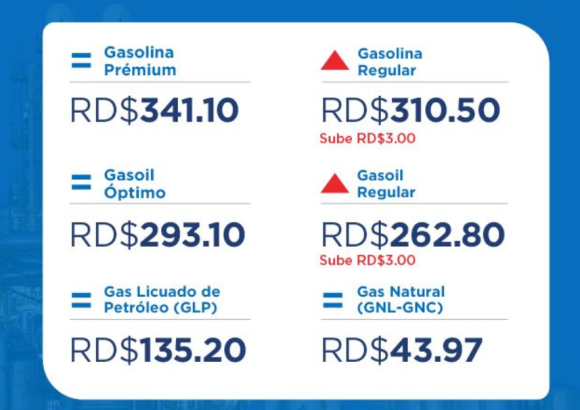
    For nearly three years starting in May 2023, the Dominican Republic’s Consumer Price Index (CPI) has consistently held above the Central Bank’s official target range of 3% to 5%. In its latest monthly economic report released this week, the monetary authority confirmed that annual inflation measured from April 2025 to April 2026 reached 5.11% — a modest overshoot of the target’s upper bound, a result directly tied to broad-based instability across global commodity markets. On a monthly basis alone, the CPI rose by 0.49% in April 2026, with the bulk of this increase traced to upward price adjustments for regular gasoline, premium gasoline, and diesel. These domestic fuel price shifts follow rising crude oil costs on international exchanges, which have been amplified by ongoing geopolitical tensions in the Middle East, the Central Bank explained. The report also unpacked offsetting factors that kept monthly inflation from climbing higher than the recorded 0.49%. A modest -0.07% deflation in the Food and Non-Alcoholic Beverages group, paired with the recent appreciation of the Dominican peso against the U.S. dollar, acted as key counterweights to energy-driven price gains. The stronger local currency has pulled down prices for imported goods including automobiles, while also reducing costs for air travel and several products and services in the communications sector, the institution noted. Digging into food price trends specifically, the Central Bank highlighted that large declines were recorded for two high-consumption staples: fresh chicken and all varieties of plantain. Both goods saw dramatic price spikes in previous months after extreme weather events disrupted domestic agricultural production, so the current price pullback represents a partial correction of that earlier volatility. At the same time, a range of other food products posted notable price increases in April, including coffee, purified water, carbonated soft drinks, avocados, chili peppers, cod, oranges, cassava, limes, and tomatoes. Encouragingly, core inflation — a closely watched metric that strips out volatile, policy-insensitive price components — remained firmly within the official target range last month. Core monthly inflation clocked in at 0.43% in April, pushing the 12-month core inflation rate to 4.87%, which falls comfortably between the 3% and 5% target band. The Central Bank emphasized that core inflation provides a more reliable signal for guiding monetary policy decisions, as it excludes items whose prices are not driven by broader economic liquidity conditions. This includes highly volatile food goods, fossil fuels, price-regulated services such as electricity rates and public transportation, as well as alcohol and tobacco products. A breakdown of monthly CPI shifts by expenditure groups shows that six categories drove the overall April inflation result: Transportation, Miscellaneous Goods and Services, Restaurants and Hotels, Recreation and Culture, Housing, and Health. Three key groups — Food and Non-Alcoholic Beverages, Communications, and Clothing — actually recorded negative monthly price changes, which softened the overall inflation reading for the month. The Transportation group alone posted a 1.78% monthly inflation rate, making it far and away the largest single contributor to April’s overall CPI gain, accounting for 61.94% of the total monthly increase. As noted earlier, this surge is primarily the result of government-approved adjustments to domestic fuel prices. Additional upward pressure came from price hikes for private intercity bus fares and motorcycle taxi services, though the group’s overall increase was partially offset by seasonal price drops for air travel and new motor vehicles. When sorted by household socioeconomic status, inflation rates varied noticeably across income quintiles in April. The lowest-income group (quintile 1) recorded a 0.36% monthly inflation rate, followed by 0.40% for quintile 2, 0.47% for quintile 3, 0.52% for quintile 4, and 0.65% for the highest-income quintile (quintile 5). The Central Bank attributes the steeper inflation faced by highest-income households to two key factors: this group sees smaller benefit from falling food prices, and feels a larger impact from the price increases that drove April’s overall inflation. The report reinforces that while headline inflation has edged slightly above target due to external geopolitical and commodity market pressures, underlying inflation trends remain anchored within the central bank’s desired range, providing a stable foundation for ongoing monetary policy management.

  • Strong wave of uncertainty in the country and South America due to the migration pact with the U.S.

    Strong wave of uncertainty in the country and South America due to the migration pact with the U.S.

    In the capital of the Dominican Republic, Santo Domingo, a newly signed migration cooperation agreement between the administration of President Luis Abinader and the United States has ignited widespread social discontent across the country. What is more, this wave of public uncertainty has quickly rippled beyond Dominican borders, spreading to three other Latin American nations – Panama, Costa Rica, and Ecuador – all partners with the Dominican Republic in the Alliance for Development in Democracy (ADD).

    Across the four-nation bloc, growing segments of civil society and political analysts fear that the agreement will erode national sovereignty, a concern that has resonated deeply with patriotic sentiment in the Dominican Republic in particular. While all four regional governments have attempted to frame the pact as a measure to advance “national security” and “strategic stability” to reassure uneasy populations, massive public outcry has erupted both in street protests and in public discourse, with demands for strengthened sovereign protections and rigorous oversight of migrant human rights.

    The debate has now moved to the center of regional political life, with critics increasingly vocal in their warning that the bloc could drift toward external dependency, ultimately becoming little more than geopolitical pawns advancing United States interests in the Western Hemisphere.

    Among the signatory-adjacent nations, Costa Rica has seen the most immediate parallel to Dominican unrest, after it signed a nearly identical agreement earlier this year in March. Under the terms of Costa Rica’s pact, the country agrees to process up to 25 deported migrants of various nationalities transferred from the United States each week, coordinating their eventual return to their home countries. Public opinion in Costa Rica has become sharply polarized: while the government defends the deal as proof of its status as a reliable U.S. strategic ally, national police unions and prominent human rights organizations have raised sharp questions about the lack of sufficient operational resources to manage the expected migrant flows. Costa Rican media outlets have framed the recent Dominican agreement as formal validation of their own government’s regional strategy, consolidating a coordinated bloc of “transit destination” countries across the Caribbean and Central America.

    For its part, Panama has approached the new Dominican agreement through a national security lens, after the country achieved landmark reductions in irregular migrant flow through the Darien Gap in early 2026. Panama already holds its own migration memorandum with the United States, which includes Washington-funded repatriation flights, and the Panamanian government has welcomed the move of other regional states taking on shared responsibility for migrant processing. Recently, Panama has also received new interceptor boats and advanced technological support from the United States for border management. For Panamanian officials, the Dominican Republic’s participation in the pact eases growing migratory pressure coming from South America by creating additional processing points for migrants before they rejoin irregular migration routes further north.

    Under the administration of President Daniel Noboa, Ecuador has maintained close de facto diplomatic and political ties with the Abinader government, with the two countries currently negotiating a partial bilateral trade agreement set to conclude in May 2026. This alignment explains Ecuador’s official public support for the new migration pact, which it has backed strongly on diplomatic fronts. While Ecuador has not signed an explicit “deportation transit” agreement on the same model as the Dominican Republic and Costa Rica, local Ecuadorian media have noted that Noboa is actively building the Abinader administration as a key regional ally to advance his agenda of continental stability.

    A key common detail across all the pacts is that the United States covers 100% of associated operational costs, a point that regional governments have highlighted as a benefit that allows them to strengthen their national migration agencies without drawing from domestic public budgets. Regional analysts also note that by joining these agreements, the four Latin American partners have positioned themselves as cooperative actors separate from less aligned regional governments, unlocking tangible benefits in return: the Dominican Republic, for example, has already gained admission to the U.S. Global Entry expedited travel program, while other members have secured pledges for new infrastructure investment.

    The core public debate across all four nations centers on whether these countries are effectively becoming de facto “safe third countries” for migrants deported from the United States, a designation that governments uniformly reject. Dominican officials, including Foreign Minister Roberto Álvarez, have repeatedly emphasized that any migrants transferred to the country will only stay for temporary, controlled transit. To defuse rising public anger, the Dominican Ministry of Foreign Affairs has released multiple clarifications: the agreement does not apply to Haitian migrants, individuals with criminal records will not be accepted, unaccompanied minor migrants are completely excluded from any transfers, and the country will not become a permanent destination for refugees. Transiting migrants will not enter the Dominican immigration system, are not eligible to apply for asylum in the country, and every migrant’s case will be individually reviewed and approved by Dominican authorities before they are allowed to enter Dominican territory.

    Under the terms of the agreement as outlined by the government, third-country nationals deported from the United States will only enter the Dominican Republic under controlled, temporary transit status for the sole purpose of coordinating onward travel to their countries of origin, with stays expected to last only a matter of days. The Abinader administration also stresses that the agreement is non-binding legally, and either party can unilaterally withdraw from the pact at any time, a condition that the government argues means it does not require prior approval from the Dominican Congress or Constitutional Court.

    These assurances have done little to calm critics, however. Civil society groups, political opposition parties, and geopolitical analysts across the region have decried the process as deeply non-transparent, noting that no public consultation or legislative review was conducted before the agreement was signed. Critics also warn that the deal will create unacknowledged logistical pressure on domestic institutions, generate hidden long-term operational costs, and carry unacceptable risks of eroding national sovereignty to align with U.S. regional policy goals. Public opinion across all four affected countries remains deeply divided: while some members of the public welcome the agreement as a way to restore control over irregular migration routes, others remain deeply concerned about what the deal means for national self-determination and the human rights of transiting migrants.