标签: Dominican Republic

多米尼加共和国

  • Dominican Republic tourism “remains strong” while competitors are declining

    Dominican Republic tourism “remains strong” while competitors are declining

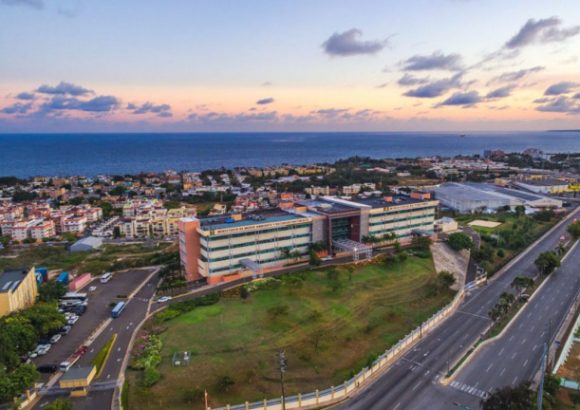
    Against a backdrop of simmering geopolitical tensions in the Middle East, skyrocketing global crude oil prices, and widespread projections of a synchronized global economic slowdown, the Dominican Republic’s key tourism sector is set to outperform regional peers, drawing unexpected visitor flows from crisis-hit competitor destinations across the Caribbean and Latin America. That is the core assessment delivered by leading economist and financial strategist Richard Medina during the 2026 Economic Perspectives Forum, an industry event hosted jointly by the CCI Stock Exchange and economic research firm Ecoanalítica at Santo Domingo’s El Embajador Hotel.

    Against widespread global economic uncertainty stoked by the escalating Iran-United States conflict and volatile energy markets, Medina reaffirmed that the Dominican Republic’s tourism industry has retained unexpected resilience. “I still see tourism as quite strong,” Medina told attendees of the forum, which centered its discussions on how Middle Eastern geopolitical instability is rippling through the Dominican economy, with specific focus on impacts to oil pricing, domestic inflation, and national public finances.

    Medina explained that the sector’s ongoing solid performance is largely driven by cascading crises that have crippled key rival tourism hubs in the region, pushing international travelers to redirect their trips to the Dominican Republic instead. “Cuba is in the midst of a deep economic and systemic crisis, so a significant share of what would have been Cuba’s inbound tourism should shift to our shores,” he noted. He also pointed to Jamaica, which recently suffered extensive infrastructure damage and service disruptions from a powerful Atlantic hurricane that hit the island last season. “Jamaica is still recovering from the hurricane’s impact, and some of its expected tourism flow is coming to us,” he added.

    The economist also highlighted Cancun, Mexico—one of the Dominican Republic’s top competitors for North American leisure travelers— which has grappled with escalating violent crime and a worsening public security crisis in recent years. “Cancun is facing a major security crisis that has deterred some visitors, and a portion of that diverted tourism could very well end up here,” Medina said.

    Beyond benefiting from regional competitors’ challenges, Medina added that the Dominican Republic has also made solid gains expanding its reach into non-traditional source markets for tourism, with particularly strong growth recorded across South America. “Tourist arrivals from Colombia and Argentina have performed exceptionally well over the past year,” he said. This deliberate market diversification, he explained, has helped the country cut its over-reliance on traditional source markets such as the United States and Canada, strengthening the sector’s stability amid an increasingly unpredictable global landscape.

    Despite the broadly positive outlook, Medina did not downplay the risks the Dominican Republic still faces. He stressed that the country cannot fully insulate itself from the spillover effects of a potential broad global economic slowdown that would curb overall international travel demand. “If we see a widespread slowdown in global tourism volumes this year, we will not escape that impact,” he cautioned. Medina also noted that while foreign exchange-generating sectors—led by tourism—have posted strong recent performance that shored up the country’s economic fundamentals, the Dominican Republic remains highly exposed to external global shocks due to its heavy dependence on imported energy and deep integration into the global economy.

    Even with these caveats, Medina maintained that the overall 2025 outlook for the Dominican tourism sector remains distinctly positive. “Even accounting for these headwinds, I believe we are going to have a very good year for tourism,” he concluded.

  • The airlines that will absorb the demand left by Spirit in the Dominican Republic

    The airlines that will absorb the demand left by Spirit in the Dominican Republic

    The exit of U.S.-based low-cost carrier Spirit Airlines from the Dominican aviation market will bring only a moderate shock to the country’s budget flight segment, according to Héctor Porcella, president of the Dominican Civil Aviation Board (JAC). Porcella emphasized that existing carriers are already positioned to absorb all the routes and passenger volume Spirit is leaving behind, easing fears of widespread disruptions or sudden price hikes.

    Spirit’s exit from the Dominican market comes after the collapse of a $500 million rescue financing deal for the airline in the United States, forcing the carrier to wind down its cross-border operations between the U.S. and the Dominican Republic. Porcella acknowledged that any airline exit from a market is never ideal for the aviation sector, regardless of the underlying causes, but stressed that the Dominican market’s existing competitive landscape has the capacity to offset the gap.

    Currently, the Dominican low-cost aviation segment is well-served by a mix of international and domestic carriers including Frontier Airlines, Southwest Airlines, local low-cost leader Arajet, and JetBlue — which Porcella classifies as a moderately low-cost operator. Even non-low-cost carriers such as American Airlines are also expected to pick up additional capacity to cover Spirit’s abandoned routes, he added.

    New data on Spirit’s market presence shows the carrier held a measurable but not dominant share of key travel routes between the U.S. and the Dominican Republic. In 2025, Spirit carried 470,147 passengers, equal to 4% of the 10.15 million total passengers traveling between the Dominican Republic and Washington D.C. For popular U.S. departure points including Florida, Philadelphia, Boston, Newark, and Baltimore, Spirit held a 20% total market share on routes to the Dominican Republic, a volume that Porcella says can be quickly absorbed by remaining operators.

    Looking ahead to 2026 capacity projections, Spirit had planned to offer 276,000 total seats for arrivals and departures in the Dominican market. All of this seat capacity will be taken up by other active carriers, Porcella confirmed, addressing widespread concerns that reduced competition in the low-cost segment would drive up airfares for travelers.

    A closer look at Spirit’s key markets in the country shows the carrier had already been scaling back its presence long before its full exit. In Fort Lauderdale, one of Spirit’s largest hubs for Dominican routes, the carrier held between 10% and 20% of the market, per local reporting from outlet Acento. On the high-traffic Philadelphia-Punta Cana route, Spirit closed out 2025 with a 20% market share, but that share had plummeted to just 1% by the first quarter of 2026, with American Airlines and Frontier already stepping in as the primary operators on the route.

    On the Fort Lauderdale-Santiago route, Spirit was the undisputed market leader in 2025, but its share had already fallen to 61% by early 2026, while JetBlue’s share climbed to 39% as the carrier expanded to capture growing demand. Porcella noted that Spirit had steadily expanded its operations in the Dominican Republic starting in 2022, but overall passenger volumes on the U.S.-Dominican routes Spirit served have remained stable even as the carrier wound down its operations, meaning no sudden drop in service is expected for travelers.

  • La Altagracia: the problems that “punish” the largest tourist province in the Dominican Republic

    La Altagracia: the problems that “punish” the largest tourist province in the Dominican Republic

    The booming tourism hubs of Punta Cana and Bávaro have brought significant economic attention to the Dominican Republic’s La Altagracia province, but this rapid expansion has come at a steep cost, according to local Senator Rafael Barón Duluc. During a recent plenary session of the national Senate, the legislator laid out a stark picture of systemic dysfunction plaguing the province, arguing that La Altagracia has been “punished by its own success” — a surge in tourism and development that has never been matched by proactive government planning or targeted public investment.

    Duluc emphasized that despite the province’s global reputation as a top travel destination, it holds the unenviable title of having the Dominican Republic’s highest rate of accumulated poverty. What growth has occurred, he explained, has been chaotic, unregulated, and deeply unequal, with large swathes of the local population pushed into marginalized, informal settlement with limited access to basic public resources.

    The senator’s remarks came as he advocated for a recently Senate-approved resolution that calls for a one-of-a-kind special population census to be conducted exclusively across La Altagracia. Per reporting from local outlet Diario Libre, the measure formally asks the Dominican President to direct the National Statistics Office (ONE) to carry out this targeted data-gathering effort, a step Duluc frames as the foundational first step to solving the province’s mounting crises.

    Current official demographic figures drastically undercount La Altagracia’s actual population, Duluc explained. While unofficial estimates place the province’s total resident population above one million, thousands of people who have settled in high-growth areas including Verón, Punta Cana, Bávaro, and Higüey have not updated their official residential or electoral registration. This massive data gap, he argued, is the root cause of widespread underprovision of critical public services from education to infrastructure.

    As a pressing example, Duluc pointed to ongoing classroom shortages across Verón, noting that thousands of school-aged children in the area are locked out of access to formal education each year due to a lack of learning facilities, a problem that has never been properly addressed because official population counts do not reflect the actual number of residents. Beyond education, the senator warned that unplanned growth has gutted regional mobility, with traffic congestion in Punta Cana and Verón now regularly outpacing gridlock in the capital city of Santo Domingo during peak periods. Where a trip from Punta Cana International Airport to local resort hotels once took just 10 minutes, Duluc said commuters and travelers now face 40-minute to hour-long delays on a regular basis.

    The senator’s assessment echoes recent warnings from prominent Dominican tourism leader Frank Rainieri, who recently labeled the unregulated, unplanned expansion of real estate and tourism development across Punta Cana fundamentally unsustainable. Duluc noted that Rainieri’s assessment was actually a prudent framing of the crisis, adding that on-the-ground conditions in La Altagracia are far more severe than the entrepreneur has described.

    In closing, Duluc made an urgent plea to national authorities, stressing that the special census is the single most critical priority for the province right now — even more pressing than building new roads, hospitals, or other traditional infrastructure projects. Without accurate, up-to-date demographic data, he argued, no government intervention can effectively address the province’s deep-seated inequalities and growing systemic pressures that threaten both local residents and the long-term sustainability of the region’s core tourism economy.

  • Due to a trough expected to arrive on Sunday, the COE has issued a green alert for five provinces

    Due to a trough expected to arrive on Sunday, the COE has issued a green alert for five provinces

    Authorities in the Dominican Republic have issued an early green weather alert for five northern provinces, ahead of an incoming low pressure trough set to bring unstable atmospheric conditions to the region starting this weekend. The announcement was made jointly by the country’s Emergency Operations Center (COE) and the Dominican Institute of Meteorology (Indomet) during an official press conference held this Friday.

    The green alert, the lowest level of weather warning, is in effect for the provinces of Montecristi, Puerto Plata, Valverde, Dajabón, and Santiago Rodríguez. According to COE, the two-day advance warning was deliberately issued ahead of the trough’s arrival on Sunday because the system is expected to impact the country over the weekend, a period when more residents are typically engaged in outdoor activities and travel.

    Impacts from the weather system are projected to begin in the late afternoon of Sunday, with unsettled conditions continuing through to next Wednesday. The head of Indomet, Gloria Ceballos, noted that the country has experienced unusual weather patterns throughout the month of May. While soil moisture levels across the affected region have not reached saturation point, Ceballos confirmed that the atmosphere will become highly unstable over the coming days, bringing the risk of severe weather events.

    This early weather alert comes on the heels of a separate preventive order issued recently by COE related to hydrological operations. The agency previously banned all recreational activities including crossing, swimming, and bathing in rivers, streams, and ravines along the Nizao River, particularly stretching from the Las Barías Counter Reservoir to the tributary’s mouth. The ban was put in place to accommodate controlled water regulation operations at the Valdesia Hydroelectric Plant, and COE has distributed guidance on protective steps for communities residing along the river corridor to mitigate risks from the scheduled operations.

  • Dominican Republic celebrates Long Night of Museums 2026 with free cultural activities nationwide

    Dominican Republic celebrates Long Night of Museums 2026 with free cultural activities nationwide

    The Dominican Republic is gearing up to host its 2026 edition of the iconic Long Night of Museums, a sprawling three-day cultural celebration scheduled to run from May 15 to 17 this year. Organized under the umbrella of the country’s Ministry of Culture and executed by the General Directorate of Museums, the landmark initiative opens the doors of all state-run cultural institutions to the public completely free of charge, offering a packed schedule of engaging programming tailored to attendees of every generation.

    Beyond standard self-guided exploration, the event features a diverse lineup of supplementary activities, from expert-led walking tours and hands-on creative workshops to academic lectures and site-specific artistic performances. Staying true to the event’s namesake, most participating venues will extend their operating hours deep into the evening, with a number of locations welcoming guests right up until midnight.

    The official opening ceremony kicked off Thursday at the National Museum of History and Geography, housed within Santo Domingo’s centrally located Plaza de la Cultura Juan Pablo Duarte. Top cultural leaders led the opening proceedings, including Minister of Culture Roberto Ángel Salcedo, Vice Minister of Cultural Heritage Gamal Michelén, and Carlos Andújar, Director General of Museums.

    The bulk of participating institutions are concentrated in the Dominican capital of Santo Domingo, where culture lovers can explore the country’s most prominent cultural sites. Top attractions on the capital’s lineup include the Museum of Dominican Man, the Museum of Modern Art, the National Museum of Natural History, and the iconic Columbus Lighthouse Museum. Several historic sites within the city’s famous Colonial Zone are also taking part, such as the Museum of the Royal Shipyards, the Museum of the Dominican Family, and the Fortress of Santo Domingo Museum. The latter is set to draw crowds with a cutting-edge immersive nighttime experience that combines holographic projections and interactive narrative storytelling to bring local history to life.

    The celebration does not stop at the capital’s borders, however. Museums across the Dominican Republic have joined the initiative, giving regional and local audiences equal access to the cultural festivities. Standout participating institutions outside Santo Domingo include the San Felipe Fortress Museum, the Heroes of the Restoration Museum, the Horacio Vásquez Museum, the 26 de Julio Museum, and the Juan Ponce de León House Fort Museum. To expand the scope of the event even further, a number of private museums and independent cultural centers have also signed on to host special limited-time programming for attendees.

    The Long Night of Museums movement traces its origins back to a 1997 launch in Germany, before spreading across the globe. The Dominican Republic first adopted the annual celebration in 2008, and today the event is held in more than 130 countries worldwide, traditionally timed to align with International Museum Day, recognized annually on May 18.

  • Incabide raises RD$562.8 million in Dominican Republic’s first asset forfeiture auction

    Incabide raises RD$562.8 million in Dominican Republic’s first asset forfeiture auction

    In a landmark milestone for public institutional reform in the Dominican Republic, the National Institute for the Custody and Administration of Seized, Confiscated and Extinction of Ownership Assets (better known by its acronym Incabide) has successfully concluded its inaugural public auction, raising 562.8 million Dominican pesos through the sale of assets seized and confiscated under the nation’s Asset Forfeiture Law 60-23.

    The auction offered 143 disparate assets to prospective bidders, split between 52 real estate holdings and 48 movable items ranging from vehicles to equipment. Of the total inventory, 100 assets found buyers, marking a 68% overall sales success rate. The vast majority of revenue came from real estate transactions, which generated 550.17 million Dominican pesos, while movable assets contributed an additional 12.67 million Dominican pesos. Four properties received no acceptable bids and were declared unsold, and a further 43 unclaimed assets will be held for future auction rounds planned by the institute.

    Incabide officials noted that the event drew robust engagement from a diverse pool of participants, including both private individual bidders and domestic corporate entities. From the opening listing process to the final bid confirmation and transfer of ownership, the entire auction operation was carried out under strict standards of transparency, full legal compliance, and ongoing independent institutional oversight, the institute confirmed.

    This successful first auction, Incabide leadership emphasized, is more than a one-off financial event: it serves as concrete proof of the institution’s commitment to delivering efficient, accountable management of assets seized through the nation’s forfeiture legal framework. The proceeds from the sale will ultimately support public institutional strengthening across the Dominican Republic, advancing efforts to streamline state asset management and reinforce governance standards.

  • Dominican Republic and Canada hold third Political Consultations Meeting

    Dominican Republic and Canada hold third Political Consultations Meeting

    Diplomatic delegations from the Dominican Republic and Canada gathered in Santo Domingo on Thursday for their third bilateral Political Consultations Meeting, an event designed to reinforce structured cross-border dialogue and extend collaborative work across a slate of high-priority sectors. The talks covered a broad range of mutually beneficial partnership areas, spanning cross-border trade, direct foreign investment, international tourism, expanded air transportation links, and coordinated regional security efforts.

    Leading the two delegations were senior foreign policy officials from both governments: Francisco A. Caraballo, Vice Minister of Bilateral Foreign Policy for the Dominican Republic, and Glen Linder, Deputy Minister for the Americas at Global Affairs Canada. In addition to the core foreign affairs leadership, the Dominican delegation included senior representatives from multiple national government agencies, including the Ministry of Finance, the Ministry of Energy and Mines, and the Ministry of Industry, Commerce and Micro, Small and Medium Enterprises (MSMEs), reflecting the wide scope of cooperation on the meeting’s agenda.

    A key focal point of the discussions centered on the ongoing situation in neighboring Haiti, a topic of shared regional concern for both nations. Following the closed-door talks, both sides reaffirmed their shared commitment to moving forward with coordinated joint initiatives designed to deliver tangible, practical outcomes that benefit citizens of both the Dominican Republic and Canada. The meeting also served as an opportunity to reflect on the long-standing diplomatic relationship between the two countries, which this year marks the 72nd anniversary of formal ties, officially established on April 22, 1954. Officials from both delegations emphasized that bilateral relations remain robust and productive, laying a strong foundation for future collaboration across all priority areas.

  • President Abinader returns to Dominican Republic after official visits to Panama and Guyana

    President Abinader returns to Dominican Republic after official visits to Panama and Guyana

    Dominican Republic President Luis Abinader touched back down in the nation’s capital of Santo Domingo on Thursday, wrapping up a two-stop official diplomatic tour that took him first to Panama and then to Guyana. The trip centered on two core goals: drawing new foreign direct investment to the Caribbean nation and expanding bilateral cooperation across key economic and energy sectors, yielding a landmark agreement for joint oil exploration by the end of his travels.

    Abinader kicked off his international itinerary in Panama, where he took the stage as the keynote speaker for the World Free Zones Congress. During his address, he laid out a compelling case for global businesses to choose the Dominican Republic as their next investment hub, spotlighting the country’s unique competitive advantages in both advanced manufacturing and high-technology sectors. Beyond his conference appearance, the president held one-on-one bilateral talks with Panamanian President José Raúl Mulino, and also convened a series of roundtable discussions with leading private sector executives from both nations. These conversations focused on breaking down trade barriers and expanding two-way export volumes to strengthen economic ties between the two countries.

    From Panama, Abinader traveled onward to Georgetown, the capital of Guyana, where he was formally greeted by Guyana’s Prime Minister Mark Phillips and Foreign Minister Hugh Todd ahead of a high-level meeting with Guyanese President Mohamed Irfaan Ali. The working visit concluded with a formal signing ceremony for a new bilateral cooperation agreement, crafted specifically to advance joint exploration activities in the oil and gas sector.

    Immediately after his arrival back in Santo Domingo, Abinader traveled directly to the National Palace to resume his daily presidential duties. Officials close to the president noted that the tour reflects the Dominican government’s sustained, strategic push to expand global partnerships, attract much-needed foreign capital, and unlock new growth opportunities across the energy, trade, and broader economic development sectors.

  • Attorney General orders investigation into killing of Esmeralda Moronta

    Attorney General orders investigation into killing of Esmeralda Moronta

    A shocking act of gender-based violence has cut short the life of a rising small business owner in the Dominican Republic’s capital, leaving the nation grappling with renewed questions over systemic protection for at-risk women.

    Thirty-three-year-old Esmeralda Moronta de los Santos, a beloved local baker and mother of two, was gunned down in a public neighborhood grocery store by her ex-partner Omar Tejeda Guzmán on Wednesday afternoon in the Alma Rosa district of Santo Domingo Este, according to official law enforcement accounts.

    What makes the tragedy particularly devastating for Dominican communities is the timeline: before the fatal attack, Moronta had already reached out to state authorities to report repeated harassment, stalking and surveillance at the hands of Tejeda Guzmán. She filed her official complaint earlier the same day at the Comprehensive Unit for Attention to Gender Violence, Domestic Violence and Sexual Crimes, the government’s designated body for supporting survivors of abuse.

    National Police spokesperson Diego Pesqueira confirmed the attack unfolded around 4:00 p.m. After being chased by her former partner through the neighborhood, Moronta fled into a local corner store seeking safety. Tejeda Guzmán followed her inside and fired multiple shots, killing her at the scene.

    Beyond her role as a victim of abuse, Moronta was a celebrated emerging entrepreneur who had built a thriving small business from scratch over the past two years. As the founder of Estilo Pastelero, a home-based bakery specializing in custom cakes, dessert tables, cupcakes, cheesecakes, and traditional Dominican treats, she had cultivated a large, loyal customer base across eastern Santo Domingo. Her most popular creations included Dominican-style sponge cake and her signature dulce de leche volcano cake, and she was just weeks away from opening her first permanent brick-and-mortar storefront, a milestone she had worked years to achieve. She leaves behind two young children, aged 10 and 3, who will now grow up without their mother.

    Yeni Berenice Reynoso, the Dominican Attorney General, has publicly expressed profound grief over Moronta’s killing and ordered an urgent, full-scale investigation into the incident. The probe will not only uncover the full circumstances of the fatal shooting but also examine whether prosecutors and agency staff followed all required safety protocols designed to protect gender-based violence survivors who file official complaints.

    Reynoso affirmed that the case would receive the full investigative rigor it demands, and extended her official condolences to Moronta’s grieving family, emphasizing the particular heartbreak faced by her two orphaned children.

    Moronta’s death has reignited widespread national conversation and concern over the persistent crisis of gender-based violence in the Dominican Republic, especially for women who follow official channels to report threats and abuse, only to still be killed by their abusers.

  • Infotep to transform former Legislators’ Club into hospitality and tourism training center

    Infotep to transform former Legislators’ Club into hospitality and tourism training center

    In a formal ceremony held in Santo Domingo, Dominican Republic, a landmark transition for public education and tourism development has been completed: the National Institute of Technical and Professional Training (Infotep) has formally taken ownership of the former Legislators’ Club, a property that will be redeveloped into a cutting-edge vocational training center focused exclusively on the hospitality and tourism sectors.

    The handover ceremony was co-led by two key Dominican government bodies: the General Directorate of National Assets and the Chamber of Deputies. Rafael Burgos Gómez, head of the National Assets Directorate, officially handed over the property deed to Luis Manuel Rodríguez, Infotep’s Deputy Director General, who attended the event on behalf of Infotep Director General Maira Morla Pineda.

    This property transfer is not an ad-hoc arrangement; it is rooted in formal legal authorization. The move was greenlit by Resolution No. 670, which was passed by relevant authorities in July 2024, alongside two existing executive orders: Decrees 235-01 and 664-23. All three legal documents explicitly approve the repurposing of the site for public use and specialized technical-professional training.

    Alfredo Pacheco, president of the Chamber of Deputies, emphasized the strategic significance of the project during the ceremony. He noted that the initiative reimagines an underused recreational space as an educational institution that will upskill thousands of young Dominican workers, while also reinforcing the competitiveness of one of the country’s most vital economic pillars: tourism.

    Government officials outlined that the new training center will address a gap in accessible technical education in the Santo Domingo Este region, expanding local learning opportunities for residents seeking careers in hospitality and tourism. By cultivating a skilled local workforce, the center is expected to support the sustained long-term growth of the Dominican Republic’s tourism industry, which is a major driver of employment and national GDP.

    Several other senior stakeholders were in attendance at the handover, including Rafael Santos Badía, multiple sitting legislators, and senior representatives from both Infotep and the General Directorate of National Assets.