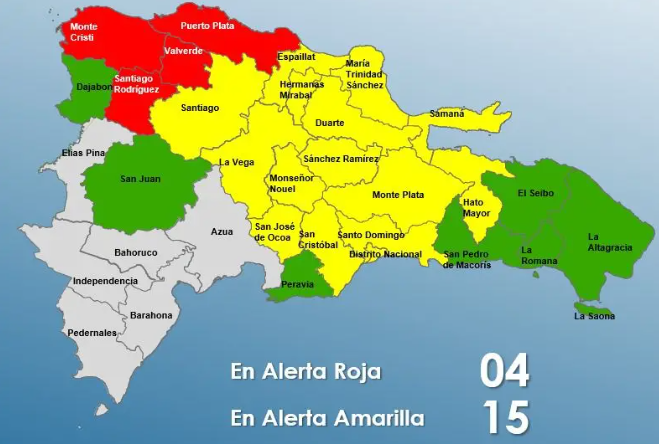
A slow-moving atmospheric trough continues to dump relentless heavy rainfall across large swathes of the Dominican Republic, triggering a cascade of natural hazards that have left thousands displaced and critical infrastructure damaged, the nation’s Emergency Operations Center (COE) has confirmed. As of the latest official update, a three-tiered alert system remains in place, with four northern provinces – Monte Cristi, Puerto Plata, Valverde and Santiago Rodríguez – placed under the highest-level red alert, 15 additional regions under yellow alert, and a further seven under precautionary green alert.
The unrelenting downpour has spawned a range of hazards across both urban and rural communities. Flash flooding has inundated low-lying neighborhoods and farmland, multiple rivers and small streams have burst their banks, and saturated hillsides have given way to landslides in scattered settlements across the affected zones. Official damage assessments paint a grim picture of the disaster’s human toll: more than 5,000 local residents have been forced to evacuate their homes to emergency shelters, while over 1,000 residential properties have sustained impacts ranging from minor flood damage to total destruction. Dozens of homes have suffered major structural compromise, and four dwellings have been completely lost to the weather event.
Transportation networks have been heavily hit, with damaged roads and bridges cutting off access to 42 isolated communities that are yet to regain connection to surrounding areas. The nation’s water distribution network has also taken significant damage: 22 regional aqueducts are currently out of operation, cutting running water service to more than 300,000 registered users across the country. In response to the unfolding crisis, emergency response teams have been deployed across the hardest-hit zones, with 15 residents rescued from floodwaters in Santiago Rodríguez alone as of the latest report.
Authorities have issued urgent public advisories warning all residents to avoid attempting to cross flooded roadways or swollen rivers, even if crossings appear passable. Drivers have been urged to reduce speeds and exercise extreme caution, as ongoing rainfall continues to cut visibility on roads across the alert zones. Meteorologists with the COE have extended warnings for continued precipitation across much of the nation in the coming days, with officials warning that the risk of further flooding and landslides will remain elevated until the trough system moves out of the region.