标签: Dominican Republic

多米尼加共和国

  • Why is it raining so much in April in the Dominican Republic: climatic causes explained

    Why is it raining so much in April in the Dominican Republic: climatic causes explained

    The Dominican Republic is facing an extraordinary and alarming weather anomaly this April: far outside the country’s typical seasonal rainfall patterns, days of extreme, high-volume downpours have shattered historical averages, leaving residents and experts grappling with a shift that is already upending thousands of lives. Meteorologists with the nation’s leading weather agency have traced the abnormal precipitation directly to human-driven climate change, sounding a clear alarm about shifting seasonal patterns across the Caribbean.

    Cristopher Florian, a veteran meteorologist at the Dominican Institute of Meteorology (Indomet), told local outlet HOY that rising global ocean temperatures are the primary driver of this extreme weather. As seas warm, they evaporate at a faster rate, pumping far more water vapor into the atmosphere than historical baseline conditions. This extra moisture creates the ideal conditions for far more intense, concentrated bursts of rainfall that far exceed what is normally expected for this time of year.

    Florian noted that this deviation from historic patterns is not an isolated event: for the past three consecutive years, April rainfall totals in the Dominican Republic have consistently outpaced long-term averages, driven by persistent anomalies in large-scale atmospheric circulation. Under normal seasonal cycles, the country’s wet convective season does not begin until mid-to-late April, when typical seasonal rainfall ramps up. In recent years, however, this active rainy period has been starting earlier and bringing more intense precipitation than ever recorded – a clear marker of broader climate disruption, according to Florian.

    The scale of the recent downpours is unprecedented in modern records for the month. On April 8, a low-pressure trough swept across multiple regions of the country, dumping extreme rainfall across populated areas. In the Ensanche Julieta neighborhood of the National District, the storm dropped 314 millimeters of rain in just a matter of hours – a volume that would be extreme even in the heart of the wettest months of the year.

    The impacts of this extreme weather extend far beyond disrupted climate patterns, causing widespread harm to local communities. The Dominican Republic’s Emergency Operations Center (COE) released an updated damage assessment Thursday that paints a stark picture of the human cost: more than 1,000 residential properties have been damaged by floodwaters and associated hazards, with dozens completely leveled by flash flooding and mudslides. In total, officials confirmed 1,024 homes sustained damage, 23 of which were partially destroyed and 32 fully reduced to uninhabitable ruins. More than 5,100 residents have been displaced from their homes and relocated to government-designated emergency safe shelters across the hardest-hit regions.

  • Despair continues in the wake of floods caused by heavy rains

    Despair continues in the wake of floods caused by heavy rains

    On the early morning of April 7, after hours of intense sustained rainfall, catastrophic flash flooding swept through neighborhoods across the National District and West Santo Domingo, leaving thousands of residents displaced, their homes and livelihoods destroyed in a matter of hours.

    For many families, the disaster unfolded in the dead of night, forcing them to flee their rising properties with only their children clutched in their arms and no prearranged safe shelter to turn to. Many still struggle to process the sudden loss of everything they spent years building.

    In the La Yuca neighborhood’s Las 800 zone, named for the local ravine that breached its banks, dozens of households lost nearly all their possessions. Electrical appliances including refrigerators, televisions and radios were completely ruined, while beds, sofas, dining sets, stored food and entire wardrobes were left waterlogged and caked in thick mud. Even days after the floodwaters receded, affected residents recount the experience with raw anguish, recalling crying frightened children and the total disorientation of having no emergency plan in place.

    As residents work to clear meters of mud and standing water from their homes and wash the few belongings they managed to salvage, many have described overwhelming feelings of helplessness over the limited official support they have received. For days after the flood, the only government intervention was municipal street cleaning, with a single truck of prepared meals arriving later for distributed pickup. Local community groups and educational institutions have stepped in to fill the gap in aid.

    The Republic of Costa Rica School, which is supporting 112 displaced families from the area, has launched a donation drive targeting state agencies and local residents. Already, community members have donated clothing and shoes for school-aged children from affected households. School principal Regina Rodríguez explained that the campus has been converted into an official donation collection center. “Once we have gathered most of the donations, families will be able to come to our school auditorium to pick up canned goods, shoes, sheets and other essential supplies that they need right now,” she said.

    During an on-site visit to affected zones, observers documented dozens of submerged vehicles abandoned along flooded streets, alongside municipal crews from the National District City Council and technicians from the Santo Domingo Water and Sewer Corporation (CAASD) working to clear mud that was blocking pedestrian access to local thoroughfares.

    Many local residents linked the extreme flooding to poorly planned drainage infrastructure work in the area. “I have lived here for more than 30 years, and my home has never flooded anywhere near this bad,” said Mary, a local resident whose entire home inventory was damaged by the floodwaters. “This all happened after they started construction on the local drainage ditch.” Community representatives have formally requested that the mayor’s office provide replacement mattresses for the hundreds of residents who lost theirs in the flood.

    In the Las Plantitas area of the Los Girasoles Segundo neighborhood, piles of waterlogged personal belongings stacked outside front gates and mud-caked clothing dragged out to air are the new normal for residents after the nearby ravine overflowed. Affected families report that while a single supply truck carrying beds and food did arrive, only a small number of households received assistance, leaving those living closest to the ravine with no support at all. Residents have also issued urgent calls for water trucks, noting that running water has been cut off in the area for 15 days, leaving them unable to even wash mud out of their flood-soaked clothing.

    “I’m hanging everything out to dry unwashed because there’s not a drop of water to be had, and no one is bringing us any,” explained Ana Ramona Sánchez, a Los Girasoles Segundo resident whose entire home was flooded overnight. “Last night, I stayed trapped on my bed behind a locked door holding back floodwater until the waters receded at dawn.”

    At the local Colegio Profesora Margarita Báez, the flood damaged critical student academic records, with many that could be recovered laid out in school yards to dry out. The school lost all of its computers, speakers and other electronic equipment. Principal Alejandrina Severino also linked the disaster to unregulated construction. “Water flooded the main office and all downstairs classrooms because construction is being done directly in the ravine, and loose construction debris trapped floating trash, which blocked the water from draining,” she said.

    In the Hato Nuevo and San Miguel neighborhoods of Manoguayabo, flooded streets left residents with total loss of household belongings. Many long-term residents described this rainfall as the most severe they have ever witnessed, noting that even in past storm events, flooding was never severe enough to force families to flee into the night with small children. “We kept moving from house to house trying to stay dry, until every one filled up with water,” recounted Elaina Martínez, who fled with three young children including a newborn. “The Emergency Operations Center (COE) sent a boat to evacuate us to the main avenue, where we could go stay with relatives. It was absolutely horrifying.”

    Today, beds, furniture and waterlogged clothing line the curbs outside Manoguayabo homes, discarded after being destroyed by mud and floodwater. Many residents are openly grieving as they clean up the few possessions they can salvage.

    In Los Alcarrizos, the heavy rains caused the Lebrón Creek to burst its banks, triggering catastrophic flooding that swept several people away in fast-moving currents. Local community members managed to pull the trapped residents to safety before emergency crews arrived. “It was an absolute disaster,” recalled Carolina Rojas, who was injured when a nail pierced her foot as she fled. “Around 2 a.m., the creek rose in seconds, flooding every house in the area. Two elderly people were swept away by the current, and we managed to pull them out with a rope. They’re still in the hospital now. Nothing like this has ever happened here before, but these rains destroyed everything, and you just saw people running, clutching their children to get out.”

    In the wake of the disaster, displaced families have been staying with neighbors and extended relatives out of fear of further flooding, only beginning to return to their properties after the COE removed the province of Santo Domingo from its official flood alert list.

  • Rain will begin in the early morning and will continue throughout Saturday, reports Indomet.

    Rain will begin in the early morning and will continue throughout Saturday, reports Indomet.

    SANTO DOMINGO – The Dominican Institute of Meteorology (Indomet) has issued public warnings that an approaching trough connected to a frontal system is set to trigger widespread heavy rainfall across more than a dozen of the country’s provinces, bringing with it a suite of potentially hazardous weather conditions over the coming three days.

    According to Indomet’s official forecast, the incoming precipitation will range from moderate to intense downpours, accompanied by sudden thunderstorms, strong wind gusts, and even isolated hailstorms in vulnerable regions. The first areas expected to feel the impact of the system include communities across Hato Mayor, Monte Plata, Sánchez Ramírez, Duarte, San José de Ocoa, Monseñor Nouel, La Vega, Santiago, Santiago Rodríguez, Dajabón, Elías Piña, San Juan, Puerto Plata, Espaillat, and Valverde, among other northern and central jurisdictions.

    By the early hours of Saturday, the trough’s advance will push scattered showers of varying intensity along the country’s entire Caribbean coastline, with precipitation forecast to persist through the full day. Indomet’s meteorologists note that rainfall will ramp up in intensity through Saturday afternoon, when residents across Greater Santo Domingo, Monte Plata, and most Cibao-region provinces can expect moderate to heavy downpours. The highest risk of severe weather — including isolated hail, thunderstorm activity and gusty winds — will be concentrated along the Central Mountain Range, the country’s western border with Haiti, and southwestern Dominican provinces.

    In response to the projected weather event, Indomet’s National Forecast Center has activated a multi-tiered system of warnings and alerts, highlighting the elevated risk of urban flash flooding, swelling rivers and creeks, sudden landslides, as well as ongoing severe wind and thunderstorm activity. Officials cautioned that existing alert levels could be updated over the next 24 to 72 hours as new meteorological data becomes available and the system progresses.

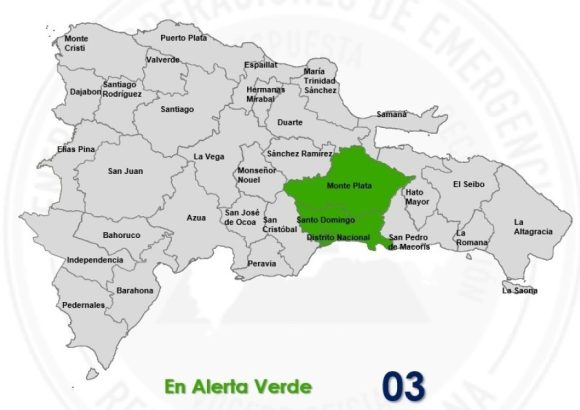
    As of the latest advisory, ten provinces are placed under full alert for hazardous weather: Monte Cristi, Monseñor Nouel, Bahoruco, Independencia, Monte Plata, San Juan, Dajabón, Puerto Plata, Elías Piña, and Santo Domingo. Three additional provinces — La Vega, Santiago, and Santiago Rodríguez — are currently under a lower-level weather advisory.

    Despite the incoming rain, Indomet forecasts that high temperatures will remain a concern for residents through the duration of the event. Warm, humid wind flow from the east and southeast will keep air temperatures elevated, particularly during afternoon hours, with urban areas facing even higher heat index values that can pose health risks to vulnerable groups. To prevent heat-related illness, the institute has issued public guidance advising residents to wear loose, light-colored clothing, maintain consistent hydration by drinking plenty of water, and limit extended exposure to direct sunlight during peak heat hours.

  • Is there evidence or not? What Public Health says about the alleged circulation of a new COVID-19 variant in the Dominican Republic

    Is there evidence or not? What Public Health says about the alleged circulation of a new COVID-19 variant in the Dominican Republic

    The Dominican Ministry of Health has issued an official update confirming that as of the latest monitoring cycle, no trace of the BA.3.2 SARS-CoV-2 subvariant, nicknamed “Cicada”, has been detected circulating within the country’s borders.

    Data compiled from the nation’s national sentinel surveillance infrastructure and integrated laboratory network has not returned any positive identifications of the new subvariant to date. Dominican health authorities maintain an active, continuous, and evidence-driven epidemiological monitoring framework designed to catch emerging viral variants at the earliest possible stage, enabling rapid public health response.

    Looking at the broader respiratory virus landscape for 2026, health officials have recorded a sustained circulation pattern of common seasonal respiratory pathogens across the first 12 epidemiological weeks of the year. Influenza strains, specifically influenza A (including H1N1 and H3N2 subtypes) and influenza B, have emerged as the dominant circulating viruses. Pre-emptive vaccination rollout launched late last year has already been deployed to mitigate the impact of influenza B, with the goal of reducing overall disease burden across the Dominican population.

    Beyond influenza, health authorities have also documented ongoing circulation of other common seasonal respiratory viruses, including adenovirus and parainfluenza. Officials note that the current pattern of multiple viruses co-circulating aligns with expected seasonal epidemiological behavior for this time of year, with no unexpected deviations detected so far.

    Eladio Pérez, Deputy Minister of Collective Health, emphasized the critical role of the national surveillance system in protecting public health. “The sentinel surveillance we have implemented across the country enables us to detect respiratory events early and rapidly, including the identification of never-before-seen viral variants,” Pérez explained. “This proactive capability directly strengthens the health system’s ability to respond effectively to emerging threats.”

    According to the ministry, all public health decision-making is rooted in real-time epidemiological data, pulled together from multiple sources including hospital epidemiology services, Provincial Directorates and Health Areas (DPS/DAS), and the national network of laboratories. This integrated data ecosystem ensures that policies and responses are always aligned with the actual on-the-ground situation.

    To help the public protect themselves against circulating seasonal respiratory viruses, the Ministry of Health has reminded the population of core evidence-based preventive measures. These include frequent hand washing, particularly before meals and after using restroom facilities; wearing a face mask when experiencing respiratory symptoms; maintaining physical distance from others while ill; and seeking prompt medical care if any warning signs of severe illness develop.

    The ministry will continue maintaining constant, close monitoring of the national epidemiological situation, working in coordination with global health organizations and aligning with international alert protocols. All ongoing efforts are focused on protecting the health and well-being of the Dominican population against emerging and seasonal respiratory virus threats.

  • The most common mistake when driving in the rain that can be very expensive

    The most common mistake when driving in the rain that can be very expensive

    For motorists globally, navigating rain-soaked roadways ranks among the deadliest common driving scenarios, yet a dangerously pervasive mistake continues to put thousands of lives at risk every wet season: drivers refusing to adjust their speed and following distance from what they use on dry pavement. When asphalt and concrete turn slick from falling rain, the friction between vehicle tires and the road surface drops dramatically, cutting down grip and doubling the amount of time a vehicle needs to come to a complete stop after a driver hits the brakes. Despite this well-documented risk, large numbers of commuters and recreational drivers consistently underestimate how much wet conditions alter road dynamics, operating their vehicles exactly as they would on a clear, dry day. The outcome of this complacency is often catastrophic: drivers lose control of their vehicles, trigger multi-car pileups, cause extensive, costly property damage, and too often result in serious injury or death. Leading road safety experts, including veteran specialist Anibal Germoso, have outlined clear, actionable adjustments all drivers should make when driving in wet conditions. Germoso and his peers advise cutting travel speed by a minimum of 30 percent compared to dry conditions, expanding the gap between one’s vehicle and the car ahead to allow for longer stopping times, activating low-beam headlights to boost both a driver’s own visibility and make their vehicle more noticeable to other road users, and avoiding any sudden turns, lane changes, or hard braking that can cause a loss of traction. Beyond in-the-moment driving adjustments, experts also stress the critical importance of pre-trip vehicle maintenance, specifically checking tire tread depth and brake functionality before heading out during rainy season, when wet roads are a constant hazard. This issue carries particular urgency in the Dominican Republic, where rainfall is often both extremely heavy and arrives with little advance warning, turning road conditions dangerous in minutes. In this Caribbean nation, the common habit of failing to adjust driving for rain has become a major, underrecognized risk factor for traffic fatalities and collisions. The country’s General Directorate of Land Transportation has recently doubled down on public outreach to remind drivers that prevention is the single most effective tool to avoid rain-related crashes. The agency emphasizes that even a small moment of carelessness behind the wheel on a wet road can carry devastating costs, both in terms of lost human life and destroyed or damaged property.

  • A green alert is not the same as a red alert: what you should do in each case

    A green alert is not the same as a red alert: what you should do in each case

    As extreme weather events grow in frequency and intensity across many regions, the Emergency Operations Center (COE) has launched a public education campaign to clarify the meaning of different weather alert levels and outline the corresponding life-saving actions residents must take for each risk tier.

    Officials stress that weather alerts are not arbitrary notifications: they are pre-emptive declarations issued ahead of an impending hazardous weather event, designed to let emergency response teams activate contingency plans and allow ordinary residents to put protective precautions in place before danger arrives. To clear up widespread public confusion about the distinct risk levels, COE has broken down the three core alert categories and their requirements:

    First, a green alert marks the lowest risk tier, issued when an atmospheric phenomenon is developing and may impact the area. At this stage, the public is advised to stay informed through official updates, maintain situational awareness, and watch for changing conditions that could require further action.

    Second, a yellow alert signals a moderate increase in risk, indicating dangerous weather is on track to reach at-risk parts of the region. For residents located in vulnerable or high-risk zones, this alert means it is time to prepare for evacuation or relocation, and make arrangements to move to a pre-identified safe location well before the weather arrives.

    Third, a red alert is the highest risk classification, reserved for areas directly in the path of the most severe dangerous weather. When a red alert is issued, residents in affected zones must finalize all emergency preparations: confirm emergency supply kits are fully stocked with water, non-perishable food, first aid supplies and critical medications, move immediately to a designated safe location, and remain sheltered there both before and throughout the duration of the weather event.

    COE officials have underscored that understanding the clear distinction between green and red alerts is a critical piece of public safety knowledge. While a green alert only calls for heightened attention and ongoing vigilance, a red alert demands immediate, decisive action to protect personal safety and reduce potential harm.

    In closing, authorities reiterated that consistent adherence to these alert guidelines directly cuts the risk of fatalities and minimizes damage to personal and community property—particularly for low-income and geographically vulnerable communities that face disproportionate harm from extreme weather events.

  • Insurance regulator urges Dominicans to review coverage ahead of heavy rains

    Insurance regulator urges Dominicans to review coverage ahead of heavy rains

    Residents of the Dominican Republic are being urged by the country’s Superintendency of Insurance to take proactive steps to review their existing insurance coverage ahead of an approaching weather system forecast to bring intense rainfall across multiple provinces. The alert, issued amid active weather warnings for the low-pressure trough, comes as the regulator works to help homeowners and business owners avoid costly surprises if disaster strikes.

    A common misconception held by many policyholders is that flood and storm-related damage is automatically included in standard insurance contracts, the agency highlighted. In reality, coverage for these hazards depends entirely on the specific terms, add-ons and conditions that were agreed to when the policy was purchased. The regulator is advising all consumers to reach out directly to their insurance providers to confirm what protections are in place, asking that they double-check coverage for flood damage, water-related property destruction, loss of personal belongings and unexpected business interruption stemming from storm events.

    Many standard home and commercial insurance policies explicitly exclude flood and storm water damage, or impose strict limitations and high deductibles that can leave policyholders responsible for significant out-of-pocket costs, the agency explained. This gap in coverage also applies to vehicle insurance: even drivers who carry what is marketed as “full coverage” auto policies often do not have protection for flood damage unless they have added a separate endorsement to their plan. For properties located in high flood-risk zones across the country, additional separate coverage is almost always required to get full protection, the regulator noted.

    Along with calling for pre-storm policy reviews, Superintendency of Insurance officials shared guidance for anyone who does experience damage. They strongly encouraged residents to create comprehensive documentation of all destruction, including timestamped photos, videos and written inventories of damaged property, to speed up the claims process. Most importantly, officials emphasized that understanding what is not covered by a policy is just as critical as knowing what is included. In the event of a dispute between a consumer and their insurance provider over a covered claim, the agency reminded the public that it offers formal mediation services to help resolve conflicts fairly.

  • Authorities issue flood alert as heavy rains threaten Dominican Republic this weekend

    Authorities issue flood alert as heavy rains threaten Dominican Republic this weekend

    In the Dominican capital of Santo Domingo, national emergency officials have issued an urgent call for residents to maintain the highest level of alert this weekend, as two converging weather systems are set to bring heavy downpours that raise major risks of urban flooding, overflowing rivers and ravines, and destructive landslides across the country.

    This threat is amplified by pre-existing dangerous conditions: nearly two straight weeks of consistent rainfall have left the nation’s soil completely saturated, leaving no additional capacity to absorb new precipitation. That means even moderate rainfall could trigger the disasters warned about by officials.

    Juan Manuel Méndez, director of the Dominican Republic’s Emergency Operations Center (known locally by its Spanish acronym COE), confirmed that the agency has convened a permanent round-the-clock session to coordinate response efforts. To prepare for the anticipated extreme weather, COE has already activated its full contingency response plan at the highest preparedness level, putting all emergency response teams and resources on standby ahead of the storm.

    Official meteorological projections indicate total rainfall accumulations will range between 50 and 100 millimeters across most affected areas through the duration of the event. Weather systems are expected to bring scattered showers that alternate between light periods and intense torrential downpours starting this weekend, with unstable conditions forecast to linger into the early part of next week. Emergency officials have urged residents in low-lying and landslide-prone areas to stay updated on official alerts and follow evacuation instructions if issued.

  • Foundation warns over 70% of Dominican workers face inadequate pensions

    Foundation warns over 70% of Dominican workers face inadequate pensions

    A leading Dominican social security advocacy organization is sounding the alarm over an impending retirement crisis that threatens the livelihood of the vast majority of the country’s working population. The Social Security for All Foundation warns that without immediate structural overhauls to the nation’s current pension framework, more than seven out of every 10 Dominican workers will enter retirement with benefits too low to sustain their pre-retirement quality of life.

    In its latest data-driven analysis of the Dominican pension system, the foundation outlines the scope of the coming demographic shift. Between 2031 and 2033 alone, roughly 1.6 million currently active pension affiliates will reach the official retirement age. Yet systemic weaknesses have left the system deeply underfunded: only 30.3% of these affiliates currently make regular required contributions to their pension accounts. This ongoing irregular contribution pattern, the group emphasizes, will almost inevitably translate to meager retirement payouts for the majority of workers when they exit the workforce.

    The potential ramifications of unaddressed pension shortfalls extend far beyond individual financial hardship, the organization cautions. Widespread inadequate retirement benefits could create widespread economic insecurity among senior citizens, which in turn may fuel social unrest and place unprecedented pressure on public institutions that are already tasked with supporting vulnerable populations. Left unaddressed, the issue could escalate into a full-scale social crisis within the next decade.

    The foundation has pinpointed four core structural drivers behind the growing pension gap: chronically low individual and employer contribution rates, excessive commissions charged by Administradoras de Fondos de Pensiones (AFPs, the private pension fund administrators), the large share of workers engaged in informal labor that does not require pension contributions, and the lack of a contributory-subsidized regime designed specifically to accommodate self-employed workers, who make up a significant segment of the Dominican workforce.

    To reverse this alarming trend, the organization has put forward a pair of targeted policy reforms that it says would meaningfully strengthen the system. The proposals include a gradual phase-in of increased pension contributions, ultimately raising the total contribution rate to 16.2%, alongside a cap on AFP commissions that would reduce the current fee levels to 0.50%. According to the foundation’s modeling, these two adjustments would significantly boost future pension payouts for workers and strengthen critical financial protections for low-income retirees, who are the most vulnerable to inadequate benefits.

  • Government says no mining planned in Northern Mountain Range

    Government says no mining planned in Northern Mountain Range

    SANTIAGO — The Dominican Republic’s top energy and mining official has drawn a clear line in the sand over resource development in one of the country’s most ecologically significant regions, confirming that full commercial mining will never be authorized in the Northern Mountain Range. In a face-to-face gathering with local community leaders and religious clergy hosted in Santiago, Energy and Mines Minister Joel Santos laid out the government’s official stance, clearing up widespread speculation about future extractive activity in the biodiverse highland area.

    Santos stressed that there is no existing government policy, signed exploitation contract, or even active pending application that would clear the way for large-scale mineral extraction in the region. Any current work being carried out in the Northern Mountain Range is restricted exclusively to preliminary scientific research, designed to map the area’s geological characteristics and assess its potential mineral resources, he explained.

    According to Santos, the exploration concessions currently held by operators do not grant any rights to commercial extraction. These permits only allow temporary access for technical work, including geological mapping, rock sampling, and other geoscientific surveys required to understand the region’s subsurface makeup.

    Any future proposal to expand activity beyond exploration to full extraction would face a rigorous multi-step approval process, Santos noted. This would require separate technical reviews, mandatory comprehensive environmental impact assessments, and a final sign-off from the Dominican president before any work could move forward. The minister also emphasized that the government remains committed to full transparency and ongoing collaborative dialogue with all communities that would be affected by any potential future changes to mining rules in the region.

    Santos also addressed calls from some stakeholders to revoke the existing exploration concessions, noting that unilateral revocation would open the Dominican government to costly international and domestic legal challenges, putting state assets and public finances at unnecessary risk.