标签: Dominican Republic

多米尼加共和国

  • Dominican Republic elected First Vice President of OAS Port Committee

    Dominican Republic elected First Vice President of OAS Port Committee

    SANTO DOMINGO — In a landmark milestone for the Dominican Republic’s regional engagement, the Caribbean nation has secured its first-ever appointment to the top leadership of the Organization of American States’ Inter-American Committee on Ports (CIP), taking on the role of First Vice President. This regional body stands as the preeminent convener of port governing authorities from across North, Central, and South America and the Caribbean, uniting stakeholders to advance cross-border maritime cooperation.

    Officials from the Dominican Port Authority (Apordom), the country’s national port governing body, confirmed that the new leadership position will dramatically elevate the nation’s influence in regional port policy and collaboration. The appointment opens the door for Dominican leaders to take a more hands-on role in shaping priority initiatives across a range of high-stakes areas, including sustainable port operations, cutting-edge technological innovation in maritime logistics, integrated port-urban development, climate-resilient port infrastructure, and expanded cross-border logistics networks.

    Apordom Executive Director Jean Luis Rodríguez emphasized that the CIP appointment aligns perfectly with the Dominican Republic’s ongoing large-scale push to overhaul and grow its national port and logistics infrastructure. In recent years, the country has invested heavily in upgrading terminal capacity, expanding shipping routes, and streamlining customs processes, all with the goal of cementing its status as a central strategic trade and connectivity hub for the broader Americas region. Rodríguez noted that the new leadership role will reinforce this progress by giving the Dominican Republic a stronger voice in setting regional priorities and accessing global best practices for port development.

    The Inter-American Committee on Ports functions as the Organization of American States’ primary official forum for coordinated port development across the Western Hemisphere. Its core mandate centers on driving safe, efficient, and environmentally sustainable growth of port systems through a mix of targeted technical assistance, professional training programs for port personnel, collaborative policy development, and cross-border sharing of successful industry practices. As First Vice President, the Dominican Republic will now take a lead coordinating role in rolling out regional projects designed to strengthen maritime trade flows, upgrade logistics networks, and improve connectivity between markets across the hemisphere, opening new economic opportunities for both the nation and its regional partners.

  • Dominican Republic set for largest energy expansion in decades

    Dominican Republic set for largest energy expansion in decades

    Santo Domingo — The Dominican Republic is gearing up for its most ambitious expansion of energy infrastructure in more than 30 years, according to the nation’s top energy official. Joel Santos, Minister of Energy and Mines, announced that total installed firm generation capacity will surge by over 50% between 2025 and 2028, a development set to reshape the country’s economic trajectory.

    Addressing attendees of the 2026 Energy Market Summit held in the capital city Santo Domingo, Santos framed the planned expansion as a foundational investment that will reinforce the Dominican Republic’s capacity to underpin broad-based economic growth, draw in foreign and domestic capital, and sharpen its competitive edge in the Caribbean region. Currently, the country operates 2,000 megawatts of renewable energy capacity across its national grid, with a further 1,000 megawatts scheduled to connect to the system by 2028 via projects that are already in active development.

    Santos emphasized that this large-scale expansion is a direct response to rapidly rising demand for electricity across the Dominican Republic. National peak electricity demand is projected to hit 4,250 megawatts this year alone, marking a nearly 59% jump from peak demand recorded back in 2019. He attributed this sharp increase to the robust expansion of the country’s core economic sectors, including tourism, manufacturing, domestic commerce, and consumer-focused services, noting that energy infrastructure development cannot lag behind overall economic growth if the country hopes to sustain long-term, inclusive development. “We cannot build a stronger economy on a weak energy foundation,” Santos told summit attendees, “every new hotel, every new factory, every new business relies on consistent, affordable power to operate.”

    The national government’s strategic energy plan centers on diversification of the country’s energy mix, integrating expanded renewable energy supplies, increased natural gas generation, and utility-scale energy storage systems to boost both the reliability and climate resilience of the national grid. Beyond generation capacity expansion, the administration is also advancing parallel efforts to extend electricity access to underserved communities, roll out widespread energy efficiency programs, strengthen the country’s energy regulatory framework, and accelerate the transition to a sector that is both more economically competitive and environmentally sustainable.

  • Abinader warns Haitian gangs: Dominican border will be defended

    Abinader warns Haitian gangs: Dominican border will be defended

    SANTO DOMINGO – Against a backdrop of rising cross-border insecurity fueled by armed gang activity in neighboring Haiti, Dominican President Luis Abinader made a firm public commitment Tuesday that his nation will not permit violent Haitian gangs to encroach on or endanger Dominican territory. Speaking at the National Palace during the official launch of the country’s new comprehensive ‘Strong Border’ security and development initiative, Abinader confirmed that the Dominican Armed Forces have received unambiguous orders to act decisively against any security hazard that emerges along the shared 392-kilometer border.

    A core pillar of the new strategy is a significant expansion of military manpower along the frontier. Currently, 9,500 active military personnel are deployed to border security operations; the administration will add an additional 1,500 troops to boost patrol, deterrence, and response capacity. The government is also extending the border’s high-tech smart perimeter fence: 54 kilometers of the advanced barrier have already been completed, and construction on 13 more kilometers will get underway shortly to close surveillance gaps and strengthen unauthorized crossing deterrence.

    To streamline border monitoring operations, the initiative reorganizes the entire frontier into eight distinct operational zones, each overseen by a senior military commander to improve coordination and rapid response. The strategy also integrates cutting-edge surveillance technology to augment on-the-ground security work, including long-endurance drones, high-resolution fixed surveillance cameras, underground fiber-optic transmission systems, and centralized real-time monitoring infrastructure that allows security teams to track and respond to incidents faster. Dominican Defense Minister Carlos Fernández Onofre specifically highlighted the addition of the domestically assembled TP-75 Dulus aircraft, which will now carry out regular border patrol and reconnaissance missions, marking a milestone for the country’s domestic defense manufacturing capacity.

    Beyond hard security investments, the ‘Strong Border’ plan frames long-term border stability as tied to inclusive economic development for underdeveloped border provinces. The administration outlined plans to modernize four key binational commercial markets in Dajabón, Elías Piña, Jimaní, and Pedernales, which will facilitate legal cross-border trade while reducing opportunities for smuggling and unauthorized movement. Additional development initiatives include the construction of new vocational training schools to expand local employment opportunities, upgraded military facilities, new regional airport infrastructure, and a geographic expansion of the national 9-1-1 emergency response system to better serve border communities. Officials also emphasized a targeted effort to reclaim and restructure the high-risk Tilory border area, where unregulated informal settlements have long blocked clear surveillance lines and undermined Dominican territorial control over the frontier.

  • Authorities mobilize to remove sargassum from Barahona beaches

    Authorities mobilize to remove sargassum from Barahona beaches

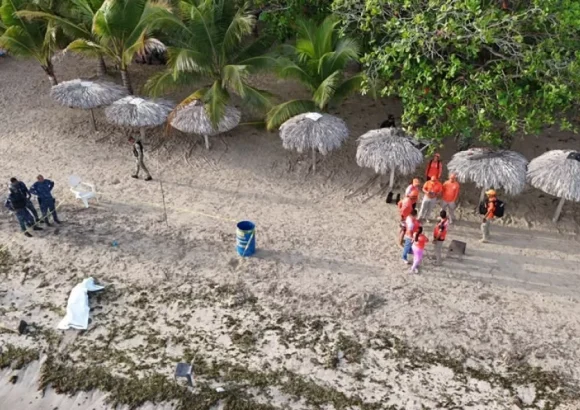
    A massive influx of sargassum washing onto Barahona’s shorelines has prompted local authorities to roll out a coordinated large-scale cleanup initiative, designed to counter growing threats to the region’s natural ecosystems and critical tourism industry. The ongoing arrival of thick mats of the brown algae has left popular local beaches choked, triggering widespread anxiety across local communities, tourism service providers and small business owners who rely on the coastal appeal to draw visitors.

    Provincial Governor Oneida Féliz Medina confirmed that the intensive cleanup work is set to get underway at 7:00 a.m. local time on Thursday, with backing from a broad coalition of public sector agencies and private sector organizations. To lay the groundwork for a smooth operation, a full coordination meeting will be held Wednesday at the Provincial Government headquarters. During the planning session, participating stakeholders will map out logistical arrangements, assign clear roles and responsibilities to each participating group, and outline all equipment, personnel and other resources that will be deployed for the algae removal effort.

    The core goal of the operation is to mount an effective, organized response to the accelerating accumulation of sargassum that has built up along the province’s entire coastline. Beyond its unsightly appearance that deters beachgoers, the large algae blooms carry measurable environmental risks, as decomposing sargassum disrupts marine habitats and alters local coastal ecosystems. For the local economy, the influx has already created tangible harm: tourism operators have reported declining visitor numbers, as travelers avoid algae-choked beaches, cutting into revenue for hotels, restaurants, excursion companies and other local businesses that depend on coastal tourism.

    Governor Féliz Medina stressed that cross-sector collaboration between government bodies, private enterprises and local community groups is not a bonus, but a core requirement to successfully reduce the impacts of the sargassum surge and protect the natural beauty that makes Barahona’s coast a valuable regional asset. She also reaffirmed that the provincial government remains fully committed to sustaining long-term joint actions to address this persistent challenge, which continues to impact most of the province’s shoreline.

  • Casa de Campo Fashion Week brings international attention to Dominican fashion

    Casa de Campo Fashion Week brings international attention to Dominican fashion

    The Dominican Republic’s luxury hospitality landmark Casa de Campo Resort & Villas has marked a major milestone in merging high-end fashion, tourism, art and culture with the successful launch of its first-ever Casa de Campo Fashion Week. This groundbreaking four-day event, held across the resort and nearby Altos de Chavón from June 4 to 7, sets out to elevate the nation’s standing as a top-tier Caribbean destination for luxury lifestyle experiences.

    More than a traditional runway showcase, the inaugural fashion week packed a diverse program that spanned industry presentations, visual art, wellness experiences and invitation-only networking gatherings. At the core of the event were the runway collections hosted at the Marina Riverside Center, where 12 designers from across the globe revealed their newest creations to a crowd of fashion industry leaders, global press and invited guests. The lineup intentionally centered local Dominican talent, with renowned homegrown designers including Giannina Azar, JC Lagares, Jacqueline Then, Jenny Polanco, Carolina Socías, and Oriett Domenech sharing the catwalk with globally celebrated Spanish designer Custo Barcelona, a pairing that underscored the event’s goal of connecting local creativity to the global fashion ecosystem.

    Kicking off the week’s activities was a special photography exhibition at the Altos de Chavón Art Gallery by acclaimed fashion photographer Jesús Cordero. Unlike the temporary fashion presentations, Cordero’s work will remain open to public viewing through July 31, 2026, extending the event’s cultural impact long after the final runway look, and adding a lasting artistic layer to the fashion-focused gathering.

    Event organizers note that the new fashion week aligns with Casa de Campo Resort’s long-term strategic vision to expand its tourism product and cement its status as the Caribbean’s gold standard for luxury hospitality, world-class entertainment and large-scale international events. The initiative has earned official backing from the Dominican Republic’s Ministry of Tourism, reflecting the national government’s push to grow the luxury tourism and creative sectors.

    Bringing international attention to the debut event was former Miss Universe and actress Dayanara Torres, who stepped into the role of official Casa de Campo Fashion Week ambassador. One of the most talked-about moments of the week came when Torres’ son, Ryan Muñiz, joined the lineup as a guest model, marking the first time the mother-son pair have walked a runway together in the Dominican Republic.

    Following a smooth and well-received debut, event leaders plan to grow Casa de Campo Fashion Week into a leading annual platform that elevates Dominican fashion, drives international luxury tourism, and amplifies the nation’s rich creative talent to a global audience, while drawing more high-spending international visitors to the country’s shores.

  • Dominican Republic prepares transfer of SICA Presidency to Belize

    Dominican Republic prepares transfer of SICA Presidency to Belize

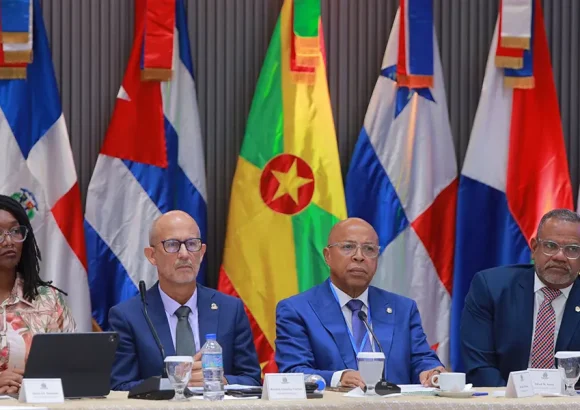
    Santo Domingo, Dominican Republic – The Dominican Republic, which currently holds the Pro Tempore Presidency (PPT) of the Central American Integration System (SICA), convened and chaired a special gathering of the bloc’s Council of Foreign Ministers this Tuesday. This high-level meeting was organized as a critical preparatory step ahead of the much-anticipated virtual summit of SICA heads of state and government, set to convene the following day.

    Leading the discussions was Dominican Republic Foreign Minister Roberto Álvarez, who stepped into the role in his official capacity as the representative of the bloc’s sitting pro tempore president. Every full member state of SICA sent their top foreign affairs official to participate in the talks, which centered on aligning positions, refining the official agenda, and prioritizing key topics that regional leaders will take up during Wednesday’s summit.

    One of the most significant announcements to emerge from the extraordinary session was the formal confirmation of the upcoming handover of SICA’s Pro Tempore Presidency. The Dominican Republic confirmed that it will pass the rotating leadership role to Belize at the end of June. The official transfer ceremony will be hosted during the next regular meeting of SICA foreign ministers, which is scheduled to take place in San Salvador, El Salvador.

    Minister Álvarez was joined by two senior Dominican diplomatic officials for the meeting: Hugo Francisco Rivera, Vice Minister for Economic Affairs and International Cooperation, and Carmen Elena Ibarra, Director of Trade Integration. Alongside other attendees, the Dominican delegation advanced discussions focused on deepening regional integration progress and expanding cross-border cooperative initiatives across key sectors for the bloc.

  • Docalsa says environmental project focuses on restoration, not mining

    Docalsa says environmental project focuses on restoration, not mining

    In Santo Domingo, Dominican Republic, Dominicana de Cales S.A. (Docalsa) has moved to publicly defend its ongoing environmental restoration initiative targeting lands degraded by historical mining activity, pushing back against growing public speculation that the project secretly opens the door to new mineral extraction.

    The company has clarified that the entire 86,000-plus square-meter project is focused exclusively on healing damaged ecosystems rather than commercial mining. Core work includes stabilizing unstable eroded terrain, reintroducing native plant life, and reversing long-term ecological damage left by past mining operations. A key centerpiece of the plan is the installation of more than 50,000 new trees, which will help restore natural carbon sequestration, prevent further soil erosion, and rebalance the local ecosystem.

    Docalsa emphasized that the full project design underwent rigorous review by the Dominican Ministry of Environment before receiving formal approval, with all permitted activities strictly limited to remediation work. The firm also addressed geographic concerns, confirming that all operational sites lie outside the government-designated protected core zone and protected buffer zone network. Any limited activity that falls within authorized buffer areas is directly tied to the restoration mandate, the company added.

    One of the most prominent points of public contention has been the potential risk the project poses to the nearby Tandem Cave, a regionally significant natural site. In response, Docalsa explained that the entire project was engineered using evidence-based technical standards specifically crafted to protect the cave and its surrounding natural resources. Critically, no explosives are being used during construction, and all work progresses under constant direct supervision from environmental regulatory bodies.

    Another widespread concern has centered on the risk of water contamination from project activities. Docalsa countered these worries by noting that no permanent rivers flow through the project’s intervention area, and all site work uses dry processing techniques that produce no toxic wastewater that would require discharge into local water systems. The only water used on site is for irrigation of newly planted saplings as part of the reforestation effort, the firm confirmed.

    In closing, Docalsa reaffirmed that every aspect of its restoration work adheres to the nation’s strict environmental regulatory frameworks, with ongoing oversight from relevant government agencies to ensure full compliance at every stage of the project.

  • ‘The New Digital Currency’ brings online reputation focus to Expoturismo 2026

    ‘The New Digital Currency’ brings online reputation focus to Expoturismo 2026

    Santiago de los Caballeros, Dominican Republic – As the global tourism industry grows increasingly digitized, the 29th iteration of Expoturismo 2026 will center one of the sector’s most pressing modern priorities: digital online reputation, via a targeted industry conference titled “The New Digital Currency.”

    The upcoming conference, slated for June 12 at the city’s Hilton Hotel Santiago Curio Collection, will be helmed by two seasoned industry professionals: Isaac Ramírez, a specialist in technology and digital business transformation, and Kenia Hernández, marketing leader and director of Ongoing Marketing Solutions. Over the course of the session, the pair will break down how search engine algorithms, interactive online maps, and user-generated review platforms have reshaped traveler behavior, emerging as make-or-break factors when consumers choose hotels, dining destinations, and local leisure experiences.

    Unlike many general-interest industry talks, this event is built to deliver actionable value for participating tourism businesses. Attendees will leave with a clear understanding of cutting-edge technological tools designed to boost brands’ digital visibility, streamline proactive reputation management, and effectively mitigate damage from negative or harmful online content. The conference will also walk attendees through proven strategies to safeguard and reinforce customer trust – a commodity that industry analysts widely identify as the most valuable intangible asset for tourism operators in today’s digital-first economy.

    As a core component of the two-day Expoturismo 2026 event, which runs June 12 and 13 in Santiago de los Caballeros, the reputation-focused conference embodies the trade show’s longstanding commitment to fostering innovation, digital adoption, and new business growth across the Caribbean tourism ecosystem. According to event organizers, the session fills a critical gap in industry training, equipping small and medium-sized tourism businesses with the practical skills they need to hold their ground in an increasingly competitive, digital-centric global marketplace.

  • U.S. Coast Guard repatriates 32 migrants to Dominican Republic

    U.S. Coast Guard repatriates 32 migrants to Dominican Republic

    A U.S. Coast Guard interdiction operation off the coast of Puerto Rico has ended with 32 migrants repatriated to the Dominican Republic, following the interception of an overloaded makeshift craft carrying 40 undocumented people. The incident unfolded in waters near Desecheo Island, a small uninhabited landmass located just west of Puerto Rico’s main island.

    The operation was triggered when a surveillance aircraft operated by U.S. Customs and Border Protection spotted the suspicious vessel, which measured between 20 and 30 feet in length and was carrying a far larger number of passengers than it was designed to hold. Acting on the intelligence, the Coast Guard cutter Heriberto Hernandez intercepted the unregistered boat on Sunday, and all 40 people aboard were taken into custody without incident.

    A demographic breakdown of the passengers released by U.S. authorities shows the group included 36 citizens of the Dominican Republic, three Haitian nationals, and one individual from Uzbekistan. Under the agency’s ongoing regional framework to reduce dangerous irregular migration across Caribbean waters, 32 of the migrants were transferred for repatriation back to Dominican territory.

    Coast Guard leaders emphasized that the successful operation is a clear demonstration of effective interagency coordination between frontline maritime security units and the Department of Homeland Security’s dedicated task force for regional migration enforcement. Commander Matthew Romano, response chief for the Coast Guard’s Sector San Juan, commended the disciplined, professional work of all crews involved in disrupting the unlawful sea migration attempt, noting that such operations also reduce the risk of life-threatening harm to migrants attempting dangerous ocean crossings.

  • Gonzalo Castillo meets U.S. Ambassador after visa reinstatement

    Gonzalo Castillo meets U.S. Ambassador after visa reinstatement

    In a significant development reshaping the political trajectory of Dominican Republic presidential candidate Gonzalo Castillo, the former public works minister and nominee of the Dominican Liberation Party (PLD) has concluded a high-stakes meeting with United States Ambassador Leah Francis Campos that both sides frame as a breakthrough for cross-border collaboration.

    The closed-door gathering in Santo Domingo comes on the heels of two pivotal wins for Castillo: a recent court acquittal in the high-profile Calamar corruption case, and the U.S. government’s decision to reverse a prior revocation and reinstate his 10-year non-immigrant visa. Castillo opened up about the talks following the meeting, emphasizing that the discussion centered on aligning shared visions for the Dominican Republic’s future and unlocking new avenues of bilateral cooperation that would deliver concrete economic and social gains for both the Dominican and American peoples.

    Castillo first went public with news of his visa restoration on May 26, using the announcement to extend formal gratitude to the U.S. government, then-President Donald Trump, and Ambassador Campos personally for facilitating the decision. The sequence of recent positive outcomes—ranging from the clearing of his name in the corruption investigation to the visa reinstatement and now the high-level diplomatic meeting—marks a clear turning point in Castillo’s bid for the presidency, reigniting momentum for his political campaign after months of legal and diplomatic setbacks. Analysts note that the restored U.S. travel access and formal diplomatic meeting signal a shift in international standing for the candidate, strengthening his position ahead of upcoming electoral contests.