标签: Dominican Republic

多米尼加共和国

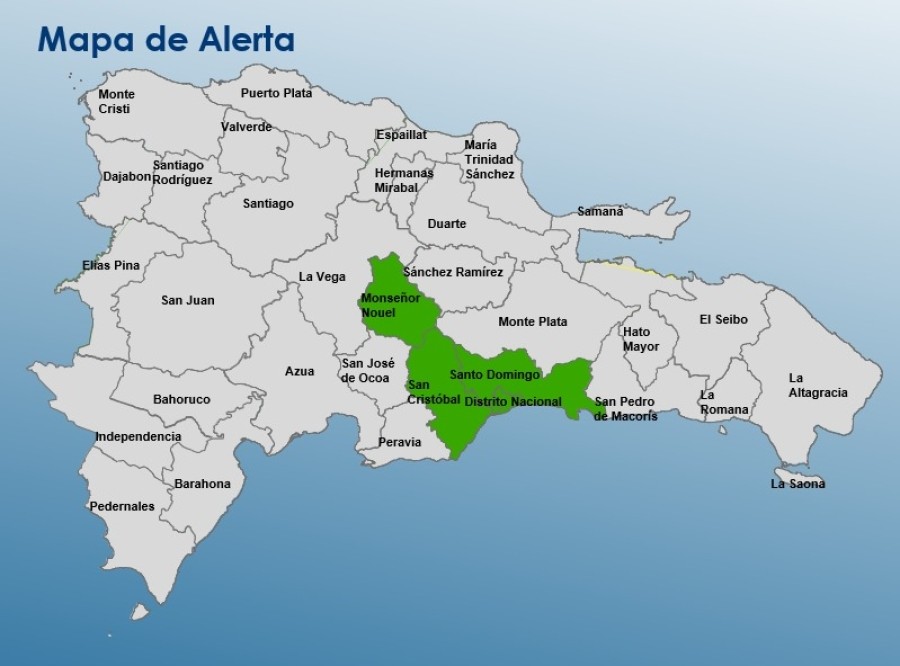
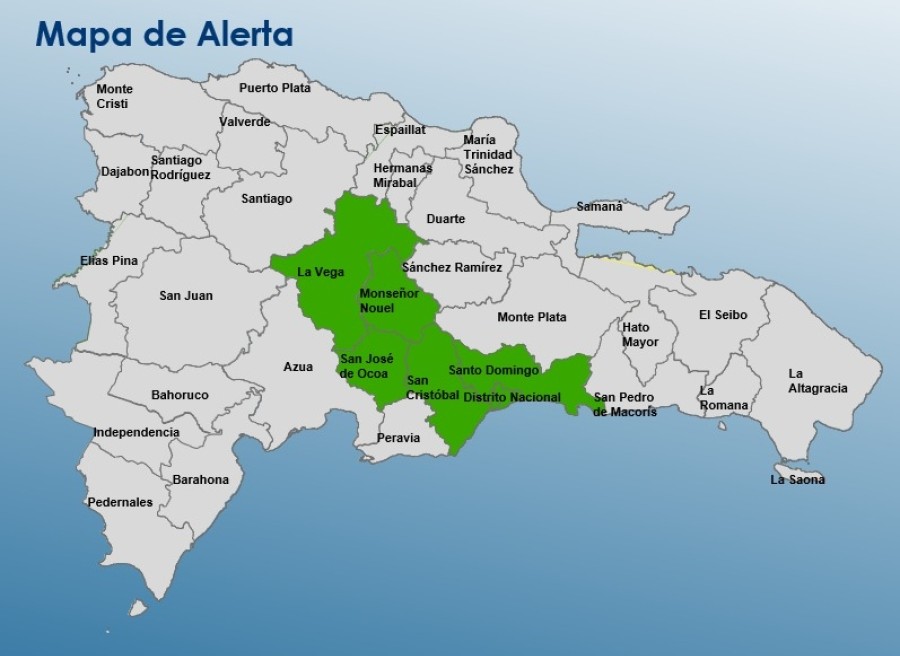
  • COE expands green alert to six areas amid trough effects

    COE expands green alert to six areas amid trough effects

    In the Dominican Republic’s capital of Santo Domingo, national emergency officials have broadened a green weather alert to cover five inland provinces and the country’s National District, responding to an unstable weather trough that is disrupting atmospheric conditions across the entire island nation.

    Data collected from satellite monitoring systems and ground-based weather radar confirms that the system has driven a sharp increase in cloud formation across the affected regions. This buildup of cloud cover is expected to produce moderate to intense rainfall through the coming days, paired with scattered isolated thunderstorms and sudden gusty winds that could create hazardous conditions for local communities.

    The areas officially placed under the expanded green alert are the province of Santo Domingo, the National District, San Cristóbal, Monseñor Nouel, La Vega, and San José de Ocoa. Green alerts, the lowest tier of weather warnings in the Dominican Republic’s emergency system, are issued to inform the public of developing dangerous conditions that require heightened awareness and preparation.

    Emergency management authorities have issued clear guidance for residents in all affected zones to mitigate risk. The public has been strongly advised against attempting to cross swollen rivers, fast-flowing streams, and rain-swollen ravines, as rising water levels can create sudden life-threatening hazards. Additionally, residents and visitors have been instructed to avoid all recreational water sites, including beaches and inland swimming spots, across the warning areas until conditions improve.

    Along the Dominican Republic’s Atlantic coastline, stretching from the eastern edge of Saona Island northward to Monte Cristi, additional precautions are in place for maritime traffic. Operators of small, structurally less sturdy vessels have been told to keep their boats docked in port, as sustained strong winds and choppy, dangerous wave conditions put small craft at high risk of capsizing or distress.

  • Inmates join Holy Week safety operations as part of a pilot program

    Inmates join Holy Week safety operations as part of a pilot program

    In a groundbreaking move aimed at reimagining inmate rehabilitation, Dominican Republic authorities have launched an unprecedented pilot initiative that integrates currently incarcerated individuals into official Holy Week preventive operations, a first-of-its-kind collaboration between the country’s Civil Defense and national Penitentiary System.

    The pilot program, centered on advancing meaningful social reintegration for people behind bars, marks a departure from traditional rehabilitation approaches by giving selected inmates a direct chance to contribute to public safety efforts during one of the country’s busiest annual travel and religious observance periods. The Directorate of Community Corrections confirmed that 10 inmates from various correctional facilities across the nation have been tapped for the initial phase of the project, with selections based strictly on consistent exemplary behavior during their incarceration.

    These selected participants will work side-by-side with trained Civil Defense teams throughout Holy Week 2026, supporting a range of prevention and public assistance activities as part of the annual emergency and safety operations for the holiday. Civil Defense director Juan Salas outlined the core vision behind the new framework, noting that the program is intentionally structured to create a tangible, practical pathway for reintegration rather than relying solely on theoretical rehabilitation programs.

    By participating in organized community service that directly benefits the broader public, inmates get the opportunity to rebuild connections with society and demonstrate their commitment to positive change, Salas explained. Government officials overseeing the initiative emphasized that the pilot is designed for gradual, data-driven expansion. Moving forward, authorities will evaluate participant performance and public impact to refine the model, with the long-term goal of creating a scalable platform that supports consistent rehabilitation and lasting social inclusion for incarcerated individuals across the country.

  • 10 injured after bus overturns on Samaná Highway

    10 injured after bus overturns on Samaná Highway

    A serious multi-vehicle collision on one of the Dominican Republic’s busiest intercity corridors left at least 10 people injured on Holy Thursday, after a passenger bus rolled over following a crash with a sport utility vehicle.

    The accident unfolded close to the third tollbooth along the Northeast Highway, which connects the capital city of Santo Domingo to the popular coastal destination of Samaná, near the access point to the El Aguacate de Arenoso community. At the time of the collision, the passenger bus was en route to Santa Bárbara de Samaná, carrying a full load of travelers ahead of the religious holiday weekend.

    Preliminary accounts from first responders confirm that the chain of events began when the SUV struck the passenger bus, robbing the bus operator of control of the vehicle and triggering the overturn. Local law enforcement and emergency management teams have confirmed that, as of the latest updates, no fatalities have been recorded from the incident. All injured people received initial on-site medical stabilization from first responders, while they waited for additional emergency crews to arrive and transport them to nearby care facilities.

    One lingering detail has added uncertainty to the developing account of the crash: the bus driver’s current location remains unaccounted for, and authorities have not yet released information about their whereabouts. A formal investigation is now active to piece together the full context of the collision and confirm the exact root causes that led to the accident.

  • Humanity scarred by war and violence, catholic church warns

    Humanity scarred by war and violence, catholic church warns

    In a solemn gathering at the Cathedral of the Americas in Santo Domingo, Archbishop Carlos Tomás Morel delivered a thoughtful reflection during the annual Chrism Mass, confronting the deep-seated wounds that continue to divide and weigh on modern humanity. Opening his address, the prelate drew attention to a broad spectrum of crises afflicting communities across the globe, from large-scale violence and active armed conflicts that displace millions to the pervasive spread of deep-seated hatred between groups. Beyond these collective tragedies, he also acknowledged the private, everyday hardships that many people bear in silence: intimate personal tragedies including pervasive domestic violence, sudden loss from preventable traffic accidents, and the unrelenting emotional and spiritual strain that comes with navigating basic daily life.

    Against this bleak landscape of widespread suffering, Archbishop Morel offered a countermessage of compassion and possibility, rejecting the idea that divine care is distant from human pain. He emphasized that God does not remain indifferent to the struggles of people navigating hardship, but instead abides close to every person who carries grief, injury, or burden. Framing Jesus Christ as a divine source of healing, he explained that this spiritual care extends far beyond superficial comfort: it reaches into the broken parts of the human heart, mending fractured lives and restoring what has been damaged in ways that are deep and enduring.

    Closing his homily to the gathered faithful, the archbishop anchored his address in a firm message of hopeful resilience. He urged all those in attendance to hold fast to and strengthen their spiritual faith even when faced with overwhelming personal or collective struggle. Reaffirming that renewal is always within reach, he stressed that no amount of suffering can block the path to spiritual transformation and inner healing, leaving the congregation with a call to lean into trust and persistence through uncertain times.

  • Weather Alert: COE warns of heavy rains and storms in multiple regions

    Weather Alert: COE warns of heavy rains and storms in multiple regions

    Authorities in the Dominican Republic have activated a green weather alert for three key provinces and the National District, as unstable atmospheric conditions driven by a low-pressure trough and moderate east-northeasterly winds are expected to bring disruptive precipitation across the affected regions. The order came from the country’s Emergency Operations Center (known locally as COE), following formal meteorological warnings issued by the Dominican Institute of Meteorology (INDOMET).

    Analysis of real-time satellite and radar imagery confirms that organized cloud systems are currently traversing the nation’s north coast, southeastern corridor, and central interior. Light to moderate rainfall has already been recorded across these zones, with meteorological officials projecting a sharp intensification of precipitation through the afternoon hours. Forecasters warn that the incoming weather system will bring heavy downpours, sudden thunderstorms, and brief but powerful wind gusts that could create localized hazards for residents.

    The jurisdictions placed under green alert include San Cristóbal, Santo Domingo, Monseñor Nouel, and the National District, which hosts the nation’s capital of Santo Domingo. Emergency management officials have issued clear public safety guidance to communities in these regions: residents are strongly advised to avoid attempting to cross swollen rivers, streams, and ravines, as surging water levels pose a major drowning risk. People are also urged to steer clear of beaches, lakes, and other recreational water bodies while the unstable weather persists.

    Additional safety warnings are in place for small craft operators along the country’s Atlantic coastline. From the eastern edge of Saona Island extending northwest to Monte Cristi, operators of small, lightweight vessels have been instructed to stay docked in port due to rough ocean swells and persistent strong winds. Notably, no navigation restrictions have been implemented for the Dominican Republic’s southern Caribbean coast, where sea conditions remain calm enough for regular maritime activity.

  • President praises Dominican engineer in NASA Artemis II mission

    President praises Dominican engineer in NASA Artemis II mission

    SANTO DOMINGO — When NASA lifted off its groundbreaking Artemis II mission from the Kennedy Space Center, one Dominican engineer’s contributions to the landmark lunar mission have turned him into a national icon back home. Dominican President Luis Abinader has publicly lauded propulsion and launch specialist Michael Guzmán for his work on the program, framing his involvement as a testament to the global impact of Dominican STEM talent and a source of widespread national pride.

    Guzmán, who serves as a core team member working on launch and propulsion systems for the Artemis program, recently drew broad attention from Dominican communities at home and across the diaspora after he shared a public video message wishing the Artemis II crew a safe, successful and inspiring voyage. The heartfelt message quickly resonated across the country, turning his behind-the-scenes technical work into a source of national celebration that has captured public imagination.

    As NASA’s first crewed test flight for its next-generation lunar exploration infrastructure, Artemis II carries enormous historical meaning for modern space exploration. The mission marks the first time a crewed spacecraft has traveled beyond low-Earth orbit to the Moon’s neighborhood in more than 50 years, serving as a critical validation test for the Space Launch System (SLS) rocket and Orion deep space capsule that will power future human landing missions to the lunar surface. Over its roughly 10-day flight plan, the four-person crew will complete a full orbit around the Moon before returning to Earth, putting all key life support, navigation and re-entry systems through their first crewed trial to clear the way for the Artemis III landing mission set to follow. For Guzmán and the Dominican Republic, his role in this milestone moment cements that talent from the nation can compete and contribute at the highest levels of global scientific exploration.

  • Heavy traffic hits Baní Bypass as Holy Week travel begins

    Heavy traffic hits Baní Bypass as Holy Week travel begins

    As Holy Week travel kicked off, thousands of holiday travelers faced crippling traffic congestion Thursday morning along the major highway leading to the Dominican Republic’s southern region. What began as steady flow quickly spiraled into a standstill, with a multi-kilometer backup building near the Baní bypass exit that extended all the way to the Ocoa intersection, leaving dozens of motorists stranded for hours.

    The gridlock upended travel plans for thousands of people heading to southern coastal tourist destinations and family gatherings for the Easter holiday, bringing movement along the corridor to a near-complete halt. Local transit authorities had pre-emptively implemented emergency measures to boost traffic flow, including opening both northbound lanes to southbound travel to accommodate the surge of outbound travelers from the capital. But these adjustments failed to prevent chaos, as widespread driver confusion and unregulated movement exacerbated congestion rather than easing it.

    Multiple motorists stuck in the backup reported that many drivers ignored adjusted lane markings and signage, continuing to use incorrect lanes that created abrupt bottlenecks across the already overstretched roadway. Observers also noted a critical lack of visible on-site guidance from traffic officials to direct driver movement, turning a congestion mitigation design into the primary flashpoint for the gridlock.

    Transit planners had anticipated a significant increase in outbound traffic for Holy Week, a popular holiday period for Dominicans to leave the capital city and travel to southern vacation hubs. But the sheer volume of vehicles hit the road much earlier and in greater numbers than projected, quickly overwhelming the existing road infrastructure and turning the Baní bypass into the worst congestion hot spot within the first hours of the holiday travel window.

  • Casa del Cordón Taíno Cultural Center examines Hispaniola’s linguistic origins

    Casa del Cordón Taíno Cultural Center examines Hispaniola’s linguistic origins

    A recent discussion hosted at the Casa del Cordón Taíno Cultural Center, an initiative developed by Banco Popular Dominicano in Santo Domingo, has shone a fresh spotlight on the rich pre-Columbian linguistic heritage of Hispaniola and the lasting imprint the Taíno language has left on modern Caribbean Spanish. Titled “Voices of the Island: Original Languages of Hispaniola,” the event brought together two leading scholars—anthropologist Leonardo Nin and researcher Rafael García Bidó—to unpack the complex linguistic landscape that existed on the island centuries before European arrival.

    The pair shared key findings that upend common misconceptions about Hispaniola’s indigenous history: before 1492, multiple distinct indigenous languages coexisted across the island, with Taíno emerging as the dominant lingua franca that united different communities. A core argument presented by the speakers pushes back against the widespread framing of Taíno as a fully extinct language. While the full conversational language is no longer in everyday use, they demonstrated that Taíno remains deeply embedded in the daily speech of communities across the Dominican Republic, Puerto Rico, and Cuba, with hundreds of common words, phonetic patterns, and idiomatic expressions preserved through generations.

    As part of the discussion, the researchers presented new work focused on reconstructing Taíno phonology and mapping its unique linguistic characteristics. They used widely recognized everyday terms as case studies to illustrate their points: words that are now standard in Spanish, such as “maíz” (corn), “iguana” (the reptile), and “bejuco” (vine), carry clear traces of Taíno’s original structural and pronunciation patterns. Beyond linguistic analysis, the conversation emphasized that sustained academic study of indigenous languages is far more than an niche academic exercise—it is a critical tool for deepening public understanding of Dominican national cultural identity. The event also reaffirmed the central role the Casa del Cordón Taíno Cultural Center plays in advancing public knowledge of indigenous heritage and supporting ongoing research initiatives that center the island’s pre-Columbian history.

  • Dominican airline Arajet announces new flights to Venezuela

    Dominican airline Arajet announces new flights to Venezuela

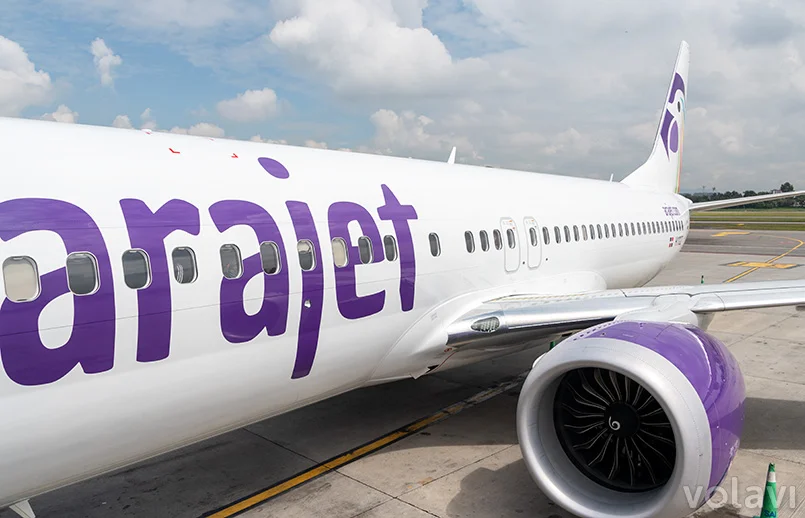
    Santo Domingo, Dominican Republic – Low-cost Caribbean airline Arajet has formally announced its scheduled entry into Venezuela’s aviation market, with commercial operations set to launch in the middle of 2026. The move comes months after the Dominican Republic and Venezuela restored formal air connectivity between the two nations, opening the door for new scheduled air services after years of restricted travel links.

    Arajet’s initial service will connect the popular Dominican tourist hub of Punta Cana with Caracas, Venezuela’s capital, operating through Maiquetía International Airport, the country’s primary air gateway. Company executives have already shared long-term expansion blueprints that include adding new routes to two of Venezuela’s other major urban centers, Valencia and Maracoibo, as operations scale up in the coming years after launch.

    In an official statement confirming the expansion, the Dominican-based carrier framed Venezuela as a critical strategic market for its ongoing regional growth push. Company representatives noted that the launch timeline was only made possible after the airline secured all required regulatory approvals from civil aviation authorities in both countries, clearing the final bureaucratic hurdle for the new service.

    This new Venezuela route is a core component of Arajet’s broader expansion strategy across the Caribbean and South America, which focuses on closing gaps in regional connectivity and offering affordable air travel options between underserved markets. To date, the airline has not yet released detailed operational data, including planned flight frequencies and introductory ticket pricing. According to the company’s announcement, these key details will be unveiled to the public in the next several weeks as launch preparations advance.

    Industry analysts note that the expansion positions Arajet to capture growing travel demand between the two nations, which has surged steadily since air borders reopened. For the airline, the move is also a key step to solidify its competitive standing as one of the fastest-growing low-cost carriers in the Latin American and Caribbean region, leveraging new market opportunities created by restored diplomatic and transportation ties.

  • RD Vial expands roadside assistance for Holy Week 2026 travel surge

    RD Vial expands roadside assistance for Holy Week 2026 travel surge

    SANTO DOMINGO — In preparation for one of the year’s busiest domestic travel periods, the RD Vial Trust has dramatically expanded its roadside emergency and assistance capabilities ahead of the upcoming “Conscience for Life: Holy Week 2026” safety operation. The infrastructure trust has added 30 brand-new service vehicles to the fleet managed by COMIPOL, the Military and Police Commission operating under the country’s Ministry of Public Works.

    The expanded fleet includes a diverse range of specialized equipment tailored for highway emergencies: heavy-duty rescue trucks, vehicle recovery cranes, fully-equipped mobile repair workshops, and a dedicated fire truck. With this infusion of new resources, the total number of operational units deployed across Dominican Republic’s national highway network now surpasses 200, bringing the service to its largest and most capable operational standing in its entire history.

    Beyond expanding its vehicle fleet, public authorities have confirmed that more than 3,600 trained personnel will be mobilized across the country to support the national Emergency Operations Center (COE) throughout the Holy Week holiday period, when travel volumes spike dramatically as locals head to coastal and regional destinations.

    All roadside assistance requests will be centrally coordinated through the dedicated 511 emergency hotline, which maintains around-the-clock 24/7 coverage for motorists traveling anywhere in the country. To further cut down on response times and prevent avoidable accidents, RD Vial has also rolled out targeted preventive safety and logistics measures along the nation’s busiest traffic corridors, including the Duarte Highway, Las Américas Highway, and the Baní bypass highway. These upgrades are designed to streamline emergency response and ensure safer travel for all road users during the peak holiday period.