标签: Dominican Republic

多米尼加共和国

  • Dominican Republic and Suriname advance energy and hydrocarbon cooperation

    Dominican Republic and Suriname advance energy and hydrocarbon cooperation

    In a recent high-level diplomatic gathering held in Santo Domingo, senior officials from the Dominican Republic and Suriname have moved forward with collaborative discussions focused on expanding joint work in hydrocarbon development and the broader energy sector. The meeting brought together Joel Santos, the Dominican Republic’s Minister of Energy and Mines, and Melvin Bouva, Suriname’s Minister of Foreign Affairs, where parties centered their dialogue on opportunities for joint oil and gas exploration, as well as potential partnerships in mining and large-scale energy initiatives. These talks unfold against a backdrop of rapid transformation in the Caribbean and Latin American regional energy landscape, where nations are actively reworking their energy strategies to balance security needs, climate goals, and economic growth.

    During the discussions, Minister Santos shared key updates on the Dominican Republic’s domestic energy plans, confirming that the country will launch its second competitive oil exploration bidding round this coming November. The initiative is designed to draw foreign and domestic investment into the country’s energy sector, shore up long-term national energy security, and deliver more comprehensive data on the full scope of the Dominican Republic’s untapped hydrocarbon reserves. Crucially, the bidding round will be structured to adhere to strict sustainable development practices and full transparency requirements, aligning with global standards for responsible resource extraction.

    Beyond non-renewable resource development, Santos also highlighted the Dominican Republic’s significant progress in transitioning to a cleaner energy system. He noted that renewable energy sources now account for more than one-quarter of the country’s total electricity generation, a milestone that has helped build a more diverse, climate-resilient national energy mix that reduces reliance on imported fossil fuels.

    Both delegations reaffirmed their shared commitment to deepening bilateral relations beyond the energy sector, with plans to explore expanded cooperation across a range of strategically important areas. In addition to energy and mining, the two governments are looking to advance collaboration on sustainable development priorities, with cross-ministerial participation from officials overseeing transport, tourism, digital communications, and international trade. This broad-based approach to partnership reflects both nations’ desire to unlock mutual economic benefits and strengthen their positions in the evolving regional and global energy market.

  • Government meets today with Leonel Fernández to address global crisis

    Government meets today with Leonel Fernández to address global crisis

    In the Dominican capital of Santo Domingo, a high-stakes cross-party gathering is set to take place Thursday evening, bringing top government officials together with former head of state Leonel Fernández and senior leadership of the opposition People’s Force party. The core purpose of the closed-door meeting, hosted at the Global Democracy and Development Foundation starting at 6:00 p.m., is to outline the full parameters of President Luis Abinader’s national preparedness initiative, which has been developed to shield the country from fallout linked to escalating international tensions between the United States, Israel, and Iran.

    The official government delegation will be led by José Ignacio Paliza, Minister of the Presidency, and will include two senior advisors, Magín Díaz and Eduardo Sanz Lovatón. Details of the planned consultation were officially verified by Omar Fernández, spokesman for former president Leonel Fernández, confirming that both government technical experts and opposition policy specialists will participate in the discussion.

    This cross-sector dialogue forms a central pillar of the Abinader administration’s broader strategy to build unified national consensus around risk mitigation. The government is working to shore up domestic resilience ahead of any potential economic and social shocks that could ripple out from the worsening geopolitical standoff in the Middle East. Prior to this meeting, administration officials already held an identical consultation session with another former Dominican president, Danilo Medina, and key representatives from the Dominican Liberation Party, one of the country’s largest opposition blocs. The ongoing series of conversations reflects a deliberate push to include all major political, economic, and social stakeholder groups in national preparedness planning, rather than advancing policy unilaterally.

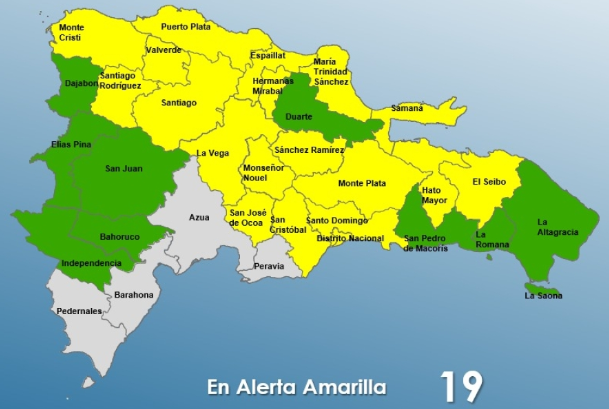
  • Weather update: COE maintains 18 provinces on yellow alert

    Weather update: COE maintains 18 provinces on yellow alert

    Residents of the Dominican Republic are navigating heightened weather risk this week, after national emergency officials rolled out multi-level alerts across nearly the entire country in response to sustained downpours and rapidly worsening soil saturation.

    The Emergency Operations Center (COE), relying on real-time data and forecasts from two leading national agencies—the Dominican Institute of Meteorology and the National Institute of Hydraulic Resources—implemented the alert system, placing 18 provinces and the country’s National District under yellow alert, with an additional nine provinces classified under green alert.

    Weather officials have cautioned that current atmospheric conditions remain primed for continued precipitation across much of the nation, which in turn amplifies a range of dangerous threats for communities in affected zones. These risks include flash urban flooding, overflowing riverbanks, landslides on saturated hillsides, and other weather-related emergencies that can threaten both life and property.

    In a series of public advisories released alongside the alert declaration, COE has pushed clear safety guidance to help residents mitigate harm. The agency strongly urges the public to avoid attempting to cross swollen rivers, streams, and ravines, even if the water appears shallow enough to traverse. It also asks people living in alert zones to steer clear of recreational bodies of water, where hidden hazards from shifting currents and debris can create unexpected danger.

    Maritime safety guidance has also been issued for coastal operators. Small and medium-sized watercraft working along the Dominican Republic’s Atlantic coast, stretching from Cabo San Rafael in the east to Punta de Manzanillo in the west, are told to exercise extreme caution while navigating, and to refrain from traveling far offshore due to dangerous rough sea conditions. By contrast, COE confirmed that sea conditions along the country’s Caribbean coastline remain stable and normal for commercial and recreational activity.

  • Raquel Peña assesses flood damage in Bahoruco communities

    Raquel Peña assesses flood damage in Bahoruco communities

    Recent heavy rainfall has triggered destructive flooding in the southern Dominican province of Bahoruco, after the El Manguito River overflowed its banks, leaving widespread damage to residential areas, infrastructure, and farmland across local communities. In response to the disaster, Vice President Raquel Peña launched an official on-site visit to the hard-hit neighborhoods of El Estero and Jaragua, carrying out a presidential mandate from head of state Luis Abinader to evaluate the scope of the crisis and meet directly with affected populations.

    During her tour of flood-impacted zones, Peña walked through waterlogged neighborhoods to inspect collapsed home foundations, washed-out road segments, and saturated agricultural plots, holding face-to-face talks with local residents, small-scale farmers, and community organizers to catalog their most pressing unmet needs. The vice president’s visit prioritized centering community voices, allowing local stakeholders to outline how the flood has disrupted their daily lives, destroyed livelihoods, and left hundreds of families without basic resources.

    To deliver immediate relief to impacted communities, the national government rolled out emergency support within days of the disaster: 800 pre-packaged food rations were distributed to vulnerable households through the country’s Directorate of Social Assistance and Community Food. Beyond this initial aid, officials announced that a team of technical specialists will conduct a systematic, full-scale assessment to calculate the total economic and structural damage caused by the flooding. This assessment will inform the distribution of additional long-term support, including replacement household goods and targeted funding for roof repairs for damaged homes.

    Top government officials have reaffirmed that the national administration will maintain a sustained presence in Bahoruco, continuing to monitor evolving flood conditions, coordinate closely with local government teams and community organizations, and address both the immediate aftermath of the disaster and long-term resilience needs. The commitment extends to preparing for potential future rainfall events, with plans to implement mitigation measures that reduce the risk of similar damage for local communities going forward.

  • Chamber of Deputies transfers property for INFOTEP tourism school

    Chamber of Deputies transfers property for INFOTEP tourism school

    SANTO DOMINGO — The Dominican Chamber of Deputies has greenlit a strategic transfer of state-owned property, greenlighting a major project aimed at boosting youth employment in the country’s critical tourism sector. The sprawling Legislator’s Club, an approximately 9,000-square-meter facility located in the eastern district of the capital Santo Domingo, will be handed over first to the General Directorate of National Assets, which will subsequently reassign the site to the National Institute of Technical and Professional Training (INFOTEP), according to an official announcement from the lower legislative chamber.

    Alfredo Pacheco, president of the Chamber of Deputies, laid out the goals of the property repurposing in a public briefing. He noted that the location was selected for its accessibility and size, which makes it ideal for hosting hands-on training facilities, lecture halls, and simulated work environments tailored to the needs of the tourism industry. Once the facility is redeveloped, INFOTEP will roll out a suite of specialized technical training programs designed to equip new entrants to the workforce with industry-relevant skills, opening up accessible career pathways for thousands of young Dominicans interested in building long-term careers in hospitality, travel management, culinary arts, eco-tourism, and other fast-growing sub-sectors of the national tourism industry.

    The transfer process already has full legal backing, with executive decrees already issued that formally classify the property as a public utility asset designated for educational use. This project is not an isolated policy adjustment, but rather a core component of a wider national initiative to reallocate underused state assets toward public education and workforce development. Government officials say the initiative prioritizes investments that align with the country’s long-term economic growth goals, given that tourism consistently ranks as one of the Dominican Republic’s largest sources of foreign exchange and job creation for working-age people.

  • Sudden temperature drop caused rare hailstorm in Bayahíbe

    Sudden temperature drop caused rare hailstorm in Bayahíbe

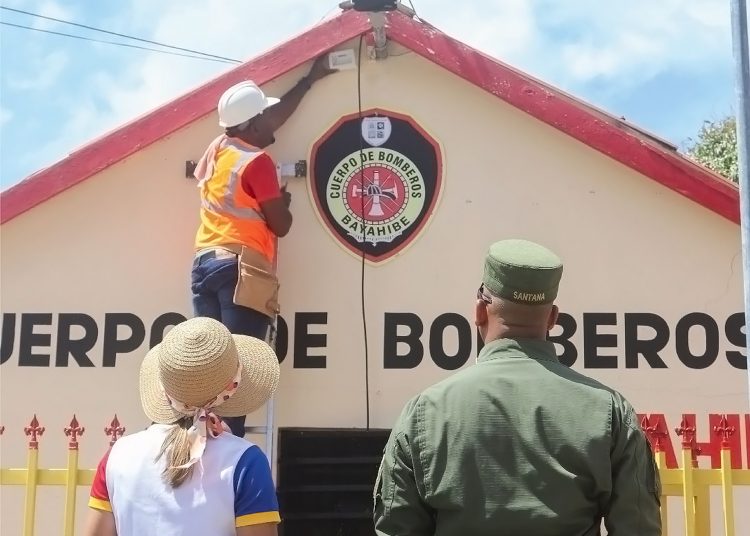
    On a Monday in Bayahíbe, an unexpected hailstorm caught local residents off guard, and new analysis from researchers at the Pontifical Catholic University Madre y Maestra (PUCMM) has pinpointed the rare atmospheric conditions that drove the extreme weather event. The research team confirms that unusual atmospheric behavior was at the core of the storm, which brought an unprecedented 12°C temperature plunge over just 45 minutes.

    According to the study’s peer-reviewed findings, the hailstorm formed when a mass of cold air collided directly with a warm, moisture-saturated air mass sitting over the coastal region. Between 3:00 p.m. and 3:45 p.m. local time, this clash dragged temperatures down from a balmy 32°C to a cool 20°C. The stark temperature contrast between the two air masses generated powerful upward air currents within the developing storm clouds. These strong updrafts lifted tiny water droplets high into the freezing upper layers of the cloud, where the droplets froze into ice pellets that grew into hailstones before falling to the ground.

    The data behind these conclusions was collected from a network of environmental sensors and a dedicated local weather station, placed in Bayahíbe as part of a broader national climate adaptation research initiative. Beyond explaining the hailstorm, the monitoring network has also detected shifting rainfall patterns across the region that deviate from historical norms. As of the current point in 2026, total accumulated rainfall in Bayahíbe has already hit 1,392.9 millimeters – far exceeding the full historical annual average of 970 millimeters. The month of April alone recorded 113.8 millimeters of rain, signaling a significant departure from long-term trends.

    This local research effort is designed specifically to boost climate resilience for at-risk coastal communities like Bayahíbe, which are disproportionately vulnerable to the impacts of shifting weather patterns and increasing extreme weather events. By generating granular, hyper-local climate data, the initiative aims to provide policymakers and community leaders with evidence-based insights to support more effective planning, disaster preparedness, and adaptation decision-making. The hailstorm analysis underscores a key takeaway: targeted local climate research is an essential tool to help communities anticipate, prepare for, and respond to the growing frequency of extreme weather events driven by changing global climate conditions.

  • Aerodom awards US$20M AILA runway contract to Ingeniería Estrella

    Aerodom awards US$20M AILA runway contract to Ingeniería Estrella

    Santo Domingo, Dominican Republic – A major infrastructure upgrade is underway at one of the Caribbean’s busiest air transit hubs, as Aeropuertos Dominicanos Siglo XXI (Aerodom), a member of the global Vinci Airports network, has formally contracted local firm Ingeniería Estrella to head up the comprehensive rehabilitation of Runway 17-35 at Las Américas International Airport (AILA). The transformative infrastructure project carries a total budget of more than US$20 million, with core goals centered on elevating aviation safety standards and boosting the airport’s daily operational efficiency.

  • Indomet forecasts continued rain, thunderstorms across Dominican Republic

    Indomet forecasts continued rain, thunderstorms across Dominican Republic

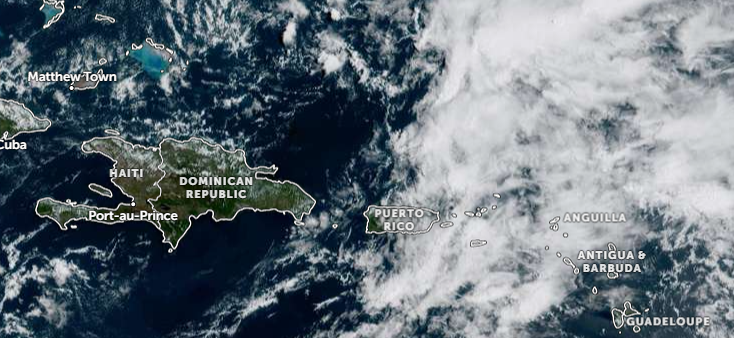
    Residents across the Dominican Republic are preparing for another day of disrupted weather on Tuesday, as the Dominican Institute of Meteorology confirms ongoing unstable conditions driven by a low-pressure trough penetrating multiple layers of the troposphere. The atmospheric system has locked the nation in a pattern of persistent rainfall that is expected to hold throughout the day, bringing varied hazards across different regions.

    Early morning brings the first round of precipitation, with scattered showers forecast to sweep across the country’s northern and northeastern provinces. Popular tourist and population hubs including Puerto Plata, Santiago, and Samaná will see this initial wave of rain, which the meteorological service projects will ease temporarily midday before gaining strength once again as afternoon sets in.

    Meteorologists explain that the combination of accumulated daytime heat and the underlying atmospheric instability will create ideal conditions for intense precipitation development. From mid-afternoon through early evening, moderate to heavy downpours, rolling thunderstorms, and sudden strong wind gusts are most likely to impact Greater Santo Domingo, as well as central, eastern, and southwestern sections of the country.

    Hazard outlooks extend beyond heavy rain for higher elevation zones: the national weather agency has issued a special warning that isolated hail events are possible across mountainous areas, paired with localized severe wind bursts that could bring down tree branches or disrupt utility service. As a result of the multi-day rainfall risk, a large swath of the country remains under active weather alerts, with officials flagging dangers including sudden urban flash flooding, overflowing rivers and streams, rain-triggered landslides, and dangerous electrical activity from thunderstorms.

    Temperatures will remain unseasonably hot in the hours before rain arrives, pushing heat indexes into potentially dangerous ranges for outdoor activity. In response, health and weather officials are urging the public to prioritize consistent hydration and stay in well-ventilated spaces to avoid heat-related illness ahead of the afternoon downpours.

    Marine hazards are also in effect for one stretch of the country’s coastline: along the Dominican Republic’s Atlantic shore, running from Cabo San Rafael to Punta de Manzanillo, small and medium-sized recreational and commercial vessels have been urged to avoid non-essential travel and navigate with extreme caution due to elevated rough sea conditions. By contrast, marine conditions along the country’s southern Caribbean coast remain within normal ranges, with no special advisories in place for that area.

    Authorities closed their update by reminding the public that weather conditions can shift rapidly amid this unstable pattern, and that residents should closely monitor official weather updates from the Dominican Institute of Meteorology, and follow all published public safety guidelines to avoid preventable risk during the weather event.

  • Malecón Center: detached cornice was non-structural

    Malecón Center: detached cornice was non-structural

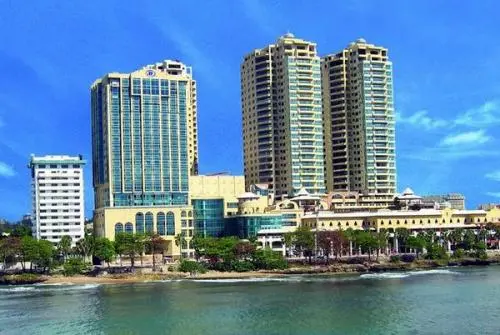
    A partial structural failure has occurred at one of Santo Domingo’s prominent landmarks after intense weather swept through the Dominican capital on Monday afternoon. The Board of Directors of Malecón Center confirmed that a decorative cornice broke free from the building’s north-facing exterior, brought down by the harsh meteorological conditions that impacted the region that day.

    In an official public announcement, the facility’s administration moved quickly to reassure the public and residents about the nature of the damage. The fallen element, they explained, is a decorative plaster feature included in the building’s original architectural plans, and never formed a core part of the property’s load-bearing structural system. This key distinction means the incident does not compromise the overall stability of Malecón Center, and poses no ongoing threat to people who live in or visit the space.

    While no people were harmed in the collapse, the falling debris did cause limited material damage to the property. The condominium’s in-house technical team is currently conducting a full on-site assessment to map out the full extent of the harm, and will move forward with all necessary restoration work once the evaluation is complete.

    The Board of Directors used the statement to reaffirm its long-standing commitment to three core priorities: maintaining rigorous safety standards across the facility, carrying out consistent proactive upkeep, and keeping residents fully informed of all relevant developments. It also extended its gratitude to property residents for their patience and collaboration as the repair process gets underway.

  • Gazcue hit hard by sudden storm, dozens of vehicles affected

    Gazcue hit hard by sudden storm, dozens of vehicles affected

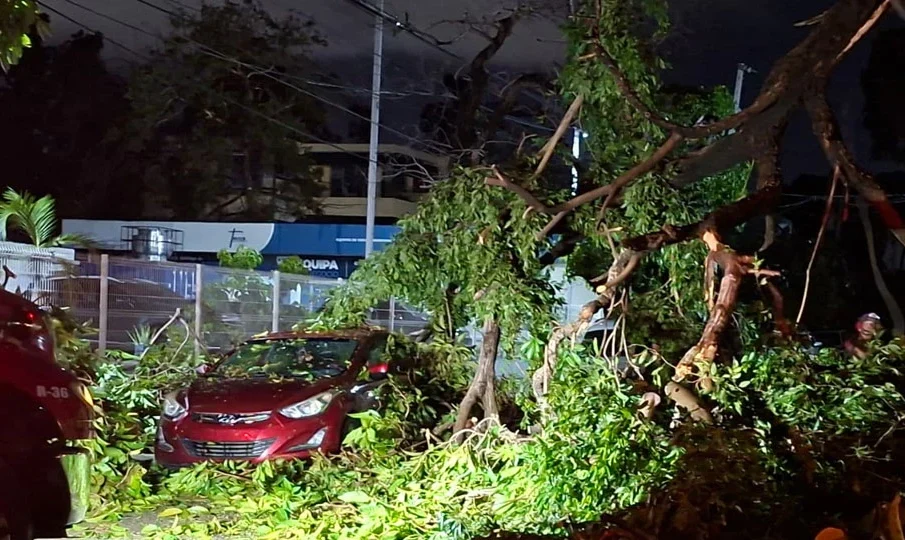
    On Monday afternoon, an unanticipated severe weather system characterized by torrential rainfall, large hail and destructive wind gusts barreled through Santo Domingo’s National District, leaving a trail of extensive destruction that hit the Gazcue neighborhood particularly hard. The fast-intensifying storm caught local residents off guard, triggering a series of disruptions that upended daily life across the affected area.

    Strong wind gusts reached enough force to uproot fully grown trees, sending the massive vegetation crashing onto public roadways and parked or moving vehicles. The blockages immediately snarled traffic, leaving commuters and local residents stranded for extended periods and creating chaotic, high-tension conditions across the sector. Multiple residential properties also reported substantial material damage: shattered window panes were widespread, and outdoor structures including awnings and backyard gazebos were completely destroyed by the powerful winds. Loose debris and household items were scattered across yards and streets by the gusts, adding to the cleanup burden facing the community.

    In addition to structural and property damage, the severe weather knocked out critical electrical infrastructure, leaving the vast majority of Gazcue without power immediately after the storm passed. Local utility companies quickly dispatched response teams to the area to conduct full damage assessments and begin restoration work. As of the latest updates, emergency management officials have confirmed that no storm-related injuries have been reported, though fallen tree debris continues to cause major traffic congestion throughout the neighborhood as cleanup efforts proceed.