标签: Dominican Republic

多米尼加共和国

  • COE extends green alert for 15 provinces and the DN due to a trough expected to arrive this Sunday

    COE extends green alert for 15 provinces and the DN due to a trough expected to arrive this Sunday

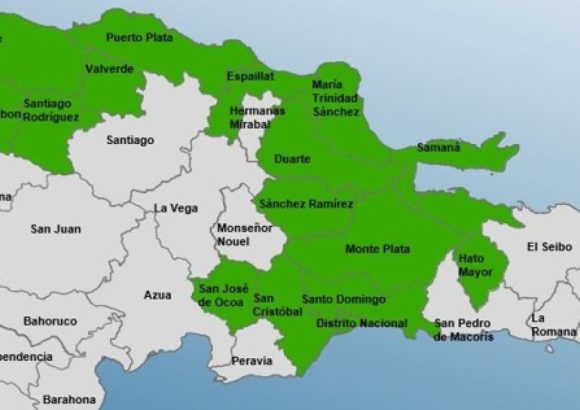
    The Emergency Operations Center (COE) of the Dominican Republic announced Saturday an extension of the green-level weather alert, covering 15 provinces and the country’s National District. The precautionary measure comes in response to the intensification of a low-pressure trough and the approaching movement of a tropical wave, which are projected to bring heavy, widespread rainfall starting this Sunday.

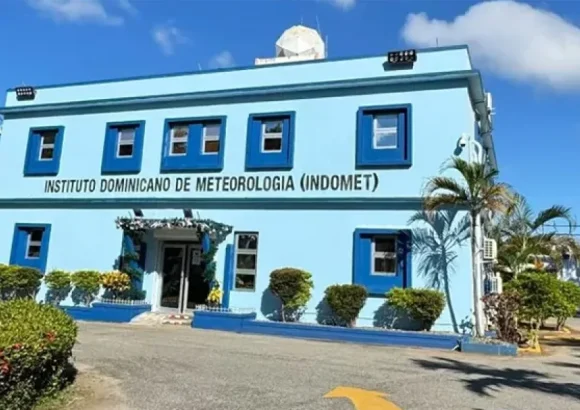
    This extension of the alert was enacted after the Dominican Institute of Meteorology (Indomet) issued an official warning forecasting moderate to heavy downpours across multiple regions of the country, paired with isolated thunderstorms and potential strong wind gusts. These adverse weather conditions are expected to develop through the afternoon, overnight, and into the early morning hours across the affected zones.

    In addition to the National District, the regions included in the extended green alert are Montecristi, Puerto Plata, Samaná, Dajabón, San Cristóbal, Hato Mayor, Valverde, San José de Ocoa, Monte Plata, Santo Domingo, Sánchez Ramírez, Espaillat, Duarte, María Trinidad Sánchez, and Santiago Rodríguez. While these 15 provinces and the National District face the highest risk, adjacent regions including La Vega, Monseñor Nouel, Santiago, and La Altagracia will also experience measurable rainfall impacts, per meteorological assessments.

    Indomet has outlined that the sustained, heavy precipitation created by current atmospheric conditions raises significant risks of dangerous hazards. Key among these threats are the overflow of rivers, small streams, and ravines, alongside widespread urban flooding and sudden flash floods—particularly in low-lying communities that are historically vulnerable to extreme weather events.

    In response to the incoming storm system, the COE has issued a series of urgent public advisories. Authorities urge all residents in the affected areas to remain vigilant, monitor continuously updated official weather and emergency bulletins, and strictly follow all safety guidance released by national civil protection agencies. The COE also issued two critical safety recommendations: the public is strongly advised against attempting to cross rivers or streams swollen by floodwaters, and to avoid all recreational swimming areas throughout the provinces under the active alert.

  • Rare earth reserves could be larger; Paliza says studies will conclude by the end of the year

    Rare earth reserves could be larger; Paliza says studies will conclude by the end of the year

    As global demand for critical rare earth minerals surges amid a sweeping reorganization of global supply chains, the Dominican Republic’s ongoing exploration of large rare earth deposits has emerged as a potential game-changing development for the Caribbean nation’s economy, a senior government official has confirmed.

    Speaking at the inaugural International Congress of Geopolitics this week, Minister of the Presidency José Ignacio Paliza shared key updates on the exploration project, revealing that a full assessment of the quantity and grade of the country’s rare earth reserves will be completed by the end of 2024. Early estimates already point to far larger deposits than initially discussed: while President Luis Abinader previously referenced a preliminary figure of 60 million gross tons, Paliza confirmed the actual reserve could be as much as double that volume.

    The project remains in its active exploration phase as of the time of the announcement. To date, exploration teams have completed 3,527 meters of borehole drilling and 3,100 meters of small-to-medium test pit excavations, and are on track to collect 10,000 geological samples for analysis by the end of the year.

    Paliza emphasized that the rare earth development opportunity comes at a pivotal moment for global markets. Global demand for rare earth elements — critical inputs for the energy transition, artificial intelligence, national defense systems, electric vehicle batteries, and consumer electronic components — is projected to double by 2030. If the Dominican Republic can bring its reserves into commercial production, it will secure a place at the center of one of the 21st century’s most strategically important global supply chains.

    When compared to existing major mining operations in the country, the scale of potential rare earth production is staggering. As Paliza noted, even a large established operator like Barrick Gold would be considered relatively small next to the economic footprint a fully developed domestic rare earth industry could create for the nation.

    A key advantage of the Dominican Republic’s deposits, located in the Ávila Fiscal Mining Reserve in Pedernales, is their favorable geological characteristics that would allow for extraction with minimal environmental harm. Paliza pointed out that many known rare earth deposits around the world are not commercially viable because processing generates toxic waste that makes exploitation environmentally and economically unsustainable. “In our case, it seems that we have them in very healthy, very favorable conditions, to put it plainly,” he said.

    Due to the lengthy timeline and high level of technical specialization required to develop a full rare earth industry from exploration to commercial production, Paliza noted the project will likely span multiple future Dominican government administrations, requiring long-term commitment and institutional continuity.

    The rare earth potential extends beyond the Dominican Republic’s borders, Paliza added. Since the deposits are located in a mountain range that crosses into neighboring Haiti, the shared geological formation means Haiti is also likely to hold significant rare earth reserves, putting both Caribbean nations on the global strategic minerals map.

    Currently, more than 80% of global rare earth production is concentrated in China, a supply dynamic that has sparked growing concern among the United States and other Western powers that rely on a single source for these critical strategic materials. Paliza argued that nations that can develop reliable supplies of strategic minerals including lithium, cobalt, copper, and rare earth elements will hold outsized economic, technological, and military competitive advantages in the coming decades.

    To fully capitalize on this once-in-a-generation opportunity amid the ongoing reshaping of the global economy, Paliza stressed that the Dominican Republic must first upgrade its energy, logistics, and technological infrastructure. He tied the Pedernales mining potential to a broader national strategy to boost the country’s regional standing, anchored by ongoing high-impact projects including the development of the Port of Manzanillo, the expansion of utility-scale renewable energy generation, and Google’s major investments in national digital infrastructure.

    “The Dominican Republic has all the underlying conditions to become a regional hub for logistics, energy, and technology,” Paliza said. “To achieve this, we just need to consolidate institutional stability, invest in growing our human capital, and strengthen the state’s capacity to deliver on large-scale strategic projects.”

  • Due to a trough expected to arrive on Sunday, the COE has issued a green alert for five provinces

    Due to a trough expected to arrive on Sunday, the COE has issued a green alert for five provinces

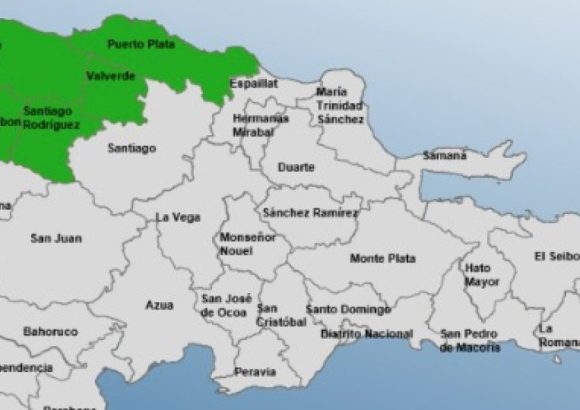
    Authorities in the Dominican Republic have issued an early green weather alert for five northern provinces, ahead of an incoming low pressure trough set to bring unstable atmospheric conditions to the region starting this weekend. The announcement was made jointly by the country’s Emergency Operations Center (COE) and the Dominican Institute of Meteorology (Indomet) during an official press conference held this Friday.

    The green alert, the lowest level of weather warning, is in effect for the provinces of Montecristi, Puerto Plata, Valverde, Dajabón, and Santiago Rodríguez. According to COE, the two-day advance warning was deliberately issued ahead of the trough’s arrival on Sunday because the system is expected to impact the country over the weekend, a period when more residents are typically engaged in outdoor activities and travel.

    Impacts from the weather system are projected to begin in the late afternoon of Sunday, with unsettled conditions continuing through to next Wednesday. The head of Indomet, Gloria Ceballos, noted that the country has experienced unusual weather patterns throughout the month of May. While soil moisture levels across the affected region have not reached saturation point, Ceballos confirmed that the atmosphere will become highly unstable over the coming days, bringing the risk of severe weather events.

    This early weather alert comes on the heels of a separate preventive order issued recently by COE related to hydrological operations. The agency previously banned all recreational activities including crossing, swimming, and bathing in rivers, streams, and ravines along the Nizao River, particularly stretching from the Las Barías Counter Reservoir to the tributary’s mouth. The ban was put in place to accommodate controlled water regulation operations at the Valdesia Hydroelectric Plant, and COE has distributed guidance on protective steps for communities residing along the river corridor to mitigate risks from the scheduled operations.

  • Luis Abinader extends the validity of driver’s licenses for people over 65.

    Luis Abinader extends the validity of driver’s licenses for people over 65.

    On Friday, Dominican Republic President Luis Abinader signed Decree 330-26, a landmark regulatory update that revises Article 21 of the nation’s Driver’s License Regulations. The reform, centered on balancing road safety improvements with more flexible terms for senior drivers, revises existing validity periods for all driver license categories and overturns the prior two-year renewal mandate for drivers over 65 years old.

    This regulatory change draws its legal foundation from Law No. 63-17, the country’s overarching legislation governing mobility, land transportation, traffic management, and road safety. Designed as the core legal framework for all vehicular movement across the Dominican Republic, Law 63-17 requires ongoing regulatory updates to enforce measures that protect all public road users and maintain safe transit conditions.

    Under the new rules, license validity timelines are structured by license category and driver age. For light vehicle license categories 01, 02, and 05, licenses will remain valid for 4 years until the driver turns 75. Once a driver passes the 75-year threshold, renewals will be required every two years, matching the strictness of the previous rule for all drivers over 65. For commercial and heavier vehicle categories 03 and 04, licenses will be valid for 3 years before the driver reaches 75 years of age, after which annual renewal will become mandatory.

    The revised regulation also retains flexibility for individual health circumstances. If a medical evaluation during license issuance or renewal identifies an underlying health condition that could deteriorate over time and impair a driver’s ability to operate a vehicle safely, authorities may shorten the license validity period regardless of the driver’s age. All existing requirements for periodic health and aptitude evaluations remain in place; these checks are critical to confirming that drivers still maintain the physical, cognitive, and skill-based capabilities required for safe motor vehicle operation.

    To enforce the new rules, the decree reaffirms that operating a vehicle on public roads with an expired license remains an offense. Any non-compliance case will be referred to the National Institute of Transit and Land Transportation (INTRANT) for processing, following the procedures outlined in Law 63-17. The decree formally mandates INTRANT to implement all necessary administrative adjustments to roll out the updated regulatory framework smoothly across the country.

  • Moderate downpours are expected today.

    Moderate downpours are expected today.

    Weather forecasting authorities in the Dominican Republic have issued official warnings for multiple northern provinces, as atmospheric conditions are set to bring widespread wet weather across several key geographic regions this week. The Dominican Institute of Meteorology, known locally as Indomet, has forecast that moderate to heavy rainfall will sweep through the northwest provinces, the fertile Cibao valley, the Central Mountain Range, and the country’s northern Atlantic coastline on the day of the alert. Along with the predicted downpours, forecasters warn that scattered thunderstorm activity is likely, with isolated pockets of strong gusty winds also possible across the affected zones.

    Meteorologists have traced the incoming precipitation to two interacting weather systems: a low-pressure upper-level trough moving across the region, combined with warm, moisture-laden winds blowing from the east and southeast. These conditions create the ideal atmospheric instability needed to trigger sustained rainfall and storm activity across the northern half of the country.

    In response to the meteorological prediction, the Dominican Emergency Operations Center (COE) has activated a green-level alert for five at-risk provinces: Dajabón, Montecristi, Santiago Rodríguez, Valverde, and Puerto Plata. A green alert, the lowest tier of emergency warnings in the country’s response framework, indicates that while hazardous conditions are expected, the risk level remains manageable and authorities are closely monitoring the situation to prepare for any potential escalation.

  • From Sunday until Wednesday «we are going to have significant rainfall,» warns Indomet.

    From Sunday until Wednesday «we are going to have significant rainfall,» warns Indomet.

    Authorities in the Dominican Republic have stepped up early public preparations after national meteorological officials issued an advance warning of significant unstable weather set to sweep across the northern region of the country starting this weekend. The Dominican Institute of Meteorology (Indomet) announced Friday that a low-pressure trough will begin impacting the country starting Sunday afternoon, May 17, bringing heavy sustained rainfall that will linger across Dominican territory through the following Wednesday.

    Gloria Ceballos, director of Indomet, noted the incoming weather system will not only bring heavy downpours but also carry the risk of secondary severe hazards including sudden thunderstorms and isolated hail events. She emphasized that this month’s weather patterns have diverged from typical seasonal trends, explaining that while soil moisture levels across the country are not currently saturated, the highly unstable atmospheric conditions will still create dangerous severe weather.

    Ceballos justified the decision to issue the warning three full days in advance during a public press briefing, pointing out that a large share of Dominican citizens step away from news updates during the weekend. Early dissemination of the alert, she argued, gives communities and households adequate time to put precautionary measures in place before the system arrives.

    In coordination with the meteorological service’s warning, the Dominican Emergency Operations Center (COE) has already activated a green alert for five northern Dominican provinces: Montecristi, Puerto Plata, Valverde, Dajabón, and Santiago Rodríguez. The alert is in response to elevated risks of flash flooding, urban flooding, and overflowing of low-lying rivers, streams, and ravines across these regions.

    This alert comes on the heels of a separate precautionary order COE issued tied to planned operations at the Valdesia Hydroelectric Plant. The emergency agency had already banned recreational activities including swimming and crossing at rivers, streams, and bathing areas along the Nizao River, urging nearby communities to stay prepared for changing conditions. The restriction applies specifically to the stretch of the Nizao running from the Las Barías Counter Reservoir to the river’s mouth, where controlled water release operations will be carried out as scheduled.

  • Zenith: No shade at midday? The phenomenon happening this week in the Dominican Republic

    Zenith: No shade at midday? The phenomenon happening this week in the Dominican Republic

    One of the most fascinating annual astronomical events is unfolding across the Dominican Republic this week, as the sun reaches its celestial zenith, creating the rare visual effect widely nicknamed the “moment without shadow.” Over the past 24 hours, the sun has moved into a direct overhead position above Dominican territory, bringing this striking phenomenon to communities throughout the country.

    The details of the event were shared by meteorological analyst Jean Suriel, who explained the science behind the unusual visual effect. Suriel noted that the solar zenith occurs as a direct result of Earth’s axial tilt, which drives the apparent northward migration of the sun across the globe following each equinox, as the planet shifts from its position relative to the equator toward the Northern Hemisphere’s summer season.

    For observers hoping to witness the effect firsthand, Suriel outlined a simple at-home experiment: placing any straight vertical object — such as a glass jar, plastic bottle, or cardboard box — on a flat, open surface during the local peak zenith time will reveal the phenomenon. At the exact moment of local zenith, these vertical objects will temporarily stop casting any visible shadow on the ground beneath them. The analyst added an important clarification, however: the full shadowless effect does not manifest the same way for human observers, due to the curved, irregular shape of the human body.

    To help locals and tourists plan their own observations, Suriel has released a full schedule of estimated peak zenith times for locations across the Dominican Republic throughout this week:

    **Wednesday, May 13**
    – Punta Cana: 12:30 PM
    – La Romana: 12:32 PM
    – San Pedro: 12:34 PM
    – Boca Chica: 12:35 PM
    – Santo Domingo: 12:36 PM
    – San Cristóbal: 12:37 PM
    – Ocoa: 12:38 PM
    – Azua: 12:39 PM
    – Neiba and Duvergé: 12:42 PM
    – Jimaní: Thursday, May 14

    **Thursday, May 14**
    – Higüey and Macao: 12:31 PM
    – El Seibo: 12:32 PM
    – Hato Mayor: 12:33 PM
    – Monte Plata: 12:36 PM
    – Father Las Casas: 12:40 PM
    – San Juan: 12:41 PM
    – The Enclosure: 12:42 PM

    **Friday, May 15**
    – Miches: 12:33 PM
    – Bonao: 12:38 PM
    – Constanza: 12:39 PM
    – Las Matas de Farfán: 12:42 PM

    **Saturday, May 16**
    – Samaná: 12:34 PM
    – Sabana de la Mar: 12:34 PM
    – Villa Rivas: 12:36 PM
    – Pimentel: 12:37 PM
    – Cotuí: 12:37 PM
    – La Vega: 12:38 PM
    – Jarabacoa: 12:39 PM

    **Sunday, May 17**
    – Las Galeras: 12:33 PM
    – Las Terrenas: 12:34 PM
    – Nagua: 12:36 PM
    – San Francisco: 12:37 PM
    – Salcedo: 12:38 PM
    – Santiago: 12:39 PM
    – Moca: 12:39 PM
    – SAJOMA: 12:41 PM
    – Restoration: 12:43 PM
    – Loma de Cabrera: 12:43 PM

    **Monday, May 18**
    – San Juan River: 12:36 PM
    – Gaspar Hernández: 12:37 PM
    – Jamao Al Norte: 12:38 PM
    – Mao: 12:41 PM
    – Sabaneta and Monción: 12:42 PM
    – Dajabón: 12:43 PM

    **Tuesday, May 19**
    – Cabarete: 12:38 PM
    – Puerto Plata: 12:39 PM
    – Luperón: 12:40 PM
    – Villa Vásquez: 12:42 PM

    The solar zenith can only occur in locations between the Tropic of Cancer and the Tropic of Capricorn, putting the Dominican Republic in the small band of global territories that get to experience this annual astronomical event. For many local communities, the arrival of the shadowless moment has become a popular informal annual tradition, with families and students often conducting small observation experiments to mark the occasion.

  • The «El Niño» phenomenon would emerge between May and July 2026 and extend until February 2027

    The «El Niño» phenomenon would emerge between May and July 2026 and extend until February 2027

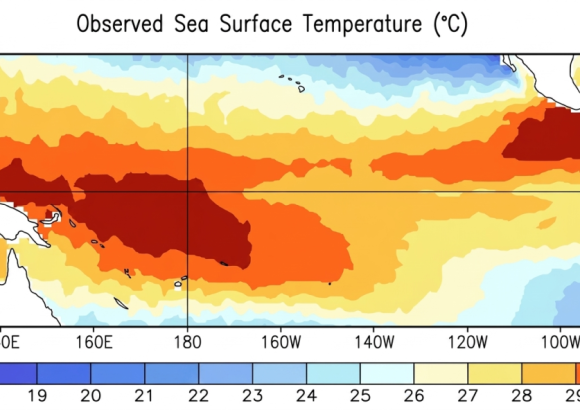
    Two leading climate forecasting bodies have raised a high-confidence alert that a new El Niño event will develop in the Pacific Ocean by mid-2026, with researchers and United Nations agencies warning that the climate phenomenon could exacerbate existing food insecurity and push millions of already vulnerable people deeper into crisis across the Americas.

    El Niño, defined as a sustained abnormal warming of Pacific Ocean surface waters that reshapes global weather patterns, has an 82 percent probability of emerging between May and July 2026, according to an official forecast released Thursday by the U.S. National Weather Service Climate Prediction Center (NWS-CPC). The agency added that there is an even higher 96 percent chance that El Niño will persist through the 2026–2027 winter in the Northern Hemisphere, lasting until at least February 2027.

    Forecasters at NWS-CPC trace the expected development of the event to two key current oceanic and atmospheric conditions: record-warm temperatures in the equatorial Pacific’s subsurface layers, and unusual low-level westerly wind patterns across the western equatorial Pacific that have already spread to the central and east-central Pacific.

    While the high probability of El Niño’s arrival is clear, forecasters have noted that its final intensity remains uncertain. The strongest recorded El Niño events all exhibited robust ocean-atmosphere coupling during the Northern Hemisphere summer, a key precursor that has yet to be confirmed for the 2026 event. Even if a strong event does develop, forecasters emphasize that intensity does not guarantee extreme impacts—it only raises the likelihood of disruptive weather outcomes.

    The alert has already been circulated by national meteorological leaders across the Americas, including Gloria Ceballos, director of the Dominican National Institute of Meteorology (Indomet), who shared the forecast with the public via her official X social media account.

    Beyond climate forecasting, three major United Nations food security agencies have warned that the impending El Niño poses substantial risks to vulnerable populations across the region, at a time when the climate crisis and global price hikes have already stretched livelihoods thin. Ahead of the forecast, the Food and Agriculture Organization (FAO), International Fund for Agricultural Development (IFAD), and World Food Programme (WFP) convened discussions on early preparedness, proactive intervention, and long-term resilience building to counter extreme weather shocks.

    Current regional data underscores the depth of pre-existing vulnerability: across the Americas, more than 33 million people already face chronic hunger, 167 million experience moderate to severe food insecurity, and over 181 million cannot afford nutritionally adequate diets. The region also bears 22 percent of global economic losses from agriculture-related disasters, totaling more than $713 billion in cumulative damage.

    In a joint warning, the three agencies stated that El Niño will likely worsen this precarious situation. The phenomenon is expected to worsen drought conditions across Central America’s Dry Corridor, an already poverty-stricken arid region that is extremely susceptible to climate shocks, while also disrupting rainfall and temperature patterns across the entire hemisphere. These disruptions could push tens of thousands more vulnerable families into food insecurity and chronic poverty, the agencies warned, stressing the urgent need for early action to mitigate harm.

  • Euro falls against the dollar amid Middle East crisis

    Euro falls against the dollar amid Middle East crisis

    Geopolitical gridlock in the Middle East has pulled the euro lower against the U.S. dollar, with the shared currency closing out the week down 0.35% at $1.1629 as surging crude oil prices compound market volatility. As of 3:00 PM GMT on Friday, the euro traded at $1.1629, marking a clear drop from its $1.1680 closing level recorded in the prior trading session. Official data from the European Central Bank reflected this downward shift, with the ECB’s official reference rate for the euro falling to $1.1628 from $1.1702 the day before.

  • Dominican Republic tourism “remains strong” while competitors are declining

    Dominican Republic tourism “remains strong” while competitors are declining

    Against a backdrop of simmering geopolitical tensions in the Middle East, skyrocketing global crude oil prices, and widespread projections of a synchronized global economic slowdown, the Dominican Republic’s key tourism sector is set to outperform regional peers, drawing unexpected visitor flows from crisis-hit competitor destinations across the Caribbean and Latin America. That is the core assessment delivered by leading economist and financial strategist Richard Medina during the 2026 Economic Perspectives Forum, an industry event hosted jointly by the CCI Stock Exchange and economic research firm Ecoanalítica at Santo Domingo’s El Embajador Hotel.

    Against widespread global economic uncertainty stoked by the escalating Iran-United States conflict and volatile energy markets, Medina reaffirmed that the Dominican Republic’s tourism industry has retained unexpected resilience. “I still see tourism as quite strong,” Medina told attendees of the forum, which centered its discussions on how Middle Eastern geopolitical instability is rippling through the Dominican economy, with specific focus on impacts to oil pricing, domestic inflation, and national public finances.

    Medina explained that the sector’s ongoing solid performance is largely driven by cascading crises that have crippled key rival tourism hubs in the region, pushing international travelers to redirect their trips to the Dominican Republic instead. “Cuba is in the midst of a deep economic and systemic crisis, so a significant share of what would have been Cuba’s inbound tourism should shift to our shores,” he noted. He also pointed to Jamaica, which recently suffered extensive infrastructure damage and service disruptions from a powerful Atlantic hurricane that hit the island last season. “Jamaica is still recovering from the hurricane’s impact, and some of its expected tourism flow is coming to us,” he added.

    The economist also highlighted Cancun, Mexico—one of the Dominican Republic’s top competitors for North American leisure travelers— which has grappled with escalating violent crime and a worsening public security crisis in recent years. “Cancun is facing a major security crisis that has deterred some visitors, and a portion of that diverted tourism could very well end up here,” Medina said.

    Beyond benefiting from regional competitors’ challenges, Medina added that the Dominican Republic has also made solid gains expanding its reach into non-traditional source markets for tourism, with particularly strong growth recorded across South America. “Tourist arrivals from Colombia and Argentina have performed exceptionally well over the past year,” he said. This deliberate market diversification, he explained, has helped the country cut its over-reliance on traditional source markets such as the United States and Canada, strengthening the sector’s stability amid an increasingly unpredictable global landscape.

    Despite the broadly positive outlook, Medina did not downplay the risks the Dominican Republic still faces. He stressed that the country cannot fully insulate itself from the spillover effects of a potential broad global economic slowdown that would curb overall international travel demand. “If we see a widespread slowdown in global tourism volumes this year, we will not escape that impact,” he cautioned. Medina also noted that while foreign exchange-generating sectors—led by tourism—have posted strong recent performance that shored up the country’s economic fundamentals, the Dominican Republic remains highly exposed to external global shocks due to its heavy dependence on imported energy and deep integration into the global economy.

    Even with these caveats, Medina maintained that the overall 2025 outlook for the Dominican tourism sector remains distinctly positive. “Even accounting for these headwinds, I believe we are going to have a very good year for tourism,” he concluded.