标签: Dominican Republic

多米尼加共和国

  • Authorities seize 123 kilograms of cocaine at Caucedo Port

    Authorities seize 123 kilograms of cocaine at Caucedo Port

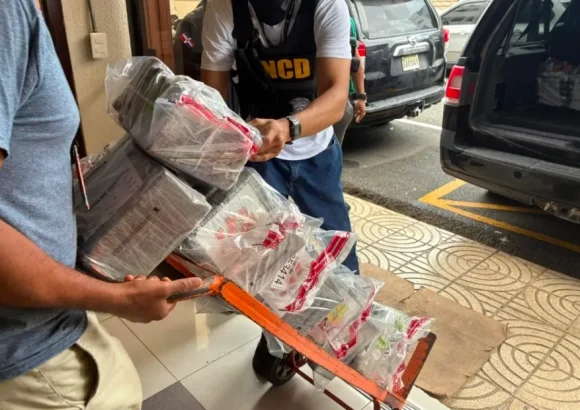
    In a coordinated anti-narcotics operation led by multiple Dominican Republic security agencies, officials have seized more than 120 kilograms of cocaine hidden inside a cargo container at the key Caucedo Multimodal Port in Santo Domingo.

    The bust was carried out jointly by the National Drug Control Directorate (DNCD) and the Public Ministry, with additional support from state intelligence services and the General Directorate of Customs. The contraband was found in a container scheduled for shipment to Rotterdam, the Netherlands, after X-ray scanning flagged anomalous images that prompted a full physical inspection.

    Upon opening the container, which was officially declared to be carrying general medical equipment, investigators uncovered five black bags holding 120 individually wrapped cocaine packages. Each package was bound in adhesive tape and marked with distinct commercial-style logos. Forensic experts from the National Institute of Forensic Sciences (INACIF) conducted an official weighing of the seizure, confirming the total net weight of the cocaine was 123.13 kilograms.

    Dominican security officials confirmed that the investigation is still in its active phase, with working groups focused on tracing the network behind the shipment and identifying all individuals involved to make eventual arrests. As part of national anti-trafficking strategies, authorities have also emphasized that they are ramping up screening and interdiction operations at all major entry and exit points across the country, including seaports, international airports, and land border crossings, to disrupt drug smuggling routes passing through the nation.

  • Dominican Republic approves National Climate Transparency System

    Dominican Republic approves National Climate Transparency System

    In a major step forward for regional climate action, the Dominican government has formally greenlit its groundbreaking National Climate Transparency System, a cutting-edge monitoring framework crafted to track greenhouse gas output, track progress on climate adaptation initiatives, and oversee the flow of climate-related funding across the country. This new infrastructure was developed through a collaborative partnership, with critical technical and strategic support provided by the Spanish Agency for International Development Cooperation, and aligns directly with the Enhanced Transparency Framework requirements laid out in the global Paris Climate Agreement.

    Following the official approval, the Dominican Republic has secured its place as the fourth nation in Latin America to launch a dedicated climate transparency system, joining a small group of regional climate leaders that already includes Costa Rica, Colombia, and Chile. Beyond this milestone, the country has made history as the first across the entire Latin America and Caribbean region to embed a fully integrated Monitoring, Evaluation, and Learning (MEL) framework specifically for climate adaptation activities into its national transparency infrastructure.

    Max Puig, a leading voice on Dominican climate policy, emphasized that the newly approved platform will deliver three core long-term benefits for the country: it will enable policymakers to clearly map unmet climate financing needs, accurately quantify the real-world impact of existing climate-focused investments, and strengthen the overall governance of national climate action strategy. Puig added that by publishing independently verified, openly accessible climate data, the Dominican Republic will significantly boost its credibility when pursuing international financing to support its ongoing just green energy transition.

  • Víctor Atallah officially installed as president of the World Health Assembly

    Víctor Atallah officially installed as president of the World Health Assembly

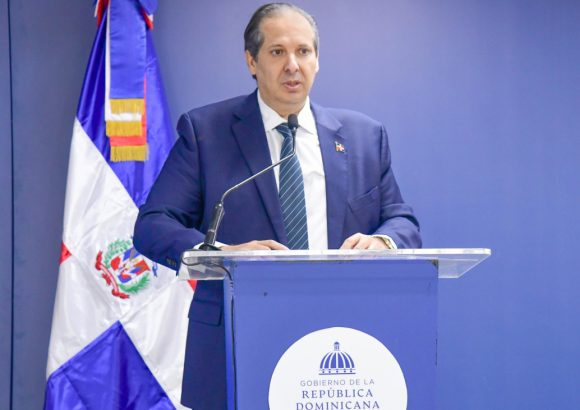
    In a landmark decision that underscores the Dominican Republic’s rising profile in global public health governance, the Caribbean nation has been elected to lead the 79th World Health Assembly (WHA), the World Health Organization’s top decision-making body. The unanimous vote took place during the opening plenary session of the assembly in Geneva, Switzerland, which named Dominican Public Health Minister Víctor Atallah to the one-year presidential post.

  • Dominican Solidarity with Haiti marks Flag Day with a call for peace and cooperation

    Dominican Solidarity with Haiti marks Flag Day with a call for peace and cooperation

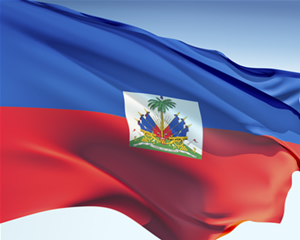
    On the annual observance of Haiti Flag Day, a Dominican-based civil society organization, Dominican Solidarity with Haiti, has issued a formal statement reaffirming its unwavering support for the Haitian people while reflecting on the island nation’s profound legacy in global freedom struggles.

    Released publicly on Monday, the statement opened with a heartfelt tribute to the iconic revolutionary figures who laid the foundation for Haiti’s independence as the first Black republic in the world. These trailblazers, including Cécile Fatiman, Dutty Boukman, Jean-Jacques Dessalines, and Alexandre Pétion, led the groundbreaking Haitian Revolution that ended colonial rule and slavery on the island more than two centuries ago. The organization emphasized that the revolution sent a ripple of inspiration across the entire Americas, fueling anti-slavery uprisings and independence movements that reshaped the regional political landscape for generations. It further highlighted Haiti’s often-overlooked contribution to South American liberation, noting the critical material and strategic support the nation provided to Simón Bolívar during his campaigns to free multiple South American territories from colonial control.

    Beyond its historical reflection, the statement turned to the pressing challenges confronting Haiti today. The organization acknowledged that the Caribbean nation is currently grappling with an unprecedented crisis marked by surging gang violence, systemic political collapse, and widespread social instability that has displaced hundreds of thousands of people and left basic services inaccessible for much of the population. Addressing ongoing international debates over external intervention in Haiti’s affairs, the group made clear that any path toward a lasting, sustainable peace must be led entirely by Haitian citizens, with full respect for Haiti’s national sovereignty and no unwarranted outside interference.

    In closing, the organization called for deeper cross-border collaboration and collective solidarity between the Dominican Republic and Haiti, two neighboring nations that share the island of Hispaniola. It stressed that building a peaceful, productive relationship between the two countries hinges on mutual respect for national boundaries, universal human rights, and a shared commitment to peaceful coexistence that benefits all people living on the island.

  • Dominican Free Zone exports reach US$2.8 billion in first four months of 2026

    Dominican Free Zone exports reach US$2.8 billion in first four months of 2026

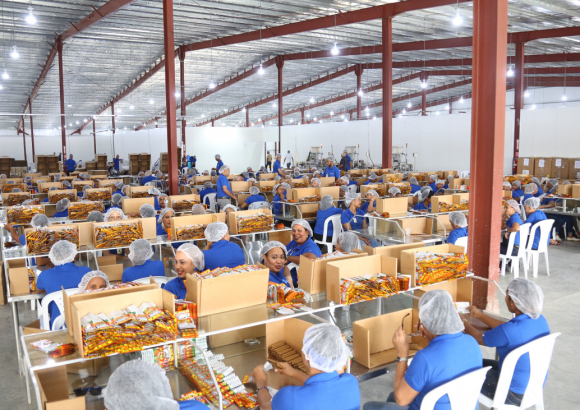
    Santo Domingo – The Dominican Republic’s export-focused free trade zone sector has delivered solid growth in the opening months of 2026, according to new data released by the National Council of Export Free Zones (CNZFE). Official figures show cumulative exports from the sector reached $2.803 billion between January and April, marking a 4.3% year-over-year increase when compared to the same four-month period in 2025. This uptick translates to an additional $115.2 million in export revenue for the country, outperforming mild regional growth projections for the first half of the year.

    Breaking down the sector’s performance by segment, medical and pharmaceutical products emerged as the clear leading contributor, generating $966 million in exports through the end of April. Following the life sciences segment, tobacco and related manufactured goods claimed the second spot with $461.2 million in outbound shipments. A range of other subsectors – including metals and fabricated metal products, cross-border trading activities, and specialty chemical products – all recorded robust double-digit gains over last year’s figures. These broad-based gains underscore the ongoing diversification and growing technological sophistication of the Dominican Republic’s industrial base, moving the country beyond low-value commodity exports toward higher-margin production.

    In a statement accompanying the data release, CNZFE Executive Director Johannes Kelner highlighted that the first-quarter growth trend confirms the long-standing resilience and global competitiveness of the country’s free zone regulatory framework. Kelner pointed to three core factors driving the sector’s steady expansion: a consistently stable macroeconomic environment that reduces risk for international investors, government-backed regulatory policies designed to support export-oriented businesses, and sustained inflows of foreign and domestic capital into new production facilities. He added that these combined advantages are rapidly cementing the Dominican Republic’s position as one of the Caribbean and Latin America’s premier hubs for export-focused manufacturing and high-value global services.

  • President Abinader receives Champion of Freedom Award in Miami

    President Abinader receives Champion of Freedom Award in Miami

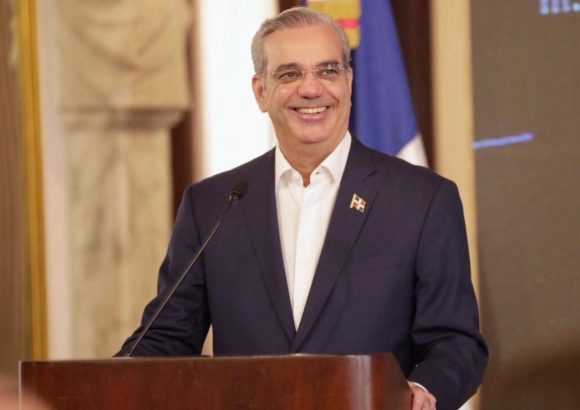
    Over the weekend, Dominican Republic President Luis Abinader traveled to Miami, Florida, to accept one of the most prestigious recognitions from the Adam Smith Center for Economic Freedom at Florida International University: the Champion of Freedom Award. This annual honor is reserved exclusively for international leaders who have shown unwavering dedication to upholding democratic values, expanding shared human prosperity, and advancing policy frameworks that prioritize and protect economic freedom around the globe.

    Founded in 2020 as an independent, nonpartisan think tank, the Adam Smith Center has built its reputation around advancing the core principles of individual liberty and inclusive economic development. In its citation for the 2024 award, the center highlighted Abinader’s track record of implementing carefully calibrated, fiscally responsible free-market policies that have transformed the Dominican Republic into a standout model of consistent economic expansion and robust institutional stability across the Caribbean and Latin American region.

    Beyond the formal recognition, this year’s award ceremony carried additional strategic importance. The event, which has a long history of convening sitting heads of state, top global business executives, and influential figures from across public and private sectors, provided a high-profile international platform to showcase the Dominican Republic’s notable progress in three key areas: advancing government transparency, accelerating broad-based economic development, and strengthening the country’s commitment to the rule of law. For attendees and international observers alike, the award and the accompanying showcase of Dominican progress reinforced the country’s growing reputation as a stable, attractive destination for global investment and a leader in democratic governance in the region.

  • Strong wave of uncertainty in the country and South America due to the migration pact with the U.S.

    Strong wave of uncertainty in the country and South America due to the migration pact with the U.S.

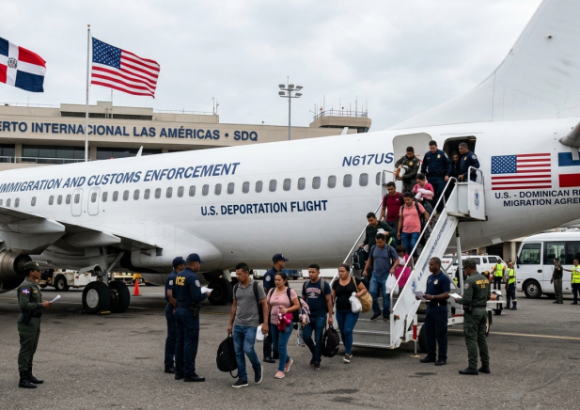
    In the capital of the Dominican Republic, Santo Domingo, a newly signed migration cooperation agreement between the administration of President Luis Abinader and the United States has ignited widespread social discontent across the country. What is more, this wave of public uncertainty has quickly rippled beyond Dominican borders, spreading to three other Latin American nations – Panama, Costa Rica, and Ecuador – all partners with the Dominican Republic in the Alliance for Development in Democracy (ADD).

    Across the four-nation bloc, growing segments of civil society and political analysts fear that the agreement will erode national sovereignty, a concern that has resonated deeply with patriotic sentiment in the Dominican Republic in particular. While all four regional governments have attempted to frame the pact as a measure to advance “national security” and “strategic stability” to reassure uneasy populations, massive public outcry has erupted both in street protests and in public discourse, with demands for strengthened sovereign protections and rigorous oversight of migrant human rights.

    The debate has now moved to the center of regional political life, with critics increasingly vocal in their warning that the bloc could drift toward external dependency, ultimately becoming little more than geopolitical pawns advancing United States interests in the Western Hemisphere.

    Among the signatory-adjacent nations, Costa Rica has seen the most immediate parallel to Dominican unrest, after it signed a nearly identical agreement earlier this year in March. Under the terms of Costa Rica’s pact, the country agrees to process up to 25 deported migrants of various nationalities transferred from the United States each week, coordinating their eventual return to their home countries. Public opinion in Costa Rica has become sharply polarized: while the government defends the deal as proof of its status as a reliable U.S. strategic ally, national police unions and prominent human rights organizations have raised sharp questions about the lack of sufficient operational resources to manage the expected migrant flows. Costa Rican media outlets have framed the recent Dominican agreement as formal validation of their own government’s regional strategy, consolidating a coordinated bloc of “transit destination” countries across the Caribbean and Central America.

    For its part, Panama has approached the new Dominican agreement through a national security lens, after the country achieved landmark reductions in irregular migrant flow through the Darien Gap in early 2026. Panama already holds its own migration memorandum with the United States, which includes Washington-funded repatriation flights, and the Panamanian government has welcomed the move of other regional states taking on shared responsibility for migrant processing. Recently, Panama has also received new interceptor boats and advanced technological support from the United States for border management. For Panamanian officials, the Dominican Republic’s participation in the pact eases growing migratory pressure coming from South America by creating additional processing points for migrants before they rejoin irregular migration routes further north.

    Under the administration of President Daniel Noboa, Ecuador has maintained close de facto diplomatic and political ties with the Abinader government, with the two countries currently negotiating a partial bilateral trade agreement set to conclude in May 2026. This alignment explains Ecuador’s official public support for the new migration pact, which it has backed strongly on diplomatic fronts. While Ecuador has not signed an explicit “deportation transit” agreement on the same model as the Dominican Republic and Costa Rica, local Ecuadorian media have noted that Noboa is actively building the Abinader administration as a key regional ally to advance his agenda of continental stability.

    A key common detail across all the pacts is that the United States covers 100% of associated operational costs, a point that regional governments have highlighted as a benefit that allows them to strengthen their national migration agencies without drawing from domestic public budgets. Regional analysts also note that by joining these agreements, the four Latin American partners have positioned themselves as cooperative actors separate from less aligned regional governments, unlocking tangible benefits in return: the Dominican Republic, for example, has already gained admission to the U.S. Global Entry expedited travel program, while other members have secured pledges for new infrastructure investment.

    The core public debate across all four nations centers on whether these countries are effectively becoming de facto “safe third countries” for migrants deported from the United States, a designation that governments uniformly reject. Dominican officials, including Foreign Minister Roberto Álvarez, have repeatedly emphasized that any migrants transferred to the country will only stay for temporary, controlled transit. To defuse rising public anger, the Dominican Ministry of Foreign Affairs has released multiple clarifications: the agreement does not apply to Haitian migrants, individuals with criminal records will not be accepted, unaccompanied minor migrants are completely excluded from any transfers, and the country will not become a permanent destination for refugees. Transiting migrants will not enter the Dominican immigration system, are not eligible to apply for asylum in the country, and every migrant’s case will be individually reviewed and approved by Dominican authorities before they are allowed to enter Dominican territory.

    Under the terms of the agreement as outlined by the government, third-country nationals deported from the United States will only enter the Dominican Republic under controlled, temporary transit status for the sole purpose of coordinating onward travel to their countries of origin, with stays expected to last only a matter of days. The Abinader administration also stresses that the agreement is non-binding legally, and either party can unilaterally withdraw from the pact at any time, a condition that the government argues means it does not require prior approval from the Dominican Congress or Constitutional Court.

    These assurances have done little to calm critics, however. Civil society groups, political opposition parties, and geopolitical analysts across the region have decried the process as deeply non-transparent, noting that no public consultation or legislative review was conducted before the agreement was signed. Critics also warn that the deal will create unacknowledged logistical pressure on domestic institutions, generate hidden long-term operational costs, and carry unacceptable risks of eroding national sovereignty to align with U.S. regional policy goals. Public opinion across all four affected countries remains deeply divided: while some members of the public welcome the agreement as a way to restore control over irregular migration routes, others remain deeply concerned about what the deal means for national self-determination and the human rights of transiting migrants.
  • Digesett agent shoots and wounds motorcycle taxi driver after the driver slapped him

    Digesett agent shoots and wounds motorcycle taxi driver after the driver slapped him

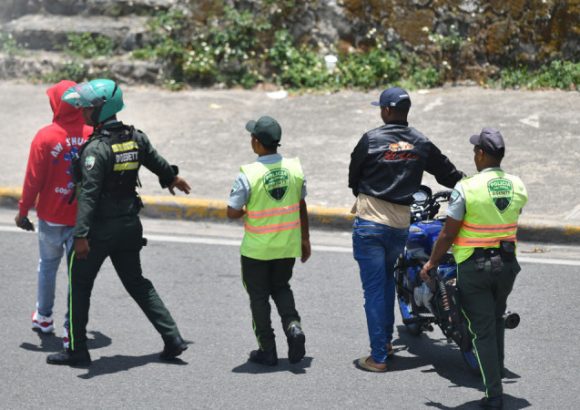
    A violent confrontation between a traffic enforcement agent and a motorcycle taxi driver in the Dominican Republic has left the driver wounded, prompting an official investigation into the use of force by authorities. The incident unfolded on public roads in the Villa Olímpica neighborhood of Santiago, when an officer from the General Directorate of Traffic Safety and Land Transportation (Digesett) pulled over the motorcyclist for a routine traffic check. The stop was initiated because the rider was violating local helmet laws, a common enforcement measure designed to reduce fatalities in two-wheeler accidents. What began as a standard inspection quickly escalated into verbal conflict, before breaking out into a physical scuffle between the agent and the driver. According to preliminary accounts from law enforcement sources, the driver struck the agent in the face before a second man joined the attack. Both assailants then forced the agent back across the road’s opposite travel lane, continuing their assault on the officer. In response to the ongoing attack, the Digesett agent discharged his service weapon, striking the motorcycle taxi driver and causing a non-lethal wound. As of the latest update, official sources have not released any additional details about the current medical status of the injured driver, nor have they confirmed the full identities of the driver, his accomplice, or the agent involved in the confrontation. Competent investigative bodies have launched a full review of the sequence of events leading up to the shooting, with the explicit goal of determining legal and administrative responsibility for the violence. The case highlights ongoing tensions between traffic enforcement officials and informal public transport operators in many urban centers of the country, where violations of safety regulations are common and confrontations during routine stops are not unheard of.

  • COE extends green alert for 15 provinces and the DN due to a trough expected to arrive this Sunday

    COE extends green alert for 15 provinces and the DN due to a trough expected to arrive this Sunday

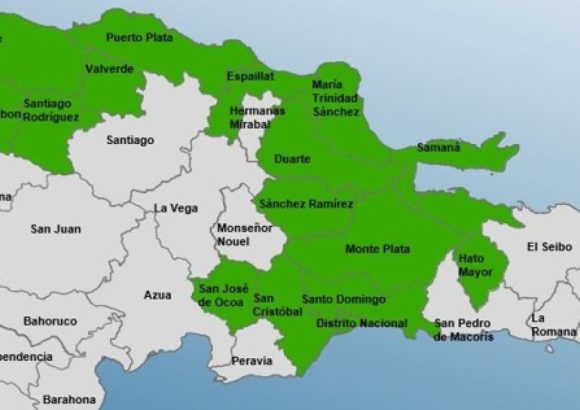
    The Emergency Operations Center (COE) of the Dominican Republic announced Saturday an extension of the green-level weather alert, covering 15 provinces and the country’s National District. The precautionary measure comes in response to the intensification of a low-pressure trough and the approaching movement of a tropical wave, which are projected to bring heavy, widespread rainfall starting this Sunday.

    This extension of the alert was enacted after the Dominican Institute of Meteorology (Indomet) issued an official warning forecasting moderate to heavy downpours across multiple regions of the country, paired with isolated thunderstorms and potential strong wind gusts. These adverse weather conditions are expected to develop through the afternoon, overnight, and into the early morning hours across the affected zones.

    In addition to the National District, the regions included in the extended green alert are Montecristi, Puerto Plata, Samaná, Dajabón, San Cristóbal, Hato Mayor, Valverde, San José de Ocoa, Monte Plata, Santo Domingo, Sánchez Ramírez, Espaillat, Duarte, María Trinidad Sánchez, and Santiago Rodríguez. While these 15 provinces and the National District face the highest risk, adjacent regions including La Vega, Monseñor Nouel, Santiago, and La Altagracia will also experience measurable rainfall impacts, per meteorological assessments.

    Indomet has outlined that the sustained, heavy precipitation created by current atmospheric conditions raises significant risks of dangerous hazards. Key among these threats are the overflow of rivers, small streams, and ravines, alongside widespread urban flooding and sudden flash floods—particularly in low-lying communities that are historically vulnerable to extreme weather events.

    In response to the incoming storm system, the COE has issued a series of urgent public advisories. Authorities urge all residents in the affected areas to remain vigilant, monitor continuously updated official weather and emergency bulletins, and strictly follow all safety guidance released by national civil protection agencies. The COE also issued two critical safety recommendations: the public is strongly advised against attempting to cross rivers or streams swollen by floodwaters, and to avoid all recreational swimming areas throughout the provinces under the active alert.

  • Rare earth reserves could be larger; Paliza says studies will conclude by the end of the year

    Rare earth reserves could be larger; Paliza says studies will conclude by the end of the year

    As global demand for critical rare earth minerals surges amid a sweeping reorganization of global supply chains, the Dominican Republic’s ongoing exploration of large rare earth deposits has emerged as a potential game-changing development for the Caribbean nation’s economy, a senior government official has confirmed.

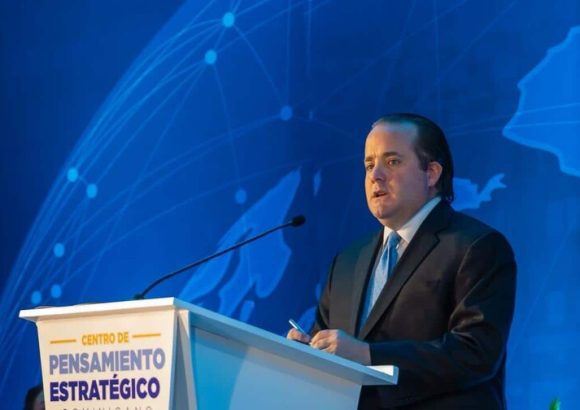
    Speaking at the inaugural International Congress of Geopolitics this week, Minister of the Presidency José Ignacio Paliza shared key updates on the exploration project, revealing that a full assessment of the quantity and grade of the country’s rare earth reserves will be completed by the end of 2024. Early estimates already point to far larger deposits than initially discussed: while President Luis Abinader previously referenced a preliminary figure of 60 million gross tons, Paliza confirmed the actual reserve could be as much as double that volume.

    The project remains in its active exploration phase as of the time of the announcement. To date, exploration teams have completed 3,527 meters of borehole drilling and 3,100 meters of small-to-medium test pit excavations, and are on track to collect 10,000 geological samples for analysis by the end of the year.

    Paliza emphasized that the rare earth development opportunity comes at a pivotal moment for global markets. Global demand for rare earth elements — critical inputs for the energy transition, artificial intelligence, national defense systems, electric vehicle batteries, and consumer electronic components — is projected to double by 2030. If the Dominican Republic can bring its reserves into commercial production, it will secure a place at the center of one of the 21st century’s most strategically important global supply chains.

    When compared to existing major mining operations in the country, the scale of potential rare earth production is staggering. As Paliza noted, even a large established operator like Barrick Gold would be considered relatively small next to the economic footprint a fully developed domestic rare earth industry could create for the nation.

    A key advantage of the Dominican Republic’s deposits, located in the Ávila Fiscal Mining Reserve in Pedernales, is their favorable geological characteristics that would allow for extraction with minimal environmental harm. Paliza pointed out that many known rare earth deposits around the world are not commercially viable because processing generates toxic waste that makes exploitation environmentally and economically unsustainable. “In our case, it seems that we have them in very healthy, very favorable conditions, to put it plainly,” he said.

    Due to the lengthy timeline and high level of technical specialization required to develop a full rare earth industry from exploration to commercial production, Paliza noted the project will likely span multiple future Dominican government administrations, requiring long-term commitment and institutional continuity.

    The rare earth potential extends beyond the Dominican Republic’s borders, Paliza added. Since the deposits are located in a mountain range that crosses into neighboring Haiti, the shared geological formation means Haiti is also likely to hold significant rare earth reserves, putting both Caribbean nations on the global strategic minerals map.

    Currently, more than 80% of global rare earth production is concentrated in China, a supply dynamic that has sparked growing concern among the United States and other Western powers that rely on a single source for these critical strategic materials. Paliza argued that nations that can develop reliable supplies of strategic minerals including lithium, cobalt, copper, and rare earth elements will hold outsized economic, technological, and military competitive advantages in the coming decades.

    To fully capitalize on this once-in-a-generation opportunity amid the ongoing reshaping of the global economy, Paliza stressed that the Dominican Republic must first upgrade its energy, logistics, and technological infrastructure. He tied the Pedernales mining potential to a broader national strategy to boost the country’s regional standing, anchored by ongoing high-impact projects including the development of the Port of Manzanillo, the expansion of utility-scale renewable energy generation, and Google’s major investments in national digital infrastructure.

    “The Dominican Republic has all the underlying conditions to become a regional hub for logistics, energy, and technology,” Paliza said. “To achieve this, we just need to consolidate institutional stability, invest in growing our human capital, and strengthen the state’s capacity to deliver on large-scale strategic projects.”