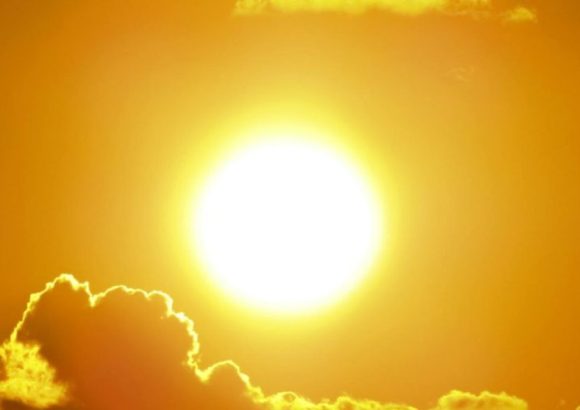
One of the most fascinating annual astronomical events is unfolding across the Dominican Republic this week, as the sun reaches its celestial zenith, creating the rare visual effect widely nicknamed the “moment without shadow.” Over the past 24 hours, the sun has moved into a direct overhead position above Dominican territory, bringing this striking phenomenon to communities throughout the country.
The details of the event were shared by meteorological analyst Jean Suriel, who explained the science behind the unusual visual effect. Suriel noted that the solar zenith occurs as a direct result of Earth’s axial tilt, which drives the apparent northward migration of the sun across the globe following each equinox, as the planet shifts from its position relative to the equator toward the Northern Hemisphere’s summer season.
For observers hoping to witness the effect firsthand, Suriel outlined a simple at-home experiment: placing any straight vertical object — such as a glass jar, plastic bottle, or cardboard box — on a flat, open surface during the local peak zenith time will reveal the phenomenon. At the exact moment of local zenith, these vertical objects will temporarily stop casting any visible shadow on the ground beneath them. The analyst added an important clarification, however: the full shadowless effect does not manifest the same way for human observers, due to the curved, irregular shape of the human body.
To help locals and tourists plan their own observations, Suriel has released a full schedule of estimated peak zenith times for locations across the Dominican Republic throughout this week:
**Wednesday, May 13**
– Punta Cana: 12:30 PM
– La Romana: 12:32 PM
– San Pedro: 12:34 PM
– Boca Chica: 12:35 PM
– Santo Domingo: 12:36 PM
– San Cristóbal: 12:37 PM
– Ocoa: 12:38 PM
– Azua: 12:39 PM
– Neiba and Duvergé: 12:42 PM
– Jimaní: Thursday, May 14
**Thursday, May 14**
– Higüey and Macao: 12:31 PM
– El Seibo: 12:32 PM
– Hato Mayor: 12:33 PM
– Monte Plata: 12:36 PM
– Father Las Casas: 12:40 PM
– San Juan: 12:41 PM
– The Enclosure: 12:42 PM
**Friday, May 15**
– Miches: 12:33 PM
– Bonao: 12:38 PM
– Constanza: 12:39 PM
– Las Matas de Farfán: 12:42 PM
**Saturday, May 16**
– Samaná: 12:34 PM
– Sabana de la Mar: 12:34 PM
– Villa Rivas: 12:36 PM
– Pimentel: 12:37 PM
– Cotuí: 12:37 PM
– La Vega: 12:38 PM
– Jarabacoa: 12:39 PM
**Sunday, May 17**
– Las Galeras: 12:33 PM
– Las Terrenas: 12:34 PM
– Nagua: 12:36 PM
– San Francisco: 12:37 PM
– Salcedo: 12:38 PM
– Santiago: 12:39 PM
– Moca: 12:39 PM
– SAJOMA: 12:41 PM
– Restoration: 12:43 PM
– Loma de Cabrera: 12:43 PM
**Monday, May 18**
– San Juan River: 12:36 PM
– Gaspar Hernández: 12:37 PM
– Jamao Al Norte: 12:38 PM
– Mao: 12:41 PM
– Sabaneta and Monción: 12:42 PM
– Dajabón: 12:43 PM
**Tuesday, May 19**
– Cabarete: 12:38 PM
– Puerto Plata: 12:39 PM
– Luperón: 12:40 PM
– Villa Vásquez: 12:42 PM
The solar zenith can only occur in locations between the Tropic of Cancer and the Tropic of Capricorn, putting the Dominican Republic in the small band of global territories that get to experience this annual astronomical event. For many local communities, the arrival of the shadowless moment has become a popular informal annual tradition, with families and students often conducting small observation experiments to mark the occasion.