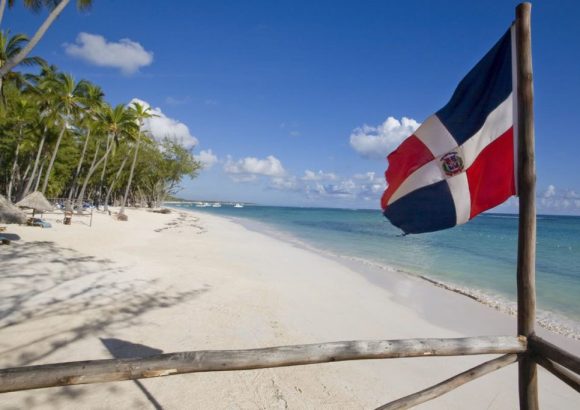
Against a backdrop of simmering geopolitical tensions in the Middle East, skyrocketing global crude oil prices, and widespread projections of a synchronized global economic slowdown, the Dominican Republic’s key tourism sector is set to outperform regional peers, drawing unexpected visitor flows from crisis-hit competitor destinations across the Caribbean and Latin America. That is the core assessment delivered by leading economist and financial strategist Richard Medina during the 2026 Economic Perspectives Forum, an industry event hosted jointly by the CCI Stock Exchange and economic research firm Ecoanalítica at Santo Domingo’s El Embajador Hotel.
Against widespread global economic uncertainty stoked by the escalating Iran-United States conflict and volatile energy markets, Medina reaffirmed that the Dominican Republic’s tourism industry has retained unexpected resilience. “I still see tourism as quite strong,” Medina told attendees of the forum, which centered its discussions on how Middle Eastern geopolitical instability is rippling through the Dominican economy, with specific focus on impacts to oil pricing, domestic inflation, and national public finances.
Medina explained that the sector’s ongoing solid performance is largely driven by cascading crises that have crippled key rival tourism hubs in the region, pushing international travelers to redirect their trips to the Dominican Republic instead. “Cuba is in the midst of a deep economic and systemic crisis, so a significant share of what would have been Cuba’s inbound tourism should shift to our shores,” he noted. He also pointed to Jamaica, which recently suffered extensive infrastructure damage and service disruptions from a powerful Atlantic hurricane that hit the island last season. “Jamaica is still recovering from the hurricane’s impact, and some of its expected tourism flow is coming to us,” he added.
The economist also highlighted Cancun, Mexico—one of the Dominican Republic’s top competitors for North American leisure travelers— which has grappled with escalating violent crime and a worsening public security crisis in recent years. “Cancun is facing a major security crisis that has deterred some visitors, and a portion of that diverted tourism could very well end up here,” Medina said.
Beyond benefiting from regional competitors’ challenges, Medina added that the Dominican Republic has also made solid gains expanding its reach into non-traditional source markets for tourism, with particularly strong growth recorded across South America. “Tourist arrivals from Colombia and Argentina have performed exceptionally well over the past year,” he said. This deliberate market diversification, he explained, has helped the country cut its over-reliance on traditional source markets such as the United States and Canada, strengthening the sector’s stability amid an increasingly unpredictable global landscape.
Despite the broadly positive outlook, Medina did not downplay the risks the Dominican Republic still faces. He stressed that the country cannot fully insulate itself from the spillover effects of a potential broad global economic slowdown that would curb overall international travel demand. “If we see a widespread slowdown in global tourism volumes this year, we will not escape that impact,” he cautioned. Medina also noted that while foreign exchange-generating sectors—led by tourism—have posted strong recent performance that shored up the country’s economic fundamentals, the Dominican Republic remains highly exposed to external global shocks due to its heavy dependence on imported energy and deep integration into the global economy.
Even with these caveats, Medina maintained that the overall 2025 outlook for the Dominican tourism sector remains distinctly positive. “Even accounting for these headwinds, I believe we are going to have a very good year for tourism,” he concluded.