标签: Dominican Republic

多米尼加共和国

  • Indomet forecasts continued rain, thunderstorms across Dominican Republic

    Indomet forecasts continued rain, thunderstorms across Dominican Republic

    Residents across the Dominican Republic are preparing for another day of disrupted weather on Tuesday, as the Dominican Institute of Meteorology confirms ongoing unstable conditions driven by a low-pressure trough penetrating multiple layers of the troposphere. The atmospheric system has locked the nation in a pattern of persistent rainfall that is expected to hold throughout the day, bringing varied hazards across different regions.

    Early morning brings the first round of precipitation, with scattered showers forecast to sweep across the country’s northern and northeastern provinces. Popular tourist and population hubs including Puerto Plata, Santiago, and Samaná will see this initial wave of rain, which the meteorological service projects will ease temporarily midday before gaining strength once again as afternoon sets in.

    Meteorologists explain that the combination of accumulated daytime heat and the underlying atmospheric instability will create ideal conditions for intense precipitation development. From mid-afternoon through early evening, moderate to heavy downpours, rolling thunderstorms, and sudden strong wind gusts are most likely to impact Greater Santo Domingo, as well as central, eastern, and southwestern sections of the country.

    Hazard outlooks extend beyond heavy rain for higher elevation zones: the national weather agency has issued a special warning that isolated hail events are possible across mountainous areas, paired with localized severe wind bursts that could bring down tree branches or disrupt utility service. As a result of the multi-day rainfall risk, a large swath of the country remains under active weather alerts, with officials flagging dangers including sudden urban flash flooding, overflowing rivers and streams, rain-triggered landslides, and dangerous electrical activity from thunderstorms.

    Temperatures will remain unseasonably hot in the hours before rain arrives, pushing heat indexes into potentially dangerous ranges for outdoor activity. In response, health and weather officials are urging the public to prioritize consistent hydration and stay in well-ventilated spaces to avoid heat-related illness ahead of the afternoon downpours.

    Marine hazards are also in effect for one stretch of the country’s coastline: along the Dominican Republic’s Atlantic shore, running from Cabo San Rafael to Punta de Manzanillo, small and medium-sized recreational and commercial vessels have been urged to avoid non-essential travel and navigate with extreme caution due to elevated rough sea conditions. By contrast, marine conditions along the country’s southern Caribbean coast remain within normal ranges, with no special advisories in place for that area.

    Authorities closed their update by reminding the public that weather conditions can shift rapidly amid this unstable pattern, and that residents should closely monitor official weather updates from the Dominican Institute of Meteorology, and follow all published public safety guidelines to avoid preventable risk during the weather event.

  • Malecón Center: detached cornice was non-structural

    Malecón Center: detached cornice was non-structural

    A partial structural failure has occurred at one of Santo Domingo’s prominent landmarks after intense weather swept through the Dominican capital on Monday afternoon. The Board of Directors of Malecón Center confirmed that a decorative cornice broke free from the building’s north-facing exterior, brought down by the harsh meteorological conditions that impacted the region that day.

    In an official public announcement, the facility’s administration moved quickly to reassure the public and residents about the nature of the damage. The fallen element, they explained, is a decorative plaster feature included in the building’s original architectural plans, and never formed a core part of the property’s load-bearing structural system. This key distinction means the incident does not compromise the overall stability of Malecón Center, and poses no ongoing threat to people who live in or visit the space.

    While no people were harmed in the collapse, the falling debris did cause limited material damage to the property. The condominium’s in-house technical team is currently conducting a full on-site assessment to map out the full extent of the harm, and will move forward with all necessary restoration work once the evaluation is complete.

    The Board of Directors used the statement to reaffirm its long-standing commitment to three core priorities: maintaining rigorous safety standards across the facility, carrying out consistent proactive upkeep, and keeping residents fully informed of all relevant developments. It also extended its gratitude to property residents for their patience and collaboration as the repair process gets underway.

  • Gazcue hit hard by sudden storm, dozens of vehicles affected

    Gazcue hit hard by sudden storm, dozens of vehicles affected

    On Monday afternoon, an unanticipated severe weather system characterized by torrential rainfall, large hail and destructive wind gusts barreled through Santo Domingo’s National District, leaving a trail of extensive destruction that hit the Gazcue neighborhood particularly hard. The fast-intensifying storm caught local residents off guard, triggering a series of disruptions that upended daily life across the affected area.

    Strong wind gusts reached enough force to uproot fully grown trees, sending the massive vegetation crashing onto public roadways and parked or moving vehicles. The blockages immediately snarled traffic, leaving commuters and local residents stranded for extended periods and creating chaotic, high-tension conditions across the sector. Multiple residential properties also reported substantial material damage: shattered window panes were widespread, and outdoor structures including awnings and backyard gazebos were completely destroyed by the powerful winds. Loose debris and household items were scattered across yards and streets by the gusts, adding to the cleanup burden facing the community.

    In addition to structural and property damage, the severe weather knocked out critical electrical infrastructure, leaving the vast majority of Gazcue without power immediately after the storm passed. Local utility companies quickly dispatched response teams to the area to conduct full damage assessments and begin restoration work. As of the latest updates, emergency management officials have confirmed that no storm-related injuries have been reported, though fallen tree debris continues to cause major traffic congestion throughout the neighborhood as cleanup efforts proceed.

  • Strong winds cause structural damage at Malecón Center

    Strong winds cause structural damage at Malecón Center

    On a stormy Monday, intense downpours paired with powerful wind gusts left their mark on one of Santo Domingo’s popular commercial hubs, triggering a partial collapse of a metal framework at the Malecón Center shopping mall in the Dominican Republic’s National District.

    The structural failure sent broken construction debris tumbling into the mall’s adjacent parking lot, where multiple unoccupied parked vehicles suffered visible damage as falling fragments struck their exteriors. Within hours, user-shared footage circulating across major social media platforms captured the raw force of the extreme weather: tall trees lining the property sway violently under sustained wind, while sections of the compromised metal structure tear free from their supports and are hurled across open areas of the mall property.

    Local authorities have confirmed that despite the extensive property damage and widespread debris scattered across the parking zone, there were no reports of personal injuries linked to the incident. The collapse unfolded as the Dominican capital grapples with a period of unseasonably severe adverse weather that has disrupted daily activity across the region. Mall management has not yet released a formal timeline for repairs and full reopening of the affected area.

  • Weather update: COE places Santo Domingo and National District on Red Alert

    Weather update: COE places Santo Domingo and National District on Red Alert

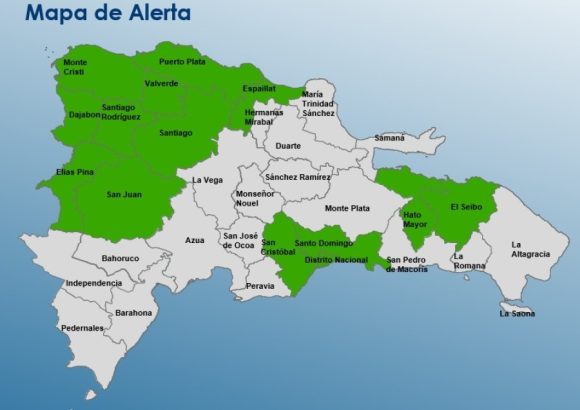
    The Caribbean nation of the Dominican Republic has activated a tiered national weather alert system as ongoing rainy conditions raise flood and landslide risks across large swathes of the country, according to joint updates from the nation’s top meteorological and water resource agencies.

    The country’s Emergency Operations Center upgraded Santo Domingo province and the National District, which encompasses the capital’s core urban area, to the highest-level red alert, marking these regions as facing the most immediate danger from the unstable weather. In addition to the red alert zones, 21 Dominican provinces remain under mid-level yellow alert, a designation that signals elevated but less immediate risk. Prominent among the yellow-alert provinces are popular coastal and inland hubs including Puerto Plata, a top tourist destination, Santiago, the nation’s second-largest city, San Cristóbal, La Vega, La Altagracia, home to the major resort region of Punta Cana, San Pedro de Macorís, Samaná, and Duarte, with particular warning issued for low-lying Bajo Yuna communities. Five southwestern provinces — San Juan, Dajabón, Elías Piña, Independencia, and Bahoruco — have been placed on the lowest alert level, green, indicating milder potential risk compared to other parts of the country.

    The alert framework comes after multiple days of rainfall that have left soil across most of the country heavily saturated, increasing the likelihood of flash floods and mudslides as new precipitation continues to move through the region. Local emergency management authorities have issued clear public guidance to reduce avoidable risk: residents across all affected provinces are strongly urged to avoid attempting to cross swollen rivers, creeks, and steep ravines with fast-moving high water, and to stay far away from unsecure recreational swimming areas that have become dangerous due to the weather.

    Beyond inland flood risks, the Dominican Institute of Meteorology (INDOMET) has issued a separate warning for maritime activities. Operators of small and medium-sized watercraft have been told to exercise extreme caution when operating near the national coastline, and advised against all travel into open offshore waters. The warning cites multiple hazardous ocean and atmospheric conditions, including strong gusting winds, abnormally high swells, reduced visibility from ongoing rain and cloud cover, frequent thunderstorms, and the potential for waterspouts to form over coastal waters.

  • INTEC’s Apollo 27 wins three awards at NASA Rover Challenge 2026

    INTEC’s Apollo 27 wins three awards at NASA Rover Challenge 2026

    A student engineering team from the Technological Institute of Santo Domingo (Intec) has cemented its status as a global standout in aerospace innovation, claiming three additional awards at the 2026 NASA Human Exploration Rover Challenge and pushing its cumulative haul of recognitions in the prestigious event to 15.

    The annual NASA competition, which invites collegiate and high school teams from around the world to design, build, and test human-powered rovers capable of navigating harsh, extraterrestrial-like terrain, serves as a launching pad for the next generation of space exploration engineers. For Apollo 27, this year’s results extend a remarkable streak of success that has already made the Dominican team one of the most decorated in the event’s history.

    Among the 2026 honors, the team secured the Team Spirit Award for the fourth consecutive year, a testament to its consistent commitment to collaboration, sportsmanship, and community among participating groups. The two additional prizes—the Industry STEM Engagement Award and the Social Media Award—extend recognition beyond pure engineering performance, highlighting Apollo 27’s far-reaching work to inspire public interest in science, technology, engineering, and mathematics across the Dominican Republic and beyond.

    In a new milestone for the program, the team also unveiled a cutting-edge lightweight rover that tipped the scales at only 126 pounds. The design breaks Apollo 27’s own previous record for the lightest functional rover the team has built, underscoring the group’s relentless focus on efficiency and innovative engineering. The achievement puts the advanced technical skills of young Dominican STEM talent on full display to a global audience of space industry leaders and engineering peers.

  • Telemicro demands government action over Channel 3 conflict

    Telemicro demands government action over Channel 3 conflict

    In the capital city of Santo Domingo, a major media organization has escalated a long-running frequency dispute to the highest level of Dominican government, calling on executive intervention to defend its legally recognized operating rights. Telemicro Media Group has publicly asked President Luis Abinader to step into the conflict surrounding the use of television Channel 3, pressing authorities to implement long-standing judicial rulings and secure the company’s legal claim to the broadcast frequency.

    In its official public statement, the media group delivered sharp criticism of the Dominican Telecommunications Institute (INDOTEL) and its governing board, which is headed by Guido Gómez Mazara. Telemicro accuses the national telecom regulator of unlawful inaction, claiming the body has refused to enforce binding court orders and has permitted unapproved third-party companies to occupy the Channel 3 frequency even amid explicit judicial restrictions barring such use.

    According to Telemicro’s position, multiple successive court decisions—including landmark rulings from both the Superior Administrative Court and the Supreme Court of Justice of the Dominican Republic—have formally recognized the company’s full ownership rights to Channel 3, a status that dates back to 1994. Despite this decades-long legal recognition, INDOTEL’s 2025 Resolution 027-25 has left the status of the frequency unresolved, keeping the dispute open pending a final ruling even as outside firms including Fransyl SRL have laid claims to control of the channel.

    Beyond its criticism of the regulator’s inaction, Telemicro has publicly denounced repeated violations of court orders by external parties seeking to seize control of the frequency. The company has also raised questions about the root of INDOTEL’s failure to act, asking whether the regulator’s lack of enforcement stems from institutional negligence or deliberate bias favoring the competing claimants. Echoing President Abinader’s own public commitment to the principle that “no one is above the law,” Telemicro has called on national authorities to uphold legal certainty and enforce existing regulatory and judicial frameworks to bring an end to the ongoing dispute.

  • César Iglesias achieves historic sales growth in first quarter

    César Iglesias achieves historic sales growth in first quarter

    Santo Domingo, Dominican Republic – Leading Dominican consumer goods conglomerate César Iglesias has kicked off 2026 with a landmark performance, posting all-time record sales in the first quarter of the year alongside expanded profit margins and enhanced operational efficiency. The strong results stand as a testament to the firm’s robust strategic execution, even as the broader global consumer goods sector navigates widespread economic and supply chain challenges.

    Across its entire diversified product portfolio, the company recorded broad-based growth that lifted its top and bottom lines. Core staple brands – including El Gallo cooking oil, Trigo de Oro wheat flour, and Domino paper goods – delivered consistent double-digit sales expansion, while two of its major standalone brands, Mazeite and Hispano, posted particularly significant double-digit growth. Additional upward momentum came from fast-growing lines including El Rey cereals and Kinsú instant soups.

    The conglomerate’s longstanding strategic distribution partnership with global consumer goods giant Unilever also contributed to the quarter’s strong performance. Popular Unilever brands distributed by César Iglesias, including personal care lines Dove, Rexona, Pond’s, and hair care brand Sedal, saw steady consumer demand that reinforced the value of the firm’s diversified brand mix and collaborative strategic relationships.

    Beyond core domestic retail sales, two other key segments drove the quarter’s outperformance: wholesale and business-to-business (B2B) channels, and expanding international operations. International sales now account for more than 15% of the company’s total annual revenue, marking a steady upward trend in global market penetration for the Dominican firm. During the first quarter, César Iglesias also expanded its footprint by adding seven new brands to its portfolio and extended its reach into the hospitality sector, a move that positions the company to capitalize on the Dominican Republic’s fast-growing tourism industry.

    With more than 100 years of operation in the Dominican Republic, company leadership framed the 2026 strong start as an outcome of three longstanding core priorities: maintaining the trust of domestic consumers, prioritizing profitability across all portfolio lines, and upholding disciplined operational execution. In a statement accompanying the quarterly results, the firm reaffirmed its long-term commitment to driving inclusive economic development across the Dominican Republic.

  • Samaná Bayport to handle three cruise ships simultaneously

    Samaná Bayport to handle three cruise ships simultaneously

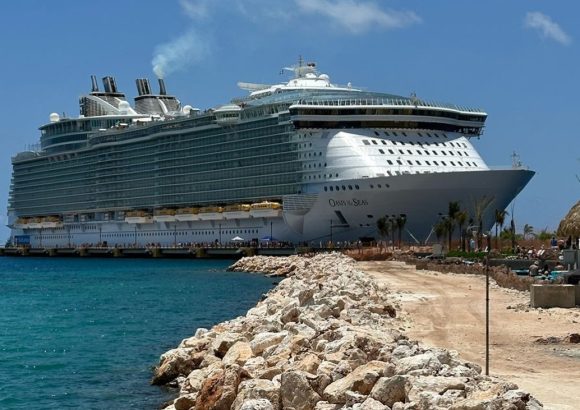
    The Dominican Republic is set to elevate its position as a top Caribbean cruise destination with the development of the new Samaná Bayport, a transformative infrastructure project announced by Jean Luis Rodríguez, executive director of the Dominican Port Authority (Apordom). Designed to address growing regional demand for cruise tourism, the facility will deliver unmatched capacity for the area, with ability to accommodate three large cruise vessels at the same time.

    At the core of the terminal’s design is an innovative SeaWalk floating pier, engineered to host massive ships carrying as many as 5,000 passengers. This cutting-edge infrastructure places Samaná Bayport among a small group of select Caribbean destinations that have adopted this advanced pier technology. The remaining two docking spots will support anchored vessels via tender services, expanding the port’s ability to handle surging visitor volumes during peak travel seasons.

    Backed by a total investment of $22 million U.S. dollars, the project prioritizes environmental stewardship from its inception, integrating industry-leading sustainable design features. Key environmental components include a on-site wastewater treatment system and targeted conservation measures tailored to protect the sensitive marine ecosystem of Samaná Bay, aligning the development with global standards for responsible tourism.

    The economic benefits of the project are already materializing for local communities. Rodríguez confirmed that construction phase has created roughly 150 direct employment positions and another 500 indirect jobs across local supply chains and support services. Once fully operational, the port is projected to generate 100 permanent direct jobs and 600 ongoing indirect roles, anchoring long-term employment for the region.

    Economic projections forecast that the port will contribute approximately $10 million U.S. dollars in annual revenue directly from cruise operations, with an additional $9 million in annual revenue generated through spin-off tourism-related services across the local economy. Beyond direct revenue and job creation, the development is strategically positioned to diversify Samaná’s tourism offerings, opening new market opportunities for local small businesses, independent artisans, and regional service providers. By balancing expanded tourism capacity with rigorous environmental protection, Samaná Bayport is set to become a model for sustainable, inclusive tourism growth in the Caribbean.

  • Abinader declares regional emergency in five provinces and National District

    Abinader declares regional emergency in five provinces and National District

    In response to widespread destruction caused by an active low-pressure weather system moving across the Dominican Republic, national president Luis Abinader has enacted Decree 234-26, establishing a regional state of emergency across six hard-hit jurisdictions. The official measure, announced publicly on April 12, extends emergency status to the provinces of Puerto Plata, Espaillat, Valverde, Santiago, Santo Domingo, as well as the country’s National District, the capital’s administrative core.

    The declaration of emergency was not an arbitrary action: it follows all formal procedural requirements laid out in the nation’s 147-02 Risk Management Law, and was prompted by urgent damage assessments submitted by two of the country’s top disaster response bodies, the Emergency Operations Center (known locally by its Spanish acronym COE) and the National Emergency Commission (CNE). Government officials confirmed that days of unrelenting heavy downpours, intense thunderstorms and gusty strong winds have left a trail of destruction across multiple sectors of the impacted regions. Critical public infrastructure, private residential housing, commercial agricultural operations and other key productive industries have all sustained significant harm that has disrupted daily life for local residents.

    By formally activating the state of emergency, the Dominican government has cleared the way for faster deployment of critical assets to affected communities. The accelerated rollout of dedicated financial resources, heavy response equipment and trained disaster response teams is now authorized, with two core goals: first, to reduce the ongoing harm inflicted by the adverse weather system, and second, to restore full normal operations and daily life to the most severely impacted communities in the shortest possible timeline.