标签: Dominican Republic

多米尼加共和国

  • Arajet captured more than 10% of the Dominican air travel market in May

    Arajet captured more than 10% of the Dominican air travel market in May

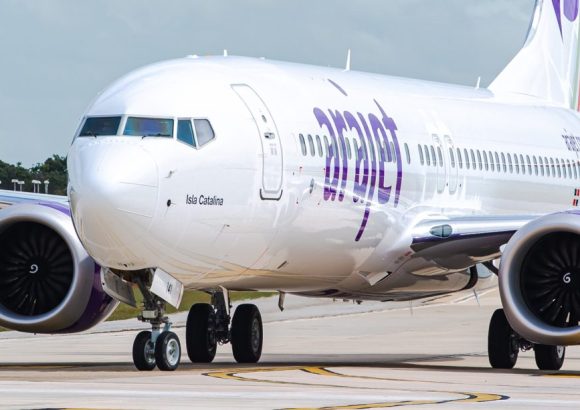
    The Caribbean and Latin American aviation sector has a new standout success story: low-cost Dominican airline Arajet has announced a historic milestone, logging the highest monthly passenger volume in its entire history during May 2026. New data from the Dominican Republic’s Civil Aviation Board confirms that the carrier’s performance not only broke internal company records but also cemented its position as one of the fastest-expanding aviation players across the Caribbean and Latin American regions.

    When excluding connecting passengers, official figures show Arajet moved more than 163,000 passengers to and from Dominican Republic soil in May. That volume accounted for more than 10% of the country’s total international passenger traffic for the month, pushing Arajet to third place in the Dominican market in terms of passenger throughput. Only two major U.S. carriers – JetBlue and American Airlines – outranked the young Dominican airline in the local market, an achievement that underscores its rapid rise in just a few years of operation.

    Including passengers transferring through Arajet’s two primary hub airports in Santo Domingo and Punta Cana, total passenger traffic for the month surpassed 183,000, setting an all-time monthly record for the carrier. The milestone offers clear validation of the airline’s core operating strategy: a hub-and-spoke model centered on positioning the Dominican Republic as a premier connectivity hub linking destinations across North, South and Central America.

    A breakdown of the airline’s route network performance for May shows that Buenos Aires drew the highest number of passengers among all Arajet destinations, followed closely by key markets including New York, Miami, Medellín and Bogotá. Geographically, the United States remains Arajet’s largest single national market, accounting for roughly 23% of the carrier’s total passenger volume. Argentina follows as the second-largest market at 18%, with Colombia taking third place at 17%. Combined, these three markets generate almost 60% of Arajet’s total annual passenger traffic, highlighting the airline’s focus on high-demand regional routes.

    Beyond the company’s own success, the record-breaking May performance also highlights the growing influence of homegrown Dominican carriers in the country’s aviation sector. Of the 176,201 total passengers carried by all Dominican-based airlines in May, Arajet alone accounted for 94% of that volume. This overwhelming market share reinforces Arajet’s unchallenged leadership among local aviation operators, and directly advances the Dominican government’s long-term goal of establishing the country as the leading aviation hub in the entire Caribbean region.

  • Black Box from fatal La Romana plane crash to be sent to U.S. for analysis

    Black Box from fatal La Romana plane crash to be sent to U.S. for analysis

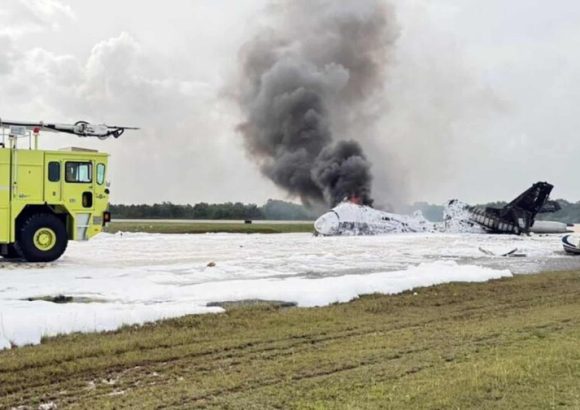
    Investigation into a deadly private plane crash that claimed two American pilots’ lives in the Dominican Republic’s eastern city of La Romana has entered a critical new phase: the flight data recorder recovered from the wreckage is now in official custody, and will be shipped to the United States for detailed technical analysis, according to the Dominican Republic’s Aviation Accident Investigation Commission (CIAA).

    The June 7 crash, which occurred shortly after the aircraft departed on a private international flight bound for Texas, killed both crew members on board. The aircraft, registered as N318JF and classified as a GALX-model business jet, was operated by U.S.-based Aibonito Aviation LLC. The two victims — 39-year-old lead pilot Erick Javier Diago and 34-year-old co-pilot Rudy Ghazal — were both seasoned aviation professionals with years of industry experience.

    CIAA President Pedro Alberto Peña confirmed the progress of the investigation in remarks to local media, noting that the flight recorder — widely known by its common nickname the “black box” — is the single most important piece of evidence investigators have to uncover the root cause of the disaster. “The black box is already in our possession and remains under official custody,” Peña stated.

    Peña explained that the decision to send the device to the United States for analysis stems from a lack of specialized on-site equipment needed to safely extract and interpret the data stored on the recorder. To date, CIAA officials have not released a formal timeline for the transfer, as the agency continues to work through coordination logistics with U.S. technical bodies that will conduct the analysis. Local aviation industry leaders, including the Dominican Council of Captains, have publicly called for the U.S. National Transportation Safety Board (NTSB) to take lead oversight of the full investigation.

    Investigators across both agencies are hopeful that the data recovered from the black box will allow them to reconstruct the aircraft’s final minutes of flight, pinpoint mechanical, environmental, or human factors that contributed to the crash, and deliver a clear, authoritative finding on what caused the fatal incident.

  • Trinidad and Tobago reports missing Dominican aircraft; international search protocols activated

    Trinidad and Tobago reports missing Dominican aircraft; international search protocols activated

    A multi-national search and rescue operation is underway in the Eastern Caribbean after a small Dominican-registered aircraft vanished from radar screens earlier this month, triggering the highest level of international aviation emergency alert.

    The aircraft in question is a Beechcraft BE-58P, identified by registration number HI-1145, which is owned by Dominican agroindustrial firm JM Espinosa Agroindustria, SRL. The alert originated from the Area Control Centre based at Piarco, Trinidad and Tobago, when air traffic controllers lost both radar tracking and radio communication with the aircraft. Following this loss of contact, the facility formally notified the Search and Rescue division of the Dominican Institute of Civil Aviation and initiated emergency procedures aligned with standards set by the International Civil Aviation Organization (ICAO). These standard protocols eventually led controllers to declare a DETRESFA distress phase, the most severe alert category reserved for aircraft confirmed or suspected to be facing imminent grave danger.

    Flight logs from the Integrated Aeronautical Management System (SIAGA) outline the aircraft’s final weeks of activity. The plane first departed Punta Cana International Airport in the Dominican Republic on May 16, heading for Canouan Island Airport located in St. Vincent and the Grenadines. After arriving at its destination, the aircraft completed multiple short regional flights: on June 10, it conducted a short out-and-back trip departing from and returning to Canouan, and two days later, it took off on a 30-nautical-mile local hop between airfields within St. Vincent and the Grenadines, departing from the capital Kingstown.

    It was after this June 12 departure from Kingstown that contact with HI-1145 was permanently lost. Ever since, Dominican civil aviation authorities have been collaborating closely with regional aviation bodies and international rescue partners to coordinate search efforts and gather information on the aircraft’s possible location. As of the latest update, the investigation into the aircraft’s disappearance remains open, with search teams continuing to comb through potential areas of interest in the Eastern Caribbean.

    The incident has become a focal point for the Caribbean aviation industry, as the activation of full ICAO emergency protocols and the sustained multi-agency search effort highlight the cross-border coordination required to respond to missing aircraft incidents in the region.

  • Dreams Dominicus: “La Romana is experiencing a historic level of occupancy”

    Dreams Dominicus: “La Romana is experiencing a historic level of occupancy”

    The Caribbean tourism hub of La Romana-Bayahibe is enjoying an unprecedented boom in its hospitality sector, with industry leaders reporting some of the strongest performance in the destination’s modern history. Amando Pozo, general manager of the prominent Dreams Dominicus La Romana resort, says the region’s hotel industry is reaping the benefits of shifting global travel patterns paired with unique natural advantages that set it apart from competing Caribbean getaways.

    According to Pozo, post-pandemic traveler mindsets have reshaped international vacation demand, driving the impressive surge in occupancy. “Since the pandemic passed it seems that worldwide everyone has reflected that they have to enjoy themselves, travel, have a good time and not be stingy on their vacations,” he explained in an interview with areca.com. This shift in consumer priorities has delivered widespread economic gains to the Dominican Republic’s tourism sector, amplified by external socio-political and environmental developments impacting neighboring destination rivals.

    Unusual environmental challenges in parts of coastal Mexico, which has struggled with widespread sargassum blooms on popular beaches, along with ongoing socio-political uncertainty in Cuba, have redirected growing volumes of international travelers to the Dominican Republic’s La Romana region. Pozo emphasized that these external factors, combined with the area’s pristine natural offerings, have pushed occupancy to all-time highs that outperform every pre-pandemic season on record.

    At Pozo’s own property, a 488-room resort belonging to Inclusive Collection, part of World Hyatt, current occupancy sits at a robust 92%. That strong figure comes in large part from the destination’s biggest selling point: untouched, sargassum-free shorelines. “La Romana is indeed very popular because we are grateful to have clean beaches, there is no sargassum, no seaweed and this benefits us greatly,” Pozo noted.

    Beyond its natural advantages, the resort offers convenient access to key travel infrastructure, located just 20 minutes from La Romana International Airport. It also features a purpose-built pier that can host private events ranging from weddings to birthday gatherings, accommodating up to 50 guests for standing events or 30 guests for seated occasions. With occupancy rates holding steadily above 90% and demand continuing to climb, La Romana-Bayahibe is cementing its status as one of the most sought-after tourist destinations in the entire Caribbean, with the hospitality sector positioned for sustained growth into coming travel seasons.

  • Amber Highway: the project that will change the economic map of Santiago and Puerto Plata

    Amber Highway: the project that will change the economic map of Santiago and Puerto Plata

    For the Dominican Republic’s northern corridor, the Amber Highway is far more than an uncompleted public works project tucked into a list of pending initiatives. This long-planned infrastructure venture stands as a transformative strategic link that, if delivered to the promised technical specifications, has the potential to reshape connectivity, trade, tourism, and long-term economic growth across Santiago, Puerto Plata and the entire North Coast for generations to come. The project has recently reemerged at the center of public debate, driven by advancing bidding processes, ongoing evaluation of technical proposals, and mounting expectations from communities across the region, including Santiago, Puerto Plata, Montellano, Sosúa, Cabarete, the Gregorio Luperón International Airport and the wider North Coast tourism corridor. While most public discussion frames the highway as a simple solution to cut travel time between Santiago and Puerto Plata, its purpose extends far beyond reduced commute times: it will directly connect Cibao’s primary economic heartland to a major tourist province that is actively working to reposition itself through new hotels, large-scale real estate developments, expanded airport infrastructure and commercial growth projects. According to official data reviewed by local outlet InfoENN – El Nuevo Norte, the completed highway will stretch between 32 and 32.7 kilometers, featuring four total lanes (two in each direction) and a designed operating speed of 100 kilometers per hour. Its core goal is to establish a modern, more direct and far safer connection between the existing Santiago Northern Bypass and the Puerto Plata–Sosúa highway. A critical detail that has gone largely undiscussed in public discourse is the highway’s alignment: rather than terminating directly in central Puerto Plata, it will route to the Montellano area, linking to the Puerto Plata–Sosúa corridor near the existing transport axis that connects Puerto Plata city, Gran Parada, Gregorio Luperón Airport, Sosúa and Cabarete. This routing fundamentally changes the project’s impact, repositioning Montellano from a forgotten transit town to a strategic hub for road transport, tourism, logistics and real estate development. From this new hub, vehicles departing Santiago will be able to access Puerto Plata, Sosúa, Cabarete, Playa Dorada, Maimón, the airport, Punta Bergantín and other key North Coast destinations without being forced onto crowded, outdated traditional routes. Traversing a rugged mountainous region, the Amber Highway breaks from the pattern of narrow, slow, curve-heavy mountain roads common to the area. Available technical plans outline a mixed engineering approach that incorporates open roadway sections, terrain cuts, embankments, retaining walls, bridges, viaducts, interchanges, overpasses and two purpose-built tunnels. The tunnels stand as one of the project’s most defining features: one will measure approximately 1.8 kilometers long, while the second will span roughly 0.7 kilometers, engineered to cut through mountain barriers, minimize sharp curves and steep grades, and reduce overall driving hazards. This modern design sets the new highway apart from the existing Gregorio Luperón Tourist Highway, a long-serving but notoriously challenging route marked by tight curves, steep slopes and elevated driving risks. The new corridor is designed to deliver a smoother, faster and safer route for passenger vehicles, tourist shuttles, intercity buses, commercial trade, cargo transport, business services and airport connections. The project’s greatest potential impact lies in broad regional economic development, rather than just improved transport. It promises to deliver direct, lasting benefits to the economies of both Santiago and Puerto Plata: Santiago acts as the commercial and industrial core of the Cibao region, while Puerto Plata ranks among the Dominican Republic’s top tourist destinations, with world-class beaches, established hotel infrastructure, commercial ports, an international airport, growing real estate development and a coastal corridor with massive untapped expansion potential. A high-speed link between the two provinces will boost domestic visitor flows, streamline freight transport, ease commutes for workers, cut overall logistics costs, and lift land and property values across corridor-adjacent areas. In Puerto Plata, growth will likely be concentrated in Montellano, Gran Parada, Sosúa, Cabarete, the zone surrounding Gregorio Luperón International Airport and developments tied to the Punta Bergantín project. A wide range of local stakeholders stand to benefit, including suppliers, construction firms, tour operators, transport companies, investors, merchants, hoteliers, restaurateurs and residential real estate developers that rely on improved connectivity to Santiago and the rest of the country. One largely underreported aspect of the project is how the Amber Highway aligns with Puerto Plata’s planned new regional tourism map. Punta Bergantín has been positioned as one of the most ambitious projects to revitalize tourism across the North Coast, and large-scale success for the development hinges on reliable, high-speed land connectivity. A modern highway from Santiago will streamline access for investors, visitors, employees, suppliers, construction contractors and supporting service providers heading to the development, while also strengthening Gregorio Luperón International Airport’s position as a more convenient travel terminal for residents and visitors across the Cibao region. If the airport can establish an effective high-speed link to Santiago, Puerto Plata will be able to compete far more effectively as a combined air and tourism gateway for much of the Dominican Republic’s northern territory. The project is being advanced by the Dominican Ministry of Public Works and Communications through the RD Vial Trust. The national public tender, identified as FIDEICOMISO-CCC-LPN-2025-0010, aims to award a contract for both the design and construction of the full highway. Initially, the deadline for proposal submission was set for March 2026, but officials extended the deadline to May to encourage broader participation and strengthen competition among interested construction groups. Following the extension, RD Vial confirmed that it had received and opened technical proposals (Envelope A of the bidding process) from three competing consortia: Consorcio Autopista del Ámbar, Consorcio AutoAmbar, and Consorcio Ruta del Ámbar. To ensure transparency, the bid opening stage included oversight from a Citizen Oversight Commission, public notaries, bidder representatives and members of the Purchasing and Contracting Committee. As of the latest update, no final award has been announced. The process has advanced to evaluation of the submitted technical proposals, with opening of financial bids from qualified participants and the final contract award still pending. The total estimated cost of the Amber Highway project exceeds RD$32 billion, making it one of the largest and most impactful road infrastructure investments in the Dominican Republic’s recent history. However, the project’s value extends far beyond its construction price tag. Its true significance lies in its potential to reshape economic development across the North, integrate two of the country’s most important provinces, and unlock tourism growth in a region rich with natural, cultural and real estate assets. For Santiago, the highway delivers a long-sought direct route to the Atlantic coast. For Puerto Plata, it creates a far stronger connection to the Cibao region’s economic engine. For Sosúa, Cabarete and Montellano, it could open the door to an entirely new era of growth and development. Even as regional stakeholders express enthusiasm for the project, success will require proactive planning to address emerging challenges. A project of this scale will bring transformative development, but also complex new pressures. Municipalities across Montellano, Gran Parada, Sosúa and Cabarete will need to update land use planning, enforce zoning controls, upgrade drainage infrastructure, expand road safety measures, regulate new access points, strengthen environmental protections and expand public services to accommodate incoming growth. As connectivity improves, pressure from real estate, commercial and tourism development will rise. When managed strategically, this growth can deliver a once-in-a-generation economic boost, but unplanned growth can lead to urban disorder if local governments are not prepared to accommodate new development. The Amber Highway has the potential to redraw the Dominican Republic’s northern economic map, but its long-term success will depend on far more than just asphalt. It will require intentional planning, sustained transparency, high-quality construction, and collaborative effort to help local communities integrate new development opportunities effectively.
  • Delicate They were going to work and ended up in the hospital: accident on the Hato Mayor-San Pedro highway leaves 18 injured

    Delicate They were going to work and ended up in the hospital: accident on the Hato Mayor-San Pedro highway leaves 18 injured

    A serious multi-vehicle incident left at least 18 people with injuries early Saturday on a key intercity highway linking the Dominican Republic towns of Hato Mayor and San Pedro de Macorís. The crash involved a public passenger bus operated by the San Pedro de Macorís municipal government.

    All of the injured victims were municipal program staff and participants traveling together from San Pedro de Macorís to Hato Mayor. They had been en route to a scheduled community work day organized as part of the national Supérate social development initiative when the collision occurred.

    Local emergency response teams from the Dominican Civil Defense quickly arrived at the crash site to manage rescue operations. Responders confirmed that two passengers had become trapped in the wreckage of the bus after the impact, forcing rescue crews to deploy specialized vehicle extrication tools to extract the pinned individuals. Both of these rescued passengers remain in critical condition as they receive care.

    Following initial on-site triage, all 18 injured people were transferred immediately to nearby regional medical facilities, where they are currently under ongoing observation and treatment from local clinical teams.

  • INACIF Report: The discovery of carbon monoxide gives a new direction to the investigation into the deaths of mother and son in Piantini.

    INACIF Report: The discovery of carbon monoxide gives a new direction to the investigation into the deaths of mother and son in Piantini.

    A high-profile double death case in the Dominican Republic’s capital has taken a critical turn, after official toxicology results from the National Institute of Forensic Sciences (INACIF) have upended initial assumptions about what killed the two victims. The case centers on Raysa Juliza Serrano Guzmán and her minor son Jadin Nael Cornelio, whose bodies were discovered inside a residential apartment in the Arpel 07 tower of Santo Domingo’s upscale Piantini neighborhood, in the National District. After conducting specialized testing via the Conway microdiffusion method, INACIF’s Forensic Toxicology Department confirmed that carbon monoxide was present in blood samples taken from both Guzmán and Cornelio, according to two official reports released by the institute. This toxicological finding marks a breakthrough piece of evidence for the ongoing probe being carried out by the Dominican National Police and the Public Prosecutor’s Office, which has been working to pin down the exact circumstances that led to the pair’s deaths. While the official reports definitively verify carbon monoxide exposure in the victims’ systems, investigating authorities have not yet resolved a key outstanding question: where the toxic gas originated from. The incident left a third person injured: 22-year-old Carolín Milagros Pérez, who was Jadin Nael Cornelio’s romantic partner. Pérez was rushed to a private local medical facility in serious condition immediately after the incident was discovered, but she made an unexpectedly strong recovery and was eventually discharged from care. Prior to the release of INACIF’s toxicology findings, investigators’ leading working hypothesis was that the deaths were caused by food poisoning. That theory has now been formally ruled out, redirecting the entire investigation to the new line of inquiry centered on carbon monoxide exposure.

  • A new date has been set to launch the Santiago monorail.

    A new date has been set to launch the Santiago monorail.

    On a recent Friday, the Dominican executive branch announced a revised timeline for the long-awaited Santiago Monorail project, confirming that passenger trial operations, branded as a “white run test”, will launch this coming December. The announcement lands amid soaring public anticipation in the region, and follows a years-long pattern of rescheduled delivery dates for the transformative transit megaproject, which aims to overhaul mobility in the capital of the Cibao region.

    During an on-site inspection of the monorail’s maintenance workshops and the underground terminal in the city’s monumental district, President Luis Abinader verified that the project has reached 92.6% overall completion, just over four years after construction first kicked off. Abinader also walked through the capabilities of the project’s central Maintenance and Control Center, noting that the facility is almost fully finished with only minor finishing touches remaining, and will be able to accommodate and service up to 15 trains overnight when fully operational.

    Jhael Isa Tavárez, executive director of the Mass Transit System Development Trust (Fitram), the public body overseeing the project, laid out the step-by-step roadmap moving forward: all core civil construction will wrap up in August, paving the way for dynamic empty-train testing between stations E1 and E11 in the final quarter of the year. Additional train units will arrive ahead of the December start date for the public trial run.

    This latest announcement marks the fourth formal timeline set by authorities, after three previous deadlines were missed. When the initial groundbreaking was held in March 2022, the government originally pledged a full inauguration by the end of 2024. The schedule was later adjusted to open the first commercial segment from Cienfuegos to Las Antillas between February and March 2025, when non-passenger movement tests were completed but public access did not launch. Most recently, the official target for first-phase completion was set for 2025, a date that has now been pushed to December 2026. Fitram has cited unforeseen urban adjustments and community-requested changes to the original route, particularly in the Reparto Universitario sector, as key factors contributing to the repeated delays.

    Beyond the monorail inspection, President Abinader packed his working trip to Santiago with a full slate of additional government announcements and project inaugurations. He held a working lunch with students from local polytechnic institutes, where he distributed new laptops and issued a directive to the Ministry of Higher Education, Science and Technology (MESCyT): the agency will begin evaluating scholarship applications while students are still in their fifth year of secondary school, eliminating gaps that force many graduates to lose an academic year while waiting for approval. Abinader also revealed plans to build a new regional campus of the Instituto Tecnológico de las Américas (ITLA) in Santiago Province.

    The president also formally opened the expanded and renovated Dr. Antonio Fernández Municipal Hospital in Monte Adentro, a project that received more than RD$103.9 million in public investment. The upgrade brings the total number of renovated healthcare facilities overseen by the National Health Service (SNS) across the country to 113. At the inauguration, Abinader confirmed that the Licey al Medio Municipal Hospital is on track to be completed next September.

    Abinader’s busy day ended with two more community-focused events: the inauguration of the quasi-Parish of San Benito Abad, and an inspection of the ongoing construction of the new headquarters for the Santiago Fire Department. He also reviewed progress on a new fire station in the El Dorado neighborhood, which the city mayor’s office confirms is currently moving forward as planned.

    Per the official public schedule, the government’s working visit to Santiago will continue into Saturday, with additional project inaugurations and scheduled meetings with regional business and community leaders.

  • Airlines warn new tax on air tickets will affect the country’s competitiveness

    Airlines warn new tax on air tickets will affect the country’s competitiveness

    As the Dominican government rolls out new policy measures to counteract global economic shocks driven by skyrocketing oil prices, strained supply chains and rising cargo transport costs, the nation’s leading airline industry body has publicly voiced significant concern over one key proposal: an extra $10 levy on all commercial airline tickets.

    The Dominican Association of Airlines (ADLA), which represents the country’s commercial aviation sector, has pushed for careful re-evaluation of the surcharge, warning that the additional cost could create far-reaching ripple effects that undermine three pillars of the Dominican economy: air connectivity, tourism and national competitiveness. In a formal statement shared by ADLA President Omar Chahín, the association acknowledged the government’s urgent need to stabilize macroeconomic conditions amid a turbulent global economic landscape, but stressed that raising air travel costs demands rigorous, targeted analysis of its potential downsides.

    “While we recognize the government’s work to shield the Dominican economy from this challenging international context, we cannot overlook that an additional tax on airfare would harm key growth sectors for our nation, most notably tourism, connectivity and commercial aviation itself,” Chahín explained.

    Chahín outlined that the Dominican Republic operates in a highly competitive regional market, going head-to-head with other Caribbean and Central American destinations to attract tourist arrivals, foreign direct investment and new commercial air routes. Even a modest $10 increase in ticket prices, he argued, could erode the country’s competitive edge in this crowded market.

    He emphasized that the burden of the new charge would not fall solely on airlines: when travel to the Dominican Republic becomes more costly, the negative impact ripples through the entire connected value chain, affecting passengers, hotels, local businesses, and every industry that relies on air access to the country.

    ADLA also noted that commercial airfare already carries a heavy load of existing taxes, fees and operational charges. Adding another levy, the association argued, would likely dampen consumer demand for air travel, slowing growth in the sector and derailing the Dominican Republic’s ongoing efforts to establish itself as the leading regional aviation hub.

    Despite its opposition to the current proposal, ADLA has reaffirmed its commitment to working alongside government authorities to identify alternative solutions that meet the state’s fiscal goals without weakening the aviation sector’s competitiveness. Chahín highlighted that the industry is open to constructive dialogue and joint problem-solving, proposing the creation of a cross-stakeholder technical working group that includes government representatives, aeronautical regulators, tourism industry leaders and airport operators. This working group would explore alternative policies that support national economic stability without holding back the growth of Dominican aviation.

    Two core proposals from ADLA are already on the table: a full, comprehensive review of the entire cost structure that impacts commercial air activity, including aviation fuel pricing, airport user fees and other operational charges, alongside targeted reforms to strengthen frameworks that boost the competitiveness of domestic airlines.

    The association stressed that commercial aviation is far more than a transportation service—it functions as a strategic economic infrastructure that drives growth, draws in foreign investment, fuels the tourism and trade sectors, and maintains critical connections between the Dominican diaspora and their home country.

    Concluding his statement, Chahín reinforced ADLA’s alignment with the government’s goal of preserving the Dominican Republic’s macroeconomic stability and social peace. “It is precisely because we share this priority that we believe any measure affecting air connectivity must undergo broad, technical, consensus-driven evaluation that protects both public finances and the country’s long-term competitiveness,” he said.

  • Today marks 67 years after June 14: the feat that broke the dictatorship from within

    Today marks 67 years after June 14: the feat that broke the dictatorship from within

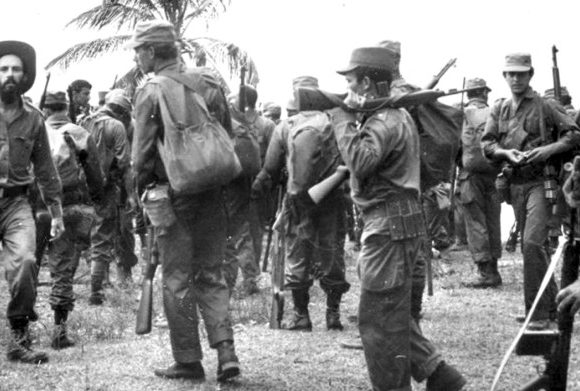
    Sixty-seven years after the landmark Constanza, Maimón, and Estero Hondo expedition touched Dominican soil, this defining moment in the nation’s fight for democratic rule remains a cornerstone of the country’s modern political history. What began as a coordinated armed incursion against the long-standing authoritarian regime of Rafael Leonidas Trujillo ultimately failed as a direct military operation, but its legacy sparked the popular opposition that would topple Trujillo’s decades-long dictatorship years later.

    Decades after the event, historians and storytellers have preserved the memory of the expeditionaries’ patriotic mission through published histories, oral anecdotes, and investigative journalistic work, cementing the uprising’s role as the catalyst that restored Dominican democracy. On the afternoon of June 14, 1959, a modified Curtiss C-46 cargo plane rolled down a runway in El Aguacate, Cuba, carrying 54 armed fighters toward the Dominican Republic. To evade detection by Trujillo’s border forces, the aircraft had been repainted to match the colors and official insignia of the Dominican Air Force, with Captain Juan de Dios Ventura Simón – a defector from Trujillo’s own Air Force – at the controls.

    Leading the ground operation was Dominican commander Enrique Jiménez Moya, at the head of a multinational coalition of volunteers committed to ending Trujillo’s 29-year authoritarian rule. Fighters from Cuba, Venezuela, Puerto Rico, Spain, the United States, and Guatemala joined Dominican rebels, uniting disparate ideological backgrounds and personal circumstances around a single shared goal of ousting the dictator. The airborne insertion was only one part of a far larger coordinated plan: two speedboats, the *Carmen Elsa* and *Tinima*, had departed a day earlier from La Chiva dock in Nipe Bay, Cuba, carrying 144 additional expeditionaries scheduled to land on June 14 at two northern Dominican coastal sites, Maimón and Estero Hondo. However, a combination of internal sabotage and severe bad weather delayed the boats’ arrival by six full days, forcing them to miss the planned coordinated landing.

    Despite the setback to the full plan, the C-46 touched down on schedule at a small remote airstrip outside Constanza. Trujillo’s garrison soldiers stationed nearby had no advance warning of the incoming flight, and the initial confusion among defending forces played into the rebels’ hands. After a brief firefight with a local patrol that left several soldiers and one officer dead, the expeditionaries unloaded their gear and slipped off the airstrip as the plane returned to Cuba. Back in the capital of Santo Domingo, Trujillo moved quickly to crush the incursion, deploying nearly 3,000 ground troops supported by truck convoys and air support. By dawn on June 15, Constanza had been turned into a war zone, with regime aircraft carrying out continuous bombing runs; the rebels were forced to retreat into the surrounding mountains to evade the assault.

    Six days behind schedule, the two expeditionary speedboats finally reached Dominican shores. The *Carmen Elsa* landed at Maimón under the command of José Horacio Rodríguez, while the *Tinima* put ashore at Estero Hondo led by José Antonio Campos Navarro. Trujillo’s military had already prepared for the delayed landing, and an additional 3,000 troops backed by air and ground fire repelled the incursion, leaving no survivors from the maritime expeditionary force. After suppressing the uprising, the Trujillo regime launched a deliberate propaganda campaign claiming that the invasion had been defeated not by its professional military, but by ordinary Dominican peasants armed only with machetes, clubs, and hand-thrown stones. The regime built this narrative into a massive public relations push, producing heroic folk songs, merengues, poetry, public rallies and competitions to celebrate the supposed popular victory over the rebels. But the truth of the aftermath was far grimmer: dozens of captured expeditionaries were secretly taken to Trujillo’s torture facilities and extrajudicially executed.

    Only a tiny handful of rebels survived the crackdown: three Dominican fighters, Poncio Pou Saleta, Mayobanex Vargas, and Francisco Medardo Germán, along with two Cuban volunteers – Delio Gómez Ochoa, a veteran of the Cuban Sierra Maestra insurgency, and teenage fighter Pablito Mirabal. While the 1959 expedition was a total military defeat, it reshaped the future of Dominican opposition politics as a powerful symbolic spark. The brutal, indiscriminate repression the regime unleashed against the uprising and its sympathizers generated widespread national outrage, amplifying deep existing discontent with Trujillo’s authoritarian rule.

    In the months following the incursion, a small group of young Dominican opponents began organizing secretly, inspired by the expeditionaries’ sacrifice. Led by Manolo Tavárez Justo and Minerva Mirabal, the group named itself after the June 14 uprising, founding the 14 June Revolutionary Movement (1J4). Within just a few years, the movement grew into one of the most powerful anti-regime political forces in the country, playing a critical role in the eventual collapse of Trujillo’s dictatorship. To honor the expeditionaries’ legacy, the Dominican government passed Law 264-97, which officially designated June 14 as the Day of the Immortal Race, and a mausoleum at the Center of Heroes in Santo Domingo now holds the remains of the fallen fighters, preserving their memory for future generations.