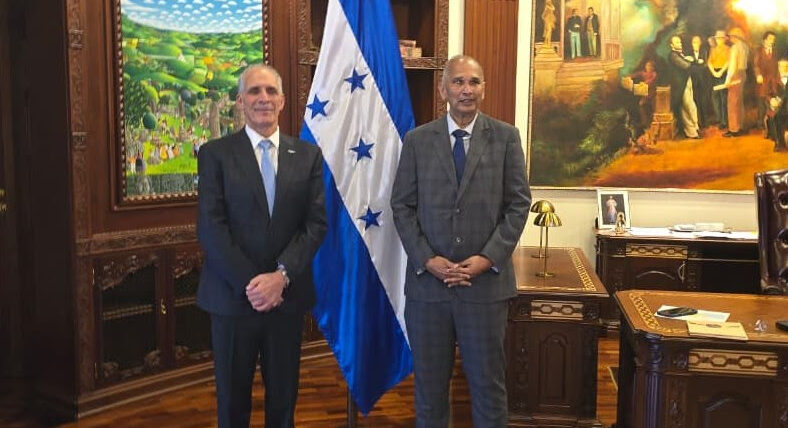
On an official visit to Honduras’ capital Tegucigalpa, Inter-American Institute for Cooperation on Agriculture (IICA) Director General Muhammad Ibrahim has reconfirmed the intergovernmental organization’s unwavering commitment to advancing the Central American nation’s agricultural development, following high-level discussions with top Honduran government leaders.
Invited to the country by Honduran President Nasry “Tito” Asfura, Ibrahim’s visit comes at a pivotal moment for Honduras, which has identified its agricultural sector as a core engine for broad-based economic growth and improved social prosperity, especially for rural populations. The talks centered on two core priorities: strengthening the country’s farming industry and building more robust, inclusive national food systems.
During their meeting at the Presidential Palace, Ibrahim laid out IICA’s full readiness to deliver targeted technical assistance to drive the modernization of Honduras’ agricultural sector. The two sides explored multiple pathways for IICA support, including technical knowledge sharing, skills training programs for local producers, policy advisory services, and cross-border resource mobilization to reshape the country’s food systems for greater sustainability and equity.
IICA Director General also updated President Asfura on the institute’s ongoing global and regional work to integrate cutting-edge science, innovative practices, and digital technology into agricultural production, with the goal of building more climate-resilient food systems. He emphasized that these initiatives align directly with the Honduran government’s national strategic goals: eradicating food insecurity, improving public nutrition outcomes, and strengthening the country’s overall food sovereignty.
Cross-border agricultural threats emerged as another key topic on the meeting’s agenda. The leaders highlighted the urgent need for coordinated action to combat transboundary pests and diseases that threaten key Honduran export and staple crops, including New World Screwworm in cattle herds, Fusarium Tropical Race 4 (TR4) that impacts banana plantations, avian influenza, and African Swine Fever. Both sides agreed that deepened collaboration in biosecurity monitoring and response is critical to protecting Honduras’ agricultural output and rural livelihoods.
Climate-related environmental challenges, particularly the prolonged dry conditions driven by the El Niño weather pattern and their severe impact on domestic food production, also took up significant space in the discussions. Ibrahim noted that IICA already maintains an active partnership with the Honduran government to address these impacts, including the rollout of targeted incentive programs known locally as “bonos”, which support smallholder and commercial producers to adopt climate-smart technologies, expand sustainable coffee production, and improve livestock farming practices. According to the IICA statement, President Asfura expressed strong enthusiasm for the institute to continue expanding this successful program.
The talks also covered concrete, actionable steps to mitigate drought impacts, such as upgrading national irrigation infrastructure, expanding smallholder access to high-quality adapted seeds and affordable fertilizers, and improving seasonal planting cycle planning to align with shifting rainfall patterns. President Asfura also shared his strong support for a proposal to construct a national seed processing facility, which would guarantee a stable, reliable supply of high-quality seeds for Honduran producers, and backed Ibrahim’s ongoing work to strengthen the country’s entire agrifood value chain. President Asfura’s Chief of Staff, Juan Carlos García, was in attendance for the high-level discussions.
Following his meeting with President Asfura, Ibrahim held separate working talks with Moisés Abraham Molina, Honduras’ Secretary of Agriculture and Livestock (SAG). Their discussion focused on expanding existing technical cooperation frameworks and scaling up resource mobilization efforts to directly benefit local smallholder and family farmers. The two leaders also reviewed potential new agricultural development initiatives that integrate sustainable management of Honduras’ abundant forest resources, and finalized coordinated preparedness plans for the drought expected to impact the country in the coming months.