标签: Dominica

多米尼克

  • Removal of derelict vehicles resumes in Goodwill and Fond Cole areas

    Removal of derelict vehicles resumes in Goodwill and Fond Cole areas

    Authorities in Dominica have launched a renewed offensive against derelict vehicles, targeting neighborhoods in Goodwill and Fond Cole as part of a comprehensive public safety initiative. The joint operation, spearheaded by the Commonwealth of Dominica Police Force (CDPF) and the Dominica Solid Waste Management Corporation (DSWMC), aims to address multiple urban hazards associated with abandoned automobiles.

    Official communications from the CDPF emphasize that this campaign extends beyond mere aesthetic improvement, targeting critical public health and security concerns. These neglected vehicles have been identified as potential havens for criminal activities, breeding grounds for disease-carrying rodents, and unnecessary obstructions in public areas. The initiative represents a proactive measure to mitigate these risks and uphold community standards.

    Law enforcement officials have issued a firm directive to vehicle owners, urging immediate removal of any unlicensed or abandoned automobiles. The appeal underscores the importance of civic responsibility in maintaining communal spaces. “Let us continue working together to keep our communities clean, safe, and orderly,” stated the official release, highlighting that citizen cooperation remains fundamental to the program’s success.

    The current operation builds upon previous cleanup efforts, demonstrating the government’s sustained commitment to urban renewal and crime prevention through environmental design. This systematic approach to removing derelict vehicles reflects broader strategies being implemented across Caribbean nations to enhance quality of life in residential areas.
  • Dominican President Sylvanie Burton joins OECS peers in Morocco at MEDays Forum 2025

    Dominican President Sylvanie Burton joins OECS peers in Morocco at MEDays Forum 2025

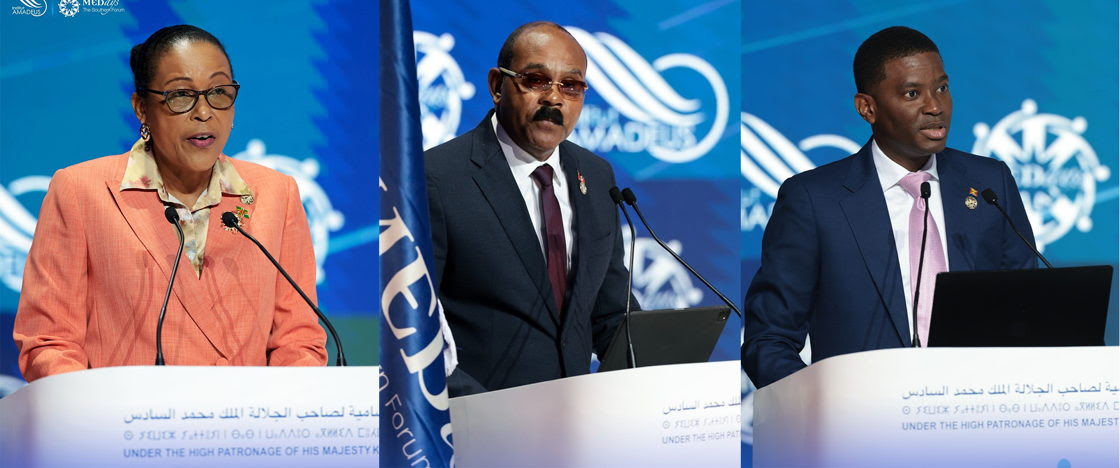
    Under the High Patronage of His Majesty King Mohammed VI, Morocco hosted the 17th MEDays Forum from November 26-29, 2025, convening global leaders during a period of significant geopolitical fragmentation. The summit, themed ‘Fractures and Polarization: Reinventing the Global Equation,’ featured substantial participation from the Organization of Eastern Caribbean States (OECS), including Dominica President Sylvanie Burton, Antigua and Barbuda Prime Minister Gaston Browne, and Grenada Prime Minister Dickon Mitchell.

    The Caribbean delegation’s involvement, facilitated through Eastern Caribbean Embassies in Morocco, signaled deepening commitments to African-Caribbean partnerships. President Burton drew upon Dominica’s Kalinago heritage to emphasize indigenous knowledge systems as crucial frameworks for addressing contemporary challenges. She advocated for enhanced mutual respect, cultural understanding, and improved financial accessibility for vulnerable nations.

    Prime Minister Mitchell highlighted the acute realities of climate change and international instability affecting small island developing states, proposing a reimagining of historical Africa-Atlantic-Caribbean trade routes as modern corridors for collaboration and mutual growth. Meanwhile, Prime Minister Browne addressed compounding poly-crises by calling for urgent financial reforms, vulnerability-specific assessment metrics, and substantive inclusion of small states in global decision-making processes.

    Ambassador Ian M. Queeley, OECS Representative in Rabat, expressed satisfaction with the region’s strong representation, noting that high-level participation demonstrates Africa’s recognition as a strategic partner. The forum enabled substantive dialogues with Moroccan officials regarding future cooperation avenues.

    The collective interventions articulated a distinctly Caribbean perspective advocating global solidarity, equity, and institutional responsiveness. As Morocco advances initiatives like the Atlantic Partnership and continental development programs, the MEDays Summit emerges as a critical platform for shaping international strategies that incorporate the voices of vulnerable nations seeking a more inclusive global order.

  • Caribbean Development Bank official highlights link between justice and economic progress at CCJ law event

    Caribbean Development Bank official highlights link between justice and economic progress at CCJ law event

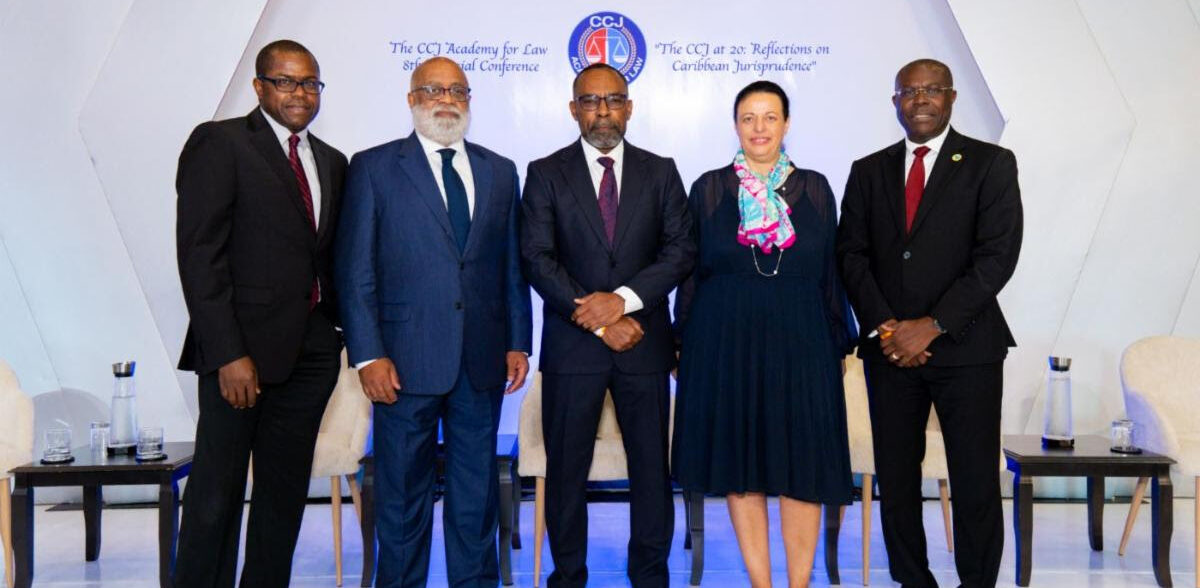
    At the 8th Biennial Law Conference hosted by the Caribbean Court of Justice (CCJ) Academy for Law, Dr. Isaac Solomon, Vice President of Operations at the Caribbean Development Bank (CDB), delivered a powerful address connecting judicial integrity to sustainable development. The event, marking the CCJ’s 20th anniversary under the theme “The CCJ at 20: Reflections on Caribbean Jurisprudence,” served as a platform for Dr. Solomon to articulate the indispensable role of justice in economic advancement.

    Dr. Solomon emphasized the CDB’s decade-long partnership with the CCJ, noting that equitable justice systems form the foundation for inclusive economic growth and poverty reduction. “Justice is the invisible engine that powers economic and social progress,” he declared. “When justice is reliable, investors feel confident. When rights are protected, communities become resilient. When systems are transparent, inequality declines.”

    The address highlighted how robust legal frameworks create conducive environments for investment, build trust in public institutions, and ensure fair treatment for marginalized groups. The CDB’s support has focused on governance improvements and institutional strengthening through multiple initiatives, including previous conferences addressing criminal justice reform and transnational legal cooperation.

    Looking toward the future, Dr. Solomon called for enhanced national justice systems and deeper regional integration. He advocated for “a justice ecosystem that is more deeply integrated, technologically-enabled, people-centered, and capable of supporting the ambitious development agenda of a dynamic Caribbean Community.”

    The conference itself represented a significant milestone, bringing together legal practitioners, policymakers, academics, and development partners to celebrate two decades of Caribbean jurisprudence and strategize on future justice initiatives. Dr. Solomon reaffirmed CDB’s commitment to ensuring legal frameworks adapt to evolving regional needs, ultimately working toward a more just, equitable, and resilient Caribbean.

  • Skerrit congratulates St. Lucia’s Phillip J. Pierre on second consecutive election victory

    Skerrit congratulates St. Lucia’s Phillip J. Pierre on second consecutive election victory

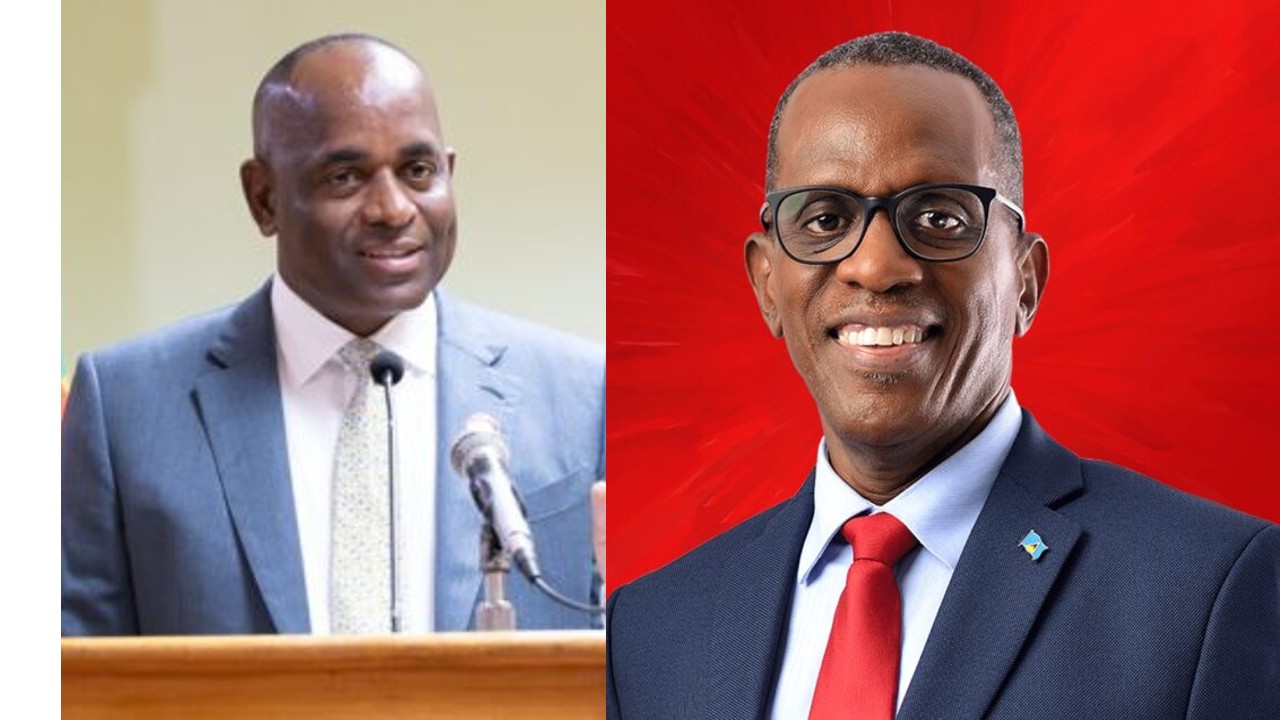
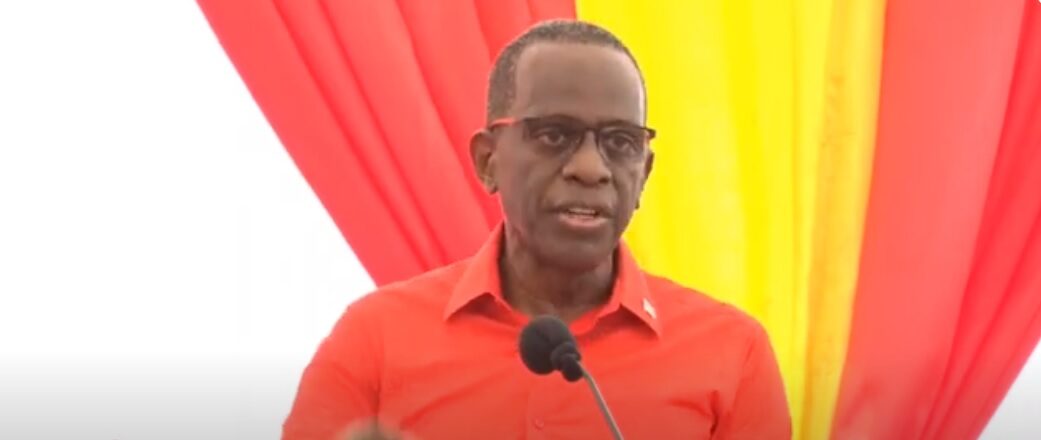
    In a significant display of regional political solidarity, Dominica’s Prime Minister Roosevelt Skerrit has extended heartfelt congratulations to St. Lucia’s Prime Minister-elect Phillip J. Pierre following his party’s decisive electoral victory. The St. Lucia Labour Party secured an overwhelming mandate, capturing 14 of the 17 parliamentary seats in what analysts are calling a remarkable affirmation of public trust.

    The electoral outcome represents a substantial political triumph for Pierre, who has maintained continuous parliamentary representation since 1997. His principal opponent, United Workers Party leader Allen Chastanet, managed to retain only his personal constituency seat, while independent candidates secured the remaining two positions in the legislative assembly.

    Prime Minister Skerrit characterized the victory as “massive” in scale and significance, attributing the success to Pierre’s unwavering commitment to accessible governance. “When leadership remains proximate to the citizens and acknowledges that ultimate authority resides with the populace, they willingly entrust you with their power,” Skerrit observed in his post-election analysis.

    The Dominican leader elaborated on the philosophical underpinnings of effective political leadership, emphasizing that longevity in public service derives not from temporal endurance but from sustained emotional connection with constituents. “The critical factor isn’t material provision or rhetorical eloquence,” Skerrit noted, “but rather the capacity to make citizens feel understood, valued, and represented in their aspirations and challenges.”

    Drawing historical parallels, Skerrit referenced veteran politician Stephenson King’s enduring parliamentary presence since the late 1980s as exemplary of this people-centered approach. The commentary suggests a emerging regional governance model where political success correlates directly with leaders’ demonstrated empathy and relational consistency with their electorate.

    This electoral endorsement, according to Skerrit’s assessment, validates the principle that governmental legitimacy and effectiveness emerge from continuous engagement with citizen needs rather than ideological positioning or policy promises alone. The victory stands as testament to the enduring relevance of empathetic leadership in contemporary Caribbean politics.

  • COMMENTARY: A note on the electoral defeat of Ralph Gonsalves, the decline of the 1970s Caribbean left, and lessons earned across a lifetime

    COMMENTARY: A note on the electoral defeat of Ralph Gonsalves, the decline of the 1970s Caribbean left, and lessons earned across a lifetime

    The recent electoral defeat of Dr. Ralph Gonsalves in St. Vincent & the Grenadines represents far more than the conclusion of a lengthy political career. This watershed moment signifies the ultimate collapse of a progressive tradition that once dominated Caribbean political thought during the 1970s—a movement that inspired generations but ultimately failed to develop into a sustainable, democratic force capable of institution-building.

    The historical context traces back to the Black Power Revolution of 1970, when the Trinidad Regiment mutinied under Geddes Granger’s leadership. This anti-colonial uprising inspired young Sandhurst graduates like Rafiq Shah and Rex LaSalle to challenge established structures. Across Dominica and other islands, educational institutions such as St. Mary’s Academy became hotbeds of revolutionary thinking, with students including the late Dr. Wellsworth Christian embracing calls for Black dignity and regional sovereignty.

    While the socialist ideals of that era provided a necessary antidote to colonial oppression, retrospective analysis reveals critical shortcomings. The movement fundamentally misunderstood democratic principles, undervalued the rule of law, and dismissed the importance of private enterprise in economic development. Ironically, certain colonial-era institutions—independent judiciary systems, competent healthcare frameworks, and professional civil services—proved more effective than their replacements despite their problematic origins.

    The progressive generation that produced leaders like Gonsalves ultimately succumbed to power’s corrupting influence. Rather than building sustainable institutions, they created political machines prioritizing spectacle over substance. The region now faces multiple crises: collapsing scientific innovation, epidemic crime rates, and systemic corruption that has transformed civil services into extensions of political parties.

    This analysis identifies deeper philosophical failures—the abandonment of fundamental values like nonpartisan service and moral integrity that were once taught in Caribbean households. True development requires rebuilding institutional frameworks based on humility, restraint, and genuine public service rather than dynastic ambition and power consolidation.

    The Caribbean’s future stability depends on cultivating sober thinking, disciplined citizenship, and robust institutions that can withstand political turbulence. This necessitates honest historical reckoning and courageous breaks from the intoxication of power that has characterized regional politics for decades.

  • St. Lucia Labour Party on course to secure commanding win in St. Lucia election

    St. Lucia Labour Party on course to secure commanding win in St. Lucia election

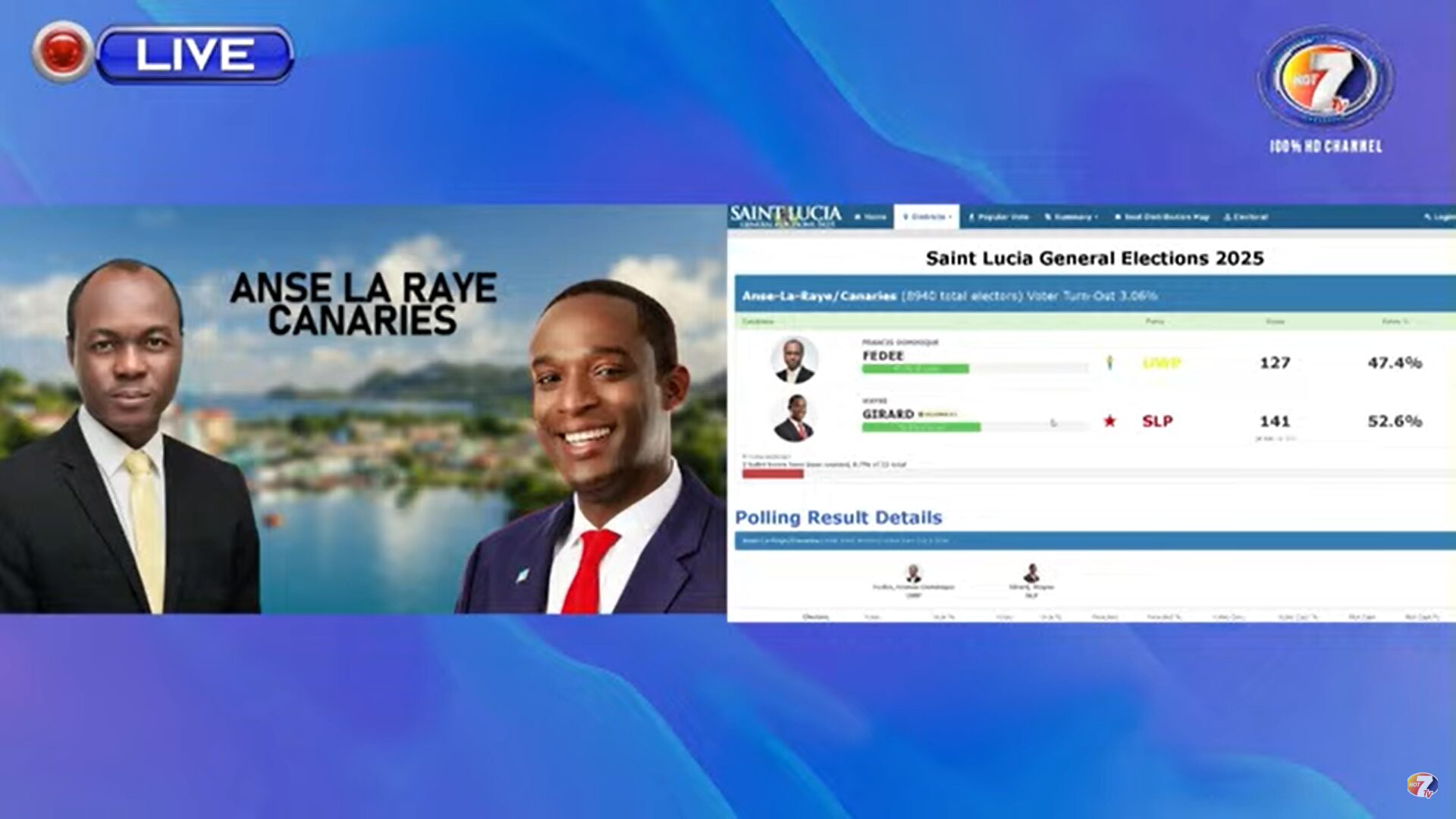
    Early election returns from Saint Lucia indicate a substantial victory for the Saint Lucia Labour Party (SLP) under the leadership of Philip J. Pierre. Preliminary constituency declarations reveal the SLP has captured a commanding majority of seats, positioning the party to form the next government.

    With nine constituencies officially confirming SLP victories at the time of reporting, the incumbent United Workers Party (UWP) has managed to secure just a single seat. Independent candidates have emerged as significant factors in this election, with projections suggesting they may claim two additional seats in the House of Assembly.

    Political analysts examining the electoral landscape are projecting a definitive final distribution of seats: 14 for the SLP, one for the UWP, and two for independents. This outcome would provide the Labour Party with a robust parliamentary majority, facilitating their legislative agenda and marking their return to governance.

    While these results remain preliminary pending official certification, the emerging pattern demonstrates a clear electoral mandate for the SLP. The final declarations, expected imminently, will formally establish the political framework for Saint Lucia’s next governing term under Prime Minister-designate Pierre’s administration.

  • Live coverage of Election Day 2025 in St. Lucia

    Live coverage of Election Day 2025 in St. Lucia

    St. Lucia witnessed a significant surge in civic participation during its 2025 General Election, with preliminary reports indicating substantially higher voter turnout compared to the previous electoral cycle in 2021. Election officials and independent observers have characterized the participation rate as remarkably elevated, reflecting heightened public engagement in the democratic process.

    The increased voter activity occurred amid comprehensive media coverage, with major news organizations including DNO and Hot7 TV providing extensive real-time reporting from polling stations across the island nation. These media outlets deployed teams of journalists to deliver continuous updates and analytical commentary throughout the election day proceedings.

    The substantial rise in voter participation suggests growing political awareness among the St. Lucian electorate, potentially influenced by contemporary issues facing the Caribbean community. This electoral engagement demonstrates the vitality of democratic institutions within the Commonwealth nation and underscores the population’s commitment to shaping their governance future through constitutional processes.

    As ballot counting progresses, citizens and international observers await the official declaration of results that will determine the composition of the next government and political leadership direction for the eastern Caribbean state.

  • Dominica’s gov’t announces upgraded fees for eco sites

    Dominica’s gov’t announces upgraded fees for eco sites

    The Dominican government has unveiled a revised fee structure for accessing its protected natural areas and eco-tourism sites, set to take effect December 1, 2025. The Ministry of Environment, Rural Modernisation, Kalinago Upliftment, and Constituency Empowerment announced the changes following their inclusion in the recently presented National Budget Address for the 2025/2026 fiscal year.

    In a significant development, two of Dominica’s most cherished natural wonders—Titou Gorge and Cold Soufrière—have received formal designation as nationally managed eco-tourism sites. This new status means standard entrance fees will now apply to these previously more accessible locations.

    According to the Office of the Prime Minister, the primary objective behind the fee restructuring is to create sustainable revenue streams dedicated to environmental preservation. The generated funds will be strategically reinvested into biodiversity conservation programs, trail maintenance, landscape management, and sustainable tourism infrastructure.

    The government also revealed plans to implement an online booking system that will allow visitors to purchase access passes before arriving in Dominica. This digital initiative aims to streamline the entry process and enhance the overall visitor experience while supporting better management of tourist flows.

    The new fee schedule establishes clear categories: private site visits (excluding the Waitukubuli National Trail) will cost US$8 per entry, while daily passes for broader access will be priced at US$20. The government indicated that pricing for weekly passes remains under development and will be announced separately.

  • Tourism minister: Mas Domnik and WCMF 2025 bring joint revenue of over 69 million to country

    Tourism minister: Mas Domnik and WCMF 2025 bring joint revenue of over 69 million to country

    Dominica’s Minister of Tourism Denise Charles-Pemberton has revealed spectacular economic results from the island’s 2025 cultural festivities, announcing that Carnival and the World Creole Music Festival collectively injected approximately $69.6 million into the national economy. The substantial financial impact was disclosed during Friday’s official launch ceremony for Mas Domnik 2026, highlighting the growing significance of cultural tourism in Dominica’s development strategy.

    The minister emphasized that these cultural events have become powerful economic drivers, supporting thousands of jobs while stimulating business activity and ensuring substantial income distribution nationwide. “When our culture moves, Dominica moves, when our creatives thrive, our people thrive,” Charles-Pemberton declared, capturing the symbiotic relationship between cultural expression and economic prosperity.

    Looking ahead to Carnival 2026, scheduled to commence on January 10th, authorities promise an enhanced experience with particular emphasis on traditional masquerade for both the opening celebrations and national parade. The event will return to Windsor Park Sports Stadium, designated as “Carnival City,” providing a secure, comfortable, and centralized venue for performers and spectators alike. The capital city of Roseau will transform into a vibrant hub featuring designated chill zones, entertainment pockets, and extensive offerings of local cuisine, crafts, and music.

    Complementing the main events, an extensive calendar of fringe activities and village masquerades will ensure continuous entertainment, demanding what the minister described as boundless energy from participants. “From sunrise to sundown is pure ‘Sewo’,” Charles-Pemberton noted, invoking the local term for festive celebration.

    In a special recognition ceremony, the Ministry of Tourism and Discover Dominica Authority honored Mr. Darnley Guye as the Mas Domnik 2026 Personality of the Year. This accolade celebrates Guye’s extraordinary five-decade contribution to Carnival through costume design, parade organization, craftsmanship, and leadership. The minister praised Guye as a foundational figure who “carried this culture long before many of us even touched the road,” acknowledging his role in shaping the contemporary festival experience. This recognition follows last year’s tribute to the late Frankie ‘Krazy T’ Bellot, maintaining the tradition of honoring cultural architects.

  • Scott’s Head Reunion and Enhancement Committee elects new executive, rolls out plans for Christmas and beyond

    Scott’s Head Reunion and Enhancement Committee elects new executive, rolls out plans for Christmas and beyond

    The Scott’s Head Reunion and Enhancement Committee has formally constituted itself as an independent organization following the election of its executive board, marking a significant milestone for community development in Dominica. With leadership spanning four countries—the United Kingdom, United States, Virgin Islands, and Dominica—the committee embodies a transnational commitment to regional improvement.

    President Jeff Bellot leads a geographically diverse team including Vice President Cheryl Adams, Secretary Deborah Destouches, Treasurer Celia Tavernier, and Public Relations Officer Ivan ‘Ivoo’ Nicholas. Additional key members comprise Michael Junny Nicholas, Joanne Bleau, Selwin John Lewis, Julius Brown, and Heather Nicholas Jervier.

    Building upon what organizers describe as an exceptionally successful pilot reunion in June 2025, the committee is now preparing for a comprehensive Parish of St. Mark Reunion in 2027. This expanded event will incorporate communities across Soufriere, Scott’s Head, Gallion, and Petit Bagatelle through collaborative partnerships with all relevant stakeholders.

    The committee’s immediate focus centers on an ambitious Christmas Village scheduled from December 20, 2025, through January 2, 2026. The program features extensive nightly holiday light displays from 6 PM to midnight, alongside traditional dominoes tournaments, bingo competitions, nostalgic Christmas games, family movie nights, and carol performances by local church choirs.

    The festivities will culminate in a grand raffle on Christmas Day with premium prizes including smart televisions, kitchen appliances, professional tool sets, and gift vouchers. Children’s activities will include dedicated raffles, complimentary toys, snacks, and age-appropriate games accompanied by live music performances.

    Proceeds from these events will directly fund critical community infrastructure projects. Priority initiatives include providing secure trash bins to every Scott’s Head household to combat littering and constructing public restroom facilities in the town center to serve both residents and visitors. The committee has additionally announced plans for a praise and worship gathering during Easter 2026.

    The organization is actively seeking financial support from individuals and institutions committed to environmental preservation, aligning with Dominica’s identity as the ‘Nature Isle.’ Interested parties can connect with the committee through their official Facebook page ‘Scott’s Head’ to contribute or obtain further information about their comprehensive community enhancement programs.