标签: Dominica

多米尼克

  • Dominica among two OECS countries named in proposed US immigration bill

    Dominica among two OECS countries named in proposed US immigration bill

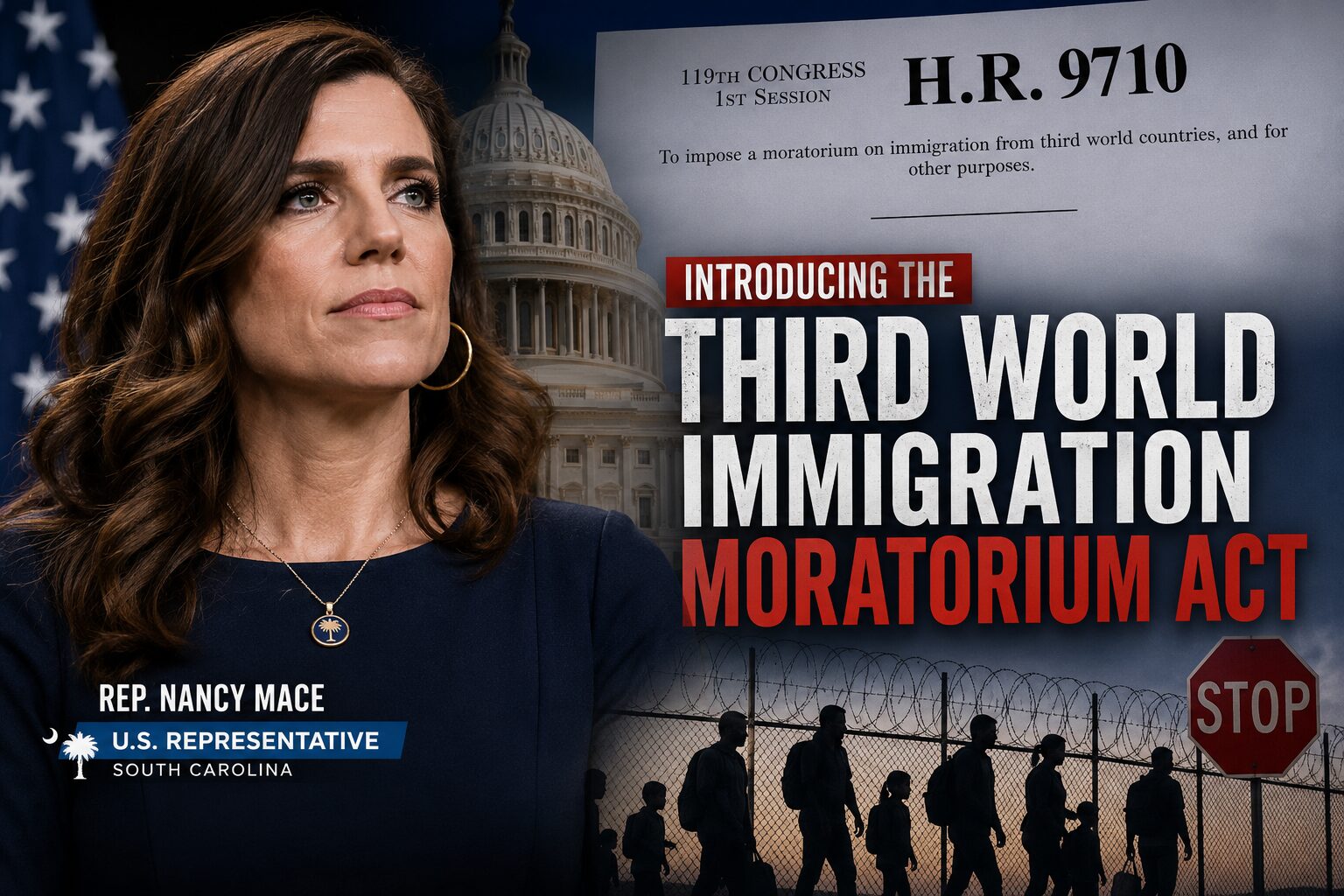
    A controversial new immigration restriction bill introduced in the U.S. House of Representatives has placed two Eastern Caribbean nations in the crosshairs of sweeping entry prohibitions targeting 40 countries labeled as security risks to the United States.

    Introduced July 15 by South Carolina Republican Congresswoman Nancy Mace, the Third World Immigration Moratorium Act — officially numbered HR 9710 — would bar entry to the U.S. for any national of the 40 designated “countries of concern,” as well as travelers carrying documents issued by the Palestinian Authority. The explicit stated goal of the legislation is to block foreign nationals from identified high-risk nations from entering American territory.
    Among the 40 nations listed, Dominica and Antigua and Barbuda stand out as the only two member states of the Organization of Eastern Caribbean States (OECS) to be included in the proposed restrictions. Other prominent countries named in the bill include Haiti, Cuba, Venezuela, Iran, Somalia, Sudan, Yemen, Nigeria and Zimbabwe, among dozens of others.
    Mace framed the proposed legislation as a direct extension of the restrictive entry policy first rolled out under former President Donald Trump, which sought to limit immigration from select nations to protect U.S. national security. In her official statement announcing the bill, Mace argued that all nations included on the list meet one or more high-risk criteria: they have refused to cooperate with U.S. deportation orders, fail to share sufficient background information for adequate traveler vetting, face widespread internal instability, are linked to terrorist activity, or are governed by regimes hostile to U.S. interests.
    “The American people are done playing games and so are we. For too long, Washington has looked the other way while bad actors exploited every gap in our system and American families paid the price. Those days are over,” Mace said in her address accompanying the bill’s introduction. She emphasized that the legislation codifies the principle that entry to the U.S. is a privilege, not an inherent right, and positions the entry ban as a critical tool to keep “dangerous aliens” out of the country while pressuring listed nations to address U.S. security concerns.
    The bill includes a series of narrow exceptions to its broad entry prohibition. The restrictions do not apply to U.S. lawful permanent residents, dual nationals who hold citizenship of an undesignated country, accredited diplomatic and NATO personnel, athletes and their support teams traveling to major international sporting events including the FIFA World Cup and Olympic Games, certain classes of special immigrant visa holders, and individuals granted immigrant visas due to documented ethnic or religious persecution in Iran. It also grants the U.S. Secretary of Homeland Security authority to issue individual case-by-case waivers for travelers whose entry would serve a critical U.S. national interest.
    If the bill is eventually passed into law, it would also mandate a regular bi-annual review process: every 180 days, the U.S. Secretary of State, in consultation with the Attorney General, Secretary of Homeland Security and Director of National Intelligence, would be required to submit a report to Congress recommending whether the restricted country list should remain unchanged, be modified, expanded, or terminated entirely.

  • Hon. Vince Henderson meets Chinese foreign minister to discuss AI and bilateral cooperation

    Hon. Vince Henderson meets Chinese foreign minister to discuss AI and bilateral cooperation

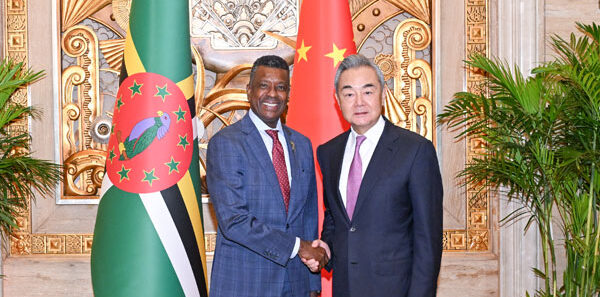
    On July 18, a high-profile diplomatic meeting between Chinese Foreign Minister Wang Yi and Vince Henderson, Dominica’s Minister for Foreign Affairs, International Business, Trade and Energy, took place in Shanghai, marking a new step forward in the longstanding cooperative partnership between the two nations. The talks came as Henderson traveled to China to participate in the 2026 World AI Conference, a global gathering focused on shaping the future of responsible artificial intelligence development.

    During the meeting, both leaders reaffirmed the deep-rooted mutual trust between China and Dominica, with Wang noting that Dominica has long stood as a reliable friend and partner to China in the Caribbean region. Wang specifically commended Dominica’s consistent and unwavering support for the one-China principle, a foundational pillar of bilateral relations between the two countries.

    A core focus of the discussion centered on inclusive global development of artificial intelligence. Wang emphasized that China is committed to steering AI innovation toward inclusive growth that delivers shared benefits to all nations, rather than exacerbating global inequality by creating a new “intelligence divide” between developed and developing economies. He stressed that every country, regardless of its geographic size or economic scale, deserves an equal opportunity to access cutting-edge technological progress and leverage it for sustainable economic development.

    To advance this inclusive vision, Wang outlined China’s readiness to deepen collaboration with developing nations including Dominica through the World Artificial Intelligence Cooperation Organization (WAICO). This partnership will prioritize supporting the Global South in building AI capacity and advancing the global governance of AI toward a framework that is both responsible and inclusive. Wang also noted that China stands ready to deepen overall bilateral cooperation by aligning national development strategies and expanding mutually beneficial partnerships across multiple sectors.

    For his part, Henderson expressed great honor in representing Caribbean nations at the 2026 World AI Conference, and reaffirmed Dominica’s full support for China’s efforts to position artificial intelligence as a fair, accessible international public good through collaborative frameworks with the United Nations. Henderson also re-stated Dominica’s firm commitment to upholding the one-China principle, and extended sincere gratitude to China for its decades-long support that has driven Dominica’s economic and social progress. He specifically highlighted China’s critical assistance in helping the small island nation address pressing climate change challenges, a top priority for vulnerable Caribbean states.

    Looking ahead, Henderson said Dominica is eager to expand bilateral cooperation across a diverse range of sectors as both countries work to strengthen their decades-long friendly partnership, building on shared values of mutual respect and equal development.

  • Disasters And You with the Office of Disaster Management July 21st 2026

    Disasters And You with the Office of Disaster Management July 21st 2026

    The content submitted for news processing only contains social media sharing prompts including “Share”, “Tweet”, and “Pin”, with no complete core news text included. Without the full context, key facts, background details, and core arguments of the intended news story, it is impossible to carry out a comprehensive in-depth analysis, structural reconstruction, or accurate rewriting of the material. News processing relies on complete factual information to maintain the accuracy, authority, and journalistic value of the final output, so no substantive reporting can be generated from the current incomplete input.

  • OP-ED: The candidate is the message: Political recruitment, electoral strategy, and democratic choice

    OP-ED: The candidate is the message: Political recruitment, electoral strategy, and democratic choice

    Candidate recruitment stands as one of the most foundational functions of any political party. The individuals a party puts forward become the public embodiment of its values, policy priorities, governing competence, and electoral goals. As pioneering scholar Pippa Norris observed in her 1997 work *Passages to Power: Legislative Recruitment in Advanced Democracies*, candidate selection is often the “secret garden of politics”: a largely opaque process that exerts a profound, lasting impact on democratic representation. Candidates are far more than just individuals seeking public office; they are strategic choices that signal which communities a party aims to represent, and how it plans to capture and hold power. Analyzing why a party nominates a particular candidate frequently reveals as much about the party itself as it does about the person selected.

    The ongoing by-election race for Dominica’s Roseau North constituency offers a compelling real-world case to examine this political dynamic. Public records confirm that the incumbent governing Dominica Labour Party (DLP) has put forward Ashma McDougall as its nominee, while the main opposition United Workers Party (UWP) has selected Daniel “Danny” Lugay. Political commentators have widely characterized McDougall as a polished, ambitious, and electorally appealing young political newcomer — a first-time candidate running for an incumbent administration navigating a highly charged, challenging political landscape. Media reporting has also uncovered an interesting backdrop to Lugay’s selection: McDougall was reportedly the UWP’s first-choice candidate, but she declined the party’s invitation to run under its banner, leaving the opposition to turn to Lugay.

    Lugay’s nomination has sparked extensive public debate across Dominica. Some political observers have questioned the choice, pointing to widespread perceptions of deep internal divisions within the UWP, unclear long-term strategic direction for the party, and a decline in its overall political capital in recent years. Other analysts have looked back to Lugay’s previous tenure as the parliamentary representative for Roseau North, noting that over the past decade the constituency has weathered three major crises — Tropical Storm Erika, Hurricane Maria, and the global COVID-19 pandemic — yet his record in office and community engagement has not left a strong, lasting imprint on public memory.

    Critics have also raised concerns about what they describe as an overly confrontational approach to parliamentary work, and a relative lack of public presence and outreach during the constituency’s most severe crisis periods. More recently, public attention has focused on two key moments: Lugay’s 2022 public statement of gratitude to the Brenda Strafford Eye-Care Department at the Dominica China Friendship Hospital after he received successful treatment there, and his current campaign calls for greater transparency around ownership of high-value real estate in the constituency. He has also made unsubstantiated claims of widespread vote-buying and voter intimidation via “treating and bribing” during the ongoing voter confirmation process, claims that have since been formally refuted by Dominica’s independent Electoral Office.

    At first glance, Lugay’s nomination can appear puzzling. But this apparent oddity opens the door to a broader, more enduring question for democratic politics: What core considerations actually shape a political party’s choice of candidate?

    Political parties exist first and foremost to win elections. The pursuit of public office is the central goal that organizes all their strategic decisions, candidate selection included. Romantic narratives about patriotism or dedication to working people may resonate with voters, but they rarely provide a full explanation for nomination outcomes. For the most part, parties select candidates they believe will give them the best chance to secure victory on election day. That said, there are well-documented exceptions. Comparative political research has long identified the phenomenon of “spoiler candidates”: individuals nominated not to win the seat, but to split the opposing party’s voter base, force competitors to spend extra time and resources defending their position, or upend the expected dynamics of the race. Such candidates certainly exist across democratic systems, but whether that label applies to Lugay in the Roseau North race is a separate question that requires further empirical evidence to answer.

    In the current political context, where even some voters who have directly benefited from DLP policies have expressed dissatisfaction with the party’s leadership, even a candidate that some see as imperfect could be enough to deliver a UWP victory. A candidate that the UWP leadership believes can reunify their fractured party, energize lapsed supporters, demoralize DLP voters, or capitalize on widespread anti-incumbent sentiment could still end up performing well on election day. Political parties are ultimately judged by their electoral results, not by whether their nomination processes meet public expectations of ideal candidate selection.

    As a result, contrary to popular belief, parties rarely pick candidates simply because they are the most qualified or most locally popular. Instead, comparative political science has identified a range of overlapping, often competing criteria that shape these decisions. While the relative weight of these factors shifts across different political systems, they consistently point to one core conclusion: parties select the candidate they believe gives them the highest probability of winning the election.

    The most widely cited factor is electability. Political scientist Anthony Downs argued in his seminal 1957 work *An Economic Theory of Democracy* that parties act as rational actors focused exclusively on maximizing their vote share. As a result, they often prioritize candidates who can pull in the most votes on election day, even if other contenders have stronger professional or policy credentials. But electability is far from the only consideration. In their 2010 book *Democracy within Parties*, scholars Reuven Hazan and Gideon Rahat explain that candidate selection requires balancing four core priorities: electoral success, internal organizational cohesion, ideological consistency, and internal party stability. Thus, parties seek candidates who can win over voters while remaining loyal to the party’s broader long-term mission.

    Internal party cohesion is just as critical as external electoral prospects. Internal party dynamics often shape nominations as much as outside voter considerations. During periods of factional conflict, leadership transition, or declining electoral support, parties will often select a candidate who represents an acceptable compromise between competing factions, rather than the individually strongest contender.

    Another key factor is descriptive representation: the degree to which a candidate matches the demographic and social characteristics of the constituency they will represent. In her 2020 work *The Impact of Gender Quotas*, scholar Jennifer Piscopo highlights the growing emphasis parties place on gender, generational, ethnic, and other forms of descriptive representation. Nominating women, younger candidates, or members of historically underrepresented groups can serve both symbolic political goals and practical electoral purposes. Closely tied to descriptive representation is the value of local roots: voters consistently reward candidates who are seen as deeply connected to their communities through long-term residency, civic engagement, professional service, and local leadership roles.

    These established political theories help bring clarity to the ongoing debate over the Roseau North by-election nominations. Some observers interpret the UWP’s choice of Lugay as a response to the party’s internal organizational challenges, while others point to priorities of party cohesion, electoral strategy, existing local name recognition, or compromise between competing factions. On the DLP side, supporters frame McDougall’s nomination as evidence of the party’s commitment to generational renewal, descriptive representation, and confidence in its electoral position heading into the vote.

    No matter which interpretation one accepts, the core underlying reality remains clear: both nominations are strategic decisions designed to maximize each party’s chance of winning the Roseau North seat, while strengthening its overall position ahead of the next general election. In the end, the outcome of the contest will be determined less by abstract debates over which candidate is inherently “better,” and more by which party’s strategic approach proves more effective at persuading undecided voters to turn out for their side.

    It is important to remember that candidate selection is far more than just a tactical exercise for electoral gain. Every nomination reflects a party’s core philosophy, its policy priorities, and its vision for governance. Equally important, it sends a clear message to voters that the party believes its chosen candidate best understands the unique challenges facing the constituency, and has the knowledge, experience, character, and leadership skills needed to address those challenges.

    For this reason, political parties have a responsibility to approach candidate selection with great care. Every nomination is ultimately a public statement about the party itself. A strong, well-vetted candidate can reinforce public trust in a party’s judgment and core values; a weak or poorly justified choice can leave voters questioning the party’s priorities and its understanding of what the electorate actually wants.

    For voters, this means candidate selection deserves far more scrutiny than it typically receives, beyond surface-level campaign rhetoric and partisan loyalty. Each nomination is an implicit promise: that the selected candidate best embodies the party’s understanding of the constituency’s needs, aspirations, and future. Candidate selection is simultaneously an electoral strategy and a core democratic statement about what a party stands for.

    Perhaps the most important question voters should ask is not simply “Who is this candidate?” or even “Why was this candidate chosen?” Instead, citizens should ask: “What does this candidate tell us about the political party that selected them?” In every democracy, political parties ultimately reveal more about themselves through the people they choose to represent them than through any campaign promise they make.
  • Electoral Office rebuts voter confirmation allegation; remains silent about invalid address concerns in Roseau North

    Electoral Office rebuts voter confirmation allegation; remains silent about invalid address concerns in Roseau North

    A pre-election controversy has emerged in Dominica’s Roseau North constituency, where United Workers Party (UWP) candidate Danny Lugay has raised formal alarm over multiple perceived flaws in the ongoing electoral confirmation process, triggering a partial denial from the island’s national Electoral Office.

    In an official letter dated July 19, Lugay outlined two key sets of concerns to the Chief Elections Officer. First, he pointed out that the latest published supplementary voter list includes dozens of entries for registered electors that lack complete, valid residential addresses. The candidate framed this oversight as an unprecedented deviation from the country’s formal electoral statute, saying the issue must be fully corrected before any constituency-wide vote proceeds to prevent potential electoral irregularities.

    Second, Lugay called attention to serious, unconfirmed allegations he had received regarding confirmation center operations in Roseau North. These claims hold that center staff have been processing voter registration and confirmation requests submitted by third parties on behalf of absent applicants, many of whom are alleged to not even be residents of the Roseau North constituency. If verified, Lugay noted, this practice would amount to a direct violation of Dominica’s electoral law, and he requested an urgent official investigation and response to both issues.

    Within 24 hours of Lugay’s letter being made public, the Electoral Office issued a public statement on July 20 pushing back against the absentee confirmation claims. The office framed the allegations as false claims that had been spreading widely across local social media platforms. It issued a categorical denial, noting that the official confirmation process has non-negotiable requirements: every elector must appear in person to have a new official photograph taken and provide an electronic signature to complete their application. The system’s integrated software will not finalize any confirmation unless both biometric and biographic data points are captured, the office explained, making third-party confirmation of absent electors technically impossible. The statement also reaffirmed the Electoral Office’s ongoing commitment to protecting the integrity of the voter confirmation process through consistent supervision and robust oversight of all local confirmation centers.

    Notably, while the Electoral Office directly addressed the claims of absentee confirmation processing, its official response did not touch on Lugay’s separate, distinct concern over the lack of valid residential addresses for electors listed on the latest supplementary voter list, leaving that part of the controversy unresolved ahead of upcoming electoral activities.

  • McDougall urges Roseau North residents to confirm voter registration ahead of by-election

    McDougall urges Roseau North residents to confirm voter registration ahead of by-election

    As the upcoming Roseau North by-election moves into its final stretch, Dominica Labour Party candidate Ashma McDougall has made a public call to all eligible voters in the constituency, urging them to complete the critical pre-voting step of verifying their voter registration status to guarantee their voices are counted on polling day. McDougall shared her remarks in a recent interview with Dominica’s state-owned media outlet, DBS Radio.

    During the conversation, the candidate opened up about her experience on the campaign trail, highlighting the warm reception she has received from residents across Roseau North’s communities. “Every day, I go door-to-door, moving between neighborhoods and speaking with voters from all walks of life, and I leave every interaction feeling incredibly grateful,” she said. “The open conversations I’ve had with constituents, and the trust they have extended to me throughout this campaign, have been far more encouraging than I ever expected.”

    Each conversation and exchange of policy ideas with local residents, McDougall noted, has only deepened her confidence in the Roseau North constituency’s untapped potential for growth and progress. With election day quickly approaching, she emphasized that checking registration status is a small but vital action that every eligible voter should prioritize ahead of the vote.

    “Your vote is your voice, and that voice holds the power to shape the future of every community across Roseau North,” McDougall explained. Beyond confirming registration, she also called on residents to turn out in force on election day, framing the vote as more than a choice between candidates. “This isn’t just about picking one person for office—it’s about choosing the kind of representation you deserve, the kind that will push Roseau North forward toward shared progress,” she said. “Vote for leadership that actually listens to you, vote for the values that matter to our community, vote for someone you can trust to deliver for Roseau North.”

    McDougall also pushed back against the often-personal nature of modern political campaigning, making clear that her bid for office has never centered on her own ambition. “For me, this campaign has never been about one individual,” she said. “I don’t waste time engaging with personal insults or trading attacks with other candidates. This race is about our community, it’s about our constituency, and most importantly, it’s about building a shared collective vision for the future of Roseau North.”

  • Turks and Caicos partners with CARPHA to strengthen laboratory and health security systems

    Turks and Caicos partners with CARPHA to strengthen laboratory and health security systems

    A major public health initiative to combat the growing global threat of antimicrobial resistance (AMR) has wrapped up in the Turks and Caicos Islands (TCI), after a five-day technical assessment mission conducted by the Caribbean Public Health Agency (CARPHA) between July 13 and 17, 2026.

    The mission forms part of CARPHA’s broader Integrated Antimicrobial Resistance Programme, which works across the Caribbean region to strengthen local capacities for AMR detection, monitoring and rapid response, with a specific focus on upgrading laboratory infrastructure, standardizing surveillance practices and reinforcing regional health security frameworks.

    A specialized three-person technical delegation led the on-the-ground assessment. The team included Mohamed Elsherbiny, Senior Technical Advisor in the Office of the CARPHA Executive Director and head of the integrated AMR programme; Dr Gabriel Gonzalez Escobar, Assistant Director of Surveillance, Disease Prevention and Control, who also leads CARPHA’s central Medical Microbiology Laboratory; and Megan Bardsley, an epidemiologist assigned to the agency’s integrated AMR initiative.

    Over the course of the five-day visit, the CARPHA team held consultation sessions with a wide range of local stakeholders, including senior officials from TCI’s Ministry of Health, technical leads from the National Epidemiology and Research Unit (NERU), management and staff from the National Public Health Laboratory (NPHL), clinical leadership from TCI Hospital, and representatives from national infection prevention and control teams.

    The assessment carried out by the delegation covered a broad scope of critical areas tied to AMR response. Technical experts evaluated the condition of local laboratory facilities, the functionality of existing diagnostic equipment, current staffing capacity and training gaps, national AMR governance structures, adherence to established biosafety protocols, the robustness of local AMR data management systems, and the effectiveness of ongoing AMR surveillance activities. As part of the broader review, the team also assessed national tuberculosis patient specimen referral processes and evaluated TCI’s existing pandemic preparedness capabilities to respond to emerging public health threats.

    In its post-mission statement, CARPHA noted that the agency has a long-standing and productive collaborative relationship with the TCI National Public Health Laboratory. The organization specifically highlighted the lab’s consistent work in confirming test results for high-priority pathogens, as well as the successful recent rollout of the MolBio mobile testing platform, which has expanded local diagnostic reach.

    Following the comprehensive assessment, the CARPHA team identified multiple actionable opportunities to advance TCI’s AMR response capacity. Key areas for improvement include expanding core diagnostic services, boosting overall laboratory operational efficiency, updating and strengthening biosafety and biosecurity protocols, scaling up antimicrobial susceptibility testing and molecular diagnostic capabilities, and standardizing processes for more accurate and complete AMR data collection and reporting.

    The review also explored adjustments to cross-border specimen referral arrangements within CARPHA’s regional laboratory network. Proposals on the table include deepening collaborative ties with Jamaica’s national laboratory system, to ensure TCI clinicians and researchers have reliable access to specialized regional testing and reference services that are not available locally.

    DR. Lisa Indar, Executive Director of CARPHA, emphasized the urgency of coordinated action on AMR in her statement following the mission. “Antimicrobial resistance stands as one of the most pressing threats to global public health today,” Indar said. “Strengthening robust laboratory systems and standardized surveillance is absolutely fundamental to enabling timely detection of drug-resistant pathogens and guiding evidence-based public health action. We are deeply encouraged by the clear commitment demonstrated by our colleagues in the Turks and Caicos Islands, and we look forward to supporting the full implementation of the recommendations developed during this assessment mission.”

    Looking ahead, CARPHA has confirmed that it will maintain long-term engagement with TCI’s Ministry of Health and Human Services and local national partners. Next steps include co-developing a phased implementation roadmap for the mission’s recommendations, providing ongoing targeted technical support to local teams, and further integrating TCI into CARPHA’s regional AMR surveillance network to improve cross-border coordination on this shared public health threat.

  • Mahaut, Jimmit and Tarreau set for St. Ann parish feast celebrations

    Mahaut, Jimmit and Tarreau set for St. Ann parish feast celebrations

    Community leaders in Mahaut Jimmit Tarreau are gearing up for their much-anticipated annual celebration of the Parish Feast of St. Ann, with a full lineup of inclusive activities scheduled to run from July 23 to 26, 2026. Organized jointly by the Mahaut Jimmit Tarreau Village Council and the area’s Parliamentary Representative, this year’s gathering blends religious tradition, local cultural expression, and recreational entertainment to create space for residents and out-of-town visitors to connect and honor the feast day.

    One of the flagship events of the celebration is a Gospel Fest, which will shine a spotlight on homegrown creative talent from across the region. Confirmed performers include vocalists Janet Azzouz, Mikael Ferrol, Julien Rivierre, and Dennis Augustine, Michel “Micho” Mason, alongside a special performance from the Men’s Ministry of the Mahaut Baptist Mission Church, with additional guest acts set to make appearances throughout the festival.

    Beyond the Gospel Fest, organizers have packed the four-day schedule with a diverse array of community-focused activities. Attendees can look forward to a popular Fish Night social gathering, an Oldie Goldie Dance throwing back to classic hit tracks, helmed by popular local DJs Dr. Miguel Labaddie and Flip the Boss, an early morning Jouvé street celebration, and the highly anticipated return of the MAHAUT EXPO. The expo will highlight handmade crafts, artisanal goods, and fresh agricultural produce from local communities spanning the route from Tarreau to Canefield, giving small-scale creators and farmers a platform to showcase their work to the public. The schedule also includes a lively Band Splash performance gathering at Zaaman Park and a relaxed Kool Down event to wind down between larger activities.

    The entire celebration will draw to a close with a solemn grand Mass held at Massacre Parish Church, a traditional closing tribute to St. Ann that anchors the festive four-day gathering in its religious roots. Organizers have extended an open invitation to all residents, visitors, and community members from surrounding areas to join in the celebrations, reminding attendees that outside independent vendors will not be allowed to operate during the scheduled events to keep the focus on local participants.

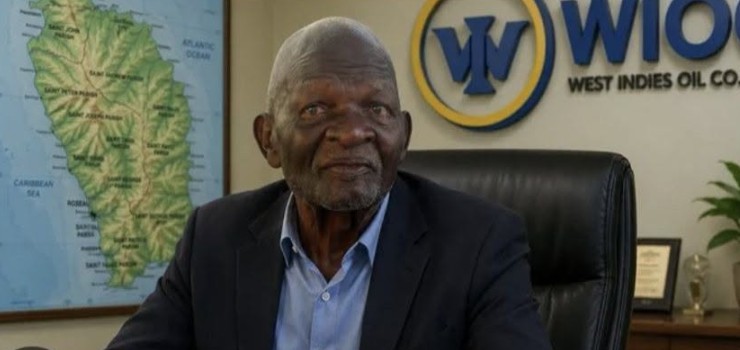
  • Prominent businessman McMillan Jno-Baptiste dies

    Prominent businessman McMillan Jno-Baptiste dies

    The Dominican business community is mourning the loss of one of its most storied figures, McMillan Jno-Baptiste, a pioneering fuel retailer whose decades-long career left an indelible mark on the nation’s petroleum sector. Affectionately known to most as “Mr. McMillan” or “Mr. Mac,” Jno-Baptiste passed away, closing the book on a nearly 60-year career dedicated to serving communities across the country.

    Jno-Baptiste first entered the energy industry in 1956, when he launched his professional journey with global oil giant Esso. After 18 years of building hands-on expertise in the sector, he struck out as an independent entrepreneur, founding his own fuel retail business in 1974. Over the subsequent decades, he steered his company through a era of dramatic transformation in the global petroleum market, weathering volatile swings in global fuel prices, steadily rising operating expenses, and shifting industry regulations that challenged small independent retailers across the Caribbean.

    Against these headwinds, Jno-Baptiste never wavered from his commitment to delivering reliable, accessible fuel services to the Dominican public. He continued to actively manage his business operations well into his later years, earning a reputation for consistency, integrity, and customer-focused service that set him apart from competitors.

    His contributions to both Dominica’s local business ecosystem and national petroleum infrastructure have been widely celebrated by industry peers and community members alike. His passing marks the end of an extraordinary career defined by relentless hard work, quiet perseverance, and unbroken decades of service to the Dominican nation, leaving a legacy that will be remembered by generations of customers and fellow business leaders.

  • STATEMENT: Electoral office responds to ‘false claims’ about voter confirmation procedures

    STATEMENT: Electoral office responds to ‘false claims’ about voter confirmation procedures

    False claims circulating across social media platforms over the weekend have prompted an official response from the country’s Electoral Office, which is moving swiftly to refute allegations that third parties can complete voter confirmation for absent electors by presenting their documents alone.

    In a public statement released to counter the growing spread of unsubstantiated misinformation, Chief Election Officer Anthea Joseph’s office categorically denied that such a practice is allowed or even possible under the jurisdiction’s current voter confirmation framework. The office emphasized that the entire system has been built with layered security safeguards explicitly designed to require the in-person physical presence of every elector seeking confirmation.

    To illustrate the rigid checks built into the process, Electoral Office officials outlined the mandatory workflow that all electors must complete. When an elector arrives at a confirmation center, their personal identifying information is first entered into the official digital system. Next, a live photograph of the elector is captured on-site, and the individual is required to provide a personal electronic signature via a dedicated signature capture pad. Critical procedural blocks are coded directly into the system: the confirmation application cannot be marked as complete until both the on-site photograph and the unique electronic signature have been successfully recorded.

    Because of these non-negotiable procedural requirements, the office confirmed that it is structurally impossible for a third party to finalize voter confirmation for another person without that elector being physically present at the center. The Electoral Office has formally rejected the false information that has spread through social media channels, and moved to reassure the general public that all official confirmation centers are adhering strictly to the prescribed regulatory procedures at all times.

    Beyond this immediate denial, the office offered a second guarantee to voters: comprehensive on-site supervision and oversight are being implemented at every confirmation location to protect the integrity of the entire voter confirmation process. Officials noted that the Electoral Office remains fully committed to upholding the requirements laid out in the Registration of Electors Act and all established administrative protocols for voter confirmation.

    In closing, the office issued a public appeal urging all community members to cross-check any claims related to electoral procedures through the Electoral Office’s official communication channels, rather than relying on unvetted social media posts. The statement also encouraged voters to avoid sharing unconfirmed allegations, which can mislead electors and erode public trust in the integrity of the region’s electoral system.