标签: Dominica

多米尼克

  • Tourism minister says Roseau Cruise Village still a priority as gov’t pushes for stronger cruise tourism growth

    Tourism minister says Roseau Cruise Village still a priority as gov’t pushes for stronger cruise tourism growth

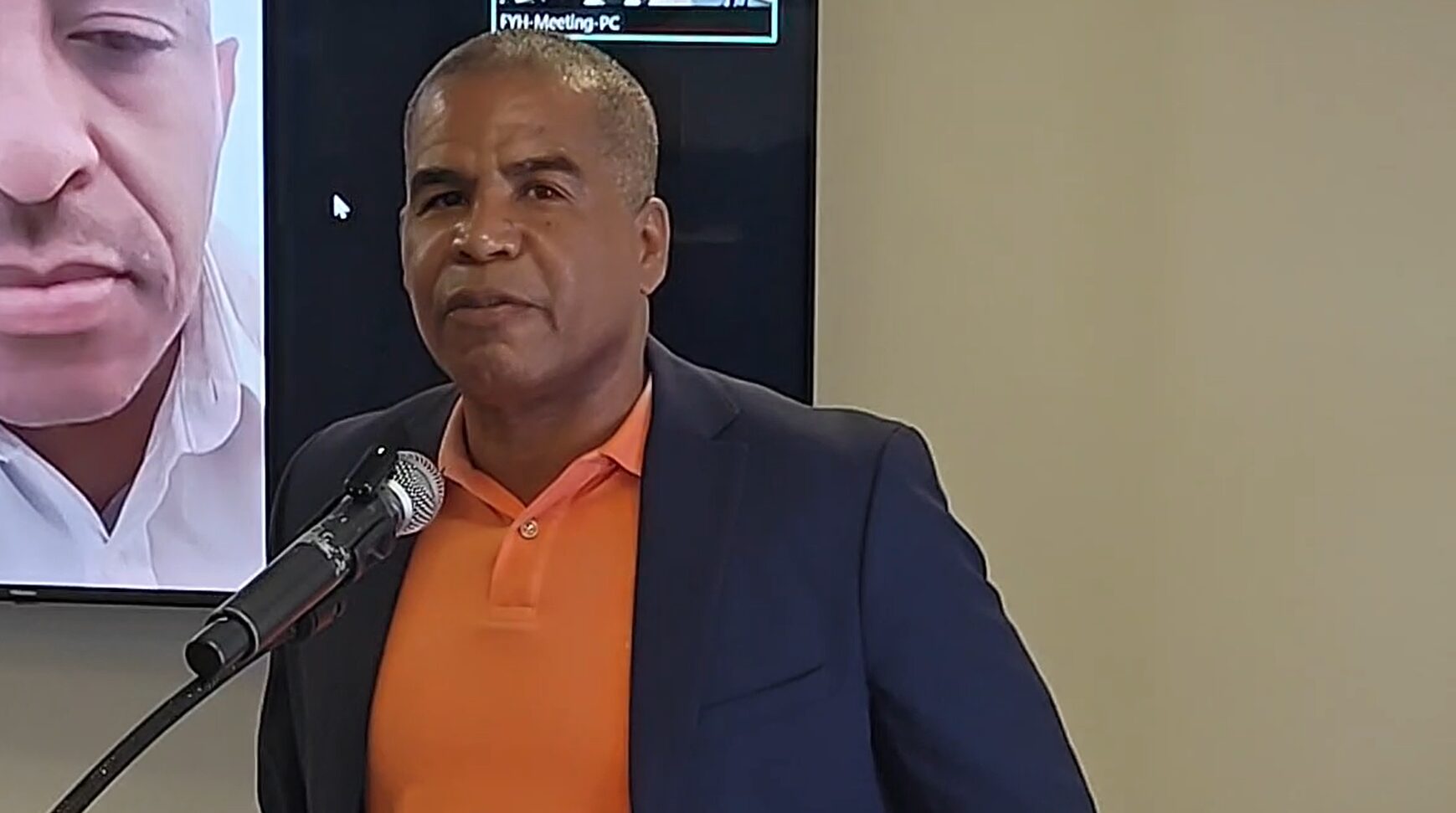
    Speaking at an ongoing three-day Business Cruise Stakeholders Symposium hosted by the Discover Dominica Authority (DDA) and the Ministry of Tourism at Goodwill Parish Hall, Dominica’s Tourism Minister Denise Charles-Pemberton has cemented the status of the long-awaited Roseau Cruise Village and Waterfront extension as a core national development priority for the island nation.

    As industry stakeholders and local observers have repeatedly raised questions about the project’s timeline and future, Charles-Pemberton acknowledged that negotiations for the large-scale infrastructure development have stretched beyond initial projections. She attributed the delay to the project’s massive investment scale and the government’s unwavering commitment to securing the most beneficial terms for the Dominican people and economy. Despite the hold-up, the minister confirmed that steady progress continues to be made, and expressed optimism that ongoing discussions will reach a final resolution in the near future, noting that the upgraded infrastructure is critical to the long-term expansion and sustainability of Dominica’s cruise tourism sector.

    Charles-Pemberton also addressed a long-running public debate over the relative value of cruise tourism versus stay-over tourism, pushing back against the narrative that the island must choose between the two sectors. Drawing a geographic comparison to Singapore, a small island nation that supports a population of over five million, she noted that Dominica, the third largest English-speaking country in the Caribbean, has more than enough capacity to accommodate both types of tourism. Rather than framing the sectors as competitors, she argued that both can coexist and thrive to deliver broader economic benefits to the country.

    Beyond capacity, the minister emphasized that the central question facing Dominican tourism is not whether the island can welcome more visitors, but how to maximize the economic impact of tourism by encouraging higher visitor spending, generating new local jobs, supporting domestic businesses, and spreading economic prosperity to every community across the island. She identified cross-stakeholder and local business cooperation as the key to unlocking this impact, urging the sector to prioritize promoting authentic Dominican experiences, local products, and domestic cuisine. Every dollar spent on local goods and services circulates within the Dominican economy, she explained, supporting working families, strengthening small businesses, and creating new employment opportunities. Charles-Pemberton clarified that her goal extends far beyond just increasing visitor arrival numbers; it focuses on building a more inclusive, locally rooted tourism economy.

    Looking back at the recently concluded 2025-2026 cruise season, Charles-Pemberton highlighted strong growth that outpaced the previous year’s performance. The season welcomed more than 409,000 cruise passengers across roughly 250 vessels, marking 21% and 8% increases in passenger numbers and vessel calls respectively compared to the 2024-2025 season. Of these arrivals, more than 330,000 passengers went ashore to explore the island, and over 161,000 participated in organized island tours. Beyond the headline growth numbers, these statistics represent tangible improvements to livelihoods across the country, the minister said, noting that cruise tourism already delivers meaningful support to household financial stability across Dominica. She reaffirmed the government’s intentional ongoing investment to support continued sustainable growth of the sector.

    A core pillar of the government’s approach is ensuring that tourism growth creates opportunities for all Dominican stakeholders, not just a small group of industry players. To advance this goal, the government is working with stakeholders including the Combined Taxi association to build a more equitable dispatch system for visitor services. It is also engaging in ongoing consultations with industry groups around private tour regulations, with the goal of ensuring every qualified local operator has a fair chance to participate in the tourism market, while upholding the high standards of quality and organization that visitors expect. Finally, Charles-Pemberton emphasized the importance of protecting Dominica’s reputation as a premium travel destination, noting that while profit is a natural and acceptable part of tourism business, unfair business practices such as price-gouging harm the entire sector. Instead of exploiting demand for quick gains, she urged stakeholders to focus on delivering greater value to visitors that supports long-term industry growth.

  • LIVE: United Progressive Party Press Conference

    LIVE: United Progressive Party Press Conference

    The current submission only contains a social media sharing interface (including options to share, tweet, and pin content) alongside an image link pointing to a remote news asset. No complete core news text, event details, or relevant contextual information is provided alongside these elements. Without the full substantive content of the original news report, it is impossible to conduct the required in-depth analysis of core points, background, or impacts, nor can a full structured rewriting of the news be completed. Users are advised to provide the complete text of the original news article to receive the full requested analysis and rewriting service.

  • LETTER TO THE EDITOR: Abortion – From prison to hospital

    LETTER TO THE EDITOR: Abortion – From prison to hospital

    In a landmark ruling delivered on July 23, 2026, the High Court of Dominica has struck down the nation’s ancient, restrictive abortion law, finding it incompatible with the country’s modern, independent constitution. The historic decision comes after five years of legal advocacy by three local reproductive rights groups: Women’s Choice, MiRiDom, and ASPIRE, which have publicly praised the four attorneys who led the case pro bono in the pursuit of justice: Rishi Dass, Anika Gray, Sasha Sukram, and Dawn Yearwood.

    Under the new court-ordered framework, abortion is no longer a criminal offense when performed under four specific circumstances: cases of rape and incest, pregnancies involving severe fetal anomaly, and procedures undertaken to protect the pregnant person’s life and long-term health. The ruling’s parameters align directly with the recommendations laid out in the Concluding Observations of the United Nations CEDAW (Committee on the Elimination of Discrimination against Women) Committee.

    The decision marks a fundamental shift in how abortion care is approached in Dominica. Where police and criminal punishment once governed care for pregnancy terminations in eligible cases, clinical providers will now take on responsibility for patient care. Where prison sentences were once the consequence for accessing care, public health facilities will become the setting for safe treatment, and stigma-driven punishment will need to make way for compassionate patient support. These profound cultural and systemic changes will require a widespread reorientation of societal values, and the bulk of implementation work lies ahead, according to ASPIRE.

    While the five-year legal battle to reach this ruling represents a major milestone, reproductive health advocates warn that changing long-ingrained social and professional behaviors, especially among healthcare workers, will be a far longer, more challenging process. The ruling gives the Dominican government six months to update policies and systems to comply with the new court order. Since the case was first heard in October 2025, ASPIRE has repeatedly reached out to the Ministry of Health, Wellness, and Social Services (MOHWSS) to offer actionable support: including share regional and global data, outline successful implementation models from other nations, and share on-the-ground experiences from similar reform efforts. To date, the Ministry has not responded to these offers.

    ASPIRE notes that public sector inertia may slow progress even with the clear court deadline, and the challenge of reform extends far beyond government agencies. Deep social stigma has forced widespread silence around abortion in Dominica, despite data showing that approximately 70% of women in the country will have had at least one abortion by the end of their reproductive years, meaning roughly 70% of adult men have also been touched by the issue. This widespread silence, fueled by stigma, has allowed outdated norms to persist for decades.

    Churches and educational institutions are uniquely positioned to address harmful abortion stigma, but ASPIRE points out that many religious groups have actively contributed to stigma, either through rigid anti-abortion doctrine or through deliberate silence on the issue. Both active condemnation and passive silence perpetuate harm, leaving little room for the grace, compassion, and pastoral care that faith communities claim to prioritize. With the court’s ruling in hand, advocates say there is extensive work ahead to shift cultural norms, update health systems, and dismantle the stigma that has long shaped access to reproductive care in the country.

    ASPIRE, the signatory of this open letter to Dominica News Online, is a pro-motherhood, pro-family, pro-choice non-governmental advocacy organization registered in Dominica and five other Caribbean nations. The group works to advance fair and just reproductive health policy through research, civil society dialogue, and government engagement.

  • CCJ overturns Barbados man’s prison sentence in cannabis trafficking appeal

    CCJ overturns Barbados man’s prison sentence in cannabis trafficking appeal

    In a landmark ruling delivered on Tuesday, July 28, 2026, the Caribbean Court of Justice (CCJ) has overturned a three-month custodial sentence handed down to a Barbadian man convicted of cannabis trafficking, correcting what senior judges identified as multiple critical errors in lower court applications of Barbados’ modern sentencing legislation.

    The case centers on Danny Lamar Husbands, who pled guilty to trafficking 90 grams of cannabis. Initially, the Magistrate’s Court sentenced Husbands to three months in prison, basing the ruling heavily on his prior criminal convictions and concluding that his offending behavior had escalated over time. The Barbados Court of Appeal later upheld this original custodial sentence, leaving Husbands to appeal to the region’s highest court for redress.

    In its official press release outlining the judgment, the CCJ confirmed it has granted Husbands’ appeal, setting aside both the lower appellate court’s ruling and the original prison term. In place of custody, the court ordered Husbands to enter a six-month good behavior bond. Should he fail to meet the terms of this bond, he will be required to pay a fine of 675 Barbadian dollars within a 14-day window.

    The core of the CCJ’s ruling rests on its finding that both lower courts failed to adhere to the requirements of Barbados’ Penal System Reform Act, a landmark piece of legislation designed to expand the use of non-custodial sentencing and cut down on unnecessary incarceration across the country. The CCJ explained that the act sets a strict high threshold that must be met before courts can issue a custodial sentence, adding that Barbadian courts have routinely opted for non-custodial penalties in cannabis trafficking cases involving quantities similar to the 90 grams at issue in Husbands’ case.

    Senior judges also emphasized that the lower courts incorrectly assigned excessive weight to Husbands’ prior criminal record. Under the explicit text of the Penal System Reform Act, an offender cannot be ordered to serve prison time solely on the basis of previous convictions, a rule that both lower courts failed to follow in this proceeding. Compounding this error, the CCJ found the Barbados Court of Appeal violated statutory requirements by upholding the custodial sentence without first ordering and reviewing a mandatory pre-sentence report.

    The appeal was heard by a five-justice panel consisting of Justices Rajnauth-Lee, Jamadar, Ononaiwu, Eboe-Osuji and Bulkan. Husbands was represented by Andrew O. G. Pilgrim, SC, and Martie R. M. Garnes, while Krystal C. Delaney and Kevin Forde represented the respondent. Anika Jackson, SC, and Rico Yearwood appeared as amicus curiae on behalf of Barbados’ Attorney General. The full text of the court’s judgment is currently available for public viewing on the CCJ’s official website.

    In the press release, the CCJ underscored that the ruling serves to reinforce the core purpose of the Penal System Reform Act, ensuring that the power to order imprisonment is only exercised in cases where it is clearly legally justified under the legislation.

  • LIVE FROM 7PM: DBF Panel Public Discussion with By-Election candidates

    LIVE FROM 7PM: DBF Panel Public Discussion with By-Election candidates

    When accessing the submitted news content for processing, analysts encountered an incomplete entry. Only social media sharing buttons and an image link were included in the submission, with no core text of the news story provided. This absence of core journalistic content means that no comprehensive analysis, fact-checking, or structural rewriting can be completed. Without the actual reporting, quotes, data, and narrative context that make up a news piece, any attempt to elaborate on the story would be speculative and inaccurate. News processing requires full, verifiable content to ensure that final outputs maintain standards of accuracy, authority, and relevance for readers. Individuals seeking full processing of a news item are advised to resubmit the complete text of the original report alongside any supplementary links or imagery.

  • Miss Dominica Dainisha Eusebe set for regional pageant debut in Nevis

    Miss Dominica Dainisha Eusebe set for regional pageant debut in Nevis

    As the calendar counts down to August 3, 2026, Dainisha Eusebe, the newly crowned Miss Dominica 2026, is putting the final touches on her preparations for one of the Caribbean’s most anticipated cultural pageants: the Bank of Nevis International Miss Caribbean Culture Queen Pageant, set to take place on the soil of St. Kitts and Nevis.

    This year’s competition is not a standalone event; it is a centerpiece attraction of the 52nd Nevis Culturama Festival, a beloved annual regional celebration that ran from July 23 to August 4, 2026. Per an official statement from the Discover Dominica Authority, the Miss Caribbean Culture Queen Pageant has long served a unique purpose beyond traditional beauty competition: it gathers competing delegates from every corner of the Caribbean, creating a platform where contestants can highlight their home nations through displays of cultural heritage, performance talent, critical intelligence, and national pride, all while advancing cross-border regional unity and cultural exchange across the Caribbean bloc.

    Since taking the Miss Dominica 2026 title earlier this year, Eusebe has balanced fulfilling representative duties at multiple official island events with an intensive pre-pageant training regimen. Her preparation has covered everything from stage performance technique to media interview coaching, and refinement of her cultural presentation that will showcase Dominica’s identity to regional audiences.

    In an interview ahead of the competition, the 24-year-old Grand Bay native shared what the opportunity means to her. “Representing Dominica on the regional stage in the Miss Caribbean Culture Queen Pageant is both an honor and a responsibility,” she said. “As the Nature Isle of the Caribbean, we have a very rich culture and a unique identity and I’m so proud to share that with the wider region. This opportunity is not just about winning a crown. It is about serving as an ambassador for my country and building meaningful connections with my Caribbean sisters. I hope to make Dominica proud and continue that legacy.”

    Eusebe holds an Associate’s Degree in Geography from Dominica State College and most recently worked as a Land Use Officer in the country’s Physical Planning Division, bringing a diverse professional background to her role as a cultural representative. Beyond the pageant stage, she has a clear goal for her participation: to boost regional interest in visiting her home island. “When I step onto that stage, I want people from across the region to see me as someone who represented Dominica with confidence and pride. I hope they see a young woman who embraces her culture and inspires other young women to do the same. If, when I leave that stage, people are inspired to learn more about Dominica and even visit our shores, then that’s when I know that I have represented my country well,” she explained.

    Marva Williams, Chief Executive Officer of the Discover Dominica Authority, publicly praised Eusebe’s dedication to her role and preparation for the pageant. “Dainisha has embraced every aspect of her role as Miss Dominica with dedication and professionalism,” Williams said. “She has prepared diligently for this opportunity and we are confident she will represent Dominica with pride and distinction. Her participation provides another opportunity to showcase our country’s culture and inspire greater interest in Destination Dominica among audiences across the Caribbean.”

    Eusebe also extended gratitude to all Dominicans, both on-island and across the global diaspora, who have supported her journey so far. “To every Dominican who will be cheering me on from home and across the diaspora, thank you for your love, your prayers and your encouragement. It means more than words can ever express. With every step that I take on that stage, I will carry Dominica in my heart. I hope to make you proud by representing our culture and the warmth of our people with grace, confidence and authenticity. No matter the outcome, I will give my very best because I know that I am carrying the pride of my nation,” she said.

    Dominica’s Ministry of Tourism and the Discover Dominica Authority have joined in calling on all local and diaspora Dominicans to rally behind Eusebe as she makes her first regional pageant appearance in Nevis.

  • OECS advances Eastern Caribbean liaison service transition during Canada mission

    OECS advances Eastern Caribbean liaison service transition during Canada mission

    In a key milestone for the reform of the Eastern Caribbean Liaison Service (ECLS) Programme, a delegation from the Organisation of Eastern Caribbean States (OECS) Commission completed a week-long series of high-level negotiations in Canada focused on advancing the initiative’s transition to a updated governance structure.

    Led by Dr. Kisha Grant, the OECS Chief of Staff and Head of Strategic Diplomacy, the official mission ran from July 5 to 12, 2026, bringing together a wide range of key stakeholders from across the Caribbean region and Canadian government. Over the course of the visit, Grant held targeted discussions with ECLS Canada-based office staff, senior leaders from Employment and Social Development Canada (ESDC) — including representatives from Canada’s Temporary Foreign Worker Programme — and diplomatic representatives from OECS member states, including consuls general and high commissioners.

    Central to the talks was the dual goal of preserving the ECLS Programme’s ability to advance the shared economic and labor interests of OECS member nations, while aligning operations with Canada’s changing diplomatic designation rules. Participants also delved into actionable strategies to strengthen governance protocols, boost day-to-day operational efficiency, and shore up the programme’s long-term financial and institutional sustainability.

    The ongoing transition is anchored in a formal regularization framework that was previously approved by the OECS Authority, and is overseen by the ECLS Transition Committee, a governing body established in 2025. The committee draws representation from Saint Vincent and the Grenadines, the ECLS leadership, and senior OECS Commission officials to ensure balanced, inclusive decision-making throughout the restructuring process.

    Beyond the transition logistics, stakeholders also used the mission to explore expansion opportunities that would open the programme up to more workers from OECS member states, while deepening collaborative ties between all participating governments. The delegation also conducted an on-site review of the proposed new location for the ECLS Canadian office and carried out a comprehensive assessment of the programme’s current daily operations to identify areas for improvement.

    In reflections on the outcomes of the mission, Dr. Grant emphasized that the in-person gathering provided an unprecedented opportunity to align all stakeholders at a critical juncture for the programme’s evolution. “The discussions reinforced our shared commitment to ensuring that ECLS continues to serve as a strong and sustainable OECS pillar while meeting Canada’s requirements. Perhaps most importantly, the mission reinforced something we should never lose sight of — that behind every discussion and every decision are hundreds of workers and families across our Member States whose lives continue to be positively impacted by this Programme each year,” Grant noted.

    A core highlight of the mission was the delegation’s meeting with current ECLS participating workers, including several who have returned to take up Canadian employment through the programme for more than two decades. Describing the interaction as particularly meaningful, Grant added: “Their experiences are a powerful reminder that the ECLS Programme is one of the OECS Commission’s most tangible and enduring success stories. Behind every placement is a family, a community and a future being strengthened through meaningful employment opportunities.”

    Looking ahead, the OECS Commission confirmed it will continue coordinated work with the ECLS Transition Committee, OECS member state governments, and Canadian regulatory authorities to roll out the next phase of the governance transition, while working to amplify the programme’s positive long-term impact across the Eastern Caribbean region.

  • BREAKING NEWS: GUILTY VERDICT – Jonathan Scott Lehrer and Robert Thomas Snider

    BREAKING NEWS: GUILTY VERDICT – Jonathan Scott Lehrer and Robert Thomas Snider

    After a high-profile criminal investigation and trial that stretched for more than 18 months, a court has delivered a guilty verdict against two men charged in the brutal killings of prominent Canadian businessman Daniel Langlois and his partner Dominique Marchand.

    Jonathan Scott Lehrer and Robert Thomas Snider Jr. were found guilty of two counts of murder in connection with the 2023 deaths of the couple, whose charred bodies were discovered inside a burned-out vehicle near the defendants’ property on December 1 of that year. The image accompanying this reporting shows Lehrer and Snider exiting the local courthouse during proceedings in 2025.

    The case drew international attention due to Langlois’ standing as a pioneer in the digital media and animation industry, and the brutal circumstances of the couple’s deaths. Investigators launched a full forensic inquiry immediately after the discovery of the vehicle and remains, working to piece together the sequence of events that led to the killings. As legal proceedings concluded with this guilty verdict, additional details on sentencing, trial evidence and the motive behind the crime are expected to be released in the coming days.

  • OP-ED: The business of slavery from Africa to the New World, Part 1 – The trader who kept a diary

    OP-ED: The business of slavery from Africa to the New World, Part 1 – The trader who kept a diary

    As we approach Emancipation Day 2026, reflections on the transatlantic slave trade demand more than surface-level commemoration — they demand a clear-eyed examination of the deeply commercial infrastructure that sustained the centuries-long system of human trafficking. This inquiry began for me, a scholar researching the evolution of global financial institutions from antiquity to the modern era during my doctoral studies at the University of Manchester, when I first encountered the hidden business records of the trade in enslaved people. Among these records, one document stands out as a singular and unflinching window into the day-to-day operations of the trade: the diary of Antera Duke.

    Duke, a prominent Efik merchant prince and leader of what was then Duke Town (in present-day Nigeria), kept his daily journal between 1785 and 1788, written in the trade English commonly used along the West African coast. First published in a comprehensive scholarly edition by Oxford University Press in 2010, this diary is the only known surviving day-by-day account of the slave trade written by an African slave trader. What makes it so striking is its unemotional, strictly commercial tone: Duke logs customs duties (called “comey”) collected from European ship captains, records dinners hosted aboard British vessels from Liverpool, details credit disputes and their resolutions, and tracks consignments of enslaved people delivered downriver to waiting buyers. There is no moral hand-wringing, no indication of the horror of the trade being documented — it is, unapologetically, the journal of a businessman running a profitable enterprise.

    Duke’s diary forces a critical, often overlooked question: before enslaved people were sold at auction in Richmond, Virginia, before they were forced to harvest sugar cane in Barbados, before they were packed onto overcrowded transatlantic crossing ships, who ran the upstream commercial business of capturing and selling enslaved people, and what were the terms of that trade? The historical record is uncomfortable on all sides, and it contradicts the common simplified narrative that Europeans directly captured most enslaved people themselves.

    In reality, the harsh disease environment of coastal West Africa earned the region the nickname “the white man’s grave”: roughly half of all newly arrived European settlers and traders died within a year of landing, forcing Europeans to remain on their ships or in isolated coastal forts, relying entirely on local African actors to supply the enslaved people they purchased. The work of capturing, marching, and selling enslaved people at coastal trading points was controlled by West African states and established merchant networks: the Kingdom of Dahomey, which operated the key port of Ouidah under a royal customs monopoly; the Aro trading network of Igboland; and the canoe-house merchant firms of Bonny and Old Calabar, where Duke himself was a leading partner. Enslaved people were acquired through a range of violent systems — warfare, raids, judicial punishment, debt seizure, and kidnapping — before being sold directly to European buyers at coastal trading beaches, where the African supply network and European shipping industry converged.

    This history cannot be softened, but it also cannot be reduced to a single simplistic narrative. The historical archive holds two concurrent truths that must both be acknowledged: many African rulers and merchants profited directly from running the supply side of the trade, but other African leaders recognized the catastrophic damage the trade was inflicting on their communities and spoke out against it centuries before abolition. As early as 1526, Afonso I, the Christian monarch of the Kingdom of Kongo, wrote a formal letter to the King of Portugal protesting that Portuguese-backed traders were seizing his people daily, writing that “our country is being completely depopulated” and begging the Portuguese crown to send priests and religious materials rather than more slave traders and trade goods. This letter survives in official archives to this day. The demand for enslaved people came from European powers across the Atlantic, and that demand transformed and industrialized violence across inland West Africa. Both facts are equally true, and neither negates the other.

    Tracing the flow of money through the trade also reveals how interconnected the early modern global economy already was, built entirely on the exploitation of enslaved people. The price of an enslaved person was calculated in a negotiated “assortment” of goods, valued in standardized trade units like the trade ounce. Contrary to popular myth, these assortments were not made up of cheap trinkets. Economic historian David Richardson’s analysis of more than 90 English slaving voyages found that the highest-value category of goods traded was textiles, most notably handwoven Indian cottons from Gujarat and Bengal. Next came guns produced in Birmingham, with hundreds of thousands of firearms traded annually at the height of the trade. The bundle also included iron bars, distilled spirits like brandy and rum, and cowrie shells harvested in the Maldives and shipped by the ton to West Africa to use as small currency: abolitionist and formerly enslaved author Olaudah Equiano recorded that he himself was sold for 172 cowries. This means a weaver in Bengal, a gunsmith in Birmingham, a shell diver in the Maldives, and an enslaved laborer in the Caribbean were all part of a single interconnected global supply chain, even if they never knew one another existed. As demand for enslaved people outstripped supply through the 18th century, prices rose roughly five-fold along the West African coast, following standard commercial market dynamics.

    Even the transatlantic slave ship itself functioned as a sophisticated financial instrument. A typical English slaving voyage was divided into 64 tradable shares, held not just by wealthy elite merchants, but also by small investors: local shopkeepers, clergymen, even widows who held a single 64th share as a long-term investment. By 1790, outfitting a single slaving voyage out of Bristol cost roughly £8,500, and the full round trip from Europe to Africa to the Americas and back took 12 to 18 months, with profits mostly returning to investors as bills of exchange drawn on London banks. The popular textbook narrative of a neat triangular trade of goods, enslaved people, and sugar is partially a myth; most returns from the voyage came in the form of financial paper, not physical cargo.

    Voyages were fully insured, with premiums totaling roughly 10% of the total outbound cost. The Middle Passage crossing itself was priced at a 4.8% premium, with each enslaved person insured for £30 per head. Insurance policies explicitly excluded coverage for deaths from illness, suicide, or insurrection, unless losses exceeded 10% of the cargo’s total value — a quiet acknowledgment of the constant risk of both disease and rebellion on these voyages. Notably, economic historians who have reconstructed historical underwriting records find that slaving voyages were not unusually risky investments to insure; in fact, insuring a voyage run by the British East India Company cost more than insuring a slaving voyage.

    When the British Parliament first passed regulation of the slave trade in 1788, it regulated the trade purely as a logistical and commercial enterprise. The Dolben’s Act set a legal limit on the number of enslaved people a ship could carry based on its tonnage: the Liverpool ship Brookes, which had previously carried 609 enslaved people in a single voyage, was now legally permitted to carry only 454, with each enslaved man allotted just six feet of length and 16 inches of width of space. The act even included incentive pay: captains received a £100 bonus and surgeons received a £50 bonus if mortality during the crossing fell below 2%.

    Mortality was explicitly treated as a key performance indicator for the trade. Across the entire transatlantic trade, roughly one in every seven enslaved people died during the Middle Passage crossing. Abolitionists quickly exposed a second devastating mortality statistic that proponents of the trade could not refute: European crew members died at shocking rates too. When abolitionist Thomas Clarkson analyzed official crew muster rolls, he found that in a single year, 216 of 910 Bristol slave-trade sailors died — more deaths than the rest of Britain’s commercial shipping combined over two years. The trade, often hailed by proponents as a “nursery of seamen” for Britain, was in fact a deadly graveyard for the sailors who worked on the ships.

    What kind of profits did the trade actually generate? Modern scholarship delivers a cold, clear answer: average profits for British slaving voyages landed between 8% and 10%, with one careful analysis by historian Roger Anstey finding an average return of 10.2%. While there was enormous variance across voyages, and some large firms earned far higher returns during boom years, the consensus average tells an important story: the slave trade delivered a normal commercial return, comparable to other ordinary shipping investments. The trade persisted for three centuries not because it was an extraordinary, once-in-a-generation bonanza, but because it was an ordinary, diversified, insurable, and socially respectable investment open even to a clergyman’s widow with a single share.

    While investors in Europe earned steady, ordinary returns, Africa paid a catastrophic cost that no financial ledger ever recorded. One careful demographic estimate suggests that Africa’s total population in 1850 was half what it would have been without the transatlantic slave trade, and modern economic analysis still finds the long-term structural scars of this depopulation and exploitation in contemporary development data.

    The trade was built on systematic record-keeping and ledgers, but it was also dismantled by activists who used the same tools of data and documentation to expose its horrors. Clarkson’s mortality tables from crew muster rolls, the widely circulated diagram of the overcrowded ship Brookes printed and distributed 7,000 times across Britain, Equiano’s bestselling memoir of his experience of enslavement and freedom: these formed the first data-driven human rights campaign in history, where numbers were marshaled to challenge the power of the pro-slave trade lobby. This work stands in that long tradition of using clear historical evidence to confront the legacy of the slave trade.

    But Antera Duke’s diary leaves no room for comfortable moral certainties, and it should leave readers uneasy as well. Both European buyers and African sellers kept careful commercial ledgers of the trade in human lives. There is no easy way to cast all responsibility on “somebody else” when the historical record makes clear that actors on both sides of the coastal trading beach participated in and profited from the system. Every generation, as it confronts the legacy of slavery, has to decide for itself which side of that beach it stands on.

    Tomorrow, Part 2 of this series will examine the auction room where enslaved people were sold in the Americas, and the financier who bankrolled the trade.

    This article is written by Professor C. Justin Robinson, Pro Vice-Chancellor and Principal of The UWI Five Islands Campus.

  • Dominica boys’ volleyball team opens WISG campaign with straight-sets victory

    Dominica boys’ volleyball team opens WISG campaign with straight-sets victory

    The 2026 Windward Islands School Games (WISG) kicked off with a standout opening performance from Dominica’s boys’ volleyball team, which delivered a commanding straight-sets victory over neighboring St. Vincent and the Grenadines, official sources from Dominica’s Sports Division confirmed.

    The opening set of the match proved to be a tight, back-and-forth battle, with both teams trading points and matching each other’s intensity until Dominica edged out a narrow 25-23 win. From that point forward, the Dominican squad found its rhythm and seized full control of the contest. The team stepped up its defensive pressure and offensive precision to dominate the second set, closing it out with a lopsided 25-11 scoreline. They carried that momentum into the third set, securing a 25-16 win to complete a clean 3-0 sweep.

    Following the impressive opening result, the Dominica Sports Division issued public congratulations to the young athletes, highlighting their relentless determination and unwavering commitment throughout the match. In an upbeat social media statement celebrating the team’s effort, the Division wrote: “You played your hearts out and made us proud — keep pushing, keep believing, keep going Team Dominica!”

    The regional WISG competition brings together hundreds of talented student-athletes from across the Windward Islands to compete across a wide spectrum of sporting disciplines. This convincing opening victory has put Dominica’s boys’ volleyball team in a strong position to build on its momentum as it progresses through the remainder of the tournament campaign.