As Argentina works to shift its national energy matrix toward lower-carbon sources, two leading hemispheric agricultural and biofuel organizations are stepping up to back the expansion of sustainable biofuel production and green mobility across the country.
The Inter-American Institute for Cooperation on Agriculture (IICA) and the Pan American Liquid Biofuels Coalition (CPBIO) recently took part in two major industry events held in San Miguel de Tucumán: the second national Bioethanol Summit, and the inaugural working meeting of Argentina’s newly launched Mobility Energy Transition Movement. Hosted by the Tucumán Sugar and Alcohol Promotion Institute (IPAAT), the gathering brought together a cross-section of public sector agencies, private industry operators, and research institutions to collaborate on strategies for scaling up renewable energy use in transportation and advancing Argentina’s decarbonization goals.
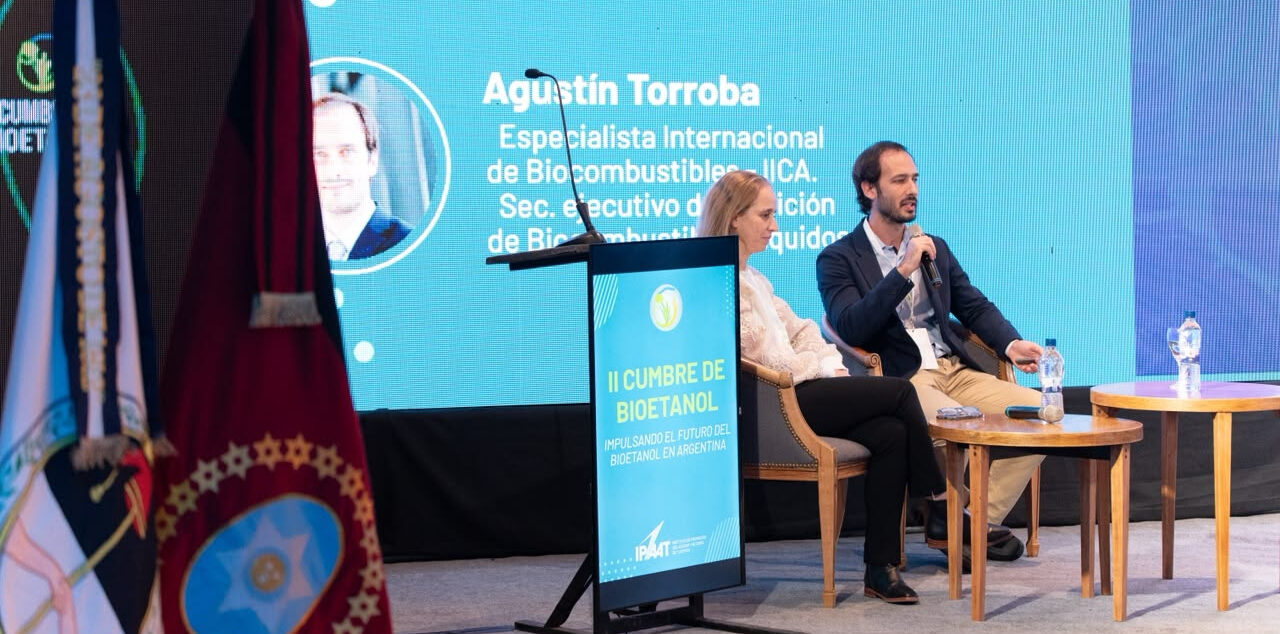
Key stakeholders in attendance included Agustín Torroba, IICA’s lead biofuels specialist and CPBIO’s executive secretary, Fernando Schwanke, IICA’s Argentina-based country representative, leadership from IPAAT, the Obispo Colombres Agroindustrial Experimental Station, Argentina’s National Agricultural Technology Institute (INTA), and the National Institute of Industrial Technology (INTI), alongside dozens of other industry and institutional partners.
During a panel discussion focused on the evolving global landscape for biofuels, Torroba outlined key comparative advantages Argentina holds in the sector. The country already boasts expanding harvests of sugarcane, corn, and soybeans—core feedstocks for biofuel production—and Torroba emphasized the untapped potential to develop new high-value uses for agricultural biomass to drive further growth.
He told attendees that more than 80 percent of all ethanol consumed worldwide today is purchased in markets that enforce strict sustainability criteria. This regulatory landscape creates significant new economic opportunities for Argentinian producers that can earn international environmental certification, opening access to premium global markets.
Torroba also pointed to northern Argentina’s large recurring corn surpluses as a readily available resource to expand domestic ethanol output. As a model for scalable production, he highlighted Brazil’s dual-feedstock flexible processing facilities, which switch between sugarcane and corn processing to match seasonal harvest cycles, maximizing operational efficiency and output.
Another high-growth area on the agenda was sustainable aviation fuel (SAF), a rapidly expanding market where ethanol can be converted into jet fuel via the Alcohol-to-Jet production pathway, creating a new long-term revenue stream for Argentina’s biofuel sector.
Marcia Valeria Sousa Alves, a representative from Brazil’s Ministry of Mines and Energy, also shared insights from Brazil’s decades-long experience building one of the world’s largest and most advanced biofuel industries. Brazil currently produces large volumes of sugarcane and corn-based ethanol, alongside biodiesel, biogas, and biomethane, and has integrated high ethanol blends into its national gasoline supply for more than 40 years.
She confirmed that Brazil’s latest regulatory milestone took effect this past August, with a mandatory 32 percent ethanol blend now required for all gasoline sold across the country. She also highlighted Brazil’s RenovaBio program, launched in 2017, as a successful policy framework that has driven major progress in decarbonizing the country’s road transport sector, offering a replicable model for other countries in the region like Argentina looking to accelerate their own energy transitions.