标签: Dominica

多米尼克

  • COMMENTARY: Building connections across generations in Dominica

    COMMENTARY: Building connections across generations in Dominica

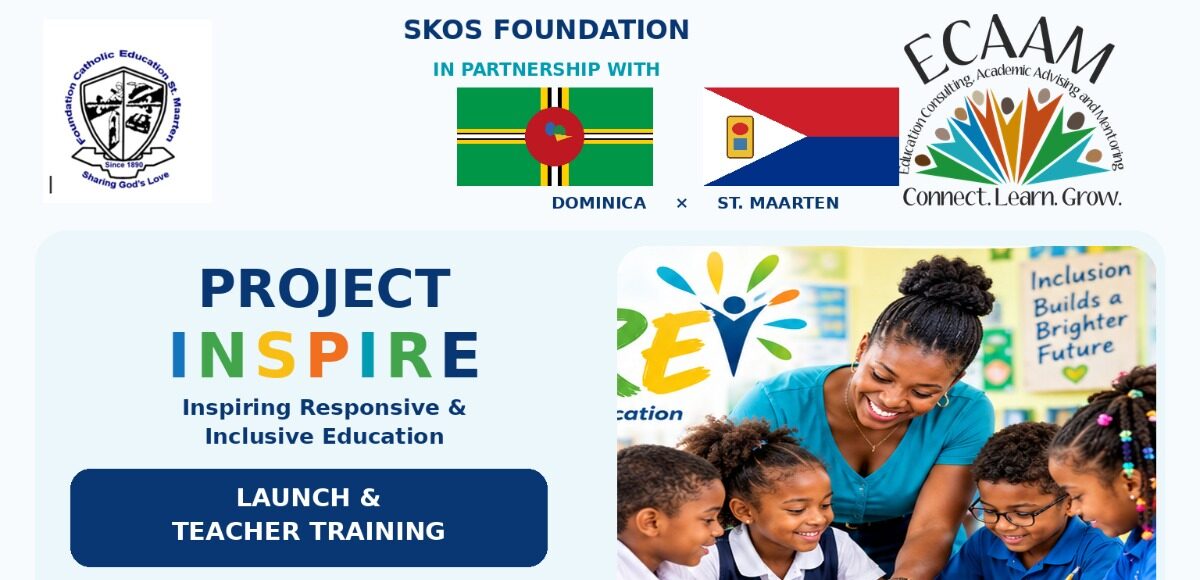
    Against a backdrop of growing regional mobility in the Caribbean, a small but transformative grassroots intercultural initiative is breaking down communication barriers and fostering inclusive community in the Commonwealth of Dominica. The project, led by Natasha Yeeloy-Labad, a selected Young Leader through UNESCO’s Youth for Peace Intercultural Leadership Programme, grew from an everyday classroom challenge: when a new student from French-speaking Guadeloupe struggled to connect with local peers, Natasha stepped in to design interactive, relationship-building activities that turned linguistic difference into an opportunity for connection. Through collaborative games, explorations of local slang and cultural expressions, and creative communication exercises, students slowly built trust and found common ground across their language gap. This small classroom success became the foundation for a far broader community effort.

    In recent years, intensifying intra-Caribbean migration driven by demands for education, employment, and improved life opportunities has reshaped Dominica’s social fabric, bringing growing demographic diversity to local communities and schools. Classrooms now bring together students from a wide spectrum of backgrounds: rural and urban residents, members of indigenous communities, and young people from diaspora and migrant households. While demographic diversity does not automatically translate to inclusive connection and mutual understanding, structured opportunities for cross-cultural interaction lay critical groundwork for building shared experiences among children and young people.

    Recognizing the power of personal narrative to bridge divides, Natasha developed a dialogue-centered initiative centered on storytelling and peer exchange, supported through the Youth for Peace programme implemented by UNESCO’s Social and Human Sciences Sector. The programme provides Natasha with targeted grant funding, ongoing skills training, and one-on-one mentorship to grow her work. At the heart of her model is the use of personal storytelling as a tool for intercultural connection: in structured, guided, safe dialogue sessions, participants are invited to share their own lived experiences, listen actively to peers, and engage with diverse perspectives. Through these exchanges, abstract values like inclusion, mutual respect, and peaceful coexistence become tangible concepts that participants can integrate into their daily interactions.

    The initiative launches its work in primary and secondary schools, where students from varied backgrounds unpack their own identities and experiences through personal narrative. Many participants have embraced the opportunity to write and share their own stories, reflecting on moments they felt belonging or exclusion, and engaging with peacebuilding principles in ways that feel personal and relevant to their daily lives.

    Uniquely, Natasha’s work extends far beyond the walls of school classrooms. The same dialogue-focused framework has been adapted for community-wide settings, bringing together local Dominican children with young migrants from backgrounds including Nigeria and Haiti to share experiences in structured, respectful spaces. The project also engages older youth, creating dedicated spaces for reflection and exchange around themes of identity, interpersonal behavior, and conflict resolution. By operating across schools, community centers, and local youth groups, the initiative adopts an intentional intergenerational approach that brings together children, young people, and longstanding community members in dialogue, embedding lessons of inclusion and understanding across the entire community rather than confining them to a single setting.

    Looking forward, the initiative will continue expanding its reach through peacebuilding workshops, intercultural exchange sessions, peer networking meetups, and cross-school exchange programs, giving participants ongoing opportunities to put their new intercultural skills into practice in real-world contexts. The Youth for Peace UNESCO Intercultural Leadership Programme, which supports Natasha’s work, is funded through a generous contribution from the Kingold Group. This piece was originally published by UNESCO on April 30, 2026, and reflects the views of the author alone.

  • Fact-checking the Hanta virus outbreak and what you may need to know

    Fact-checking the Hanta virus outbreak and what you may need to know

    A rare hantavirus outbreak tied to the Dutch-flagged cruise vessel MV Hondius has sparked international public health alerts, after the ship completed an Atlantic voyage that departed from Argentina carrying nearly 150 passengers. Multiple fatalities linked to the outbreak have been confirmed, pushing public health agencies across several countries to launch urgent contact tracing operations and issue guidance urging anyone who may have been exposed to the virus to enter immediate self-isolation. As concern about potential wider spread grows, the World Health Organization has moved to reassure the public, stating that current data indicates the overall risk of sustained human-to-human transmission and large-scale global spread of the virus remains low. The global health body also added that it is continuously monitoring the evolving situation to adjust guidance as needed. Currently, international public health teams are working around the clock to track down all passengers who disembarked from the MV Hondius at different ports of call along the ship’s route, as many have already traveled to multiple countries since leaving the vessel. To clarify common public questions about the outbreak, *Medical News Today* consulted three independent infectious disease experts to break down key information: what telltale symptoms people should monitor for, when at-risk individuals should seek formal medical care, and what precautionary steps people can take if they believe they have had potential exposure to the virus. The outbreak has underscored the ongoing risks of infectious disease transmission on passenger vessels operating across international routes, even as global health systems maintain robust surveillance frameworks to contain emerging outbreaks quickly.

  • Ministry of Health, Wellness and Social Services issues public guidance on Hantavirus prevention

    Ministry of Health, Wellness and Social Services issues public guidance on Hantavirus prevention

    The input provided for news rewriting and analysis only contains social media sharing links, an image URL, and a PDF download prompt with a stated file size of 202KB. No actual core news text, event details, background context or relevant factual information about the reported story is included in the user’s submission. Without the full substantive content of the original news piece, it is not possible to conduct a structured rewriting, in-depth analysis of core points, or accurate classification of the story. Receiving incomplete input prevents the completion of the requested news processing task as specified.

  • COMMENTARY: Hearing her voice every day

    COMMENTARY: Hearing her voice every day

    Even on ordinary days, there are few sounds as grounding as the familiar lilt of my mother’s voice. Today, that voice rarely stretches into long conversations; most often, it ends with her soft, familiar refrain: “God bless you, Amen.” That quiet line is enough, though, to pull me straight into reflection as Mother’s Day approaches, calling my mother’s life, her quiet strength, and the subtle shifts time and geographic distance have carved into my family into sharp focus.

    For as long as I can remember, the simple knowledge that she existed, just a call away, was a quiet comfort. She never claimed to fully understand every part of my life, but that was never the point—her steady presence was enough. As I grew into adulthood, I learned to give that same presence back to her: joining her on the trips she loved, and savoring the good meals that have always brought her joy.

    My mother’s later years have been marked by unthinkable hardship. Five years ago, we lost my brother at just 50 years old, and a deep, enduring grief has settled around her ever since. Still, she refused to stop moving forward. Grief, however, does not stay confined to the heart—it seeps into the body, slow and unrelenting, changing her in ways I could not see from afar.

    It had been years before I could travel home to see her, and when I finally did, two years ago, the visit overlapped with both Mother’s Day and her 80th birthday. Standing across from her, I saw the weight of years in the lines on her face, the slower cadence of her steps, and the quiet, unshakable resilience that has always defined her.

    In the years since that visit, her declining health has demanded more and more daily care. Like thousands of other families separated by international borders, distance complicates every part of our journey—it strains us emotionally, and creates practical barriers that feel impossible to overcome. The hardest part of this separation is not the miles between us. It is the constant, heavy knowledge that I cannot always give her the level of gentle, consistent care she deserves in her final chapter.

    This struggle is not unique to our family. It is a shared reality for millions of cross-border households: when formal care support is limited, and access to reliable care depends on proximity and local networks, the weight of responsibility falls disproportionately on families already stretched thin across continents.

    Over time, I have also had to accept that our daily routine of calls at the same time each day is gone. Our conversations are fewer and further between now, but they have also grown deeper, more intentional. Every exchange carries more weight, more gratitude, more focused presence than the casual check-ins we shared for decades.

    Even with all the ache of distance and grief, gratitude is what I feel most. I am grateful she has a dedicated caregiver to stand by her each day. I am grateful I can still pick up the phone and hear her voice. I am grateful that even when connection changes, it never fully breaks.

    My sister and I both built our lives outside our home country. We did not leave for political asylum or economic opportunity—we left to build our own families, to follow love. My brother stayed behind to be close to our mother until his passing, and our father died years before he did.

    When I look at my mother, I see a woman who lived every bit of her life fully. She was always active, endlessly social, engaged with her community, and brimming with energy for even the smallest daily moments. Now, like so many other elderly people, her world has grown quieter. The phone rings far less often than it once did.

    But this is not just my mother’s story. It is the story of millions of aging parents, millions of scattered families, millions of adult children building lives thousands of miles from the home they grew up in. And if we are honest, it will likely be our story one day, too, when our own children grow and build their lives across borders.

    That is what makes Mother’s Day so much more than a commercial celebration of mothers. It is a reminder: to show up for the people we love, to cherish the connections we still have, to appreciate the simple gift of hearing a loved one’s voice on the other end of a line.

    It is a reminder to live fully, to feel deeply. To value the people who are still with us, today. To extend forgiveness, and to accept it when we need it. To give love without keeping score of what we get in return. Because at the end of the day, that is all love ever really is.

  • Cynthia Thomas: Historic ‘Stampgirl’ from Dominica and beloved matriarch in her 90th year

    Cynthia Thomas: Historic ‘Stampgirl’ from Dominica and beloved matriarch in her 90th year

    Nearly seven decades after an unplanned childhood moment secured her a permanent place in Dominica’s national identity, Cynthia Thomas, the face of one of the Caribbean nation’s most iconic postage stamps, has celebrated her 90th birthday, surrounded by loved ones and decades of warm memories.

    Born in Dominica on March 7, 1936, Thomas spent her formative years at the Nuns’ Industrial School on the island, a setting that would unexpectedly shape her lasting legacy. It was the 1950s, when the Dominican government was developing a new series of postage stamps intended to showcase everyday island life to the world. Officials commissioned a professional photographer to capture authentic scenes of local daily activity, and during a school visit, the photographer snapped a series of shots that included a young Thomas weaving traditional mats.

    Of all the frames captured that day, the image of teenage Thomas at work stood out. It was selected for the final stamp issue, appearing on both the 3-cent and 48-cent denominations released in 1957. That small print turned a local schoolgirl into a globally recognized symbol of Dominican culture, seen by letter senders and collectors across every continent.

    After completing her schooling, Thomas left Dominica to live and work first in St Kitts and Antigua, before relocating to London, United Kingdom, in 1961. In London, she built a decades-long professional life, holding roles at a Harrods bank and later at car manufacturer Vauxhall Motors, while raising her only son, Stephen. She would go on to become a proud grandmother to two grandchildren, Damani and Jamilah.

    Out of respect for Thomas’ age and limited mobility, her 90th birthday celebration earlier this year was kept small and intimate, held at her London home. Close family members traveled to gather with her, bringing fresh flowers, her favorite Caribbean takeaway meal, a custom birthday cake, and a playlist of the classic music she loves to sing along to.

    Music has remained one of Thomas’ core lifelong passions, and in a testament to her enduring creativity, she even released a full album of her work just a few years ago. For Thomas, the stamp that made her a part of Dominican history remains a source of constant joy and pride. Relatives say she still reflects fondly on the 1950s photo shoot, often describing the experience as unexpected and deeply meaningful. She also regularly shares warm reflections of her time at the Nuns’ Industrial School with younger family members, advising them that school days are among life’s most precious gifts, even when they are not fully appreciated in the moment.

    Decades after that photo was taken, and thousands of miles from the island where she was born, mention of the iconic stamp still lights Thomas up. The small, accidental moment of her teenage years has grown into an enduring piece of Dominica’s cultural heritage, bridging geographic distance and multiple generations to remain a beloved part of the nation’s visual identity.

  • Fuel consumers to receive subsidy from government

    Fuel consumers to receive subsidy from government

    Against a backdrop of skyrocketing global crude oil markets, the Commonwealth of Dominica is rolling out targeted consumer relief through a new fuel subsidy program designed to soften the blow of steep price increases for local motorists and businesses. As of May 7, 2026, unsubsidized fuel prices across the island stand at $17.98 per gallon for regular gasoline, $19.23 per gallon for high sulfur diesel, $20.53 per gallon for ultra-low sulfur diesel, and $18.23 per gallon for kerosene.

    In an official press briefing, Prime Minister Roosevelt Skerrit outlined the context driving the policy: global crude prices have spiked by more than 30% in recent months, creating unavoidable upward pressure on local retail fuel costs that threatened household budgets and small business viability. To counter this trend, the Dominican government will roll out per-gallon subsidies ranging between $1.50 and $2.00 starting at the next monthly fuel price review cycle, scheduled for the end of May. The subsidy will be delivered through a targeted reduction in domestic fuel taxes.

    While the relief package will come at a net cost of more than $500,000 to public funds each month, Skerrit emphasized that the support is critical for low- and middle-income households, public transportation operators, commercial fishing crews, and small and medium-sized enterprises across the island. At the same time, the Prime Minister was transparent about the significant tradeoffs the policy requires for public finances. Every dollar allocated to fuel subsidies represents forgone government revenue at a moment when public spending is already rising rapidly. Higher operating costs for core public services including public schools and hospitals, coupled with ongoing post-disaster recovery efforts in the flood-hit eastern and northeastern regions of the country, have stretched public budgets thin.

    Skerrit added that diesel prices alone have jumped 48% since the start of February 2026, and ongoing volatility in global crude markets through 2026 means these subsidies will become an increasingly heavy burden on the Dominican national treasury. This sustained pressure, in turn, limits the government’s ability to allocate funding to other core priorities, including public health initiatives, public education upgrades, infrastructure development, and long-term disaster resilience programming.

    Moving forward, the government will maintain a monthly fuel price review process to strike a balance between protecting consumers from sudden price shocks and upholding responsible fiscal management that preserves long-term public service capacity. Looking beyond short-term relief, Skerrit reaffirmed that the only sustainable path to long-term energy security for Dominica is accelerating the country’s transition from fossil fuels to domestic renewable energy sources.

  • OP-ED: The global epidemic of violence in an age of impunity

    OP-ED: The global epidemic of violence in an age of impunity

    In an authoritative analysis published by Dr. Alon Ben-Meir, President of the Institute for Humanitarian Conflict Resolution, the modern world faces an unprecedented escalation of systemic violence that has shifted from an extraordinary anomaly to a normalized daily reality. Data compiled by the International Institute for Strategic Studies underscores the severity of this crisis: more than 180,000 violent events have been documented globally, and the number of active armed conflicts currently stands at over 130—more than double the count recorded just 15 years ago. This pervasive spread of conflict inflicts catastrophic damage beyond immediate battlefield casualties: critical civilian infrastructure is destroyed, long-standing social bonds are torn apart, and the dehumanization of enemy groups has become an accepted political tactic. Disproportionate harm falls on the most vulnerable populations: hundreds of millions of women and children live within range of active armed clashes, facing not only the direct threat of bullets and bombs, but also secondary devastation including widespread hunger, preventable disease, and soaring rates of gender-based violence that leave millions dead and countless more with lifelong psychological trauma. Despite the scale of this crisis, Dr. Ben-Meir argues that the United Nations system and the world’s leading democratic powers are stuck in dangerous paralysis. Gridlocked by Security Council veto power, crippled by intensifying geopolitical rivalries, and reduced to issuing hollow, unenforceable declarations, global bodies offer only symbolic gestures of concern rather than the coordinated, enforceable accountability that this growing plague of violence desperately demands. The analysis frames the global escalation of violence as a structural crisis, not a random deviation from global order—a crisis that lays bare the profound failure of international institutions and the normalization of human suffering across political, economic, and societal spheres. The proliferation of conflict is not merely a numerical increase in armed confrontations, but a total breakdown of the global mechanisms designed to constrain aggression, turning dehumanization into a routine tool of political power. To unpack this multi-layered crisis, the analysis examines root causes across six interconnected dimensions, drawing on foundational insights from leading political and social philosophers. First, from a philosophical perspective, violence is revealed as a symptom of collapsed legitimate political authority, not a demonstration of state strength. Citing Hannah Arendt’s 1970 work *On Violence*, the analysis echoes Arendt’s core argument: “Power and violence are opposites; where the one rules absolutely, the other is absent. Violence appears where power is in jeopardy, but left to its own course, it ends in power’s disappearance.” Today’s spreading conflicts directly reflect this dynamic: they do not signal strong state power, but widespread institutional failure, where violence substitutes for the popular consent and legitimacy that governing bodies can no longer command. When political dialogue is exhausted and no legitimate power structure exists to resolve disputes, violence becomes the default recourse. Second, economic disenfranchisement acts as a critical accelerant of modern violence, fueled by resource competition, exploitative resource extraction, and systemic global inequality. Drawing on Slavoj Žižek’s concept of systemic violence, the analysis highlights that the most insidious form of modern violence is not the overt brutality of individual actors, but the anonymous, objective structural violence embedded in global capitalist systems. Greed-driven extraction of natural resources—from blood diamonds in Sierra Leone to oil in Venezuela and conflict cobalt in the Democratic Republic of the Congo—directly finances armed rebellions, turning prolonged conflict into a profitable enterprise for rogue actors. Beyond extractive industries, systemic economic deprivation, geoeconomic confrontation waged through weaponized tariffs and sanctions, and global commodity price shocks all directly shape military capabilities and the outcomes of conflicts. Third, the analysis examines the political conditions that enable violence to flourish. Political violence rarely emerges spontaneously from conflicting interests; it is a deliberate choice to pursue goals through coercion rather than negotiation. The paralysis of the UN Security Council and weakening democratic institutions align with Arendt’s description of bureaucratic tyranny: “In a fully developed bureaucracy, there is nobody left with whom one can argue, to whom one can present grievances, on whom the pressures of power can be exerted. … everybody is deprived of political freedom, of the power to act… where we are all equally powerless, we have a tyranny without a tyrant.” This dynamic creates a structural void in global accountability: veto power and geopolitical rivalry allow violence to spread unchecked, while political fragility and weakened institutions in countries such as Syria and Myanmar leave societies vulnerable to total breakdown, radicalization, and violent dissent. Fourth, deep societal fragmentation creates conditions where violence becomes normalized through growing inequality and the erosion of social cohesion. Centuries after Thomas Hobbes described the “solitary, poor, nasty, brutish, and short” life of humans in a pre-political state of nature, his bleak assessment remains relevant for modern communities where governance has collapsed and fear dominates daily life—conditions that currently affect millions of people living near active conflict zones. When social norms accept violence as a legitimate way to resolve disputes, combined with deep economic inequalities and limited opportunities for community participation, aggression is allowed to flourish. This environment normalizes dehumanization, creating recurring cycles of brutality fueled by gender-based violence, ethnic tensions, and unaddressed historical grievances, visible in regions from Nigeria to South Africa. Fifth, state-level actions and complicity amplify systemic violence. Governments that fail to address ethnic marginalization, resource competition, and establish functional governance create fertile ground for prolonged conflict. Walter Benjamin’s 1940 observation that “There is no document of civilization which is not at the same time a document of barbarism” underscores how national institutions can perpetuate violence through their foundational exclusionary structures. When governments refuse to recognize and address destabilizing inequities such as political, religious, or ethnic marginalization, societies become trapped in cycles of civil and international conflict. In extreme cases, rulers weaponize state apparatus to carry out totalitarian mobilization of violence, eliminating all space for political dissent and resistance. Finally, the instrumentalization of religion by political actors acts as a powerful catalyst for violence. When faith is stripped of its ethical core and co-opted to advance political goals, it becomes a tool to sanctify exclusion and legitimize brutality. Sectarian divides across the Middle East, South Asia, and parts of Africa turn collective identity into a battlefield, where compromise is labeled heresy and the annihilation of opposing groups is framed as a moral duty. As René Girard observed, “Religion shelters us from violence just as violence seeks shelter in religion.” When faith is manipulated to justify political power or historical grievance—seen in regions including India, Israel, and Iraq—it no longer restrains violence, but instead consecrates it, deepening cycles of retribution and turning conflicts into existential struggles that cannot be resolved through negotiation. The convergence of these six interconnected dimensions explains why violence has become a baseline condition of modern life, rather than an exceptional deviation from order. While Dr. Ben-Meir acknowledges that reversing this crisis is an extraordinarily difficult challenge, he outlines four concrete actionable measures that global actors can pursue to de-escalate global violence, emphasizing that grassroots public pressure is the essential driving force for change. Sustained popular protest, continuous grassroots advocacy, and relentless pressure on policymakers are required to force meaningful institutional reform. First, the United Nations Security Council must reform its veto power rules. Governments should restrict the use of veto power in cases involving genocide, war crimes, and crimes against humanity, and require permanent Security Council members to abstain from veto use when they are directly involved in a conflict. This would transform the veto from a tool of obstruction into a mechanism for accountability, addressing the institutional paralysis that allows violence to spread unchecked. Second, international bodies must develop and implement functional early warning systems that connect detection of emerging conflict to rapid preventive action, closing the persistent gap between early warning and effective response. Effective systems will integrate predictive analytics, local on-the-ground expertise, and cross-border coordination to anticipate violence months before it erupts, enabling timely diplomatic intervention and humanitarian action that can stop conflict before it begins. Third, governments and global institutions must address the root economic drivers of violence by tackling systemic inequality and economic insecurity. Progressive policy reforms including targeted wage increases, comprehensive tax reform, and targeted financial assistance for vulnerable communities directly address the underlying triggers of violence. Targeted lending, large-scale job creation, and redistributive economic policies alleviate the financial strain that fuels conflict and violent crime, making structural prevention far more effective than reactive, post-conflict response. This analysis, authored by Dr. Alon Ben-Meir, carries the disclaimer that the opinions expressed are solely those of the author and do not necessarily reflect the views of Duravision Inc., Dominica News Online, or any of its subsidiary brands.

  • CDB seminar to spotlight clean energy push and lower electricity costs across the Caribbean

    CDB seminar to spotlight clean energy push and lower electricity costs across the Caribbean

    As Caribbean nations grapple with sky-high energy costs, persistent economic strain, and intensifying climate risks, a landmark seminar focused on accelerating the region’s shift from imported fossil fuels to renewable energy is set to take centre stage at the Caribbean Development Bank’s (CDB) 56th Annual Meeting of the Board of Governors in Nassau, The Bahamas.

    Scheduled for Thursday, June 4, 2026, from 9:00 AM to 10:30 AM Atlantic Standard Time, the 90-minute session titled *Energy Transition: The Key to a More Resilient Caribbean* is framed as one of the flagship discussions of the week-long gathering, which runs from June 1 to 5. The event aligns with the annual meeting’s overarching theme: *Forging the Caribbean’s Future: Strategic Solutions for Uncertain Times*, which aims to equip regional stakeholders with actionable approaches to navigate economic volatility, fiscal headwinds, and growing climate-driven threats.

    The core impetus for the seminar stems from a long-standing crisis plaguing the region: crippling dependence on imported fossil fuels that has pushed electricity prices to among the highest globally. According to CDB data, commercial electricity rates across the bank’s Borrowing Member Countries average roughly US$0.37 per kilowatt-hour — almost three times the average rate across the United States. William Ashby, Acting Division Chief of CDB’s Economic Infrastructure Division, emphasized that this extraordinary cost burden weighs disproportionately on micro, small, and medium enterprises (MSMEs), eroding the Caribbean’s overall economic competitiveness. Beyond cost concerns, the fossil fuel dependence also leaves regional energy systems vulnerable to global price shocks and supply chain disruptions, undermining long-term energy security.

    To meet existing national renewable energy targets set by Caribbean nations, CDB estimates that approximately US$11 billion in targeted clean energy investment will be required between 2020 and 2030. To unlock this level of financing and progress, officials argue that deeper regional cooperation, progressive policy reform, and creative, accessible financing mechanisms are no longer optional — they are critical necessities.

    The seminar will convene a cross-sectoral lineup of key stakeholders, including regional government policymakers, leading energy sector specialists, global and regional financiers, and international development leaders, all to debate and co-develop practical strategies to speed up the transition to low-carbon energy systems. Key topics on the agenda include modernizing aging regional electricity grids to accommodate variable renewable energy sources like solar and wind, updating regulatory frameworks to draw more private sector investment into clean energy projects, and expanding access to blended financing — a model that combines public and private capital to de-risk emerging renewable initiatives.

    The session will also showcase CDB’s own ongoing renewable energy work across its member states, which forms a core pillar of the bank’s 2026–2035 strategic plan, *Transforming the Caribbean for Resilience*. Confirmed featured speakers bring on-the-ground expertise from across the region: Barbados’ Kerrie Symmonds will outline his country’s national Energy Transition and Investment Plan; Toni Seymour will share updates on utility modernization and transformation efforts in host country The Bahamas; Mohammad Rafik Nagdee will deep dive into pathways for expanded renewable energy financing and project development; and Timothy N. J. Antoine will offer perspective on how clean energy transition strengthens broader regional economic resilience.

    For those unable to attend the event in person, CDB has announced that all public sessions of the 56th Annual Meeting, including the energy transition seminar, will be streamed live for free via the bank’s official YouTube, LinkedIn, and Facebook platforms, opening the discussion to global stakeholders and interested observers.

  • Trump administration releases long-secret UFO files, revealing decades of military encounters

    Trump administration releases long-secret UFO files, revealing decades of military encounters

    In a move that has reignited widespread public curiosity about extraterrestrial life and decades-old questions surrounding military encounters with unexplained aerial objects, the Trump administration has published the first tranche of formerly classified U.S. government records focused on unidentified flying objects, now formally termed unidentified anomalous phenomena, or UAPs.

    The public disclosure, carried out by the Pentagon on Friday, stems from a presidential directive issued back in February, which ordered all federal agencies to comb through their archives, declassify relevant records, and release all materials connected to government UAP investigations and unexplained aerial encounters. According to senior officials, the initial batch of documents pulls together decades of collected data, ranging from written witness testimony and military surveillance footage to photographic evidence and raw source documentation gathered across multiple U.S. government departments.

    Defense Secretary Pete Hegseth framed the disclosure as a critical step toward greater government transparency with the American public. In an official statement shared on the social platform X, Hegseth noted that decades of classification around these records had given rise to fully justified public speculation, adding that it was long past time for American citizens to review the materials directly.

    One of the most high-profile testimonies included in the release comes from Buzz Aldrin, the astronaut who made history as the second person to walk on the lunar surface during NASA’s 1969 Apollo 11 mission. Reporting from The Guardian confirms that in a post-mission debrief held shortly after the Moon landing, Aldrin described observing a “sizeable” unidentified object moving near the Moon’s surface, alongside a “fairly bright light source” that the Apollo 11 crew initially hypothesized could have been a laser.

    Beyond astronaut testimony, the declassified files also include multiple pieces of military surveillance footage capturing unusual objects recorded across different regions of the globe. One sequence, captured in 2022, shows a distinct football-shaped craft traveling through airspace above the East China Sea. Other footage, collected in recent years, documents fast-moving lights and unidentifiable dots executing erratic, high-speed maneuvers in airspace above Iraq, Syria, and the United Arab Emirates.

    ABC News’ analysis of the released documents confirms that the vast majority of reported sightings included in the archives are clustered around active U.S. military operations and locations where the United States has deployed advanced, high-resolution surveillance systems. A large share of the incidents documented date back to the 1950s and 1960s at the height of the Cold War, with most of these mid-20th century encounters concentrated in Germany and territory belonging to the former Soviet Union.

    More recently documented encounters have been overwhelmingly concentrated in the Middle East, particularly near the strategically critical Strait of Hormuz. Nearly all reported sightings included in the files were submitted by active-duty military pilots and on-the-ground military personnel, though Pentagon officials have emphasized that none of the encounters documented in the released files suggest the unidentified objects posed any immediate threat to U.S. personnel or national security.

    Among the most unusual modern cases documented in the archives is a 2023 encounter reported by federal law enforcement officers operating in the western United States. Multiple officers independently reported observing glowing, spherical orbs, with one witness stating they had seen “orbs launching other orbs,” according to ABC News’ reporting. Pentagon officials have described the 2023 case as “among the most compelling” in the entire U.S. archive of UAP encounters.

    In a closing statement, the Pentagon confirmed that the full set of declassified UAP files is now available for instant public access, noting that the U.S. government is leaving it to individual members of the public to draw their own conclusions from the information contained in the released documents.

  • CRICKET WEST INDIES: West Indies Championship Playoff preview – Second finalist to be decided, while the WI Academy provides preparation for the Harpy Eagles

    CRICKET WEST INDIES: West Indies Championship Playoff preview – Second finalist to be decided, while the WI Academy provides preparation for the Harpy Eagles

    One of the most anticipated matches in the 2026 West Indies Championship is set to get underway on May 10, as Trinidad & Tobago Red Force and Barbados Pride lock horns at Antigua’s Coolidge Cricket Ground in a do-or-die playoff. The winner will earn a place in the tournament final against undefeated defending champions Guyana Harpy Eagles, who have already wrapped up their spot in the title decider scheduled for May 20.

    Both sides head into the four-day encounter brimming with confidence, having navigated tricky preliminary rounds to secure their shot at the final. The Red Force earned their playoff berth after a consistent run through the group stage, which included a dominant innings-and-271-run win over Leeward Islands Hurricanes in their opening fixture followed by two consecutive drawn matches. They finished second in the overall standings with 53.6 points, enough to book their place in the knockout playoff.

    For Barbados Pride, the road to the playoff has been a story of comeback. They opened their campaign with a defeat to Jamaica Scorpions, but fought back steadily to outscore the Scorpions 42.2 points to 34 across the bilateral series. After a high-scoring draw in the second match, the Pride sealed their playoff spot with an impressive innings-and-11-run victory in the third fixture to level the series at one win apiece.

    History is on the Red Force’s side heading into this matchup: in their most recent meeting at Barbados’ Kensington Oval in 2025, Trinidad & Tobago secured a commanding innings-and-56-run victory inside two days. That match saw the Red Force’s pace attack dismantle the Pride for just 86 runs in their first innings, cruising to a comprehensive win. This year, the Red Force retains the firepower that delivered that result: fast bowler Jayden Seales returns to the squad after a planned rest, having already taken 13 wickets in just two matches this tournament, while Anderson Phillip enters the playoff as the championship’s leading pace bowler with 17 scalps to his name.

    Red Force captain Joshua Da Silva emphasized that his side will not take the Pride lightly, crediting the team’s core cohesion and consistent performance for their run so far. “It is about getting back to the basics and the drawing board by sharpening up a few skills that we may need for the upcoming games, but all in all the team is gelling well. We have a good core here that I think can take us to the final and win it,” Da Silva said.

    The Pride, however, enter the fixture on a high note and boast impressive batting credentials that make them serious contenders. They have recorded more 300-plus team totals than any other side in the championship, and are led by the tournament’s top run-scorer Kevin Wickham, who has piled up 371 runs in four innings at an astonishing average of 123.66. Their confidence has been further buoyed by their comeback against the Scorpions, which proved their ability to bounce back from early setbacks. To strengthen their fast bowling attack, the Pride have called up Akeem Jordan to replace Jair McAllister, who featured in the Scorpions series.

    Pride captain Kraigg Brathwaite stressed the need for all-round improvement and discipline, particularly with the ball, as his side chases a spot in the final. “Overall, I just want to see discipline in both departments but especially bowling,” Brathwaite said. “Batting wise we had four innings where we scored above 300 plus, but I think we will still need to make improvements all round, batting, bowling and getting better in the field, because there are always things to work on and we can’t take things for granted because we have to get stronger.”

    While the two playoff rivals battle it out at Coolidge, the already-qualified Guyana Harpy Eagles are using the lead-up to the final to fine-tune their game, facing off against the West Indies Academy at the Antigua Recreation Ground this week. The defending champions have been unstoppable so far this tournament, notching three straight wins to sit comfortably atop the standings. They also boast the championship’s leading wicket-taker overall, left-arm spinner Gudakesh Motie, who has already claimed 24 wickets in the competition. The Harpy Eagles have made two squad changes for the warm-up match: Jonathan Van Lange and Thaddeus Lovell have been brought in to replace injured fast bowler Isai Thorne, while star quick Shamar Joseph has been rested ahead of the final.

    Harpy Eagles captain Tevin Imlach said the fixture against the Academy gives his side a valuable opportunity to fix gaps in their batting ahead of the title match. “We have some things to work on to be at our best, we need to be better as a batting group especially our top five, we need to be more consistent and score hundreds,” Imlach said.

    Both the playoff match between Red Force and Pride, and the warm-up fixture between Harpy Eagles and West Indies Academy, will begin at 10am local time (9am Jamaica time) on May 10.

    Full Squads
    Trinidad and Tobago Red Force: Joshua Da Silva (Captain), Yannic Cariah, Bryan Charles, Cephas Cooper, Jyd Goolie, Terrence Hinds, Joshua James, Amir Jangoo, Evin Lewis, Jason Mohammed, Khary Pierre, Anderson Phillip, Jayden Seales
    Barbados Pride: Kraigg Brathwaite (Captain), Joshua Bishop, Jediah Blades, Leniko Boucher, Roston Chase, Jonathan Drakes, Akeem Jordan, Johann Layne, Kyle Mayers, Shayne Moseley, Shamar Springer, Jomel Warrican, Kevin Wickham
    Guyana Harpy Eagles: Tevin Imlach (Captain), Kevlon Anderson, Tagenarine Chanderpaul, Richie Looknauth, Thaddeus Lovell, Gudakesh Motie, Matthew Nandu, Keemo Paul, Veerasammy Permaul, Zeynul Ramsammy, Kemol Savory, Nial Smith, Jonathan Van Lange
    West Indies Academy: Rivaldo Clarke (Captain), Ryan Bandoo, Carlon Bowen-Tuckett, Giovonte Depeiza, Mavendra Dindyal, Nathan Edward, Damel Evelyn, Amari Goodridge, Mbeki Joseph, Zishan Motara, Shaqkere Parris, Jakeem Pollard, Kelvin Pitman, Reneico Smith