标签: Dominica

多米尼克

  • Two arrested following fatal Picard shooting

    Two arrested following fatal Picard shooting

    A fatal shooting that claimed the life of a St. Kitts national in Dominica’s Picard region has led to the arrest of two suspects, one man and one woman, local law enforcement announced Monday. Police Chief Lincoln Corbette shared details of the ongoing investigation during an official press briefing, confirming the developments that unfolded over 24 hours prior.

    The incident was first reported to Portsmouth district police at approximately 9:20 p.m. Sunday, when residents alerted authorities to sounds of gunfire in the Picard vicinity. Promptly responding to the emergency call, officers arrived at the scene to find a young Black man with braided hair lying unresponsive, Corbette said. First responders immediately requested emergency medical support, and a physician attending the scene officially pronounced the victim dead at the location.

    In the hours following the discovery of the body, law enforcement launched a rapid manhunt, which culminated in the arrest of the two unidentified suspects. No further details about the suspects’ identities, potential motives for the shooting or connections to the victim have been released to the public as of Monday’s briefing, as investigators work to piece together the sequence of events leading up to the fatal shooting.

    Corbette emphasized that the investigation remains active and ongoing, and appealed for public assistance to move the case forward. Any residents or visitors with information related to the shooting — whether they witnessed the incident, noticed suspicious activity in the area Sunday evening, or have details that could aid investigators — are asked to contact the official police tip line at 1-800 TIPS. All tips can be submitted anonymously, and law enforcement has encouraged anyone with relevant information to come forward, even if they believe the details they have are minor.

  • Dominica among Eastern Caribbean nations set to benefit from EU-funded food security initiative

    Dominica among Eastern Caribbean nations set to benefit from EU-funded food security initiative

    Small island developing states across the Eastern Caribbean have long grappled with overlapping threats to food sovereignty, from intensifying climate shocks to persistent economic volatility and heavy reliance on expensive food imports. Now, a groundbreaking public-private partnership between the Zero Hunger Trust Fund (ZHTF) and the European Union is rolling out a targeted regional initiative designed to address these gaps while investing in the next generation of food systems leaders.

    Officially launched on March 27, 2026, the 18-month “Cultivating Futures – Empowering Youths for a Food Secure Region” project is funded through the EU’s Caribbean Fund for Nutrition (EU-CaN), a four-year regional food security program that supports six member states of the Organisation of Eastern Caribbean States. The first phase of implementation will reach four countries: Dominica, Saint Vincent and the Grenadines, Saint Lucia, and Grenada, marking a major milestone in collective action to improve regional food resilience.

    At the core of the initiative is a focus on integrating sustainable food practices into primary school environments. Over the course of the project, 10 participating primary schools will either establish new ecological school gardens or upgrade existing growing spaces in vulnerable communities. The program targets approximately 1,600 students aged 5 to 11, combining improved access to nutritious local food with hands-on learning opportunities that would not otherwise exist in standard curricula.

    Beyond just building gardens, the initiative provides comprehensive training and ongoing technical support to a broad range of school stakeholders, including teachers, cafeteria cooks, school administrators, and local community partners. Training modules cover climate-smart sustainable farming techniques, garden maintenance, evidence-based nutrition education, and healthy, locally-focused menu planning for school meal programs. This holistic approach ensures that gardens remain productive and educational long after the project’s initial 18-month timeline concludes.

    To encourage engagement and friendly competition among participating institutions, the project will also host a range of youth-centered activities, public outreach forums, national awareness campaigns, and a regional “Garden-to-Lunch” School Garden Competition, which celebrates creativity, innovation, and excellence in sustainable school gardening.

    Safiya Horne-Bique, Director and CEO of the Zero Hunger Trust Fund Saint Vincent and the Grenadines (ZHTF-SVG), framed the project as a transformative investment in both the region’s food future and its young people. “Cultivating Futures places children and communities at the center of sustainable food security efforts across the Caribbean,” she explained. “We are not only expanding access to fresh, nutrient-dense local produce for schools—we are creating space for young people to build a deep, firsthand understanding of agriculture, nutrition, environmental stewardship, and community resilience.”

    Horne-Bique emphasized that regional cooperation is critical to addressing the growing food security challenges facing small island states. “Small island developing states continue to face mounting pressures from climate change, global economic disruptions, and long-standing dependence on food imports,” she noted. “This project demonstrates the power of cross-border partnerships and community-led solutions that empower our youth while strengthening local food systems for generations to come.”

    Project Coordinator Chanda Davis added that the initiative’s hands-on model is designed to make agriculture and sustainability accessible and engaging for young learners, rather than abstract academic concepts. “By integrating ecological gardens into the daily learning environment, students get to actively participate in growing their own food, learn about the value of healthy diets, and build lifelong skills tied to sustainability and self-sufficiency,” Davis said. She added that organizers hope the impact of the project extends far beyond school walls, inspiring a new generation of environmentally conscious citizens and future agricultural leaders across the region.

    “Our goal is to help students see agriculture not just as a casual activity, but as a core pillar of community resilience, economic entrepreneurship, and national development,” Davis explained.

    The Cultivating Futures project is part of a broader global and regional push to reduce food insecurity, improve nutrition outcomes, and boost climate resilience for vulnerable populations across the Caribbean. In the coming weeks, participating national governments will issue formal calls for primary schools to submit applications to join the initiative. A formal regional launch ceremony and media briefing is scheduled for June 23, 2026, in Saint Vincent and the Grenadines, with attendees including representatives from all participating countries, regional intergovernmental bodies, national government agencies, and international development partners focused on food security and sustainable development.

    Updates on project progress, application details, and additional resources are available to the public via the ZHTF-SVG official website (https://zerohungersvg.com/eu-cultivatingfutures/) and the project’s social media channels on LinkedIn, Facebook, and Instagram.

  • Pottersville man in custody for arson

    Pottersville man in custody for arson

    A resident of Pottersville is now behind bars at Dominica State Prison, facing six separate arson charges connected to a destructive early-morning blaze that tore through multiple structures in Roseau earlier this month. Police Chief Lincoln Corbette confirmed the details of the case in an official media briefing held on Tuesday.

    The suspect, 48-year-old Wilson Joseph, made his initial appearance before a Roseau magistrate court earlier the same day, where law enforcement officials formally opposed any grant of bail. Following the hearing, the court ordered Joseph to be held in pre-trial custody at the island’s state penitentiary. The next scheduled review of Joseph’s case is set for October 2026, according to official court records.

    The incident that led to the charges dates back to 3:20 a.m. on May 6, 2026, when first responders received an emergency call reporting a fire that broke out at Jane’s Cuisine, a local eatery located on Upper Lane in Roseau. Chief Corbette explained that the fire spread at an unusually rapid rate, jumping from the original restaurant location to adjacent adjacent buildings before firefighters could fully contain the blaze. While no casualties have been reported as of the press briefing, multiple properties sustained significant damage from the flames, heat, and smoke.

    Corbette added that official assessments of the total financial and structural damage are still ongoing, as investigators work to document the full scope of the destruction and corroborate evidence connected to the charges. Arson investigations often require extensive forensic analysis to rule out accidental causes and confirm intentional ignition, a process that can take weeks to complete in cases involving widespread damage.

  • CXC delivers message reaffirming fair and human-centred approach to AI use in school-based assessments

    CXC delivers message reaffirming fair and human-centred approach to AI use in school-based assessments

    As generative artificial intelligence continues to reshape learning landscapes across the globe, regional educational assessment bodies are racing to establish clear, balanced frameworks that adapt to new technology while upholding core academic standards. The Caribbean Examinations Council (CXC®) has recently stepped forward with a thoughtful, student-centered policy for AI integration in School-Based Assessments (SBAs), aiming to ease widespread anxiety among students, educators, and families across the Caribbean region.

    In a public video address published across CXC®’s official website and social media channels, Dr. Nicole Manning, the organization’s Director of Operations, opened with a balanced overview of AI’s role in modern education, acknowledging both its transformative learning benefits and the unprecedented challenges it creates for assessment integrity. Her remarks, framed in a press release from the Council, were designed to reassure all stakeholders navigating the rapid shift to digitally enhanced learning.

    A core point of public concern in recent months has centered on the reliability of AI detection tools and their potential to unfairly penalize students in assessment grading. Addressing these worries directly, Dr. Manning emphasized that AI detection software will never serve as the sole basis for academic disciplinary or grading decisions at CXC®. She stressed that the long-standing, hands-on relationship between teachers and students remains the foundation of SBA assessment and moderation. Over months of working together through draft revisions, one-on-one conversations, and ongoing guidance, teachers develop a nuanced understanding of each student’s abilities that no automated tool can match. “AI checkers are one input. They are not the verdict,” Dr. Manning explained, confirming that human oversight will be embedded at every stage of the assessment process to guarantee fair outcomes.

    CXC®’s new framework also draws a clear line between acceptable and unacceptable AI use, giving students clear guardrails rather than an outright ban on the technology. The Council confirms that students may legitimately use AI tools to support their learning: from breaking down complex academic concepts and brainstorming project ideas to clarifying confusing terminology and organizing the structure of their work. The only requirement for ethical use is full transparency: any student who incorporates AI assistance into their SBA must disclose this use via an official Disclosure Form and Originality Report when submitting their work. For students who complete their assessments without any AI support, no additional documentation is required.

    The policy makes clear that academic misconduct rules still apply: submitting work that is fully or predominantly generated by AI without proper disclosure violates CXC®’s academic integrity standards, and will be handled through the organization’s established irregularity procedures, which include collaboration between the student, their classroom teacher, and school principal.

    Recognizing that adapting to this new policy places additional responsibility on Caribbean educators, Dr. Manning reaffirmed CXC®’s commitment to providing ongoing training and resource support to help teachers confidently implement the AI framework in their classrooms. “You are not alone in this,” she told educators, encouraging them to hold open, honest conversations with students about responsible AI use, and to help learners understand why academic integrity matters long after they leave the examination room.

    For students, Dr. Manning shared a straightforward, values-driven message: ethical AI use is ultimately about personal character, not avoiding detection by technology. “Integrity is not about whether a machine can detect what you did. It is about who you choose to be,” she said.

    Dr. Manning’s full video address, titled “Who You Choose to Be,” is available for public viewing on CXC®’s official YouTube channel. The complete Standards and Guidelines on Generative AI Use in School-Based Assessments is available for download at the organization’s official website, www.cxc.org.

  • Community policing meeting brings Bellevue Chopin and Petite Savanne residents together

    Community policing meeting brings Bellevue Chopin and Petite Savanne residents together

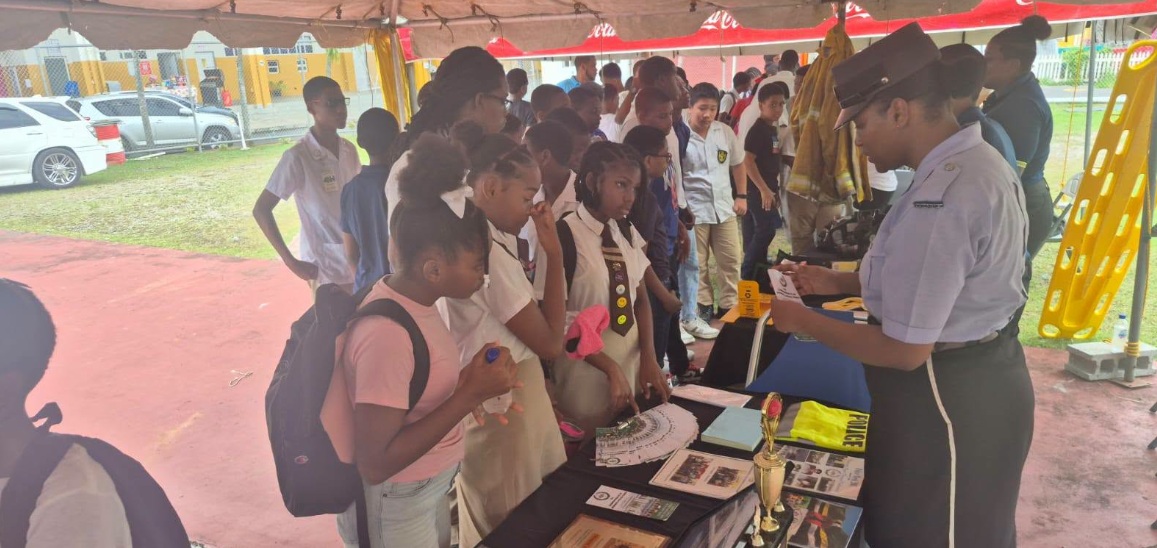
    Residents and law enforcement stakeholders from two Dominica communities gathered this Thursday for a BPP Community Shield community policing forum, launching a collaborative effort to tackle pressing public safety and quality of life challenges in Bellevue Chopin and Petite Savanne.

    Organized by the Commonwealth of Dominica Police Force, the cross-sector gathering brought together a diverse group of participants beyond uniformed officers: local residents, community leadership representatives, small business operators, faith leaders from local churches, and youth representatives from the area. The meeting was structured around open, transparent dialogue, creating space for community members to voice unfiltered concerns about issues affecting their daily lives and brainstorm collective solutions alongside policing officials.

    Six core challenges emerged as top priorities for attendees during the discussion. The most frequently cited issues included repeated theft of agricultural crops and harvested produce, a critical concern for local farmers who rely on their crops for income and food security. Additional problem areas included unaddressed traffic congestion and safety risks in the New Settlement neighborhood, persistent excessive noise pollution from motorcycles and scooters that have been modified with non-standard silencers, open marijuana use by young people in public spaces, insufficient street lighting that contributes to safety hazards after dark, and the blight and public risk created by long-abandoned vehicles left scattered across community areas.

    Following the open sharing of concerns, participants turned to developing actionable, community-centered responses to improve local public safety and overall wellbeing. Proposed solutions included increasing targeted police patrols in high-concern areas, expanding access to organized recreational and sporting programs for local youth to provide positive, constructive activities, deepening ongoing cooperative ties between residents and policing teams, and rolling out new public awareness campaigns to educate community members on crime prevention and shared accountability. Attendees also made early progress in planning a collaborative Father’s Day sporting event in partnership with the local Village Council, a gathering designed to strengthen community bonds while supporting the initiative’s goals.

    In an official statement shared publicly across the police force’s social media channels, organizers extended gratitude to everyone who carved out time from their personal and professional schedules to participate in the meaningful, solution-focused dialogue. “Together, we are building safer, stronger, and more united communities,” the statement noted.

    The forum is part of the ongoing Community Policing Initiative run by the Commonwealth of Dominica Police Force. The program centers its long-term work on three core priorities: building and strengthening public trust between local communities and law enforcement, cultivating sustained, productive partnerships between police and residents, and reducing widespread fear of crime through consistent, proactive engagement with community members.

  • Government turns to regional bodies for electoral reform assistance

    Government turns to regional bodies for electoral reform assistance

    As the Caribbean nation of Dominica works to overhaul its national electoral system, slow progress in key phases of the reform initiative has pushed the government to reach out to multiple leading regional and global bodies for specialized technical and expert support.

    In an official statement released by the Office of the Prime Minister of Dominica (OPM), the government has submitted formal requests for guidance to four prominent institutions: the Commonwealth Secretariat, the Organization of American States, the Organisation of Eastern Caribbean States, and the Caribbean Community. The appeal for outside support comes after growing public and administrative concerns over the sluggish pace and suboptimal execution of two core election modernization processes.

    Speaking to journalists during a press briefing on Wednesday, Prime Minister Roosevelt Skerrit outlined the core goals of the ongoing reform project: to modernize Dominica’s entire voting framework by updating voter registration verification protocols and rolling out a unified national voter identification card system. Skerrit emphasized that these changes are crafted to boost the accuracy and reliability of the country’s electoral roll, while adding robust new protections to prevent voter fraud and preserve the integrity of future elections.

    Breaking down the current progress of the voter confirmation process, established under the updated Registration of Electors Act, Skerrit shared official data covering the period from October 15, 2025, through April 30, 2026. Over this six-and-a-half-month window, the Electoral Office received a total of 16,573 voter confirmation applications. More than 79% of these applications – 13,146 in total – were submitted within the first six weeks of the 12-month confirmation period, which runs from October 2025 to October 2026. Despite this early flood of submissions, by the end of April 2026, only 6,592 applications, equal to just 40% of the total received, had been fully processed and approved. That leaves nearly 10,000 applicants (9,981) still waiting for their registration confirmation, Skerrit confirmed.

    Compounding the delay, no voters who have already secured confirmation have received their new national voter ID cards. Skerrit noted that the Electoral Office has announced it will not even begin issuing the new ID cards for another six to eight weeks, pushing the rollout of the core reform component further behind schedule.

    The prime minister explained that the decision to solicit external expertise is not a sign of withdrawal from the reform process, but rather a recognition of the enormous scale and complex technical requirements of updating the electoral system. Building a fully accurate, secure voter register and a dependable national ID infrastructure demands specialized knowledge that the government is eager to source from established international electoral bodies.

    The OPM further clarified the specific areas where the government is requesting assistance. First, external experts are asked to conduct a full, detailed review of the current voter confirmation process and identify bottlenecks slowing application processing. Second, the government is seeking actionable recommendations for the secure operation of the voter ID program, including guidance on integrating the new card system with Dominica’s existing electoral database, and ensuring the cards remain easily accessible to all eligible voters across the country.

    Beyond process and technical fixes, Dominica’s authorities are also looking for guidance aligned with globally recognized electoral standards to improve three key pillars of the reform: overall transparency, public voter participation, and administrative efficiency. The broader support package will also include targeted training for electoral officials working on the ground, and expanded public awareness campaigns designed to build public trust in the new systems and encourage more eligible voters to complete the confirmation process.

    Skerrit closed by reaffirming the government’s full commitment to seeing the reforms through, noting that the administration is ready to coordinate closely with all partnering institutions and provide any resources or access required to facilitate joint assessments and on-the-ground technical missions focused on getting the reform initiative back on track.

  • Public invitation to UWI Dominica Open House and Public Lecture with with professor C. Justin Robinson

    Public invitation to UWI Dominica Open House and Public Lecture with with professor C. Justin Robinson

    The material submitted for processing only contains two image links and social media sharing buttons, with no complete, verifiable news text included. Without the actual core reporting content, descriptive text, event details, or source information that forms a complete news story, it is impossible to conduct a structured rewrite, in-depth analysis, or detailed contextual expansion. Image links hosted on the specified third-party domain cannot be accessed to extract embedded news content, leaving no substantive journalistic material to work with. This leaves an incomplete submission that lacks all the necessary components for a standard news processing task.

  • LIVE: Ministry of National Security Press Conference 11th May 2026

    LIVE: Ministry of National Security Press Conference 11th May 2026

    The submitted news material only contains social media sharing options (including share, tweet, and pin functions) and a link to an external image, but lacks the complete core text content of the news report that needs to be processed. Without the full descriptive and factual content of the original news, it is impossible to conduct in-depth analysis of core information, background details, or potential impacts of the reported event. No valid news facts, event narratives, or data points are provided in the current submission to support structured rewriting, classification, or sentiment analysis work.

  • Ferry-airline partnership could open new Caribbean travel opportunities, says LIAT Air CEO

    Ferry-airline partnership could open new Caribbean travel opportunities, says LIAT Air CEO

    Caribbean-based regional airline LIAT is paving the way for more interconnected island travel, as Chief Executive Officer Hafsah Abdulsalam revealed the carrier is in early discussions over a strategic partnership with major regional ferry operator L’Express Des Iles. The announcement came during a celebratory event marking the launch of LIAT’s brand-new twice-weekly air route between Antigua and Guadeloupe, which commenced commercial service on Friday.

    When questioned about collaboration plans with the Guadeloupe-headquartered ferry firm — which already moves thousands of travelers annually between multiple Caribbean island destinations — Abdulsalam confirmed preliminary conversations have already gotten underway. The core goal of the proposed alliance, she explained, is to integrate LIAT’s air networks with L’Express Des Iles’ established sea routes to create a more cohesive regional transportation ecosystem.

    LIAT’s leadership sees untapped potential in combining air and sea travel options to cut down on travel friction for visitors and local residents alike. Abdulsalam noted that L’Express Des Iles already operates well-developed ferry connections from Guadeloupe to popular destinations including Dominica and St. Lucia, infrastructure that LIAT could leverage as it scales up its regional footprint. “We’re trying to tap into that market,” she added, framing the partnership as a natural extension of LIAT’s mission to improve cross-island connectivity.

    If the partnership moves forward, travelers across the Eastern Caribbean stand to benefit from far more seamless multi-destination itineraries, eliminating the logistical headaches that often come with mixing separate air and sea bookings. Beyond improving passenger experience, the integrated network is also expected to drive growth for two key pillars of the regional economy: tourism and cross-border commerce, by making it easier for visitors to explore multiple islands and for local businesses to move people and goods more efficiently.

    Friday’s inauguration of the Antigua-Guadeloupe route marks a key milestone in LIAT’s regional expansion strategy. The new route will operate two flights per week between the two island nations, creating more reliable and frequent travel options for passengers connecting through Antigua’s regional hub and exploring Guadeloupe’s cultural and tourist offerings.

  • Caribbean disaster agencies push for unified displacement data system to strengthen emergency response

    Caribbean disaster agencies push for unified displacement data system to strengthen emergency response

    As climate-fueled extreme weather events grow more frequent and severe across the Caribbean, regional disaster management bodies and international humanitarian partners are collaborating to build a standardized, region-wide system for tracking people displaced by hurricanes, floods, wildfires, and volcanic eruptions. The coordinated effort is designed to strengthen emergency response, speed the delivery of life-saving humanitarian aid, and improve governments’ long-term recovery planning after catastrophic events.

    Data from the Internal Displacement Monitoring Centre (IDMC) underscores the urgent need for this reform: between 2008 and 2024, climate and weather-related disasters triggered an estimated 2.61 million internal displacements across the Caribbean, stretching existing regional emergency management frameworks to their breaking point. To address critical gaps in information sharing and data collection, the International Organization for Migration (IOM), IDMC, and the Caribbean Disaster Emergency Management Agency (CDEMA) gathered senior representatives from national disaster offices of 13 CDEMA member states and key regional stakeholders for a two-and-a-half-day workshop in Bridgetown, Barbados, held from April 21 to 23. The core focus of the gathering was closing long-standing information gaps that have historically slowed emergency response and undermined post-disaster recovery planning.

    Barbados’ Minister of Home Affairs and Information Gregory Nicholls opened discussions by reaffirming that disaster response systems must center the needs of affected communities above all else. “For Barbados, the guiding principle is simple: families first,” Nicholls said. “Good data helps responders locate families faster, match assistance with real needs, and protect dignity when systems are under extreme stress. Displacement data must serve people, not bureaucratic processes.”

    Funded by EU Humanitarian Aid through IOM’s Resilient Caribbean project, the workshop is already being hailed as a landmark step toward data-driven, people-centered disaster management across the region. Daniela D’Urso, Caribbean Coordinator and Regional Policy Expert for European Civil Protection and Humanitarian Aid, emphasized that coordinated displacement tracking is non-negotiable for effective response after major disasters. “Bringing systems together to track displacement after a hurricane really matters,” D’Urso explained. “It turns fragmented, often anecdotal information into clear, usable data, helping responders act faster, support people more fairly, and plan for long-term recovery. When there is no common approach, governments and humanitarian partners are left without a clear picture of who has been displaced, where they are, and what they need.”

    Over the course of the workshop, participants collaborated to draft harmonized Standard Operating Procedures (SOPs) for cross-regional displacement data collection, aligned with CDEMA’s existing Damage Assessment and Needs Analysis (DANA) framework. The new procedures establish shared activation triggers, clear institutional role delineation, and agreed minimum data requirements, creating a standardized model that will allow countries to generate timely, comparable displacement data to support both immediate emergency operations and long-term recovery and risk reduction planning.

    Patrice Quesada, IOM Coordination Officer for the Caribbean and Chief of Mission for Barbados, highlighted that regional cooperation and proactive preparedness are foundational to reducing disaster risk. “Preparedness is about learning from experience,” Quesada said. “It is really about anticipating the next storm, not just responding to the last one. For that, we need to share experience with teams of experts who can trust and support each other when the time comes.”

    D’Urso added that stronger standardized data systems will also improve protection outcomes for the region’s most vulnerable groups. “Better data enables better protection – by improving evacuation planning, strengthening shelter management, and ensuring that assistance reaches those most at risk, including women, children, older adults and persons with disabilities,” she said.

    Workshop sessions also introduced attendees to a suite of specialized displacement data and mapping tools, including IOM’s Displacement Tracking Matrix (DTM), the IOM Shelter Portal, KoboToolbox, the European Commission’s Copernicus Earth observation program, and MapAction’s humanitarian mapping solutions. Experts from IDMC and the CIMA Research Foundation also shared cutting-edge insights on displacement monitoring and integrating risk analysis into pre-disaster planning.

    Development of the new SOPs drew directly on lessons learned from CDEMA After Action Reviews following Hurricane Beryl and Hurricane Melissa, which exposed critical gaps in the region’s existing data infrastructure. Participants identified a clear need for standardized activation thresholds, stronger data privacy and ethical protections, and more clearly defined institutional responsibilities during large-scale emergencies. Once implemented, officials expect the standardized procedures will strengthen communication links between emergency shelters, regional emergency operations centers, and national disaster management systems, enabling responders to identify urgent needs faster and coordinate assistance more effectively. A unified regional approach will also make it easier for affected countries to compare and share data during transboundary disasters, when multiple hazards may hit multiple Caribbean nations at once, improving cross-border coordination.

    Sashagaye Vassell, Planning Analyst at Jamaica’s Office of Disaster Preparedness and Emergency Management, noted that rapid, consistent data sharing is particularly critical in a region defined by high hazard exposure and widespread vulnerability. “We are very prone to multiple hazards and have many vulnerable people,” Vassell said. “This SOP will help us capture and share consistent information faster, so decision-makers can direct support where it is needed most.”

    In the coming months, the initiative will move into the capacity-building phase, with planned training programs for National Disaster Office staff focused on data collection and analysis, vulnerability assessment, simulation exercises, and specialized training in Camp Coordination and Camp Management (CCCM) and other core disaster preparedness domains. The overarching goal of the initiative is to build a more coordinated, better prepared, and increasingly resilient Caribbean, capable of withstanding and responding to the growing climate-driven disaster risk facing the region.