标签: Dominica

多米尼克

  • PM Skerrit satisfied with progress on Goodwill Secondary School project site

    PM Skerrit satisfied with progress on Goodwill Secondary School project site

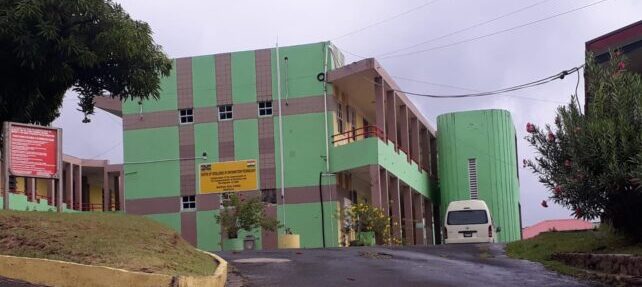
    During an on-site inspection this week, Prime Minister Roosevelt Skerrit of Dominica announced that construction of the new Goodwill Secondary School (GSS) is moving ahead at a steady, encouraging pace, calling the development “very satisfactory” and aligned with the government’s top education priorities.

    The original GSS campus was left completely unusable after Hurricane Maria tore through the island nation in 2017. Today’s project is one of six new educational facilities being built across Dominica through the China Aid Project, a bilateral development partnership between the government of Dominica and the People’s Republic of China. Ground was officially broken for the new campus on September 6, 2023, and contractors from the China Civil Engineering Construction Corporation (CCECC) launched demolition of the damaged original structure just over two months later, on November 13 of that same year.

    Walking through the construction site, Skerrit highlighted that all core structural work on the facility is now complete, with only final fitting-out works remaining. “You can see tiling and painting are well underway, all electrical and plumbing infrastructure is already in place – it is just a matter of installing the final fixtures,” he explained.

    Designed as a modern, student-centered learning space, the new campus was planned to accommodate every key need of a 21st-century education. Skerrit pointed out that the design features ample-sized classrooms, dedicated specialized spaces including science labs, a full library, computer suites, and IT facilities. Physical education was also a core priority in the planning process: indoor space on the first floor has been allocated for court sports including basketball, netball and volleyball, while the adjacent Pottersville playing field will provide additional outdoor space for other athletic activities. Once construction wraps up, the entire facility will be fully equipped and furnished before welcoming students.

    One of the project’s most groundbreaking features is its focus on climate resilience, a critical consideration for small island nations like Dominica that face frequent extreme weather events. Skerrit emphasized that the new GSS has been engineered to withstand severe catastrophic weather events, meaning teaching and learning can resume almost immediately after a natural disaster strikes, eliminating extended disruptions to students’ education that were common with older, less resilient infrastructure.

    Skerrit framed the project as a reflection of the Dominica government’s unwavering commitment to upgrading education across the country. “Having a safe, conducive place for learning is priority number one for our government and the Ministry of Education,” he said. “That is why we have continuously invested in upgrading physical infrastructure and learning centers across Dominica, to ensure every student has access to a learning environment that sets them up for success.” He added that the near-completion of the new GSS marks an exciting milestone for both the local Goodwill community and the future of education across the island nation.

  • DOMLEC restoring electricity following feeder fault that triggered widespread outage

    DOMLEC restoring electricity following feeder fault that triggered widespread outage

    A sudden, unplanned power outage cut electricity service to thousands of customers across multiple regions of Dominica earlier on Wednesday, prompting swift mobilization of repair crews from the island’s main utility provider to bring service back online.

    In an official public statement issued shortly after the outage began, Dominica Electricity Services Ltd. (DOMLEC) confirmed that power has started flowing back to customers in the capital city of Roseau, with surrounding communities set to regain connections step-by-step as repair work progresses across affected infrastructure.

    Initially, the disruption was linked to an unexpected trip at the island’s geothermal power plant, but follow-up technical investigations have adjusted that initial finding. The utility clarified Wednesday that the geothermal facility was not the root cause of the full outage.

    “After further investigations, it was determined that the cause of the outage did not originate from the geothermal plant, but rather a fault on DOMLEC’s Lower Goodwill Feeder,” the company confirmed in its updated statement.

    DOMLEC’s explanation outlines a chain reaction that led to the widespread blackout: the fault on the Lower Goodwill Feeder triggered the initial disruption, which then caused the geothermal plant to trip offline. That secondary trip expanded the scope of the outage, pushing the interruption far beyond the initial affected area and leaving far more customers without power than the original feeder fault would have impacted.

    As technical crews continue to assess and repair the damaged infrastructure, the utility is bringing power back in controlled, incremental phases to avoid further strain on the grid. Restoration work started in Roseau and will expand outward to adjacent communities as sections of the network are confirmed safe to reactivate.

    “We continue efforts to restore power to all affected customers and thank you for your patience and understanding,” the company’s statement added. DOMLEC also issued a formal apology to customers for the inconvenience caused by the unplanned service interruption.

    As of Wednesday afternoon, the utility had not released a formal timeline for when full power restoration would be completed across all affected areas. However, DOMLEC emphasized that all available teams remain focused on reconnecting every affected customer as quickly as work can be completed safely, with no compromises on public or infrastructure safety to speed up the process.

  • CDB and IDB invest launch US$25 million trade finance facility for Caribbean markets

    CDB and IDB invest launch US$25 million trade finance facility for Caribbean markets

    Against a backdrop of a persistent, crippling global trade finance shortfall that hits developing economies hardest, two leading regional development institutions have forged a new partnership to unlock critical trading capital for small and medium businesses across the Caribbean. IDB Invest and the Caribbean Development Bank (CDB) have signed a $25 million guarantee agreement, announced during 2026 Sustainability Week in Barbados, that is set to expand access to much-needed trade financing for enterprises across eight borrowing member countries of CDB.

    The core challenge the new facility seeks to address is one that has held back Caribbean economic growth for decades: the inability of local businesses to secure sufficient funding to complete cross-border trade transactions. Under the terms of the deal, CDB will issue partial credit guarantees for trade transactions processed through IDB Invest’s long-running Trade Finance Facilitation Program (TFFP). This risk-sharing framework allows both institutions to deploy existing capital far more efficiently, boosting the total volume of trade financing available to local financial intermediaries that serve businesses on the ground.

    The TFFP is not an untested new initiative. Over its 21 years of operation, which launched back in 2005, the program has emerged as a cornerstone of trade support across Latin America and the Caribbean. To date, it has backed more than 36,000 separate trade transactions with a total combined value exceeding $21 billion, including $4.8 billion raised through targeted resource mobilization efforts.

    The timing of the new partnership could not be more urgent. While trade finance underpins roughly 80% of all global trade activity, a massive funding gap continues to restrict growth worldwide. Current industry estimates put the global trade finance shortfall at approximately $2.5 trillion, with developing and emerging market economies bearing the brunt of the shortage. For small island developing states across the Caribbean, this gap has been a particularly acute barrier to private sector expansion and regional economic integration.

    James P. Scriven, Chief Executive Officer of IDB Invest, emphasized that the collaboration aligns with the institution’s core development mission. “This partnership with the Caribbean Development Bank reflects our commitment to expanding access to trade finance across the Caribbean while using innovative risk-participation instruments to maximize development impact,” Scriven said. “By working together, we can channel more resources to local financial institutions, support consistent trade flows, and help build more resilient and competitive economies in the region.”

    The new facility will prioritize financial institutions operating in CDB’s Borrowing Member Countries, a roster that includes The Bahamas, Barbados, Belize, Guyana, Haiti, Jamaica, Suriname, and Trinidad and Tobago. By making trade financing more accessible and affordable, the initiative is expected to streamline cross-border imports and exports of essential goods and commodities, strengthening regional supply chains and supporting business growth.

    CDB President Daniel M. Best noted that the partnership leverages each institution’s unique strengths: CDB’s deep on-the-ground regional expertise paired with IDB Invest’s established financial infrastructure. “Expanding trade finance in our markets demands both regional insight and the right instruments to reduce borrowing costs and unlock capital. This facility brings both to bear and is grounded in our drive to widen access to finance across our BMCs,” Best explained. “Working alongside IDB Invest, we are taking concrete steps to close the trade finance gap and advance sustainable economic growth across the Caribbean.”

    The agreement was formally signed during 2026 Sustainability Week, IDB Invest’s flagship annual industry gathering hosted in Barbados this year. Event organizers confirmed that the conference drew more than 800 attendees from across the globe, including representatives from 350 private sector companies. The week’s agenda centered on identifying high-impact investment opportunities and advancing private sector-led sustainable development across the Latin America and Caribbean region.

  • Upcoming summer program aims to help Dominican youth become climate resilience leaders

    Upcoming summer program aims to help Dominican youth become climate resilience leaders

    As the 2026 Atlantic hurricane season approaches, the Caribbean island nation of Dominica is launching a groundbreaking new educational initiative designed to equip its youngest residents with the knowledge and skills to address climate change and natural disaster risk. The Junior Climate Resilience Champions Program, developed and led by the island’s long-running non-profit Business Training Center (BTC), will kick off this July, with full funding supported by a $22,000 grant from the Caribbean Catastrophe Risk Insurance Facility Segregated Portfolio Company (CCRIF SPC) through its Small Grants Programme.

    The free program will welcome 125 young participants between the ages of 5 and 15 across two months of summer learning and hands-on community engagement. To ensure age-appropriate instruction aligned with each group’s developmental needs, BTC has split participants into two cohorts. For younger learners aged 5 to 9, core climate and disaster concepts will be introduced through playful, immersive formats including interactive storytelling, educational games, and hands-on group activities. Older participants, aged 10 to 15, will dive into more complex topics, ranging from foundational climate science and local disaster risk assessment to collaborative problem-solving for climate adaptation.

    The program’s structured curriculum is organized around five core thematic areas: comprehensive disaster risk management, introductory principles of climate-resilient infrastructure engineering, climate literacy through creative and artistic expression, community-focused environmental action, and individual leadership capacity building. Unlike traditional classroom-only education programs, the Junior Climate Resilience Champions places heavy emphasis on practical, real-world application of learned concepts. Participants will take part in a range of community-focused projects, including native tree planting drives, watershed clean-up campaigns, the development of shared community food gardens, and educational visits to local sustainable farms.

    In a nod to Dominica’s own recent history of devastating climate disasters, the program will also include guided educational tours to sites deeply impacted by past extreme weather events. Scheduled stops include the Hurricane Maria memorial in the coastal community of Pointe Michel, and several hard-hit communities in the Kalinago Territory, a decades-long experience with climate impacts that organizers say will help young participants connect abstract concepts to tangible, local experiences. These on-site visits are designed to reinforce the critical importance of disaster preparedness and long-term resilience building for the island.

    BTC Managing Director Lucia Stedman emphasized the intergenerational impact of the initiative in a statement ahead of the program’s launch. “This program is about planting seeds of resilience in the next generation,” Stedman explained. “As hurricane season 2026 officially begins, Dominica knows firsthand the devastating effects of climate-related disasters. By equipping our young people with practical knowledge and skills, we are building communities that are better prepared, more aware, and actively engaged in protecting our environment.”

    Beyond educating the 125 direct participants, the program is structured to amplify its impact across entire communities through its “Climate Champions” model. Young participants are encouraged to share the lessons and skills they gain with family members, neighbors and peers, extending climate literacy far beyond the program’s direct cohort.

    With nearly 30 years of experience designing and delivering youth development and community empowerment programs across Dominica, BTC brings deep institutional knowledge and local trust to the initiative, positioning the organization to successfully cultivate a new generation of environmentally conscious, disaster-ready Dominican citizens.

  • UWI Global Campus and Caribbean HR institute partner to strengthen workforce development

    UWI Global Campus and Caribbean HR institute partner to strengthen workforce development

    Against a backdrop of rapidly shifting regional labour markets across the Caribbean, where evolving workplace demands have exposed a growing disconnect between academic HR training and on-the-ground industry needs, two leading institutions have joined forces to reshape human resource development across the region. The University of the West Indies Global Campus’ Hugh Shearer Labour Studies Institute and the Caribbean Institute for Human Resource Management have formally signed a Memorandum of Understanding to solidify a new collaborative partnership centered on elevating HR education, advancing professional growth, and boosting workforce readiness across all Caribbean nations.

    This agreement is far more than a symbolic alliance: it is a targeted effort to close the long-standing gap between theoretical academic learning and real-world industry practice, ensuring that HR education keeps pace with the changing requirements of the regional labour force. By merging The UWI’s decades of academic excellence and research infrastructure with CaIHRM’s deep, on-the-ground industry insights and professional network, the partnership will create clear, accessible pathways for current and aspiring HR professionals to advance their careers.

    Under the terms of the MOU, the two institutions will collaborate on a range of key initiatives. First, they will co-develop structured professional pathways and industry-recognized credentials for practicing HR practitioners, giving learners clear milestones for career progression. They will also work to update existing academic curricula to integrate cutting-edge contemporary HR and organizational development topics, ensuring course content directly reflects the emerging trends and unique challenges facing Caribbean workplaces today.

    Additional areas of collaboration include expanding applied research focused on the specific HR challenges facing the Caribbean region, and embedding hands-on practical learning opportunities — including real-world case studies and immersive workplace simulations — into all educational programs. To bridge the divide between academia and industry, the partnership will also increase interaction between working HR professionals and students through guest lecture series, adjunct teaching opportunities for industry leaders, and structured feedback loops that allow practitioners to shape the direction of academic programming.

    Joint programming is also a core pillar of the agreement: the two organizations will co-develop short specialized courses and professional certificate programs, and host regular regional conferences, symposia, and thought leadership events designed to advance HR practice and organizational development across the Caribbean. A dedicated Joint Steering Committee will be established to oversee all initiative implementation, coordinate cross-institutional activities, track progress against core goals, and ensure the partnership remains aligned with its founding objectives throughout its term.

    Dr. Lauren Marsh, Head of the Hugh Shearer Labour Studies Institute, framed the collaboration as a transformative strategic milestone for regional human resource development. “This collaboration reflects a shared commitment to strengthening professional pathways and enhancing workforce readiness across the Caribbean, with a strong emphasis on practical training through case-based learning, simulations, and real-world industry engagement,” Marsh explained. “It is expected to play a significant role in shaping resilient, future-ready organisations and labour markets across the region.”

    Cavelle Joseph-St. Omer, President of CaIHRM, also welcomed the new agreement, calling it a landmark development for HR professionals at every career stage across the Caribbean. She emphasized that the partnership opens unprecedented opportunities to strengthen professional practice and expand access to continuous learning and development across the region, adding that the alliance creates a rare, valuable opportunity to meaningfully connect academia and industry. By working together, the two institutions can build local HR capacity, strengthen regional specialized expertise, and better prepare both current and future practitioners to meet the changing demands of Caribbean workplaces.

    The three-year initial agreement includes an option for renewal following a joint performance evaluation and mutual agreement from both parties. In the long term, the partnership is projected to strengthen the regional HR talent pipeline, raise uniform professional standards for HR practice across the Caribbean, and contribute to broader inclusive economic and social development across the region. For The UWI Global Campus, the initiative aligns with its long-standing institutional focus on educational innovation, intentional industry collaboration, and delivering relevant, high-quality education tailored to meet the unique needs of the Caribbean and the wider global community.

  • Discover Dominica Authority to host discussion on wellness tourism and its role in Dominica’s development

    Discover Dominica Authority to host discussion on wellness tourism and its role in Dominica’s development

    Against the backdrop of a rapidly expanding global wellness travel market, the Discover Dominica Authority (DDA) has announced an upcoming high-profile panel discussion that aims to unpack the transformative potential of wellness tourism for the Caribbean island’s local economies, communities, and long-term tourism brand positioning.

    Scheduled for Thursday, June 11, 2026, from 10:00 AM to 11:30 AM at the scenic Jungle Bay Resort & Spa, the discussion carries the theme “Wellness Tourism in Dominica: A Destination That Benefits Everyone,” and forms a core centerpiece of DDA’s 2026 Tourism Awareness Program, an annual initiative carried out this year under the overarching banner “Wellness by Nature.”

    Unlike conventional conversations that frame wellness tourism as a luxury niche limited to high-end spas and private retreats, organizers have structured the session to center on how Dominica’s unique natural assets and indigenous cultural knowledge can turn wellness-focused travel into a driver of broad-based economic and social progress. The dialogue will explore how embedding the island’s abundant natural landscapes, traditional healing practices, and local cultural heritage into wellness offerings can strengthen Dominica’s competitive edge in the fast-growing global experience-driven travel sector, while opening new doors for local entrepreneurship and community participation.

    A diverse cross-sector lineup of expert panelists has been assembled to bring multiple perspectives to the conversation. The group includes Dr. Paula Lockhart, a prominent holistic wellness advocate and co-author of *Natural Plant-Based Remedies*; Marva Williams, DDA’s Chief Executive Officer and Director of Tourism; Ellen Joseph, a holistic practitioner and wellness consultant at Rosalie Bay Eco Resort & Spa; Antonina Okinina, lead wellness practitioner at InterContinental Cabrits Resort & Spa; and Renauld Deschamps, a certified naturopath, herbalist, and President of the Dominica Herbal Business Association. Monelle Alexis, DDA’s Communications and Public Relations Specialist, will serve as moderator for the interactive session.

    Odile Jno Baptiste, Product Promotions Manager at DDA, emphasized that Dominica’s approach to wellness tourism goes far beyond the conventional spa model that dominates mainstream perceptions of the sector. “When people think about wellness tourism, they often think about spas and retreats. In Dominica, wellness is also found in our rivers, hot springs, local foods, traditional practices, and the ways people connect with nature,” Jno Baptiste explained. “This discussion will highlight how those experiences can create opportunities for communities and entrepreneurs while contributing to the well-being of both residents and visitors.”

    Organizers have issued an open call for broad participation, inviting tourism industry stakeholders, independent wellness practitioners, local small business entrepreneurs, university students, community organization representatives, and general members of the public to attend. The event will include a dedicated interactive question-and-answer segment that gives attendees the chance to pose questions directly to panelists and share their own insights on developing inclusive wellness tourism in the country.

    Per DDA’s official press release, the annual Tourism Awareness Program is designed to deepen public understanding of tourism’s outsize contribution to Dominica’s national development, and encourage broader public participation in industry-building initiatives. This year’s focus on wellness is intentional: it is meant to showcase how the island’s unspoiled natural resources, existing wellness offerings, and generations of local traditional expertise can be leveraged to deliver shared, long-lasting benefits for local residents, host communities, and visitors alike.

    Anyone seeking additional details about the event can contact the Discover Dominica Authority directly at +1 (767) 448-2045.

  • LIVE NOW: Press Conference with Prime Minister Roosevelt Skerrit 10th June 2026

    LIVE NOW: Press Conference with Prime Minister Roosevelt Skerrit 10th June 2026

    When attempting to process a news analysis and rewriting request, only social media sharing prompts including “Share”, “Tweet”, “Share”, and “Pin” were received. No complete core news text, event details, or relevant background information was included in the submission. Without the full body of the original news content, it is impossible to carry out the required in-depth analysis, structural reconstruction, or accurate rewriting that meets the established standards. Users who wish to obtain professional news processing services need to provide the complete original news content along with their request to ensure the output meets accuracy and completeness requirements.

  • Young Vincentians help shape agriculture’s future through FAO-led inclusion initiative

    Young Vincentians help shape agriculture’s future through FAO-led inclusion initiative

    On June 5, 2026, the Food and Agriculture Organization of the United Nations (FAO) partnered with Saint Vincent and the Grenadines’ Ministry of Agriculture, Forestry and Rural Transformation to host a landmark Youth and Gender Inclusion Working Session in Kingstown, creating a dedicated space for young producers, agribusiness leaders and agricultural traders to share unfiltered insights into the challenges they face and co-design actionable solutions for a more inclusive agricultural sector.

    The convening brought 23 cross-sector stakeholders together around a common goal: centering youth and gender-responsive strategies that open new pathways for young women and men to participate, lead, and thrive across every segment of national agrifood value chains. Attendees included not only young people actively engaged in farming, trade and agribusiness, but also representatives from the national Gender Affairs Division, local civil society organizations, and senior technical staff from the Ministry of Agriculture.

    Throughout the day-long discussion, participants laid out firsthand accounts of systemic barriers that block their success, while working collaboratively to map out targeted opportunities to expand their role in the sector. Juan Cheaz, FAO’s Caribbean Gender Focal Point and Value Chain Technical Lead, opened the session by emphasizing the non-negotiable role young people and women must play in driving national agricultural transformation.

    “Young people are the core engine of innovation and systemic change in agrifood systems,” Cheaz explained. “Yet far too often, young women and men face disproportionate barriers to accessing training, securing quality employment, and stepping into leadership roles. By centering youth and gender equity in our policy and program design, we can build more inclusive pathways to decent work, and secure a stronger, more resilient future for agriculture across Saint Vincent and the Grenadines.”

    Permanent Secretary Colville King echoed this call, drawing attention to a stark demographic gap that threatens long-term agricultural sustainability: just 10 percent of registered farmers in the country are young people. “The future of our agriculture depends entirely on our ability to attract young people into the sector, and to ensure they have a meaningful seat at the table when we shape its development,” King noted. “We need the next generation of farmers, innovators, processors, marketers and entrepreneurs to keep agriculture sustainable and protect our national food security for decades to come.”

    Discussion attendees outlined a consistent set of interlocking barriers holding young and female producers back, including limited access to affordable financing, arable land, formal markets, reliable transportation, and skills training, as well as widespread exclusion from key decision-making processes. For many, these barriers translate directly to tangible, devastating financial losses. Young farmer Dianza Selby shared a prominent example of how lack of market access derails small-scale producers: she once lost more than 600 pounds of unsold cucumbers, after exhausting all local distribution channels including supermarkets, schools, charities and community customers.

    “My losses were significant, and it was incredibly discouraging,” Selby said. Her experience struck a chord with other participants, who shared innovative workarounds they have developed independently to cut post-harvest losses and boost profit margins. Many have turned to value-added production, turning surplus produce into shelf-stable goods like pickles and hot sauces, while others leverage public storage facilities to extend the shelf life of their crops.

    The conversation also highlighted under-tapped opportunities for growth, including youth-led entrepreneurship, expanded domestic agro-processing, strategic product branding, and scaled-up value-added production. Participants also raised concerns about gaps in transportation infrastructure and export capacity, noting that younger, less established producers and traders have far fewer resources to absorb these challenges than larger, long-standing industry operators.

    Agricultural trader Glenroy Thomas emphasized that meaningful change requires centering young people in the decision-making process from the very start, rather than treating them as afterthoughts. “If we’re making decisions that impact young people, young people need to be part of those conversations from day one,” Thomas argued.

    A core, recurring theme across all working group discussions was the urgent need for expanded, targeted support systems for young people and women entering or scaling up operations in agriculture. Attendees called for expanded mentorship programs, increased access to technical assistance, more equitable access to critical resources, and greater youth representation in national agricultural policy discussions.

    In closing, both FAO and the Ministry of Agriculture reaffirmed their shared commitment to ensuring the perspectives and lived experiences shared during the session will directly inform the development and implementation of future agricultural programs and initiatives across Saint Vincent and the Grenadines, laying the groundwork for a more inclusive, sustainable and food-secure future.

  • Over 10,000 farmers benefit as Agroecology initiative expands support across Africa and Latin America

    Over 10,000 farmers benefit as Agroecology initiative expands support across Africa and Latin America

    A landmark international agroecology project has already empowered more than 10,000 small-scale farmers across four nations in Africa and Latin America, expanding their access to cutting-edge sustainable knowledge, climate-resilient technologies, and tailored professional agricultural support. Now entering its next phase of expansion, the Rural Advisory and Agroecology Project (known as AERAS) has spent two years supporting producers to adopt regenerative agroecological models that deliver balanced benefits across environmental health, economic stability, and community well-being, according to an official announcement from the Inter-American Institute for Cooperation on Agriculture (IICA).

    From its launch, the initiative has centered its mission on strengthening regional food systems while lifting incomes and quality of life for vulnerable rural communities. It operates as a multi-stakeholder partnership between IICA, the Latin American Network of Rural Extension Services (RELASER), and the Global Forum for Rural Advisory Services (GFRAS). AERAS forms a core component of the broader Global Programme for Small-Scale Agroecology Producers and Sustainable Food Systems Transformation (GP-SAEP), which receives core funding from the European Commission, Belgian Development Cooperation, and Access Agriculture.

    The project targets persistent systemic barriers that have slowed widespread adoption of agroecological practices in four focus countries: Costa Rica and Ecuador in Latin America, and Madagascar and Uganda in Africa. Over its first two years, participating producers have received hands-on training and ongoing technical guidance across a wide range of high-priority agricultural sectors, including livestock management, specialty cash crop cultivation for cocoa and coffee, small-scale vegetable production, Musaceae crops such as bananas and plantains, and tropical root crop farming.

    Beyond direct technical support, AERAS has worked to break down silos between producers, government agricultural agencies, academic research institutions, and private sector partners. This collaborative framework is designed to help farming communities build greater capacity to adapt to growing climate-related environmental pressures and volatile global market uncertainties.

    To mark the transition into the project’s next implementation phase, key stakeholders, partner institution representatives, and rural extension officers gathered recently for a focused strategy meeting at IICA’s headquarters in Costa Rica. During the meeting, participants reviewed progress achieved to date, documented key lessons from early implementation, and aligned on long-term strategies to lock in the initiative’s impact for years to come.

    Laura Ramírez Cartín, AERAS Project Coordinator and representative of Foro Relaser Costa Rica, outlined the multifaceted benefits the program has delivered to participating producers. “AERAS has enabled farmers to acquire knowledge in areas such as the reduction of external inputs, soil health, biodiversity, synergies, economic diversification, joint knowledge creation, food security, impartiality, connectivity, land governance, and resources,” she explained.

    Kenneth Solano, IICA’s Project Management and Agribusiness Specialist based in Costa Rica, emphasized the critical role of sustainability-focused initiatives at a moment when smallholder farmers face intensifying competitive pressures in global agricultural markets. “These environmental, social, and economic sustainability projects are fundamental in tackling the challenges of an increasingly competitive agriculture sector; and they require proper support to generate a long-lasting impact,” Solano noted.

    He added that structured reflection and ongoing evaluation are key to the program’s long-term success. “These reflective and evaluation exercises are vital in laying the foundation for our work and defining the next steps of the project, to ensure that this effort will endure and continue to create positive results in the region,” he said.

    Oswaldo Páez Aponte, a project consultant, echoed this focus on long-term systemic change, noting that the initiative’s true success will not be measured by short-term output alone but by its lasting impact after the project’s formal funding timeline ends. “The most valuable changes stemming from AERAS are those that will extend beyond the duration of the project. The most significant thing is to ensure that these agroecological practices do not remain on paper but gain traction in the organizations that are providing extension and consultancy services in rural areas,” he explained.

    Looking forward, the AERAS leadership plans to deepen cross-sector partnerships between public and private institutions, building a more robust interconnected network to share resources, technical expertise, and shared commitments to sustainable agriculture. Organizers note that these expanded collaborative efforts will preserve the progress already achieved and scale up adoption of agroecological practices across all participating countries in the coming years.

  • Regional heritage dialogue highlights role of the preservation of Caribbean identity reflected in culture, historic structures

    Regional heritage dialogue highlights role of the preservation of Caribbean identity reflected in culture, historic structures

    Across the Caribbean, irreplaceable cultural heritage — from centuries-old wooden architecture to unwritten ancestral histories — faces growing threats from accelerating climate change, unregulated development, and decades of systemic neglect. In response to this urgent regional challenge, cultural practitioners from four Caribbean territories gathered recently for a cross-regional dialogue hosted at the launch of *Artefacts of Jamaica*, a landmark digital heritage initiative supported by the Caribbean Culture Fund (CCF).

    The CCF, a regional organization that backs community-led cultural work through grant funding and skills-building opportunities, has made expanding public access to Caribbean arts and protecting at-risk heritage central to its mission. The gathering brought together heritage workers from Jamaica, Dominica, the U.S. Virgin Islands, and Saba to collectively explore collaborative strategies for protecting the Caribbean’s diverse cultural memory, with a particular focus on the region’s distinctive architectural history.

    Three CCF grant finalist projects, each taking unique approaches to preservation, took center stage at the event, all tied to the shared goal of centering community ownership of Caribbean history. The first, the Resilient Houses Project led by Sharifa Balfour, investigates the shared traditional architectural heritage of Saba and Dominica. Balfour’s work examines how generations-old wooden construction techniques are inherently tied to climate resilience, cultural identity, and sustainable development — far more than just historical relics.

    Through cross-community research exchanges, public exhibitions, hands-on restoration work, and digital storytelling, the project documents how traditional building methods evolved to let communities adapt to extreme local environmental conditions over hundreds of years. “It’s not just safeguarding our history and culture,” Balfour explained at the launch. “It’s really saving our identity.”

    Alongside Balfour’s project, Jamaican visual artist and CCF grantee Idris Veitch debuted *Artefacts of Jamaica*, a pioneering open-access digital archive dedicated to documenting Jamaica’s threatened architectural history. The initiative prioritizes recording historic buildings that are deteriorating, at risk of demolition, or already lost to extreme weather. Veitch noted that one landmark documented in the archive, Waterloo House, was completely destroyed by Hurricane Melissa in late 2026, underscoring the urgent need for rapid documentation. Too often, he argued, historic structures are overlooked by local communities who pass them daily without recognizing their cultural significance. “People walk past them as if they’re in the background, when there’s so much history behind them,” he said.

    The third project featured at the dialogue was presented by Stephanie Chalana Brown, a photographer and cultural archivist from the U.S. Virgin Islands. Her work, *Claiming Spaces: The African Story of the Sugar Mill*, reframes the history of St. Croix’s historic sugar mills by centering the experiences of the enslaved African people who built and operated them. Combining documentary photography, oral history interviews, genealogical research, and community engagement, Brown’s work challenges the colonial narratives that have long dominated interpretations of these iconic sites. “The tangible and material evidence provides a framework for us to say that we built this,” Brown said. “Because our ancestors were able to endure, we still exist.”

    While the three initiatives range from architectural research to digital archiving to diaspora narrative reconstruction, participants emphasized that all share a core mission: deepening the connection between modern Caribbean communities and the histories, landscapes, and traditional knowledge that define the region’s shared identity.

    The dialogue also surfaced a key practical barrier to long-term preservation work: participants agreed that consistent, sustained institutional funding and support remain largely out of reach for most independent cultural practitioners, who often carry out critical documentation and research with limited resources.

    As the CCF press release summarized, the gathering made clear that Caribbean cultural workers do far more than just record the past. They actively help communities reclaim their heritage, assert ownership of their own histories, and carry these traditions forward for future generations. As Veitch noted, artists often act as translators, making complex cultural and historical narratives accessible to broad audiences and ensuring that the stories, places, and practices that shape Caribbean identity remain visible for coming generations.

    The CCF reaffirmed its commitment at the event, stating that cultural preservation will remain a central priority for its regional programming moving forward. More information on all projects and CCF grant opportunities is available at caribbeanculturefund.org.