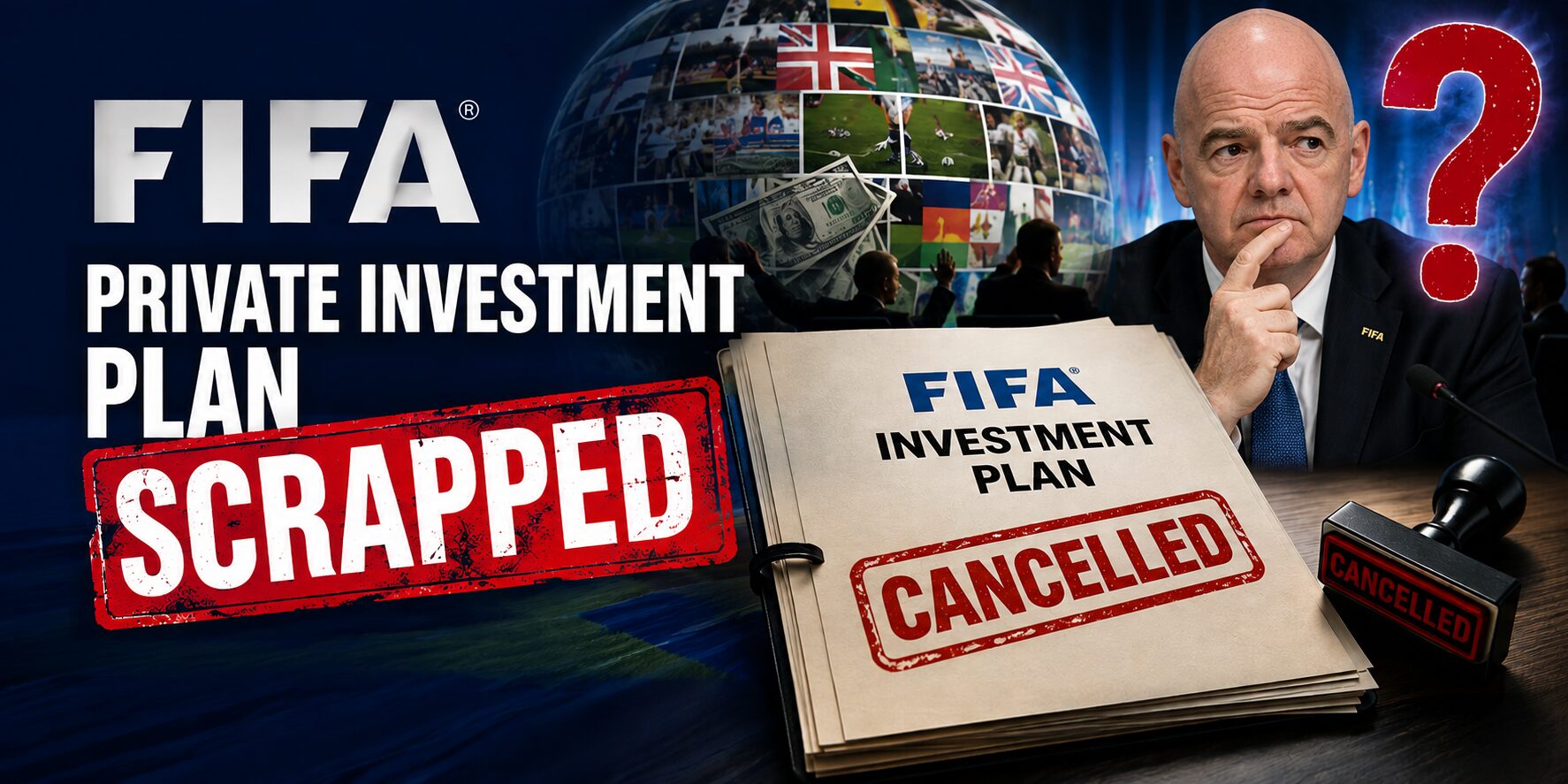
In a major reversal that marks one of the sharpest setbacks of his tenure, FIFA President Gianni Infantino has formally scrapped his divisive plan to sell minority non-controlling stakes in football’s top international tournaments to private investors, bowing to overwhelming pushback from continental governing bodies and member associations across the globe, the BBC has confirmed.
The proposal, which would have established a new commercial subsidiary named FIFA Forward Enterprise (FFE) to oversee FIFA’s flagship events including both the men’s and women’s World Cups, opened the door for outside private investors to acquire minority holdings in the new entity. To secure support from the body’s 211 member associations, FIFA offered an upfront $20 million payment to each association, with an additional $20 million promised following approval of the plan. Analysis prepared by investment bank JPMorgan Chase projected that the restructuring would unlock far greater long-term financial returns for members between 2015 and 2039, claiming that FIFA’s existing commercial assets were currently under-monetized.
However, the plan sparked immediate and fierce resistance from every major regional football confederation. European football’s governing body UEFA went as far as to pass a formal vote committing to a boycott of future World Cups if the proposal moved forward, while North and Central America’s governing body CONCACAF rejected the plan in full. The Asian Football Confederation (AFC) quickly joined the opposition, publicly declaring its solidarity with UEFA and CONCACAF. With 55 UEFA members, 35 CONCACAF members, and 46 AFC members already lined up to vote against the plan, analysts widely agreed Infantino had no path to secure the 106 majority votes required for approval from FIFA’s full 211-member body.
The controversy also roiled FIFA’s own internal administration, exposing deep rifts at the top of the organisation. FIFA Chief Operating Officer Kevin Lamour publicly claimed the organisation had been “deceived” about key details of the project, while Carlos Cordeiro, Infantino’s own senior adviser for global strategy and governance, resigned in protest, labeling the proposal “a bad deal for football” that would “mortgage football’s future” for short-term financial gains.
Criticism of the plan and Infantino’s leadership extended far beyond the football ecosystem. UK Prime Minister Andy Burnham publicly stated that Infantino was “the wrong man” to lead global football’s governing body. The proposal also drew political attention due to its expected lead investor: Thrive Eternal, an American venture capital firm founded by Joshua Kushner, brother of Jared Kushner, former U.S. President Donald Trump’s son-in-law. For his part, Trump claimed he had never discussed the investment proposal with Infantino, despite the two men’s known close personal ties.
In his official statement confirming the plan’s cancellation, Infantino acknowledged the proposal had created damaging divisions that ran counter to the initiative’s original stated goals. “As a result, this proposal will not proceed,” he said. He reaffirmed that FIFA’s core purpose “has always been – and will always be – to unite and improve.”
Despite the high-profile defeat, Infantino said he remains committed to repairing fractured relationships across global football. “Moving forward, my intent is to bring all interested parties back together in the coming days and weeks in the spirit of shared interest in our game,” he added, as he prepares to run for a fourth term as FIFA president at the organisation’s upcoming Congress next March.
AFC President Sheikh Salman bin Ebrahim Al Khalifa welcomed Infantino’s decision to scrap the plan, saying that the future of global football must be shaped through “proper consultation, collective dialogue and respect for the established governance structures of our game.”
BBC analysis notes that the collapse of the investment plan has significantly intensified pressure on Infantino ahead of the 2026 presidential election, raising new and serious questions about his ability to hold onto his leadership role when delegates gather to vote in March.