标签: Cuba

古巴

  • Cuba, May Day, Raúl Castro, Miguel Díaz-Canel

    Cuba, May Day, Raúl Castro, Miguel Díaz-Canel

    On May 1, 2026, at the closing ceremony of the International Meeting of Solidarity with Cuba, an event themed “For a World Without Blockade: Active Solidarity on Fidel’s Centennial,” Cuban President Miguel Díaz-Canel Bermúdez delivered a bold and clear address pushing back against long-standing narratives advanced by the United States that frame the Caribbean island as a national security threat.

    Díaz-Canel, who also serves as First Secretary of the Communist Party of Cuba, stressed that Cuba poses no extraordinary or unusual threat to the U.S., leaving no legal or ethical justification for any form of military aggression against the island nation. To counter the depiction of Cuba as a destabilizing force, he pointed to the country’s long track record of international peace mediation, including its pivotal role in facilitating the historic high-level meeting between the Vatican and the Russian Orthodox Church, a milestone that helped ease religious and geopolitical tensions globally.

    The Cuban leader emphasized that the Cuban people remain steadfast in their commitment to serving as a beacon of progressive hope in the Caribbean for communities and movements across the world that share the vision of a more fair and equitable global order.

    He framed this year’s May Day celebration as a defining moment of national unity, noting that more than 80 percent of Cubans over the age of 16 signed a national petition calling for global peace and opposing foreign military aggression, while approximately five million citizens joined peaceful marches across the country to defend national sovereignty and reject interventionism. Against persistent international narratives that label Cuba a “failed state,” Díaz-Canel pushed back firmly: “This is not the failed state they try to portray.”

    He particularly highlighted the role of Cuban youth in the nationwide mobilization, noting that young Cubans stepped forward as core organizers and participants in the anti-imperialist marches to defend the Cuban Revolution, echoing the courage and commitment of the generation that supported Fidel Castro during the centennial of his birth. This collective mobilization, he stressed, has persisted even amid severe economic headwinds driven by the ongoing tightening of the decades-long U.S. economic blockade against the island.

    In his remarks, Díaz-Canel also called global attention to a coordinated international information campaign that manipulates and distorts Cuba’s reality to force the Cuban people to abandon their cultural roots, collective national identity, and independent political path. He warned that this campaign constitutes a full-scale media war waged across both digital social networks and traditional mainstream media, aimed at spreading white supremacist ideology, stoking xenophobia, and smearing the reputations of Cuban leaders and institutions.

    The nation’s greatest source of strength, the president affirmed, comes not from institutions or resources, but from its people: working-class citizens who are building a dignified, self-determined future for the country. This domestic power, he added, is amplified by the global solidarity the country has received from progressive movements around the world. “This is a moment of global struggle against selfishness, for resistance and creativity,” he told attendees.

    Díaz-Canel also outlined the country’s ongoing domestic development priorities, noting that Cuba is currently advancing projects to transform its national energy matrix by scaling up renewable energy infrastructure. The country also aims to achieve full food sovereignty through expanded investment in science, technology and local innovation. Acknowledging that short-term challenges remain inevitable amid the current pressure campaign, he emphasized that the country continues to make incremental progress, sustain development work, and uphold its long-term vision.

    “Every Cuban has a role in the defense and a role to play; therefore, we will resist,” Díaz-Canel said, adding that “the Cuban people are not afraid.” He pointed to the country’s recent achievement in domestic crude oil refining, a milestone that many foreign analysts claimed Cuba would never be able to achieve independently. Now, the country is working to double that domestic production to strengthen energy security, he noted.

    Looking forward, Díaz-Canel reaffirmed that Cuba will remain a just, inclusive nation that welcomes all members of society, and will continue to extend international solidarity to marginalized just causes across the globe. These causes, he said, include the Palestinian people’s struggle for self-determination, the Bolivarian Revolution in Venezuela, and the push for the freedom of Venezuelan President Nicolás Maduro and his wife.

    He closed his address with three resounding slogans: “Long live International Workers’ Day! Long live solidarity among peoples! Cuba is not alone!”

  • “No aggressor, however powerful, will find surrender in Cuba”

    “No aggressor, however powerful, will find surrender in Cuba”

    In a bold public statement posted to his X social media account on May 4, 2026, Cuban President and First Secretary of the Central Committee of the Party Miguel Díaz-Canel Bermúdez has issued a firm rebuke of escalating threats from the United States, warning that the Cuban people will never surrender to foreign aggression, regardless of an aggressor’s military or economic power.

    Díaz-Canel’s remarks came in direct response to the latest round of unilateral coercive measures and military threats unveiled by the US administration against the Caribbean island. He emphasized that any foreign attacker would face a unified population fully committed to defending every inch of Cuba’s sovereign territory and hard-won independence. The Cuban leader also called out the dangerous escalation of US rhetoric, noting that aggressive posturing has reached an unprecedented level, and urged the international community to join with peace-loving people inside the United States to check actions that he described as criminal, driven only by the narrow interests of a small, wealthy, revenge-fueled faction seeking domination over Cuba.

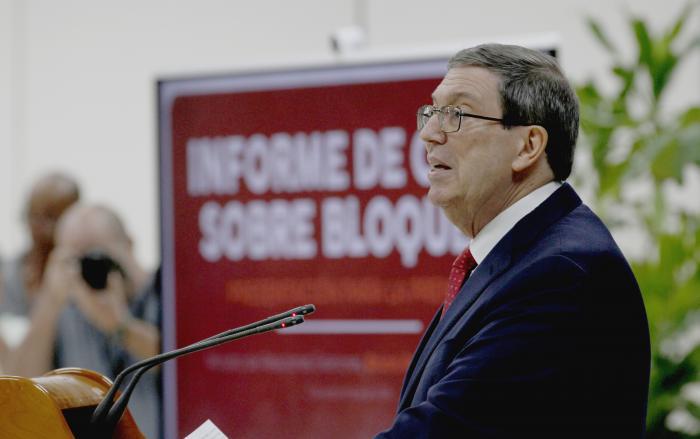
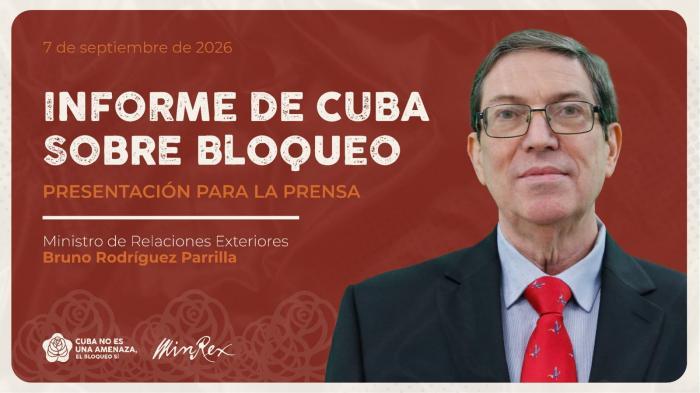
    Shortly before Díaz-Canel’s statement, Cuban Foreign Minister Bruno Rodríguez Parrilla, a member of the nation’s Political Bureau, also addressed the new sanctions on X, labeling the US measures as reprehensible, yet simultaneously curious and ridiculous. Rodríguez explained that the White House’s aggressive new actions are a direct response to Cuba’s recent grassroots “My signature for the Homeland” movement, which drew the support of more than six million Cubans — equal to 81% of all Cubans over the age of 16. The mass movement was organized to stand in defense of the nation against growing military threats, and to condemn the ongoing tightening of the US trade blockade and energy embargo against the island.

    In line with its long-standing pressure campaign against Cuba, the US has once again designated the country as an “unusual and extraordinary threat” to US national security and foreign policy via a new executive order, matching a similar designation issued back on January 29. This designation acts as a legal pretext to further tighten a comprehensive economic, commercial and financial blockade that has been in place for more than six decades, a policy designed to systematically suffocate the Cuban population and pressure the country’s government.

    The new sanctions, which went into effect immediately upon announcement, target economic activity involving Cuban and foreign entities, as well as private individuals including US citizens, that operate in key development sectors for Cuba — including energy, mining, and financial services — all of which are critical pathways for the island to gain access to much-needed foreign currency. The latest escalation comes as the long-running US blockade continues to exacerbate economic hardship on the island, limiting access to essential goods and infrastructure investment.

  • The people, together with Raúl, made history once again

    The people, together with Raúl, made history once again

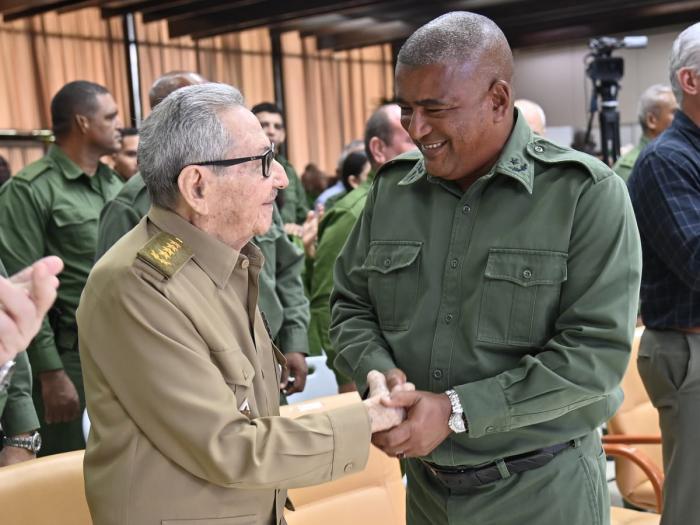
    On the international celebration of May Day, a landmark demonstration of national unity unfolded on the streets of Havana, Cuba. At the iconic José Martí Anti-Imperialist Tribune, Army General Raúl Castro Ruz, the historic leader of the Cuban Revolution, presided over a massive rally that drew more than 500,000 residents of Havana, with attendees acting as representatives for working people and communities across the entire island nation.

    The gathering, rooted in Cuba’s longstanding traditions of popular mobilization and national sovereignty, featured a powerful symbolic centerpiece: the formal presentation of two bound volumes holding thousands of signatures collected from Cuban citizens across the country, all gathered in a show of collective commitment to the nation’s homeland and revolutionary principles. Accompanying the signed books was an engraved plaque that publicly revealed the final, unprecedented total of signatures: 6,230,973.

    Documented in a series of photographs by Estudios Revolución, the event underscored the deep connection between Cuba’s revolutionary leadership and its broad base of popular support, marking May Day not just as a celebration of workers’ rights, but as a demonstration of unified national purpose amid the country’s ongoing commitment to self-determination. The event was reported by Cuba’s official outlet Granma, with the story filed by the outlet’s national editing team on May 4, 2026.

  • Creative work at the forefront

    Creative work at the forefront

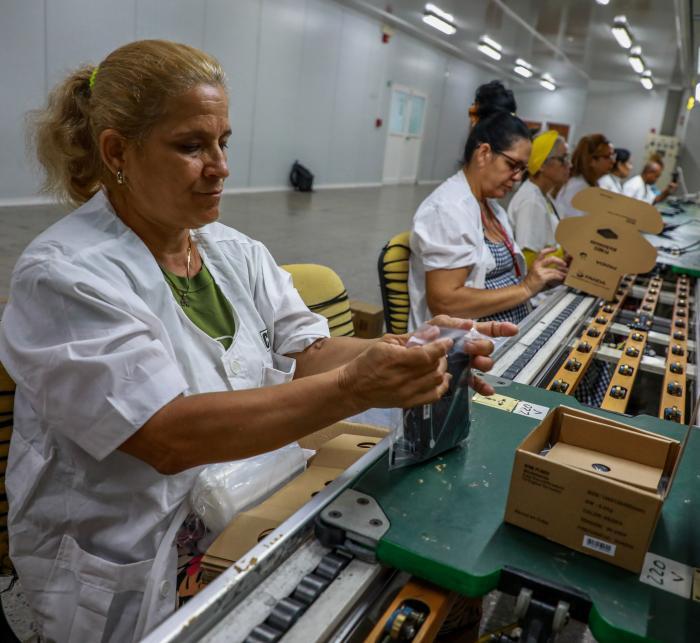
    In a pre-International Workers’ Day ceremony held on April 30, 2026, Cuban Prime Minister Manuel Marrero Cruz, who also serves as a member of the country’s Political Bureau, led an official event honoring 14 exceptional labor collectives under the Palco Business Group with the prestigious National Vanguard flag distinction. The award recognizes the group’s relentless drive to uphold productive output and creative problem-solving, even amid the long-standing, punitive economic blockade imposed by the United States on Cuba. Event organizers framed the group’s consistent commitment to meeting production targets as an act of resilience against external economic pressure, a stance that earned the 14 entities this top national honor.

    Among the recognized collectives, three organizations received the National Vanguard flag for the first time in their history: TRANSPAK, the Palco Customs and Freight Forwarding Company; the Central Office of Conex Company; and Palacio de Convenciones UEB. The remaining 11 collectives re-qualified for the honor, reaffirming their long track record of exceptional performance and alignment with national labor priorities.

    Beyond recognizing consistent domestic productive excellence, the ceremony also paid special tribute to Palco Business Group workers who were deployed to provide critical services in Venezuela during the unrest that unfolded on January 3 of this year. The emotional tribute highlighted the workers’ unwavering commitment to the core principles of the Cuban Revolution, as well as Cuba’s longstanding tradition of cross-border solidarity with other peoples across the Global South. Photographs captured by Estudios Revolución documented the entire ceremony, capturing moments of tribute and celebration among attending workers and government officials.

  • In them, work becomes their Homeland

    In them, work becomes their Homeland

    On the eve of International Workers’ Day 2026, Cuba held a solemn, emotion-filled ceremony to honor the nation’s most dedicated workers, recognizing their extraordinary contributions to national development amid persistent economic and social pressure from the long-standing U.S. blockade. The event, led by Miguel Díaz-Canel Bermúdez — First Secretary of the Central Committee of the Communist Party of Cuba and President of the Republic — celebrated workers who have embodied the resilience and collective commitment that define Cuban society.

    Before the official awards conferral began, Díaz-Canel held a closed-door gathering with approximately 80 workers from the country’s critical essential sectors, held in the El Laguito protocol hall. According to an official post from the Cuban Presidency’s X account, the discussion centered on the daily challenges workers navigate under the crippling effects of the U.S. trade and economic embargo. Workers across key fields including public health, education, culture, energy, and tourism shared firsthand accounts of how they have turned resistance and creative problem-solving into a way of life, sustaining critical services for communities across the island. During the meeting, Díaz-Canel emphasized that work in Cuba is far more than a routine professional obligation: it is an act of profound national commitment and patriotism, and a core pillar of the country’s ongoing resistance to external pressure.

    At the formal awards ceremony, which was attended by senior Cuban political figures including Rebel Army Commander José Ramón Machado Ventura, Esteban Lazo Hernández (President of the National Assembly of People’s Power and the Council of State), Prime Minister Manuel Marrero Cruz, and other top leaders from the Communist Party, government, and mass organizations, Díaz-Canel conferred Cuba’s highest labor honor — the title of Hero of Labor of the Republic of Cuba — on 24 outstanding individuals spanning diverse sectors of the national economy and public life. The honorees include Martha López Guzmán from the José Martí UBPC, Luis Oscar Gálvez Taupier from the Icidca, Graciela María Rodríguez Pérez from the Alejo Carpentier Foundation, Antonio Gómez Delgado from the TVC Information System and Estudios Revolución, and dozens of other workers from education, healthcare, mining, military construction, internal security, and cultural institutions.

    Beyond the Hero of Labor titles, the ceremony also recognized dozens of additional outstanding workers and labor collectives with the Lázaro Peña Order (awarded in first, second, and third classes) and the Jesús Menéndez Medal, honoring sustained, exemplary service across the country’s workplaces.

    Every honoree carries a unique story of quiet devotion, creative resilience, and unwavering loyalty to the core principles of Cuba’s social project, where individual sacrifice consistently aligns with collective progress. The timing of the ceremony, held on the cusp of May 1, carries special symbolic weight: as Cuban workers prepare to march and celebrate International Workers’ Day, the recognition reinforces a core national belief that the homeland is defended not just through political action, but through the daily effort, responsibility, and unity of ordinary working people. In his remarks, Díaz-Canel underscored the deep honor of gathering with workers who prove every day that the Cuban people have the ingenuity and determination to overcome any obstacle placed in their path.

  • Signatures for peace, for life

    Signatures for peace, for life

    In a sweeping display of popular unity and unyielding rejection of external meddling, thousands of residents across Cuba’s central province of Ciego de Ávila have mobilized to participate in the “My Signature for the Homeland” campaign, a nationwide grassroots initiative pushing back against rising hostile actions from the United States government.

    Launched on April 19, the 65th anniversary of the Bay of Pigs victory — widely marked across Cuba as the first decisive military defeat of U.S.-backed imperial expansion in Latin America — the signature drive will run through May 1, International Workers’ Day, aligning with widespread popular mobilizations responding to the escalating warmongering rhetoric and policy against the island nation.

    Spontaneous participation has unfolded across every corner of the province: from primary schools and industrial workplaces to senior community centers, military garrisons, public medical clinics, government administrative offices, and local Committees for the Defense of the Revolution. Cubans of all ages and backgrounds have turned out voluntarily to add their names to the campaign’s rosters.

    Niurka Ferrer Castillo, general secretary of the Cuban Workers’ Confederation (CTC) in Ciego de Ávila, emphasized to state-owned newspaper Granma that the mobilization is not coerced, but a natural, heartfelt expression of the Cuban people’s demands. “This is not a forced act, but a genuine cry for peace. We signed for our families, for life, for the right to exist as a free nation,” Ferrer explained.

    The simple act of signing carries profound symbolic and political weight: every signature represents a clear affirmation of support for peace, and an uncompromising rejection of foreign-instigated conflict. Signatories overwhelmingly condemn the decades-long intensification of the U.S. economic, commercial, and financial blockade against Cuba, as well as recent hostile statements and actions that threaten the island’s domestic stability. “Cuba will not bow to the designs of the empire,” Ferrer reiterated.

    Official data from the province highlights five municipalities that have recorded particularly high turnout: Chambas, Baraguá, Ciro Redondo, Primero de Enero, and the provincial capital also named Ciego de Ávila. Organizers describe the broad participation as a living exercise in popular sovereignty, driven by the Cuban public itself rather than top-down mandate.

    Radamés Alemán Alonso, a retired veteran of the Cuban Revolutionary Armed Forces, framed the campaign as a collective defense of national dignity. “Each signature is another stone in the wall of dignity,” he said. “There is no place for fear or intimidation here.”

    Martha María González Gutiérrez, a homemaker from the Centro neighborhood council, echoed that sentiment as she added her name to a community signature sheet. “I sign for my children, for the future, because we understand that peace is not begged for, it is defended,” she stated.

    The mass participation in Ciego de Ávila forms part of a nationwide movement that has seen millions of Cubans add their signatures across the country. Beyond a symbolic gesture, the collective action sends an unmistakeable message to the international community: regardless of the pressure and threats coming from the United States, revolutionary consciousness and deep patriotism remain firmly rooted in Cuban society. The collective action of the Cuban people reaffirms a timeless promise: this nation will never surrender its right to self-determination.

  • A peace signature against the blockade

    A peace signature against the blockade

    Across Cuba right now, a quiet but powerful wave of civic action is sweeping the island nation. The growing “My Signature for the Homeland” movement is far more than a symbolic gesture or empty political slogan — it is a deliberate, conscious act of collective resistance against the long-standing international blockade that has shaped daily life for generations of Cubans.

    History has a way of elevating small, intentional acts into defining markers of national identity. A single stroke of ink on a petition sheet carries more moral weight than any weapon of aggression. Today, Cuba is uniting around this movement: millions of hands reach for paper, and every name added becomes a line of defense, a moral bulwark against the collective punishment that has sought to break the Cuban people’s resolve.

    As the movement’s organizers emphasize, this initiative is first and foremost a profound act of civic duty. The siege Cuba endures is not merely a physical barrier that blocks oil tankers from reaching its ports, cutting off critical supply chains. It is a deliberate attempt to erode the nation’s collective soul, to wear down public commitment to Cuban sovereignty through systemic economic and social hardship.

    The U.S.-led blockade operates as a cruel, indiscriminate machinery of punishment that spares no segment of the Cuban population. It does not differentiate between children, elderly people, rural farmers, or urban workers. Its impact is felt in every shortage of staple bread, every gap in access to life-saving medicine, every scarcity of fuel that grinds daily activity to a halt, and every separated family kept from the embrace they have waited years to share. There are few more fundamentally inhumane acts than coercing an entire population to surrender its inherent dignity by inflicting widespread suffering on ordinary families.

    Yet on this island shaped by decades of struggle, the Cuban people have chosen a response far more powerful than resentment: radical national unity. Adding one’s signature to the movement is no passive symbolic act. It is a public message to the entire world: Cubans choose to build cross-border solidarity rather than succumb to fear and division. It is an act of guarding the concept of “the Homeland” — the intangible, shared territory of the national heart that holds the legacy of José Martí, the revered Cuban independence leader, and the quiet sacrifice of thousands of anonymous Cubans who sustained the nation through years of hardship.

    Martí, often called the Apostle of Cuban independence, once taught that “Homeland is humanity.” Today, as every new signature links to the last, forging an unbroken chain of principled resistance, Cubans are defending peace as their first and most foundational line of defense. Cuba has never sought war, but it will not accept the slow, gradual death imposed by the ongoing blockade. Cubans do not crave revenge; they crave the ability to breathe freely, to build their nation without the constant shadow of punitive legislation that punishes them simply for existing as a sovereign people.

    This civic movement carries a unique beauty: it turns a collective act of national resistance into an intimate, personal choice. When a Cuban signs their name, they are not just adding a name to a list — they are standing with the mother waiting for a life-saving shipment of medicine, the engineer waiting for access to critical raw materials to build the nation’s future, and the child who deserves to grow up without the weight of external hatred. Participants do not sign out of bitterness; they sign with the clear certainty that the blockade can only be overcome through the power of truth and active, principled peace.

    Every signature added is a small piece of the Cuban Homeland that refuses to return to colonial status. Every full sheet of signatures is a verse of quiet, unyielding civil resistance. So long as there are Cuban hands willing to write their name and affirm their commitment to national sovereignty, the blockade — this unjust collective punishment — will never hold legal or moral force in the hearts of the Cuban people.

    Because Cuba is not signing a document of surrender. It is signing for life, for peace, and for the inherent dignity of a people that has never accepted existence on its knees. That signature, that commitment, is as deeply, inherently Cuban as the palm trees that line the nation’s coasts.

  • Fidel and unconventional warfare: An early warning about the assault on consciousness

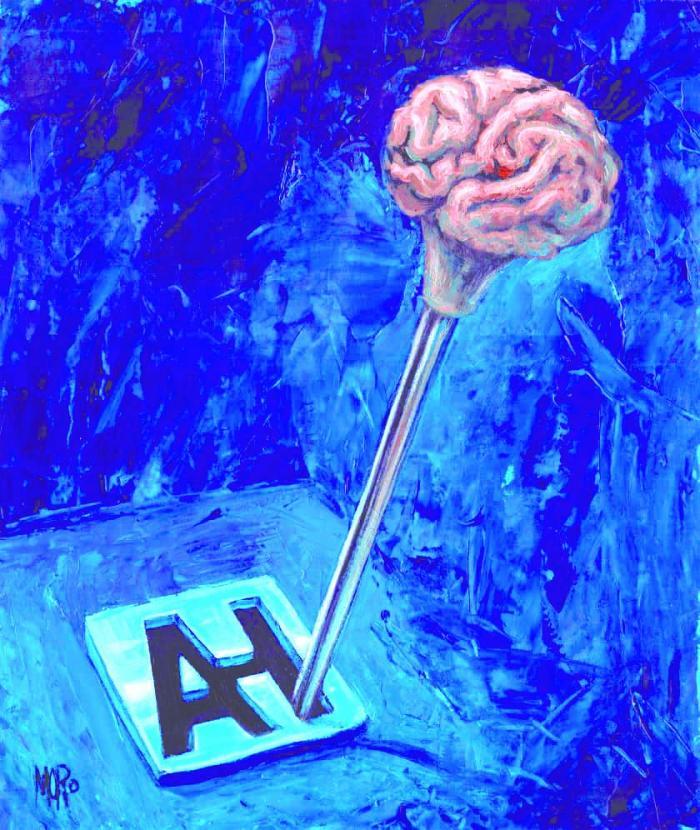
    Fidel and unconventional warfare: An early warning about the assault on consciousness

    Decades before modern phrases like “fake news” and “cognitive warfare” entered everyday public discourse, Fidel Castro Ruz, the iconic founding leader of the Cuban Revolution, had already mapped out the hidden mechanisms of power that major world powers would unleash through digital information and communication technologies.

    Crucially, Castro’s perspective was never rooted in opposition to technological progress itself. A close look at his legacy reveals a consistent commitment to expanding digital access and technical expertise across Cuba: he championed the development of the island’s first domestic computer, established the country’s preeminent University of Information Sciences, and launched the nationwide Joven Club de Computación (Youth Computer Club) initiative to bring digital literacy to generations of young Cubans.

    Instead, his words represented a prescient, far-sighted warning: he accurately foresaw that cyberspace would evolve into the central battlefield of a quiet, unconventional war designed to colonize the minds of people across the Global South. Castro framed the internet as inherently contested terrain. He never rejected its transformative potential for marginalized nations, noting in a 2012 address at the launch of the book *Guerrillero del Tiempo*: “The internet is a revolutionary tool that allows us to receive and transmit ideas in both directions—something we must know how to use.”

    Yet as early as 2006, when the U.S. government formally announced the creation of its Air Force Cyberspace Special Command, Castro sounded an urgent alarm that rings even louder in today’s hyper-connected world. “The internet can be used with the worst intentions in the world, as envisioned by the CIA and the Pentagon,” he warned at the time. This core duality defined his entire framework on digital power: the network itself is not the enemy; the danger lies in how U.S. imperialism and its allied powers would weaponize it for geopolitical gain.

    At the heart of Castro’s analysis was a sharp critique of mass psychological manipulation. In a landmark November 2005 address delivered at the University of Havana’s Aula Magna, he laid out a critical distinction that explains the effectiveness of 21st century unconventional conflict. “When they first emerged, the mass media took hold of people’s minds and ruled not only on the basis of lies, but also of conditioned reflexes,” he explained. “A lie is not the same as a conditioned reflex. A lie affects knowledge; a conditioned reflex affects the ability to think.”

    This core thesis exposes that the goal of this digital warfare is not merely to spread false information—it is to erase a population’s capacity for critical thought. Through endless repetition of ideological slogans that seep into the collective subconscious, adversaries can reshape public opinion without overt military intervention. Castro illustrated this dynamic with a stark, direct example: “Because they have already created reflexes in you: ‘This is bad, this is bad; socialism is bad, socialism is bad,’ and all the ignorant, all the poor, and all the exploited saying: ‘Socialism is bad.’ ‘Communism is bad,’ and all the poor, all the exploited, and all the illiterate repeating: ‘Communism is bad.’”

    Today, that dynamic has been amplified exponentially by algorithmic curation and viral social media platforms, turning this repetitive messaging into a constant, pervasive assault on independent consciousness.

    Castro’s analysis expanded further to connect digital psychological warfare to the global military-industrial complex. In an August 2009 reflection titled *The Empire and the Robots*, he denounced the stark global inequality that drives weapons development: while more than one billion people across the planet faced chronic hunger, the United States accounted for 42% of total global military spending, pouring vast resources into developing “technologies for killing.”

    The question he posed nearly 20 years ago remains as urgent as ever: “If robots in the hands of transnational corporations can replace imperial soldiers in wars of conquest, who will stop the transnational corporations in their search for markets for their devices?” This shift toward the dehumanization of war—replacing on-the-ground soldiers with drones, algorithms, and autonomous weapons—works hand in hand with psychological warfare: it turns mass destruction into a distant, abstract spectacle, making it far easier to manipulate public perception to justify military aggression. Recent examples, such as Project Maven, the partnership between the Pentagon, tech firms Palantir, Anthropic and its AI Claude, in strikes targeting Venezuela and Iran, confirm Castro’s early insight.

    All of Castro’s interconnected warnings about unconventional warfare coalesce into a overarching diagnosis he labeled “knowledge imperialism.” Repeatedly across his speeches, he framed this as the “main battlefront of the imperialist war,” with an ultimate goal of breaking the sovereign will of independent nations without firing a single shot. Instead of overt military invasion, imperial powers rely on cultural subversion and systematic information manipulation to achieve their geopolitical aims.

    In 2017, Cuban President Raúl Castro Ruz formally reaffirmed this framework before the country’s National Assembly, emphasizing that massive U.S. investments in digital and cultural tools were designed to “refine the tools of the so-called ‘unconventional war’” to provoke political destabilization and restore capitalist rule on the island.

    In the decades since Fidel Castro first issued these warnings, his early analysis has become a core part of Cuban state doctrine, and an essential lens for interpreting 21st century geopolitical conflict. In an era where social media amplifies manufactured conditioned reflexes, algorithms target and segment users to spread tailored misinformation, and autonomous weapons replace frontline soldiers, Castro’s words carry the weight of a fulfilled prophecy—one that is ultimately a call to defend popular sovereignty through critical knowledge and commitment to truth.

  • In its squares on May 1st, Cuba will not be alone either

    In its squares on May 1st, Cuba will not be alone either

    As International Workers’ Day approaches on May 1, hundreds of international solidarity activists are preparing to stand shoulder-to-shoulder with Cuban working people in mass demonstrations across the island nation’s public squares. This year’s mobilization carries extra historic weight, marking the centennial of the birth of Cuban revolutionary leader Fidel Castro Ruz, and comes as the Caribbean nation continues to navigate persistent external pressures designed to undermine its sovereignty.

    Cuba, the largest of the Antilles archipelago, has built a decades-long legacy of resistance amid external challenges. For this year’s May Day, international supporters have traveled from every corner of the globe to witness that resilience firsthand, joining working-class Cubans in reaffirming the island’s right to exist as a free, independent, peaceful and self-determining nation.

    A core contingent of 70 international visitors, organized as the second May Day Solidarity Convoy, has already spent days touring eastern Cuban communities in Santiago de Cuba and Guantánamo provinces, walking through rural hills and coastal villages to connect with local residents. The group includes activists from Italy, Venezuela, Mexico, the United States, France, Switzerland, and Cuban expatriates who have returned to show their support. Michelle Curto, from the Italian Agency for Cultural and Economic Exchange with Cuba, described the trip as an immersion in “the wellspring that is the Cuban Revolution,” adding that Cuba is “the island where we must grow and become ourselves.”

    International visitors have quickly become vocal advocates for the Cuban people after witnessing their daily determination to overcome hardship. Alejandra Chavira, a participant from Mexico, called Cubans “the most supportive people on the planet.” Italian activist Roberto Forte echoed that sentiment, noting that Cuba stands as proof “a world different from one of imposition and bombs is possible.”

    In the capital city of Havana, another group of international supporters — members of the 19th International Brigade of Voluntary Work and Solidarity with Cuba and the Che Guevara Contingent — got an up-close look at Cuban public innovation during a visit this week to the prestigious Center for Genetic Engineering and Biotechnology (CIGB).

    Josefina Guillo, a representative of the Cuba-France Association, emphasized that standing with Cuban workers on the eve of May Day and Fidel Castro’s centennial carries deep symbolic meaning for her organization. “We admire the strength of the Cuban people, their capacity for resilience despite the difficulties,” she said. Ian Müller, a student delegate from the Socialist Party of Germany, echoed that commitment, noting, “The strongest weapon the Cuban people have is international solidarity and friendship with other peoples.”

    When Cuban working masses fill the nation’s squares on May 1, these international supporters will march alongside them. Organizers note that the principles Cuba defends — sovereignty, self-determination, and dignity for working people — are universal causes shared by communities across the globe. That commitment echoes the enduring words of Cuban national hero José Martí, which remain ingrained in the identity of the Cuban people: “Homeland is humanity.”

  • “There are more of us who love and defend Cuba”

    “There are more of us who love and defend Cuba”

    Kicking off its multi-stop tour of Cuba’s southeastern region on April 27, 2026, the second annual May Day International Solidarity Convoy has brought tangible aid and heartfelt global support to local communities across Granma, Santiago de Cuba and Guantánamo provinces. Made up of pro-Cuba activists and supporters from Italy, France, the United States, Mexico, and Cuban expatriate communities living abroad, the convoy’s 10-day itinerary combines aid deliveries, cultural visits, and direct engagement with local residents to highlight global opposition to the decades-long U.S. blockade against the island nation.

    The delegation’s first stop was Santiago de Cuba’s University of Medical Sciences, where members met with institutional leadership, faculty, and students. In remarks to the gathering, Michele Curto, president of the Italian Agency for Cultural and Economic Exchange with Cuba and director of the joint venture BioCubaCafé, reaffirmed the international community’s unwavering commitment to the Cuban people amid ongoing external pressures. “We have come to reaffirm our commitment to the noble Cuban people, who are now under constant threat,” Curto stated, adding later that a growing global movement of Cuba supporters stands with the island: “There are many more of us who love and defend Cuba; you are not alone, and we will prevail.”

    The meeting became an emotional reunion for many in attendance. Dr. Abel Tobías Suárez Olivares, rector of the University of Medical Sciences, recalled his own deployment to Turin, Italy, as part of Cuba’s international medical brigade that responded to the crisis at the height of Europe’s COVID-19 pandemic. Ileana Núñez, a Cuban soprano who has resided in Italy for decades, was also on hand for the gathering – she had served as a translator and liaison between Dr. Suárez and local patients when the brigade worked in Italy’s COVID-19 red zones. The reunion unfolded as a warm exchange of hugs and shared memories, with Dr. Suárez emphasizing the transformative impact of the convoy’s visit: “Your visit shows that we are not alone in this battle and that solidarity is always capable of breaking the blockade.”

    Beyond the exchange of experiences, the convoy has organized a large shipment of targeted solidarity aid for Cuban health and education institutions, including life-saving medications, critical medical equipment, school supplies, and photovoltaic solar panels. The first donations were officially handed over Thursday to the University of Medical Sciences and Santiago de Cuba’s Antonio Vegues César South Children’s Hospital. Juan Carlos Vaillant Despaigne, delegate of the Cuban Institute of Friendship with the Peoples in Santiago, called the gesture far more than a material contribution: “We deeply appreciate this gesture, which goes beyond the material and touches our souls.”

    Following the Santiago opening events, delegation members traveled by bus to key stops across the region, with the explicit goal of connecting directly with Cuban communities most impacted by the U.S. blockade. One of the early stops was the historic Santa Ifigenia Cemetery, where the international delegates paid tribute to Cuba’s most iconic national figures: they honored founding father Carlos Manuel de Céspedes, national mother Mariana Grajales Cuello, national hero José Martí, and former Commander-in-Chief Fidel Castro Ruz, who is credited with building lasting bridges of friendship between Cuba and the global community.

    In Matahambre, a town that suffered severe damage from Hurricane Melissa in October 2025, the convoy delivered solar panels to the local Family Doctor and Nurse Clinic to ensure the facility can maintain consistent operations amid ongoing energy challenges. The delegation also dropped off new teaching materials for the town’s elementary school and sports equipment for the local basic secondary school, taking time to interact with students and educators during the visit.

    Curto, who leads the cross-border coffee initiative BioCubaCafé, met with local coffee growers in the region to discuss their work. Many of these smallholder producers cultivate coffee using sustainable agroecological practices, and they have recently benefited from new government policies designed to boost the traditional export sector. Curto’s meeting offered an opportunity to hear first-hand about the ongoing challenges producers face due to the tightened U.S. blockade, which restricts access to imported farm machinery and critical fertilizers.

    Further stops along the tour included the Porfirio Valiente Polyclinic in Alto Songo, where delegates observed how the facility delivers consistent patient care even amid widespread shortages caused by the blockade. One local general practitioner noted that while the facility faces supply constraints, it retains its most valuable asset: “the powerful human capital, so professional and shaped by the Revolution.” The convoy also delivered medications and medical consumables to the Emilio Bárcenas Rural Hospital in Segundo Frente, a mountainous municipality. Opened in 1961, the hospital provides urgent care, emergency services, and inpatient care to the local rural population. The tour wrapped up its first week with a meeting with local agricultural producers, who detailed the widespread economic harm caused by the intensification of the U.S. blockade.

    As the convoy continues its journey through southeastern Cuba through the end of the week, organizers say the initiative remains focused on two core goals: delivering critical support to communities in need, and demonstrating that global solidarity continues to transcend political divisions to stand with the Cuban people.