标签: Cuba

古巴

  • Bay of Pigs: The Crossroads Between the Past and the Future

    Bay of Pigs: The Crossroads Between the Past and the Future

    Six and a half decades have passed since the fiery, heroic April of 1961, when Cuban forces defeated a CIA-backed mercenary invasion at the Bay of Pigs, also known locally as Playa Girón. To commemorate this defining moment in the island nation’s revolutionary history, the Fidel Castro Ruz Center is hosting a two-day academic workshop titled *“Bay of Pigs: 65 Years Since the Great Victory Against Imperialism”* on April 14 and 15, 2026. The gathering forms a core part of national activities honoring the centennial birth anniversary of Fidel Castro, the legendary commander-in-chief of the Cuban Revolution.

    According to official announcements posted on the center’s website, the workshop will open with a keynote address from René González Barrios, Ph.D., who serves as the institution’s director. Barrios’ talk will focus on the direct role of the United States Armed Forces in the mercenary incursion, with particular attention to the role of the U.S. Naval Base at Guantánamo Bay, a longstanding point of geopolitical tension between the two nations.

    The workshop’s agenda extends far beyond formal lectures, with a lineup of complementary public events scheduled across the two days. Attendees will get access to the official launch of a new edited volume, *Bay of Pigs: 65 Years Since That Socialist April*, compiled by Elier Ramírez Cañedo, deputy head of the Ideological Department of the Central Committee of the Communist Party of Cuba, and published by independent publishing house Ocean Sur. Following the book launch, the center will open a new photographic and archival exhibition titled *“Fidel, Days of Bay of Pigs”* in its Cinco Palmas Hall, showcasing never-before-seen personal materials from Castro’s experience leading the counter-invasion.

    Scheduled thematic presentations cover a wide range of under-explored angles of the 1961 invasion, including the behind-the-scenes development of Operation Pluto (the codename for the U.S.-planned invasion plot), the organization and arming of the mercenary brigade that carried out the attack, and the concurrent counter-insurgency campaigns against pro-U.S. remnant bands across Cuba in the weeks surrounding the invasion. Historians, political analysts, journalists, and academic researchers from across Cuba and international partner institutions are taking part in the workshop, continuing a tradition of annual critical analysis of the Bay of Pigs legacy.

    Since the Fidel Castro Ruz Center opened its doors in 2021, institutional leadership has prioritized the study and preservation of the Bay of Pigs as a foundational moment of anti-imperialist resistance for Cuba and Global South movements more broadly. Each annual edition of the workshop has brought new archival discoveries and updated scholarly analysis of the invasion, deepening collective understanding of how the victory reshaped global politics in the Cold War era and beyond.

    Beyond its military and geopolitical significance, the Bay of Pigs victory holds a central place in Cuba’s domestic political history: the heroic resistance during the invasion directly led revolutionary leaders to declare the socialist character of the Cuban Revolution on April 16, 1961, the date now recognized as the founding day of the modern Communist Party of Cuba.

    As Castro himself framed the moment in a 1976 address, the Bay of Pigs invasion was never a small, marginal skirmish. It was, in his words, “the choice between the past and the future, reaction or progress, tradition or loyalty to principles, capitalism or socialism, imperialist domination or liberation.” Six and a half decades later, that framing remains just as relevant for Cuban political life and global anti-imperialist movements, organizers with the workshop note.

    For audiences unable to attend the event in person at the Fidel Castro Ruz Center, all plenary lectures will be streamed live for free via the center’s official YouTube channel, allowing interested observers around the world to follow the proceedings remotely.

  • “Surrender is not part of the revolutionaries’ mindset”

    “Surrender is not part of the revolutionaries’ mindset”

    In a wide-ranging April 9, 2026 interview with NBC News *Meet the Press* moderator Kristen Welker, conducted at Havana’s José Martí Memorial, Cuban President Miguel Mario Díaz-Canel Bermúdez addressed mounting threats from U.S. leadership, the crippling impact of the decades-long American blockade, and Cuba’s longstanding commitment to national sovereignty.

    Welker opened the conversation by pressing Díaz-Canel on recent aggressive rhetoric from former president and current U.S. leader Donald Trump, who has claimed he “can do whatever I want with Cuba” and implied plans to take control of the island nation. Díaz-Canel framed the threats as a reflection of long-standing U.S. aggression against Cuba, rooted in a 150-year struggle for Cuban independence from foreign domination. He emphasized that Cuba’s national identity is inextricably tied to sovereignty, noting that the 1959 Cuban Revolution ended decades of foreign subjugation and delivered transformative social gains that the Cuban people will never abandon. Echoing legendary Cuban independence hero Antonio Maceo, he stated: “Whoever attempts to seize Cuba will only gather the dust of its blood-soaked soil, if they do not perish in the struggle.”

    While affirming Cuba’s commitment to peace and regional solidarity, Díaz-Canel made clear that the country is not intimidated by threats and remains fully prepared to defend itself against any invasion. He rejected U.S. claims that Cuba is on the brink of collapse, pointing to the island’s six decades of resilience in the face of the longest-running blockade in modern history, which he described as a “criminal, genocidal” act of aggression. When asked if he feared assassination or arrest by the U.S. following Trump’s pattern of aggressive actions against foreign leaders, Díaz-Canel said he holds no personal fear, noting that all Cuban revolutionary leaders are prepared to sacrifice their lives for the nation. He pushed back on the framing that the Cuban Revolution’s leadership is centered on a single individual, explaining that Cuba operates under a unified collective leadership structure where hundreds of leaders are prepared to step into any role if needed. Any attack on Cuba would be met with full national resistance, he added, noting that the Cuban national anthem’s mantra “To die for the Fatherland is to live” is not an empty slogan but a core value held by all Cubans from childhood to old age.

    Confirming that Cuba is actively preparing for potential U.S. attack, Díaz-Canel stressed that Cuba’s defense doctrine is entirely defensive. The country’s “War of the Entire People” strategy, developed during past periods of heightened U.S. threat, organizes every Cuban citizen to participate in national defense, ensuring that any invasion would be unsustainable for foreign forces, even one as powerful as the United States. “Preparing to defend ourselves is the best way to avoid war and the best way to preserve peace,” he said, adding that the only legitimate path forward for U.S.-Cuba relations is dialogue, not confrontation, which would bring unnecessary loss of life and instability to both nations and the entire Caribbean region.

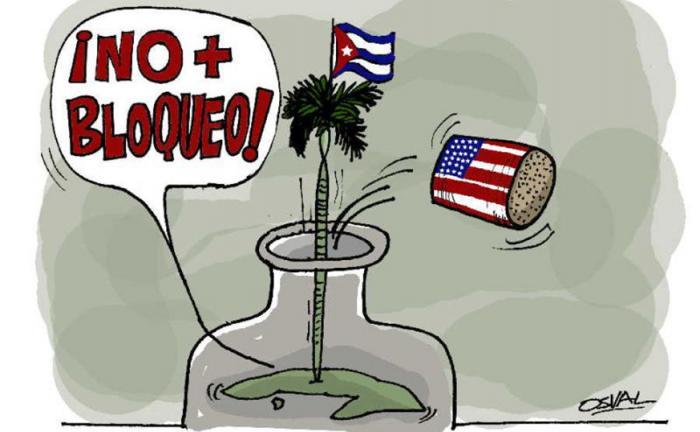
    Turning to the ongoing energy crisis, Díaz-Canel addressed the recent U.S. suspension of all fuel supplies to Cuba and the arrival of a Russian fuel shipment delivered as humanitarian aid. He explained that the new U.S. energy blockade is just the latest escalation of 67 years of economic war and 60+ years of total blockade, a policy that was first intensified during Trump’s first term in 2019, maintained through the Biden administration, and is now being ramped up to unprecedented levels. He noted that the Russian shipment only covers one-third of Cuba’s monthly fuel demand, and while the aid is greatly appreciated, it does not resolve the ongoing crisis. Díaz-Canel outlined Cuba’s comprehensive long-term strategy to achieve energy independence, including expanding domestic oil production, welcoming foreign investment in the energy sector (including from U.S. companies, if the blockade allows), investing in renewable energy, and developing domestic refining technology for Cuba’s heavy high-sulfur crude. He stressed that despite external pressure, Cuba will persist and adapt through the resilience and creativity of its people.

    Responding to claims that Cuba requires Russian support to survive and is on the edge of collapse, Díaz-Canel emphasized that Cuba’s strength ultimately comes from its own people, who have consistently demonstrated creative resistance to decades of blockade. He welcomed aid from partner nations including Russia, China, Vietnam, and Mexico, but noted that the U.S. could also choose to abandon its hostile policy and contribute to Cuba’s development. Rejecting the U.S. narrative of imminent collapse, he asked: “What country in the world would be capable, as Cuba has been, of withstanding 67 years of sustained aggression from the world’s most powerful nation… and not collapse?” He pointed to Cuba’s enduring social gains, including universal free healthcare and education, top global Olympic medal per capita rates, world-leading biotechnology innovation, and a society free of corruption, drug trafficking, and organized crime, arguing that these achievements are impossible under a “failed state.”

    When pressed on widespread suffering from energy and food shortages, Díaz-Canel placed full blame on the intensified U.S. blockade, noting that the 2019 escalation cut off all external financing, imposed harsh secondary sanctions on any country or company that trades with Cuba, and crippled key sectors including tourism, manufacturing, and public infrastructure. He pushed back on claims that the Cuban government is responsible for economic decline, pointing to the cumulative impact of decades of escalating blockade pressure. He highlighted Cuba’s response to the COVID-19 pandemic as evidence of the government’s commitment to its people: when the U.S. blocked access to vaccines, ventilators, and medical oxygen, Cuban scientists developed domestic mRNA vaccines, locally produced ventilators, and achieved better COVID mortality outcomes than the United States, despite decades of blockade. “It is unjust to blame a government whose sole purpose is to serve its people… for these evils,” he said. “The U.S. government should reflect on how cruel it has been toward Cuba and the Cuban people. It has no right to present itself as our savior, nor does it have the moral authority to do so.”

    Addressing calls for economic reform and a shift away from Cuba’s one-party socialist system, Díaz-Canel noted that the Cuban government regularly conducts self-critical assessments and works to improve its policies, but that the national political system, approved by the Cuban people via popular referendum, is not the cause of the country’s hardships. He pointed to the successful development of socialist economies in China and Vietnam, which advanced rapidly once their blockades were lifted, noting that Cuba has studied their reforms as a reference but must adapt to its own unique context: an island nation 90 miles from the U.S. that has lived under an unbroken six-decade blockade. “Lift the blockade and let’s see how we fare,” he challenged. “If even under the blockade we have achieved victories and shown solidarity to other nations, imagine what we could do without it.”

    On the topic of potential negotiations with the Trump administration, Díaz-Canel said that while a civilized, mutually respectful agreement between the two nations is possible, deep mistrust remains after 67 years of U.S. hostility and repeated American violations of past bilateral agreements. Cuba has always been open to dialogue based on mutual respect and equality, with no preconditions, he said, and there are many areas of potential cooperation including counter-narcotics, counter-terrorism, migration, trade, investment, cultural exchange, and public health collaboration. He highlighted two ongoing groundbreaking cooperative projects: a joint decade-long clinical trial for a Cuban lung cancer vaccine with a top U.S. cancer research center, which has produced extremely encouraging results, and a collaboration on an innovative Cuban Alzheimer’s treatment with a Colorado clinic, where American patients have seen better outcomes than with existing U.S. medications. “We cannot allow a blockade policy that serves only minorities and elites to undermine the relationship that our two peoples could have,” he said.

    When asked about U.S. demands for political reforms including free press, the release of purported political prisoners, and fair elections, Díaz-Canel said Cuba’s internal constitutional order is not up for negotiation with the United States. He rejected the narrative that Cuba holds political prisoners, explaining that people are only incarcerated for committing violent or disruptive criminal acts, often encouraged and funded by U.S. subversion programs, not for peaceful protest. Peaceful protests are regularly held and addressed by government officials without imprisonment, he added, noting that the narrative of political prisoners is a manufactured slander designed to discredit the Cuban Revolution. When asked if he would resign to meet U.S. demands, Díaz-Canel rejected the premise of the question, noting that no U.S. journalist would ask any other sitting head of state to resign at the demand of a foreign power. He stressed that Cuban leaders are elected by the Cuban people via a grassroots democratic system, and only the Cuban people have the right to remove their leadership. The U.S. has no moral standing to demand changes to Cuba’s political system, he said, as it bears full responsibility for the suffering the Cuban people endure.

    Closing the interview, Díaz-Canel reiterated that Cuba remains open to good-faith dialogue with the United States, focused on mutual respect, shared interests, and avoiding confrontation, to build a relationship of good neighborliness that benefits both peoples, the Caribbean, and Latin America. He thanked Welker for the opportunity to speak directly to the American people and extended an invitation for further discussion on unresolved issues.

  • “We call for a May Day that will stir us as a nation through unity and a commitment to making a difference”

    “We call for a May Day that will stir us as a nation through unity and a commitment to making a difference”

    In mid-April 2026, the Cuban Workers’ Central (CTC) and its affiliated national unions issued a formal call for nationwide celebrations of International Workers’ Day on May 1, centered on the rallying slogan “The Homeland Must Be Defended”. The call comes on the heels of a collective volunteer work day focused on boosting domestic food production, an event organized to reaffirm Cuba’s commitment to national food sovereignty in the face of mounting external pressure.

    The initiative was spearheaded by high-ranking Cuban leaders, including Liván Izquierdo Alonso, First Secretary of the Communist Party of Cuba in Havana, Havana Governor Yanet Hernández Pérez, alongside leaders of the Union of Young Communists and local Party bodies. Osnay Miguel Colina Rodríguez, president of the organizing committee for the 22nd CTC Congress, emphasized that against the backdrop of escalating threats from the U.S. government—most recently a new executive order in January 2026 that added an energy blockade to the 65-plus-year intensified economic, commercial and financial embargo—collective labor and national unity stand as Cuba’s most powerful defensive tools. “There is nothing more important and decisive today than working together and growing as a country,” Colina Rodríguez stated.

    For Cuban organizers, this year’s May Day celebration is far more than a traditional observance of international labor. It is framed as a public demonstration of national unity and unwavering patriotism, rooted in Cuba’s long history of anti-colonial and sovereign struggle. Colina Rodríguez drew parallels between the current moment and the 1878 protest at Baraguá, where independence leader Antonio Maceo refused to accept a peace deal that would sacrifice Cuban independence, noting that May Day 2026 represents another opportunity to “break the circle” of external pressure. The event also evokes the foundational independence ideals of José Martí and the revolutionary vision of former Commander-in-Chief Fidel Castro Ruz, laid out in his 2000 May Day address, coming in the centennial year of Fidel’s birth.

    The CTC’s call outlines plans for parades and community celebrations across every workplace, municipality, and province across Cuba, with organizers urging participants to adhere to practical precautions shaped by the constraints imposed by the U.S. embargo. Cuban workers are called upon to defend national sovereignty from every sector of society: from agricultural fields and manufacturing factories to classrooms, scientific research centers, energy facilities, hospitals, cultural institutions, and sports organizations—every space is framed as a “combat trench” for the defense of the homeland.

    Consistent with longstanding tradition, the invitation to join this year’s International Workers’ Day celebration extends to global allies of Cuba. In the official call, organizers expressed advance gratitude for international solidarity, noting that even amid rising military and economic threats, Cuban people remain optimistic in their fight for sovereignty, echoing the iconic line from the Cuban national anthem: “To die for the Fatherland is to live.”

    This year’s May Day observance builds on a series of weekend volunteer work initiatives organized by the CTC throughout 2026. Union leaders note these volunteer events echo the vision of revolutionary icon Che Guevara, who championed voluntary collective labor in the 1960s as a mechanism to sustain national development even amid external pressure. Today, these initiatives serve as a living demonstration of cross-organizational unity and the collective vitality Cuba needs to persevere under what organizers call the “genocidal” U.S. blockade.

    Guided by the priorities set by the Communist Party of Cuba, under the leadership of First Secretary and President of the Republic Miguel Díaz-Canel Bermúdez, the 2026 May Day celebration aligns with core national priorities: defending the socialist homeland, transforming Cuba’s energy matrix to offset the impacts of the energy blockade, expanding domestic food production, and solving daily challenges facing the Cuban people. Organizers emphasize that Cuban revolutionary commitment stems not from dogma, but from deeply held conviction in the right to build a sovereign, dignified nation.

    In closing the official call, the CTC, its national unions, and the National Association of Innovators and Rationalizers (ANIR) urged all Cuban workers and citizens to come together with the vibrant colors of the Cuban flag, carrying forward the teachings of Army General Raúl Castro Ruz. Ahead of the upcoming 22nd CTC Congress, organizers called for a May Day that unites the nation around a shared commitment to defending the revolutionary project that Martí envisioned, Fidel brought to fruition, and current Cuban leaders are committed to preserving. The call closes with the iconic revolutionary slogans: “Long live the Cuban Revolution! Fatherland or Death! We shall overcome! See you on May 1.”

  • Guáimaro: when the Cubans made the Constitution the reason for their sword

    Guáimaro: when the Cubans made the Constitution the reason for their sword

    On a dust-choked April day in 1869, in the plains of Cuba’s Camagüey region, a ragtag group of independence fighters defied all odds to write a new chapter of global history. Six months had passed since the first spark of the Cuban independence struggle ignited at La Demajagua, and the outlook was grim: the strategic city of Bayamo had already fallen back under Spanish colonial control, military momentum had stalled, and the fledgling independence movement fractured into three competing governing factions, flying two separate flags. The choice left to the revolutionaries was uncompromising: unify, or face certain death.

    Against a backdrop of ongoing armed conflict, deep ideological divisions, and missing comrades, the Mambí independence fighters achieved what many deemed impossible. Not only did they hammer out an agreement for a unified command structure, but they also drafted and formally adopted the first Constitution of the Republic of Cuba in Arms on that April 10. Clocking in at just 29 articles, this founding document was far more than a parchment signed amid the roar of gunfire. It was the birth certificate of a sovereign Cuban nation, enshrining core principles that still shape Cuban national identity today: a separation of governmental powers, a clear division between military and civilian authority, and the radical, foundational commitment to the abolition of chattel slavery.

    Like all human political projects, it was not perfect. But it was uniquely Cuba’s. The nation’s founding revolutionaries refused to wait for permission from the Spanish colonial metropolis to write their own laws and claim their right to self-determination. With this Magna Carta, Cuba carved out its place among the world’s 19th-century republican nations through its own collective effort, standing in open defiance of one of Europe’s oldest imperial powers. Out of that Guáimaro Constituent Assembly emerged the first legitimate national government of Cuba, with independence leader Carlos Manuel de Céspedes serving as president and Manuel de Quesada taking on the role of Commander-in-Chief. It also established a constitutional tradition that remains the beating heart of the Cuban Republic more than 150 years later.

    That same spirit of sovereign self-determination would go on to inspire Cuba’s national hero José Martí to establish another transformative institution on the same April date, 23 years later in 1892: the Cuban Revolutionary Party. As Martí himself wrote in the newspaper *Patria*, the party was the embodiment of the Cuban people, tasked with organizing the final push for independence that would secure full sovereignty and establish a democratic republic built “with all and for the good of all.” The ideological and organizational foundations laid by that party would later shape the first Communist Party of Cuba, and its modern iteration as the vanguard organization of the Cuban Revolution.

    Today, as foreign narratives from the Global North push the argument that a nation can enjoy freedom without full political and economic sovereignty, the legacy of the 1869 Guáimaro Constitutional Assembly offers a vital reminder. Cuba’s founding fathers never debated whether an independent sovereign state was a wise goal; they took it as a given that independence is never granted to those who beg for it—it is built through deliberate action, with laws to codify the people’s will and arms to defend that will against colonial aggression. That unshakable conviction, that faith in the legitimacy of the anti-colonial struggle, has run like a constant underground river through every subsequent Cuban constitution, from the 1940 national constitution to the current framework ratified by the Cuban people in 2019.

    So when algorithmic mercenaries and pro-annexation lobbyists peddle the bitter lie that Cuba should surrender its sovereignty for foreign favor, Cubans are called to remember the dust of Guáimaro. There, on the open plains of Camagüey, a small band of revolutionaries armed with nothing but machetes and a shared dream of freedom left the Cuban people the most powerful tool any free nation can hold: the moral and legal justification for their struggle, transformed from a cause into a binding constitution. This inheritance is not up for negotiation, not for sale to the highest bidder, nor to be surrendered lightly. It is a legacy to be defended, always.

  • Life deserves to be celebrated

    Life deserves to be celebrated

    On a windy Thursday in April 2026, 19 young people gathered at Havana’s Solidaridad con Panamá School to mark a universal coming-of-age milestone: their 15th birthdays. For decades, this school has upheld a beloved tradition of celebrating quinceañeras for disabled students, a ritual that has endured through the decades of economic blockade that have shaped daily life in Cuba.

    As preparations wrapped up, the first chords of the traditional quinceañera waltz rang out across the school grounds. Not every dancer moved in perfect step: some relied on canes for support, others maneuvered custom wheelchairs across the esplanade, and many leaned gently on their partners to steady their balance. But to observers in attendance, there was no mistaking the perfection of the moment—raw, genuine, and alive with the joy of the young people at the center of the celebration. Bright yellow balloons dotted the open space, holding their ground against strong gusts of wind, a quiet metaphor for the resilience of the students gathering to mark their big day. Nineteen wide smiles shone across the esplanade, none dimmed by the adversity that has tested Cuban communities for decades, each one a candle of hope that no hardship can blow out.

    Cuba’s highest-ranking leaders joined the celebration: Miguel Díaz-Canel Bermúdez, First Secretary of the Central Committee of the Communist Party of Cuba and President of the Republic, and Manuel Marrero Cruz, member of the Political Bureau and Prime Minister of Cuba, were among the guests, moved by the students’ determination and joy. From the school’s esplanade, the gathered students and faculty sent warm birthday greetings to retired Cuban revolutionary leader Army General Raúl Castro Ruz, a long-time supporter of the institution’s work.

    Esther María La O Ochoa, known affectionately as Teté, who served as the school’s director for many years, reflected on the legacy of the annual celebration. She credits Fidel Castro Ruz, the school’s founder and former Commander-in-Chief, and Raúl Castro Ruz, for ensuring this tradition was never interrupted, even in the hardest of times. “We live in a Cuba under blockade, but never one that refuses to give love,” she told the assembled crowd.

    As the event unfolded, the colors of students’ outfits mingled across the open esplanade, with wheelchair users gathering front and center to lead the celebration. “No one could stop this celebration,” one student said—a sentiment echoed by everyone in attendance. These young people, each with their own unique body shapes and personal stories of overcoming struggle, reminded all present that every life is worthy of celebration, no matter the circumstances.

    For 20 full minutes, tenderness and hope walked hand in hand across the school grounds. Glasses were raised in a toast to happiness, and shared embraces erased all lines of status, distance, and prejudice, holding space only for quiet joy. Many parents openly wept as they watched their children dance, and teachers—who have long stepped into caregiving roles for their students—shared in the profound, soft joy of the moment. At the center of it all, the 15-year-olds beamed, their smiles unclouded by hardship.

    For these students, the bouquets they held were far more than decorative flowers: they were a living promise of what is still to come, a testament to the core belief that has guided the school and this tradition for more than 25 years: even amid difficulty, in Cuba, every person matters, and every life will persist in blossoming.

  • Russia, One Hundred Percent in Solidarity with Cuba

    Russia, One Hundred Percent in Solidarity with Cuba

    On a Thursday afternoon in April 2026, a landmark diplomatic meeting between top Cuban and Russian officials took place at Havana’s Palace of the Revolution, reinforcing the long-standing strategic partnership between the two nations. Cuban President Miguel Díaz-Canel Bermúdez, who also serves as First Secretary of the Central Committee of the Communist Party of Cuba, hosted visiting Russian Deputy Foreign Minister Sergei Ryabkov, who traveled to Havana for the event in conjunction with a bilateral inter-ministerial dialogue between the two countries.

    Opening the cordial exchange, Ryabkov expressed that he felt deeply honored to receive an audience with the Cuban president, a sentiment that prompted a warm response from Díaz-Canel, who framed the Russian diplomat as a trusted friend to Cuba and highlighted decades of reciprocal solidarity between Havana and Moscow.

    In his opening remarks, Díaz-Canel first extended a warm greeting to Russian President Vladimir Putin and all Russian allies, before turning to address the most recent demonstration of Russian support for Cuba: a timely fuel shipment delivered to the island in recent days. The Cuban leader emphasized that the delivery carries far more than practical value, calling it a momentous symbolic gesture that sends a clear message that Cuba does not stand alone amid mounting international pressure.

    Díaz-Canel stressed that the aid comes at a particularly critical juncture for Cuba, noting that this shipment is the first and only fuel supply the country has received in four months, making it an indispensable lifeline for the island. Beyond its immediate practical impact, he framed the fuel delivery as a stand against what he termed coercive imperialist policies, praising Russia’s courage in refusing to bow to external pressure that aims to block trade with Cuba. He added that the shipment upholds a core principle both nations defend: Cuba’s inherent right to receive energy supplies, and other countries’ equal right to conduct legitimate energy trade with the island.

    The Cuban president requested Ryabkov convey his official gratitude to the Russian government and President Putin directly, reaffirming that all bilateral agreements reached during previous talks with Putin remain in full force. He referenced the recent 23rd session of the Cuba-Russia Intergovernmental Commission held in St. Petersburg, which was attended by Cuban Deputy Prime Minister and Minister of Foreign Trade and Foreign Investment Oscar Pérez-Oliva Fraga, noting that both sides remain fully committed to advancing all joint bilateral projects.

    Looking ahead, Díaz-Canel underlined Cuba’s unwavering commitment to deepening political, diplomatic, and economic cooperation with Russia. He called for continued unity between the two nations, particularly at a time of widespread global instability and ongoing armed conflicts that have roiled international order.

    Responding to Díaz-Canel’s remarks, Ryabkov echoed the spirit of camaraderie, thanking the Cuban president for the opportunity to hold the high-level meeting. He noted that the gathering itself serves as a powerful signal to both Russia and the broader international community of the unique, close bond between Havana and Moscow. The Russian deputy foreign minister also expressed appreciation for the warm hospitality extended by Cuban authorities during his visit, including his earlier reception by Cuban Foreign Minister Bruno Rodríguez Parrilla.

    Ryabkov reaffirmed that Moscow stands in full solidarity with Cuba, stating that the Russian side fully understands the severe challenges Cuba currently faces and remains unwavering in its support for the island. Also in attendance for the diplomatic meeting on the Cuban side was Gerardo Peñalver Portal, First Deputy Minister of Foreign Affairs of Cuba, as the talks proceeded in an atmosphere defined by mutual respect and fraternal solidarity.

  • That day, people fought and died across the country

    That day, people fought and died across the country

    Seventy-odd years after one of the most pivotal moments in Cuba’s revolutionary struggle, the legacy of the April 9 general strike against the Batista tyranny endures as a powerful testament to the Cuban people’s unbreakable commitment to change. In excerpts from his 1989 book *Semillas de fuego (Seeds of Fire)*, Rebel Army Commander Faustino Pérez reflects on the failed 1958 uprising, drawing lessons that remain resonant for Cuba’s ongoing journey decades later.

    When revolutionary leaders called for a nationwide general strike to oust the Batista regime, activists across the island rose to answer the call. From the capital of Havana to the far eastern provinces, hundreds of disparate actions unfolded: revolutionary activists seized national radio outlets to broadcast the strike call, stormed the Old Havana armory, destroyed electricity substations, shut down transportation hubs, blocked key travel routes into and out of the capital, and derailed trains in multiple regions. Guerrilla forces joined the effort, matching the underground movement’s actions with coordinated assaults: Enrique Hart led a raid on the Matanzas radio station, rebels attacked the Quemado de Güines barracks and shut down Cuba’s Central Highway, and militias from Santiago de Cuba, led by René Ramos Latour (who had stepped into Frank País’ post at the National Action Headquarters in the Sierra Maestra), launched an assault on the Boniato Barracks. By the end of the day, the entire Eastern region was effectively paralyzed by the combined power of guerrilla fighters and underground organizers.

    Despite the widespread popular mobilization, the strike failed to achieve its core goal of toppling the Batista tyranny. In the wake of the uprising, the regime unleashed a wave of brutal repression that claimed more than 100 revolutionary combatants, including Marcelo Salado, the July 26 Movement’s capital field commander and one of its most promising young leaders. The defeat pushed the Cuban revolutionary movement into one of the most difficult periods of its entire campaign against Batista.

    Pérez offers a candid reflection on the causes of the failure, acknowledging that while multiple contributing factors were at play, the primary responsibility rested with errors in judgment and leadership among the activists tasked with directing the uprising. Yet far from framing the April 9 strike as a catastrophic and final loss, Pérez frames it as a critical turning point that strengthened the revolutionary cause. Even in defeat, the uprising proved beyond doubt that the Cuban people retained an unyielding commitment to struggle and sacrifice for their vision of independence.

    The immediate aftermath of the April 9 setback also laid new groundwork for future victory. Dozens of grassroots insurgent groups, many armed only with basic weapons, remained active across the island, and gradually merged with established guerrilla fronts. Two new full guerrilla columns formed to expand the revolutionary struggle: the Pepito Tey column, which joined the Frank País Second Front under Belarmino Castilla after winning the battle of Ramón de las Yaguas, and a separate column led by Víctor Bordón that began operations in the Escambray Mountains. Even an unsuccessful expedition to Pinar del Río, which included future combatant Jesús Suárez Gayol (who would later die fighting alongside Che Guevara in Bolivia), represented a step forward in building insurgent capacity across the island.

    For Pérez, this trajectory of defeat turned into strength is a defining feature of Cuba’s century-long revolutionary journey. “On the Cuban people’s upward path, no setback has ever been or will ever be definitive; it has never brought paralysis, nor has it ever meant abandoning the struggle,” he writes. “The darkness of the setback has never extinguished the revolutionaries’ certainty of victory.” The April 9 defeat was no exception, Pérez argues: through the fighting spirit of the Cuban people, the courage of frontline combatants, and steady revolutionary leadership, what appeared to be a total loss was eventually re-forged into a stepping stone to the eventual victory that would reshape Cuba’s history forever.

  • Progress reported on natural treatments for post-stroke conditions and skin diseases

    Progress reported on natural treatments for post-stroke conditions and skin diseases

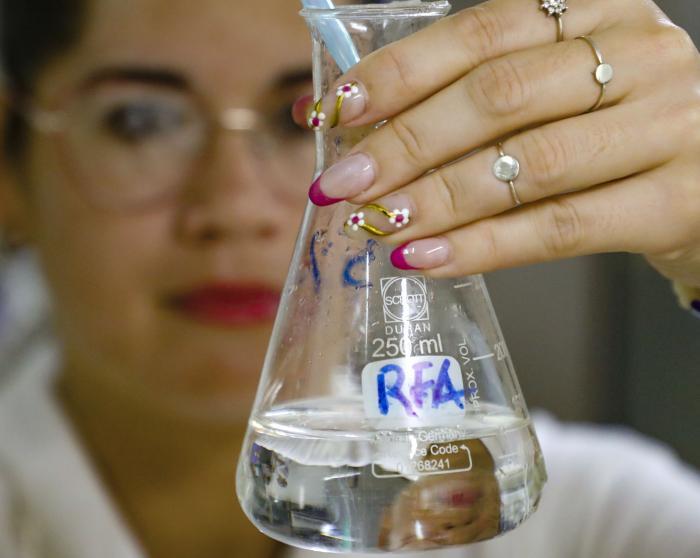
    In a high-profile meeting this week between Cuban leadership and top national health scientists, the National Center for Scientific Research (CNIC) has unveiled encouraging clinical trial results for two lines of new natural-product based therapies targeting post-stroke cognitive impairment and common dermatological conditions, advancing the institution’s decades-long legacy of innovative biomedical research.

    The presentation was delivered to Miguel Díaz-Canel Bermúdez, First Secretary of the Party’s Central Committee and President of the Republic of Cuba, during the country’s regular consultative exchanges between government leadership and scientific health experts. Per Dr. Sarahí Mendoza Castaño, Director of Research, Development, and Innovation at CNIC, all the developed products have already demonstrated clear efficacy and safety in trials. These developments will not only expand Cuba’s domestic portfolio of accessible medical treatments for its population but also position the country to compete in the global pharmaceutical market.

    The most high-profile outcome shared was from a clinical trial investigating the combination of policosanol, the active ingredient in CNIC’s iconic PPG first developed by the center in the late 1980s, paired with a low 81-milligram daily dose of aspirin, for the treatment of post-ischemic-stroke cognitive impairment. The 12-month controlled study enrolled 100 male and female patients with an average age of 69, all living with post-stroke cognitive decline, and split participants into two separate treatment groups for comparative analysis.

    Researchers recorded measurable, significant improvement in cognitive function as early as 45 days after the start of treatment across both groups. “With this study, we demonstrate for the first time that long-term therapy with 20 milligrams of policosanol and a daily dose of 81 milligrams of ASA improves both functional recovery and post-stroke cognitive impairment in patients who have suffered an ischemic stroke,” explained Dr. Javier Sánchez López of Cuba’s Center for Neurology and Neurosurgery.

    The neurologist noted that the initial results open doors for expanded use of the combination therapy down the line. “This is a promising result, and we are preparing to use this therapy in the future for vascular parkinsonism, because policosanol clearly protects the vascular tree; therefore, in any condition involving this type of damage, its effect will be beneficial. That is our hypothesis, and the results have been encouraging in this initial study.”

    Given that ischemic stroke is a major contributing factor to late-life dementia, Sánchez López emphasized the critical public health value of this breakthrough. As global life expectancy continues to rise, cognitive decline has become an increasingly common burden on older populations. “Any product, any trial that points to an improvement is welcomed as a relief, knowing that we want to live longer, but also with a better quality of life, and even more so by using natural products, which are highly reliable and safe for medical use,” he added.

    Alongside the stroke therapy research, CNIC also shared new data on dermatological treatments based on ozonized sunflower oil (OSO). Researchers conducted trials testing the efficacy of OSO cream paired with specialized sulfur-based AGO soaps for multiple common skin conditions. One trial focused on acne patients, enrolling 75 participants (average age 24, majority female) split into three groups: one receiving only OSO soap, one only OSO cream, and the third a combined therapy of both products.

    All three groups recorded clinical improvement, higher assessment scores, and better quality of life after treatment, with the combined therapy delivering notably stronger results than either monotherapy. CNIC plans to continue testing these dermatological products with larger patient cohorts and longer treatment periods to confirm the initial positive outcomes. A separate eight-week trial of OSO soap paired with an alcohol-based anti-inflammatory OSO cream for chronic dermatitis, which enrolled 90 patients, also returned promising preliminary results, which are currently under peer review. Additional promising early data was also shared for rectal ozone therapy as a treatment for persistent joint pain following the acute phase of chikungunya infection.

    President Díaz-Canel praised the new achievements from CNIC, an institution founded in 1965 by former Cuban leader Fidel Castro Ruz that holds the distinction of being the founding core of Cuba’s network of revolutionary scientific institutions, evolving from the original Scientific Pole into today’s Biocubafarma. The center’s latest breakthroughs confirm that six decades after its founding, CNIC remains fully committed to addressing high-priority biomedical and technological challenges that advance Cuba’s economic and social welfare, while developing cutting-edge, globally competitive pharmaceutical products.

  • Patria: a communication milestone of our time

    Patria: a communication milestone of our time

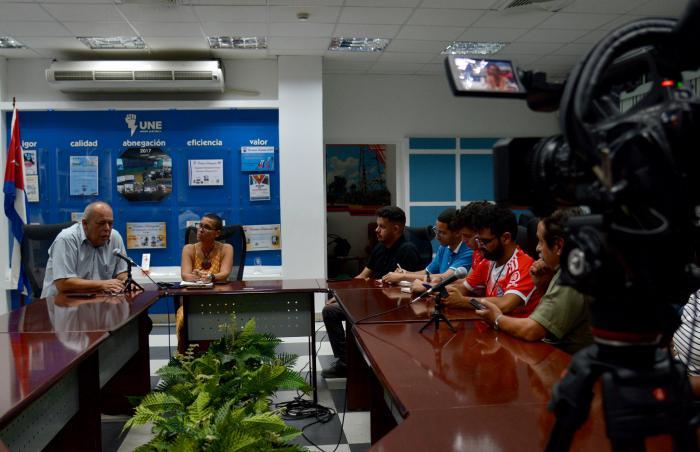
    Cuba’s leading international communication gathering, the Patria International Colloquium, is gearing up to open its fifth iteration in 2026, bringing a slate of new updates and symbolic milestones to Havana. Rooted in the core mission of aligning Cuba’s public communication network with progressive, leftist frameworks adapted to 21st-century digital shifts, the event carries heavy symbolic weight this year, timed to coincide with two landmark national anniversaries: the centennial of Cuba’s iconic Commander-in-Chief, and the 65th anniversary of the victory at the Bay of Pigs, as well as the declaration of the socialist character of the Cuban Revolution.

    Against a backdrop of sustained international media pressure targeting Cuba, the colloquium stands as a tangible demonstration of global solidarity with the island nation, event organizers confirmed. At an official press conference, Ricardo Ronquillo Bello, president of the Union of Cuban Journalists (UPEC), shared that even with an accelerated call for participation, global turnout has exceeded expectations, with roughly 150 international delegates already confirmed to attend. This strong response, he noted, is clear evidence of widespread global support for Cuba and the long-standing international prestige the colloquium has built since its launch.

    This year’s edition introduces a restructured programming model that expands the event’s core mission beyond academic discussion, positioning it as a hub for practical professional preparation and skills training. Parallel to the main keynote panels and discussions, a series of hands-on workshops will be held, and a hybrid virtual component will be offered to extend access to communication professionals across every region of Cuba. Organizers emphasized they are prioritizing leveraging the expertise of high-profile attendees, including senior specialists, veteran journalists, leading communication theorists, and heads of major communication organizations from around the world.

    Daniel González, a member of the colloquium’s organizing committee, added that the event will center cutting-edge shifts in the global communication sector, with artificial intelligence and its real-world applications for media and public communication set to be one of the central thematic focuses of the conference. The gathering will also feature a large-scale public exhibition hosted at Havana’s Línea y 18 fairgrounds, where domestic and international media outlets and communication-focused initiatives will display their latest technological and innovative advances to attendees.

    A key milestone of this fifth edition will be the official inauguration of the permanent Patria Project headquarters, a facility designed to operate as a year-round hub for communication research, professional training, and preparatory work for future industry initiatives. Closing his remarks, Ronquillo Bello framed the colloquium as a modern stand against external media pressure, drawing a parallel to the historic Bay of Pigs victory: “Patria coincides with dates of great national symbolism. Let us say, then, that Patria is the communications-based Bay of Pigs of our time.”

  • Judicial firmness against sabotage of the Cuban Energy Program

    Judicial firmness against sabotage of the Cuban Energy Program

    Against the backdrop of a steadily intensifying illegal economic, financial and energy blockade imposed by the United States, Cuba’s government and national institutions have poured unprecedented effort into expanding a national energy program designed to secure consistent electricity access for all citizens. As a fundamental public service, reliable power is enshrined as a basic right of the Cuban people, serving as a cornerstone of public well-being and a non-negotiable requirement for the continued functioning of the country’s economy amid external pressure.

    Even as the nation grapples with the crippling effects of this economic war and widespread fuel shortages, however, a troubling wave of criminal activity has emerged: unscrupulous actors have targeted critical energy infrastructure, stealing components, parts, full equipment units, fuel, dielectric oil and other materials from photovoltaic parks, solar panel arrays, power generators and other energy generation facilities. These targeted thefts do not merely disrupt local operations — they undermine the entire Cuban National Electrical System and put at risk the full government strategy crafted to soften the severe social and economic damage caused by the U.S. blockade.

    Under Cuban law, these damaging acts are explicitly classified as the crime of sabotage, as laid out in Article 125 of Law No. 151, the 2022 Cuban Penal Code. The statute outlines that any individual who destroys, alters, damages or compromises critical infrastructure including energy generation facilities, energy transmission systems and related resources — either with the explicit intent to disrupt normal operations, or with full knowledge that their actions will cause such disruption — faces a prison sentence ranging from seven to 15 years. For aggravated circumstances, the penalty increases dramatically: if the act results in serious injury or death, involves explosive, chemical or biological agents, endangers collective public safety, causes severe widespread disruption, or targets reserved strategic material reserves, sentences can range from 10 to 30 years in prison, up to life imprisonment or the death penalty.

    To formalize this legal interpretation and reinforce the severity of these crimes, the Governing Council of Cuba’s Supreme People’s Court issued Opinion No. 475 in May 2025, exercising its constitutional authority granted under Article 148 of the Cuban Constitution and Article 29 of Law No. 140 on the Administration of Justice. The opinion reaffirms that all unlawful acts targeting the country’s critical infrastructure, particularly the national electrical power system, meet the legal definition of sabotage. This classification is designed to protect the function of public assets, preserve the security and stability of Cuban state institutions, maintain domestic public order, and safeguard national priority programs such as the ongoing energy expansion initiative.

    Cuban penal code further outlines additional aggravating factors that can increase penalties for these offenses, per Article 80. These include participation in the criminal act as part of a group of three or more people, involving minors under the age of 18 in the crime, using methods that put the general public at risk, committing the theft under cover of night, acting for personal financial profit, and committing the offense while impaired by alcohol or illicit drugs if the offender intentionally impaired themselves to carry out the crime. Additionally, Article 89, Paragraph 2 of the Penal Code requires that convicted offenders must serve at least two-thirds of their total prison sentence before they become eligible for any parole consideration.

    Cuban provincial courts, which administer justice on behalf of the Cuban people in compliance with all due process guarantees enshrined in Articles 94 and 95 of the national constitution, have already moved to enforce these penalties with the full rigor the offenses demand, given the extreme harm these crimes cause to Cuban society. Data confirms that between January 2025 and the end of the first quarter of 2026, the State Security Crimes Chambers of Cuban Provincial People’s Courts imposed prison sentences of more than 10 years on 100 percent of all defendants convicted of these sabotage offenses. In addition to lengthy prison terms, convicted offenders also face additional penalties including restrictions on movement, property confiscation, travel bans, and court orders to pay full civil damages for the losses their crimes caused.