标签: Cuba

古巴

  • Granma 2.0: “Solidarity cannot be blocked”

    Granma 2.0: “Solidarity cannot be blocked”

    A significant international solidarity initiative reached Cuban shores this week as the tuna vessel ‘Maguro,’ renamed ‘Granma 2.0’ by its crew, docked in Havana harbor carrying over 30 tons of humanitarian aid. The shipment represents a concerted effort by activists from eleven nations to support Cuba during its current economic challenges.

    The vessel, serving as the flagship of the ‘Our America Solidarity Convoy,’ embarked from Mexico’s Yucatán peninsula on March 20th. The journey encountered unexpected difficulties when electrical system malfunctions extended the planned one-day voyage to five days. Despite these technical challenges, the 32 international activists aboard persisted in their mission.

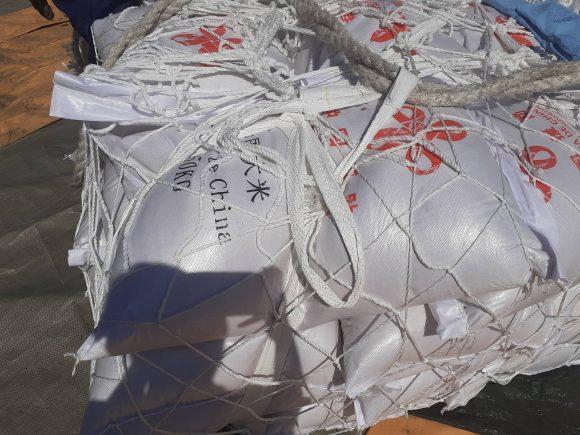
    The aid delivery includes substantial quantities of food supplies, medical resources, hygiene products, and more than seventy solar panels designated for Cuban healthcare facilities. The convoy’s nomenclature pays homage to the original Granma yacht that transported revolutionary figures to Cuba seventy years earlier under the motto ‘free or martyrs.’

    Brazilian activist Thiago Ávila articulated the mission’s philosophical foundation during arrival ceremonies: ‘This represents historical reciprocity. Cuba has consistently demonstrated unparalleled international solidarity, deploying medical brigades worldwide during health crises, supporting disaster relief efforts, and contributing to liberation movements across the Global South. The global community now acknowledges its debt to Cuban generosity.’

    Australian participant Daniel Herbert provided critical context regarding media representation, noting that ‘heavy political propaganda in Western media deliberately distorts Cuba’s reality. Having traveled extensively, I can confirm these narratives are manufactured contrary to evident truth.’

    The initiative emerges amidst complex international relations and economic pressures affecting the island nation. Participants characterized their mission as countering systematic disinformation campaigns while providing tangible support to Cuban institutions. As one activist concluded: ‘While defeating oppressive systems presents difficulties, this vessel demonstrates that solidarity remains unblockable. Free peoples worldwide possess far greater strength than any empire.’

  • Brazilian councilwoman highlights Cuba’s resistance

    Brazilian councilwoman highlights Cuba’s resistance

    A Brazilian municipal legislator has brought firsthand accounts of widespread hardship in Cuba back from an independent, self-funded solidarity trip to the Caribbean island, framing the crisis as a direct consequence of escalated US economic sanctions imposed by former President Donald Trump.

    Lourença, a city councilor from Belo Horizonte in the state of Minas Gerais and a member of Brazil’s Socialism and Freedom Party, traveled to Cuba outside of her official legislative duties to join an international collective of solidarity activists. During her visit, she documented conditions on the island for her followers on social media platform X, revealing that the delegation delivered critical donated supplies including sanitary towels and prescription medications to local communities.

    In her posts, Lourença painted a stark picture of daily life under the tightened US blockade, which has been in place in various forms for more than 60 years. She reported widespread shortages of essential pharmaceuticals, uncollected garbage piling up in urban streets, and widespread school absences among children whose families cannot cope with current economic conditions. Most alarmingly, she warned that neonatal intensive care units across the country’s public hospital system are at imminent risk of shutting down, endangering the lives of newborns and new mothers.

    Lourença tied this acute crisis directly to policy actions taken by Trump, who in January 29 of his term issued an executive order that labeled Cuba an “unusual and extraordinary threat” to US national security. The order authorized harsh new tariffs on any third country that sells or ships oil to the island, cutting off almost all of Cuba’s access to global energy supplies. As a result of this policy, Lourença reported that the island is plagued by widespread, prolonged blackouts, a development she called a deliberate component of what she frames as Trump’s authoritarian agenda for Latin America: rolling back progressive gains and erasing revolutionary symbolic movements that shape the modern history of many regional nations. “Donald Trump’s silent war is leading Cuba to collapse,” she wrote in one post.

    She emphasized that almost all medications currently reaching Cuban patients arrive only through international donation, a reality that underscores the urgent need for cross-border anti-imperialist organizing and regional solidarity. “The anti-imperialist struggle and Latin American solidarity have never been more important,” she added.

    Even amid the overwhelming economic hardship, however, Lourença highlighted the resilience of the Cuban population, noting that despite daily struggles, “the brave Cuban people continue to resist, praying, dancing and aware of their strength.” She added that during her trip, she encountered extraordinary warmth and determination among the communities she met, moments of beauty that reinforced her faith in collective regional power. “The situation is difficult, but I am also seeing beautiful things and meeting wonderful people, which keeps me believing in our strength,” she wrote.

    Lourença’s trip comes as a growing global movement of solidarity has emerged in response to the tightened sanctions. One major initiative, the Convoy Nuestra América, brought hundreds of activists and donated supplies from across the world to Havana starting last week, part of a broader wave of international mobilization to support the Cuban people amid the deepening crisis.

  • Granma 2 ship arrives in Cuba with solidarity from Mexico

    Granma 2 ship arrives in Cuba with solidarity from Mexico

    In a striking show of grassroots cross-border solidarity, the first ship of an international civil society-led aid convoy has docked in Cuba, carrying tonnes of desperately needed assistance collected by grassroots organizations across the globe. The vessel, originally named Maguro but rebranded *Granma 2* by participating activists to honor the historic boat that brought the Cuban Revolution to power, holds 32 passengers hailing from a wide range of nationalities. Onboard, the cargo consists primarily of life-sustaining goods that directly address gaps created by long-standing international sanctions: staple foodstuffs, critical medical supplies, pharmaceutical products, and renewable energy infrastructure including solar panels.

    Leading the expedition is Thiago de Ávila, a prominent activist and social media influencer who has rallied broad public support for the mission. In remarks following the vessel’s arrival, Ávila made clear that the convoy would not yield to diplomatic or economic pressure from the United States, which has maintained sweeping sanctions on Cuba for decades. He emphasized that the mission stands in defense of fundamental global rights: the right to peace and self-determination for all peoples targeted by U.S. foreign policy, including Cubans, Venezuelans, Brazilians, Palestinians, Iranians, Yemenis, and all other communities facing Washington’s pressure. “The Cuban people have an inalienable right to live in peace,” Ávila stated, explaining that this principle is what drove the global grassroots mobilization behind the convoy.

    The *Granma 2* was welcomed at Havana Bay’s Cruise Terminal by local Cuban authorities and members of Convoy Nuestra América, a coordinating group that had previously arrived in the country by air to prepare for the convoy’s landing. Organizers confirmed that this first arrival is just the opening phase of the solidarity initiative, with additional aid-carrying vessels expected to dock in Cuba in the coming weeks as part of the ongoing convoy movement.

  • Costa Rica’s CBYLO challenges reduction of ties with Cuba

    Costa Rica’s CBYLO challenges reduction of ties with Cuba

    A leading Costa Rican civil society organization has issued a sharp rebuke of the Costa Rican government’s recent decision targeting Cuba, labeling the move a diplomatically unjustified action that directly violates long-held international principles of cooperative engagement, sovereign equality and non-interference in the internal affairs of other states. The organization’s formal statement, first published by local Costa Rican publication Surcos magazine, makes clear that the group stands unwavering in solidarity with both the Cuban government and the Cuban people.

    The statement stresses that the Costa Rican government’s policy choice has dealt a significant blow to decades of friendly bilateral ties between the two Latin American nations, eroding deep historical connections that have bound their populations together for generations. Members of the organization, identified as CBYLO, frame this latest decision as part of a growing pattern of actions that run counter to both the principle of national self-determination and core democratic standards that the region has long championed.

    Surcos’ publication of the statement highlights the deep shared history between Costa Rica and Cuba, pointing to iconic 19th-century Cuban independence leaders Antonio Maceo and Jose Marti, both of whom spent time in Costa Rica during their struggles for Cuban sovereignty. These shared historical moments, the statement notes, are foundational to the cross-border bonds that unite the two peoples.

    Beyond rejecting the government’s decision, the organization categorizes the measure as a deliberate hostile act directed at the ordinary Cuban people. The statement extends explicit solidarity to the diplomatic team stationed at the Cuban Embassy in San José, reaffirming the organization’s long-standing support for the Caribbean island nation.

    To conclude, the statement calls for renewed unity across all Latin American peoples, joining the global call for an immediate end to the decades-long United States trade and economic blockade against Cuba, as well as all other unilateral coercive measures that inflict widespread harm on the Cuban population.

  • Russia renews solidarity with Cuba amid US threats

    Russia renews solidarity with Cuba amid US threats

    During a public diplomacy event hosted by the Alexander Gorchakov Fund on Tuesday, Russian Foreign Minister Sergey Lavrov made a clear statement of unity with Cuba, emphasizing Moscow’s unwavering recognition of the Caribbean nation’s right to pursue a sovereign development path independent of external interference.

    Beyond articulating solidarity, Lavrov openly voiced deep concern over the sharp intensification of coercive pressure that the United States has brought to bear against Cuba in recent weeks. He stressed that Russia would not step back from its long-standing partnership with Havana, confirming that Moscow would maintain its support through multiple channels, with a particular focus on delivering critical humanitarian assistance to the Cuban people. “We will continue to provide assistance and support, including material and humanitarian aid,” Lavrov reiterated in his remarks.

    The escalating standoff traces back to January 29, when former US President Donald Trump announced a full oil blockade against Cuba. The action was justified by the Trump administration on unsubstantiated claims that Cuba posed an alleged threat to US national security in the domain of nuclear affairs. In a further escalation of the campaign against Havana, Trump has issued global threats to impose punitive tariffs on any country that moves forward with oil shipments to the island nation, extending the reach of Washington’s pressure campaign beyond its own borders.

  • Cuba celebrates 34th anniversary of diplomatic ties with Turkmenistan

    Cuba celebrates 34th anniversary of diplomatic ties with Turkmenistan

    The foreign ministry of the Caribbean island nation Cuba has publicly restated its unwavering commitment to advancing constructive bilateral relations with the Central Asian state of Turkmenistan, delivering the message in an official post on the social media platform X.

    The diplomatic partnership between the two countries dates back more than three decades, to March 23, 1992. That milestone came just months after Turkmenistan declared its full independence following the dissolution of the Soviet Union, where it had previously existed as one of the union’s 15 constituent republics.

    In the decades since formal ties were established, the relationship between Cuba and Turkmenistan has been defined by mutual friendship and collaborative action. Core pillars of the partnership include consistent reciprocal support in multilateral international forums, and ongoing work to strengthen both political and economic connections between the two nations.

    Despite the significant geographical distance separating the Caribbean and Central Asian countries, their bilateral bond remains rooted in fraternity, solidarity and a shared, clear ambition to expand collaborative work, particularly in multilateral and economic domains.

    Most recently, in December of last year, Serdar Berdimuhamedow, President of Turkmenistan, extended formal messages of congratulations to Cuban President Miguel Díaz-Canel to mark Cuba’s national holiday and ring in the new year. In his correspondence, Berdimuhamedow also extended warm wishes of lasting peace, steady progress and widespread prosperity to the Cuban people.

  • The US government ignores its own people, concludes Cuban F.M.

    The US government ignores its own people, concludes Cuban F.M.

    The top diplomat of Cuba has used his social media platform on X to amplify new polling data that reveals shifting American public opinion toward the decades-long U.S. trade blockade against his country, urging the Biden administration to heed the growing discontent and reverse the long-standing punitive policy.

    The Cuban foreign minister pointed out that 40% of U.S. adults now oppose the ongoing embargo, marking an 8-percentage-point rise in disapproval compared to previous measurements. He emphasized that this shifting trend reflects the will of a growing segment of the U.S. population, rather than the agenda of a small, hateful minority driven by warmongering. If the current U.S. administration were truly responsive to its own people’s views, he argued, it would immediately end what he called the criminal policy toward Cuba that inflicts mounting humanitarian harm on ordinary Cuban citizens.

    The findings come from a recent public opinion survey conducted by YouGov, which also broke down attitudes by partisan affiliation. The poll makes clear that opposition to the blockade is far from a uniform position across the U.S. political spectrum, but it holds overwhelming support for ending the policy among two key blocs: 65% of Democratic respondents expressed disapproval of the blockade, compared to just 16% who support it. Among independent voters, 41% oppose the embargo versus 21% who back it. The only group where a majority still favors the policy is Republican voters, 63% of whom approve of the blockade while only 15% disapprove.

    Beyond core attitudes toward the broader trade embargo, the survey captured additional insights into U.S. public opinion on related hardline policies. Nearly half of all respondents (46%) said they oppose, to varying degrees, the current U.S. policy that blocks oil shipments to Cuba from third-party countries. An even larger share of Americans — 61% — oppose any use of military force against Cuba.

    Across partisan lines, the poll also found broad agreement on two key points: most U.S. citizens hold a positive view of the Cuban people, and a vast majority support restoring full diplomatic relations between the two neighboring countries, a stance that crosses party lines.

  • Life imprisonment sentenced to terrorist who assaulted police officer in Camaguey

    Life imprisonment sentenced to terrorist who assaulted police officer in Camaguey

    In a landmark ruling, the First Chamber of the Camagüey Provincial People’s Court has sentenced Osvaldo Fernández Pichardo to life imprisonment for committing acts of terrorism and unlawfully possessing weapons or explosives. The verdict concludes case number 6 of 2025, which involved a violent assault on a National Revolutionary Police officer in Camagüey city.

    The court established that Fernández Pichardo, a U.S. resident with documented anti-government activism, accepted a payment of $600 to execute a brazen attack on a uniformed police officer. Surveillance footage from May 29th of the previous year captured the defendant approaching the unarmed officer from behind on República Street and stabbing her with a knife, exploiting his physical advantage in the assault.

    The sustained injuries were deemed life-threatening, requiring immediate medical intervention. Beyond the life sentence, the court imposed additional penalties including the revocation of civil rights, confiscation of assets connected to the crime, and travel restrictions prohibiting passport acquisition and international departure.

    The convicted individual was further ordered to provide financial compensation to the injured officer for damages incurred. Judicial authorities confirmed that all legal procedures and constitutional guarantees were strictly maintained throughout the investigation and trial process.

    This case has drawn significant public attention since its initial disclosure, with widespread condemnation of the attack on law enforcement personnel tasked with maintaining public safety. The court characterized the life sentence as an exceptional yet proportionate response to the severity of the offenses committed.

  • Determination in Preventing and Confronting Terrorism

    Determination in Preventing and Confronting Terrorism

    Cuba has formally reaffirmed its commitment to combating terrorism in all manifestations, citing its extensive history as a victim of externally orchestrated attacks. The Caribbean nation has implemented a robust legal and strategic framework to address ongoing security threats, particularly those originating from foreign soil.

    Historical records indicate that over six decades, Cuba has endured numerous terrorist incidents including the bombing of Cubana de Aviación Flight 455 that killed 73 passengers, the La Coubre explosion, hotel bombings, and armed assaults on fishing vessels. These acts, predominantly organized and financed from United States territory, have frequently resulted in impunity for perpetrators despite Cuba’s presentation of evidence to international bodies.

    In response, Cuba has ratified approximately twenty United Nations counterterrorism instruments and integrated these provisions into domestic law through Article 8 of its Constitution. The nation developed a Comprehensive National Strategy against Terrorism outlining prevention protocols, operational plans, and international cooperation mechanisms.

    The 2022 Criminal Code amendment significantly strengthened penalties for terrorism-related offenses, establishing sentencing ranges from 10-30 years imprisonment to life sentences or capital punishment for extreme cases. The legal definition encompasses acts intended to coerce governments, international organizations, or terrorize populations through various means including hostage-taking, attacks on protected persons, and cyber terrorism.

    Notably, the Code specifically criminalizes terrorism financing, addressing the collection, transportation, or provision of resources intended for terrorist activities. Judicial procedures mandate that convicted terrorists serve at least two-thirds of their sentence before parole eligibility, with no statute of limitations for prosecution and permanent criminal records for offenders.

    Cuba’s Prosecutor General published an updated National List identifying 62 individuals and 20 entities based in the United States allegedly involved in organizing, financing, and executing terrorist acts against Cuba. This inventory, documented in 2025’s Resolution 13, represents Cuba’s implementation of UN Security Council Resolution 1373 regarding counterterrorism obligations.

    The government emphasized that despite ongoing threats, its revolutionary policy remains committed to preventing terrorism without exemption, including opposition to state-sponsored terrorism. Cuban authorities assert there will be no impunity for those involved in anti-Cuba terrorist activities.

  • In war Medicine, the miracle of Life

    In war Medicine, the miracle of Life

    At Havana’s Ramón González Coro Maternity and Obstetrics Hospital, medical professionals continue delivering critical care to high-risk pregnancies and newborns despite severe resource constraints, demonstrating remarkable resilience through innovative problem-solving and international solidarity.

    A European Solidarity Convoy arrived on March 17th with approximately five tons of medical supplies, medicines, and basic necessities, providing crucial support to the facility that specializes in complex cases including pregnant women with diabetes, heart conditions, and cancer. The delegation expressed astonishment at Cuba’s ability to maintain medical services amid significant challenges.

    Dr. Otto Rafael Recio, the institution’s director, explained their approach using a medical metaphor: “Much like a fetus with intrauterine growth restriction prioritizes vital organs, our country is focusing on essential healthcare functions.” The hospital has implemented strategic reorganizations of surgical activities and patient care to ensure service continuity.

    The reality of practicing “wartime medicine” was detailed by oncologist Raiza Ruiz, who described working with an “absolute minimum for everything.” Most medications and treatments for her specialty require imports, but Cuba faces purchasing restrictions despite having budget allocations through programs like the Maternal and Child Health Program (PAMI).

    Innovative solutions emerge from necessity. Two recently graduated engineers successfully repaired a previously unusable anesthesia machine by developing their own software when donors couldn’t provide the necessary programming. The equipment now functions fully, saving lives instead of collecting dust.

    The hospital has faced extreme situations, including generator failures during surgeries that required completion using emergency lamps. For newborns on German-made Dragger ventilators, battery replacements are unavailable due to trade restrictions, forcing staff to resort to manual ventilation during power outages.

    Andrea Santor of solidarity organization Cuba Va recalled how Cuba extended medical assistance to Italy during COVID-19’s devastating peak in Turin: “A small island, with fewer resources than capitalist countries, extended a helping hand when we needed it most.”

    Patient Maureen Echevarría Peña, hospitalized throughout her third trimester for hypertension and diabetes, expressed confidence in her medical team despite resource limitations. “The hospital has gone to great lengths to ensure I lack nothing,” she stated, focusing on her upcoming delivery rather than material shortages.

    The emotional visit concluded with a profound acknowledgment from a convoy member: “Thank you for the effort you make despite the difficulties, for the example of resilience you are.”