标签: Cuba

古巴

  • José Martí Memorial: the highest tribute

    José Martí Memorial: the highest tribute

    Havana’s Revolution Square has been home to an iconic tribute to Cuban national hero José Martí since January 27, 1996, when revolutionary leader Fidel Castro inaugurated the monumental complex at the base of the square’s towering obelisk. Recognized as the world’s largest monument dedicated to Martí, the memorial stands as both an architectural marvel and a profound symbol of Cuban national identity.

    The concept for this permanent tribute originated with Fidel Castro Ruz, who championed the idea of creating a dedicated space to honor the intellectual architect behind the Moncada Barracks assault. The project gained momentum during 1995, coinciding with the centenary of Martí’s death in combat, ultimately materializing as the impressive structure that dominates Havana’s urban landscape.

    During the inaugural ceremony, Castro expressed profound satisfaction with the realization of this vision, noting: “One feels satisfaction that a man like him has received such a beautiful, aesthetic tribute. The combination of everything here is truly beautiful. The design has been excellent, so now we have a Memorial, which we thought we had, because there was a Monument and the star. I think many people will come to see it; there will not be a citizen who does not come to this place.”

    The memorial complex encompasses not only the striking obelisk but also an extensive museum dedicated to preserving and exhibiting valuable historical documents, photographs, and artifacts that chronicle Martí’s life and intellectual legacy. More than just an architectural achievement, the institution serves as a living testament to Martí’s enduring influence on Cuban revolutionary thought and national consciousness.

    Three decades after its establishment, the José Martí Memorial continues to function as both an educational center and a pilgrimage site for Cubans and international visitors alike. Its dual significance—combining majestic physical presence with deep historical resonance—cements its status as one of Cuba’s most important cultural and patriotic landmarks, ensuring that Martí’s philosophical contributions remain accessible to future generations.

  • “When we have united, history has shown that we have always achieved victory”

    “When we have united, history has shown that we have always achieved victory”

    Cuban President Miguel Díaz-Canel Bermúdez oversaw extensive military exercises on National Defense Day, emphasizing the nation’s preparedness against potential foreign aggression. The tactical demonstrations at the Great Tank Unit of Combat Glory Rescate de Sanguily featured combined forces from regular military units, Territorial Troop Militias, and Production and Defense Brigades.

    Accompanied by high-ranking military officials including Army Corps General Álvaro López Miera and General Roberto Legrá Sotolongo, Díaz-Canel observed the drills that began three weeks prior. The President highlighted the significance of these exercises in the current geopolitical climate, specifically referencing the “hegemonic offensive being carried out by the United States government” since January 3.

    The drills demonstrated remarkable coordination between different components of Cuba’s territorial defense system. Díaz-Canel praised the “levels of preparation, cohesion, and cooperation” as admirable, noting that the systematic preparation program is yielding concrete results while strengthening national patriotism and anti-imperialist sentiment.

    The President later visited university students practicing rifle assembly, mine deployment, and other combat skills. He emphasized to the future professionals that defense preparedness remains crucial, echoing historical warnings from Fidel and Raúl Castro that the best deterrent against aggression is comprehensive military readiness. The students responded with revolutionary slogans including “Fatherland or Death!” and “No one surrenders here!”

    The inspection concluded at an air defense unit where Díaz-Canel verified combat technology conditions and observed demonstrations of Cuba’s response capabilities to potential enemy attacks.

  • International Congress on Thousand Cities sccessfully ends in Havana

    International Congress on Thousand Cities sccessfully ends in Havana

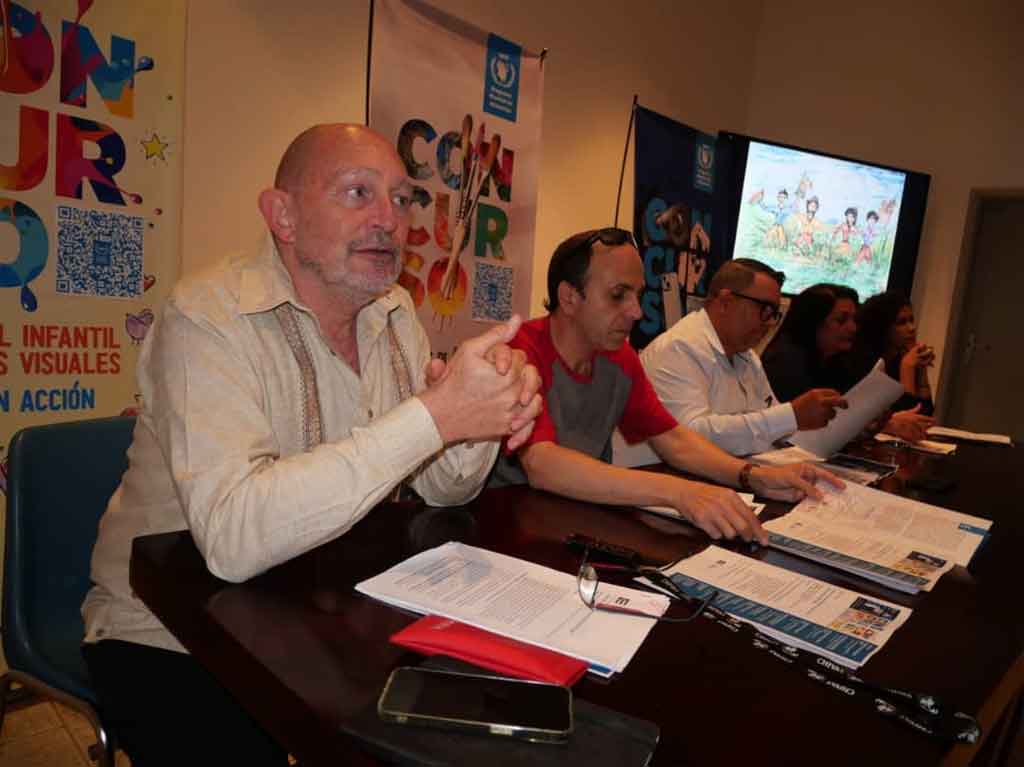
    An international congress focused on building happier, more sustainable cities through artificial intelligence and strategic communication concluded successfully in Havana. Hosted by the National Institute of Economic Research (INIE), the event brought together global experts to address urban development challenges in the digital age.

    The conference, jointly sponsored by Plaza de la Revolucion Cultural District, the University of Sao Paulo’s International Center for Innovation and Development of Thousand Cities (CIIDCMIL-USP), and the Center for Studies in Evaluation and Measurement of Communication and Marketing, achieved its primary objective of disseminating innovative approaches to urban happiness. According to Felipe Chibas-Ortiz, executive coordinator of CIIDCMIL-USP, the gathering specifically targeted overcoming cultural barriers and countering hate narratives through effective communication strategies.

    The comprehensive program featured expert panels examining media literacy, creative economy models, institutional ethics, and family dynamics. Additional sessions explored gender equality considerations, public health promotion, robotics integration, and practical guidance for developing AI-enhanced urban projects. The congress attracted participation from nine countries through both physical attendance and virtual engagement platforms.

    Distinguished participants included Cuban intellectual Miguel Barnet, Cuban Association of Social Communicators President Rosa Maria Gutierrez, INIE Director Maile Yiser, and University of Zaragoza Vice-Rector Carmen Marta-Lazo from Spain. UNESCO representation featured several high-level officials, including Paris Office Director Alton Grizzle and Media Literacy Network Director Manuel Perez Tornero.

    The event culminated in two significant cultural contributions: the presentation of the book ‘Thousand Cities: Challenges and Solutions for Sustainable Development in the Age of Artificial Intelligence’ and a special cartoon exhibition titled ‘Thanks to the Thousand Cities’ by renowned Brazilian artist Dorinho Bastos.

  • The Uruguayan brigade “Fidel Castro” traveled to Cuba with aid

    The Uruguayan brigade “Fidel Castro” traveled to Cuba with aid

    A contingent of Uruguayan citizens representing diverse segments of society has embarked on a humanitarian mission to Cuba, carrying both medical resources and a profound message of international solidarity. The group, formally designated as the ‘Fidel Castro’ brigade, departed from Carrasco International Airport in Montevideo with a cargo of essential medical supplies and pharmaceuticals meticulously packed in their luggage.

    Complementing the tangible aid, the delegation transported a financial contribution of approximately $17,000. This sum was accumulated through a nationwide fundraising campaign orchestrated by the Coordinating Committee in Support of the Cuban Revolution, which saw active participation from ordinary citizens, political groups, and various social organizations. These funds are expressly destined to bolster the Caribbean nation’s public health infrastructure.

    The brigade comprises a cross-section of Uruguayan society, including students, active workers, and retirees, all united by a common purpose. For many, like Lucia Moderneli, a sociology student at the University of the Republic, the journey represents the fulfillment of a deeply personal and political ambition. “I am fulfilling a political dream of expressing my support for the Cuban people, and a family dream, since my father always wanted to make this journey but couldn’t,” Moderneli explained in an interview with Prensa Latina.

    The mission is widely perceived by its participants as a reciprocal act of gratitude. For nearly two decades, Cuba’s Operation Miracle program has provided free ophthalmologic surgeries across South America, notably in Uruguay. Moderneli highlighted this legacy, expressing profound thanks on behalf of the estimated 130,000 Uruguayans—including her own grandfather—who have regained their eyesight through the skill and generosity of Cuban medical professionals. This initiative, she stated, is a modest effort to ‘return Cuba’s internationalism and cooperation with the world.’

  • Cubans residing in Nicaragua reiterate support for Venezuela

    Cubans residing in Nicaragua reiterate support for Venezuela

    The Cuban community residing in Nicaragua has issued a powerful declaration of solidarity with Venezuela, condemning what it describes as systematic aggression and destabilization campaigns targeting the Bolivarian nation’s sovereignty. The statement, disseminated through official social media channels, emerges amid heightened geopolitical tensions in Latin America.

    This proclamation strategically coincides with the 173rd anniversary of Cuban national hero José Martí’s birth, observed annually on January 28th. The timing underscores the deliberate invocation of Martí’s philosophical legacy, particularly his advocacy for Latin American unity and resistance against external intervention.

    The comprehensive statement articulates three primary concerns: the employment of unilateral coercive measures against Venezuela, coordinated disinformation campaigns designed to undermine democratic processes, and systematic attacks on the nation’s right to self-determination. These elements, according to the declaration, represent a concerted effort to disrupt regional stability.

    Drawing direct parallels between historical anti-colonial struggles and contemporary political challenges, the Cuban community in Nicaragua emphasized the enduring relevance of Martí’s vision. The statement characterized current events as a continuation of historical patterns of foreign intervention in Latin American affairs, necessitating renewed commitment to regional integration and mutual defense of sovereignty.

    Furthermore, the declaration reaffirmed Nicaragua’s alignment with Venezuela through the framework of regional cooperation alliances, highlighting existing bilateral agreements and diplomatic coordination mechanisms between left-leaning governments in the region.

    The statement concludes with an impassioned call for strengthened brotherhood between Cuban and Venezuelan peoples, framing this solidarity as both a moral imperative and strategic necessity in confronting perceived external pressures. This diplomatic communication represents the latest development in ongoing ideological alignment among certain Latin American nations advocating for reduced U.S. influence in the region.

  • Cuba celebrates World Day of African and Afro-descendant culture

    Cuba celebrates World Day of African and Afro-descendant culture

    Cuba’s top diplomat has publicly affirmed the nation’s profound cultural and historical connections to Africa, framing the relationship as one of shared heritage and familial bonds. In a statement released on social media platform X, the official characterized Cuban identity as the product of a dynamic fusion of diverse cultures, traditions, and religious practices cultivated over hundreds of years.

    The declaration emphasized that this rich national character stems from a long history of continuous exchange, solidarity, and fraternal ties between the Cuban people and the African continent. “We Cubans feel part of the African continent and children of Africa,” the Foreign Minister stated, underscoring a sense of shared destiny and belonging.

    This recognition coincides with the global observance of World Day of African and Afro-descendant Culture on January 24. The annual celebration, championed by UNESCO, honors the vast and vibrant cultural expressions originating from Africa and its diasporic communities worldwide. The event reinforces the international body’s core mission to advance respect for cultural diversity and human creative expression across the globe.

    This commemoration highlights Africa’s invaluable contribution to world heritage, positioning cultural appreciation as a fundamental pillar for achieving sustainable development, fostering mutual understanding, encouraging dialogue, and maintaining global peace.

  • Venezuela’s acting President highlights Program for Coexistence

    Venezuela’s acting President highlights Program for Coexistence

    Venezuela’s interim President Rodriguez has inaugurated an ambitious national security initiative, establishing a 100-day timeline to develop a comprehensive peace plan addressing the nation’s political, social, and economic dimensions. The launch ceremony brought together government ministers alongside representatives from academic, political, private enterprise, and social sectors, signaling a collaborative approach to national stability.

    President Rodriguez emphasized the program’s inclusive nature, noting that a “diverse and pluralistic group of Venezuelans” had already contributed substantial ideas toward what she described as “a common destiny.” The initiative will be administratively coordinated by Culture Minister Ernesto Villegas, with Professor Ana Maria San Juan appointed as executive secretary to oversee daily operations.

    A significant component of the peace initiative addresses economic stability, with Rodriguez highlighting that “peace also depends on economic peace.” The government has collected numerous proposals from entrepreneurs and business leaders, which will form an ideas bank to inform the developing National Plan.

    In a parallel confidence-building measure, Rodriguez announced the release of 626 individuals currently deprived of liberty, characterizing this action as part of Venezuela’s ongoing political process while acknowledging that some parties are attempting to manipulate the situation.

    The administration simultaneously conducted a dramatic demonstration as part of its “We Want Them Back” campaign. Thousands of drones illuminated the night sky over Fort Tiuna’s Military Academies in Caracas, projecting images of Nicolas Maduro and Cilia Flores in a public appeal for the presidential couple’s release.

  • Cabello: We will never stray from the path of Bolivar and Chavez

    Cabello: We will never stray from the path of Bolivar and Chavez

    Thousands of Venezuelan citizens converged in Caracas under heavy rainfall, staging a massive demonstration to demand the immediate repatriation of President Nicolás Maduro and First Lady Cilia Flores. The protestors allege that both figures were abducted by U.S. military forces exactly 21 days prior to the gathering.

    The mobilization, orchestrated by the United Socialist Party of Venezuela (PSUV), coincided with the 68th anniversary commemoration of the January 23, 1958 civic-military rebellion. Participants assembled at strategic eastern and western points throughout the capital before marching toward O’Leary Square, adjacent to the governmental headquarters at Miraflores Palace.

    During the emotionally charged event, PSUV leader Diosdado Cabello delivered a stirring address reframing the historical significance of the date. He characterized the original 1958 rebellion as “the ultimate betrayal of the Venezuelan people,” alleging that business magnates, political opponents, religious leaders, and imperialist forces conspired to undermine national sovereignty.

    Cabello articulated how this historical narrative shifted with the emergence of Commander Hugo Chávez, who exposed what he described as systemic exploitation of popular movements. The political leader affirmed the crowd’s unwavering commitment to the Bolivarian revolution, declaring that contemporary demonstrations symbolize “absolute loyalty to President Maduro and Cilia Flores” rather than remembrance of past betrayals.

    Emphasizing resilience following the January 3rd incident—described as a devastating blow provoking profound sadness, anger, and frustration—Cabello called for national unity and steadfast dedication to the Chavista political project. He concluded with assurances that external forces would never suppress the will of the Venezuelan people.

  • Ecuador: Warns of “silent dismantling” of state-owned oil company

    Ecuador: Warns of “silent dismantling” of state-owned oil company

    Ecuador’s oil industry is confronting a severe downturn, with official data revealing a significant 8.5% annual decline in crude production for 2025. Total output amounted to 127.4 million barrels, averaging just 349,167 barrels per day. This production slump has been compounded by a parallel decrease in domestic refining capacity, forcing the nation to dramatically increase its reliance on imported fuels. Imports surged by 16.8% year-on-year to 74.3 million barrels, a dependency that analysts warn undermines national energy security and places strain on the economy. The situation is further exacerbated by a drastic 72.97% contraction in public sector investment, with budget execution plummeting to $485.4 million compared to the previous year. The human cost of this crisis has also been severe, with 1,379 workers dismissed, constituting a 13.7% reduction in the industry’s workforce. Adding to these operational and financial concerns, serious legal questions have been raised regarding contracts signed by OCP Ecuador S.A., the state-managed entity overseeing the Heavy Crude Oil Pipeline since its transfer to public ownership on December 1, 2024. Industry groups are now issuing urgent calls for heightened scrutiny from both authorities and the public into the management of the country’s vital energy resources, cautioning that the current trajectory threatens to inflict irreversible damage upon the national oil industry.

  • Chile cancels energy project threatening astronomy

    Chile cancels energy project threatening astronomy

    A major conflict has emerged in Chile between renewable energy ambitions and astronomical research, pitting a green hydrogen initiative against one of the world’s most important astronomical observatories. AES Andes, the Chilean subsidiary of American energy multinational AES Corporation, has faced mounting opposition to its proposed INNA project—a green hydrogen and ammonia production facility planned for the Atacama Desert.

    The project, which entered Chile’s Environmental Impact Assessment System in 2024, has encountered significant regulatory hurdles and widespread objections from both domestic and international stakeholders. The controversy stems from the proposed location just kilometers from the town of Taltal, placing it in immediate proximity to the Paranal Observatory.

    Paranal represents one of the most critical ground-based astronomical facilities globally, housing the renowned Very Large Telescope (VLT) operated by the European Southern Observatory (ESO). The site is also currently constructing the Extremely Large Telescope (ELT), projected to become the world’s largest optical/near-infrared telescope upon completion. Scientists anticipate the ELT will revolutionize our understanding of the universe by capturing unprecedented images that could reveal new insights into cosmic history and evolution.

    The Atacama Desert has earned global recognition among astronomers for its exceptional observational conditions, combining high altitude, minimal atmospheric interference, and exceptionally dark skies—attributes that make it uniquely suited for cutting-edge astronomical research.

    Environmental assessors and scientific organizations have raised concerns that the INNA project could severely degrade these pristine conditions through multiple mechanisms: light pollution from facility operations, atmospheric emissions that could affect air clarity, and potential vibration impacts from industrial activity. The conflict highlights the growing challenge of balancing renewable energy development with the preservation of scientifically critical environments.