标签: Cuba

古巴

  • Who is unfamiliar with cancer?

    Who is unfamiliar with cancer?

    In the pediatric oncology ward of Cuba’s National Institute of Oncology and Radiobiology (INOR), life unfolds with heartbreaking fragility and extraordinary resilience. Here, children play amidst their battles with cancer, while medical professionals wage a daily war against both disease and scarcity. Dr. Mariuska Forteza Sáez, head of INOR’s Pediatric Oncology Department, leads a team that consistently achieves survival rates comparable to developed nations despite severe medication shortages and equipment limitations.

    The Cuban healthcare system faces unprecedented challenges in cancer treatment due to the longstanding US economic blockade. With one cancer death occurring every 20 minutes and 50,000 new cases diagnosed annually, the nation’s medical professionals must constantly adapt treatment protocols when first-line chemotherapy drugs are unavailable. Doctors frequently modify regimens, sometimes using less effective or more toxic alternatives when essential medications remain inaccessible.

    Dr. Luis Martínez Rodríguez, INOR’s director, emphasizes that while 40% of cancers could be prevented through lifestyle changes, the current economic situation has significantly reduced clinical research capabilities. From over 30 clinical trials, the institution now maintains only the most critical studies due to reagent shortages.

    Remarkably, Cuba has developed significant biotechnological capabilities despite these constraints. Dr. Elías Gracia Medina notes that 40% of the country’s cancer drugs are manufactured domestically, building on pioneering work that began with Cuba’s first monoclonal antibody development in the 1980s. The Center for Molecular Immunology (CIM) has become a leader in therapeutic vaccines and antibodies.

    The human impact extends beyond medication shortages. Patients struggle with transportation to hospitals, nutritional challenges, and even power outages affecting medical equipment. Dr. Carlos Alberto Martínez Blanco condemns the sanctions as ‘inhumane and genocidal measures’ that attack fundamental rights to life and healthcare.

    Through telemedicine collaborations with leading centers in Canada, Spain, Mexico, Russia, Japan, and China, Cuban oncology maintains its international connections. The nation’s healthcare professionals continue their sovereign commitment to treat patients, demonstrating that human determination can overcome even the most severe material limitations in the fight against cancer.

  • Material aid sent by Mexico arrives in Havana

    Material aid sent by Mexico arrives in Havana

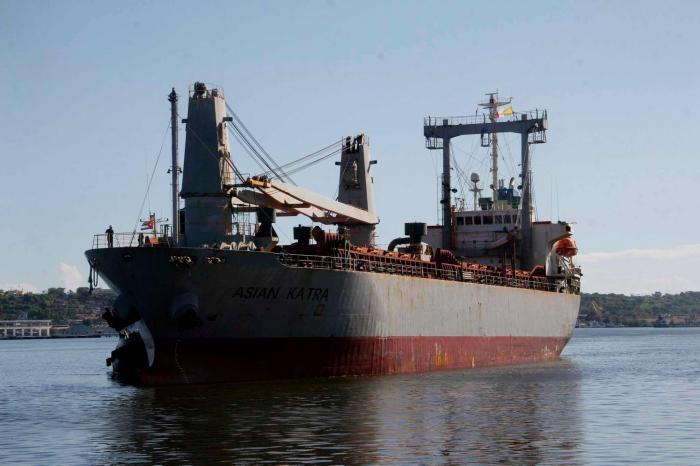
    In a significant demonstration of international solidarity, Mexican Navy vessels Papaloapan and Isla Holbox docked at Havana’s port on Thursday morning carrying substantial humanitarian aid for the Cuban people. The shipment, comprising essential food supplies, toiletries, and cleaning products, represents the Mexican government’s concrete response to Cuba’s ongoing economic challenges.

    Cuban President Miguel Díaz-Canal Bermúdez publicly acknowledged the gesture via social media, characterizing the assistance as emblematic of “the solidarity, friendship, and exemplary history of sovereignty and respect for the rights of others that distinguish Mexico.” His statement underscored the deep historical ties between the two nations.

    Betsy Díaz Velázquez, Cuba’s Minister of Domestic Trade, personally oversaw the reception of the aid and expressed profound gratitude to Mexican President Claudia Sheinbaum, the Mexican government, and its citizens. “We feel accompanied by Mexico, by its humanity, its solidarity, and its brotherhood,” she stated during the arrival ceremony.

    The minister specifically recognized the coordinated efforts of multiple Mexican institutions including the Ministry of the Navy, the Ministry of Foreign Affairs, the Embassy, and the Office of the Presidency in facilitating the complex logistical operation. She emphasized the particular importance of this assistance given the “intensified attempt to suffocate us” through tightened U.S. economic sanctions.

    This humanitarian delivery occurs against the backdrop of strengthened U.S. restrictions under the economic blockade, which Cuban officials describe as increasingly detrimental to civilian welfare. The Mexican government’s aid shipment not addresses immediate material needs but also serves as a diplomatic statement reinforcing Mexico’s independent foreign policy and commitment to South-South cooperation.

    The distribution mechanisms for the received supplies will be managed through Cuba’s domestic trade networks, ensuring the aid reaches populations most affected by current economic pressures.

  • Defending popular participation and control based on the country’s priorities

    Defending popular participation and control based on the country’s priorities

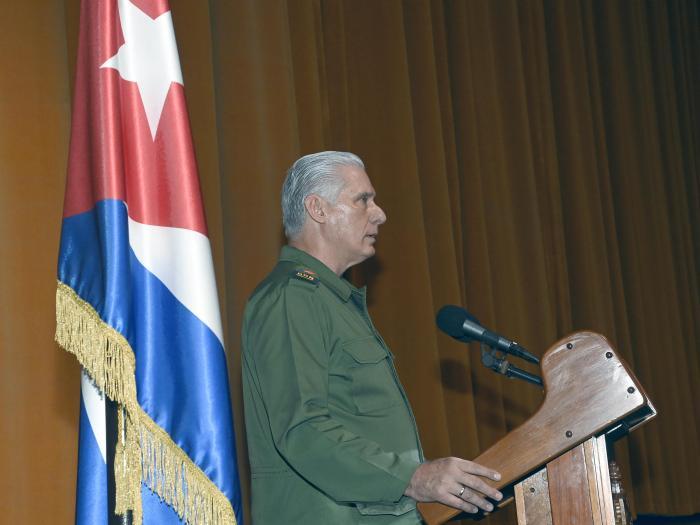
    In a significant governmental session held on February 11, Cuban President Miguel Díaz-Canel Bermúdez participated in a Council of State meeting focused on evaluating the nation’s economic reform agenda. The session, presided over by Council President Esteban Lazo Hernández and attended by Prime Minister Manuel Marrero Cruz, centered on thorough assessments of the Government Program designed to address economic distortions and stimulate growth.

    The gathering revealed substantial public engagement with the reform process, with officials reporting that approximately 76,172 community meetings had been conducted nationwide, generating an impressive 140,348 citizen proposals. This extensive consultation process demonstrates the government’s commitment to incorporating grassroots input into policy formulation.

    Prime Minister Marrero Cruz provided detailed insights into the implementation of parliamentary agreements concerning the Economic Plan and State Budget. Notably, he disclosed the development of Government Directives to combat severe fuel shortages that have challenged the Caribbean nation. The administration’s strategy emphasizes maintaining national vitality without compromising development objectives, while simultaneously minimizing population impact through endogenous resource utilization and foreign exchange diversification.

    President Díaz-Canel emphasized the critical importance of strengthening community engagement mechanisms and enhancing popular oversight at neighborhood levels. He advocated for intensified social program implementation and collaborative problem-solving approaches that leverage collective contributions from all societal sectors.

    Additionally, the Council evaluated the operational effectiveness of the National Assembly’s permanent working commissions and reviewed performance metrics from the Population Attention services at Auxiliary Offices, indicating a comprehensive governance review extending beyond economic matters.

  • Cuban scientists continue to deliver good news

    Cuban scientists continue to deliver good news

    In a significant scientific gathering at Havana’s Palace of the Revolution, Cuban President Miguel Díaz-Canel Bermúdez convened with the nation’s leading health experts to review groundbreaking progress in pneumococcal vaccine development. The meeting revealed extraordinary outcomes from Cuba’s vaccination initiatives, particularly noting that incidence rates among children aged one to four years have plummeted to zero since 2019.

    Dagmar García Rivera, Deputy Director of Research and Development at the Finlay Institute of Vaccines (IFV), presented compelling data demonstrating how Streptococcus pneumoniae remains the primary cause of bacterial infectious diseases in children under five globally. Despite existing vaccination programs, millions continue to die from pneumonia and related complications worldwide.

    The Cuban scientific team has developed an innovative approach to multivalent vaccines targeting multiple pneumococcal serotypes. Their research has produced a 7-serotype vaccine, an advanced 11-serotype candidate currently in clinical trials, and a pioneering 16-serotype vaccine in preclinical development.

    Dr. Yury Valdés Balbín, Director General of IFV, emphasized the unique capacity of Cuba’s healthcare system to conduct sophisticated clinical trials within primary care settings rather than hospitals. “Only a political system like ours has the capacity to coordinate all stakeholders,” Balbín stated, acknowledging the efforts of healthcare workers across Havana, Cienfuegos, and Santiago de Cuba.

    The most compelling evidence came from Project Leader María Eugenia Toledo Romaní, who revealed that after vaccinating over 90% of children aged 1-5 in Cienfuegos province, invasive disease rates dropped from 3.1-9.1 per 10,000 children to absolute zero. Notably, all pneumococcal cases occurring after 2019 were exclusively among unvaccinated children.

    The data further demonstrated that unvaccinated children face 3.48 times greater risk of ICU admission for severe pneumonia compared to vaccinated children. Vicente Vérez Bencomo, President of Finlay Vaccines S.A., concluded that despite these achievements, Cuban science continues to pursue technological leaps beyond even their 16-serotype vaccine, maintaining Fidel Castro’s principle: “We have to compete with the best.”

  • In the face of imperial harassment, solidarity among Cubans

    In the face of imperial harassment, solidarity among Cubans

    Amidst Cuba’s ongoing economic challenges, tobacco producers from Villa Clara province have emerged as beacons of community solidarity through a significant humanitarian contribution. These agricultural workers have generously donated 48 complete photovoltaic power modules designed to provide emergency electricity to critical healthcare facilities throughout the region.

    The comprehensive donation package, comprising advanced solar panels and power stations, will ensure uninterrupted operation at polyclinics, maternity wards, nursing homes, funeral services, and hospitals during power disruptions. This initiative represents the collective effort of local farmers who have personally allocated their savings toward addressing infrastructure vulnerabilities in their community.

    This marks the latest in a series of philanthropic actions undertaken by Villa Clara’s agricultural sector. Previous contributions have included hospital roof waterproofing projects, acquisition of climate control equipment, comprehensive facility renovations, and refurbishment of medical wards. These cumulative efforts have substantially improved living conditions for hundreds of children, elderly residents, and vulnerable community members.

    The movement has inspired participation from diverse economic sectors across the region, with both state enterprises and private businesses preparing additional donations of food supplies, medical equipment, clothing, and essential utensils for distribution to those most affected by current economic conditions.

    This demonstration of civic responsibility underscores the resilience of Cuban communities during difficult periods, highlighting how collective action and shared resources can effectively address critical public needs when institutional capacities are strained.

  • Firmness vs. Blockade: the formula of a friendly embrace

    Firmness vs. Blockade: the formula of a friendly embrace

    International condemnation mounts against United States economic policies toward Cuba as multiple nations and multilateral organizations express solidarity with the Caribbean nation. The coordinated responses challenge what numerous governments characterize as imperialist tactics designed to cripple Cuba’s economy and create humanitarian suffering.

    Mexican President Claudia Sheinbaum confirmed the dispatch of over 800 tons of humanitarian aid to Cuba, emphasizing her nation’s enduring solidarity. “Mexico will always stand in solidarity, seeking the best way to support the Cuban people,” Sheinbaum stated, while urging the US government to prevent further deterioration of Cuba’s humanitarian situation.

    Russia’s government denounced American tactics as “suffocating” measures causing severe difficulties for Cuba. Kremlin spokesman Dmitry Peskov confirmed ongoing discussions with Cuban officials about potential solutions and assistance measures. Russian Foreign Minister Sergey Lavrov reiterated Moscow’s “firm readiness to continue providing Cuba with necessary political and material support” during a telephone conversation with Cuban Foreign Minister Bruno Rodríguez Parrilla.

    China joined the chorus of criticism, with Foreign Ministry spokesperson Guo Jiakun declaring Beijing’s “firm support for Cuba in defending its national sovereignty and security.” China condemned practices it described as inhumane measures that deprive Cubans of their right to subsistence and development.

    Venezuela’s government rejected US executive orders imposing punitive measures on countries trading with Cuba, calling the designation of Cuba as a national security threat “an absurdity.” Brazil’s President Luiz Inácio Lula da Silva characterized US policy as a “massacre fueled by US speculation” lasting over six decades, pledging Brazilian solidarity and support.

    The Non-Aligned Movement, G77 plus China, and the Bolivarian Alliance for the Peoples of Our America (ALBA-TCP) issued formal statements criticizing the extraterritorial nature of US measures. These organizations emphasized the measures’ violation of UN Charter principles and international law, while reaffirming their unwavering solidarity with Cuba.

    United Nations spokesperson Stéphane Dujarric expressed concern about Cuba’s growing fuel shortage and its impact on the population, confirming the UN’s monitoring of the situation and coordination with the Cuban government to provide support including food, water, sanitation, and medical care.

    Pope Leo XIV and Arab League Secretary General Ahmed Aboul Gheit additionally voiced concern over escalating US aggression against Cuba, joining the widespread international call for avoiding actions that increase suffering among the Cuban people.

  • State Council approves relief from work duties for delegates of People’s Power whose responsibilities allow it

    State Council approves relief from work duties for delegates of People’s Power whose responsibilities allow it

    In an unprecedented move addressing Cuba’s severe economic and political challenges, the Council of State has authorized the temporary release of municipal delegates from their regular employment duties to strengthen connections with constituents. The decision, formalized through Agreement No. 556-X on February 9, 2026, comes as the nation grapples with fuel shortages, energy system failures, and deteriorating public services exacerbated by recent U.S. government measures.

    Juan Esteban Lazo Hernández, President of the National Assembly of People’s Power, announced the measure citing constitutional provisions that mandate delegates to balance their elected responsibilities with community needs. The resolution acknowledges the critical role delegates played during the pandemic and subsequent weather emergencies, highlighting their established capacity for maintaining direct constituent communication.

    Under the agreement, Municipal Assembly presidents will assess which delegates can be temporarily relieved from their professional occupations based on work flexibility considerations. Those unable to leave their jobs will maintain constituent relationships primarily during non-working hours, with enhanced emphasis on community participation in problem-solving initiatives.

    The directive establishes a comprehensive framework for crisis management communication, requiring delegates to regularly update constituents about national developments while collecting community feedback and proposals. People’s Councils will intensify oversight of local entities, particularly focusing on food production, energy distribution, and price control measures implemented by the government.

    Local administrations must actively support the initiative despite current resource constraints, with the Commission for Attention to Local Organs of People’s Power monitoring implementation progress. The measure represents one of Cuba’s most significant adjustments to grassroots governance mechanics since the 2019 adoption of Law No. 132 governing Municipal Assemblies structure and functionality.

  • Guatemalans denounce US lies to attack Cuba’s example

    Guatemalans denounce US lies to attack Cuba’s example

    In a penetrating analysis of U.S. foreign policy, psychologist and political commentator Marcelo Colussi examines the enduring American campaign against Cuba, revealing deeper motivations beyond conventional geopolitical interests. Colussi contends that Washington’s persistent hostility toward the Cuban revolution—spanning over six decades and multiple administrations—represents a unique case in the annals of imperial aggression.

    According to Colussi, the United States’ relentless pursuit to undermine Cuba’s socialist system defies typical patterns of imperial behavior where resource exploitation or business interests typically drive foreign intervention. Instead, Cuba presents an exceptional circumstance: a nation that has constructed a functioning socialist model demonstrating remarkable sovereignty and dignity directly within the sphere of American influence.

    The analyst documents how successive U.S. administrations, regardless of political affiliation, have consistently manufactured justifications for their imperial adventures. This pattern of constructing absurd narratives, Colussi argues, serves as a standard operating procedure in Washington’s foreign policy toolkit. Each fabricated pretext, no matter how logically untenable, effectively serves its purpose in legitimizing aggressive actions.

    Colussi particularly emphasizes the extraordinary nature of the ongoing economic blockade—a measure globally condemned yet persistently intensified. Despite worldwide repudiation and numerous United Nations resolutions demanding its termination, this coercive economic warfare continues to target the Cuban people. The psychologist notes that after exhausting countless tactics to destabilize the Cuban system, the current administration under Donald Trump has remarkably classified the island nation as an “unusual and extraordinary threat”—a designation that reveals more about American anxiety than Cuban aggression.

    This enduring confrontation, Colussi concludes, ultimately demonstrates Washington’s profound discomfort with any successful alternative to capitalist hegemony, especially when developed so close to its borders.

  • Cuba to host 2nd International Biennial of Political Humor

    Cuba to host 2nd International Biennial of Political Humor

    The National Council of Visual Arts (CNAP) of Cuba has officially launched its global call for entries for the 2nd International Biennial of Political Humor, inviting artists, illustrators, cartoonists, and humorists worldwide to submit works that critically examine globalization and its multifaceted impacts through satirical expression. The submission window remains open until March 31, offering a platform for creative commentary on contemporary global phenomena.

    Prospective participants must deliver their digital submissions in JPG format, meeting specific technical requirements of 300 dpi resolution with maximum side dimensions of 2400 pixels. All entries must be sent to the official biennial email address, bienalhumorpolitico2cuba@gmail.com, accompanied by comprehensive documentation including the creator’s full name, artistic pseudonym, country of origin, work title, complete residential address, email contact, and telephone number.

    An expert jury will evaluate all qualified entries to select three primary prize winners, with all decisions rendered as final. The most exceptional and representative pieces will receive prominent display in the main exhibition alongside complementary collateral shows throughout the event. Selected artworks may additionally feature in various promotional materials and official biennial publications, with full attribution to the originating artists and strict adherence to intellectual property protections.

    Organized through a collaborative effort between Cuba’s Ministry of Culture, the National Council of Visual Arts, and the cultural publication La Jiribilla, the biennial will incorporate both visual exhibitions and theoretical discussions. The programming will include specialized panels addressing pertinent issues within cartooning practice and the biennial’s thematic focus on globalization, creating a multidimensional dialogue between artistic expression and critical discourse.

  • Solidarity campaign in Belgium with Cuba in the face of US aggression

    Solidarity campaign in Belgium with Cuba in the face of US aggression

    In a striking visual protest against American foreign policy, the European Commission’s Berlaymont building in Brussels became the canvas for a dramatic projection campaign. Utilizing advanced video mapping technology, activists emblazoned the structure’s façade with messages reading “Hands Off Cuba” and “Stop the US Blockade.”

    The demonstration was orchestrated by the Belgian association Cubanismo.be, which condemned what it characterized as the Trump administration’s intensified efforts to economically strangle the Caribbean nation. The group specifically highlighted recent oil embargo measures that compound the six-decade-long economic, commercial, and financial blockade against Cuba.

    Protest organizers accused Washington of deliberately targeting essential services, alleging attempts to paralyze hospital operations and deprive Cuban citizens of basic energy and food resources. Cubanismo.be representatives framed this escalation as retaliation for Cuba’s continued resistance to American imperialist policies.

    “While the United States exports conflict worldwide, Cuba exports international solidarity,” declared one member during the event, referencing the nation’s deployment of medical personnel across the globe during the COVID-19 pandemic.

    The projection protest followed a Saturday gathering at Brussels Central Station where participants in the “Hands Off Cuba” campaign demonstrated their support for the Cuban people. Juan Antonio Fernandez, Cuba’s ambassador to Belgium and the European Union, expressed official gratitude for the solidarity shown in response to what he termed “Trump’s crusade” against his nation.