
A shocking daylight carjacking carried out by two armed men has rattled Belize, after the assailants ambushed a local businessman on the Philip Goldson Highway just outside Sandhill Village, according to Belizean law enforcement authorities. The violent incident, which unfolded on September 26, 2026, represents an unusually bold criminal act on a major Belizean highway, and investigators are still working to track down the two attackers who remain at large as of Monday.\n\nAssistant Commissioner of Police Hilberto Romero, head of the National Crimes Investigation Branch, confirmed the details of the terrifying attack in a press briefing. The victim, identified as Sandeep Kumar, told police he was traveling along the highway when another vehicle began tailoring his car, and he soon heard gunshots fired in his direction. The suspects’ vehicle then pulled directly in front of Kumar, forcing him to stop. Two armed men exited their vehicle, struck Kumar in the head with a firearm, dragged him out of his own car, and fled the scene in the stolen vehicle heading toward Belize City.\n\nResponding officers launched an immediate manhunt and search operation, and recovered both the stolen car and the suspects’ getaway vehicle abandoned in the Maxboro area shortly after the attack. Forensic investigators have already processed both vehicles for DNA, fingerprint, and other forensic evidence, Romero confirmed. The getaway car, which belongs to a rental company based in Belize’s Cayo District, has already been formally identified by authorities, though the two suspects remain missing.\n\nLaw enforcement has issued a public warning that the two attackers are considered armed and extremely dangerous, and urged residents across Belize District to remain vigilant in the coming days as the investigation moves forward. Community members are asked to contact Belizean police immediately if they observe any suspicious activity in their neighborhoods or have information that could help lead to the arrest of the suspects.\n\nWhile highway carjackings remain rare in Belize, investigators say they are working to determine whether this brazen public attack signals a worrying shift in the pattern of criminal activity across the country. This report is adapted from a transcribed evening television news broadcast originally published online.
标签: Belize
伯利兹
-

Deadly Warning at Western Border; Customs Officer Threatened
A brazen death threat targeting a senior Belizean customs official has triggered an urgent cross-agency criminal investigation at one of the country’s most high-traffic western border crossings, with authorities ramping up security amid ongoing uncertainty over who is behind the intimidation attempt.
When staff reported for duty at the border checkpoint on the morning of September 28, 2026, they discovered a handwritten chilling message pinned at the entry point. The warning, written in Spanish, was explicitly addressed to veteran customs officer Luis Betancourt, who only weeks earlier assumed leadership of operations at the strategic crossing. The note read simply: “You leave or you die.”
The western border between Belize and Guatemala has long been a hotspot for rampant smuggling operations and other cross-border illicit activity, a reality that has put enforcement officers posted to the region at heightened risk of retaliation from criminal networks. Investigators have not yet confirmed whether the threat originated on the Belizean side of the boundary or from Guatemalan territory, but law enforcement officials have classified the incident as a severe security risk that requires full investigative resources.
In comments to reporters, Assistant Commissioner of Police Hilberto Romero, who leads the National Crimes Investigation Branch, outlined the early steps of the probe. “This morning, police responded to the call at the customs cargo area, where they found a threatening message scrawled on a piece of cloth placed at the gate,” Romero explained. “Forensic teams have already processed the scene for evidence, and we are now working through surveillance footage to identify who left the material.” When asked if monitoring systems covered the location where the threat was found, Romero confirmed that cameras are active in the area, and all footage is currently under review by investigative teams.
Rear Admiral Elton Bennett, CEO of Belize’s Ministry of Home Affairs, noted that the investigation remains in its early stages, with dozens of open questions remaining about the origin and motivation for the threat. “At this point, there is still a great deal of uncertainty,” Bennett stated. “The Belize Police Department is collaborating closely with customs authorities and other partner agencies to canvass the area, collect witness statements, and pull intelligence from both surveillance footage and on-the-ground interviews.”
When pressed about whether the threat likely originated from criminal groups operating across the Guatemalan border, Bennett declined to speculate, saying it would be premature to draw conclusions before evidence is reviewed. “Regardless of where the threat came from, this incident has prompted a significant boost in security vigilance across the entire border region,” Bennett added. “When incidents of this nature occur in such a sensitive, high-stakes location, we coordinate closely with all relevant stakeholders and share information as it develops to protect our personnel and secure the border.”
As the investigation progresses, Betancourt has not yet issued a public statement on the threat. Local security observers note that the intimidation attempt comes amid a renewed crackdown on smuggling at the crossing that Betancourt was brought in to lead, raising unconfirmed speculation that the threat may be retaliation for the officer’s enforcement work, a theory investigators are expected to explore as part of their ongoing inquiry.
-

Illegal Guatemalan Military Flight Reignites Border Tensions
# Unlawful Guatemalan Military Flight Reignites Long-Simmering Border Tensions Between Belize and Guatemala Ahead of ICJ Hearings
Published: September 28, 2026
A decades-long territorial dispute between neighboring Central American nations Belize and Guatemala has flared into a new international confrontation after Belize accused Guatemala of sending an unauthorized military aircraft into its sovereign airspace — an incident that has already reshaped the diplomatic landscape ahead of a landmark International Court of Justice (ICJ) ruling scheduled for 2027.
The incident unfolded on September 25, when a Guatemalan military Pilatus PC-12 NG aircraft entered Belizean airspace without prior authorization or clearance. According to Belizean officials, the aircraft disabled its transponder mid-flight, causing its radar signal to vanish while it traversed airspace near popular coastal areas Caye Caulker and Lighthouse Reef, before exiting Belizean territory without any explanation from Guatemalan authorities.
Less than 48 hours after the incursion, Belizean Prime Minister John Briceño brought the accusation directly to the United Nations General Assembly, framing the incident as more than an isolated violation of international aviation rules. In his formal address, Briceño emphasized that the unauthorized flight is part of a broader pattern of provocative actions by Guatemala along the contested Sarstoon River border, where Guatemalan state vessels and personnel have repeatedly operated in what Belize recognizes as its territorial waters.
“This incursion is not an isolated one. It forms part of a continuing pattern in which Guatemalan state vessels and personnel operate unlawfully in Belizean territorial waters of the Sarstoon River, which forms part of Belize’s border with Guatemala, in defiance of obligations binding on both parties to refrain from any action capable of aggravating or extending the dispute presently before the International Court of Justice,” Briceño told the assembly.
The Prime Minister warned that the escalating provocative actions threaten to undermine the authority of the ICJ ahead of oral hearings scheduled to begin in February 2027, and erode ongoing efforts to reach a peaceful, binding resolution to the territorial conflict that has divided the two nations for more than a century. He called on Guatemala to immediately end all cross-border incursions across air, land and sea, comply fully with its obligations under the UN Charter, the Chicago Convention on International Civil Aviation, and Organization of American States (OAS) confidence-building agreements, and respect the integrity of the upcoming ICJ judicial process. Briceño also requested increased monitoring from both the UN and OAS to prevent any member state from using military intimidation to sway judicial proceedings.
In a swift rebuttal delivered from the UN floor, Guatemala categorically denied the entire allegation. Paola Andrea Morris Garrido, an advisor with Guatemala’s Permanent Mission to the UN, rejected the accusation outright, stating “This flight never happened. At all times, Guatemala has respected its obligations on the basis of the UN Charter, including Article two, paragraph four.”
Guatemala has called on the OAS’s local border office to launch a formal investigation into what it calls a “supposed incident,” and has accused Briceño of deliberately spreading misinformation to influence public opinion ahead of the ICJ hearings. Garrido further countered that Belize’s decision to raise the issue at the UN General Assembly is itself a violation of the 2005 confidence-building agreement between the two nations, arguing that the UN body is not the proper forum for disputes already pending before the ICJ. To date, the Guatemalan government has not released any official records or details addressing the flight to refute or confirm Belize’s claims.
This latest confrontation follows a string of rising tensions along the Sarstoon River border in recent months, as both nations prepare for the ICJ’s binding ruling. Briceño reaffirmed Belize’s full confidence in the judicial process, stating the country expects a final ruling that will establish internationally recognized, secure borders between the two states. In his broader address to the General Assembly, the Prime Minister also highlighted priorities for small developing nations, including climate change action, reparatory justice, and greater global representation for small states, while voicing support for international action on issues including the crises in Haiti, the situations in Cuba and Palestine, and cross-strait relations involving Taiwan.
News Five’s Britney Gordon contributed to this report from the field.
-
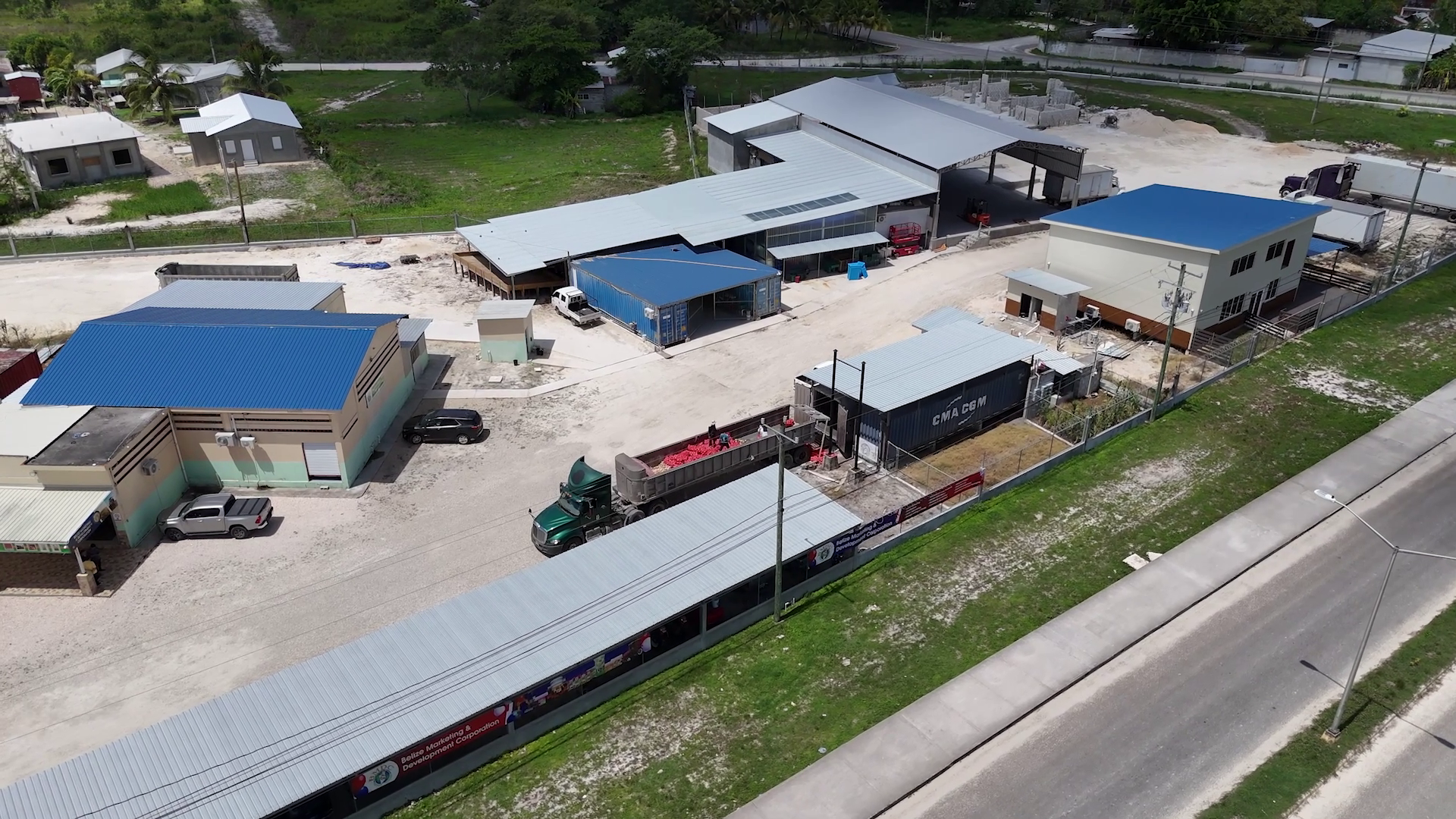
Wholesalers Challenge BMDC’s Grip on Imported Vegetables
In a growing controversy roiling Belize’s fresh produce market, independent wholesalers and municipal vendors are openly challenging the Belize Marketing and Development Corporation (BMDC) over its exclusive grip on key imported vegetable imports, a stranglehold they claim has forced prices upward for everyday consumers across the country. The dispute, which dates back months of quiet frustration among market actors, has now moved into the public eye, with critics labeling the state-controlled body’s position an illegal and harmful monopoly that squeezes household budgets. News Five’s investigative reporter Paul Lopez recently gained on-the-ground access to BMDC’s core import processing facility in Orange Walk Town to unpack how the current system operates and where the fault lines between stakeholders lie.
-
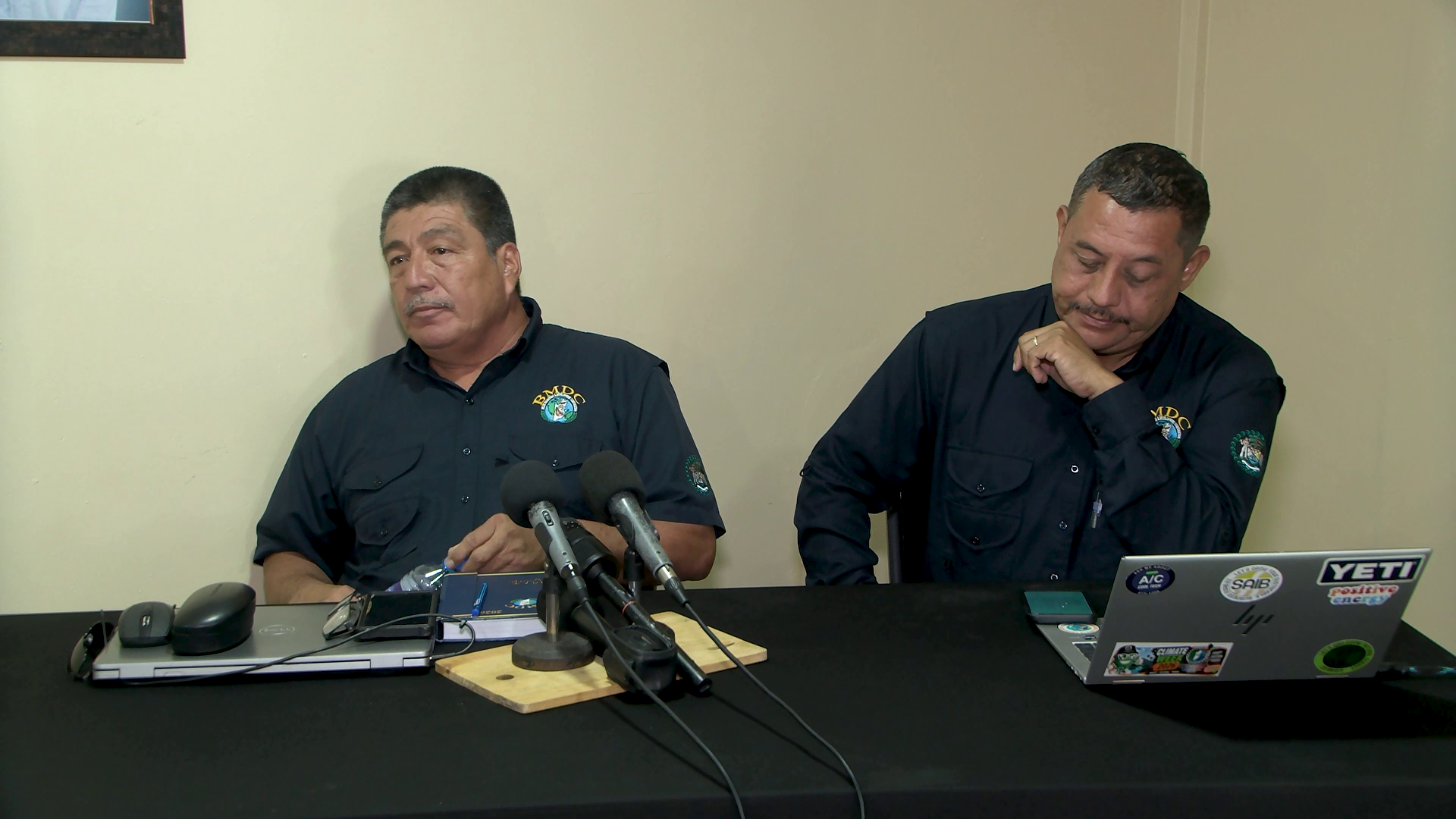
Is BMDC Middleman Costing Consumers More?
As consumers across the country continue to grapple with soaring price tags for fresh fruits and vegetables, public scrutiny has shifted to the third-party service arrangements that underpin BMDC’s exclusive produce import program. At the center of the debate is Julio Castillo, a logistics operator who manages critical end-to-end functions for the agricultural marketing board’s imported goods, including product consolidation, packaging, quality inspection and final delivery to BMDC facilities.
The core question driving public discussion is whether this contracted third-party arrangement is adding unnecessary markup costs that ultimately get passed down to everyday shoppers at grocery stores and market stalls. In a recent on-camera interview with reporters, BMDC administrator Valentin Carillo pushed back on framing Castillo as a traditional profit-taking middleman, clarifying his official role within the organization’s import supply chain.
Carillo explicitly stated that BMDC itself did not issue the contract to Castillo, noting that the agreement was arranged directly by the Ministry of Agriculture. When pressed by reporters to clarify whether Castillo functioned as a middleman, Carillo reclassified him as a contracted service provider, not an intermediary seeking margin on the produce itself. “We don’t have a middleman, we have a service provider,” Carillo told reporters, adding that Castillo’s work has proven highly efficient for the board’s operations.
When asked how Castillo was selected for the role, Carillo acknowledged he had no involvement in the hiring process. “When I came in, he was already here,” he explained. Carillo went on to outline the full scope of Castillo’s responsibilities, which covers logistics operations across northern import routes stretching from Mexico City to Puebla. His duties include consolidating incoming produce shipments, sourcing all required packaging materials, and ensuring that products reach BMDC facilities intact and meeting quality standards. Critically, Carillo noted that Castillo assumes full financial responsibility for any losses that occur during transit—including incidents like truck accidents, cargo theft, or driver hijackings—with no cost passed to BMDC.
When asked about payment, Carillo confirmed that Castillo receives a pre-negotiated service fee through BMDC’s operational budget, a structure that has led to questions about whether the fee structure inflates overall import costs that are ultimately reflected in consumer prices. This report is a transcribed excerpt from an evening television news broadcast, with all dialogue transcribed accurately per standard journalistic practice. A full recording of the newscast is available on the outlet’s digital platform.
-

BMDC Says It’s Profitable, But Is It Accountable?
In a recent on-the-record interview for an evening television broadcast, published online September 28, 2026, top leadership of the Belize Marketing Development Corporation (BMDC) has claimed the state-run agricultural marketing board is now operating as a financially self-sufficient, profit-generating entity that no longer requires taxpayer-funded government subsidies. But the admission that full detailed financial figures remain restricted from public view has raised new questions about the statutory body’s transparency and accountability to the public it serves.
BMDC Administrator Valentin Carillo defended the organization’s financial standing in the interview, noting that current leadership made independent annual auditing a top priority when taking office. Carillo explained that the agency’s financial records were in such disarray when the new administration took over that a complete initial audit was impossible the first year. Since that time, the agency has completed two full independent audits, and a third annual audit is currently in progress, with auditors already completing their preliminary field work, per Carillo. He added that annual independent audits are now a formal requirement set by the BMDC board, putting the agency on what he frames as a business-like operational footing.
When pressed by interviewer Paul Lopez to share concrete public figures for annual net profit that the agency has generated over the past two completed audit cycles, Carillo declined to release full detailed data, claiming that the disclosure of finalized financial numbers falls outside his level of authority. Carillo explained that audited financial statements are first reviewed and approved by the BMDC board of directors, before being passed to the agency’s CEO and ultimately sent to the relevant government minister for review. When pressed again to share at least a rough estimate of the previous year’s profit, Carillo offered a ballpark figure of approximately 1 million U.S. dollars.
The original broadcast notes that this report is the first in a series examining BMDC’s operations, with a follow-up segment planned for a future newscast that will explore how the statutory body has changed and evolved over the past five years. This report is a verbatim transcript of the original televised interview, with all Creole-language statements transcribed using a standardized spelling system for accessibility.
-
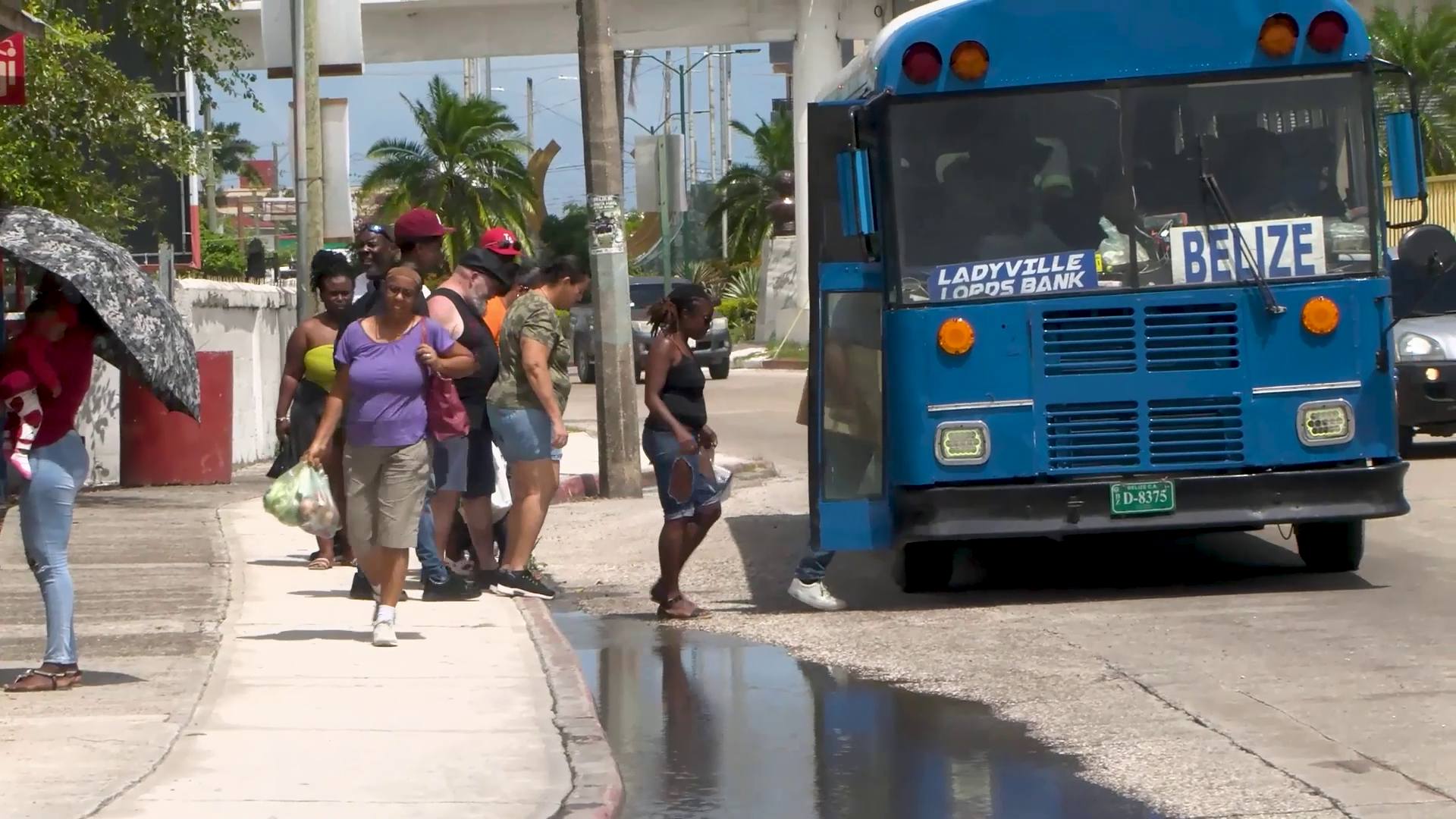
Belize Bus Association Changes Leadership Amid Industry Shifts
As Belize’s public bus industry grapples with sweeping regulatory changes, mounting operational costs, and the growing footprint of the state-owned National Bus Company, a long-time industry veteran has stepped into the top leadership role of the Belize Bus Association (BBA) to guide independent operators through a period of unprecedented uncertainty.
Froylan Gilharry Jr., co-owner of the local Venus Bus Line, has taken over the BBA presidency from Philip Jones, who stepped down from the role just one year into his term following successful negotiations to extend the Belize government’s critical diesel subsidy program for private bus operators.
In a phone interview, Gilharry outlined his core priority: amplifying the voices of small, independent bus owners who he argues have long been sidelined by structural flaws in the nation’s transportation governance. He pointed to the configuration of Belize’s Transport Board as a long-standing unaddressed issue, noting that the current structure fails to ensure proper representation for the stakeholders who bear the brunt of industry challenges – bus owners, commuters, and financial partners alike. “It doesn’t matter which administration is in power, they have never fixed this structural problem,” Gilharry explained. “Stakeholders who actually feel the impact of every policy decision should be at the table when solutions are being shaped.”
Jones, who formally stepped down on September 27, 2026, pushed back against growing industry speculation that his exit was tied to tensions between the BBA and the government, stemming from his separate government contract for school bus services. He emphasized that his decision to resign was driven exclusively by growing personal and business commitments that demanded his full attention. “I had my school bus routes before I was elected BBA president, so that claim has no merit,” Jones clarified. “I’m launching a new business that requires all of my time and energy, and it would be unfair to BBA members for me to hold the presidency without being able to give the role 100% of the effort it requires.” Jones also rejected claims the BBA had faced government pressure during his tenure, noting that no member had been targeted or disadvantaged because of their political, religious, or professional positions within the association.
The most contentious issue facing the industry today is the expansion of the state-backed National Bus Company, which has deepened divisions between public and independent private operators. Gilharry explained that many independent family-run operations, which have been built over decades by local owners, are reluctant to integrate into the National Bus Company because the government has yet to release a detailed, transparent business plan for the entity. Many operators fear integration will lead to them losing the independent businesses they have spent generations building.
Gilharry also highlighted the uneven playing field created by government concessions granted to the National Bus Company, benefits that have never been extended to independent private operators. The National Bus Company receives generous financial support, development concessions including multi-year tax holidays on fuel, tires, and other critical operational inputs, plus exclusive access to high-demand routes, advantages that put independent operators at a significant competitive disadvantage. “It’s absurd to offer all these benefits to the state operator and then pressure independent owners to join, when we’ve never had access to the same supports,” Gilharry noted.
Looking ahead, the new BBA president said the association has not yet scheduled formal talks with the Belizean government, but plans to request meetings with Cabinet and other key stakeholders to open negotiations on the core issues impacting the nation’s entire public transportation network. This report was prepared by Britney Gordon for News Five, Belize.
-
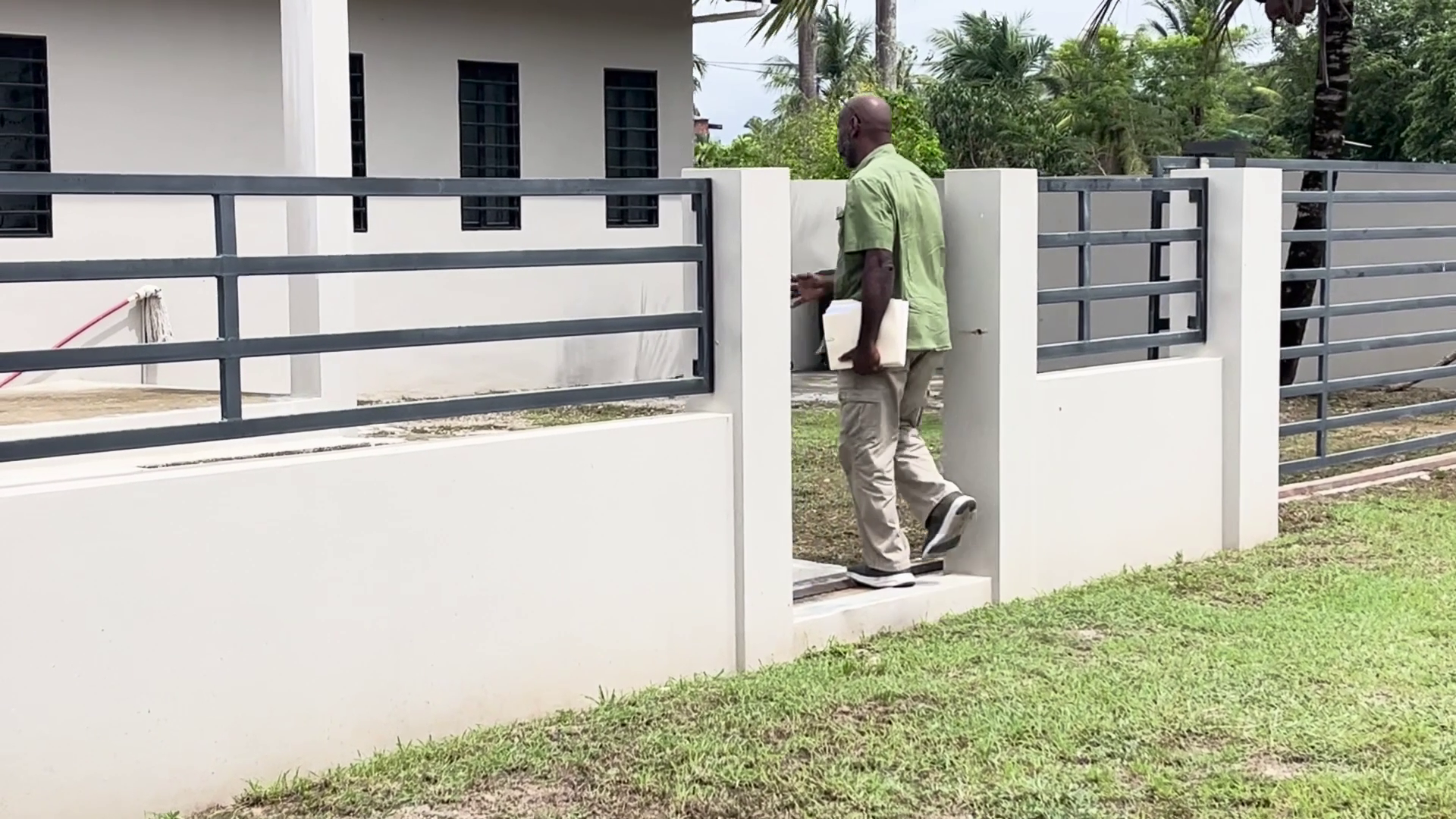
Broaster Takes Evidence Before Integrity Commission
Belize’s high-profile Ministry of Defense procurement corruption scandal is now advancing on two parallel investigative tracks, as a key opposition figure has appeared before the country’s Integrity Commission to give formal testimony.
The inquiry centers on long-simmering corruption allegations leveled against Oscar Mira, and as the Office of the Auditor General prepares to deliver its initial preliminary report in the coming days, the Integrity Commission has continued to move forward with its own probe into the claims.
News Five has confirmed that Edward Broaster, the United Democratic Party (UDP) caretaker representative for the Belize Rural Central constituency, gave sworn evidence to the anti-corruption body on September 28, 2026. This investigation traces its origins back to late June, when Broaster first brought the allegations to light by submitting dozens of official invoices to the commission. These documents reportedly show that the Ministry of Defense made hundreds of separate payments to private businesses that are connected to Mira’s siblings.
Following a preliminary review of the submitted materials, the Integrity Commission concluded that Broaster’s evidence met the threshold required to open a full formal investigation into the claims. While it is still too early to assess what impact Broaster’s latest testimony will have on the commission’s final conclusions, his public appearance before the body confirms that the long-awaited inquiry is actively progressing.
Currently, multiple overlapping reviews into the scandal are still ongoing. To date, the unfolding controversy has raised widespread questions about public procurement oversight in Belize’s defense sector, but no definitive final findings have been released by any of the investigating bodies.
-
Armed Robbers Raid Business in Independence Village
In an audacious daylight criminal incident that has sparked law enforcement investigation in Belize’s Stann Creek District, a four-person armed gang robbed a local business in Independence Village on a Sunday, making off with a licensed pistol, an undisclosed sum of cash, and critical business documents before fleeing the scene. No people were harmed in the attack, according to official updates from Belize’s National Crime Investigation Unit.
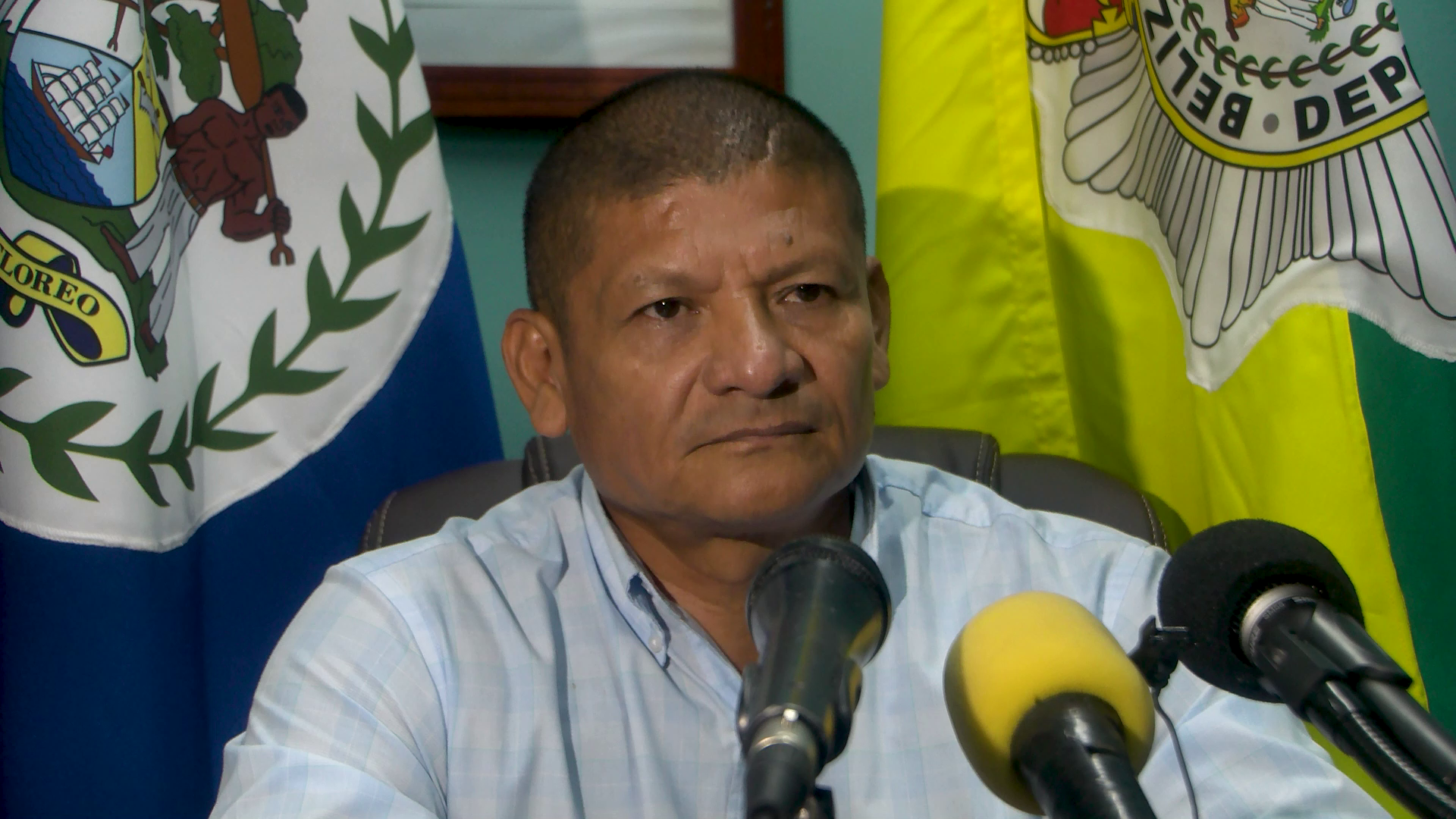
ACP Hilberto Romero, head of the national investigative agency, confirmed the details of the heist in an official briefing. The target of the attack was CIB Brewery, owned by Kang Young, who was present at the location when the robbery unfolded. Romero recounted that the suspects arrived at the brewery in a Kia sedan, before all four armed individuals exited the vehicle and confronted Young directly. Brandishing their weapons, the gang held the owner at gunpoint, forced him to hand over the keys to the establishment’s safe, and cleared the container of all valuables and documents. Among the stolen property was Young’s privately owned 9-millimeter licensed firearm.
Immediately after taking the loot, the perpetrators fled the brewery premises before any coordinated response could be organized. While the gang itself remains at large as of the latest update, law enforcement teams were able to track down and recover the getaway vehicle abandoned at a banana plantation located in the nearby Bella Vista area. As the investigation into the robbery continues, all stolen property – including the firearm, cash, and documents – remains unrecovered. Police have not yet announced any arrests or named persons of interest in connection with the incident. This report is based on a transcribed transcript of a television news broadcast focused on criminal activity in the Stann Creek District.
-
Was Approved Design Ignored at Canery Wharf Near Corozal Central Park?
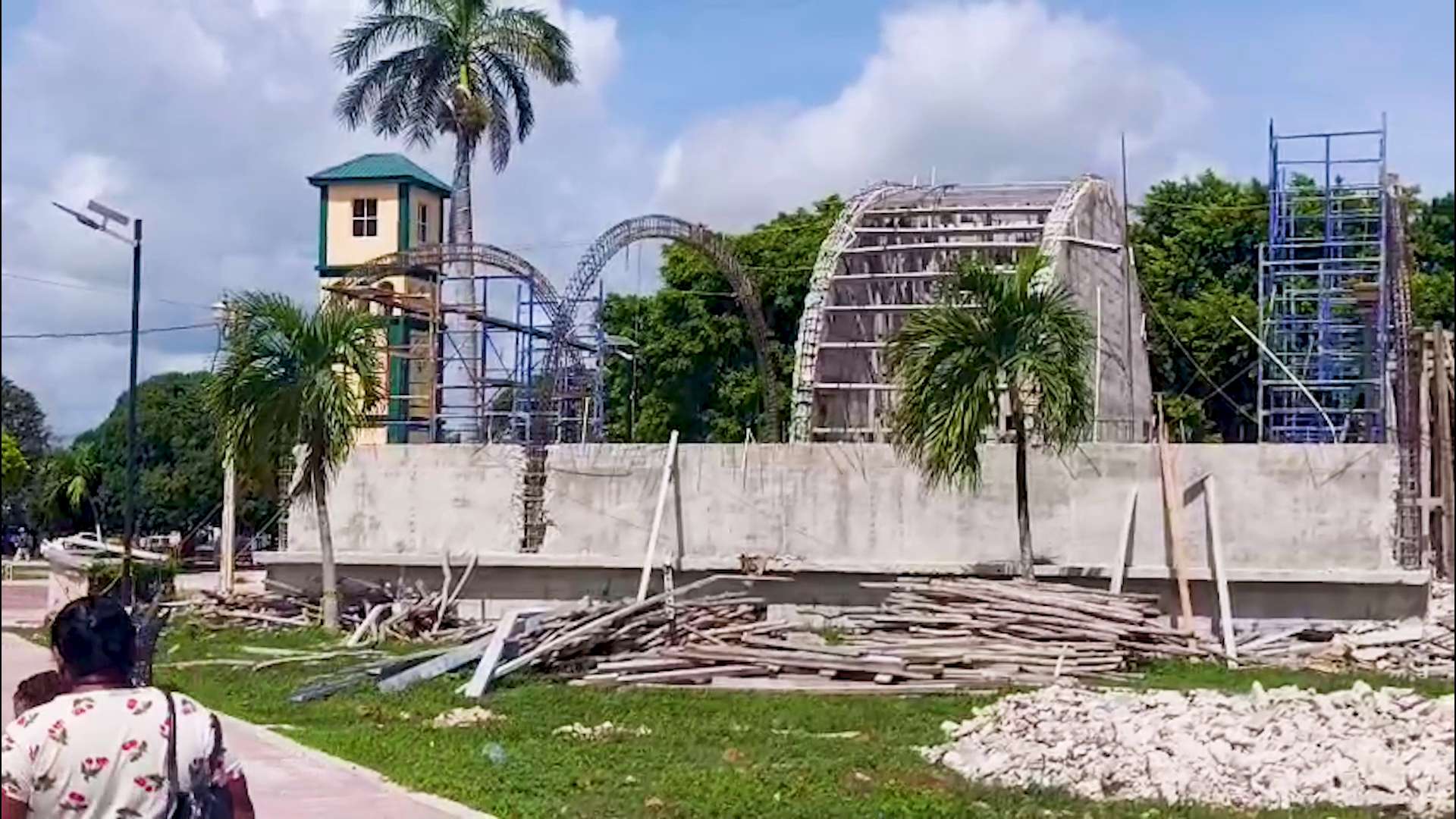
Months of work on a key waterfront component of the highly anticipated Corozal Central Park revitalization project has come to a halt, as crews began demolishing defective sections of Canery Wharf this week after an independent engineering review uncovered dangerous structural flaws linked to construction that deviated from the officially approved design plans. The unexpected setback has triggered widespread public scrutiny of construction quality controls, project oversight protocols, and lingering uncertainty over who will bear the financial cost of fixing the costly mistakes.
Local officials have moved quickly to reassure residents that the structural issues are isolated exclusively to the wharf segment of the broader park renovation, and do not pose any risk to other completed or ongoing parts of the project. In a press briefing Thursday morning, Corozal Bay Area Representative Thea Garcia Ramirez confirmed that corrective construction work is already actively underway, framing the discovery of flaws as evidence that the project’s oversight system is working as intended.
“I know community members have a lot of questions about what went wrong, and that’s completely understandable,” Ramirez told reporters. “Like any large infrastructure project, setbacks can happen occasionally. That is exactly why we put independent supervision systems in place. The supervising engineers did their job: they caught the defects early, before the park opened to the public, which could have prevented a serious safety incident.”
Ramirez explained that under the terms of the original construction contract, the contractor was given a formal opportunity to correct the non-compliant work that failed to meet the project’s engineering standards. If the contractor is unwilling or unable to remedy the breaches of contract, a formal legal process exists to terminate the agreement and bring in a new firm to complete the work – a step that has already been taken in this case, according to Ramirez.
“I’m not an engineer, and I’m not a lawyer, so we defer to the experts to carry out assessments and follow the legal processes laid out in the contract,” she added. “Right now, a new team is on site working closely with oversight engineers, and we are already seeing steady progress on the corrected build.”
As of September 28, 2026, government authorities have not released any public figures detailing the total cost of the construction error or how much additional public funding will be required to complete the rebuild, leaving open key questions about budget overruns for the public project. This report is adapted from a transcribed broadcast segment of the outlet’s evening television news program.